
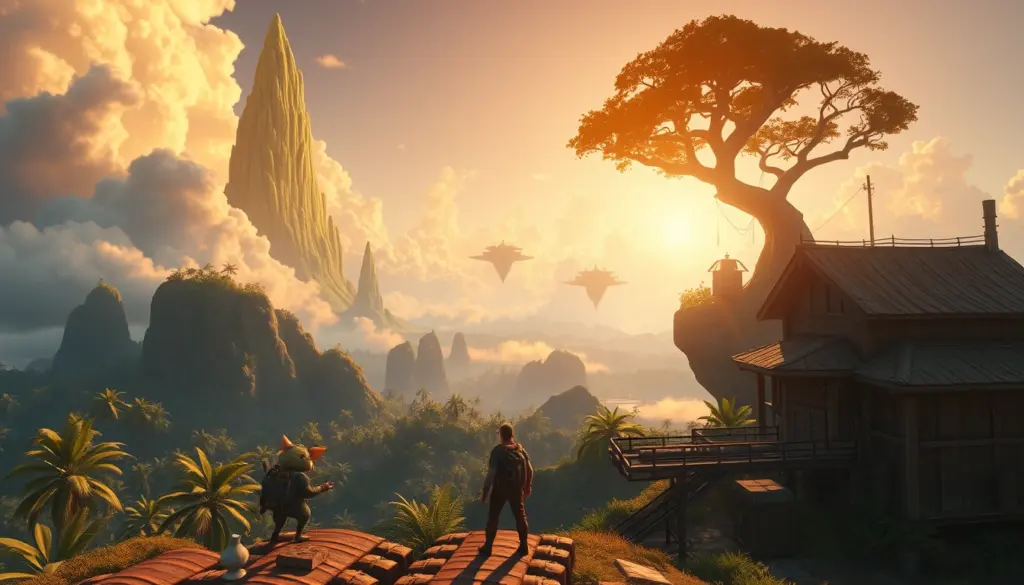
After nearly 30 months in early access, Palworld 1.0 arrives on July 10, 2026, closing the book on one of the most improbable success stories in modern gaming and reopening a legal fight that has quietly collapsed into what one patent analyst calls a “rounding error.” The full release lands simultaneously on PC, PlayStation 5 and Xbox, day one on Game Pass, and free for the tens of millions of players who already own it. Behind the launch sits a studio that shipped 15 million copies in a month, briefly became the second most-played game in Steam history, and drew a lawsuit from Nintendo and The Pokémon Company that, as of this week, appears headed for a payout smaller than a mid-tier developer’s annual salary.
This is the story of how a roughly 60-person Tokyo indie studio built a cultural phenomenon, why the Palworld 1.0 release date matters far beyond the game itself, and what the numbers say about the platform economics, the intellectual-property stakes, and the road ahead. Updated July 7, 2026.
Palworld 1.0 Launches July 10 After 30 Months in Early Access
Developer Pocketpair confirmed that Palworld 1.0 exits early access on Friday, July 10, 2026, targeting an estimated 12:30 PM Japan Standard Time rollout across every platform at once. Because Pocketpair operates out of Tokyo, North American players get the update the evening of Thursday, July 9 – roughly 8:30 PM Pacific and 11:30 PM Eastern – while UK players wake up to it around 4:30 AM on July 10. The studio has cautioned that the exact minute is an estimate, not a guarantee.
Crucially, 1.0 is a free update. Anyone who already owns Palworld on Steam, the Microsoft Store, Xbox or PS5 receives it at no additional cost, and it launches day one on Xbox Game Pass for both PC and console. Full crossplay remains intact. The move mirrors the day-one Game Pass strategy that has defined Microsoft’s platform pitch, the same one underpinning this month’s Halo: Campaign Evolved multiplatform launch. According to CGMagazine, existing saves carry over without a forced wipe, though Pocketpair recommends a fresh start to feel the full weight of the new content.
The launch caps a development cycle that began on January 19, 2024. What started as an early-access curiosity – a survival-crafting game where cartoon creatures wield assault rifles – became a genuine platform event. The Palworld 1.0 rollout is, in Pocketpair’s framing, the biggest update in the game’s history, and the studio kept the full patch notes secret until launch precisely because the scope is meant to reframe what Palworld is.
| Palworld 1.0 launch detail | Specification |
|---|---|
| Release date | Friday, July 10, 2026 (~12:30 PM JST, estimated) |
| North America | Evening of July 9 (~8:30 PM PT / 11:30 PM ET) |
| Platforms | PC (Steam + Microsoft Store), PS5, Xbox Series X|S, Xbox One |
| Game Pass | Day one, PC and console |
| Price for existing owners | Free update, no separate purchase |
| Crossplay | Supported across all platforms |
| Save data | No forced wipe; fresh start recommended |
What’s Inside the Palworld 1.0 Update: World Tree, Sky Islands and 27 Pages of Notes
The centerpiece of Palworld 1.0 is the World Tree, a colossal endgame zone that has sat behind an impassable red barrier since the January 2024 launch. With the full release, that barrier finally drops, and the World Tree becomes the game’s climactic region, home to the conclusion of the main story that early-access players have waited two and a half years to see. Pocketpair describes the 1.0 patch notes as running to roughly 27 pages, which the studio deliberately withheld until launch day.
Beyond the World Tree, the update introduces Sky Islands – floating landmasses suspended above the Palpagos archipelago, each packing its own Pals and resources – plus a new Wing Pack traversal tool that reworks how players move across the map. Offshore base building extends construction onto the water, reworked Tower bosses overhaul the game’s marquee encounters, and a Wildlife Sanctuary revamp changes how rare Pals are captured and protected. The studio has promised more new Pals in this single update than in any previous patch, alongside fresh weapons, armor and gear.
A Game Built to Be Modded and Self-Hosted
Part of Palworld’s staying power is its dedicated-server ecosystem. Cooperative multiplayer scales to 32 players on a hosted world, and the game’s self-hosting community has produced a thriving modding and private-server scene. Readers planning to run their own 1.0 world can follow our full Palworld dedicated server setup guide, which walks through the SteamCMD install, port configuration and security hardening step by step. The endurance of that community – the kind of player-run infrastructure at the heart of the Stop Killing Games preservation debate – is a big reason Palworld’s audience never fully churned out during early access.
From “Pokémon With Guns” to 32 Million Players: The Numbers
The commercial story is the part that reads like fiction. When Palworld hit Steam and Xbox Game Preview on January 19, 2024, it sold 1 million copies in its first eight hours. Within 24 hours it had doubled to 2 million. By day six it had cleared 8 million. According to figures compiled on Wikipedia’s Palworld entry, the game reached 12 million copies on Steam and 7 million players on Xbox by February 1, 2024, then 15 million Steam sales and 10 million Xbox players by February 22 – a combined 25 million players inside 34 days.
By February 2025, roughly a year into early access, Palworld counted 32 million total players across all platforms. Those numbers put a small Japanese indie studio in the same commercial conversation as the industry’s biggest publishers, and they explain why the Palworld 1.0 launch is being treated as a platform-level event rather than a routine version bump. For context on how rare that kind of breakout is, compare it to the coordinated marketing machine behind GTA 6’s pre-order launch – Palworld did it with a fraction of the budget and no publisher.
| Milestone | Figure | Date |
|---|---|---|
| First-day sales (8 hours) | 1 million copies | Jan 19, 2024 |
| First 24 hours | 2 million copies | Jan 20, 2024 |
| Day six | 8 million copies | Jan 25, 2024 |
| Steam / Xbox split | 12M Steam + 7M Xbox | Feb 1, 2024 |
| One-month total | 15M Steam + 10M Xbox players | Feb 22, 2024 |
| Peak concurrent (Steam) | 2,101,381 players | Jan 27, 2024 |
| Total players, all platforms | 32 million | Feb 2025 |
The Steam Concurrency Record That Still Stands
On January 27, 2024, Palworld peaked at 2,101,381 concurrent players on Steam. That figure made it only the second game in Steam’s entire history to break 2 million simultaneous players, as PC Gamer reported at the time. The only title ahead of it remains PUBG: Battlegrounds, which topped out around 3.2 million. Palworld’s peak sat above Counter-Strike 2, Lost Ark, Dota 2, Cyberpunk 2077 and every other game on the platform – an astonishing result for an early-access game from a studio almost nobody had heard of a week earlier.
The concurrency record matters because it reshaped Valve’s perception of what a breakout can look like. Palworld demonstrated that server-strapped, buy-once survival games could rival free-to-play behemoths for peak load, a lesson that has since informed how Valve provisions bandwidth for launches. Whether Palworld 1.0 reignites those numbers is one of the most-watched questions heading into July 10. A new endgame, day-one Game Pass exposure and two and a half years of pent-up demand could push a concurrency spike that rivals the original launch – though matching a once-in-a-generation moment is a tall order.
The Nintendo and Pokémon Patent Lawsuit, Explained
No account of Palworld is complete without the lawsuit. On September 18, 2024, Nintendo and The Pokémon Company jointly filed a patent-infringement suit against Pocketpair in the Tokyo District Court. Notably, the complaint did not allege copyright infringement – the “Pokémon with guns” resemblance that dominated headlines – but patents covering specific gameplay mechanics, most prominently the act of throwing a capture device to catch a creature and then summoning it back out into the world, including to ride for traversal.
The two plaintiffs each sought ¥5 million – roughly $31,000 apiece – plus late-payment damages, and, more consequentially, an injunction that would have blocked Palworld’s continued sale. For a game that had already sold 25 million copies, an injunction was the real threat; the monetary demand was almost symbolic. That framing is why the case drew wall-to-wall coverage: it was read, at first, as Nintendo weaponizing its patent portfolio to strangle a rival in the creature-collector genre it has dominated since 1996. The stakes felt existential for Pocketpair, and the broader indie scene watched nervously, aware that Nintendo’s litigation budget dwarfs most studios’ entire valuations.
Why Analysts Now Call It a “$30,000 Rounding Error”
Two years on, the picture has inverted. In November 2025, Nintendo and The Pokémon Company amended their claims, narrowing the scope of the suit to older versions of Palworld – the exact builds that Pocketpair had already patched. Throughout early access, Pocketpair quietly reworked the mechanics Nintendo targeted: the summoning-from-a-ball animation and the ride-your-creature traversal were both altered in response to the litigation. By narrowing to superseded versions, the plaintiffs effectively conceded they had no viable path against the current game.
Patent analyst Florian Mueller, whose assessment was reported by GamesRadar and Techdirt, concluded that Nintendo now has “zero chance” of prevailing over current Palworld versions on any platform, and that even a complete win would yield only “chump change” – a maximum of roughly ¥5 million, or about $30,000. Mueller characterized that figure as “a rounding error” next to what both sides have spent on legal fees. Several of the asserted patents did not exist when Palworld launched, so those initial sales cannot factor into damages, and the patched later versions fall outside the narrowed claims entirely – squeezing any award into a vanishingly small window.
Pocketpair has acknowledged that the litigation weighed on studio morale and slowed development at points, per GamesRadar’s reporting. But the financial threat that once loomed over the Palworld 1.0 release has all but evaporated. A $30,000 ceiling is not a business risk for a studio that moved 25 million copies in a month.
| Date | Legal development |
|---|---|
| Sep 18, 2024 | Nintendo + The Pokémon Company file patent suit in Tokyo District Court |
| 2024–2025 | Pocketpair patches targeted mechanics (ball-summon, creature-riding traversal) |
| Oct 2025 | Japan Patent Office rejects a related Nintendo patent application for lacking originality |
| Nov 2025 | Plaintiffs amend claims, narrowing scope to older, already-patched versions |
| Oct 1, 2026 | Scheduled presentation of evidence at the Tokyo District Court |
| Nov 9, 2026 | Court expected to indicate its preliminary view on the case |
The October Hearing and November Ruling: What Comes Next
The legal calendar now points to autumn. The Tokyo District Court has scheduled a presentation of evidence for October 1, 2026, and is expected to indicate its preliminary view on November 9 – likely the clearest signal yet of how little of Nintendo’s case survives. The Palworld 1.0 launch on July 10 will therefore land months before any resolution, meaning the full release ships with the lawsuit still technically open but functionally defanged.
Nintendo’s position was further weakened in October 2025, when Japan’s Patent Office rejected a related patent application for lacking originality, as Windows Central detailed. On the parallel US front, only one of 23 filed patents in the relevant family was approved, with 22 rejected – a track record that undercuts the notion of an ironclad portfolio. The likeliest outcomes now are a token judgment, a quiet settlement, or a withdrawal that lets both sides save face. What is off the table is the injunction that once threatened to pull Palworld from sale.
Palworld 1.0 vs. the Genre: A Competitive Comparison
Palworld sits at the intersection of three genres – creature collection, open-world survival crafting, and base automation – and that hybrid is precisely why it broke out. Traditional creature-collectors like Pokémon are turn-based, family-friendly and platform-locked to Nintendo hardware. Survival crafters like ARK and Valheim offer freedom and self-hosting but no monster-catching hook. Palworld fused both, then added factory-style automation where captured Pals work assembly lines and mount turrets. The result was a game that appealed to Pokémon fans, survival veterans and streamers simultaneously.
The competitive contrast with Nintendo is stark. Pokémon remains the highest-grossing media franchise in history, but its mainline games are tightly controlled, released on a fixed cadence, and unavailable off Switch hardware – a limitation thrown into relief by the sales dynamics we covered in Nintendo’s Switch 2 launch analysis. Palworld, by contrast, is multiplatform, moddable, self-hostable and iterated in public. For a generation of players comfortable with early-access games and dedicated servers, that openness is a feature, not a compromise. The genre table below frames where Palworld 1.0 lands against its nearest reference points.
| Attribute | Palworld | Pokémon (mainline) | ARK / Valheim |
|---|---|---|---|
| Core loop | Catch + survive + automate | Catch + battle (turn-based) | Survive + build |
| Platforms | PC, PS5, Xbox, Game Pass | Nintendo hardware only | PC, PS5, Xbox |
| Self-hosted servers | Yes (up to 32 players) | No | Yes |
| Modding | Active community | Restricted | Extensive |
| Release model | Early access to 1.0 | Fixed retail cadence | Early access / live |
Game Pass, Day One, and the Xbox Platform Bet
The decision to ship Palworld 1.0 day one on Xbox Game Pass is a platform story as much as a game story. Palworld was a Game Pass title from its early-access debut, and Microsoft has repeatedly pointed to it as proof that the subscription can host genuine cultural moments, not just back-catalog filler. For Pocketpair, Game Pass distribution traded some per-unit revenue for enormous reach – 10 million Xbox players inside a month is a number few premium releases ever touch.
That bet cuts both ways for Microsoft. Game Pass economics have come under intense scrutiny during a brutal year for the platform, one that produced the 3,200-job Xbox restructuring and a broader rethink of first-party spending. A blockbuster free 1.0 update that drives fresh subscriptions is exactly the kind of win the division needs. It also arrives as Microsoft leans harder into multiplatform releases and cloud delivery – the same strategic pivot we analyzed in our GeForce Now versus Xbox Cloud Gaming comparison. Palworld’s 1.0 launch is a live test of whether day-one, cross-platform, subscription-first releases can still generate the concurrency spikes that define a hit in 2026.
Palworld Entertainment: The Sony Joint Venture Building an IP Empire
While Nintendo pursued Pocketpair in court, Sony moved to partner with it. On July 10, 2024 – two years to the day before the Palworld 1.0 release date – Sony Music Entertainment (Japan), its subsidiary Aniplex, and Pocketpair announced a joint venture called Palworld Entertainment, Inc. The venture, detailed in Sony’s official announcement, exists to expand Palworld beyond the game – global licensing, merchandising and commercial ventures built on the IP.
Importantly, the structure keeps the game itself under Pocketpair’s control. As Game Developer reported, Palworld Entertainment manages the brand’s commercial expansion while all software development, updates and code remain with Pocketpair. Early efforts began with exclusive merchandise, and the licensing pipeline has since extended toward tie-ins and collectibles. The juxtaposition is hard to miss: one arm of the Sony ecosystem sells Palworld PlayStation copies and merchandise, while Palworld competes head-on with Nintendo’s crown jewel. For a studio that started as a doujin outfit, aligning with Sony’s media machinery signals ambitions well beyond a single hit game.
What Palworld’s Success Means for Indie Studios and Live Service
Pocketpair is not a typical AAA operation. Based in Shinagawa, Tokyo, and led by CEO Takuro Mizobe, the studio built Palworld with a development team that grew past 40 additional hires during production and a budget that exceeded ¥1 billion – a fraction of a marquee console exclusive’s cost. That a lean indie could out-concurrent nearly every game on Steam is the single most disruptive lesson of the Palworld era, and it reframes what “risk” means for smaller studios eyeing genre mashups the majors consider too weird to greenlight.
The early-access-to-1.0 model is the other takeaway. By shipping a rough but playable build in January 2024 and iterating in public for 30 months, Pocketpair funded its own development, built a self-sustaining community, and de-risked the full release before it ever happened. The Palworld 1.0 launch is the payoff of a strategy that treated players as collaborators. It stands in sharp contrast to the traditional model of console blockbusters and the price pressure squeezing hardware – a dynamic we tracked in our reporting on the PS5 sales crash and console price surge. In a year when platform holders are cutting staff and raising prices, a free, community-built 1.0 is a pointed counterexample.
5 Predictions for Palworld After the 1.0 Launch
With the facts established, here is where the evidence points next:
- A concurrency resurgence, not a record. Expect a strong Steam concurrent spike on launch weekend – likely into the six figures and possibly past a million – but not a return to the 2.1 million January 2024 peak. Day-one Game Pass and PS5 traffic will absorb much of the demand off Steam.
- The lawsuit ends with a whimper. After the October 1 evidence hearing and the court’s November 9 signal, the most probable outcome is a token judgment, settlement or withdrawal – nothing that materially affects Palworld or forces further mechanical changes.
- Merchandising accelerates. With 1.0 stabilizing the IP, expect Palworld Entertainment to expand the licensing and collectibles pipeline aggressively through late 2026, leveraging Sony and Aniplex distribution.
- Post-launch content cadence continues. A “1.0” label will not end development. Pocketpair is likely to keep shipping seasonal updates and new Pals, following the live-service playbook that kept the community engaged through early access.
- Copycats flood the genre. Palworld’s blueprint – creature collection plus survival crafting plus automation – will spawn a wave of imitators over the next 12–18 months, just as battle royale did after PUBG.
Palworld 1.0 FAQ
When is the Palworld 1.0 release date and time?
Palworld 1.0 launches Friday, July 10, 2026, at an estimated 12:30 PM Japan Standard Time. In North America that translates to the evening of Thursday, July 9 – roughly 8:30 PM Pacific and 11:30 PM Eastern. Pocketpair has stressed the exact time is an estimate.
Is Palworld 1.0 free for existing owners?
Yes. The 1.0 update is free for anyone who already owns Palworld on Steam, the Microsoft Store, Xbox or PS5, and it is available day one on Xbox Game Pass for PC and console. There is no separate purchase.
What platforms does Palworld 1.0 launch on?
Palworld 1.0 releases simultaneously on PC (Steam and the Microsoft Store), PlayStation 5, and Xbox Series X|S and Xbox One, with full crossplay support intact across all platforms.
Do I need to wipe my save for Palworld 1.0?
No wipe is forced – existing worlds and Pals carry over. However, Pocketpair recommends starting a fresh character to experience the reworked progression and new endgame content properly. Backing up save files before updating is advisable.
What happened with the Nintendo Palworld lawsuit?
Nintendo and The Pokémon Company filed a patent-infringement suit in September 2024. After Pocketpair patched the targeted mechanics and the plaintiffs narrowed their claims in November 2025 to older versions, analysts now estimate any award would top out around ¥5 million – roughly $30,000. A key hearing is set for October 1, 2026, with the court expected to signal its view on November 9.
How many copies has Palworld sold?
Palworld sold 1 million copies in its first eight hours and 15 million on Steam within a month of its January 2024 launch, plus 10 million players on Xbox. By February 2025 it counted 32 million total players across all platforms.
Can I play Palworld 1.0 on a dedicated server?
Yes. Palworld supports self-hosted dedicated servers for up to 32 players, and the community maintains an active modding and hosting scene. Our Palworld dedicated server guide covers the full setup, including port configuration and security hardening.
Is Palworld connected to Sony?
Pocketpair formed a joint venture, Palworld Entertainment, with Sony Music Entertainment (Japan) and Aniplex in July 2024 to handle licensing and merchandising. The game itself, including all development and updates, remains fully under Pocketpair’s control.
Related Coverage
- Palworld Dedicated Server: 12 Steps, 30 Min
- Xbox Layoffs: 3,200 Jobs Cut, 4 Studios Divested
- Halo: Campaign Evolved Hits PS5 July 28, $49.99
- GTA 6 Pre-Orders Live: $79.99, Console-Only
- Switch 2 Hits 19.86M, Outsells PS5 in Year One
- PS5 Sales Crash 58% as Console Prices Surge
- Stop Killing Games: 1.29M Signatures, No EU Law
- More gaming platform coverage
Sources: Palworld – Wikipedia, PC Gamer, CGMagazine, GamesRadar, Techdirt, Windows Central, Sony, Game Developer, Steam.