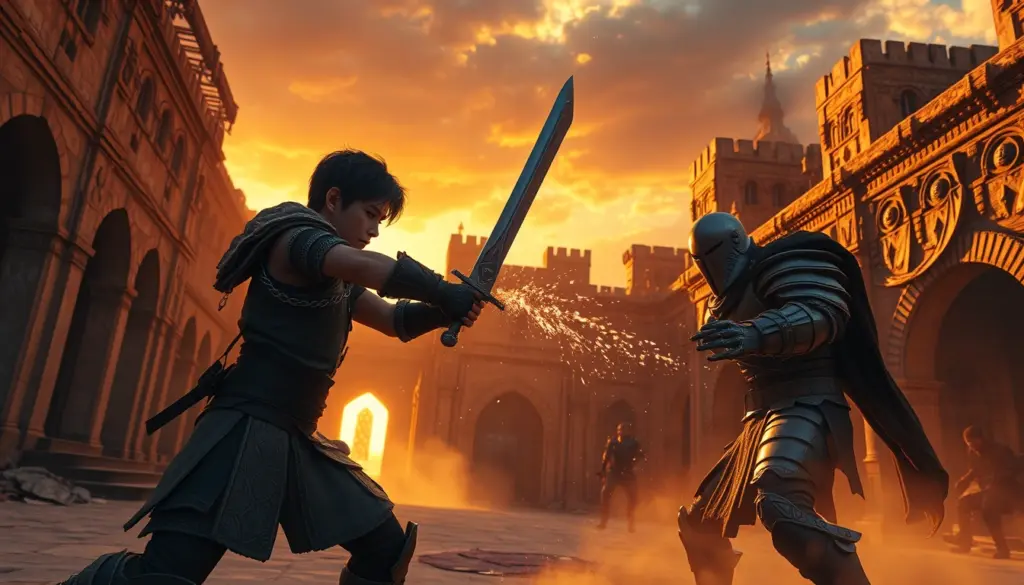
Templar Media pulled back the curtain on Gate Zero‘s combat system for the first time on August 31, 2026, releasing an official combat gameplay trailer tied to gamescom 2026. The video, titled “Gate Zero – Combat Gameplay Reveal // Templar Media,” confirms the story-rich action-adventure game is coming Spring 2027 to Steam, the Epic Games Store, PlayStation 5, and Xbox Series X|S. Games Press, Polygon, and Kotaku all picked up the reveal within hours, and gaming outlets GameFragger and COGconnected published detailed breakdowns of what the footage shows.
The trailer matters beyond a single studio’s marketing calendar. Gate Zero has spent two years as one of the more unusual crowdfunding stories in games, and its combat reveal is the clearest signal yet that a project built on church donations and a Kickstarter campaign is being reshaped into something meant to compete for shelf space against mainstream action-adventure franchises. This piece breaks down what actually shipped in the trailer, what it’s worth in market terms, and where Gate Zero sits next to the games it’s implicitly chasing.
What the Gate Zero combat trailer actually shows
Templar Media’s press materials describe the video as the first time the public has seen Gate Zero’s combat rather than its exploration or dialogue systems. The plot follows Max, described in press text as “a teenager from a dystopian future,” who steps through the titular Gate Zero into first-century Judea and Galilee. Reports from GameFragger frame that setup as a narrative bridge: a modern, dystopian frame story called the EON World gives players a familiar action-adventure hook before dropping them into biblical history.
Coverage from COGconnected and GameFragger both single out enemies referred to as “Kairos” and a boss encounter shown late in the trailer, describing the pacing as faster and more conventional than the exploration-first footage Templar and Bible X had shown previously. That’s a notable shift. Earlier Gate Zero materials leaned on walking-simulator comparisons and historical recreation; this trailer leans on melee exchanges, enemy variety, and a boss fight, which reads as a deliberate attempt to answer the most common skeptical question about faith-based games: whether they can actually play like games.
The trailer also carries voiceover lines built around themes of bondage and rebellion, consistent with a story rooted in first-century occupation. One line from the reveal reads: “It’s easy to rise against the chains you can see.” Another follows with: “It’s harder to face the oppression that is hidden.” A separate line of in-game dialogue states: “We are not supposed to die in bondage,” and a third declares: “We need a revolution.” Those lines come directly from the official Gate Zero combat gameplay reveal video, and they set a tone closer to a political thriller than a Sunday-school retelling.
The Bible X to Templar Media pipeline, explained
Gate Zero didn’t start as a Templar Media project. It began under Bible X, a Norwegian studio incubated by BCC Media, the media arm connected to Brunstad Christian Church. Bible X’s founders described their goal in an interview with Geeks Under Grace as wanting young people to “experience the stories of Jesus in a way that feels alive and relevant,” essentially treating the game as a time machine into the Gospels.
The studio’s early Kickstarter campaign hit its funding goal fast. According to Templar Media’s own acquisition announcement, the campaign reached 100% of a €200,000 goal within 79 hours. Wccftech later reported the fuller total: $330,000 raised through Kickstarter from 4,145 backers, plus more than €6 million in additional donations. Separately, BCC’s own coverage put donations from church members at more than NOK 60 million, a figure the church called crucial to keeping development funded before outside investment arrived.
That donor-funded phase ended in stages. Bible X announced a partnership with Templar Media in March 2025 to handle financing and global distribution, while donations kept flowing through NextGen Bible Media. By December 2025, Templar Media had acquired Bible X outright, a move confirmed in Wccftech’s report on the acquisition. Templar now lists itself as both developer and publisher on Gate Zero’s Steam page, though Bible X and BCC continue contributing biblical content and consultation.
Why a former Tripwire Interactive CEO bought a Bible game studio
Templar Media’s involvement traces back to John Gibson, the former CEO of Tripwire Interactive, the studio behind Killing Floor and the Maneater series. In an interview with Wccftech, Gibson explained that Templar’s guiding motto, “Entertainment First,” grew out of a desire to build a company focused on content that resonates with audiences rather than one built around messaging. He told Wccftech that players “recognize when someone is trying to push an agenda,” and that the studio’s goal is producing entertainment people actually want to play, not sermons dressed up as software.
Gibson also described how he found Gate Zero in the first place: he came across footage on social media, assumed faith-based games would be low quality, and found himself unable to stop thinking about the project anyway. After reaching out to the team and seeing a prototype, he concluded Bible X had strong art direction and a clear creative vision but needed help translating that into satisfying gameplay mechanics, which led to his role as executive consultant and eventually Templar’s full acquisition of the studio. That account, along with Gibson’s framing that the biblical setting is “not the sole type of content” Templar plans to produce, comes from Wccftech’s published interview.
The corporate math behind that decision matters for market watchers. Templar isn’t a charity operation picking up a passion project out of goodwill; it’s a media company betting that a built-in donor base, a proven Kickstarter track record, and an underserved genre add up to a commercially viable release. Whether that bet pays off depends heavily on how the finished combat system compares to the games Gate Zero will actually be shelved next to in Spring 2027.
Gate Zero by the numbers
| Metric | Figure | Source |
|---|---|---|
| Kickstarter total raised | $330,000 | Wccftech |
| Kickstarter backers | 4,145 | Wccftech |
| Time to hit funding goal | 79 hours (100% of €200,000 goal) | Templar Media acquisition release |
| Additional donations raised | €6 million+ | Wccftech |
| BCC church member donations | NOK 60 million+ | BCC (Brunstad Christian Church) |
| Bible X acquisition date | December 2025 | Templar Media, Wccftech |
| Templar/Bible X partnership announced | March 2025 | Bible X announcement |
| Game engine | Unreal Engine 5 | Steam store page, Gate Zero developer updates |
| Confirmed launch platforms | Steam, Epic Games Store, PS5, Xbox Series X|S | Gate Zero combat trailer description |
| Release window | Spring 2027 | Official trailer, Templar Media |
Where Gate Zero sits in the faith-based games niche
Faith-based games have existed for decades, but almost none of them have competed on production values with mainstream releases. The 2005 party title The Bible Game is remembered mostly as a curiosity. The Left Behind strategy series from the mid-2000s built a small following around apocalyptic fiction but never crossed into wider gaming culture. More recently, I Am Jesus Christ drew attention for its first-person recreation of Gospel scenes, and the Superbook franchise has targeted younger players through animated tie-in games. None of these titles publish reliable sales or revenue figures, and no market analyst tracks “faith-based games” as a distinct, sized category the way research firms track mobile gaming or cloud gaming spend.
That data gap is itself part of the story. Gate Zero’s most concrete performance indicators aren’t sales figures, since the game hasn’t launched. They’re demand signals: developer-reported figures put demo players at 45,000 and Steam wishlists above 100,000, alongside the Kickstarter’s 4,145 backers. Those numbers suggest a real, engaged audience, but they’re a fraction of the wishlist counts major AAA action-adventure titles routinely generate before launch. The honest read is that Gate Zero occupies a niche that’s growing in visibility but still lacks the kind of third-party market sizing that would let anyone call it a “movement” with confidence.
Combat comparisons: what Gate Zero is chasing
Every outlet that covered the trailer reached for the same comparison points, even if none published a formal side-by-side. The dystopian-frame-story-into-historical-setting is reminiscent of Assassin’s Creed’s Animus device, which has used a similar structure since 2007 to justify jumping between time periods without a literal time machine. The melee-heavy, boss-fight-punctuated combat shown in the trailer invites comparisons to God of War’s more grounded, weighty combat style, though Gate Zero’s footage doesn’t show anything approaching that franchise’s scale of production. Enslaved: Odyssey to the West, an earlier attempt to build a AAA-adjacent action game around ancient mythology and a mismatched-pair story, is a useful cautionary comparison: strong art direction and setting didn’t save it from being a commercial disappointment when the combat underneath felt generic.
| Title | Setting hook | Combat style shown | Status |
|---|---|---|---|
| Gate Zero | Time travel from dystopian future to biblical Judea/Galilee | Melee-focused, enemy variety, boss fights (per trailer) | In development, Spring 2027 |
| Assassin’s Creed series | Genetic memory device (Animus) into historical past | Stealth/melee hybrid, series-dependent | Long-running franchise, Ubisoft |
| God of War (2018/Ragnarök) | Norse mythology, father-son journey | Weighty melee, axe/blade combos | Released, critically acclaimed |
| Enslaved: Odyssey to the West | Post-apocalyptic reimagining of Journey to the West | Melee combat, platforming | Released 2010, commercial underperformer |
| I Am Jesus Christ | First-person recreation of Gospel events | Simulation-focused, minimal combat | Released, niche audience |
The comparison that matters most for Gate Zero’s commercial prospects isn’t the setting, it’s the combat feel, since that’s the thing a two-minute trailer can’t fully prove. Enslaved is the closest historical parallel to what could go wrong: a game with real narrative ambition and a distinctive premise that still needed its combat loop to be fun on a moment-to-moment basis, and fell short. Templar’s decision to lead with a “first combat gameplay” trailer, rather than another cinematic or exploration reel, suggests the studio is aware that combat feel is the make-or-break variable reviewers and players will judge it on.
The gamescom 2026 spotlight effect
Gamescom remains the single biggest annual stage for game reveals outside of the big publisher press conferences earlier in the year, and Templar’s choice to time the combat trailer to the show wasn’t incidental. Games shown at gamescom get a compressed window of press attention that smaller studios can’t buy through advertising alone. For a project that spent years relying on donations and a Kickstarter campaign rather than a traditional publisher marketing budget, a gamescom slot functions as free distribution: outlets covering the show’s biggest reveals will naturally scoop up adjacent announcements, which is exactly what happened here with GameFragger and COGconnected publishing same-day breakdowns.
That visibility cuts both ways. A studio that spent two years building goodwill among a donor and backer community now has to manage expectations from a much larger, more skeptical gaming press audience that has no particular investment in the project’s religious themes and will judge it purely on mechanics, presentation, and price. Gibson’s own framing to Wccftech, that players “recognize when someone is trying to push an agenda,” reads as a preemptive answer to exactly that skepticism.
Market impact: what a Templar-backed Gate Zero means
Templar Media’s acquisition of Bible X is a small deal in absolute dollar terms compared to the billion-dollar acquisitions that dominate gaming headlines, but it’s a meaningful data point for a specific trend: mid-size media companies buying into niche, community-funded studios once those studios prove demand through crowdfunding rather than market research. Gate Zero’s Kickstarter success and donor base gave Templar a pre-validated audience before spending a dollar of its own production budget, a much cheaper way to de-risk a new IP than greenlighting an original concept from scratch.
If Gate Zero performs well commercially in Spring 2027, expect more of this pattern: publishers scanning crowdfunding platforms and niche communities for projects with proven, if modest, fundraising traction, then acquiring the studio rather than competing with it. If it underperforms, the more likely lesson publishers take away is that faith-based and other identity-driven niches don’t scale past their existing donor and fan base no matter how much production polish gets added on top. Either outcome will shape how the next wave of crowdfunded passion projects gets pitched to investors.
What we still don’t know
Several details remain unconfirmed as of this writing. Templar Media has not disclosed the acquisition price it paid for Bible X. No party has published a total combined budget figure covering Kickstarter funds, church donations, and Templar’s own investment. Pricing for Gate Zero itself hasn’t been announced, and reports describing it as “more affordable than many AAA titles” haven’t been accompanied by a specific number. A precise release date within Spring 2027 also hasn’t been set; Templar’s materials consistently use the seasonal window rather than a month or day.
It’s also worth being precise about what the trailer does and doesn’t prove. A two-minute combat reveal demonstrates that a combat system exists and that Templar felt confident enough to show it publicly. It doesn’t demonstrate how that combat holds up over a full campaign, how enemy variety scales past the “Kairos” encounters shown so far, or how the game performs technically across the three console and two PC storefronts it’s targeting.
Historical context: crowdfunded games that made the jump to traditional publishing
Gate Zero’s path from crowdfunded passion project to publisher-backed release echoes a pattern that’s become increasingly common since Kickstarter’s early gaming successes in the early 2010s. Games that raise initial funding from a dedicated community, then get picked up or invested in by a larger publisher once they prove viability, sidestep the traditional pitch-and-greenlight process entirely. The difference with Gate Zero is the nature of its original funding base: a religious community donating through a media arm connected to a specific church, rather than a general gaming audience on Kickstarter alone, even though the Kickstarter campaign itself was also a major funding pillar.
That hybrid funding model, donations plus crowdfunding plus eventual acquisition, is unusual enough that it’s difficult to point to a close precedent in mainstream gaming. It’s closer to how some documentary films or religious media projects get funded than how most AAA or even mid-budget indie games reach production, which is part of why Gate Zero has drawn attention from general gaming press well beyond its target audience.
Predictions: what happens next for Gate Zero
Based on the pattern of the last two years and the trajectory visible in this trailer, a few outcomes look likely heading into 2027:
- Expect at least one more major gameplay showcase before launch, likely timed to a spring or early-2027 showcase event, focused on exploration or narrative rather than combat, to balance out this reveal.
- Expect Templar Media to announce a specific price and release date closer to Q1 2027, most likely positioning Gate Zero as a mid-budget release rather than a full AAA price point, consistent with Templar’s own “more affordable than many AAA titles” framing.
- Expect gaming press coverage to increasingly focus on whether Gate Zero’s combat can hold up under review scrutiny, since that’s the one area Templar chose to spotlight first and therefore the area it will be judged most harshly on.
- Expect Templar Media to reference Gate Zero as a template for future acquisitions of community-funded niche studios, particularly if pre-launch wishlist and demo numbers continue climbing.
- Expect continued silence on the Bible X acquisition price and total project budget unless Gate Zero significantly over- or under-performs at launch, at which point one side or the other will likely have incentive to disclose figures.
The bottom line
Gate Zero’s combat trailer is a small piece of footage carrying a lot of narrative weight. It’s the clearest evidence yet that a studio built on Kickstarter backers and church donations is being retooled to compete in the same conversation as Assassin’s Creed and God of War, at least in terms of press attention if not yet production budget. Whether that retooling produces a combat system that holds up past a two-minute highlight reel is the question Templar Media has chosen to answer first, ahead of price, ahead of a firm release date, and ahead of a second trailer. That’s either confidence in what they’ve built, or an acknowledgment that combat feel was always going to be the hardest thing to prove.
Frequently asked questions
What is Gate Zero?
Gate Zero is a story-rich action-adventure game from Templar Media in which a teenager named Max travels from a dystopian future into first-century Judea and Galilee to witness events tied to biblical history.
When does Gate Zero release?
Templar Media has confirmed a Spring 2027 launch window. No specific month or day has been announced.
What platforms is Gate Zero coming to?
Gate Zero is confirmed for PC via Steam and the Epic Games Store, plus PlayStation 5 and Xbox Series X|S.
Who is developing Gate Zero?
Templar Media is the current developer and publisher, following its December 2025 acquisition of the original studio, Bible X, which was incubated by Norway’s BCC Media.
How much has Gate Zero raised in funding?
Wccftech reported a $330,000 Kickstarter total from 4,145 backers, plus more than €6 million in additional donations, on top of over NOK 60 million in donations from Brunstad Christian Church members according to BCC’s own reporting.
What game engine does Gate Zero use?
Gate Zero is built in Unreal Engine 5, according to its Steam store page and Templar Media’s development updates.
Is Gate Zero only about religious content?
Templar Media CEO John Gibson told Wccftech that biblical narratives are the focus of this first game but not the only type of content the studio plans to produce going forward.
How does Gate Zero’s combat compare to other action-adventure games?
The trailer shows melee-focused combat against enemies referred to as “Kairos,” along with a boss encounter, drawing comparisons to games like God of War and Assassin’s Creed, though no formal benchmark or review has been published since the game hasn’t launched.