
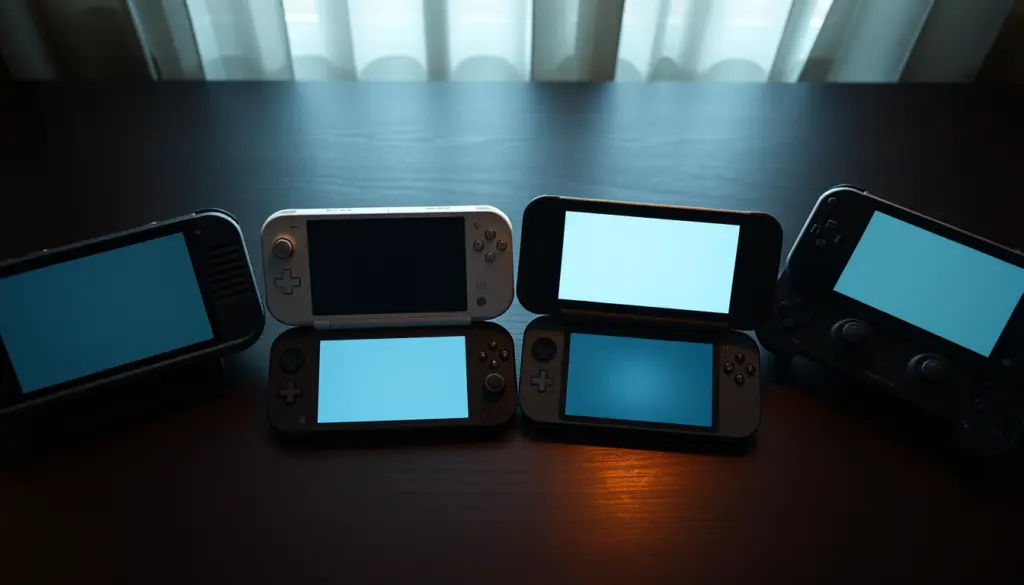
Valve spent four years treating SteamOS as a one-device operating system. If you wanted the company’s Arch Linux-based, console-like interface, you bought a Steam Deck, full stop. That changed for good this month. A beta update pushed to Valve’s Beta and Preview channels between August 8 and August 10, 2026, and detailed in a September 4, 2026 report from Tech Insider, adds official gamepad support to four handhelds Valve did not design, build, or sell: the MSI Claw 8 EX AI+, the OneXPlayer Apex, the AYANEO Pocket S2, and the Konkr FIT. Buried in a changelog that otherwise reads like routine bug-fix housekeeping, the update quietly turns SteamOS into something closer to a shared industry platform than a single-vendor console operating system.
The timing matters. The same report notes that Valve has still not confirmed a release date, price, name, or spec sheet for a Steam Deck successor as of September 2026, even as a Valve engineer is quoted describing next-generation hardware work as active and ongoing. Put those two threads together and you get a company that appears to be building out its software ecosystem on other people’s hardware while it keeps its own next machine under wraps. This piece breaks down what SteamOS 3.8.25 actually changes, why Valve is opening its OS to competitors, and what the pattern says about where the Steam Deck 2 conversation actually stands.
What SteamOS 3.8.25 Actually Changes
According to the Tech Insider report, SteamOS 3.8.25 landed in Valve’s Beta and Preview update channels on August 8, 2026, with the rollout continuing through August 10. That distinction matters for anyone trying to use it today: Beta and Preview channels are opt-in tracks that Steam Deck and third-party device owners switch to deliberately, not the default Stable channel that ships to everyone automatically. The headline change, per that reporting, is official gamepad support for four handhelds Valve had no hand in manufacturing.
That brings the tally of third-party devices SteamOS officially recognizes to five, plus Lenovo’s Legion Go S, which already ships with a dedicated SteamOS configuration as a factory option rather than requiring an aftermarket install. The update also carries forward existing support for the original MSI Claw and earlier OneXPlayer models, so nothing already working stops working. What is new is the scope: this is the first time Valve has extended official gamepad-level support to this many outside brands in a single update cycle.
The Four New Handhelds Getting Official Support
Per the Tech Insider report, the four devices added in this cycle are the MSI Claw 8 EX AI+, the OneXPlayer Apex, the AYANEO Pocket S2, and the Konkr FIT. All four ship from the factory running Windows 11, meaning SteamOS support here is an alternate operating system path rather than the out-of-box default, similar to how Linux distributions have long supported hardware that ships pre-loaded with Windows. Official gamepad support specifically means Valve’s input layer now recognizes each device’s controls without users needing manual configuration files or community-built profiles, which had previously been the workaround for running SteamOS on non-Valve hardware.
| Device | Maker | SteamOS 3.8.25 Status | Factory OS |
|---|---|---|---|
| MSI Claw 8 EX AI+ | MSI | New official gamepad support | Windows 11 |
| OneXPlayer Apex | OneXPlayer | New official gamepad support | Windows 11 |
| AYANEO Pocket S2 | AYANEO | New official gamepad support | Windows 11 |
| Konkr FIT | Konkr | New official gamepad support | Windows 11 |
| Legion Go S | Lenovo | Existing factory SteamOS SKU | SteamOS / Windows 11 dual-SKU |
| MSI Claw (original), earlier OneXPlayer models | MSI / OneXPlayer | Carried-over support, unaffected by update | Windows 11 |
Where the Legion Go S Fits Into the Picture
Lenovo’s Legion Go S occupies a different category from the four new additions. Rather than running SteamOS as an aftermarket or beta-channel option, Lenovo sells the Legion Go S with SteamOS pre-installed as a factory configuration choice, alongside a separate Windows 11 SKU of the same hardware. That makes Lenovo the only major handheld maker so far to sell a SteamOS-first device at retail without routing through Valve’s own hardware line. The Tech Insider report frames the Legion Go S as sitting outside the new four-device batch precisely because that relationship already existed before SteamOS 3.8.25 shipped, and the update’s real news is about the devices Valve had not previously touched.
Why Valve Is Opening SteamOS to Hardware It Didn’t Build
Valve makes its money from Steam storefront transactions, not from handheld hardware margins, which is a fundamentally different incentive structure than Microsoft’s Windows licensing business or Sony and Nintendo’s console-first models. Every handheld that runs SteamOS instead of Windows is a device where Valve’s storefront becomes the default, frictionless path to buying games, ahead of the Microsoft Store or any other launcher. Widening official support to MSI, OneXPlayer, AYANEO, and Konkr costs Valve comparatively little in engineering terms once the underlying Proton compatibility layer and Deck-verified game database already exist, and it extends Steam’s reach onto hardware Valve never had to design, manufacture, warranty, or discount.
That logic also explains why this expansion arrived through the Beta and Preview channels rather than a marketing push. Valve has a long pattern, documented across its own Steam Deck news page, of testing platform changes on smaller opt-in audiences before promoting them to Stable. Treating five-plus rival handhelds as a beta-channel feature rather than a headline product launch fits a company that would rather let compatibility data accumulate quietly than make promises about hardware support before it has been stress-tested.
Inside the Steam Deck 2 Question: What Valve Has and Hasn’t Confirmed
Here is the part readers searching for Steam Deck 2 news actually want answered plainly: no, it is not officially confirmed. As of September 2026, Valve has not announced a release date, a price, a product name, or a spec sheet for any Steam Deck successor. What does exist, according to the Tech Insider report, is a comment attributed to a Valve engineer describing the company’s hardware team as continuing to work toward its next generation of hardware. That is a confirmation that development work is happening somewhere inside Valve, not a confirmation of when, at what price, or under what name a product will ship.
Independent estimates cited in that same report, built from typical chip development cycles rather than any Valve statement, put the earliest plausible launch window in late 2027 or early 2028. That framing is explicitly speculative, not a Valve-confirmed date, and readers should treat any more specific date circulating online with proportional skepticism until Valve itself puts out a spec sheet or price.
Checking Which SteamOS Channel You’re On
For readers with a Steam Deck or a supported third-party handheld who want to confirm whether they are already on a build that includes the 3.8.25 changes, Valve’s client exposes the update channel through Desktop Mode. The relevant setting lives inside the Steam client’s own settings menu rather than requiring any external tool.
# From Steam Deck Desktop Mode, open a terminal and check the current build:
cat /etc/steamos-release

# To see which update channel (Stable, Beta, Preview) is active:
steamos-select-branch --show

# To switch to the Beta channel and pick up 3.8.25-era changes:
steamos-select-branch beta
Owners of the four newly supported third-party handhelds should check their device manufacturer’s own SteamOS installation instructions first, since gamepad support arriving in a Valve update channel does not automatically mean SteamOS ships pre-installed on that hardware.
The Chip Problem Behind Every Next-Gen Deck Rumor
Any next-generation Steam Deck faces a harder constraint than software polish: it needs a meaningfully faster chip than the AMD silicon in the current Steam Deck OLED while staying within a handheld’s power and thermal envelope, and while launching at a price that does not simply chase the market upmarket the way recent handheld price hikes already have. That is a narrower design window than a plug-in laptop chip gets, which is part of why chip-cycle-based estimates land in the 2027-2028 range rather than sooner. Valve has not detailed which silicon partner or process node any next-generation hardware would use, and no verified figures on that point exist as of this report.
Historical Context: From a Single Device to a Multi-Vendor Platform
SteamOS launched in 2022 tied to a single piece of hardware. The first real widening came in June 2026, when Valve shipped SteamOS 3.8 to Stable and brought official support to the ASUS ROG Ally line, Lenovo’s Legion Go family, and the MSI Claw, alongside a companion beta that opened the door further still. SteamOS 3.8.25 is best read as the second wave of that same expansion rather than an isolated event: two months after the Stable 3.8 release established the principle that SteamOS could run officially on hardware Valve didn’t build, this beta update extends that principle to a new batch of devices from MSI, OneXPlayer, AYANEO, and Konkr.
| Date | Milestone | Source |
|---|---|---|
| June 2026 | SteamOS 3.8 reaches Stable, adding official support for ROG Ally, Legion Go, and MSI Claw lines | Valve SteamOS release notes |
| Aug. 8-10, 2026 | SteamOS 3.8.25 pushed to Beta and Preview channels | Tech Insider, citing Valve changelog |
| Sept. 2026 | Valve engineer describes next-gen hardware work as ongoing; no specs confirmed | Tech Insider report |
| Sept. 4, 2026 | Report on SteamOS 3.8.25’s expanded handheld support published | Tech Insider |
| Sept. 7, 2026 | Weekly Verified/Playable additions logged, including Metal Gear Solid Master Collection Vol. 2 | Steam Deck HQ |
Competitive Comparison: SteamOS Versus Windows 11 on Handhelds
Every handheld gaming PC on the market today ships from the factory running Windows 11, with SteamOS available as an alternate install on a growing list of devices. The practical trade-off has stayed consistent across the handhelds SteamOS now supports: Windows 11 carries broader software compatibility, including launchers Steam does not integrate with directly, but it also carries desktop-OS overhead that handheld makers have spent years trying to work around with launcher shells and boot-to-game modes. SteamOS trades some of that compatibility for a console-like boot experience built specifically around Steam’s own library and its Deck-verified and Deck-playable compatibility ratings.
That compatibility database is the part of Valve’s advantage that is hardest for any single OEM to replicate on its own. A PC Gamer report from this month puts the combined Steam Deck-verified and Steam Deck-playable game count at roughly 30,000 titles, a library size built from years of Valve’s own compatibility testing plus community-submitted reports. Any OEM shipping SteamOS on its own hardware inherits that entire compatibility layer rather than having to build a rating system from scratch, which is a meaningfully different proposition than simply installing a Linux distribution and hoping games run.
Market Impact for Hardware Partners
For MSI, OneXPlayer, AYANEO, and Konkr, official SteamOS support functions as a marketing and compatibility de-risking event without Valve collecting any hardware margin. Each of these brands can now advertise SteamOS as an officially supported alternate OS rather than an unofficial, community-patched workaround, which matters to buyers who specifically want the console-like SteamOS experience but are shopping among competing handheld form factors. That is a real differentiator in a crowded field where devices increasingly compete on screen size, battery life, and price rather than raw specs alone.
It also raises the bar for handheld makers that stay Windows-11-exclusive. As more of the field picks up official SteamOS support, a Windows-only device increasingly reads to shoppers as the outlier rather than the default, inverting the position SteamOS itself held when it launched as the platform tied to a single device four years ago.
Market Impact for Players Weighing a Purchase Today
For anyone shopping the handheld market in September 2026, the practical guidance out of this update is straightforward: buying a supported third-party device no longer means locking yourself out of the SteamOS experience the way it might have a year ago. Players specifically holding out for a Steam Deck 2 should recalibrate expectations around the absence of any confirmed date, price, or spec sheet, and weigh whether a currently available handheld running officially supported SteamOS meets their needs now rather than waiting on a machine Valve has not committed to a timeline for.
What the Verified and Playable Program Shows About Ecosystem Scale
Software compatibility keeps compounding on the side alongside the hardware expansion. Steam Deck HQ’s own weekly tracking for August 31 through September 6, 2026, logged the Metal Gear Solid Master Collection Vol. 2, which bundles Metal Gear Solid 4 and Peace Walker, receiving Valve’s green Verified checkmark, while BioEden and SpeedRunners 2 both picked up the lighter-weight Playable badge in the same window. Every one of those ratings, once granted, applies across every device now running officially supported SteamOS, not just Valve’s own Steam Deck. That is the compounding effect Valve is betting on: hardware partners get instant access to a compatibility library built over years, and every new verified game adds value to every supported handheld simultaneously.
5 Predictions for the Next 12 Months
- SteamOS 3.8.25 or a close successor build reaches the Stable channel within the next few months, following the same beta-to-stable pattern Valve used with 3.8 earlier in 2026.
- At least one additional handheld maker beyond MSI, OneXPlayer, AYANEO, and Konkr announces official SteamOS gamepad support before the end of 2026.
- Valve continues withholding any Steam Deck 2 name, price, or spec sheet through the rest of 2026, keeping the conversation centered on chip-cycle speculation rather than confirmed details.
- The Steam Deck-verified and Deck-playable game count, currently near 30,000 per PC Gamer’s count, keeps climbing as more third-party hardware funnels compatibility reports back into Valve’s rating system.
- Windows-11-exclusive handhelds increasingly market themselves around specs and price rather than OS exclusivity, as official SteamOS support becomes a baseline expectation rather than a differentiator.
The Takeaway
SteamOS 3.8.25 is a beta-channel update with a changelog most players will never read line by line, but the substance underneath it, official gamepad support quietly extended to four handhelds Valve had no hand in building, is a bigger strategic signal than its packaging suggests. Valve is building out platform reach on other companies’ hardware while its own next machine stays undated and unspecified. Readers hoping for a confirmed Steam Deck 2 timeline got nothing new this week beyond a Valve engineer acknowledging ongoing work. Readers shopping the current handheld market got a meaningfully larger list of officially supported SteamOS devices to choose from instead.
Frequently Asked Questions
Is Steam Deck 2 officially confirmed?
No. As of September 2026, Valve has not announced a release date, price, product name, or spec sheet for any Steam Deck successor. A Valve engineer has been quoted describing ongoing next-generation hardware work, which confirms development activity but not a product timeline.
What is SteamOS 3.8.25?
It is a beta-channel SteamOS update that Valve pushed to its Beta and Preview channels between August 8 and August 10, 2026, adding official gamepad support for the MSI Claw 8 EX AI+, OneXPlayer Apex, AYANEO Pocket S2, and Konkr FIT, according to a Tech Insider report on the changelog.
Which third-party handhelds officially support SteamOS now?
Following SteamOS 3.8.25, the officially supported list includes the MSI Claw 8 EX AI+, OneXPlayer Apex, AYANEO Pocket S2, and Konkr FIT, plus continued support for the original MSI Claw and earlier OneXPlayer models. Lenovo’s Legion Go S ships with a dedicated factory SteamOS configuration separately from this update.
Do I need to be on the Beta channel to get these changes?
Yes. SteamOS 3.8.25 shipped to the Beta and Preview channels rather than Stable, so devices on the default Stable channel will not see these changes until Valve promotes the update, following the same pattern it used before stabilizing SteamOS 3.8 in June 2026.
When might a next-generation Steam Deck actually launch?
Independent estimates built from typical chip development cycles, not any Valve announcement, place the earliest plausible window at late 2027 or early 2028. Treat this as speculative context rather than a confirmed date until Valve publishes its own timeline.
How large is the Steam Deck-compatible game library?
PC Gamer reported this month that roughly 30,000 games are rated either Steam Deck Verified or Steam Deck Playable, a library that every officially supported SteamOS handheld benefits from, not just Valve’s own hardware.
Why would Valve let rival companies use SteamOS for free?
Valve’s revenue comes primarily from Steam storefront transactions rather than hardware margins. Every handheld running SteamOS instead of Windows 11 defaults to Steam as its primary storefront, extending Valve’s platform reach onto hardware it did not have to design, manufacture, or discount.
Does this update affect the original Steam Deck or Steam Deck OLED?
The Tech Insider report frames SteamOS 3.8.25 as focused on extending support to third-party hardware; it does not describe any removal of existing functionality for Valve’s own Steam Deck or Steam Deck OLED models on the update.