
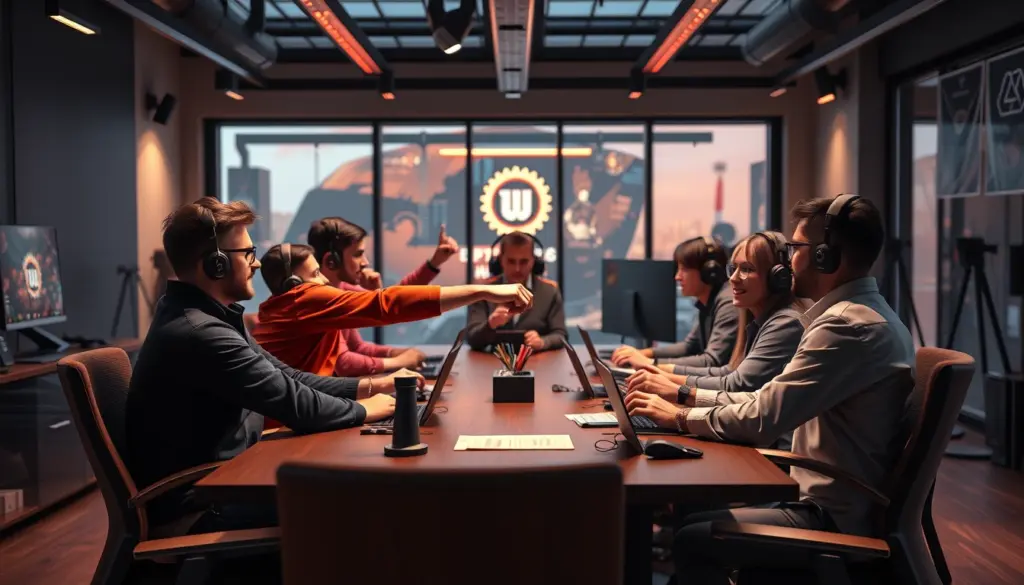
Blizzard Entertainment workers represented by the Communications Workers of America have ratified their first union contracts, a milestone that reshapes how the Microsoft-owned game maker treats layoffs, severance, and the growing role of artificial intelligence in game production. The vote covers nearly 1,900 video game workers spread across Blizzard’s marquee franchises and its shared services staff, according to the union. It marks the broadest labor agreement reached so far at a major American game studio, and it lands at an unusually pointed moment: right after Labor Day and just days before BlizzCon opens in Anaheim, Calif.
The Blizzard CWA contract caps two years of bargaining between the company and organized staff across World of Warcraft, Quality Assurance, Hearthstone, Warcraft Rumble, Overwatch, Diablo, and two shared-services groups: Platform & Technology and Story and Franchise Development. For an industry that spent much of the last decade resisting organized labor, the scale of this deal, touching nearly every major Blizzard product line at once, signals that unionization inside AAA game studios has moved from experiment to established practice.
What Workers Just Ratified at Blizzard
The ratification vote closed out two years of negotiations between Blizzard management and CWA-represented bargaining units drawn from across the studio’s game teams. Coverage extends to nearly 1,900 workers, a figure the union says makes this the largest coordinated union win at a single video game publisher to date. The Los Angeles Times and Esports.net both reported on the scale of the deal following the announcement, framing it as a turning point for a workforce that has spent years pushing back against layoffs and unstable QA jobs.
Unlike narrower agreements reached earlier in the game industry, the Blizzard union contract 2026 deal was negotiated across multiple bargaining units simultaneously rather than shop by shop. That approach let CWA negotiators push for shared standards, things like the recall window and severance floor, that apply the same way whether a worker builds World of Warcraft content or works Platform & Technology infrastructure. Reports describe the contracts as historic specifically because of that breadth, not just their size.
Blizzard has not published a public breakdown of every individual clause, and the exact number of separate contract documents involved has not been confirmed. What is confirmed, per CWA’s own account of the agreement, is the headline package: guardrails on how AI tools get used in workflows, stronger layoff protections, a recall right that follows workers across the company, and new remote and hybrid work benefits. Those four pillars now serve as the reference point for other Microsoft gaming studios watching how their own bargaining might unfold.
Inside the Numbers: 1,900 Workers, Two Years, Four Weeks
Three numbers anchor the Blizzard CWA contract story. Nearly 1,900 workers are covered. Bargaining ran for two years before both sides reached agreement. And union workers secured an extra four weeks of severance on top of whatever they already qualified for, regardless of how long they had been at the company. That last detail matters more than it might look on paper. Tenure-based severance formulas tend to shortchange newer hires during layoffs, and the flat four-week add-on removes that penalty entirely.
Two years of bargaining is a long runway by any measure, though it is not unusual in this corner of the industry. Raven Software’s QA union spent close to three years reaching its own first contract with Microsoft, so a two-year timeline for a deal covering roughly 100 times as many workers actually represents a faster pace once the scale is accounted for. That efficiency likely reflects lessons CWA negotiators carried over from earlier Microsoft-adjacent contracts, along with a company on the other side of the table that had already committed, in writing, to a neutral posture toward organizing.
The table below lays out the core numbers from the ratified agreement, pulled directly from the fact pattern confirmed by CWA, the Los Angeles Times, and Esports.net.
| Contract Provision | Confirmed Detail |
|---|---|
| Workers covered | Nearly 1,900 video game workers |
| Bargaining duration | 2 years |
| Severance increase | Extra 4 weeks for union workers, regardless of tenure |
| Recall rights window | 14 months from the date of a layoff announcement, across any Blizzard bargaining unit |
| AI protections | Guardrails around AI usage in day-to-day workflows |
| Work flexibility | Remote and hybrid work benefits |
| Announcement timing | Just after Labor Day, days ahead of BlizzCon in Anaheim, Calif. |
Every Bargaining Unit Covered by the Deal
What sets this Blizzard CWA contract apart from earlier game-industry union wins is the sheer range of teams it touches. Rather than a single studio or department organizing on its own, this agreement stretches across eight distinct bargaining units, spanning entertainment franchises that generate billions in revenue and the backend teams that keep them running. The units named on the record are World of Warcraft, Quality Assurance, Hearthstone, Warcraft Rumble, Overwatch, Diablo, Platform & Technology, and Story and Franchise Development.
Grouping QA staff alongside developers on flagship franchises is itself notable for how bargaining structures have evolved. Early game-industry organizing, including the first wave at Activision Blizzard, started almost exclusively among QA testers, the role most exposed to short contracts and abrupt layoffs. This contract folds that same QA protection into a single agreement that also covers the higher-profile teams building World of Warcraft expansions and Overwatch seasons.
| Bargaining Unit | Team Focus |
|---|---|
| World of Warcraft | Long-running MMORPG development and live content |
| Quality Assurance | Cross-franchise QA and playtesting staff |
| Hearthstone | Digital collectible card game team |
| Warcraft Rumble | Mobile strategy game team |
| Overwatch | Team-based hero shooter franchise |
| Diablo | Action role-playing game franchise |
| Platform & Technology | Shared engineering and technical infrastructure |
| Story and Franchise Development | Narrative design and cross-franchise strategy |
Covering both flagship franchises and shared services in one push also gives the union leverage it would not have shop by shop. If Platform & Technology staff walked out, every game team on this list would feel it. That interdependence is exactly what made a unified bargaining push worth two years of the union’s time.
AI Guardrails Mark New Ground for Game Labor Deals
Among the confirmed provisions, the AI language stands out as the newest territory for a game-industry labor contract. The agreement includes guardrails around AI usage, according to the announcement, though the exact wording of that clause has not been made public. Even without the fine print, the fact that AI protections made it into a ratified contract at all tells its own story about where worker anxiety currently sits inside game studios.
QA testers and narrative staff, two of the roles named in this contract, sit closest to the kinds of tasks AI tools are already being pitched to automate: bug triage, playtesting scripts, dialogue drafts. A guardrail clause typically works by requiring the company to notify or consult the union before deploying AI in ways that affect job duties, though again, Blizzard has not confirmed the specific mechanics here. What matters for the broader industry is precedent. Once one Microsoft studio agrees to any form of AI guardrail in writing, unions at sister studios gain a template to point to during their own talks.
Game studios have leaned harder on AI tooling for QA automation, localization, and concept art over the past two years, and workers at multiple companies have flagged job security concerns tied to that shift. A contract clause addressing AI directly, even in general terms, gives Blizzard’s unionized staff a mechanism to push back if the company tries to use automation to justify future layoffs. Expect other CWA-affiliated units, including newer ones still bargaining their first contracts, to ask for similar language starting now.
Layoff Protections and the 14-Month Recall Right
The recall provision may end up being the most consequential piece of this Blizzard CWA contract for day-to-day workers. Under the new terms, laid-off union employees keep the right to be recalled into open positions across any Blizzard bargaining unit for 14 months from the date their layoff was announced. That window is wide in two directions at once: it runs well over a year, and it applies company-wide rather than confining a worker to the specific team or franchise they were cut from.
Game industry layoffs have followed a familiar and painful pattern over the past several years, where entire teams get cut after a project ships or gets canceled, with little transparency about whether roles might reopen later. A recall right flips part of that dynamic. If Blizzard reopens a QA role, or hires back into Platform & Technology, laid-off union members from any covered unit get first consideration during that 14-month stretch rather than competing from scratch as outside applicants.
Combined with the four extra weeks of severance, the recall clause functions as a two-part safety net. Severance covers the immediate financial gap after a layoff. Recall rights cover the longer runway, giving workers a real shot at returning to Blizzard once hiring picks back up, without having to restart their career inside the company from zero.
Severance and Remote Work Gains Workers Secured
Beyond recall rights, the ratified agreement locks in an extra four weeks of severance for union workers no matter how long they had been employed at Blizzard. That detail directly addresses a long-standing complaint from newer hires, who often received the thinnest severance packages under standard tenure-based formulas even though they were just as likely to be laid off as veteran staff.
The contracts also lock in remote and hybrid work benefits, an area where game studios have pulled in different directions since 2023. Some publishers have pushed staff back into offices full time, while others kept flexible arrangements in place. Blizzard’s unionized workforce now has those flexible options written into a binding contract rather than left to shift at management’s discretion, which removes one source of uncertainty that non-union studios still face every time leadership changes its return-to-office policy.
Matt Gant, a CWA Local 6215 member and senior quality analyst at Blizzard’s Austin studio, connected the severance and layoff language directly to job stability in comments carried by CWA. This agreement gives us a better working environment with increased pay, benefits, and layoff protections that include recall rights and ensures that quality assurance work remains a stable and respected role for the workers who will build games long after us, Gant said, according to the Communications Workers of America. Gant also framed the win in personal terms, noting that after nearly two decades in the video game industry, it feels great to work with my fellow union members in ratifying a fair contract that makes it easier to see a real, long-term career in this work, per the same CWA account.
From Raven Software to Blizzard: A Short History of Game Unions
The Blizzard CWA contract did not appear out of nowhere. It sits at the end of a chain of organizing wins that stretches back roughly four and a half years, each one making the next slightly easier to pull off.
Raven Software’s 2022 QA Vote
Quality assurance testers at Raven Software, an Activision Blizzard studio best known for Call of Duty work, formed the Game Workers Alliance with CWA in 2022 after a five-week strike triggered by layoffs. Their union election passed with roughly 86 percent support, making Raven’s QA team the first group to win union representation anywhere at Activision Blizzard, according to CWA’s own account of the campaign. It took Raven’s union close to three years to land its first contract, a timeline that today’s Blizzard bargaining unit managed to beat despite covering a workforce many times larger.
ZeniMax and the Spread to Other Microsoft Studios
The push didn’t stay contained to Activision Blizzard. QA staff at ZeniMax, the Bethesda parent studio Microsoft already owned, voted to unionize in a supermajority vote at the end of 2022, forming ZeniMax Workers United with CWA. Microsoft recognized that union voluntarily, consistent with the neutrality stance it had already adopted, and ZeniMax’s contract talks became the second major test case for how Microsoft would actually behave once its game studios started organizing at scale.
CODE-CWA’s Broader Organizing Campaign
Both the Raven and ZeniMax drives grew out of CODE-CWA, the Campaign to Organize Digital Employees that CWA launched in 2020 specifically to support organizing inside tech and game companies. That campaign has since helped thousands of tech and game workers unionize, and it remains the connective tissue linking Blizzard’s new contract back to the earliest organizing pushes at smaller studios. Every Microsoft game studio that has unionized since 2022 has done so under the CODE-CWA banner, which is part of why the union frames this Blizzard deal as part of one continuous campaign rather than an isolated win.
Microsoft’s 2022 Neutrality Agreement Set the Stage
None of this happens on the current timeline without Microsoft’s 2022 labor neutrality agreement with CWA. Signed while the Activision Blizzard acquisition was still pending regulatory review, the agreement committed Microsoft to stay neutral if employees at the soon-to-be-acquired studios expressed interest in unionizing, and to give workers a streamlined, confidential process for making that choice, according to Microsoft’s own announcement of the deal.
That agreement mattered because it removed the standard corporate playbook, contesting union elections, delaying votes, running anti-union campaigns, from Microsoft’s available options once the deal closed. Instead of years of legal fights over whether a bargaining unit could even form, CWA and Microsoft moved straight to negotiating terms once workers signaled interest. Blizzard’s nearly 1,900-worker contract is the largest fruit of that arrangement so far, and it validates the neutrality agreement’s core bet: that removing the fight over recognition speeds up everything that comes after.
CWA President Claude Cummings Jr. tied this contract directly back to that broader Microsoft relationship, arguing CWA members at Blizzard are leading the way for all Xbox studios, showing what can be achieved when video game workers have a strong voice in shaping their studios for the better, in comments reported by GamesBeat. He added elsewhere that it’s a new day at Blizzard, where greater power for workers is translating into more innovative games for players.
What This Means for Microsoft and Activision Blizzard
For Microsoft, a smooth ratification at this scale is a business win as much as a labor story. Xbox leadership has spent three years managing the reputational fallout from Activision Blizzard’s pre-acquisition workplace controversies, and a contract this size, reached without a strike or a public standoff, gives the company a cleaner narrative heading into BlizzCon than it has had in years.
There’s a cost side too. Extra severance weeks, wider recall rights, and hybrid work guarantees all carry real budget implications, and Microsoft will need to fold those obligations into how it plans future layoffs and studio restructurings across its gaming division. Any move to trim headcount at Blizzard going forward now has to route around a 14-month recall window and a flat severance floor that didn’t exist before this contract, which changes the math on how cheap or fast future cuts can actually be.
The upside for Microsoft is retention and stability. A workforce with contractual job security tends to stick around longer, and Blizzard’s live-service games, particularly World of Warcraft and Overwatch, depend on institutional knowledge that takes years to rebuild after a layoff wave scatters a team. Locking in longer job tenure through contract terms may end up saving Microsoft more in onboarding and training costs than the severance and recall provisions cost it upfront.
A Precedent Other Studios Will Have to Answer
Every publisher that hasn’t unionized yet now has a concrete reference point sitting in public view. Ron Swaggerty, President of CWA Local 6215, framed the win in exactly those terms, saying video game workers continue to set the pace for what organizing and collective bargaining can achieve in 2026 and beyond, in comments shared in a LinkedIn post following the ratification.
Studios outside Microsoft’s umbrella, at companies like Electronic Arts, Take-Two, and Ubisoft, now face a workforce that can point to a specific, ratified Blizzard CWA contract when making the case for their own organizing drives. The AI guardrail language in particular gives future campaigns a concrete demand to bring to the table instead of a vague ask for job security. Recruiters at competing studios may also start feeling pressure to match Blizzard’s recall rights and severance terms just to stay competitive for senior QA and production talent who now know what’s possible.
How the Industry Is Reacting to the Ratification
Reaction from labor circles has been uniformly positive, with CWA leadership using the announcement to position Blizzard as a model for the rest of the Xbox portfolio. Trade coverage from outlets tracking the deal, including Esports.net, framed it as validation of the slower, studio-by-studio organizing strategy CWA has run since 2020 rather than a one-off event.
Inside Blizzard, the reaction described by workers quoted in union channels leans heavily on relief and long-term career framing rather than triumphant declarations. Gant’s comments, cited earlier, focused specifically on stability for QA as a career path rather than on any single number in the contract, which tracks with how QA workers have talked about organizing since the earliest Raven Software campaign. That consistency, across roughly four years and multiple studios, suggests QA staff across the industry are motivated by the same underlying concern: being treated as a permanent part of game development instead of a disposable pre-launch cost.
BlizzCon Timing and What Happens Next
The timing here was not incidental. Blizzard and CWA announced the ratification just after Labor Day and only days before BlizzCon opens in Anaheim, Calif., putting the news directly in front of the convention news cycle rather than burying it in a quiet news week. That scheduling choice hands both sides a cleaner story to tell at the event: management gets to walk into BlizzCon without an active labor dispute hanging over panels and reveals, and the union gets maximum visibility for a win it spent two years building toward.
What happens next depends largely on implementation. Contract ratification is the start of enforcement, not the end of the story, and the real test of the AI guardrails and recall rights will come the next time Blizzard restructures a team or leans on automation for a QA pass. Workers and CWA representatives will be watching closely for how management applies the recall window in practice, especially if Blizzard announces any project cancellations or team reductions in the months following BlizzCon.
Five Predictions for Game Industry Labor After This Deal
Contract ratifications this large tend to ripple outward. Based on the pattern set by Raven Software and ZeniMax before it, here’s how this Blizzard CWA contract likely plays out over the next year or two.
- Other Microsoft-owned studios still without contracts will move faster to ratify their own agreements, using Blizzard’s severance and recall terms as a floor rather than a ceiling.
- AI guardrail clauses become a standard ask in every game-industry contract negotiated from this point forward, even at studios with no current union presence.
- Non-union publishers such as Electronic Arts and Take-Two will face fresh organizing pushes from staff citing this contract directly as proof of what’s achievable.
- Microsoft will lean on this ratification as a talking point in future regulatory and public relations conversations about its labor record inside the gaming division.
- Recall rights, rather than raw severance dollars, become the most-copied provision in future game industry contracts, since they address the layoff-rehire cycle that has repeated at nearly every major studio since 2022.
Frequently Asked Questions About the Blizzard CWA Contract
How many Blizzard workers are covered by the new CWA contracts?
The ratified agreement covers nearly 1,900 video game workers across Blizzard’s game teams and shared services staff, according to CWA.
Which Blizzard teams are included in the contracts?
Named units include World of Warcraft, Quality Assurance, Hearthstone, Warcraft Rumble, Overwatch, Diablo, and the Platform & Technology and Story and Franchise Development groups.
How long did negotiations take?
The contracts were reached after two years of bargaining between Blizzard and CWA-represented workers.
What does the contract say about artificial intelligence?
It includes guardrails around AI usage, though the exact contract language has not been made public.
What protections exist if a union worker is laid off?
Laid-off workers get an extra four weeks of severance regardless of tenure, plus the right to be recalled into open positions across any Blizzard bargaining unit for 14 months from the layoff announcement date.
Why was the deal announced right before BlizzCon?
The announcement came just after Labor Day and days ahead of BlizzCon in Anaheim, Calif., putting the ratification in front of the convention’s news cycle.
Does this contract cover every Blizzard employee?
No. It covers workers in the specific bargaining units named in the agreement, not every employee across Blizzard’s full workforce.
What is CODE-CWA and how does it connect to this deal?
CODE-CWA is the Campaign to Organize Digital Employees, the broader CWA initiative launched in 2020 that supported earlier organizing drives at Raven Software and ZeniMax before this Blizzard contract.