
OpenAI president Greg Brockman has put a number and a label on the company’s newest model in the same breath. Astra, OpenAI’s latest flagship system released on September 3, 2026, was trained using more than 100,000 GPUs, according to Brockman’s own account across a string of interviews this month. In a September 10, 2026 exclusive interview, Brockman described the run as OpenAI’s largest ever and framed it as the company’s formal entry into what he calls the AGI era.
The story has unfolded in pieces since launch day: a Stratechery interview on September 4, public commentary from Nvidia CEO Jensen Huang on September 7, and now the September 10 exclusive that pulls the hardware claim and the AGI framing into one place. For a hardware market already digesting record capital spending on AI infrastructure, the specifics of how Astra was built matter as much as what it can do.
OpenAI Confirms Astra Trained on More Than 100,000 GPUs
The headline fact repeated across every account of Astra’s development is the scale of its training run. OpenAI has not published a formal technical paper detailing exact GPU counts, cluster topology, or training duration, but Brockman has confirmed the 100,000-GPU threshold directly, on the record, more than once. That repetition matters. Training claims from AI labs are often vague or rounded for effect, but Brockman’s phrasing, delivered around the Stargate site in Texas where the run reportedly took place, has stayed consistent across separate outlets over the course of a week.
OpenAI’s compute build has historically scaled well ahead of its public model releases, and the Stargate project, OpenAI’s joint infrastructure push to expand US-based training capacity, has been the physical home for that expansion. Astra is the first model OpenAI has explicitly tied to a Stargate training run at this scale, and the company is treating that distinction as newsworthy in its own right, separate from any benchmark score or product feature.
For a hardware audience, the significance sits less in the model’s output and more in what it implies about supply. A single training run consuming six figures of accelerators, sustained over weeks, pulls directly against the same GPU inventory that cloud providers, other labs, and enterprise customers are all competing for in 2026.
Inside the Exclusive Interview: What Brockman Told Reporters
The September 10 exclusive interview, published by 36Kr, centers on Brockman discussing Astra’s training scale and what it signals about OpenAI’s roadmap. Brockman told the outlet, “This is the first time we have conducted training on more than 100,000 GPUs,” a line that echoes remarks he gave less than a week earlier in a separate conversation with Stratechery’s Ben Thompson (36Kr, September 10, 2026).
What distinguishes the exclusive from the earlier Stratechery piece is framing rather than fact. The 36Kr interview leans into positioning Astra as a turning point for the company’s mission, not just an incremental model upgrade. Brockman is described as speaking candidly about the operational reality of running a cluster at that size, a subject OpenAI executives have historically discussed only in general terms.
Reporters covering the interview noted that Brockman’s comments were recorded ahead of Astra’s public rollout, meaning the 100,000-GPU figure was locked in as a talking point before the model reached its first outside users. That sequencing suggests OpenAI made a deliberate choice to lead with the hardware story rather than let it surface later through third-party analysis.
The Stargate Texas Buildout Behind the Training Run
Stargate, the data center campus OpenAI has built out in Texas, is where reports place the Astra training run. The project has functioned as the physical backbone for OpenAI’s compute ambitions since it was first announced, and Astra now stands as the clearest public marker of what that facility can support at full scale.
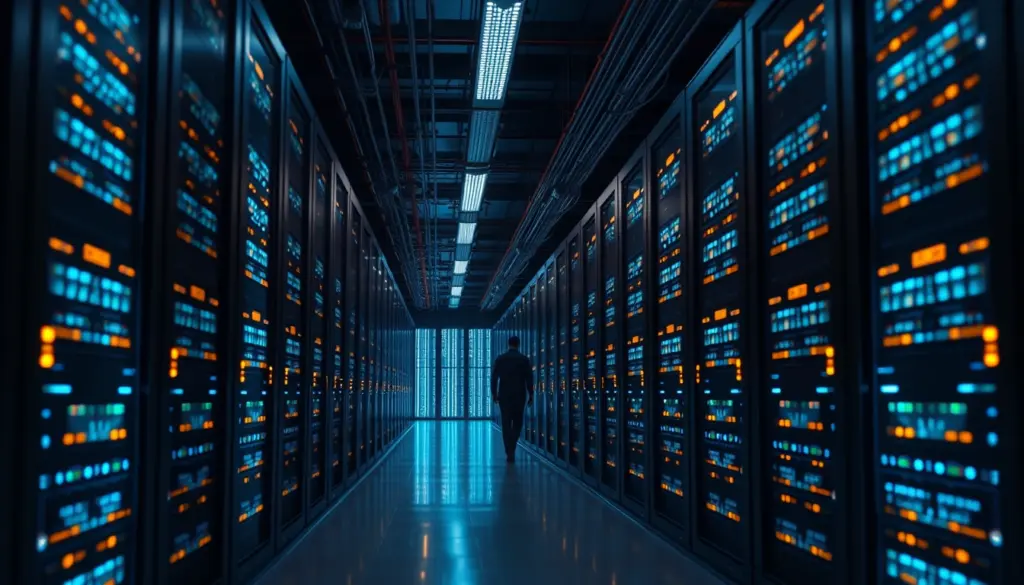
Running 100,000-plus GPUs as a single coordinated training job is not simply a matter of having the chips on hand. It requires networking fabric capable of keeping that many accelerators synchronized, power delivery sized for sustained peak draw, and cooling infrastructure that can hold thermal limits across a campus-scale footprint. Brockman’s public remarks have touched on the engineering side of that challenge without disclosing specific power, cooling, or networking figures, and OpenAI has not released those details independently.
That gap between the headline GPU count and the underlying infrastructure specifics is where most of the hardware industry’s follow-up questions are landing. Analysts who track data center buildouts want cluster interconnect design and sustained utilization figures, not just the peak accelerator count OpenAI is willing to confirm.
Timeline: How the Astra Hardware Story Broke
The story has moved fast, with each outlet adding a layer rather than a full reset. The table below lays out how the coverage developed over a single week.
| Date | Development | Source |
|---|---|---|
| September 3, 2026 | OpenAI releases GPT-6 Astra as its newest flagship model | Launch reports |
| September 4, 2026 | Stratechery publishes an interview with Brockman covering Astra’s training scale and alignment work | Stratechery |
| September 7, 2026 | Nvidia CEO Jensen Huang publicly comments on the GPU hardware behind Astra’s training run | Industry coverage |
| September 7, 2026 | A separate interview summary describes Astra as the first OpenAI model trained on more than 100,000 GPUs | Industry coverage |
| September 10, 2026 | 36Kr publishes an exclusive interview with Brockman tying the GPU figure to OpenAI’s “AGI era” framing | 36Kr |
Brockman in His Own Words
Across his public appearances this month, Brockman returned to the same core claim, but he also expanded on what the scale meant to him personally as an engineer. Speaking about the training run, he said: “This is the first run that we’ve trained on more than 100,000 GPUs, which is an easy number to throw around, but just think about the scale of that.” (clip via x.com/firesidealpha)
He went further in describing what that scale looks like from the inside of OpenAI’s infrastructure operation: “These data centers in some ways are these big machines that we’ve built in order to help deliver and create AI technology, and it’s a real engineering challenge and marvel that people are able to harness that amount of compute to deliver the kinds of results that we have.” (clip via x.com/firesidealpha)
And on the more contentious question of what the model represents historically, Brockman told reporters: “If we fast forward a couple years, and we look back and say when was it really that AGI was created, I think it’s going to be about this time, and I think it might be about this model.” (The Guardian, September 3, 2026)
Taken together, the quotes show a consistent message: Brockman wants the 100,000-GPU figure understood as both a hardware milestone and a marker of historical significance, even while OpenAI stops short of calling Astra AGI outright.
Nvidia’s Jensen Huang Responds to the 100,000-GPU Milestone
Nvidia CEO Jensen Huang weighed in on Astra’s training hardware on September 7, 2026, adding a second high-profile voice to a story that had, until then, been driven almost entirely by OpenAI’s own statements. Huang’s comments focused on the GPU hardware powering the run, reinforcing that Nvidia accelerators sat at the center of the Stargate buildout (PC Gamer, September 2026).
Having Nvidia’s chief executive comment publicly on a customer’s training run is itself notable. Nvidia rarely confirms specifics about how individual customers deploy its hardware, and Huang’s willingness to speak about the Astra buildout signals how much marketing value the company sees in being publicly tied to the most talked-about AI training run of the month.
For Nvidia, every headline about a six-figure GPU training run doubles as a demand signal to its own investors and customers. The company has spent 2026 fielding questions about whether GPU demand can keep pace with the supply it has lined up, and a data point this large, delivered by the customer rather than the vendor, carries more weight than a Nvidia earnings call slide.
Comparing the Record: How Brockman’s Public Statements Evolved
Because Brockman made the 100,000-GPU claim in several separate settings, it’s worth lining up exactly what he said and where, since the wording shifted slightly each time even as the core figure held steady.
| Outlet | Date | What Brockman Said |
|---|---|---|
| Stratechery | September 4, 2026 | First run trained on more than 100,000 GPUs, called it “an easy number to throw around” relative to its actual scale |
| 36Kr (exclusive) | September 10, 2026 | “This is the first time we have conducted training on more than 100,000 GPUs” |
| The Guardian | September 3, 2026 | Suggested history may look back on this period, and possibly this model, as when AGI was created |
| Social clip (firesidealpha) | Week of September 7, 2026 | Described the Stargate data centers as engineering “machines” built to harness that scale of compute |
The consistency across four separate appearances is itself a data point. Brockman did not round the number up or down, and he did not walk back the figure when pressed by different interviewers with different audiences. That kind of repetition is usually a sign a company wants a specific number to stick in press coverage.
Why 100,000 GPUs Changes the Hardware Conversation
Training runs at the scale OpenAI is describing move well past what most cloud regions can provision from a single data hall. A cluster of that size forces decisions about interconnect topology, checkpointing frequency, and fault tolerance that simply don’t apply to smaller training jobs, where a failed node is an inconvenience rather than a run-ending event.
Power and Cooling at Data-Center Scale
A cluster in the six-figure GPU range draws power on a scale that pushes against grid capacity in many regions, which is part of why hyperscalers and AI labs have increasingly turned to purpose-built campuses rather than leased colocation space. OpenAI has not disclosed Stargate’s exact power draw for the Astra run, but industry observers tracking similar buildouts have flagged power and cooling as the binding constraint well before GPU supply becomes the limiting factor.
Chip Supply and Lead Times
A single customer absorbing more than 100,000 accelerators for one training run also has knock-on effects for everyone else waiting in line. Cloud providers, smaller labs, and enterprise buyers all compete for the same allocation windows on current-generation Nvidia hardware, and a run of this size can visibly tighten availability elsewhere in the market for weeks at a time.
Competitive Landscape: Nvidia, AMD, and the Custom Silicon Race
Astra’s training run reinforces Nvidia’s position as the default supplier for frontier-scale AI training, a position the company has held through most of the current AI buildout cycle. Huang’s own comments on the run underline that Nvidia hardware, not a custom accelerator, sat underneath OpenAI’s largest training job to date.
That doesn’t mean Nvidia has the field to itself going forward. AMD has continued to push its Instinct accelerator line as an alternative for large training and inference workloads, and multiple hyperscalers, including Google, Amazon, and Microsoft, have kept investing in their own custom silicon programs rather than relying solely on merchant GPUs. None of those alternatives has been publicly tied to a training run at the scale OpenAI is describing for Astra, which is part of why the Astra number stands out. It’s a real, named, on-record claim rather than a marketing estimate.
The practical effect is that Nvidia’s competitors are being measured against a moving target. Every time a frontier lab confirms a new compute record, it resets the bar that AMD’s Instinct line and the hyperscaler ASIC programs have to clear to be taken seriously as alternatives for the largest training jobs, even if they remain competitive for narrower workloads like inference.
Historical Context: From Thousand-GPU Clusters to Stargate Scale
OpenAI’s compute footprint has grown by orders of magnitude since its earliest large language model training runs, which relied on clusters that would look small by today’s standards. The company has never published a full public history of its cluster sizes model by model, but the trajectory implied by Brockman’s own comments, moving from undisclosed earlier figures to an explicitly confirmed 100,000-plus GPU run, tracks with the broader industry pattern of each model generation requiring a step change in training infrastructure rather than a gradual increase.
That pattern isn’t unique to OpenAI. Every major lab racing toward larger models has needed correspondingly larger clusters, and the entire AI hardware market, from Nvidia’s data center revenue to the construction pipeline for new power-hungry campuses, has been built around the assumption that this scaling curve continues. Astra is the clearest single data point yet that the curve hasn’t flattened.
What makes this moment different from earlier scale-up milestones is that OpenAI’s president is the one putting a specific, round number on the record, rather than leaving it to analyst estimates or leaked documents. That shift, from speculation to confirmation, is itself part of the story.
Market Reaction and What It Means for Chipmakers
For Nvidia, a confirmed six-figure GPU deployment tied to the most-discussed AI model of the month functions as validation of continued demand, arriving at a time when investors have been watching closely for any sign that AI infrastructure spending might slow. Huang’s decision to comment publicly on the Astra run, rather than let the story circulate without an Nvidia voice attached, fits a pattern of the company actively shaping the narrative around its own hardware’s role in frontier AI development (Tech Times coverage of the 2026 AI chip market).
Beyond Nvidia, the ripple effects extend to memory suppliers, power infrastructure firms, and the data center construction industry, all of which scale their own planning around confirmed demand signals like this one. A training run of this size doesn’t just consume GPUs, it consumes high-bandwidth memory, networking silicon, and megawatts of grid capacity, each with its own supply chain and its own bottlenecks in 2026.
Competing labs face a harder question: match the spend or accept a compute disadvantage. Meta, Google, Anthropic, and xAI have all continued to expand their own training infrastructure through 2026, though none has attached a public, named figure to a single training run the way Brockman has now done twice in one week.
Skepticism Over the “AGI” Label
Brockman’s framing of Astra as OpenAI’s entry into the AGI era has drawn as much attention as the GPU figure itself, and not all of it has been favorable. Researchers outside OpenAI have long pushed back on loose use of the term artificial general intelligence, arguing that compute scale alone doesn’t establish general reasoning capability, and Brockman’s comments to the Guardian, that history may look back on this model as the moment AGI arrived, read to critics as a claim ahead of the evidence.
OpenAI itself has been careful not to formally declare Astra an AGI system in any technical or governance sense. Brockman’s remarks read more as a personal, forward-looking opinion than a company position, a distinction that matters for how seriously regulators and competing labs treat the claim.
That gap, between an executive’s public framing and the company’s formal claims, is likely to keep generating coverage independent of the hardware story. For now, the 100,000-GPU figure is the verifiable part of the announcement. The AGI framing remains a matter of interpretation.
What Enterprises Buying Compute Should Watch
Enterprise buyers negotiating GPU capacity in late 2026 have a direct stake in stories like this one, since every large training run at a frontier lab competes for the same finite pool of current-generation accelerators, data center power, and networking capacity. A confirmed 100,000-plus GPU run from OpenAI is a signal that allocation pressure at the top of the market isn’t easing.
Procurement teams evaluating cloud GPU contracts should treat this kind of announcement as a prompt to lock in capacity commitments earlier rather than later, particularly for any workload that depends on current-generation Nvidia hardware rather than older, more available accelerator generations. Buyers with flexibility to shift some workloads toward AMD Instinct capacity or custom silicon options may find better near-term pricing, even if peak-performance training still runs on Nvidia systems.
Five Predictions for the Next 12 Months
- Rival labs will confirm their own six-figure GPU runs. Once one lab puts a specific number on the record, competitors under pressure to look equally well-resourced tend to follow with their own disclosures.
- Nvidia will keep leaning on customer-confirmed deployments as marketing. Huang’s willingness to comment on the Astra run suggests more public commentary on named customer clusters is coming, not less.
- GPU allocation disputes will become more public. As frontier labs absorb larger blocks of current-generation hardware, expect more visible friction from cloud customers competing for the remaining supply.
- The “AGI era” framing will draw formal pushback. Expect competing labs and independent researchers to publicly challenge Brockman’s characterization within weeks, forcing OpenAI to clarify its own official position.
- Power and cooling, not chip supply, will dominate the next wave of infrastructure headlines. As training clusters keep growing, the binding constraint increasingly shifts from GPU availability to grid capacity and data center construction timelines.
Frequently Asked Questions
How many GPUs did OpenAI use to train Astra?
Greg Brockman has stated on multiple occasions, including in a September 10, 2026 exclusive interview, that Astra was trained using more than 100,000 GPUs, which he has described as OpenAI’s largest training run to date.
Where was Astra trained?
Reports place the training run at OpenAI’s Stargate site in Texas, the data center campus the company has developed to support large-scale training infrastructure.
Did Greg Brockman say Astra is AGI?
Brockman told the Guardian that history may eventually look back on this period, and possibly this model, as the point AGI was created, but OpenAI has not formally classified Astra as artificial general intelligence in any technical or governance sense.
What did Nvidia’s Jensen Huang say about Astra?
Huang commented publicly on September 7, 2026 on the GPU hardware behind Astra’s training run, confirming Nvidia accelerators as the hardware underpinning the Stargate buildout, according to reports.
Is 100,000 GPUs a new record for AI training?
Brockman has described it as the first time OpenAI has trained a model on more than 100,000 GPUs. No rival lab has publicly confirmed a comparable figure for a single training run as of this reporting.
What does this mean for GPU prices and availability?
A training run of this scale competes directly with cloud providers and enterprise buyers for current-generation Nvidia hardware, which tends to tighten near-term allocation and pricing across the broader market.
Are other AI labs running comparably large training jobs?
Meta, Google, Anthropic, and xAI have all continued expanding their own training infrastructure through 2026, though none has publicly attached a specific GPU count to a single training run the way OpenAI has with Astra.
When was Astra officially released?
OpenAI released GPT-6 Astra on September 3, 2026, with follow-up interviews and commentary from Brockman and Nvidia’s Jensen Huang continuing through the following week.