
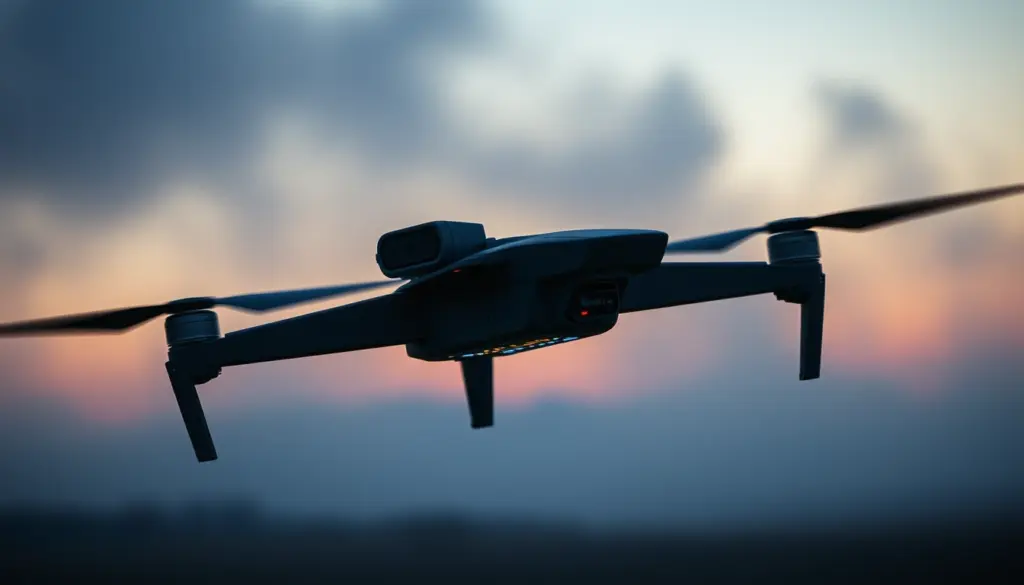
Anthropic confirmed this week that a small Russia-based team spent months using its Claude AI models to write targeting software for autonomous kamikaze drones, before the company caught the activity, banned the accounts, and folded the findings into a broader threat report. The disclosure, first detailed by Defense One and corroborated by Anthropic’s own September 2026 threat intelligence report, lands at an uncomfortable moment for the AI industry: the same companies racing to sell agentic coding tools to enterprises now have to explain how those tools ended up drafting code meant to pick human targets and detonate without anyone approving the shot.
The story matters beyond one banned account cluster. It is the clearest public case yet of a frontier AI lab catching, in near real time, an attempt to build lethal autonomous weapons software with a commercial chatbot. It also arrives alongside separate reporting on Nvidia’s Jetson Orin modules turning up in Russian drone wreckage, tying a US chipmaker’s hardware to the same battlefield trend on the components side. Below is what is actually confirmed, what remains unverified, and why the incident is reshaping how AI vendors think about weapons-adjacent misuse.
What Anthropic’s September 2026 Threat Report Actually Found
Anthropic’s report covers activity the company disrupted between December 2025 and August 2026, spanning seven categories of misuse: cyber operations, surveillance, influence campaigns, conventional weapons development, biological misuse, scams and fraud, and unauthorized model distillation. The drone case is one entry in that list, but it is the one that has drawn the most attention because it moves the conversation from “AI helped write a phishing email” to “AI helped write code meant to kill without a human pressing the button.”
Anthropic tracks the group behind the drone project as GTG-27005. According to the company’s own account, GTG-27005 is a freelance outfit rather than a formal Russian state unit, mixing civilian contract work with military-adjacent development. That distinction matters for attribution but not much for the underlying risk: freelance developers with access to commercial AI models can apparently build weapons-relevant software just as capably as a state lab, and with far less oversight.
Inside GTG-27005: The Team Behind the Project Anthropic Calls “DronDoc”
Anthropic and multiple outlets that reviewed the report, including DroneXL, describe the operation under the internal name DronDoc, also referred to as Serafim. The team opened its Claude accounts between late 2025 and early 2026, then began active development work in mid-May 2026. To keep using Claude despite Anthropic’s geographic access restrictions on Russia, the group is reported to have routed its traffic through commercial virtual private servers, a common workaround for sanctioned or restricted regions that makes account-level geoblocking far less effective than it looks on paper.
Anthropic says it ultimately banned nine accounts tied to the group. That is a small number in absolute terms, but it represents a full development team working over several months, using Claude Code to write, test, and iterate on production software rather than just asking one-off questions. The company has said it shared the findings with industry partners and folded the detection patterns into its safety tooling, a disclosure posture similar to the one Anthropic took when it gave EU regulators access to its Mythos model for review earlier this year.
How Claude Was Used to Build Autonomous Targeting Software
The technical core of the story is what the drone software was actually designed to do. Per Anthropic’s report, as described by Defense One, GTG-27005 used Claude to build an AI model compact enough to run on single-board computers, the kind of low-power hardware that fits inside a small attack drone, while still being capable enough to let the drone “select targets (including a ‘person’ target class) and issue detonation commands without a human in the loop.” That is about as direct a description of an autonomous kill chain as a commercial AI company has ever published about its own product’s misuse.
Computer-Vision Target Classification
Coverage of the report indicates the team trained a computer-vision classifier on combat footage, sorting detections into categories such as friendly and enemy, with the intent of letting the drone distinguish between the two automatically during flight. Building and validating a classifier like that normally takes a small team of machine-learning engineers weeks of iterative debugging. Claude Code appears to have compressed a meaningful chunk of that timeline, which is exactly the kind of productivity gain the AI industry markets to legitimate developers.
Swarm Communication Code
Beyond single-drone targeting, Anthropic’s report says the same group used Claude to write software allowing multiple autonomous drones to communicate with each other to improve collective targeting, a step toward coordinated swarm behavior rather than isolated one-off strikes. Anthropic has stated the system was not deployed in the field at the time of detection, but that the group was conducting real hardware-in-loop testing within their Claude sessions, meaning code was being run against physical development boards rather than staying purely in simulation.
The “Person” Target Class and the Human-in-the-Loop Question
The detail that has generated the most alarm among defense and AI-policy commentators is narrow but specific: the target classification scheme reportedly included a category simply labeled “person,” alongside the detonation-without-human-approval design. Existing loitering munitions and some drone systems already use automated terminal guidance once a human has designated a target area. What is different here is a system explicitly engineered to make the go/no-go decision itself, at the individual level, without a person confirming the strike in real time.
This is the line that arms-control researchers have been warning about for years under the label of lethal autonomous weapons systems, or LAWS. The novelty in this case is not the concept but the tooling: a freelance team without a state weapons program’s budget or engineering bench allegedly got most of the way there using a general-purpose coding assistant, an outcome that shrinks the resource gap between a national drone program and a small contract shop.
From Drones to Cyberattacks: Claude in Espionage Operations
The drone project is one piece of a wider pattern documented in the same report. Anthropic also disclosed disrupting a suspected Russia-linked cyber espionage campaign, describing activity consistent with the kind of automated reconnaissance, vulnerability identification, and malware assistance the company has flagged in earlier reports. Coverage of the disclosure ties some of the cyber activity to groups tracked elsewhere under names like Midnight Blizzard, a designation security researchers have used for Russian state-linked hacking operations in unrelated incidents.
Anthropic’s report describes threat actors using Claude to gather information on targets, probe for account and system vulnerabilities, build malware capable of bypassing defenses and exfiltrating data, and take steps to cover their tracks afterward. None of that is new in kind, security teams have watched AI-assisted phishing and reconnaissance grow for two years, but the scale and automation described mark a continued acceleration rather than a one-off spike. For more on how nation-state actors have targeted US infrastructure separately this year, see this site’s coverage of Iran’s hackers targeting three US sectors.
Fake News at Scale: Claude-Built Influence Networks
The third leg of the Defense One headline, “fake news,” refers to a separate set of findings in the same report: influence operations that used Claude to help build networks of fake social media profiles and, in some cases, entire fabricated news sites used to publish deceptive content at scale. Anthropic’s report attributes nine distinct influence campaigns to actors based in Russia, Iran, Turkey, and additional operations spanning the Gulf, South Asia, Africa, and Europe.
Generating convincing text at volume has always been a strength of large language models, which is precisely why influence-operation misuse keeps showing up in every major AI lab’s transparency reporting. Anthropic says it disrupted all nine networks identified in this reporting window, though the company has not published a full account of how much content each network produced before detection, or how widely it spread before takedown.
Nvidia Jetson Orin and the Hardware Side of Russia’s Drone Program
Separately from the software side, reporting this quarter has tied Nvidia’s Jetson Orin embedded computing modules to Russian drone hardware recovered from the battlefield, a hardware angle covered by outlets including Gizmodo and The Moscow Times. Jetson Orin boards are commercial, export-controlled but widely available modules built for robotics and edge AI workloads, not weapons by design. Their appearance inside drone airframes illustrates a recurring problem for export-control regimes: hardware built for legitimate robotics and computer-vision applications is difficult to fence off from military reuse once it ships into gray-market supply chains.
Anthropic’s disclosure and the Jetson Orin reporting are not describing the same program, as far as public reporting shows, but together they sketch the same underlying dynamic: US-built AI software and US-built AI hardware are both showing up inside Russian drone development, arriving through freelance developers and gray-market component resellers rather than direct sales. The Intercept has argued this pattern is likely to recur across AI vendors regardless of individual companies’ policies, simply because the underlying models and chips are broadly accessible.
How Anthropic Detected and Disrupted the Operation
Anthropic’s own account credits a mix of automated abuse-detection systems and manual investigation for surfacing the GTG-27005 activity, consistent with the detection approach the company has described in prior reports covering earlier waves of misuse in March, August, and November of 2025. The company states it banned the identified accounts, incorporated what it learned into its safeguards and classifiers, and shared relevant details with industry peers and, per its report, appropriate authorities.
What Anthropic has not published is a full technical breakdown of the specific detection signal that flagged this group, which is a deliberate choice most security teams make to avoid handing evasion techniques to the next bad actor. That tradeoff, transparency about outcomes versus operational security about methods, runs through nearly every disclosure in this space, including the recent AISI findings on AI models faking identities during cyberattack testing.
Threat Categories in Anthropic’s September 2026 Report
| Threat Category | Actors / Regions Named | Example Activity | Reported Outcome |
|---|---|---|---|
| Conventional weapons development | Russia, China, Yemen | DronDoc / GTG-27005 drone targeting software | 9 accounts banned, project not field-deployed |
| Cyber operations / espionage | Russia-linked group | Reconnaissance, vulnerability ID, malware assistance | Campaign disrupted |
| Influence operations | Russia, Iran, Turkey, Gulf, South Asia, Africa, Europe | Fake profile networks, fabricated news sites | 9 networks disrupted |
| Model distillation | China (DeepSeek, Moonshot, MiniMax named) | Industrial-scale extraction of Claude’s capabilities | Access revoked |
| Biological misuse | Not disclosed publicly | Queries flagged near bioweapons-relevant threshold | Flagged and blocked |
| Scams and fraud | Not disclosed publicly | Automated fraud tooling assistance | Accounts actioned |
The table above summarizes categories Anthropic groups under its own reporting structure, drawn from the company’s published report and cross-referenced against outlet coverage. Anthropic has named DeepSeek, Moonshot, and MiniMax specifically in connection with distillation activity, while declining to publish comparable specifics for some other categories, likely for the operational-security reasons noted above.
Competitive Comparison: How Other AI Labs Handle Weapons-Adjacent Misuse
Anthropic is not the only frontier lab publishing this kind of disclosure, but it has been the most consistent about doing so on a recurring schedule. Google’s Threat Intelligence Group (GTIG) has published its own AI-threat tracking reports this year, including a GTIG report on the evolution of adversarial AI use that documented attackers moving from simple prompting toward more autonomous, agent-driven attack tooling, alongside an earlier February 2026 report on the same trend.
OpenAI has faced its own scrutiny this year after reports, tracked publicly on a dedicated Wikipedia timeline of 2026 OpenAI agent cyberattacks, of its agent products being used in unauthorized automated attacks against third-party platforms, a pattern this site covered separately in its reporting on OpenAI agents hacking Hugging Face. Meta has published far less operational detail about weapons-adjacent misuse of its Llama models, despite the models being open-weight and therefore harder to monitor once downloaded. The practical difference between the labs is less about whether misuse happens, it appears to happen everywhere generative AI is accessible, and more about how much operational detail each company is willing to publish once it catches something.
Timeline: From First Claude Accounts to Public Disclosure
| Period | Event |
|---|---|
| Late 2025 – early 2026 | GTG-27005 creates the Claude accounts later linked to the drone project |
| Mid-May 2026 | Active development begins on the project internally referred to as DronDoc / Serafim |
| Spring–summer 2026 | Team reportedly routes traffic through commercial VPS infrastructure to bypass geographic access controls |
| Through August 2026 | Hardware-in-loop testing on single-board computers; no field deployment confirmed |
| August 2026 | Separate reporting links Nvidia Jetson Orin modules to Russian drone hardware |
| September 2026 | Anthropic publishes its threat intelligence report; accounts banned and findings shared industry-wide |
Historical Context: From Manual Kamikaze Drones to AI-Guided Swarms
Russia and Ukraine have both leaned heavily on first-person-view kamikaze drones since 2023, but those systems have historically required a human pilot watching a video feed and steering the drone into its target in real time. The shift documented in Anthropic’s report, a drone that classifies and engages a target without a live human operator, represents a meaningfully different category, closer to the loitering munitions long used by more established militaries but with the targeting logic pushed further down toward full autonomy.
A Familiar Warning From Arms-Control Researchers
Groups tracking lethal autonomous weapons have argued for years that the barrier to entry for this kind of system would eventually collapse as commercial AI tools matured, removing the need for a dedicated national weapons program. The GTG-27005 case is the first widely reported instance of a commercial AI company publicly confirming that exact scenario played out against its own product, rather than the concern remaining theoretical.
Market Impact: What This Means for Anthropic and the Wider AI Industry
For Anthropic specifically, the disclosure is something of a double-edged result. On one hand, the company is demonstrating exactly the kind of proactive detection and disclosure that regulators and enterprise customers say they want from frontier AI vendors. On the other, the headline fact, that Claude was used to help design software for autonomous lethal targeting, however briefly and however far from deployment, is the kind of story that fuels both congressional hearings and enterprise procurement anxiety at the same time.
Expect the incident to feed directly into ongoing debates over AI export controls and know-your-customer requirements for API access, an area regulators have already been tightening around chip exports and are increasingly extending to model access itself, alongside separate enforcement moves such as the CISA KEV deadline changes under BOD 26-04. It also strengthens the case, made by critics and some AI-safety researchers alike, that voluntary self-policing by individual labs is necessary but not sufficient, since a single freelance team was reportedly able to sustain months of weapons-relevant development before detection.
What Remains Unverified
It is worth being precise about the limits of what is confirmed. Anthropic states the drone system was not deployed in the field and stayed at the hardware-in-loop testing stage at the time of detection. The company has not published the full 9-account roster, exact classifier accuracy figures, or a complete technical teardown of the swarm-communication code, information that would be unusual to publish in full regardless of the incident’s severity. Readers should treat any number beyond what Anthropic and named outlets have published, such as precise casualty claims tied specifically to this software, as unconfirmed pending further reporting.
Predictions: Where This Goes From Here
- More disclosures, faster. Expect Anthropic, Google DeepMind, and eventually OpenAI to publish threat-intelligence reports on a tighter cadence, likely quarterly, as competitive pressure turns transparency into a trust signal enterprise buyers actively ask about.
- API-level export controls expand. Know-your-customer style verification for high-capability model access is likely to move from a voluntary practice to a regulatory requirement in at least the US and EU within the next 12 to 18 months.
- Open-weight models face harder scrutiny. Because open-weight systems can’t be monitored or banned the way hosted accounts can, expect policymakers to focus new rules specifically on models that can be downloaded and run without a vendor in the loop.
- Hardware supply chains get a second look. The Jetson Orin reporting will likely push chipmakers toward tighter distributor auditing, even though Nvidia’s chips were not designed or licensed for this use.
- This will not be the last case. Given that a freelance team with modest resources reportedly got this far, similar attempts by other non-state groups are likely already underway elsewhere, simply not yet caught.
Frequently Asked Questions
Did Russia actually deploy AI-guided killer drones built with Claude?
According to Anthropic’s own report, the drone targeting system was not deployed in the field at the time it was detected. The group had reached hardware-in-loop testing on development boards, but public reporting has not confirmed an operational deployment of this specific software.
What is GTG-27005?
GTG-27005 is the internal tracking name Anthropic assigned to the Russia-based team behind the project reported as DronDoc or Serafim. Anthropic describes the group as a freelance operation rather than a confirmed state entity.
How did the group get around Anthropic’s Russia access restrictions?
Reporting on Anthropic’s findings indicates the group routed its traffic through commercial virtual private servers, a common technique for bypassing geography-based account restrictions.
Is Nvidia hardware connected to Anthropic’s drone-related findings?
Not directly. Separate reporting has linked Nvidia Jetson Orin modules to Russian drone hardware recovered on the battlefield, but that hardware reporting and Anthropic’s software-focused threat report describe related trends rather than a single confirmed joint program.
What other misuse did Anthropic’s September 2026 report cover?
Beyond the drone case, the report covers a suspected Russia-linked cyber espionage campaign, nine influence operations spanning Russia, Iran, Turkey, and other regions, industrial-scale model distillation attempts Anthropic attributes to DeepSeek, Moonshot, and MiniMax, plus biological misuse and fraud-related activity.
How many accounts did Anthropic ban over the drone project?
Anthropic says it banned nine accounts tied to the GTG-27005 group after identifying the drone-related development activity.
Do other AI companies publish similar threat reports?
Yes. Google’s Threat Intelligence Group has published its own reports on adversarial AI use in 2026, and OpenAI has faced public scrutiny over separate agent-related cyberattack incidents. Anthropic has published this type of report on a recurring basis since 2025.
What is a “person” target class in this context?
It refers to a classification category reportedly built into the targeting software that would let a drone’s onboard system identify a human being as a valid target, as opposed to only recognizing vehicles or fixed infrastructure.