Sony’s long-dormant heist shooter is back in the news, and not because Sony wanted it there. Gameplay footage tied to a closed playtest codenamed Project Espresso spread across gaming forums and social media on September 10-11, 2026, and within hours multiple outlets had confirmed the obvious: this is Fairgame$, the Haven Studios project Sony first showed off in 2022 and then mostly stopped talking about. The listing reportedly surfaced on the playtesting platform Player.gg, carrying pre-alpha screenshots and video that matched the game’s earlier reveal trailers. Sony has not issued a formal statement confirming or denying the footage.
What makes this leak worth a second look isn’t just the footage itself. It’s the pattern. Fairgame$ has now surfaced under at least three different public-facing names since its debut, and shattered.io has tracked a dozen separate unannounced-game leaks across the industry in 2026 alone. The Project Espresso incident fits neatly into a year where playtests, beta signups, and internal builds have become the leading way major games reach the public, often before the publisher is ready.
What Leaked in the Project Espresso Playtest
According to MP1st, the Player.gg listing described an “unannounced competitive action shooter codenamed Project Espresso being developed by a AAA studio.” The page carried a blunt tagline: “Get in. Get out. Get paid.” That phrasing lines up almost word for word with the heist premise Haven Studios pitched when Fairgame$ was first revealed years ago.
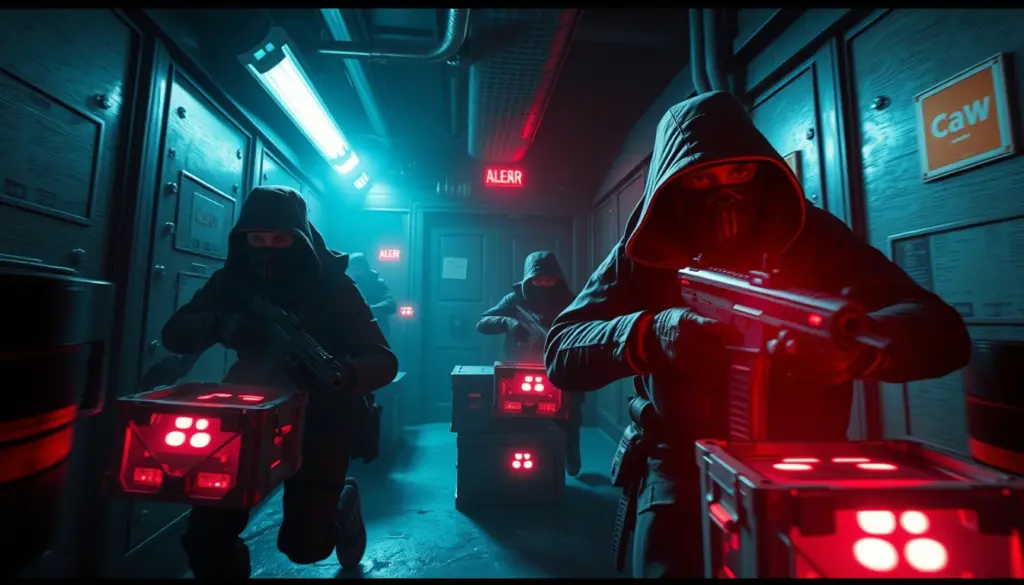
The playtest description, as reproduced by Video Games Chronicle, frames the game as a third-person PvPvE competitive action title in which “competing teams race to infiltrate high-security locations, steal valuable cargo, and make it out before their rivals.” That loop, break into a location, grab loot, extract before a rival squad does, is the same core idea Sony showed at its original reveal. The footage that circulated this week included pre-alpha screenshots and short gameplay clips, according to Insider Gaming and PSU, both of which noted the visual similarity to the game’s earlier public showings.
It’s worth being precise about what’s confirmed and what isn’t. No outlet involved in this round of reporting has an on-record statement from Sony or Haven Studios verifying that the leaked build is current, or that Project Espresso is the game’s final internal name. Whether the material came from a hack, an internal leak, or simply a playtest page that Sony left more discoverable than intended is also unresolved, with some reporting pointing to the latter rather than any kind of breach.
From Fairgame$ to Project Espresso: A Three-Year Timeline
The Original Reveal
When Sony and Haven Studios first pulled the curtain back on Fairgame$, creative director Mathieu Leduc described the pitch directly, saying: “In a nutshell, this is a thrilling competitive heist game where you join an underground movement to rob the ultra-rich and rebalance the scales.” That framing, per VGC’s coverage, has stuck with the project through every subsequent leak and rumor cycle, including this week’s.
The Silent Stretch
After that initial burst of coverage, Fairgame$ went quiet. Games industry journalist Jeff Grubb addressed the drought directly on the Game Mess podcast, saying: “No Fairgame$ this year. Fairgame$, as far as I’m aware, has been pushed to 2026,” a comment reported by KitGuru. That silence is also why a rumor about the game’s cancellation gained traction earlier this year. Industry analyst Michael Pachter walked back an earlier claim about the project’s status, telling 80.lv: “I misspoke. Said Jade was let go, and assumed it was cancelled. I have no info on the game at all. Feel free to quote this, I truly don’t know.” That exchange shows how little hard information has been public about the game for most of its development, enough that even a well-sourced industry analyst had to walk back his own claim.
| Milestone | What Happened | Source |
|---|---|---|
| Original reveal | Haven Studios unveils Fairgame$ as a competitive heist shooter; creative director Mathieu Leduc describes the “rob the ultra-rich” premise | Video Games Chronicle |
| Cancellation rumor | Chatter about the game being scrapped circulates; analyst Michael Pachter later says he misspoke and had no real information | 80.lv |
| “Pushed to 2026” claim | Jeff Grubb says on the Game Mess podcast that the game has reportedly moved to a 2026 window | KitGuru |
| Project Espresso playtest listing | A closed playtest under a new codename appears on Player.gg with pre-alpha footage and screenshots | MP1st, VGC |
| September 10-11, 2026 leak | Footage and screenshots from the listing spread publicly; Sony has not formally confirmed the material | Insider Gaming, PSU, GameRant |
Player.gg and the Leak Vector Question
One detail separates this leak from a typical breach story: the material didn’t come from stolen internal files or a hacked server, based on current reporting. It came from a public-facing playtest signup page. Publishers routinely use third-party platforms like Player.gg to recruit testers for closed builds, and those listings sometimes carry more descriptive detail, screenshots, or video than the publisher intended to expose before an announcement. When a listing like that gets indexed, screenshotted, or shared before access is locked down, the effect looks identical to a leak even though no system was actually breached.
That distinction matters for how Sony handles the aftermath. A breach usually triggers a security review and, eventually, a statement about what data was exposed. A playtest listing that simply wasn’t locked down tightly enough is a process failure, not a security incident, and it’s typically fixed by tightening NDAs, access gating, and how much a listing is allowed to say publicly. Multiple outlets covering the story have treated it as the latter, though Sony’s silence means the company hasn’t confirmed either explanation.
Sony’s 2026 Has Been a Leak-Heavy Year
Fairgame$ isn’t an isolated case. Across the games industry, 2026 has produced a steady drip of pre-release leaks, from playtest listings to internal build footage to file dumps. Shattered.io alone has covered a dozen distinct incidents this year involving unannounced or unconfirmed game content surfacing ahead of an official reveal, spanning Nintendo, Valve, Xbox, and now PlayStation. The table below lines up some of the year’s biggest examples.
| Publisher/Platform | What Leaked | How It Surfaced |
|---|---|---|
| PlayStation | Fairgame$ gameplay footage under codename Project Espresso | Public playtest listing on Player.gg |
| Nintendo | Ocarina of Time Remake footage and details | Reported across multiple outlets ahead of an official date |
| Nintendo | Switch 2-era Smash Bros. and Nintendogs material | Material surfaced across several outlets simultaneously |
| Valve | Roughly 12TB of internal files referencing Half-Life 2 | Large-scale file leak |
| Rockstar Games | GTA 6’s Lucia prologue sequence | Leaked clip attributed to a source called Cyberleek |
| Xbox | Details pointing to Control Resonant as a Game Pass day-one title | Leak referenced by multiple outlets |
The common thread isn’t a single point of failure. It’s scale. Every major publisher now runs a sprawling web of external testers, playtest platforms, localization vendors, and marketing partners who touch unreleased content before the public does. Each one of those touchpoints is a place a leak like the Fairgame$ footage can start.
Industry Reaction: Analysts Weigh In
Reaction to the Project Espresso leak has been measured rather than alarmed, in part because Fairgame$ was already a known quantity. Games industry journalist Jeff Grubb’s earlier comment that the title had been “pushed to 2026” gives the new footage useful context: if that timeline holds, a playtest surfacing now would actually track with a game nearing a proper announcement rather than one still years away. Michael Pachter’s walk-back of the cancellation rumor points the same direction, since it confirms that even well-connected analysts had little concrete information to go on before this week.
That combination, a long information vacuum followed by a leak that matches a “coming soon” timeline, tends to read as a signal the game is closer to a real reveal than a cancellation. It doesn’t confirm a release date. It does suggest Sony’s silence has been strategic rather than a sign the project stalled out entirely.
Haven Studios’ High-Stakes Bet
Haven Studios is a Sony-owned studio built specifically around Fairgame$, which makes the project’s fortunes tightly tied to the studio’s own. A multi-year gap between a splashy reveal and a real launch window isn’t unusual for a live-service title of this scope, but it does raise the stakes. The longer a competitive shooter sits unreleased, the more time rival studios have to ship something similar, and the more pressure builds on the eventual launch to justify the wait.
The heist-focused pitch Leduc described, teams infiltrating locations and racing to extract stolen goods before rivals do, is distinctive enough to stand apart from a generic shooter, but it also means Haven Studios is building and refining systems (matchmaking, loot balancing, anti-cheat for competitive PvPvE) that are hard to get right on a first attempt. A leak like this one puts a rough, pre-alpha version of that work in front of the public before the studio has had a chance to polish it.
Competitive Comparison: Where Fairgame$ Fits in the Extraction Shooter Market
Fairgame$’s “get in, get out, get paid” loop places it in the same broad genre as extraction shooters like Escape from Tarkov and newer entrants such as Arc Raiders, along with PvPvE competitive titles more generally. What sets the Haven Studios take apart, based on the public description, is the heist framing layered on top: named high-security targets, a team-versus-team race structure, and a narrative hook built around robbing the wealthy rather than a pure survival-loot premise. That’s a crowded lane. Extraction and heist-adjacent shooters have become one of the more active subgenres in live-service gaming over the past few years, and several studios are chasing the same core fantasy of high-tension infiltration runs.
For Sony specifically, a PvPvE competitive shooter also represents a different kind of bet than the single-player, story-driven games the PlayStation brand built its reputation on. Live-service titles need sustained player counts to justify their development cost, and that’s a much harder needle to thread than a linear campaign with a fixed audience. Fairgame$’s eventual launch will be judged as much on player retention in the weeks after release as on its opening numbers.
Market Impact: What a Leak Does to an Unannounced Game
Leaks like this one cut both ways commercially. On one hand, they generate free attention. Fairgame$ trended across gaming coverage within a day of the footage surfacing, and outlets that hadn’t written about the game in months suddenly had a reason to revisit it. For a project that’s gone largely quiet since its reveal, that’s not nothing.
On the other hand, uncontrolled reveals strip a publisher of the ability to frame its own message. Sony didn’t get to choose the footage, the resolution, the build quality, or the narrative around this reveal, a rough pre-alpha clip is now the public’s most recent reference point for a game that’s been in development for years. That’s a real cost, especially for a live-service title where early impressions shape community sentiment long before launch. Publishers that lose control of their own announcement timeline also lose leverage over how directly competitors can react, since rivals now have a preview of Fairgame$’s core loop months or years before Sony planned to reveal it.
Historical Context: Sony’s Live-Service Track Record
Sony’s push into live-service gaming has produced mixed results in recent years, and that history is part of why every Fairgame$ development gets extra scrutiny. Live-service games are expensive, multi-year commitments, and a single misfire can shape how skeptically the press and players treat a studio’s next attempt. Fairgame$ carries that weight by association, even though it’s a distinct project built by a distinct studio with its own creative direction.
That context is also why the “pushed to 2026” framing matters. A studio under pressure to prove a live-service investment can pay off has an incentive to take the extra time rather than rush a competitive shooter’s core systems, matchmaking, balance, anti-cheat, to market before they’re ready. Whether that’s actually what happened with Fairgame$ remains unconfirmed, but the timeline is at least consistent with that explanation.
How the Gaming Community Is Reacting
Community response to the Project Espresso footage has split along familiar lines. Some players are simply glad to see proof the game still exists after years of near-silence. Others are picking apart the pre-alpha visuals frame by frame, comparing animation quality and UI elements against the original reveal trailer. That second group tends to overreact to unfinished builds, and it’s worth remembering that playtest footage is explicitly a work in progress, not a marketing asset polished for public consumption.
Clips from the leak spread fastest on social platforms and gaming forums before being consolidated into full write-ups by outlets including GameRant and Insider Gaming. That distribution pattern, short clips first, full context later, is now standard for how leaks like this travel, and it means early reactions online are often based on a fraction of the material that outlets eventually verify and publish in full.
What’s Still Unconfirmed
It’s worth restating plainly what hasn’t been verified as of this writing. Sony has not confirmed that the leaked footage represents a current or final build. No outlet has confirmed whether the material reached the public through a hack, an internal leak, or simply an under-secured playtest listing, though the playtest-listing explanation has more support in current reporting. There’s no confirmed release date, price, platform lineup, or final technical specification for Fairgame$. And no individual has been publicly identified as responsible for surfacing the footage. Treat any claim beyond what’s outlined above as speculation until Sony or Haven Studios says otherwise.
Predictions: Where Fairgame$ Goes From Here
- An official acknowledgment is likely, not guaranteed. Sony has a pattern of eventually addressing leaks once footage reaches this level of circulation, even if the acknowledgment is brief.
- Expect tighter playtest security going forward. If the leak did originate from an under-secured Player.gg listing, Haven Studios and other Sony-owned studios are likely to lock down future testing pages more aggressively.
- A formal reveal probably lands within the next few PlayStation showcases. Jeff Grubb’s “pushed to 2026” comment, combined with a playtest already running, points toward a window that’s closer than it’s been in years.
- Competitors will move fast. Studios building similar heist or extraction-style PvPvE shooters now have a clearer picture of Fairgame$’s core loop and can adjust their own roadmaps accordingly.
- Scrutiny of the live-service angle will intensify. Every update on Fairgame$ from here forward will be measured against Sony’s broader live-service track record, fairly or not.
What This Means for PlayStation Players
For players, the practical takeaway is patience. Pre-alpha footage from a closed playtest is, by definition, not representative of a finished product. Visuals, UI, matchmaking flow, and even core mechanics routinely change substantially between a playtest build and a shipping game. Getting excited about a heist shooter with a distinctive premise is reasonable. Treating anything in the leaked footage as a preview of the final release isn’t, at least not yet.
The more useful signal for players to watch isn’t the footage itself but what Sony does next. A quick statement, a takedown push against reposted clips, or silence that stretches for weeks will each tell a different story about how close Project Espresso actually is to becoming a real, dated PlayStation announcement.
Frequently Asked Questions
Is the Project Espresso leak confirmed to be Fairgame$?
Multiple outlets, including Video Games Chronicle, MP1st, Insider Gaming, and PSU, have reported that the leaked footage and playtest description match Fairgame$’s known premise and prior showings. Sony has not issued a formal confirmation.
What is Project Espresso?
Project Espresso is the codename used on a closed playtest listing that appeared on Player.gg, described as an unannounced competitive action shooter from a AAA studio, featuring a third-person PvPvE loop of infiltration and extraction.
Who is developing Fairgame$?
Haven Studios, a Sony-owned developer, is the studio named in reporting on Fairgame$ and the Project Espresso leak.
Was Fairgame$ hacked?
Current reporting doesn’t confirm a hack. Some coverage points instead to a public playtest listing on Player.gg as the source of the leaked material, which would be a security oversight rather than a breach, though this hasn’t been formally confirmed by Sony.
Does Fairgame$ have a release date?
No official release date has been confirmed. Games industry journalist Jeff Grubb has said the title was reportedly pushed to a 2026 window, but Sony hasn’t confirmed a date, platforms, or pricing.
What kind of game is Fairgame$?
Based on Haven Studios’ original reveal and the Project Espresso playtest description, it’s a competitive third-person PvPvE heist shooter where teams infiltrate high-security locations, steal cargo, and race to extract before rival teams.
Was Fairgame$ cancelled?
No. A cancellation rumor circulated earlier in the project’s development, but analyst Michael Pachter publicly clarified that he had misspoken and had no real information suggesting the game was scrapped. The Project Espresso playtest is further evidence the game remains in active development.
Why does Fairgame$ keep changing names?
Studios frequently use internal codenames for playtests and closed builds to keep unannounced projects harder to search for and identify before an official reveal. Project Espresso appears to be the latest of several names associated with the game since its 2022 debut.