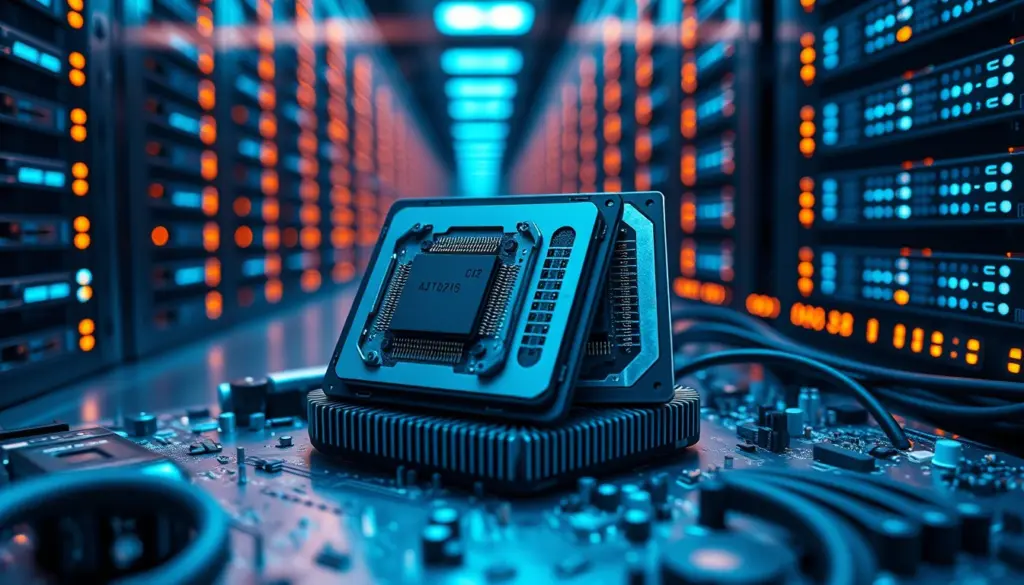
Arm used the first day of Hot Chips 2026 to reveal the chip it hopes will get it a real seat at the data center table: the Arm AGI CPU, a dual-chiplet server processor built for what the company calls “agentic AI” workloads. Announced on September 8, 2026 alongside a new semi-custom platform called Neoverse CSS N4, the chip packs up to 136 cores, runs on TSMC’s N3P process, and targets a market that AWS, Google, and Microsoft have already proven will buy Arm silicon at scale. The pitch is simple: as AI agents chew through more control-plane work, network traffic, and orchestration overhead, the CPU sitting next to the GPU matters again.
This is not Arm’s first swing at the data center. Neoverse has powered AWS Graviton since 2018 and now underpins Google Axion and Microsoft Cobalt. But the AGI CPU marks the first time Arm has designed and named its own complete server chip rather than licensing cores for someone else to package. That shift matters for anyone tracking cloud pricing, chip manufacturing capacity, or the widening gap between x86 incumbents and Arm challengers.
What Arm Announced at Hot Chips 2026
Arm’s newsroom post, titled “Arm Everywhere: The Compute Platform for Agentic AI,” framed the announcement around two products rather than one. The first is the Arm AGI CPU, a production chip aimed directly at hyperscale AI data centers. The second is Neoverse Compute Subsystems N4, a semi-custom design kit that lets partners like MediaTek, Samsung, and other licensees build their own variants without starting from scratch. Arm described CSS N4, internally codenamed “Ranger” according to AI Weekly’s coverage, as its most configurable compute subsystem to date.
The timing lines up with a broader signal Arm sent throughout Hot Chips: on the conference’s opening day, Arm-based designs were central to four of the six CPU papers presented, according to Arm’s own blog recap. That is a notable share for an architecture that spent most of the last two decades confined to phones and embedded devices before pushing into servers.
Inside the AGI CPU: Chiplets, Cores, and Watts
Tom’s Hardware’s technical breakdown of the Hot Chips session describes the AGI CPU as two chiplets, each holding 70 Neoverse V3 cores, fabricated on TSMC’s N3P node. Design-Reuse’s coverage adds detail: four cores per chiplet are held back as redundant units for yield and reliability, which brings the active count down to 66 per chiplet at the top configuration. Arm offers the chip in 64-core, 128-core, and 136-core variants, giving cloud vendors room to trade core density against power budget and price.
Power draw at the top end lands around 300 watts for the full 136-core configuration, per Design-Reuse and a Seoul Economic Daily report on the same session. That figure sits in familiar territory for high-core-count server chips, though it will draw scrutiny as data center operators keep running into power ceilings well before they run out of rack space.
Chiplet architecture and interconnect
Arm chose a dual-chiplet layout connected by a UCIe link rated at roughly 2 TB/s, which Tom’s Hardware highlighted as one of the session’s headline numbers. UCIe (Universal Chiplet Interconnect Express) has become the industry’s preferred way to stitch separate dies together without paying a heavy latency penalty, and Arm’s implementation is fast enough to let the two chiplets behave close to a single monolithic die for most software.
One design choice stood out to reviewers: Arm placed compute and I/O on the same die instead of splitting them into separate chiplets, a more common pattern among rival server chips. Design-Reuse’s analysis ties this decision to a specific target, sub-100 nanosecond DRAM access latency, which matters more for agentic workloads that bounce between memory-bound orchestration tasks and short bursts of compute than it does for traditional batch processing.
Memory and I/O subsystem
The memory numbers are where the chip gets genuinely aggressive. Tom’s Hardware’s headline cites a 12-channel memory controller, and paired with DDR5-8800 support (confirmed by Design-Reuse), that works out to roughly 844.8 GB/s of peak bandwidth. Arm layered Chipkill-class error protection and quality-of-service controls on top, features server buyers expect but that add real engineering cost. For accelerator connectivity, each platform exposes up to 96 lanes of PCIe 6.0 alongside CXL 3.0 support, giving the AGI CPU enough I/O headroom to feed multiple GPUs without starving them of data.
Neoverse CSS N4: The Semi-Custom Sibling
While the AGI CPU is Arm’s own finished product, Neoverse CSS N4 is a kit other companies license to build their own chips faster. AI Weekly’s writeup describes CSS N4 supporting up to 128 cores per die on TSMC’s N3P process, running at clock speeds up to 3.8 GHz. That positions CSS N4 as the design most likely to show up rebadged inside chips from cloud providers and networking vendors who want Arm’s latest core without designing a full chiplet package from scratch.
Arm’s own product page for CSS N4 makes a direct performance claim against the previous generation: up to 2x performance per socket, 1.25x performance per watt, and 1.75x memory bandwidth. Those are vendor-reported figures rather than independently benchmarked ones, so treat them as a ceiling rather than a guarantee until third-party labs get hardware in hand.
Why Agentic AI Is Driving the Design
Arm’s messaging leans hard on a specific framing: CPUs matter again because AI agents create workloads that look different from either classic web serving or raw GPU training. An agent chaining together tool calls, retrieving context, and orchestrating multiple model calls per user request spends a lot of cycles on control-plane logic, memory movement, and network I/O rather than dense matrix math. That is exactly the workload profile Arm designed the AGI CPU’s memory subsystem and I/O lanes around, according to the company’s own product materials.
Whether that framing holds up under real deployment is a separate question from whether it works as marketing. Cloud operators buying tens of thousands of these chips will run their own workload traces before committing to fleet-wide purchases, and Arm’s public claims will get tested against AWS’s, Google’s, and Microsoft’s internal benchmarks long before any of that data becomes public.
Arm AGI CPU Spec Sheet
| Spec | Arm AGI CPU (top config) |
|---|---|
| Core configurations | 64, 128, or 136 cores |
| Core type | Neoverse V3 |
| Process node | TSMC N3P |
| Package design | Dual chiplet, 70 cores per chiplet (66 active at top config) |
| Chiplet interconnect | UCIe, approx. 2 TB/s |
| Memory | 12-channel DDR5-8800, approx. 844.8 GB/s bandwidth |
| PCIe / accelerator I/O | Up to 96 lanes PCIe 6.0, CXL 3.0 support |
| Thermal design power | Approx. 300W at 136-core config |
| Target latency | Sub-100ns DRAM access (unified compute/I/O die) |
| Shipment timing | Late 2026 |
Every figure in that table traces back to the Hot Chips 2026 session as reported by Tom’s Hardware, ServeTheHome, and Design-Reuse, plus Arm’s own newsroom and product pages. None of it is independently benchmarked yet, which is normal for a chip that has not shipped.
How the AGI CPU Stacks Up Against Graviton4, Axion, and Grace
Arm is not entering an empty field. AWS, Google, and Nvidia already ship Arm-based server silicon at volume, and each took a different approach to core count, memory, and target workload. AWS Graviton4 uses 96 Neoverse V2 cores per socket with 12 channels of DDR5-5600 memory, and it now underpins Amazon’s C8g, M8g, R8g, X8g, and I8g EC2 instance families. Google’s Axion (branded as the C4A metal platform) also ships with 96 vCPUs, pairs that with 384 to 768 GB of DDR5 memory, and offers up to 100 Gbps of networking bandwidth for bare-metal cloud instances.
Nvidia took a different route entirely. Its standalone Grace CPU uses 72 Neoverse V2 cores with LPDDR5X memory and ECC support, while the Grace Superchip doubles that to 144 cores by fusing two Grace dies on a single module built on TSMC’s 4N process. Nvidia’s Grace Hopper Superchip pairs a 72-core Grace CPU with a Hopper GPU on one board, and even Nvidia’s BlueField-4 DPU carries a 64-core Grace CPU alongside its networking silicon. Arm’s own AGI CPU, at 136 cores on newer Neoverse V3 cores and a newer TSMC node, is explicitly positioned above the Graviton4 and Axion generation rather than as a direct swap-in replacement.
| Chip | Vendor | Max cores | Core IP | Process | Primary use case |
|---|---|---|---|---|---|
| AGI CPU | Arm | 136 | Neoverse V3 | TSMC N3P | Agentic AI data center hosts |
| Graviton4 | AWS | 96 | Neoverse V2 | 4nm-class | General-purpose EC2 instances |
| Axion (C4A) | Google Cloud | 96 vCPUs | Neoverse V2-based | Not disclosed in this report | Bare-metal cloud compute |
| Grace CPU | Nvidia | 72 | Neoverse V2 | TSMC 4N | CPU-GPU coherent AI systems |
| Grace Superchip | Nvidia | 144 | Neoverse V2 | TSMC 4N | Dense AI training nodes |
The comparison undersells one thing: raw core count is a poor proxy for real throughput once instruction sets, clock speeds, and memory subsystems differ this much between designs. Buyers evaluating the AGI CPU against Graviton4 or Grace will care far more about tokens processed per dollar on their actual agent pipelines than about a spec sheet.
TSMC N3P and the Manufacturing Backdrop
N3P is TSMC’s performance-enhanced follow-on to its N3E node, part of the broader 3nm-class family that has become the default choice for leading-edge server and AI chips in 2026. Arm building the AGI CPU on N3P puts it in the same generational class as the node choices Intel and Samsung are racing to match with 18A and SF2 respectively, though Arm’s own materials do not publish a direct density or power comparison against those rival processes.
What is clearer is the capacity question behind the announcement. TSMC has reportedly been running close to 20 fabs under construction worldwide, split between roughly 13 in Taiwan and five to six overseas sites, according to reports cited around the same week as Arm’s announcement. That buildout matters directly to Arm: every AGI CPU and every CSS N4 derivative competes for the same N3P wafer capacity that Apple, Nvidia, AMD, and Qualcomm are also drawing on for their own 2026 and 2027 chips.
What the Industry Is Saying
Arm’s own framing of the announcement leans on the idea that customers now want a full menu rather than a single chip. As Arm put it in its newsroom announcement, “As agentic AI drives more diverse requirements, Neoverse CSS N4 gives silicon partners Arm’s most configurable CSS yet for throughput-efficient scale-out workloads, while Arm AGI CPU provides production-ready, high-performance compute.”
The company doubled down on that dual-product strategy in the same release, adding, “Together, CSS N4 and AGI CPU give customers greater choice in building next-generation AI infrastructure on a common Arm Neoverse platform and software ecosystem,” according to Arm’s newsroom post. That “common platform” language is a pointed jab at the fragmentation that has historically made Arm server software harder to standardize than x86.
Arm’s product documentation for CSS N4 gets more specific about the target workload, stating the platform is “built for next-generation agentic AI data centers” and “delivers rack-scale CPU density, efficient control-plane processing for high-bandwidth network, and high-speed interfacing with AI accelerators,” per Arm’s CSS N4 product page. On performance, the same page claims customers can “power agentic AI infrastructure with up to 2x performance per socket, 1.25x performance per watt and 1.75x memory bandwidth versus the previous generation.”
Outside coverage picked up on the platform’s internal codename. AI Weekly reported that “Arm unveiled the Neoverse CSS N4 semi-custom compute subsystem, codenamed Ranger, targeting cloud, networking and agentic-AI workloads,” a detail Arm’s own marketing materials did not emphasize as heavily.
Market Impact: Intel, AMD, and Cloud Pricing
The immediate competitive pressure lands on Intel Xeon and AMD Epyc, both of which have spent the past two years defending core-count and price-per-core arguments against Arm’s hyperscaler chips. An AGI CPU that ships at 136 cores with a 300W envelope gives cloud providers another data point to negotiate x86 pricing down, even if most of them never buy the chip directly from Arm and instead license the design for their own custom silicon.
That licensing model is the real story for market impact. Arm rarely sells finished chips to end customers. It licenses architecture and, increasingly, near-complete designs like CSS N4 to partners who build and brand their own silicon. That means the AGI CPU’s biggest effect on cloud pricing will likely arrive indirectly, through whichever hyperscaler or chipmaker adopts CSS N4 first and ships a derivative at scale, rather than through Arm selling AGI CPUs under its own brand in volume.
For AMD and Intel, the more uncomfortable signal is Arm’s public claim to already have four of six CPU papers at a single Hot Chips session. Even if that ratio reflects a program committee’s interests as much as market reality, it reinforces a narrative that has been building since Graviton first shipped: Arm’s server roadmap is no longer a side project, it is a primary battleground for cloud CPU spend.
Historical Context: Arm’s Decade-Long Data Center Push
Arm’s server ambitions did not start with the AGI CPU. Neoverse launched as a dedicated infrastructure line, and AWS became its highest-profile customer when Graviton debuted in 2018, followed by Graviton2, Graviton3, and now Graviton4 across successive re:Invent cycles. Google followed with Axion, Microsoft built Cobalt 100 for Azure, and Nvidia bought into the same core IP for Grace rather than licensing x86 or building its own CPU architecture from scratch.
What changed by 2026 is Arm’s willingness to put its own name on a finished server chip instead of only licensing cores to others. That is a meaningful strategic shift for a company whose business model has, for decades, depended on staying neutral and letting partners compete against each other using the same underlying IP. The AGI CPU tests whether Arm can sell a finished product without alienating the same licensees it depends on for royalty revenue.
The Software Side: Porting Agentic Workloads to Arm
Hardware announcements move faster than software ecosystems. Most agentic AI frameworks, orchestration tools, and inference runtimes were originally built and tuned on x86, and while major Linux distributions, container runtimes, and Python-based ML tooling now run natively on Arm without much friction, the long tail of internal tooling at large enterprises often does not. Companies moving agent workloads onto AGI CPU or CSS N4-based silicon will need to budget time for compatibility testing, particularly around any code that assumes x86-specific instruction extensions or relies on vendor libraries without an Arm build.
Cloud providers have already absorbed much of this pain on behalf of their customers by making Graviton and Axion instances a drop-in option for common workloads, and that groundwork should shorten the runway for AGI CPU adoption once it actually ships in a cloud provider’s fleet.
Risks and Open Questions
Several details remain unverified outside Arm’s own claims. The 2x performance and 1.75x memory bandwidth figures for CSS N4 are vendor-reported comparisons against an unspecified previous generation, not independent benchmark results. TSMC N3P capacity is shared across nearly every major fabless customer in 2026, so Arm’s “late 2026” shipment target for the AGI CPU depends partly on factors outside Arm’s control. And because Arm licenses its designs rather than manufacturing and selling finished chips itself in most cases, the actual market impact depends heavily on which partners commit to shipping AGI CPU or CSS N4-based silicon, information that has not been publicly disclosed yet.
Predictions Through 2027
- Expect at least one hyperscaler to announce a CSS N4-derived custom chip within two to three quarters, following the same pattern AWS, Google, and Microsoft used with earlier Neoverse generations.
- Independent benchmarks of the AGI CPU will likely arrive within weeks of the “late 2026” shipment window, and early results will probably fall short of Arm’s headline 2x claim on real-world agentic workloads while still beating Graviton4 on raw throughput.
- Intel and AMD will respond with sharper Xeon and Epyc pricing for cloud customers rather than a rushed core-count response, since neither company can match a 136-core chiplet design on a comparable timeline.
- TSMC’s N3P capacity crunch will become a recurring theme in Arm’s and its partners’ 2027 roadmaps, with shipment delays more likely to stem from wafer allocation than from design issues.
- Watch for Ampere, Qualcomm, or another Arm licensee to position a competing “agentic-first” server chip within the next year, now that Arm has publicly defined the category.
Frequently Asked Questions
What is the Arm AGI CPU?
It is a data center CPU that Arm announced on September 8, 2026 at Hot Chips, built from two 70-core Neoverse V3 chiplets on TSMC’s N3P process, offered in 64, 128, and 136-core configurations for AI data centers.
What is Neoverse CSS N4?
CSS N4 is Arm’s semi-custom compute subsystem, reportedly codenamed “Ranger,” that partners license to build their own server chips supporting up to 128 cores per die on TSMC N3P, rather than a finished chip Arm sells directly.
How does the Arm AGI CPU compare to AWS Graviton4?
Graviton4 uses 96 Neoverse V2 cores on a 4nm-class process, while the AGI CPU uses newer Neoverse V3 cores, a newer TSMC N3P process, and scales up to 136 cores, though no independent benchmarks comparing the two exist yet.
When will the Arm AGI CPU ship?
Arm and outlets covering the Hot Chips 2026 session cite a “late 2026” shipment target, though Arm has not confirmed a specific launch date or named the first cloud partners to deploy it.
Why is Arm targeting “agentic AI” specifically?
Arm argues that AI agents create more control-plane, memory-movement, and networking overhead than traditional workloads, which favors a CPU with high memory bandwidth and low DRAM latency rather than raw floating-point throughput alone.
Does the Arm AGI CPU replace Nvidia Grace?
No. Grace and the Grace Superchip are Nvidia’s own Arm-based CPUs built for tight coherent integration with Nvidia GPUs, while the AGI CPU is Arm’s general data center chip aimed at a broader set of cloud and networking customers.
Who will actually manufacture chips based on this design?
Arm licenses its architecture and subsystem designs to partners rather than manufacturing chips itself, so the real-world impact depends on which cloud providers or chipmakers choose to build and ship silicon based on the AGI CPU or CSS N4, details that had not been publicly confirmed as of this report.
Is TSMC N3P better than Intel 18A or Samsung SF2?
All three are competing leading-edge nodes in the same generational class, but neither Arm nor TSMC has published a direct density or power comparison against Intel 18A or Samsung SF2, so any ranking beyond marketing claims would be speculative at this stage.