
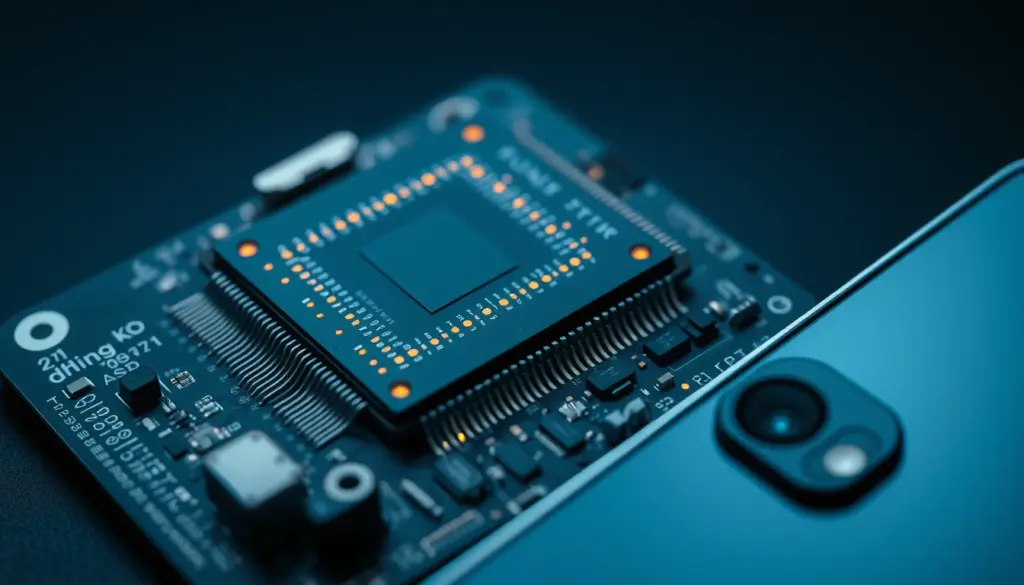
A fresh wave of leaks is reshaping expectations for Google’s next flagship processor. Multiple outlets tracking the Pixel 11 rollout now describe the Tensor G6 as carrying an unusual 7-core CPU layout, a jump to TSMC’s 3nm process, and a Titan M3 security chip, according to reporting from 9to5Google, Android Authority, The Gadgeteer, and Gigazine spanning April through August 2026. The chip is also at the center of a separate controversy: the GrapheneOS project says it has dropped Pixel 11 support after finding the hardware lacks a memory-safety feature the OS treats as mandatory. Google has not issued an official Tensor G6 spec sheet, so everything below is sourced to named outlets reporting on leaked documents, benchmark listings, and supply-chain sourcing.
What the Tensor G6 Leaks Actually Say
The Pixel 11 series, expected to span the standard Pixel 11, Pixel 11 Pro, and Pixel 11 Pro XL, is the subject of a leak trail that has run steadily since late April 2026. 9to5Google published the first detailed Tensor G6 CPU and GPU breakdown on April 28, then followed with a fuller spec dump on May 4 that named the GPU, security chip, and modem supplier. The Gadgeteer, Gigazine, and Android Authority each independently corroborated the core count and chip architecture in reports published between May and August. That level of repetition across competing outlets is unusual for a Pixel cycle and suggests the leak chain traces back to a consistent internal source, though none of the outlets have named Google as a confirming party.
The headline change is the CPU layout. Where Tensor G5 followed a more conventional big.LITTLE-style arrangement, Tensor G6 is reported to use a 1+4+2 configuration: a single high-clock prime core, four mid-tier performance cores, and two efficiency cores, for seven cores total instead of the eight found in most competing flagship chips. Android Authority’s breakdown of the leak describes the layout as “a seven-core configuration, with one prime ‘C1 Ultra’ core, four performance ‘C1 Pro’ cores, and two efficiency ‘C1 Pro’ cores.” That same breakdown lists the prime core running around 4.1GHz, the four performance cores around 3.4GHz, and the two efficiency cores at 2.65GHz.
The 7-Core Layout, Broken Down
Seven cores is a departure from the eight-core norm that has held across Android flagships for years. Google’s own Tensor line has used eight-core designs since Tensor G1 launched in the Pixel 6, so dropping to seven marks the first structural change to the CPU cluster count in the chip’s history. The core types are built on Arm’s C1 family, which Google adopted starting with Tensor G5 as part of a broader shift toward custom core licensing rather than off-the-shelf Cortex designs.
The single “C1 Ultra” prime core is designed to handle the heaviest single-threaded workloads, the kind that matter most for app launch speed and UI responsiveness. The four “C1 Pro” performance cores sit in the middle tier, splitting sustained multi-core workloads like photo processing and background compilation. The two remaining “C1 Pro” cores run at the lowest clock and are tuned for idle and background tasks to preserve battery life. Because the middle and bottom tiers use the same core type at different clocks rather than a fully distinct third core design, the arrangement reads more like a tuned 1+6 split than a traditional three-tier hierarchy, which is part of why several outlets have flagged it as an atypical design choice for a 2026 flagship chip.
GPU: A PowerVR Chip Under Scrutiny
The GPU side is where the leak coverage turns more skeptical. Android Authority’s spec breakdown describes a PowerVR C-series GPU variant with six compute units clocked at 1.3GHz. Tech Advisor went further, characterizing the graphics silicon as tracing back to a PowerVR architecture that first appeared commercially around 2021, and warned that the aging design could leave Pixel 11 behind rivals on sustained gaming performance despite the CPU-side gains. Android Police raised a similar concern, framing the graphics choice as a repeat of criticisms leveled at earlier Tensor generations, where CPU improvements outpaced GPU throughput.
This pattern is not new for Tensor. Since the line launched, Google’s chips have consistently traded flagship-tier GPU performance for on-device AI acceleration and camera-processing capability, a tradeoff that reviewers have flagged in nearly every generation. If the leaked GPU specs hold, Tensor G6 would continue that tradeoff rather than close the gap with Qualcomm and Apple’s latest graphics silicon.
TSMC’s 3nm Process: A Manufacturing First
The most consequential supply-chain detail is the reported move to TSMC’s 3nm node. 9to5Google, citing Economic Daily News, reported on July 13 that Tensor G6 is being built on TSMC’s 3nm process, which would make the Pixel 11 line one of the earliest smartphone series to ship on that node. Google’s Tensor chips have moved fabrication partners before, splitting time between Samsung Foundry in the earliest generations and TSMC more recently, so a 3nm jump would continue that migration toward TSMC’s leading-edge nodes.
A smaller process node typically brings power efficiency and thermal headroom gains, which would help explain why Google might accept a 7-core layout instead of eight: a smaller die budget per core at 3nm could make the unusual core count a deliberate tradeoff for efficiency rather than a manufacturing shortfall. None of the outlets reporting the 2nm claim have published die shots or wafer data to confirm it independently, so it remains attributed to supply-chain sourcing rather than verified through hardware teardown.
Titan M3 and the Security Chip Story
Alongside the CPU and GPU changes, leaks consistently point to an updated Titan M3 security chip replacing the Titan M2 used in recent Pixel generations. The Titan security coprocessor handles key storage, secure boot verification, and on-device encryption independent of the main Tensor die, and Google has used a dedicated Titan chip since the Pixel 3. 9to5Google’s May 4 and July 17 reports both name Titan M3 as part of the confirmed leak chain across multiple Pixel 11 models, including the rumored Pixel 11a variant.
The security chip upgrade is where the Tensor G6 story intersects with a more pointed controversy over what Google left out of the main processor.
The GrapheneOS Fallout: Missing Memory Tagging
In late August, the leak narrative shifted from spec speculation to an active dispute. TechTimes reported on August 31 that Google removed Arm’s Memory Tagging Extension (MTE) from the Tensor G6 hardware, a silicon-level feature that helps catch memory-safety bugs like buffer overflows and use-after-free errors before they can be exploited. Notebookcheck independently reported the same finding days later, citing leaked internal documents that reportedly showed Google had planned to include MTE support and then cut it before finalizing the chip.
The removal matters because GrapheneOS, the privacy-focused Android fork widely used on Pixel hardware, treats MTE as a non-negotiable requirement for any device it supports. According to Notebookcheck’s reporting, the GrapheneOS team spent roughly a week attempting to force a port to the Tensor G6 before concluding the hardware could not meet its security baseline without the feature. If that holds through launch, Pixel 11 would be the first Pixel generation in three years that GrapheneOS does not support, a meaningful shift for the subset of privacy-conscious buyers who have used Pixel hardware specifically because Google previously supported both stock Android and community-hardened alternatives on the same silicon.
Google has not issued a public statement confirming or denying the MTE removal as of this writing. Until the company responds or ships the retail hardware for independent testing, the claim remains attributed to the leaked documents cited by TechTimes and Notebookcheck rather than an official Google disclosure.
Modem Shift: MediaTek Replaces the Samsung Exynos Line
A less-discussed but structurally significant change is the modem supplier. Android Authority’s reporting describes a switch from the Samsung-built Exynos modem used in recent Tensor generations to a MediaTek M90 modem, alongside a new custom image signal processor and a dedicated AI tensor processing block. 9to5Google’s July 17 report on the Pixel 11a repeats the MediaTek M90 detail, suggesting the modem swap would extend across the full 2026 Pixel lineup rather than apply only to the higher-end models. As with the process-node claim, Google has not confirmed the modem supplier, and the MediaTek M90 designation is sourced entirely to leak reporting rather than an official teardown or FCC filing at this stage.
Tensor G5 vs Tensor G6: What’s Reported to Change
The table below summarizes what multiple outlets have reported for the generational jump. Figures marked “reported” come from leak sourcing rather than an official Google spec sheet, since Google has not published Tensor G6 documentation as of September 14, 2026.
| Spec | Tensor G5 (Pixel 10) | Tensor G6 (Pixel 11, reported) |
|---|---|---|
| CPU core count | 8-core (conventional tiering) | 7-core, 1+4+2 layout |
| Prime core clock | Lower generation baseline | Reported ~4.1GHz (Arm C1 Ultra) |
| Performance core clock | Lower generation baseline | Reported ~3.4GHz (Arm C1 Pro x4) |
| Efficiency core clock | Lower generation baseline | Reported ~2.65GHz (Arm C1 Pro x2) |
| GPU | Prior-generation Tensor GPU | Reported PowerVR C-series, 6 compute units, ~1.3GHz |
| Process node | TSMC (prior node) | Reported TSMC 3nm |
| Security chip | Titan M2 | Reported Titan M3 |
| Modem | Samsung Exynos modem | Reported MediaTek M90 |
| MTE (memory tagging) | Present | Reportedly removed, per TechTimes and Notebookcheck |
Confirmed vs. Unconfirmed: Sorting the Leak Chain
Because so much of this story runs through unofficial sourcing, it helps to separate what has been repeated consistently across independent outlets from what rests on a single leak chain. The table below groups the major claims by how many separately reporting outlets have corroborated them.
| Claim | Corroboration level | Key outlets reporting it |
|---|---|---|
| 7-core CPU layout (1+4+2) | Repeated across multiple independent outlets | 9to5Google, Android Authority, The Gadgeteer, Gigazine, Tech Advisor |
| Titan M3 security chip | Repeated across multiple independent outlets | 9to5Google (May 4 and July 17 reports) |
| TSMC 3nm process node | Traced to a single sourcing chain, repeated by multiple outlets | 9to5Google (citing Economic Daily News), The Gadgeteer |
| MediaTek M90 modem | Repeated across two reporting windows | Android Authority, 9to5Google |
| MTE removed, blocking GrapheneOS | Independently corroborated by two outlets | TechTimes, Notebookcheck |
| PowerVR GPU specifics (CXTP-48-1536 naming) | Single-source leak naming | Tech Advisor, Android Police |
Why an Odd Core Count Could Be a Deliberate Tradeoff
Chip architects rarely land on an unconventional core count by accident. A 7-core design skips the symmetry most rivals use, and there are a few plausible reasons a team would choose it. One is die area: dropping a core frees up space on the 3nm die for a larger AI accelerator block or additional cache, which would align with Google’s continued push to run Gemini-branded on-device features locally rather than routing every request to the cloud. Another is thermal budget: Pixel phones have historically run hotter than competing flagships under sustained load, and trimming a core can reduce peak power draw during multi-core bursts without cutting single-thread performance, since the prime core is untouched.
A third possibility, raised implicitly by the GPU criticism from Tech Advisor and Android Police, is that Google prioritized CPU and AI silicon this generation at the direct expense of graphics investment, a pattern the Tensor line has followed since its debut. None of the leak reporting names an official rationale from Google, so this remains analytical interpretation of the leaked configuration rather than a confirmed design goal.
Market and Search Interest: A Story Already Trending
Search interest around the Pixel 11 line has climbed sharply as the leak cycle has intensified. Keyword tracking data shows “Pixel 11 Pro” queries rising from the low hundreds per month in late 2025 to tens of thousands per month by mid-2026, tracking closely with the publication dates of the major leak reports from 9to5Google and Android Authority. That kind of volume growth ahead of an official launch date is typical for a flagship Pixel cycle, but the added GrapheneOS dispute has pulled in a second, more security-focused audience that historically pays closer attention to Pixel hardware changes than to other Android OEMs, given Google’s role as the reference Android device and the platform GrapheneOS builds directly on top of.
For Google, that attention cuts both ways. The 7-core and 3nm details play into a narrative of meaningful hardware investment, while the MTE removal story risks becoming a talking point for competitors and privacy advocates if Google does not clarify its rationale before launch.
Historical Context: Tensor’s Five-Generation Track Record
Tensor G6 would mark the sixth generation of Google’s custom silicon effort, which began with Tensor G1 in the Pixel 6 as Google’s first attempt to move off Qualcomm Snapdragon chips entirely. Early Tensor generations drew criticism for thermal throttling and modem reliability issues, particularly in the Tensor G2 and G3 era. Tensor G5 marked a shift toward deeper Arm core customization and a fabrication move to TSMC, a change multiple outlets have described as part of Google’s broader effort to close the efficiency gap with Apple’s A-series and Qualcomm’s Snapdragon 8-series chips. The reported jump to a 3nm process for Tensor G6 would continue that trajectory, though whether the CPU and GPU tradeoffs described in current leaks translate into real-world efficiency gains will not be verifiable until independent reviewers get retail hardware.
What Rivals Are Doing While Google Iterates
Google is not iterating in isolation. Qualcomm and Apple both continue to ship 8-core flagship designs with dedicated GPU investment that reviewers have generally rated ahead of Tensor on raw graphics throughput, even as Tensor has maintained an edge on integrated AI and camera-processing tasks tied to Google’s software stack. Tom’s Guide reported a leaked Geekbench listing for the Pixel 11 Pro XL that it characterized as showing a significant single-core gap against a competing flagship chip, though Geekbench listings ahead of launch are frequently run on unoptimized firmware and should be read as directional rather than final. If Tensor G6 ships with the PowerVR GPU configuration described in current leaks, the graphics gap against rival flagships would likely persist into this generation, keeping Google’s competitive pitch centered on AI features and camera processing rather than raw benchmark scores.
What This Means for Pixel Buyers
For most buyers, the practical impact of a 7-core versus 8-core layout will be difficult to notice in daily use, since single-thread performance, the metric most tied to how snappy a phone feels, is carried by the unchanged prime core. The more consequential change for a specific segment of Pixel’s audience is the GrapheneOS situation. Buyers who chose Pixel hardware specifically to run a hardened, privacy-focused OS on top of it would need to either stay on an older Pixel model or accept Google’s stock software if the MTE removal holds through launch. For the broader market, the 2nm process and Titan M3 upgrade point to continued investment in efficiency and security infrastructure, even as the GPU and modem changes introduce real uncertainty until retail units are independently tested.
Predictions: What to Watch Before Launch
- Google will likely address the GrapheneOS and MTE reporting directly once official Tensor G6 marketing begins, given the volume of coverage the story has already generated across TechTimes and Notebookcheck.
- Expect additional Geekbench and AnTuTu leak listings in the weeks ahead of launch, which will offer more concrete performance data than the current core-count and clock-speed leaks, though early listings often run on pre-release firmware.
- If the TSMC 3nm sourcing holds, expect comparisons to Apple’s chip roadmap to intensify, since 9to5Google’s July 13 report framed the move as arriving ahead of Apple’s own iPhone chip on the same node.
- The PowerVR GPU criticism from Tech Advisor and Android Police is likely to resurface in early hands-on coverage at launch, particularly from outlets that benchmark sustained gaming performance rather than short burst tests.
- Watch for confirmation or denial of the MediaTek M90 modem swap through regulatory filings, which typically surface before retail launch and would settle the supplier question independent of leak sourcing.
The Bigger Picture for Google’s Silicon Strategy
Tensor G6, as currently described across leak reporting, reads as a chip built around tradeoffs rather than across-the-board upgrades. A smaller core count paired with a leading-edge process node suggests Google is optimizing for efficiency and AI throughput over raw multi-core horsepower. Keeping GPU investment flat, if the PowerVR specs hold, keeps Tensor’s long-standing gap against Qualcomm and Apple graphics silicon intact. And cutting MTE support, whatever the internal reasoning, creates a real cost in the form of lost GrapheneOS compatibility, a tradeoff Google has not yet explained publicly. None of this is unusual for a leak-heavy pre-launch cycle, but the volume and consistency of corroborating reports across 9to5Google, Android Authority, The Gadgeteer, Gigazine, TechTimes, and Notebookcheck make this one of the more thoroughly sourced Pixel leak cycles in the line’s history, even without an official word from Google.
Frequently Asked Questions
What is the Google Tensor G6 chip?
Tensor G6 is the processor widely reported to power the upcoming Pixel 11 series, including the Pixel 11, Pixel 11 Pro, and Pixel 11 Pro XL. Google has not published official specifications, so current details come from leak reporting by outlets including 9to5Google and Android Authority.
Why does the Tensor G6 reportedly have 7 CPU cores instead of 8?
Leaks describe a 1+4+2 layout, one prime core, four performance cores, and two efficiency cores, which departs from the eight-core layout Tensor chips have used since Tensor G1. Outlets have not confirmed an official reason, though the change coincides with a reported move to a smaller 3nm manufacturing process.
When will the Google Pixel 11 launch?
Google has not announced an official launch date as of September 14, 2026. Leak coverage has not converged on a confirmed date, so any specific launch window should be treated as unconfirmed until Google issues an event invitation.
Is Tensor G6 built by Samsung or TSMC?
9to5Google, citing Economic Daily News, reported that Tensor G6 is being manufactured on TSMC’s 3nm process. Google’s earlier Tensor chips split fabrication between Samsung Foundry and TSMC across different generations, and this report describes a continued shift toward TSMC.
Why won’t GrapheneOS support the Pixel 11?
TechTimes and Notebookcheck both reported that Google removed Arm’s Memory Tagging Extension (MTE) from the Tensor G6 hardware. GrapheneOS treats MTE as a required security feature for any device it supports, and without it the project says it cannot offer a supported Pixel 11 build.
What is the Titan M3 security chip?
Titan M3 is the reported next-generation version of Google’s dedicated security coprocessor, which handles secure boot, key storage, and encryption separately from the main Tensor chip. Google has used a Titan security chip on Pixel devices since the Pixel 3.
Will the Pixel 11 use a MediaTek modem?
Leak reporting from Android Authority and 9to5Google describes a switch from the Samsung-built Exynos modem used in recent Tensor generations to a MediaTek M90 modem. Google has not confirmed this supplier change, and it remains attributed to leak sourcing.
How does Tensor G6 compare to Tensor G5?
Based on current leak reporting, Tensor G6 would move to a 7-core layout from Tensor G5’s more conventional core arrangement, shift to a TSMC 2nm process, update the security chip to Titan M3, and reportedly change modem suppliers. None of these comparisons are based on official Google specifications for either chip generation.