
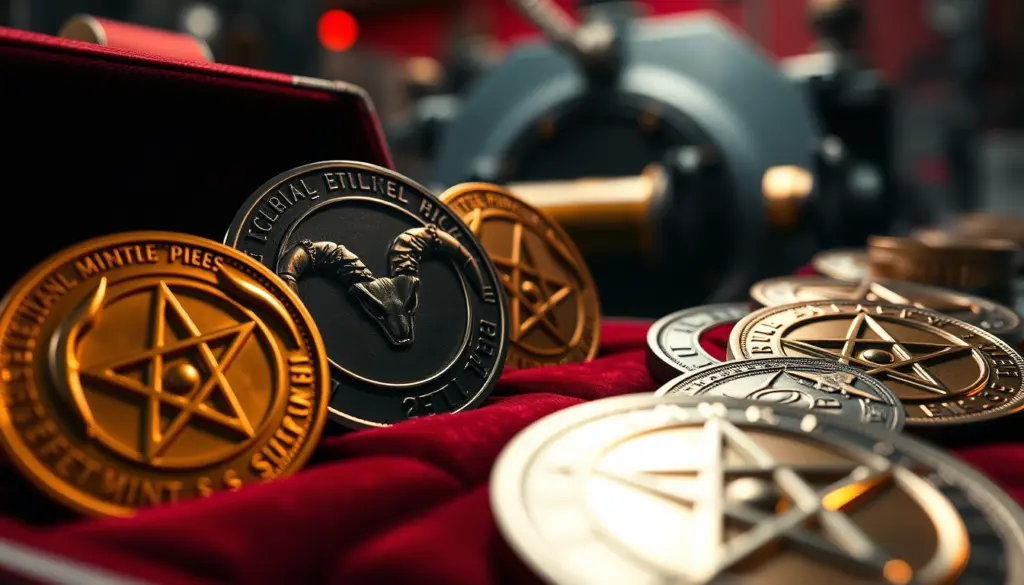
South Korea’s state mint just proved that gaming nostalgia sells faster than gold itself. On September 14, 2026, a limited run of commemorative Diablo 30th-anniversary gold medals from the Korea Minting and Security Printing Corporation (KOMSCO) sold out within minutes of going live, according to Seoul Economic Daily and Inven Global. The headline splashed across KED Global’s Culture & Trends section put it plainly: Blizzard’s Diablo gold medals sell out in minutes as Korea’s state mint firm bets on gaming fandom.
It’s a small transaction by national-mint standards, but a telling one. A government institution that normally strikes coins, prints banknotes, and issues national ID cards chose a video game license as its marquee collector’s item for the back half of 2026. That decision, and the speed at which collectors cleared the shelves, says as much about the state of gaming fandom as it does about the state of the collectibles market.
What KOMSCO actually released
KOMSCO’s Diablo 30th-anniversary lineup, produced in partnership with Blizzard Entertainment, covers four distinct products rather than a single coin. The set includes a 99.9% pure gold medal, a silver medal, a 99.9% pure silver bullion medal, and a pair of intaglio prints (one black-and-white, one color) reproducing Diablo’s anniversary key art. Each product carries a hard mintage cap, which is the detail that turned a niche numismatic release into a flashpoint for gaming fans.
Mintage was capped at 500 gold medals, 2,500 silver medals, 10,000 silver bullion medals, and 500 copies each of the black-and-white and color intaglio prints, per figures reported by Inven Global and Seoul Economic Daily. Pricing in Korean won lands at 4,795,000 won for the gold medal (roughly $3,715, as KED Global converted it), 333,300 won for the silver medal, 165,000 won for the silver bullion medal, and 110,000 won for each intaglio print. Sales opened domestically through KOMSCO’s own online shopping mall and the KakaoTalk gift channel on a first-come, first-served basis, while international buyers could preorder the same day through CoinsToday.
None of this happened on a coin-collector forum in isolation. Diablo turns 30 this year, with the original 1996 release widely credited by outlets including Yahoo Tech for defining the modern action-RPG genre. Blizzard has built an entire anniversary calendar around the milestone, from a new Diablo IV season that rebuilds classic content, detailed in Blizzard’s own BlizzCon 2026 recap, to a Six Flags dark-ride tie-in launching for Halloween. The KOMSCO medals are one more spoke in that wheel, but they’re the spoke that involves a national mint’s engraving presses.
The product lineup, by the numbers
| Product | Material | Mintage cap | Price (KRW) | Approx. USD |
|---|---|---|---|---|
| Diablo 30th anniversary gold medal | 99.9% gold | 500 | 4,795,000 won | ~$3,715 |
| Diablo 30th anniversary silver medal | Silver | 2,500 | 333,300 won | ~$258 |
| Diablo 30th anniversary silver bullion medal | 99.9% silver | 10,000 | 165,000 won | ~$128 |
| Intaglio print (black-and-white) | Paper, intaglio engraving | 500 | 110,000 won | ~$85 |
| Intaglio print (color) | Paper, intaglio engraving | 500 | 110,000 won | ~$85 |
USD conversions are approximate, based on the $3,715 figure KED Global attached to the gold medal’s won price at the time of the announcement. Total addressable revenue across the five product lines, if every unit sells at list price, works out to roughly 5 billion won (close to $3.9 million) before any secondary-market premium. That’s a modest number for a company the size of KOMSCO, which also handles Korea’s currency printing and passport production, but the speed of the sellout is the story, not the total dollar figure.
Why a state mint is making gaming merchandise
KOMSCO isn’t new to licensed collectibles, and it isn’t new to gaming, either. The mint has previously partnered with esports organization T1 to strike a gold commemorative medal honoring League of Legends player Lee “Faker” Sang-hyeok, a release covered by Strafe. That earlier medal established a template: take a beloved intellectual property with a large, loyal, and financially engaged fanbase, apply the mint’s precious-metal striking and security-printing expertise, and cap production tightly enough that demand outstrips supply on day one.
The Diablo release scales that playbook up. Where the Faker medal targeted Korea’s domestic esports audience, Diablo is a global franchise with three decades of releases across PC, console, and mobile. Opening international preorders through CoinsToday on the same day as the domestic launch signals that KOMSCO wanted worldwide collectors in the room from minute one, not as an afterthought once Korean stock ran out.
There’s also a straightforward institutional logic at play. National mints worldwide have been chasing shrinking demand for circulating coinage as digital payments displace cash. Licensed collectibles, bullion rounds, and commemorative sets fill that gap with product lines that carry higher margins and don’t depend on a central bank’s minting order. Pairing that commercial need with an entertainment property that has 30 years of built-in nostalgia, and a fanbase with disposable income, is not a coincidence. It’s a mint reading its own balance sheet.
The security angle: why this matters beyond gaming
What separates a KOMSCO-issued collectible from a typical licensed toy or statue is the anti-counterfeiting engineering baked into it. KOMSCO’s core business is producing Korea’s banknotes and ID documents, and it carries that same toolkit into its bullion and medal lines. According to the mint’s own product pages and industry coverage, KOMSCO gold and silver rounds use latent imaging (designs that shift depending on viewing angle), micro-engraving, and hallmark certification to make forgery difficult, the same category of technique the mint applies to currency, as detailed on KOMSCO’s banknote and security paper product pages.
That matters for a readership that tracks security and authentication technology closely. A licensed gaming collectible backed by a sovereign mint’s anti-counterfeiting stack is a meaningfully different object than a third-party replica sold on a marketplace. Buyers get provenance guarantees closer to what you’d expect from a national bullion coin than from a typical pop-culture collectible, which is precisely why prices for gold medals with tight mintage caps tend to hold up, or climb, on the secondary market once official stock is gone.
It also raises the more practical question every sellout creates: what happens next on resale platforms. With only 500 gold medals in circulation worldwide, and demand visibly exceeding supply within minutes, expect listings on numismatic marketplaces and grading services to appear within days, carrying premiums well above the 4,795,000 won issue price. Collectors chasing authenticated pieces should stick to graded, sealed units from recognized dealers rather than unverified secondary listings, standard advice for any capped-mintage bullion release.
Diablo’s 30-year run, in context
The medals land at a point when Diablo’s commercial footprint is larger than at any point in its history. The original Diablo shipped on PC in December 1996 and is widely credited, per Yahoo Tech’s retrospective, with codifying the click-to-loot, isometric action-RPG format that dozens of later titles borrowed wholesale. Diablo II followed in 2000 and got its own remaster in 2021. Diablo III arrived in 2012, Diablo Immortal brought the franchise to mobile in 2022, and Diablo IV launched in 2023 as, according to sales figures reported by Dexerto, the fastest-selling title in Blizzard’s history, crossing $666 million in revenue within roughly five days of launch.
That commercial weight is exactly why a state mint would want its name next to Diablo’s. Thirty years of continuous releases means thirty years of players who grew up with the franchise and now have careers, salaries, and, in some cases, a taste for numismatics. KOMSCO isn’t betting on a fad. It’s betting on a fanbase old enough to buy a $3,700 gold medal and young enough, in gaming terms, to still care.
How this compares to other gaming collectible plays
Gaming companies and licensing partners have tried precious-metal and collectible tie-ins before, with mixed track records. Most fall into one of three categories: third-party replica makers producing unlicensed or loosely licensed metal trinkets, publisher-run merchandise stores selling resin statues and art books, and, far more rarely, sovereign or quasi-sovereign mints producing officially licensed bullion. The KOMSCO Diablo drop sits firmly in that third, rarest category, alongside its own earlier Faker medal with T1.
| Collectible type | Example | Authentication | Typical mintage | Resale liquidity |
|---|---|---|---|---|
| State-mint licensed bullion | KOMSCO Diablo gold medal | Sovereign hallmark, latent imaging, micro-engraving | Hard-capped (500 gold units) | High, via bullion/numismatic dealers |
| Esports commemorative medal | KOMSCO x T1 Faker medal | Sovereign hallmark | Limited, publisher-disclosed | Moderate, niche esports collector base |
| Publisher merchandise (statues, art books) | Blizzard Gear Store collectibles | Publisher trademark only | Often open or lightly capped | Low to moderate, condition-dependent |
| Unlicensed third-party replicas | Generic marketplace metal coins/medals | None verifiable | Unknown/uncapped | Low, no provenance guarantee |
The gap between the top row and the bottom row of that table is the entire point of this story. A sovereign mint’s involvement changes the risk profile for collectors in a way a publisher-run merch store simply can’t replicate, because a mint’s anti-counterfeiting infrastructure exists independently of the gaming license. That’s a structural advantage KOMSCO has over, say, a Western publisher trying to launch its own metal-collectible line from scratch.
Market impact: what a minutes-long sellout signals
A sellout measured in minutes, on a 500-unit gold product priced above $3,700, tells you two things about market conditions. First, gold itself remains a sought-after store of value among collectors willing to pay a premium for a themed, capped-mintage product rather than a generic bullion round, consistent with broader gold-demand trends through 2026. Second, and more specific to this story, gaming IP now carries enough weight to move that kind of premium purchase on its own, without needing a broader bullion rally to explain the speed of the sellout.
For Blizzard, the immediate financial upside from a licensing arrangement with KOMSCO is almost certainly smaller than a single day of Diablo IV in-game store revenue. The value is reputational and marketing-adjacent: a sovereign institution striking your 30-year-old franchise into gold is a credibility signal no marketing budget can buy directly. Expect other publishers with multi-decade franchises, Nintendo, Square Enix, and Capcom among the most obvious candidates given their own anniversary calendars, to take note of how quickly this sold out.
For KOMSCO, the calculus is different. A sellout this fast, on a first licensed gaming release of this scale, sets up an obvious case for expanding the program, more titles, more publishers, and potentially recurring annual drops tied to major franchise anniversaries. If Seoul Economic Daily’s and Inven Global’s reporting on demand holds up in the following weeks, expect KOMSCO to treat this as proof of concept rather than a one-off.
The scalping and secondary-market question
Any first-come, first-served sale of a hard-capped, high-value collectible invites bot activity and resale flipping, and there’s no indication in current reporting that KOMSCO deployed queue-based anti-bot protections comparable to what ticketing platforms or sneaker drops now use as standard. That’s a gap worth watching. If a meaningful share of the 500 gold medals went to automated buyers rather than genuine collectors, the secondary-market price discovery over the coming weeks will look very different than it would in a clean, human-only sellout.
Buyers considering the resale market should also weigh that KakaoTalk gift-channel sales and CoinsToday preorders create two separate provenance chains, domestic and international, that may not be equally easy to verify after the fact. Anyone paying a secondary-market premium should confirm serial numbers and certificates of authenticity against KOMSCO’s own registry before completing a purchase, not just trust a seller’s listing photos.
Historical precedent: mints and pop culture
State and quasi-state mints dabbling in pop-culture licensing isn’t unheard of globally, national mints have issued commemorative coins for everything from national sports teams to film franchises over the decades, typically through legal-tender coin programs rather than pure bullion medals. What’s less common is a state mint treating a video game with the same anniversary-commemorative seriousness usually reserved for national holidays or historical figures. KOMSCO’s own history with the T1 Faker medal established that Korea’s mint is comfortable extending that treatment to esports and gaming, and the Diablo release confirms it wasn’t a one-off experiment.
South Korea’s cultural relationship with gaming makes this less surprising than it might look from outside the country. Korea has treated esports as a mainstream spectator sport since the early 2000s, with government-adjacent institutions like KOMSCO now extending that legitimacy into physical collectibles. It’s a natural extension of a domestic culture that already treats competitive gaming and franchise fandom as worthy of national institutional attention.
What to watch next
Several threads from this story are still open. Whether KOMSCO restocks any of the five product lines, whether it announces additional gaming licensing partnerships before year-end, and how secondary-market pricing settles for the gold medal over the next month will all shape whether this becomes a recurring program or a single anniversary experiment.
- Expect secondary-market listings for the 500-unit gold medal to surface on numismatic and bullion marketplaces within one to two weeks, likely carrying a premium over the 4,795,000 won issue price.
- Watch for KOMSCO to announce a second gaming-licensed collectible, potentially tied to another major franchise anniversary, within the next 6 to 12 months if Diablo demand holds.
- Other national mints, particularly in markets with strong domestic gaming cultures such as Japan, could explore similar licensed-collectible programs if KOMSCO publicizes strong resale performance.
- Blizzard is likely to reference the medals’ popularity in future Diablo anniversary marketing, even though the direct revenue share to Blizzard from a mint licensing deal is modest next to in-game monetization.
- Anti-bot and queue-fairness measures for future drops are worth watching, given the minutes-long sellout and the absence of confirmed bot mitigation in this launch.
The bigger picture for gaming and collectibles
Gaming has spent three decades building franchises with the kind of longevity that used to be reserved for film and sports. Diablo turning 30 in 2026, with Blizzard building an entire cross-media anniversary campaign around it, from Six Flags dark rides to a rebuilt Diablo IV season, is the clearest evidence yet that the industry’s oldest properties now carry institutional weight. A government mint choosing to strike that property into gold, and selling out in minutes, is a small transaction that confirms a much larger shift: gaming fandom has become bankable enough for a sovereign institution to underwrite it with its own name and security technology.
The number that matters most here isn’t the $3,715 gold-medal price tag or even the roughly $3.9 million in total list-price revenue across the five product lines. It’s the minutes. A national mint, backed by anti-counterfeiting technology built for currency, sold out a licensed gaming collectible faster than most sneaker drops. That’s the headline collectors, publishers, and other mints will be reading closely.
Frequently asked questions
What is KOMSCO?
KOMSCO, the Korea Minting and Security Printing Corporation, is South Korea’s state-owned mint. It produces the country’s coins, banknote security features, passports, and ID cards, and also runs a commercial bullion and commemorative-medal business, according to its official site at english.komsco.com.
How much did the Diablo gold medal cost?
The gold medal was priced at 4,795,000 won, roughly $3,715, according to figures reported by Seoul Economic Daily and Inven Global. Only 500 units were minted.
How fast did the medals sell out?
Reports from KED Global’s Culture & Trends coverage, along with Seoul Economic Daily and Inven Global, described the gold medals selling out within minutes of the September 14, 2026 launch.
Can international buyers still get one?
Overseas preorders opened the same day as the domestic launch through the CoinsToday platform, separate from KOMSCO’s own online shopping mall and KakaoTalk gift channel used for the domestic sale.
Has KOMSCO made gaming collectibles before?
Yes. KOMSCO previously partnered with esports organization T1 on a gold commemorative medal honoring League of Legends player Faker, establishing a precedent for gaming and esports licensing before the Diablo release.
Why is Diablo’s 30th anniversary a big deal?
The original Diablo launched in December 1996 and is widely credited with defining the modern action-RPG genre. Diablo IV, the franchise’s most recent mainline entry, became the fastest-selling game in Blizzard’s history and crossed $666 million in revenue within roughly five days of its 2023 launch, according to figures reported by Dexerto.
Is this gold medal a good investment?
The tight mintage cap (500 units) and sovereign-mint anti-counterfeiting backing give it structural advantages over typical publisher merchandise, but precious-metal collectibles carry standard bullion-market risk. Buyers should treat it as a collectible with bullion-adjacent liquidity, not a guaranteed appreciating asset.
Where can I verify a medal’s authenticity?
Buyers should confirm serial numbers and certificates against KOMSCO’s own product and authentication channels rather than relying solely on secondary-market seller claims, particularly for units purchased after the initial sellout.