
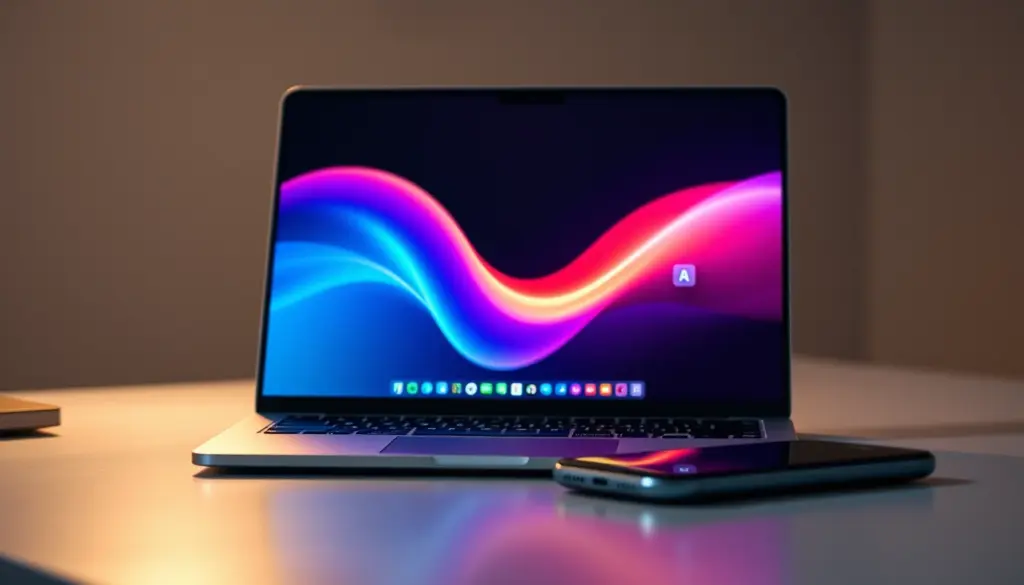
Google confirmed on September 14, 2026 that pre-orders for Googlebook, its new line of laptops built around Gemini Intelligence, open Monday, September 21 at 9 a.m. ET. The announcement, first detailed on Google’s own product blog and echoed by outlets including Engadget and 9to5Google, marks the moment Google stops treating AI as a Chromebook add-on and starts building a laptop category around it from the ground up.
The first wave of devices comes from five manufacturers: Acer, Asus, Dell, HP, and Lenovo. Google has not published pricing, hardware specs, or the exact model lineup that will be available on day one. What it has confirmed is the pitch: a laptop “designed for Gemini Intelligence,” built to work with an Android phone, and shipped with two flagship interaction features Google calls Magic Pointer and Create My Widget.
Google Confirms Googlebook Pre-Orders for September 21
Google first introduced Googlebook as a category on May 12, 2026, but left the sales timeline open for months. That changed this week. Google’s own materials state that users can pre-order the first Googlebook devices starting September 21, with general availability following in fall 2026 rather than a fixed ship date. The company has not said whether “fall” means late September, October, or later, and it has declined to confirm a specific on-sale date beyond the pre-order window.
Google’s own wording, repeated across its Googlebook announcement, describes the first wave as coming from “leading laptop manufacturers like Acer, Asus, Dell, HP and Lenovo.” That is a notable list because it is nearly identical to the OEM roster that has built Chromebooks for a decade, which tells you this is an extension of an existing supply chain relationship rather than a from-scratch hardware program.
What is missing matters just as much as what is confirmed. Google has not revealed pricing for any Googlebook model. It has not published specific hardware specifications, chip suppliers, screen sizes, or battery figures. And it has not said which models, out of presumably several per manufacturer, will actually be available to pre-order on September 21. Reporting from Engadget and 9to5Google both note pricing is still undisclosed as of publication, and treat the September 21 date itself, not a price or spec sheet, as the actual news.
What Exactly Is Googlebook?
Googlebook is Google’s attempt to define a laptop category the way Chromebook Plus tried to two years earlier, except this time Gemini sits at the center of the pitch instead of on top of it. Google’s own copy describes the devices as built for “heavyweight power” and “perfectly in sync with your Android phone.” That phone-tethering language is a deliberate signal: Google wants Googlebook bought as a companion device to an Android phone the way a MacBook is often bought as a companion to an iPhone.
The platform runs on an Android-based ChromeOS stack, combining ChromeOS, Android app support, and Gemini on top of premium hardware supplied by the OEM partners. That is consistent with Google’s multi-year project of merging Android and ChromeOS internals, which has been visible in developer builds since 2024 but has never before shipped as a distinct consumer brand. Googlebook is the first time that merged foundation gets its own name, its own marketing site, and its own hardware partners lined up at launch.
Google’s positioning line for the category, repeated on its product page and blog post, is that Googlebook devices are “designed for Gemini Intelligence.” The company describes the goal as letting a user select anything on screen and ask about it, compare it, or create something from it, without switching apps or opening a separate assistant window. That framing puts Gemini at the operating-system layer rather than treating it as a sidebar chatbot, which is the same architectural bet Microsoft made with Copilot+ PCs in 2024.
Magic Pointer: The Feature Google Built With DeepMind
The headline feature in nearly every piece of Googlebook coverage is Magic Pointer, a cursor-replacement interaction Google says it built together with its DeepMind team. Instead of clicking and right-clicking, a user wiggles the cursor to summon Gemini, which then reads whatever is under or near the pointer and offers contextual actions.
Google has published two specific examples of how this is supposed to work. Point at a date mentioned inside an email, and Magic Pointer can help set up a calendar meeting around it automatically. Select two separate images on screen, and Gemini can combine or visualize them together without opening an editing app. Google frames the tool set around three verbs: ask, compare, and combine.
It is worth being precise about what is confirmed here versus what is inferred. Google has confirmed the wiggle gesture, the DeepMind collaboration, and the two worked examples above. It has not published a full list of supported actions, has not said which apps Magic Pointer can read content from beyond the two examples, and has not disclosed whether the feature works offline or requires a live connection to Gemini’s cloud models. Coverage from MacRumors and other outlets treats Magic Pointer as the single biggest departure from a standard laptop interface Google has shipped in years, but none of that coverage includes performance benchmarks or hands-on testing, because no reviewer has used a shipping unit yet.
Create My Widget: Gemini Builds Your Dashboard
The second flagship feature, which Google calls Create My Widget, lets a user describe a widget in plain language and have Gemini build it. According to Google’s own materials, the request can either trigger a web search or connect to Google apps such as Gmail and Calendar, and the result appears as a live widget on the desktop.
This is the feature most directly aimed at making Gemini feel useful in the background rather than as a chat window a user opens on purpose. Chromebook Plus already shipped generative wallpapers and a “Help Me Write” tool tied to Gemini, but those were one-off content generators. Create My Widget is closer to a personalization layer that persists on the desktop and updates itself, which is a meaningfully different product bet.
Some outlets, including reporting that references Cast My Apps and Quick Access features, describe additional Android-phone integrations tied to Googlebook, letting a phone’s apps and notifications surface directly on the laptop. Google has not detailed exactly how deep that integration goes, and one report notes certain phone-linked functions may require an Android 17 or later device, though that detail has not been confirmed directly on Google’s own Googlebook product page.
The First-Wave OEM Lineup: Acer, Asus, Dell, HP, and Lenovo
That follows a broader pattern of Google building custom silicon and hardware programs across its device lineup, including the Tensor chips inside its own Pixel phones. Google’s decision to launch Googlebook with five OEM partners rather than a single self-branded device (the way Apple builds every Mac in-house) is a strategy choice with real trade-offs. It gets Googlebook onto store shelves and into existing retail and enterprise sales channels immediately. It also means the actual hardware quality, battery life, and build materials will vary by manufacturer, the same way Chromebook build quality has always varied between a budget Acer model and a premium Lenovo one.
None of the five manufacturers has published its own Googlebook model page, spec sheet, or price as of this writing. That is unusual for a hardware launch with a confirmed pre-order date less than a week out. Typically, OEM partners start teasing individual SKUs days or weeks ahead of a pre-order window opening, the way partner brands did ahead of Copilot+ PC launches in 2024. The silence from all five partners simultaneously suggests Google is controlling the announcement tightly and may be planning individual OEM reveals closer to or on September 21 itself.
One useful comparison point: Acer’s recent Swift Air 16 shipped without the NPU horsepower needed for Microsoft’s Copilot+ certification, a gap that drew criticism for falling short of the 40 TOPS threshold Microsoft requires. Whether Acer’s Googlebook hardware clears whatever local-AI processing bar Google sets, if any, is one of the open questions heading into September 21, since Google has not published an equivalent NPU or on-device compute requirement for Googlebook the way Microsoft did for Copilot+.
What We Still Don’t Know: Price, Specs, and the Model List
Three gaps stand out heading into pre-orders. First, pricing. Google has not revealed a price for any Googlebook configuration, and neither have any of the five OEM partners. Second, specs. There is no confirmed processor, RAM configuration, display size, or battery capacity for any model. Third, the model list itself: Google has not said how many distinct Googlebook devices will be available to pre-order on day one, or whether each OEM ships one model or several.
This is a genuinely unusual amount of ambiguity for a pre-order date that is locked to the hour. Google has committed to “9 a.m. ET on September 21” with precision, while leaving the price of the product being pre-ordered completely open. That gap is itself part of the story: it suggests Google is treating September 21 as a lead-generation and sign-up moment (the pre-order page currently just collects notification sign-ups, per Google’s own Chromebook page) rather than a hard commerce launch with checkout-ready pricing.
From Chromebook Plus to Googlebook: A Product Lineage
Googlebook did not appear out of nowhere. Chromebook Plus, Google’s earlier attempt at a premium AI-enabled Chromebook tier, bundled local and cloud Gemini features, generative wallpapers, Magic Editor, Help Me Write, a Google Tasks integration, and a year of Google One AI Premium that included Gemini Advanced and 2TB of storage. That lineup was Google’s first attempt to make Gemini a selling point rather than a bundled extra, and it ran on the same OEM roster, Acer, Asus, Dell, HP, and Lenovo, that Googlebook is launching with now.
The difference is architectural, not just cosmetic. Chromebook Plus bolted Gemini features onto an existing ChromeOS product line. Googlebook is described by Google as built “designed for Gemini Intelligence” from the ground up, with Magic Pointer replacing a core interaction model (the cursor) rather than adding a new app on top of an old one. That is a bigger bet, and a riskier one, because replacing how users move a cursor is the kind of change that either becomes a signature feature or gets switched off by frustrated users within a week.
It also continues a pattern in Google hardware strategy that goes back to the original Chromebook launch in 2011: Google defines the platform, branding, and software requirements, while OEM partners handle manufacturing, industrial design, and go-to-market. That has let Google scale a hardware category quickly without carrying inventory risk, but it has also meant inconsistent build quality across price tiers, a tension Googlebook inherits directly.
Googlebook vs Copilot+ PCs: How the AI PC Race Lines Up
Googlebook enters a market Microsoft has already spent two years defining. Copilot+ PCs launched in 2024 with a hard technical bar: a neural processing unit capable of at least 40 TOPS, paired with deep Copilot integration across Windows, including features like Recall and on-device image generation. Google’s approach so far looks different in one important way: it has not published any equivalent on-device performance requirement for Googlebook hardware.
| Category | Googlebook | Copilot+ PCs | Apple Silicon Mac |
|---|---|---|---|
| Core AI layer | Gemini Intelligence | Microsoft Copilot | Apple Intelligence |
| Operating system | Android-based ChromeOS | Windows 11 | macOS |
| Confirmed OEM partners | Acer, Asus, Dell, HP, Lenovo | Acer, Asus, Dell, HP, Lenovo, Samsung, Microsoft Surface, others | Apple only |
| Signature interaction feature | Magic Pointer | Recall, Click to Do | Apple Intelligence writing tools, Genmoji |
| Published on-device compute requirement | Not disclosed | 40+ TOPS NPU | Apple Silicon M-series only |
| Pre-order/availability status | Pre-orders open Sept. 21, 2026 | Available since 2024 | Available since 2020 (Apple Silicon transition) |
| Pricing disclosed | No | Yes, varies by OEM | Yes, varies by model |
The comparison matters because Gemini has already been expanding aggressively on Windows itself, separate from Googlebook. Google shipped a Gemini app for Windows with an Alt+Space shortcut that reaches more than a billion PCs, putting Gemini directly in front of Copilot’s roughly 420 million users, according to earlier reporting on that rollout. Googlebook is a different move: instead of bringing Gemini to Windows users, it is trying to pull users onto a Google-controlled operating system entirely, the same way Apple keeps Apple Intelligence exclusive to its own hardware.
That dual strategy, Gemini everywhere on Windows and Gemini exclusive on Googlebook, mirrors how Microsoft itself plays offense and defense simultaneously: Copilot ships broadly across devices while Copilot+ certification is reserved for hardware Microsoft’s OEM partners build to spec. Qualcomm, one of the chip suppliers powering Copilot+ hardware, recently raised prices on its AI PC silicon even as it pushed new AI PC chips to market, a sign the entire AI-PC hardware category is dealing with rising component costs regardless of which software platform wins.
Where Apple Silicon Macs Fit In
Apple’s position is structurally different from both Google’s and Microsoft’s. Apple builds every Mac itself on Apple Silicon, with Apple Intelligence woven into macOS rather than licensed out to third-party manufacturers. That tight vertical integration is closer in spirit to what Google is now attempting with Googlebook than to Microsoft’s OEM-partner model, even though Google is using outside manufacturers to build the actual hardware.
The distinction that matters for buyers: Apple controls both the chip and the software end to end, so Apple Intelligence features are guaranteed to run consistently across every Mac that supports them. Googlebook, because it depends on five different manufacturers building to Google’s software spec on their own hardware choices, does not have that same guarantee yet. Until Google publishes a minimum hardware bar, buyers won’t know whether an entry-level Acer Googlebook runs Magic Pointer as smoothly as a premium Lenovo one.
Market Reaction and What Analysts Are Watching
Because Google has not disclosed pricing or shipped hardware, market reaction so far has been limited to trade press framing rather than financial analyst notes. Coverage from Android Central, Mashable, and Engadget all treat Googlebook as Google’s formal entry into the AI PC category Microsoft defined with Copilot+, rather than as an incremental Chromebook refresh. That framing itself is a signal: none of the outlets that have covered the pre-order date are calling this a Chromebook update, they are calling it a new product line.
The bigger unknown for market watchers is enterprise uptake. Chromebooks have historically done best in education and frontline-worker deployments, segments where Windows and macOS have dominated for AI-heavy knowledge work. Whether Googlebook can break into that higher-margin segment depends entirely on specs and pricing Google has not yet revealed, which is likely why September 21 is framed as a pre-order and notification date rather than a full retail launch with checkout pricing live.
Why Google Is Making This Move Now
Timing is the most telling part of this launch. Google is introducing a hardware-exclusive Gemini experience at the same moment it is pushing Gemini as broadly as possible everywhere else, including inside Gmail transcription tools, Google Classroom, and now Windows itself. Running both strategies at once only makes sense if Google believes hardware exclusivity and software ubiquity solve different problems: ubiquity grows Gemini’s user base fast, while a controlled hardware platform lets Google build features, like Magic Pointer, that require a level of OS integration it can’t guarantee on Windows or macOS.
There’s also a defensive angle. Apple has run its own hardware-software integration playbook for AI since the Apple Silicon transition. Microsoft locked in Copilot+ certification requirements in 2024 and has been expanding them since. Google, absent Googlebook, was the only major PC-adjacent platform without a hardware tier it fully controlled for its own AI product. Googlebook closes that gap.
The Android-ChromeOS Convergence Bet
Googlebook is also the clearest public evidence yet that Google’s long-rumored merger of Android and ChromeOS is real and shipping, not just an internal engineering project. Running Android app support natively alongside a ChromeOS-style desktop shell, on a platform Google is willing to put its own brand name on for the first time since the original Chromebook, suggests the convergence work has reached a point Google trusts enough to sell.
That convergence also explains the phone-tethering angle. If Googlebook and a user’s Android phone share more of their underlying software stack than a Chromebook ever did, deeper integrations like Cast My Apps become easier to build and more reliable to ship. It’s the same logic Apple has used to sell the Mac-iPhone pairing for over a decade, just arriving on the Google side of the market roughly fifteen years after the first Chromebook.
Googlebook Launch Timeline at a Glance
| Date | Event | Status |
|---|---|---|
| May 12, 2026 | Google introduces Googlebook as a new laptop category | Confirmed |
| September 14, 2026 | Google confirms pre-order date via blog and press coverage | Confirmed |
| September 21, 2026, 9 a.m. ET | Pre-orders/notification sign-ups open | Confirmed |
| Fall 2026 | General availability window (no fixed date) | Confirmed, date not fixed |
| TBD | Pricing disclosure | Not yet confirmed |
| TBD | Individual OEM model reveals (Acer, Asus, Dell, HP, Lenovo) | Not yet confirmed |
Five Predictions for Googlebook’s Launch Window
- Pricing lands close to Chromebook Plus territory, not premium Mac territory. Google’s OEM-partner model has historically kept Chromebook pricing competitive against Windows laptops rather than against MacBooks, and there’s no signal in the current announcement that Googlebook breaks from that pattern.
- At least one OEM ships a Googlebook with the same NPU shortfall that hit Copilot+ certification. Given Acer’s recent Swift Air 16 stumble on the 40 TOPS bar, and no published Googlebook compute requirement from Google, hardware inconsistency across the five-OEM lineup is likely on day one.
- Google publishes individual OEM model pages within days of September 21, not before. The current silence from all five partners simultaneously points to a coordinated reveal timed to the pre-order window rather than a staggered pre-launch tease.
- Magic Pointer becomes the feature reviewers either love or immediately disable. Replacing a core cursor interaction is high-risk, and it will likely draw the most hands-on coverage once review units ship, for better or worse.
- Enterprise and education channels adopt Googlebook faster than general consumers. That has been the pattern for every Chromebook generation, and nothing in the current feature set (Gmail and Calendar-linked widgets, phone integration) specifically targets home users over managed fleets.
What to Watch Before September 21
Three things would meaningfully change how this launch reads. First, any of the five OEMs publishing a spec sheet or price ahead of the pre-order window would signal Google is ready for a hard commerce launch rather than a sign-up campaign. Second, Google publishing a minimum hardware requirement, the way Microsoft did with its 40 TOPS Copilot+ bar, would tell buyers whether every Googlebook model actually supports Magic Pointer and Create My Widget equally. Third, watch whether Google frames September 21 purely as “notify me” sign-ups (as its current Chromebook page suggests) or opens actual checkout, because those are very different kinds of launches wearing the same “pre-order” label.
For now, the confirmed facts are narrower than the coverage volume might suggest: a name, a date, a time, five manufacturer partners, and two named features. Everything else, price, specs, and the actual model lineup, remains open until Google or one of its OEM partners says otherwise.
Frequently Asked Questions
When do Googlebook pre-orders open?
Pre-orders open Monday, September 21, 2026, at 9 a.m. ET, according to Google’s own announcement and matching coverage from Engadget and 9to5Google.
How much will Googlebook cost?
Google has not disclosed pricing for any Googlebook model. Reporting from Engadget and 9to5Google both confirm pricing remains undisclosed as of this article’s publication.
Which companies are making Googlebook laptops?
Google’s first wave of partners includes Acer, Asus, Dell, HP, and Lenovo. Google describes these as “leading laptop manufacturers” in its official announcement.
What is Magic Pointer?
Magic Pointer is a cursor-based Gemini feature Google built with its DeepMind team. Wiggling the cursor summons Gemini to read what’s on screen and offer to ask, compare, or combine content, such as helping schedule a meeting from a date mentioned in an email.
What is Create My Widget?
Create My Widget lets a user describe a desktop widget in natural language. Gemini then builds it, either by searching the web or connecting to Google apps like Gmail and Calendar, and places it on the desktop as a personalized dashboard.
Is Googlebook a Chromebook?
Googlebook runs on an Android-based ChromeOS platform, combining ChromeOS, Android app support, and Gemini. Google is marketing it as a distinct new category rather than as a Chromebook model, though it shares underlying software lineage and OEM partners with the Chromebook Plus line.
How does Googlebook compare to Copilot+ PCs?
Both put an AI assistant at the operating-system level with multi-OEM hardware partners. The key difference so far is that Microsoft requires Copilot+ hardware to include an NPU rated at 40+ TOPS, while Google has not published any equivalent on-device compute requirement for Googlebook.
When will Googlebook actually ship?
Google says general availability follows in fall 2026 but has not confirmed a specific ship date beyond the September 21 pre-order window.