
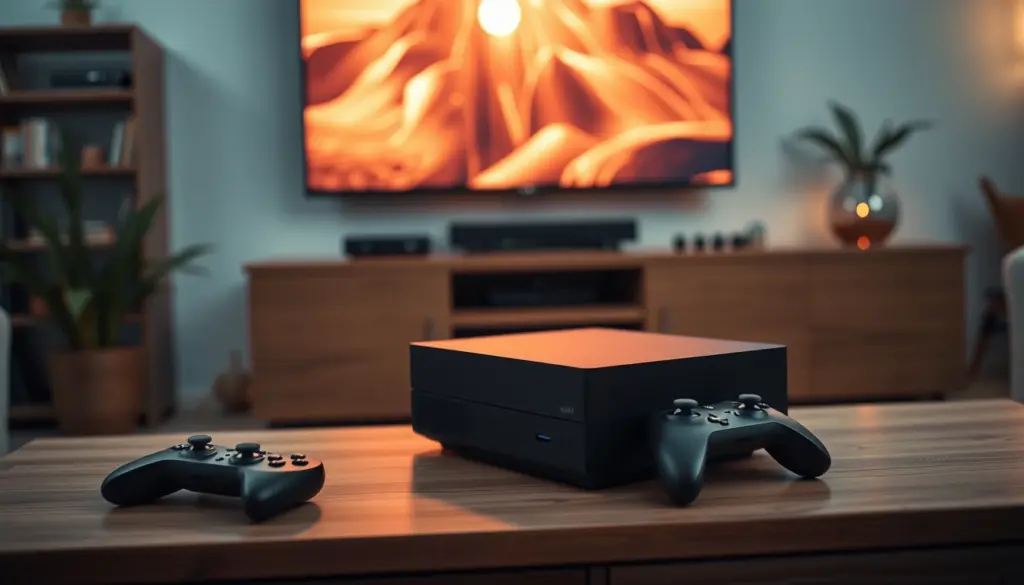
Valve’s Steam Machine finally arrived this week, going on sale on June 29, 2026 after a seven-month wait since its November 2025 reveal. The compact, cube-shaped living-room PC starts at $1,049 for the 512GB model and tops out at $1,428 for a 2TB unit bundled with the new Steam Controller. Valve claims the box delivers “over six times the horsepower of the Steam Deck,” repositioning SteamOS from a handheld curiosity into a credible challenger for the space under your television.
It is also a launch defined by timing. The Steam Machine ships into the worst memory market in a decade, a 2026 DRAM and NAND shortage that has pushed component prices up by double and triple digits and forced rivals to raise prices across the board. That context explains a four-figure sticker that would have looked unthinkable when Valve first floated a cheap living-room box years ago. This analysis breaks down the Steam Machine price, specs, and performance, how it compares to the PS5 and Xbox Series X, why it costs what it does, and what its arrival means for the wider battle between SteamOS and Windows.
Steam Machine Price: What $1,049 Actually Buys
Valve has kept the Steam Machine lineup simple. There are two storage tiers, each available with or without the redesigned Steam Controller. The entry 512GB configuration costs $1,049 (£879), while the 2TB model lands at $1,349 (£1,149). Adding the new controller pushes those figures to $1,128 and $1,428 respectively, a flat $79 premium for the gamepad. Pricing and availability are listed on the official Steam Machine page, and Valve opened reservations months ahead of the June launch.
The single most important word in that pricing is “PC.” The Steam Machine is not subsidised hardware sold at a loss to recoup money on game sales, the way consoles traditionally are. It is a small-form-factor desktop that Valve sells at roughly the cost of building an equivalent mini-PC yourself. That framing matters because it sets expectations: this is not a $499 PlayStation rival, it is a turnkey gaming PC that happens to live in a console-sized chassis and boot straight into a couch-friendly interface.
For shoppers weighing the Steam Machine price against a handheld, the gap is narrower than it first appears. The Steam Deck OLED climbed to roughly $789 after Valve raised its price by $240 in May 2026, citing the same memory and storage cost pressures squeezing the entire industry. Seen in that light, paying $1,049 for six times the performance, a desktop-class chassis, and a quiet living-room form factor is a coherent step up rather than a separate product category. The table below summarises the full Steam Machine lineup at launch.
| Configuration | Storage | Controller | USD | GBP |
|---|---|---|---|---|
| Steam Machine 512GB | 512GB NVMe | Not included | $1,049 | £879 |
| Steam Machine 512GB + Controller | 512GB NVMe | Steam Controller | $1,128 | £938 |
| Steam Machine 2TB | 2TB NVMe | Not included | $1,349 | £1,149 |
| Steam Machine 2TB + Controller | 2TB NVMe | Steam Controller | $1,428 | £1,208 |
Steam Machine Specs: AMD Zen 4, RDNA 3 and Six Times the Deck
Under the hood, the Steam Machine specs read like a well-judged compact gaming PC rather than a bleeding-edge showpiece. The processor is a semi-custom AMD Zen 4 part with six cores and twelve threads running up to 4.8 GHz inside a 30-watt power envelope, roughly comparable to a Ryzen 5 7540U. The graphics are the real story: a semi-custom AMD RDNA 3 GPU with 28 compute units clocked at up to 2.45 GHz sustained and a generous 110-watt power budget, paired with a dedicated 8GB of GDDR6 video memory. System memory is 16GB of DDR5.
That dedicated graphics power budget is what separates the Steam Machine from every handheld in Valve’s range. The Steam Deck’s APU has to share a tight thermal and power envelope between CPU and GPU; the Steam Machine gives its RDNA 3 graphics 110 watts to stretch into, which is why Valve can credibly claim it is six times more powerful than the Steam Deck. In practical terms the GPU sits in the same class as a desktop Radeon RX 7600, enough to run the vast majority of the Steam catalogue at 1080p with comfortable frame rates.
Physically, the Steam Machine is a near-cube measuring about 156mm wide, 162mm deep and 152mm tall, weighing roughly 2.6kg. Valve has engineered it to run quietly enough to sit in a living room without drowning out dialogue, a deliberate contrast with the jet-engine reputation of some compact gaming PCs. The full specification sheet is below.
| Specification | Steam Machine (2026) |
|---|---|
| Release date | June 29, 2026 |
| Announced | November 12, 2025 |
| CPU | Semi-custom AMD Zen 4, 6 cores / 12 threads, up to 4.8 GHz (30W) |
| GPU | Semi-custom AMD RDNA 3, 28 CUs, up to 2.45 GHz (110W) |
| Video memory | 8GB GDDR6 |
| System memory | 16GB DDR5 |
| Storage | 512GB or 2TB NVMe SSD |
| Operating system | SteamOS 3 (Linux, Proton) |
| Performance claim | ~6x Steam Deck |
| Dimensions / weight | ~156 x 162 x 152 mm / ~2.6kg |
| Starting price | $1,049 (512GB) |
4K Gaming Through FSR: Reading the Performance Claims Carefully
Valve and early coverage describe the Steam Machine as “4K-capable,” and that claim deserves a precise reading. The hardware does not brute-force native 4K in demanding modern titles. Instead it leans on AMD’s FidelityFX Super Resolution (FSR 4.1) to render at a lower internal resolution, typically around 1080p, and upscale to a 4K output target while aiming for 60 frames per second. For Steam Deck Verified and well-optimised games, that pipeline holds up; for ray-tracing-heavy blockbusters, expect to dial settings down or accept a lower frame target.
This is the same upscaling-first philosophy that now defines mainstream console gaming. The PS5 Pro built much of its pitch around AI-assisted upscaling, and current consoles lean heavily on dynamic resolution. The Steam Machine simply brings that approach to an open PC platform. The honest framing is that this is an outstanding 1080p machine and a competent 1440p one, with 4K reserved for lighter titles or aggressive upscaling, exactly the territory you would expect from RX 7600-class silicon.
The upside of the PC foundation is flexibility that no console offers. Because the Steam Machine runs SteamOS on standard PC architecture, owners can tune graphics settings game by game, install community tools, cap frame rates to match a TV’s refresh, and benefit from every future FSR revision the moment AMD ships it. Performance is not frozen at launch the way it is on a closed console; it improves as Proton and FSR mature.
Steam Machine vs PS5, Xbox Series X and a Gaming PC
The hardest question for any potential buyer is where the Steam Machine sits against the established living-room options. On raw price, it is the most expensive box in the room: at $1,049 it costs more than a PS5 or Xbox Series X (both $649 in the US) and trails only a fully specced DIY mini-PC by a small margin. But price alone misses the point, because the Steam Machine competes on a different axis: an open platform, the full Steam library, and PC-grade configurability.
Against the PS5 Pro ($899), the comparison is closest. Both target upscaled 4K, both are premium living-room machines, and both ask buyers to pay up for performance headroom. The PlayStation wins on exclusives and a frictionless console experience; the Steam Machine wins on library size, modding, backwards compatibility with decades of PC games, and freedom from a walled garden. Our breakdown of the PS5 Pro versus the standard PS5 and our PS5 versus Xbox Series X comparison map out the console side of that decision in detail.
| Device | Price (USD) | Processor class | Target resolution | OS | Form factor |
|---|---|---|---|---|---|
| Steam Machine 512GB | $1,049 | Zen 4 6c + RDNA 3 (RX 7600-class) | 1080p native / up to 4K via FSR | SteamOS | Living-room PC |
| PS5 Pro | $899 | Zen 2 8c + custom RDNA (enhanced) | Up to 4K (upscaled) | PS5 OS | Console |
| PS5 | $649 | Zen 2 8c + RDNA 2 | Up to 4K | PS5 OS | Console |
| Xbox Series X | $649 | Zen 2 8c + RDNA 2 | Up to 4K | Xbox OS | Console |
| Steam Deck OLED | ~$789 | Zen 2 4c + RDNA 2 (APU) | 800p handheld | SteamOS | Handheld |
| DIY mini-PC (equivalent) | ~$1,000+ | Varies | Varies | Windows | Self-built |
The most revealing comparison is internal. The Steam Machine is the big sibling to Valve’s handhelds, and anyone deciding between a portable and a living-room box should read it alongside the broader handheld market. Our Steam Deck versus ROG Ally comparison covers the portable end of the SteamOS ecosystem the Steam Machine now anchors from the top.
Why the Steam Machine Costs This Much: The 2026 DRAM Shortage
No analysis of the Steam Machine price is complete without the elephant in the server room: the 2026 memory crisis. Demand for high-bandwidth memory (HBM) to feed AI data centres has pushed the three dominant memory makers, Samsung, SK Hynix and Micron, to redirect manufacturing capacity toward high-margin enterprise parts. Every bit of HBM produced means several bits of conventional DRAM and NAND that never reach the consumer market, and prices have responded violently.
The numbers are stark. Industry trackers reported consumer DRAM prices climbing by triple digits across the first half of 2026, with one widely cited figure from Wccftech putting the consumer-segment surge at up to 89% in the second quarter alone. Research firm IDC expects average PC prices to rise by up to 8% across 2026, and as PC Gamer has documented, the squeeze now reaches RAM, SSDs and graphics cards alike. Tom’s Hardware has reported warnings that conditions will deteriorate further before they improve.
| Component / metric | Reported 2026 movement | Source |
|---|---|---|
| Consumer DRAM (first half 2026) | Triple-digit increases reported | Industry trackers |
| Consumer memory (Q2 2026) | Up to +89% | Wccftech |
| NAND flash / SSDs | Sharp increases reported | Industry trackers |
| Average PC prices (2026) | Up to +8% | IDC |
| Vendor price hikes (Lenovo, Dell, HP, etc.) | Warnings of 15-20% | Tom’s Hardware |
| Steam Deck OLED (May 2026) | +$240 | Valve |
This is why the Steam Machine, with 16GB of DDR5 and 8GB of GDDR6 on board, carries the price it does. Memory is one of the costliest line items in the bill of materials, and Valve is shipping a generous amount of it into a market where every gigabyte has become expensive. The same pressure already forced the Steam Deck OLED price up by $240 and is expected to keep hardware costs elevated into late 2027.
SteamOS vs Windows: Valve’s Real Play for the Living Room
The hardware is only half the story. The Steam Machine’s strategic purpose is to put SteamOS, Valve’s Linux-based operating system, in front of millions of living-room gamers and, in doing so, weaken the assumption that PC gaming means Windows. Powered by the Proton compatibility layer, SteamOS now runs a large share of the most-played Steam catalogue without modification, and it boots straight into a console-style Big Picture interface instead of a desktop.
Crucially, Valve has spent 2026 pushing SteamOS well beyond its own hardware. The platform opened to third-party devices, with the Lenovo Legion Go S shipping as the first non-Valve handheld blessed with SteamOS pre-installed, and the SteamOS-based Legion Go 2 arriving in June 2026 from $1,199. Beta builds added the platform’s first official Intel handheld support and broadened compatibility to ASUS ROG Ally and other AMD devices. The Steam Machine is the living-room capstone of that expanding ecosystem.
For the technically inclined, SteamOS retains a full Linux desktop mode underneath the gaming interface, which is part of what makes the Steam Machine appealing to the developer-leaning audience. You can drop into a terminal, inspect the build and force the Proton compatibility layer for every title in your library.
# SteamOS Desktop Mode (Konsole): check the OS build
cat /etc/os-release        # e.g. NAME="SteamOS"  VERSION="3.x"

# Enable Proton for every title (Steam > Settings > Compatibility):
#   "Enable Steam Play for all other titles"
# This lets unsupported Windows games run through Proton on the Steam Machine.
The competitive subtext is that Microsoft, for the first time in the modern era, faces a genuine alternative platform that PC gamers actively choose on the merits rather than tolerate. Windows still dominates the desktop, but SteamOS has turned into the default for handhelds and now has a beachhead under the television.
Steam Frame and the New Steam Controller Complete the Lineup
The Steam Machine did not launch alone. Valve unveiled it in November 2025 alongside two other devices: the Steam Frame, a standalone VR headset, and a redesigned Steam Controller. Together they represent Valve’s most ambitious hardware push since the original Index, and all three share the same SteamOS-and-Proton foundation.
The Steam Frame is a standalone headset built around a Snapdragon 8 Gen 3 ARM processor with 16GB of LPDDR5X memory, dual LCD panels at 2160 x 2160 per eye, and refresh rates spanning 72Hz to 120Hz with an experimental 144Hz mode. The base unit weighs roughly 185 grams, rising to about 440 grams with the strap, facial interface and battery fitted, and storage comes in 256GB and 1TB options. Valve has said it expects the Frame to cost less than the $999 Index launch kit, with analysts estimating a launch price in the $800 to $1,000 range, and a summer 2026 shipping window. As of late June, pre-orders had not yet opened, a caution likely tied to the same memory-pricing volatility roiling the rest of the market.
The new Steam Controller is the third pillar. Its standout upgrade is a switch to tunneling magnetoresistance (TMR) thumbsticks, a technology designed to eliminate the stick drift that has plagued gamepads for years. It is sold standalone or bundled with the Steam Machine for an extra $79, and its design language carries over to the Frame’s motion controllers. Taken together, the three products turn SteamOS into a hardware family spanning handheld, living room and VR.
Steam Machines 2015 vs 2026: What Valve Learned
Valve has been here before, and the first attempt is a cautionary tale. The original Steam Machines, announced in 2013 and launched at retail in late 2015, were a high-profile failure. Valve farmed the hardware out to partners such as Alienware, producing a confusing spread of boxes at wildly different prices, all running an immature SteamOS that could play only a fraction of the Steam library natively. There were no compelling exclusives, the Linux game catalogue was thin, and most boxes were simply more expensive than building an equivalent Windows PC. Valve quietly removed Steam Machines from the Steam store’s navigation by 2018.
The 2026 attempt is different in almost every way that mattered. The single biggest change is Proton, the compatibility layer Valve introduced in 2018, which lets the vast majority of Windows games run on Linux unmodified. SteamOS is no longer a liability that shrinks your library; it is a mature platform proven over four years on the Steam Deck, which launched in February 2022 and sold in the millions. Valve now builds the hardware itself, sets a single coherent product range, and controls the software end to end.
In short, the 2015 Steam Machine asked customers to accept a worse PC for the privilege of using SteamOS. The 2026 Steam Machine offers a polished, quiet, fully compatible PC where SteamOS is an asset rather than a tax. Whether that is enough to win the living room is unproven, but the strategic foundation is incomparably stronger than it was a decade ago. The Steam Machine reference page documents the full specification and launch timeline.
Market Impact: What the Launch Means for PC and Console Gaming
The Steam Machine’s arrival reshapes the competitive map in several ways. For Sony and Microsoft, it introduces a premium living-room competitor that does not play by console economics. Microsoft in particular is squeezed from two directions: SteamOS erodes Windows’ grip on PC gaming hardware just as Xbox grapples with the fallout from raising Game Pass Ultimate to $29.99 in late 2025, a 50% hike later walked back to $22.99 after the service reportedly shed millions of subscribers. A credible non-Windows platform is the last thing Redmond wanted in this moment.
For the broader PC hardware market, the Steam Machine is a proof point that a console-like, fixed-spec PC can be a viable product when paired with a polished OS. If it sells, expect partners to follow with their own SteamOS living-room boxes, just as they have rushed to ship SteamOS handhelds. That would accelerate a slow but real fragmentation of the “PC gaming equals Windows” assumption that has held for three decades.
The wildcard is timing. Launching a memory-heavy device into the 2026 DRAM shortage means Valve is fighting both for mindshare and against a cost base it cannot control. Console makers, meanwhile, also use the same memory and face the same pressure, which paradoxically narrows the price gap the Steam Machine has to overcome. If the shortage drives a PS5 or Xbox price increase in late 2026, the Steam Machine’s premium starts to look more reasonable by comparison.
Who Should Buy the Steam Machine, and Who Shouldn’t
Strong fit: PC gamers who want a console experience
The Steam Machine is an easy recommendation for existing Steam users with large libraries who want a quiet, no-fuss box under the television. If you already own dozens or hundreds of Steam games, value modding and configurability, and dislike walled gardens, this is the most elegant way to get a PC experience on the couch without building one. The single-purchase, boots-into-gaming simplicity is its core appeal. It also suits the developer-adjacent and tinkerer crowd that overlaps heavily with our readership: a full Linux desktop sits one click away, and the open platform rewards anyone who likes to tune, script or experiment with their hardware.
Look elsewhere: value buyers and exclusive-chasers
If your priority is the lowest entry price or access to PlayStation and Nintendo exclusives, the Steam Machine is the wrong tool. A $649 PS5 or Xbox Series X delivers a turnkey 4K console experience for $400 less, and Sony and Nintendo’s first-party catalogues remain off-limits on SteamOS. Buyers who want maximum portability are also better served by a Steam Deck or another SteamOS handheld, which our handheld comparison and the Switch 2 sales analysis put in context.
5 Predictions for the Steam Machine and SteamOS
Based on the launch terms, the platform trajectory and the market backdrop, here is where we expect the Steam Machine story to go over the next 12 to 18 months.
- Pricing stays elevated. With the DRAM shortage forecast to persist into late 2027, do not expect a meaningful Steam Machine price cut in 2026. If anything, a mid-cycle bump is more likely than a discount.
- Third-party SteamOS living-room boxes follow. Just as partners rushed out SteamOS handhelds, expect at least one OEM to announce a SteamOS mini-PC or console-style device within a year, mirroring the Legion Go playbook.
- Microsoft responds on the platform front. Watch for Windows handheld and living-room UI improvements, or deeper Xbox-on-PC integration, as Redmond tries to blunt SteamOS momentum.
- FSR and Proton extend the machine’s life. Continuous upscaling and compatibility gains will let this fixed hardware punch above its weight for years, a luxury closed consoles lack.
- Steam Frame pre-orders open at the top of the announced range. Given memory costs, expect the Frame to land nearer the $1,000 end of analyst estimates than the $800 end when reservations finally open.
Frequently Asked Questions
How much does the Steam Machine cost?
The Steam Machine starts at $1,049 (£879) for the 512GB model and $1,349 (£1,149) for the 2TB model. Adding the new Steam Controller costs an extra $79, bringing the bundles to $1,128 and $1,428 respectively.
When was the Steam Machine released?
Valve put the Steam Machine on sale on June 29, 2026, roughly seven months after announcing it on November 12, 2025. Reservations opened ahead of the launch.
Is the Steam Machine more powerful than the Steam Deck?
Yes. Valve says the Steam Machine offers more than six times the graphics horsepower of the Steam Deck, thanks to a dedicated RDNA 3 GPU with a 110-watt power budget and 8GB of GDDR6, compared with the Deck’s power-constrained handheld APU.
Can the Steam Machine play 4K games?
It can output 4K, but typically by rendering at around 1080p and upscaling with AMD FSR 4.1 to hit 60fps. Native 4K is realistic in lighter or older titles; demanding modern games are best run at 1080p or 1440p with upscaling.
Does the Steam Machine run Windows games?
Yes, through Proton. The Steam Machine runs SteamOS (Linux), and Valve’s Proton compatibility layer lets the large majority of Windows games in the Steam catalogue run without modification. You can enable Steam Play for all titles in settings.
Is the Steam Machine a console or a PC?
It is a PC in a console-sized form factor. Unlike subsidised consoles, it is priced at roughly the cost of an equivalent mini-PC, boots into a couch-friendly interface, and retains a full Linux desktop underneath for those who want it.
Why is the Steam Machine so expensive?
The 2026 global memory shortage is a major factor. DRAM and NAND prices have surged as manufacturers prioritise AI data-centre demand, raising the cost of the 16GB of DDR5 and 8GB of GDDR6 inside the machine. The same pressure pushed the Steam Deck OLED’s price up by $240 in May 2026.