
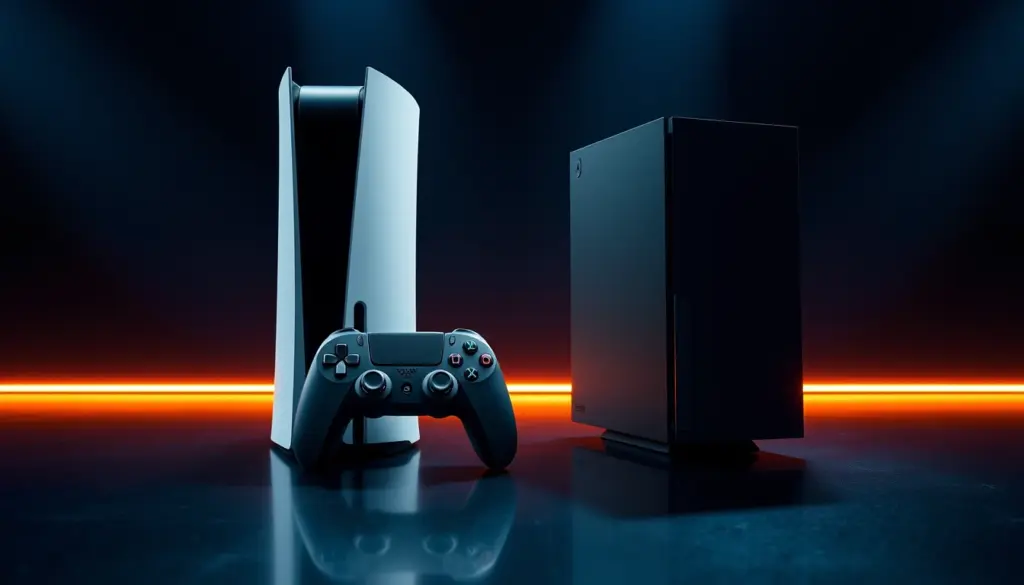
In June 2026, the PS5 vs Xbox Series X decision is stranger than it has ever been. After back-to-back price hikes, Sony’s standard disc PlayStation 5 and Microsoft’s flagship Xbox Series X both sit at exactly $649.99 in the United States – a dead heat on price for two machines that launched at $499.99 in 2020. Yet the sales gap could not be wider: PlayStation 5 has shipped an estimated 91.04 million units worldwide versus roughly 34.43 million for the Xbox Series X and Series S combined. And the pricing truce is about to break, because Microsoft has confirmed another Xbox increase landing on August 1, 2026.
This comparison cuts through the noise with verified 2026 data: official specifications, real Digital Foundry performance findings, current subscription pricing for Game Pass and PlayStation Plus, lifetime sales figures, and a clear, buyer-by-buyer recommendation. Whether you are buying your first current-generation console, upgrading from a launch unit, or weighing the $899.99 PS5 Pro, this guide gives you the numbers that actually matter – and flags the deadline that should shape your timing.
PS5 vs Xbox Series X: The 2026 Verdict at a Glance
If you only have thirty seconds, here is the bottom line. The PS5 vs Xbox Series X matchup in 2026 is decided less by raw hardware – which is remarkably close – and more by software strategy, subscription value, and price trajectory. The Xbox Series X holds a measurable on-paper GPU advantage and the best backward-compatibility library in the industry. The PlayStation 5 wins on exclusive games, install base, controller technology, and, after August 1, on price. Microsoft’s decision to publish its own first-party titles on rival hardware has quietly reshaped the whole argument.
For most buyers, the PlayStation 5 is the safer default purchase: it has the games people cannot play anywhere else, the larger online community, and – once the next Xbox hike lands – the lower flagship price. The Xbox Series X is the smarter pick for value-focused players who will lean on Game Pass, for households that want to play decades of older Xbox and Xbox 360 titles, and for anyone who buys before the August 1 increase pushes the disc model to $799.99. Neither machine is a wrong answer; the right one depends on how you actually play.
| Category | Winner | Why it matters |
|---|---|---|
| Raw GPU power | Xbox Series X | 12.155 TFLOPS vs 10.28 TFLOPS |
| Price (June 2026) | Tie | Both flagships at $649.99 |
| Price (after Aug 1, 2026) | PS5 | Xbox Series X disc rises to $799.99 |
| Exclusive games | PS5 | Astro Bot, Ghost of Yotei, Death Stranding 2 |
| Subscription value | Xbox | Game Pass day-one first-party releases |
| Backward compatibility | Xbox Series X | Four generations of titles |
| Storage speed | PS5 | 5.5 GB/s vs 2.4 GB/s raw |
| Install base | PS5 | 72.6% global share (VGChartz, Feb 2026) |
| VR support | PS5 | PlayStation VR2; Xbox has none |
Price in 2026: Why Both Consoles Just Got More Expensive
Console pricing in 2026 has become a moving target, and understanding it is the single most important part of any console-buying decision this year. Both platform holders have raised prices repeatedly, blaming global economic pressure, tariffs, and surging memory and storage component costs. The result is a current-generation lineup that is materially more expensive than it was even twelve months ago.
On Sony’s side, the standard disc PlayStation 5 climbed from its long-standing $499.99 to $549.99, then jumped again to $649.99 in a price change Sony announced on March 27, 2026 and applied in early April. The Digital Edition rose by the same $100 to $599.99, and the PS5 Pro surged $150 to $899.99 – a remarkable figure for a console that launched at $699.99 in November 2024. Even the PlayStation Portal remote player went up $50.
Microsoft, meanwhile, currently lists both the disc and all-digital Xbox Series X at $649.99, matching the PS5 exactly. But that parity has an expiration date. According to Variety, Xbox prices increase again on August 1, 2026: the disc Series X rises to $799.99, the all-digital Series X to $749.99, the 512 GB Series S to $499.99, and the 1 TB Series S to $599.99. The 2 TB Series X is being discontinued entirely. Microsoft attributed the hike to component costs, stating that “console storage and memory prices have increased by more than 2.5x” with “another doubling expected by the fall of 2027.”
The practical takeaway is blunt: if you want an Xbox Series X, buy it before August 1, 2026, when it still costs $649.99 rather than $799.99. After that date, the PS5 becomes the cheaper flagship by $150 – a decisive swing in a matchup that is otherwise a coin flip on hardware. Note too that the $649.99 disc PS5 is only $50 more than the $599.99 Digital Edition, even though adding a disc drive to a digital unit later costs $79.99; the disc model is the better value if you want physical media or cheaper second-hand games.
| Console model | Price (June 26, 2026) | After Aug 1, 2026 |
|---|---|---|
| PS5 Digital Edition | $599.99 | $599.99 (unchanged) |
| PS5 Standard (Disc) | $649.99 | $649.99 (unchanged) |
| PS5 Pro | $899.99 | $899.99 (unchanged) |
| Xbox Series S (512 GB) | $399.99 | $499.99 |
| Xbox Series S (1 TB) | $449.99 | $599.99 |
| Xbox Series X (1 TB, all-digital) | $649.99 | $749.99 |
| Xbox Series X (1 TB, disc) | $649.99 | $799.99 |
| Xbox Series X (2 TB) | Selling through | Discontinued |
Full Specs Compared: PS5 vs Xbox Series X
Underneath the plastic, the PS5 and Xbox Series X are close cousins. Both are built on AMD’s Zen 2 CPU architecture and RDNA 2 graphics, both ship with 16 GB of GDDR6 memory, and both target 4K output at up to 120 Hz over HDMI 2.1 with variable refresh rate support. The differences are real but narrow, and they cut in both directions: Microsoft chose a wider, slower-clocked GPU for more raw compute, while Sony chose a narrower, faster-clocked GPU paired with a dramatically quicker solid-state drive.
The Xbox Series X graphics processor packs 52 compute units running at 1.825 GHz for 12.155 teraflops, against the PS5’s 36 compute units at a variable 2.23 GHz for 10.28 teraflops. On paper that is an 18% advantage for Xbox. Memory bandwidth also favors Microsoft, at up to 560 GB/s versus Sony’s flat 448 GB/s. Sony’s counterpunch is storage: the PS5’s custom 825 GB SSD delivers 5.5 GB/s of raw throughput, more than double the Xbox’s 2.4 GB/s, which translates to faster level loading and more aggressive asset streaming in games engineered for it.
| Specification | PlayStation 5 (Disc) | Xbox Series X |
|---|---|---|
| Worldwide release | November 2020 | November 10, 2020 |
| Launch price | $499.99 | $499.99 |
| Price (June 2026) | $649.99 | $649.99 |
| CPU | 8-core AMD Zen 2 @ 3.5 GHz | 8-core AMD Zen 2 @ 3.8 GHz |
| GPU | RDNA 2, 36 CUs @ 2.23 GHz | RDNA 2, 52 CUs @ 1.825 GHz |
| GPU throughput | 10.28 TFLOPS | 12.155 TFLOPS |
| Memory | 16 GB GDDR6 | 16 GB GDDR6 |
| Memory bandwidth | 448 GB/s | 560 / 336 GB/s (split) |
| Internal SSD | 825 GB custom | 1 TB custom NVMe |
| SSD raw throughput | 5.5 GB/s | 2.4 GB/s |
| Optical drive | 4K UHD Blu-ray (detachable) | 4K UHD Blu-ray |
| Expandable storage | M.2 NVMe (PCIe 4.0) slot | Proprietary expansion card |
| Max video output | 4K/120 Hz, 8K, VRR | 4K/120 Hz, 8K, VRR |
| 3D audio | Tempest 3D AudioTech | Dolby Atmos / DTS:X |
| VR support | PlayStation VR2 | None |
| Controller | DualSense (haptics, adaptive triggers) | Xbox Wireless Controller |
Two practical differences stand out beyond the headline numbers. First, the PS5’s DualSense controller remains a genuine point of differentiation, with haptic feedback and adaptive triggers that supported games use to convey texture, tension, and recoil in ways the standard Xbox pad cannot. Second, only the PS5 supports virtual reality, through the PlayStation VR2 headset; Microsoft has no current VR platform. For buyers who care about immersion technology, that is a one-sided contest.
PS5 Pro vs Xbox Series X: Does the $899 Upgrade Change the Math?
The PS5 Pro complicates this comparison because it is, by a wide margin, the most powerful console on the market – and now the most expensive at $899.99. Released on November 7, 2024, the Pro is built around a substantially larger GPU. According to the device’s published specifications, it carries 60 compute units clocked up to 2.35 GHz for an 18.05 TFLOPS peak, with Sony claiming “a GPU about 45% faster than that in the existing PlayStation 5” and “twice as fast ray tracing performance.”
The Pro’s headline feature is PlayStation Spectral Super Resolution, or PSSR – a deep-learning image upscaler comparable in concept to Nvidia’s DLSS. In Pro-enhanced titles, PSSR lets the console hit higher internal resolutions or steadier frame rates than either the base PS5 or the Xbox Series X can manage. The Pro keeps the same 16 GB of GDDR6 as the base model but adds 2 GB of dedicated DDR5 for the system, ships with a 2 TB SSD, supports Wi-Fi 7 and 8K output, and ships without a disc drive (Sony sells an external drive for $79.99).
So does it change the math? For most buyers, no. At $899.99 – $250 more than a disc Series X today and $100 more even after the August Xbox hike – the PS5 Pro is a premium product for enthusiasts with 4K displays who want the cleanest possible image in graphically demanding games. It does not unlock exclusive software; every PS5 game runs on the base console too. If your budget is the deciding factor, the base PS5 or Xbox Series X delivers the overwhelming majority of the experience for hundreds of dollars less. The Pro earns its place only if image quality is your top priority and money is not the constraint.
Raw Performance: What Digital Foundry’s Benchmarks Actually Show
Here is where marketing collides with reality. The Xbox Series X has more teraflops, but in the Xbox Series X vs PS5 performance debate, that theoretical edge rarely produces a difference you can see from the couch. Across hundreds of cross-platform comparisons, the technical analysts at Digital Foundry have repeatedly found the two consoles to be near-identical in most multiplatform games, trading minor advantages depending on how each title was optimized.
The pattern that has emerged is nuanced. The Xbox Series X often holds a slightly sharper image or a marginally higher target resolution in demanding, ray-traced scenes, thanks to that extra GPU compute and memory bandwidth. The base PS5, conversely, frequently delivers smoother performance in high-frame-rate modes, partly due to a more consistent variable-refresh-rate implementation. These are differences measured with capture tools and frame-time graphs, not ones most players notice in motion.
Specific 2025 releases illustrate the point. In Obsidian’s The Outer Worlds 2, Digital Foundry found the Xbox Series X port outperformed both the PS5 and even the PS5 Pro, with the PlayStation versions suffering image breakup, lower resolution, and frame-rate drops in performance mode. In other titles the advantage flips to Sony. The honest conclusion is that neither console has a decisive, repeatable performance lead in 2026 – game-by-game optimization matters far more than the spec sheet. The exception is the PS5 Pro, whose 18.05 TFLOPS and PSSR upscaling give it a clear, visible edge in enhanced titles that neither base console can match.
Storage and Expansion: SSD Speed and Upgrade Costs
Storage is one area where the two platforms diverge meaningfully, both in performance and in upgrade cost. The PS5’s 825 GB drive leaves roughly 667 GB usable out of the box, while the Xbox Series X starts with a 1 TB drive offering about 802 GB of usable space. Modern games routinely exceed 100 GB, so most owners will expand storage within the first year regardless of which console they choose.
Sony’s approach is the more open and cost-effective one. The PS5 accepts standard off-the-shelf M.2 NVMe solid-state drives in an internal slot, so you can shop the competitive PC SSD market and frequently find a 1 TB drive for around $100 or less. Microsoft uses a proprietary Storage Expansion Card co-developed with Seagate and Western Digital; while convenient to install, these cards historically carried a price premium over comparable PC drives, with the 1 TB card launching at $219.99 before later discounts.
If you go the PS5 route, Sony publishes clear requirements for compatible drives. Buying a drive that misses these specifications – particularly the speed and heatsink requirements – can cause the console to reject it or warn of degraded performance.
PS5 M.2 SSD upgrade requirements (Sony-published)
- Interface:         PCIe Gen4 x4 M.2 NVMe SSD
- Capacity:          250 GB to 8 TB
- Sequential read:   5,500 MB/s or faster (recommended)
- Form factors:      2230 / 2242 / 2260 / 2280 / 22110
- Heatsink:          required (single- or double-sided)
- Total module size: up to 25 mm wide, 11.25 mm tall
The takeaway: PS5 expansion is cheaper and more flexible if you are comfortable installing a drive (a five-minute, screwdriver-only job), while Xbox expansion is more plug-and-play but historically pricier per gigabyte. Both consoles also support external USB drives, but on each platform those can only store and run last-generation games, not current-gen titles, which must live on the internal or expansion NVMe storage.
Game Libraries and Exclusives in 2026
For years, the exclusives war was simple: each platform locked its biggest games to its own hardware. In 2026 that logic has fractured, and it has fractured almost entirely in one direction. Microsoft now publishes its first-party games on competing platforms, bringing former Xbox-only titles such as Indiana Jones and the Great Circle, DOOM: The Dark Ages, Sea of Thieves, Forza Horizon 5, and Gears of War: Reloaded to the PlayStation 5. The strategic implication is significant: buying an Xbox to play “Xbox games” makes less sense when most of those games also appear on PS5.
PlayStation 5 Exclusives
Sony, by contrast, continues to hold a deep bench of console exclusives. Astro Bot won Game of the Year at The Game Awards 2024, and Sony followed it in 2025 with two major releases – Sucker Punch’s Ghost of Yotei and Kojima Productions’ Death Stranding 2: On the Beach, each of which earned multiple Game Awards nominations. Add established hits like Marvel’s Spider-Man 2, God of War Ragnarök, Horizon Forbidden West, Demon’s Souls, and Gran Turismo 7, and the PS5 simply has more games you cannot play on a competitor’s box. Many Sony titles eventually reach PC, but they do not appear on Xbox hardware.
Xbox Series X First-Party Games
Microsoft’s recent first-party slate is strong on quality – Hellblade II: Senua’s Saga, Avowed, South of Midnight, and The Outer Worlds 2 all arrived in the 2024-2025 window – but the multiplatform pivot means few of these are true console exclusives anymore. The genuine Xbox advantage now lies less in exclusivity and more in how you access these games, which brings us to subscriptions. For a different angle on platform momentum, see our breakdown of how the Nintendo Switch 2 outsold the PS5 in its first year.
Third-Party and Multiplatform Games
For the many players whose libraries are dominated by cross-platform releases – annual sports titles, big-budget role-playing games, live-service shooters, and the year’s marquee blockbusters – exclusives matter far less than they once did. Virtually every major third-party game launches on both the PS5 and the Xbox Series X simultaneously, at near-identical quality. If your most-played games are franchises like EA Sports FC or Call of Duty, or the latest open-world epics, you will get essentially the same experience on either console, which pushes the decision back onto price, subscriptions, and ecosystem. This is precisely why the August 1 Xbox price increase carries so much weight: when the games are the same, the cheaper machine wins by default.
Game Pass vs PlayStation Plus: Subscription Showdown
Subscriptions may be the single biggest swing factor in the value calculation between these two consoles, and 2026 has been a turbulent year for both. The headline difference is structural: Microsoft puts its own brand-new first-party games into Game Pass on launch day, while Sony does not add its day-one blockbusters to PlayStation Plus. That alone makes the top Game Pass tier the better deal for players who want to sample a steady stream of major releases without buying each at $70.
Pricing has whipsawed. In October 2025, Microsoft hiked Game Pass Ultimate from $19.99 to $29.99 a month – a 50% jump reported by CNBC – and restructured the tiers. After a public backlash, Microsoft reversed course on April 21, 2026, cutting Ultimate to $22.99 and PC Game Pass to $13.99. PlayStation Plus moved the opposite way in May 2026, raising monthly and quarterly prices across every tier while leaving annual plans untouched. One caveat for Xbox subscribers: starting in 2026, new Call of Duty titles no longer join console Game Pass at launch, arriving roughly a year later instead.
| Feature / Tier | PlayStation Plus | Xbox Game Pass |
|---|---|---|
| Entry tier (monthly) | Essential – $10.99 | Essential – $9.99 |
| Mid tier (monthly) | Extra – $16.99 | Premium – $14.99 |
| Top tier (monthly) | Premium – $19.99 | Ultimate – $22.99 |
| PC-only tier | – | PC Game Pass – $13.99 |
| Day-one first-party games | No | Yes (Ultimate & PC) |
| Cloud streaming | Premium tier | Premium & Ultimate |
| Entry annual price | $79.99 | ~$74.99 |
| Online multiplayer | All tiers | All tiers |
The math is straightforward. If you play three or more major new releases a year and are happy to play them via subscription, Xbox Game Pass Ultimate at $22.99 a month is the strongest value proposition in console gaming – you effectively rent the entire Xbox first-party catalog on day one. If you primarily want a back catalog, online multiplayer, and the occasional monthly freebie, PlayStation Plus Essential at $10.99 covers the basics more cheaply. The two services are no longer trying to be the same product, and that clarity actually makes the choice easier.
Backward Compatibility: Xbox’s Quiet Superpower
If your library spans more than one console generation, backward compatibility may settle the contest on its own. This is the clearest, most lopsided win on either side, and it belongs to Microsoft. The Xbox Series X plays the entire Xbox One catalog plus thousands of Xbox 360 and original Xbox titles through Microsoft’s long-running compatibility program – a library spanning four hardware generations, much of it enhanced with higher frame rates, faster loading, and Auto HDR at no extra cost.
The PlayStation 5’s backward compatibility is good but far narrower. It runs the overwhelming majority of PS4 games – well over 4,000 titles, with only a tiny handful of exceptions – and often boosts their performance. But it offers no native support for PS3, PS2, or original PlayStation discs. Sony’s answer is its PlayStation Plus Premium tier, which streams or emulates a curated selection of classics, but that is a subscription-gated catalog rather than the open, play-what-you-own model Xbox offers.
For collectors, lapsed players returning with a shelf of old discs, or anyone who values preservation, the Xbox Series X is simply the better machine. You can drop in an Xbox 360 disc from 2008 and, in many cases, play it looking and running better than it ever did on original hardware. That is a genuine, durable advantage that Microsoft’s competitors have never matched – and one of the few reasons to choose Xbox that the multiplatform-games shift has not eroded.
Sales and Market Share: PS5’s Commanding Lead
Whatever the spec sheets say, consumers have already rendered a verdict, and it is decisive. Industry trackers put the PlayStation 5 far ahead of the Xbox Series X and Series S in lifetime sales – a gap that has widened, not narrowed, over the generation. This matters beyond bragging rights: a larger install base means more active multiplayer lobbies, more attention from third-party developers, and stronger resale value. It is the clearest signal in the entire PS5 vs Xbox Series X sales picture.
According to VGChartz, “In February 2026, the PlayStation 5 has sold 91.04 million units in 64 months, while the Xbox Series X|S sold 34.43 million units, giving the PS5 a 72.6% market share.” A separate VGChartz tally a month earlier reported that “as of January 2026, the PlayStation 5 has sold an estimated 90.2 million units worldwide, while the Xbox Series X and Series S have combined for approximately 34.29 million units, representing a 72.5% market share for PS5” – confirming a steady, widening trajectory in Sony’s favor.
The picture is closer in the United States, where Xbox has always been stronger. Citing data from market-research firm Circana, one sales analysis noted that “in the United States as of December 2024, the PS5 leads with 59.9% market share versus Xbox’s 40.1%, with 24.54 million PS5 units sold compared to 16.41 million for Xbox Series X/S.” In other words, the global blowout becomes a closer contest on home turf – but PlayStation still leads in every major region.
| Metric | PlayStation 5 | Xbox Series X|S | Source |
|---|---|---|---|
| Global units (Feb 2026) | 91.04 million | 34.43 million | VGChartz |
| Global share (Feb 2026) | 72.6% | 27.4% | VGChartz |
| US share (Dec 2024) | 59.9% | 40.1% | Circana |
| US units (Dec 2024) | 24.54 million | 16.41 million | Circana |
Design, Controllers, and Everyday Features
Day-to-day, the two consoles feel different in ways the spec sheet does not capture. The Xbox Series X is a compact, monolithic black tower that tucks neatly into a media cabinet and runs quietly. The PlayStation 5 is physically larger, with its distinctive two-tone curved shell; the 2023 slimmer revision trimmed its bulk and introduced a detachable disc drive, but it still occupies more space than the Xbox. Both run cool and quiet compared with their predecessors, a welcome change from the jet-engine consoles of past generations.
The controllers are where Sony pulls ahead for many players. The DualSense’s adaptive triggers can stiffen to simulate drawing a bowstring or squeezing a trigger, and its haptics deliver granular feedback that supported games use to convey everything from raindrops to gravel underfoot. The Xbox Wireless Controller is a refined, comfortable, familiar pad with broad PC compatibility, but it is a conservative evolution rather than a reinvention. Xbox does offer the premium Elite Series 2 controller for competitive players, and its standard pad’s wide compatibility makes it a favorite for PC gaming too.
Two ecosystem features round out the comparison. The PS5 supports PlayStation VR2, a capable virtual-reality headset with OLED displays and eye tracking – a category Xbox does not compete in at all. And Sony’s Tempest 3D AudioTech delivers convincing positional audio through any headphones, while Xbox leans on industry-standard Dolby Atmos and DTS:X. For immersion-focused buyers, the PS5’s feature set is simply broader.
Real-World Use Cases: Which Console Should You Buy?
Specs and sales charts are useful, but the right console depends on who you are and how you play. Here are seven common buyer profiles and the data-driven recommendation for each, based on everything covered above.
| Buyer profile | Best pick | Reasoning |
|---|---|---|
| Single-player / story fan | PS5 | Astro Bot, Ghost of Yotei, God of War, Spider-Man 2 |
| Value / subscription gamer | Xbox Series X | Game Pass Ultimate adds first-party games on day one |
| Tight budget, first console | Xbox Series S ($399.99) | Cheapest entry – but buy before Aug 1, 2026 |
| Best-possible image quality | PS5 Pro ($899.99) | 18.05 TFLOPS plus PSSR upscaling |
| Third-party / multiplatform only | Either (PS5 after Aug 1) | Near-identical performance; PS5 cheaper post-hike |
| Retro / backward-compat fan | Xbox Series X | Four generations of playable games |
| VR enthusiast | PS5 | PlayStation VR2; Xbox has no VR |
A few of these deserve emphasis. Budget buyers should note that the $399.99 Xbox Series S is the cheapest way into current-generation gaming – but only until August 1, 2026, when it jumps to $499.99; after that, the calculus shifts and a discounted PS5 Digital or a used console may win. Subscription-first players genuinely get more from Xbox: if Game Pass fits how you play, the Xbox Series X is the better long-term value despite the looming hardware price increase. And anyone buying purely for cross-platform blockbusters can pick on price and ecosystem preference, because the performance difference is negligible in practice.
Pros and Cons: PS5 vs Xbox Series X
PlayStation 5 – Strengths and Weaknesses
- Pros: Deepest exclusive library; fastest internal SSD (5.5 GB/s); cheaper, open M.2 storage upgrades; DualSense haptics and adaptive triggers; PlayStation VR2 support; largest install base; cheaper flagship after August 1, 2026.
- Cons: No day-one first-party games in PlayStation Plus; limited backward compatibility (PS4 only natively); physically the larger console; PS5 Pro is expensive at $899.99; PS Plus prices rose in May 2026.
Xbox Series X – Strengths and Weaknesses
- Pros: Highest raw GPU power (12.155 TFLOPS) and memory bandwidth; unmatched backward compatibility across four generations; Game Pass adds first-party games on day one; compact, quiet design; excellent controller and PC integration.
- Cons: Third price hike lands August 1, 2026 ($799.99 disc); shrinking exclusive advantage as Microsoft goes multiplatform; pricier proprietary storage cards; no VR; Call of Duty no longer day-one on console Game Pass.
How to Switch Consoles: A 2026 Migration Guide
Switching platforms – or setting up a second console alongside your current one – is more painless in 2026 than ever, but a little planning saves headaches. The single most important rule is that digital game purchases do not transfer between platforms: a game bought on PlayStation Store stays on PlayStation, and an Xbox purchase stays on Xbox. Cross-buy is rare. Before switching, take stock of how much of your library is digital and platform-locked, because rebuying favorites adds a hidden cost to any migration.
- Audit your library and subscriptions. List your most-played digital games and check whether they exist on the destination platform. Cancel auto-renewing subscriptions you will not use after switching.
- Save your progress to the cloud. Both PlayStation Plus and Xbox offer cloud saves; some cross-platform games (and most live-service titles) sync progress through the publisher’s own account, so link those accounts first.
- Transfer local data within a platform. Moving from an old PS5 to a new one, or Xbox to Xbox, supports direct console-to-console or network transfers – no need to redownload everything.
- Budget for storage on day one. Install a 1 TB or larger expansion before you start downloading; running out of space mid-setup is the most common frustration.
- Secure the new account immediately. Turn on two-step verification and a strong, unique password before you add a payment method.
If you are cross-shopping handhelds and hybrids as well as home consoles, our coverage of the broader gaming hardware market – including the Switch 2’s record-breaking launch – puts these platform choices in context. The console you pick is increasingly one node in a multi-device gaming life rather than an exclusive commitment.
Protecting Your Gaming Account: Security Basics
Whichever console wins your decision, the account you create on it becomes a target. Gaming accounts store payment methods, years of digital purchases, and personal data – and they are among the most phished credentials online. Sony learned this the hard way in 2011, when a breach of the PlayStation Network exposed data from roughly 77 million accounts and took the service offline for weeks. The threat landscape has only intensified since.
The defensive playbook is the same on both platforms. Enable two-step verification (Sony’s 2SV or Microsoft’s two-factor authentication) so a stolen password alone cannot unlock your account. Use a long, unique password – ideally generated and stored by a password manager – and never reuse it across services. Be skeptical of “free currency,” account-verification, or prize messages, which are classic phishing attacks aimed at gamers. For a deeper foundation, our guides to password security and how data breaches actually happen explain why these habits matter.
Looking ahead, both Sony and Microsoft are moving toward passwordless sign-in. If you want to understand where account security is headed, our comparison of passkeys versus passwords covers the technology that will eventually replace the login box on your console. A few minutes spent hardening your account is the cheapest insurance you will ever buy for a library that may be worth thousands of dollars.
Final Verdict: The Data-Driven Pick for 2026
After weighing every factor, the PS5 vs Xbox Series X verdict tilts toward the PlayStation 5 for the majority of buyers – but not for the reasons it would have a few years ago. The hardware is close enough that performance should rarely decide your purchase; both deliver excellent 4K gaming, and Digital Foundry’s testing shows the two trading minor wins game by game. What separates them now is software direction and price trajectory.
The PS5 earns the default recommendation because it has the exclusive games you cannot get elsewhere, the largest and most active community, the better controller and VR ecosystem, and – critically – the lower flagship price once Xbox’s August 1, 2026 hike pushes the Series X to $799.99. The data backs the momentum: at 72.6% global market share, PlayStation has won this generation’s popularity contest decisively.
Choose the Xbox Series X if Game Pass fits your habits – paying $22.99 a month for day-one access to Microsoft’s first-party catalog is the best value in console gaming – or if you treasure backward compatibility and want to play four generations of games on one box. If you go that route, buy before August 1 to lock in the $649.99 price. And if money is no object and image quality is everything, the $899.99 PS5 Pro stands alone at the top. For everyone else, the PlayStation 5 is the console to beat in 2026, and the numbers explain why.
Frequently Asked Questions
Is the PS5 or Xbox Series X more powerful?
On paper, the Xbox Series X is more powerful, with a 12.155-teraflop GPU versus the PS5’s 10.28 teraflops and higher memory bandwidth. In real games, Digital Foundry’s testing shows the two are near-identical, trading small advantages depending on optimization. The PS5’s faster 5.5 GB/s SSD partly offsets Xbox’s GPU edge. The most powerful console overall is the PS5 Pro at 18.05 teraflops.
Why do the PS5 and Xbox Series X cost the same in 2026?
Both companies raised prices repeatedly due to economic pressure and rising memory and storage costs. As of June 2026, the disc PS5 and the Xbox Series X both retail at $649.99. That parity ends on August 1, 2026, when the Xbox Series X disc model rises to $799.99, making the PS5 the cheaper flagship.
Should I buy an Xbox before August 1, 2026?
Yes, if you have decided on an Xbox. On August 1, 2026, the disc Series X rises to $799.99, the all-digital Series X to $749.99, the 512 GB Series S to $499.99, and the 1 TB Series S to $599.99, while the 2 TB model is discontinued. Buying before that date saves $100 to $150.
Is Game Pass better value than PlayStation Plus?
For players who want new releases, yes. Xbox Game Pass Ultimate ($22.99/month) adds Microsoft’s first-party games on launch day, while PlayStation Plus never includes Sony’s day-one blockbusters. If you mainly want a back catalog and online multiplayer, PlayStation Plus Essential ($10.99/month) is cheaper. Note that new Call of Duty games no longer hit console Game Pass at launch starting in 2026.
Does the Xbox Series X still have exclusive games?
Fewer than before. Microsoft now publishes most of its first-party games on PS5 too, including Indiana Jones, DOOM: The Dark Ages, and Gears of War: Reloaded. The Xbox’s strongest remaining advantage is not exclusivity but Game Pass day-one access and unmatched backward compatibility.
Is the PS5 Pro worth $899.99?
Only for enthusiasts. The PS5 Pro’s 18.05-teraflop GPU and PSSR upscaling deliver visibly better image quality in supported games, but it unlocks no exclusive software – every PS5 game runs on the base console. At $250 more than a disc Series X today, it is a premium choice for 4K-display owners who prioritize fidelity over value.
Which console has better backward compatibility?
The Xbox Series X, decisively. It plays the full Xbox One library plus thousands of Xbox 360 and original Xbox titles across four generations, many enhanced for free. The PS5 runs over 4,000 PS4 games but offers no native PS3, PS2, or PS1 disc support – only a curated streaming catalog through PlayStation Plus Premium.
Which console sells more, PS5 or Xbox Series X?
The PS5, by a wide margin. VGChartz reported 91.04 million PS5 units sold worldwide as of February 2026 versus 34.43 million for the Xbox Series X and Series S combined – a 72.6% global market share for PlayStation. Xbox performs better in the United States, where Circana data put the split closer to 60/40 in late 2024.
Related Coverage
- Switch 2 Hits 19.86M, Outsells PS5 in Year One [2026]
- Passkeys vs Passwords: 8.5s vs 31s Sign-In [2026]
- Password Security: What Actually Keeps Accounts Safe
- Phishing Attacks: How to Recognize and Avoid Them
- Data Breaches: How They Happen and How to Protect Yourself
- More gaming hardware coverage from shattered.io