
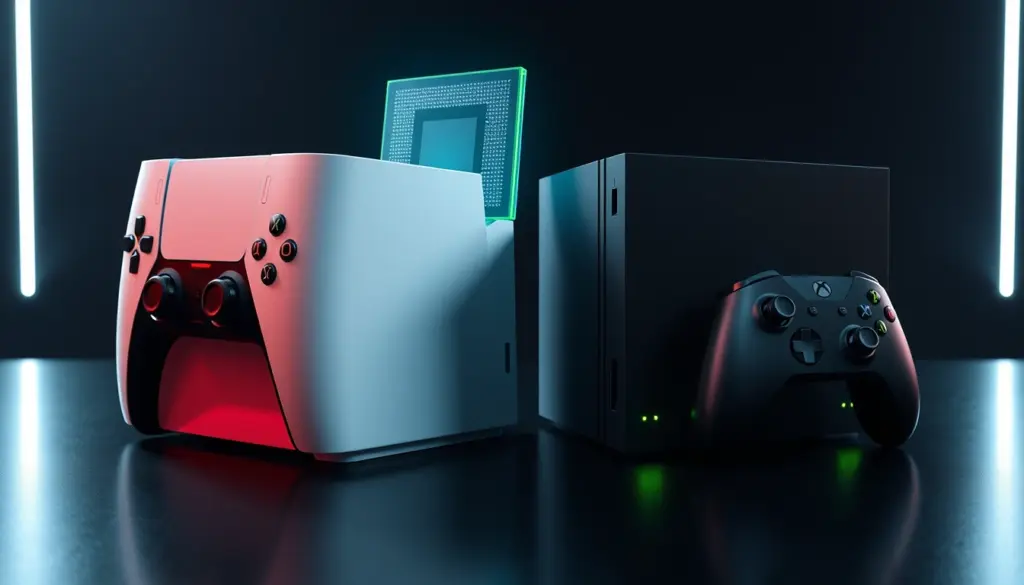
A fresh round of leaks is putting a number back on the calendar for the next generation of home consoles: 2027. Hardware leaker KeplerL2 says both Sony’s PlayStation 6 and Microsoft’s next Xbox remain lined up for a holiday 2027 launch, and the claim carries more weight than usual because it lines up with something AMD’s own CEO has already said in public. On an earnings call earlier in 2026, Dr. Lisa Su told analysts that development of Microsoft’s next-gen Xbox, built around an AMD semi-custom SoC, is “progressing well to support a launch in 2027,” according to a report from GamingBolt.
That is a rare thing in console hardware coverage: a named public company executive putting a year on a semi-custom chip program, on the record, during a quarterly call. It does not confirm a PlayStation 6 or next Xbox exist as officially announced products. Sony and Microsoft have not named either machine, and both companies have stayed silent on specs, pricing, or a launch date. What changed on September 17, 2026 is that the leak crowd and the earnings-call crowd are now telling the same story, and that alignment is what is driving search interest and renewed coverage across the gaming press this week.
What KeplerL2 and Moore’s Law is Dead are actually claiming
KeplerL2 is a longtime hardware leaker known in GPU-watching circles for pulling early product identifiers out of graphics drivers, a method that has previously surfaced accurate die names and memory configurations ahead of official reveals. In recent posts cited by Sportskeeda, the leaker said both consoles, along with a rumored PlayStation handheld, are “still in track for Holiday 2027.” Speaking about the timeline more broadly and cited by Tom’s Guide, the leaker said “it’s the plan” unless unexpected delays happen.
YouTuber Moore’s Law is Dead, another regular source in this space, has offered a similar but slightly more hedged take. In a video cited by ScreenRant, the leaker said “I think I’ve crystallized why I would say the PS6 will almost certainly come out in 2027, if not early 2028,” adding “I do not think it will be delayed to 2029.” That is notably less certain than KeplerL2’s framing, and it points to the real state of this story: multiple independent leakers converging on the same rough window, without any of them claiming inside knowledge of a locked release date.
Neither leaker’s claims should be read as confirmed fact. Both are unverified third-party reports, not statements from Sony or Microsoft. The distinction matters because leak culture around console launches has a mixed track record, and outlets covering this story have been careful to frame it as a rumor rather than an announcement.
Why Lisa Su’s comment changes the calculus
Leaks about console silicon come and go, but a public company CEO discussing semi-custom chip timing during an earnings call is a different category of information. AMD designs and fabricates the core silicon in every current-generation PlayStation and Xbox, which puts the chipmaker directly inside both companies’ hardware roadmaps. Su’s comment, reported by Tom’s Hardware, PC Gamer, and Dataconomy among others, was specific to the next Xbox rather than the PlayStation 6, and it was carefully worded: the SoC is “progressing well to support a launch in 2027,” not that Microsoft has locked in a 2027 release.
That distinction is the whole story in miniature. AMD can say its chip will be ready. Whether Microsoft or Sony actually ship a console around that chip on that timeline is a separate decision, driven by manufacturing costs, memory pricing, and how much runway is left in the current console generation. Su also told investors she expects semi-custom revenue to climb once the ramp for next-gen Xbox and PlayStation silicon begins, a comment that at least confirms AMD is actively engineering for both platforms rather than one.
The memory shortage problem nobody can leak around
The most concrete threat to a 2027 launch is not engineering, it is memory. Leaks reported by TechSpot put PlayStation 6 memory at roughly 30GB of GDDR7, with a narrower 160-bit bus offset by faster 32Gbps-per-chip speeds, yielding around 640GB/s of bandwidth versus the PS5 Pro’s 576GB/s. That is a meaningful upgrade on paper, but it lands at the worst possible moment for memory pricing.
2026 has been defined by a DRAM and NAND supply crunch driven largely by AI data center demand, and GDDR7 competes for the same fabrication capacity as the memory going into AI accelerators. If Sony and Microsoft need tens of gigabytes of premium GDDR7 per console at scale, they are bidding against AI infrastructure buyers with far deeper budgets. That dynamic is already visible on the PC side, where GPU and laptop memory costs have spiked through 2026, and it is the single biggest variable that could push a console launch from a 2027 target into 2028 regardless of what any leaker says about silicon readiness.
Rumored specs: what leakers are describing
None of the following is officially confirmed. It reflects leak-sourced claims currently circulating in hardware coverage, attributed to KeplerL2 and related reporting.
| Component | Rumored spec (leak-sourced, unconfirmed) | Current-gen comparison |
|---|---|---|
| CPU architecture | AMD Zen 6 | PS5/PS5 Pro use Zen 2 |
| GPU architecture | UDNA (unified RDNA/CDNA successor), sometimes described as RDNA 5-derived | PS5 Pro uses a customized RDNA 4-class GPU |
| Memory | ~30GB GDDR7, 160-bit bus | PS5 Pro: 16GB GDDR6, 256-bit bus |
| Memory bandwidth | ~640GB/s (leak estimate) | PS5 Pro: 576GB/s |
| Process node | TSMC 3nm-class | PS5 Pro: TSMC 4nm-class |
| Leaked codename(s) | Orion (PS6), Magnus / Project Helix (next Xbox) | Not applicable |
| Reported launch window | Holiday 2027 (KeplerL2); 2027, “if not early 2028” (Moore’s Law is Dead) | PS5 launched Nov. 2020; Xbox Series X/S launched Nov. 2020 |
The pattern across these rumors is a console that trades a wider memory bus for faster individual chips, likely a cost-driven decision given how expensive high-bandwidth memory has become industry-wide. It also mirrors a design tension shattered.io has covered elsewhere on the AMD hardware side: RDNA 5 desktop GPU silicon has itself been reported slipping toward 2028, even as AMD’s semi-custom console business reportedly stays on a separate, earlier 2027 track. Console chips and flagship desktop GPU dies do not share a single tapeout schedule, which is part of why AMD can sound confident about console silicon while consumer GPU launches drift later.
AMD’s console business, by the numbers
The financial backdrop matters here too. AMD’s gaming segment, which includes semi-custom console chip revenue, brought in $779 million in the second quarter of 2026, down 31% year over year, according to a Tom’s Hardware report on the company’s earnings. AMD attributed the decline to lower semi-custom sales tied to where the current console cycle sits, plus component constraints and pricing pressure weighing on consumer demand for Xbox Series X/S, PS5, and Steam Deck hardware.
| Metric | Q2 2026 figure | Year-over-year change |
|---|---|---|
| AMD gaming segment revenue | $779 million | Down 31% |
| Driver cited by AMD | Lower semi-custom console chip sales, component constraints, pricing pressure | N/A |
| Current console generation age | ~6 years (launched Nov. 2020) | N/A |
| AMD stated outlook | Expects semi-custom revenue to increase once next-gen console ramp begins | N/A |
A 31% drop in gaming segment revenue is exactly the kind of number that makes a 2027 refresh commercially attractive to AMD regardless of what Sony and Microsoft ultimately decide. The current generation is six years old, semi-custom sales are declining as that cycle matures, and AMD has every incentive to want the next design win to ramp as soon as memory economics allow.
Historical context: how console generation timing has actually played out
Console generations have not followed a fixed cadence in decades. The PS4 and Xbox One launched in 2013, seven years after their predecessors. The PS5 and Xbox Series X/S launched in November 2020, another seven-year gap. If Sony and Microsoft both ship in holiday 2027, that would be a shorter seven-year cycle measured from November 2020, arriving right on the historical pattern rather than ahead of it. That context cuts against the idea that a 2027 launch would be some kind of rushed early refresh; on past form, it would actually be right on schedule.
What is different this time is the component environment. Neither the 2013 nor the 2020 launches happened during a global memory shortage this severe, with AI data center buildouts pulling DRAM and high-bandwidth memory away from consumer electronics at a scale the industry has not seen before. That is the wildcard that leak-based release-date chatter tends to ignore, because leakers are typically reading engineering and driver data, not memory supply contracts.
Competitive comparison: Sony and Microsoft’s diverging positions
Sony and Microsoft are not approaching this leak cycle from the same starting point. Microsoft has spent much of 2026 reshaping its hardware division, including reported layoffs affecting Xbox teams, while leaning harder into Xbox Game Pass and cloud gaming as the platform’s growth engine rather than console unit sales alone. A next-gen Xbox positioned as a high-end, PC-adjacent machine would fit that strategy, and some of the leak-era codenames tied to the next Xbox, including Project Helix, have circulated in connection with a console designed to run PC-native game files more directly.
Sony, by contrast, has leaned on PS5 hardware profitability even as unit sales have cooled from their peak, and has been reportedly exploring adjacent hardware like a PlayStation handheld alongside a mainline PS6. Both companies face the identical external pressure: neither can escape the same GDDR7 and DRAM supply market, meaning whichever company blinks first on memory-driven cost increases will shape pricing expectations for the other.
Market impact: what a 2027 signal does to the supply chain
A credible 2027 console launch window has ripple effects well beyond Sony and Microsoft. It gives TSMC visibility into a large, multi-year 3nm-class order alongside AMD’s existing data center and client CPU demand on the same node. It gives memory makers a demand signal to plan GDDR7 capacity allocation against, at a time when they are already prioritizing AI customers. And it puts pressure on game publishers and engine makers to start planning for a hardware jump that could arrive in roughly 15 months if the 2027 window holds, a much shorter runway than developers typically get.
For AMD specifically, a confirmed next-gen console win locks in years of guaranteed semi-custom chip volume, which is exactly the kind of predictable revenue base that offsets swings in its more AI-dependent data center business. That is likely part of why Su was willing to discuss the timeline on an earnings call in the first place: it is a data point investors want, even in hedged form.
What could still push this to 2028 or later
Several factors could delay either console past 2027, and none of them require a single leaker to be wrong about chip readiness:
- GDDR7 and broader memory pricing could make a launch at a competitive price point commercially unworkable in 2027, pushing a delay purely on cost grounds.
- Microsoft has not publicly committed to any date, and reporting from Sportskeeda notes Su’s comment describes chip readiness, not a locked Microsoft release decision.
- Sony has historically preferred to let a console generation run its full commercial life before cannibalizing it with a successor, and PS5 hardware is reportedly still profitable.
- Manufacturing capacity at TSMC’s most advanced nodes is under heavy demand from AI chip customers, which could bottleneck console SoC production volume even if the design is finished on time.
- Past console generations have slipped from initial leak-era target windows before, and Moore’s Law is Dead’s own hedge toward “early 2028” reflects that leakers themselves are not fully aligned on the exact month.
Five predictions for the next 12 months
- Expect Sony and Microsoft to keep declining to confirm or deny specific dates through at least mid-2027, letting leak coverage do the market-testing for them.
- AMD will likely continue referencing next-gen console silicon on future earnings calls in similarly hedged language, tied to its semi-custom revenue outlook rather than firm product news.
- Memory pricing coverage will increasingly get tied directly to console launch speculation, since GDDR7 availability is now a leading indicator for whether a 2027 window is realistic.
- More leak-sourced codenames and driver-string discoveries are likely to surface before any formal announcement, following the same pattern KeplerL2 has used on past GPU and console leaks.
- If either company slips past 2027, expect the announcement to be framed around component costs and supply chain conditions rather than engineering delays, consistent with how the memory shortage has been discussed elsewhere in the industry this year.
What remains genuinely unconfirmed
It is worth restating plainly what has and has not been confirmed as of September 17, 2026. Sony has not announced a PlayStation 6 by that or any other name. Microsoft has not announced a successor to the Xbox Series X/S by any final retail name. Codenames like Orion, Magnus, and Project Helix are leak-era references, not confirmed internal or retail branding. The 2027 launch window comes from independent leakers and a hedged AMD earnings-call comment, not from a joint Sony or Microsoft statement. Readers should treat every spec in the tables above as a rumor snapshot, useful for tracking the shape of the story, not as a spec sheet for a real product.
Why this story keeps resurfacing
Console generation speculation is a recurring news cycle precisely because so little official information exists to settle it. Every time a leaker repeats a claim, or a company executive says something adjacent to it in a public forum, the story gets a fresh news hook without actually resolving the underlying uncertainty. That is what happened this month: KeplerL2’s restated 2027 claim, paired with a months-old but newly recirculated Lisa Su quote, combined to push PS6 and next Xbox coverage back to the top of gaming and hardware news feeds, even though neither company has said anything new.
The practical takeaway for readers and industry watchers is to track two things separately: AMD’s own semi-custom business signals, which come from a public company with disclosure obligations, and leaker chatter, which comes from anonymous or pseudonymous sources with a mixed accuracy record. Right now both are pointing at 2027. That is a meaningfully stronger signal than a leak alone, but it is still not a launch date.
Frequently asked questions
Has Sony officially confirmed the PlayStation 6?
No. “PlayStation 6” is a name used in leaks and rumor coverage. Sony has not announced a successor to the PS5 by that or any other name.
Has Microsoft officially confirmed a next-gen Xbox for 2027?
No. AMD CEO Lisa Su said the semi-custom chip for Microsoft’s next Xbox is “progressing well to support a launch in 2027,” but Microsoft itself has not confirmed a release year or product name.
Who is KeplerL2?
KeplerL2 is a hardware leaker known for surfacing early GPU and console chip details, often sourced from driver files and hardware identifiers, ahead of official announcements.
What GPU architecture will the next consoles use?
Leaks point to UDNA, an architecture AMD has described as unifying its RDNA gaming and CDNA compute lines, sometimes discussed alongside RDNA 5. This is unconfirmed for any specific console product.
Could the 2027 launch window slip?
Yes. Memory pricing, manufacturing capacity at advanced process nodes, and either company’s own commercial timing decisions could all push a launch into 2028 or later, independent of chip readiness.
Why does the current memory shortage matter for console timing?
Rumored specs point to roughly 30GB of GDDR7 memory, and GDDR7 production competes for the same advanced fabrication capacity in demand from AI accelerator makers, which has pushed memory prices up industry-wide through 2026.
How did AMD’s gaming segment perform recently?
AMD’s gaming segment revenue was $779 million in Q2 2026, down 31% year over year, which the company attributed to lower semi-custom console chip sales as the current generation matures.
Is there a PlayStation handheld coming alongside the PS6?
Leak coverage citing KeplerL2 has mentioned a PlayStation handheld on a similar rumored timeline, but this is unconfirmed and separate from PS6 hardware claims.