Bitcoin ran on one signature scheme for twelve years. Then, in November 2021, the Taproot upgrade quietly swapped in a second one, and by 2026 that second scheme is doing more of the network’s heavy lifting than most users realize. ECDSA still signs the majority of legacy addresses, but Schnorr signatures, standardized in BIP340, now handle everything from Lightning channel opens to institutional multisig custody. The two schemes solve the same basic problem, proving you control a private key, but they get there through different math, and that difference shows up in signature size, verification speed, and how many keys you can combine into a single proof.
The choice isn’t just academic for anyone building wallets, custody infrastructure, or Layer 2 systems in 2026. Signature size and aggregation support directly change transaction fees, privacy, and how complex a multisig implementation has to be. This comparison walks through the specs, the benchmarks from three independent sources, and the real production systems running each scheme as of September 2026, so you can see exactly where the two diverge and where they’ll both keep running side by side for years to come.
What Is ECDSA?
The Elliptic Curve Digital Signature Algorithm has been the default signing scheme for Bitcoin, Ethereum, and most TLS certificates since well before either chain existed. It builds a signature from a random nonce, a private key, and a hash of the message, producing two values, r and s, that a verifier checks against the signer’s public key. On the secp256k1 curve that Bitcoin and Ethereum share, a raw ECDSA signature is 64 bytes, but Bitcoin encodes signatures using the DER format plus a sighash byte, which pushes the typical on-chain size to 70-72 bytes according to River Financial’s BIP340 explainer.
ECDSA’s math is non-linear. The relationship between the nonce, the private key, and the final signature doesn’t let you simply add two signatures together to get a valid combined one. That’s fine for single-signer use, but it means multisig setups have to post every signer’s full signature on-chain separately, or lean on more complex threshold protocols like GG18 or Lindell17 to fake the effect. ECDSA also carried a known signature malleability bug for years: because the s value in a valid signature could be flipped to its negative counterpart and still verify, transaction IDs could shift after broadcast. SegWit and the low-S rule closed that gap, but the underlying algebra never changed.
ECDSA’s other well-documented failure mode is nonce reuse, and it isn’t hypothetical. The most cited real-world case is Sony’s PlayStation 3, where the console’s firmware signed every piece of code with the same fixed nonce instead of a fresh random one for each signature. Once security researchers at the 2010 Chaos Communication Congress noticed the reused k value across two signatures, the algebra collapses: subtracting one signature equation from the other cancels the nonce term entirely and exposes the private key directly. That single implementation mistake, not a flaw in ECDSA’s underlying math, let outsiders sign arbitrary code the console would trust. Schnorr signatures carry the exact same nonce-reuse risk, since both schemes depend on a fresh, unpredictable nonce for every signature, which is why modern implementations of both use deterministic nonce derivation schemes closely related to RFC 6979 rather than trusting a raw random number generator.
What Is a Schnorr Signature? How BIP340 Changed Bitcoin
Schnorr signatures predate ECDSA. Claus Schnorr patented the scheme in 1989, and the patent’s 2008 expiration is a big part of why Bitcoin didn’t launch with it, ECDSA was simply the unencumbered option available at the time. Schnorr’s construction is algebraically simpler: it computes a signature as s = k + e·x, where k is a nonce, e is a challenge hash, and x is the private key. That linear structure is the whole point. Because s values from separate signers can be added together, so can their public keys, which is what makes Schnorr the foundation for Bitcoin’s modern multisig tooling.
BIP340 standardized Bitcoin’s specific Schnorr variant on the secp256k1 curve, fixing every signature at 64 bytes and every x-only public key at 32 bytes, no encoding variance, no DER overhead. It shipped as part of the November 2021 Taproot soft fork alongside BIP341 and BIP342, and it’s the scheme behind every P2TR address, every MuSig2 wallet, and the Simple Taproot Channels now rolling out across the Lightning Network.
How Taproot Actually Got Activated
Bitcoin doesn’t add new signature schemes overnight, and Taproot’s rollout shows why. Miners signaled readiness through a Speedy Trial activation window that ran from April to August 2021, requiring 90% of blocks in a difficulty period to flag support before lock-in could trigger. That threshold was hit in June 2021, which locked in a mandatory activation height roughly three months later. The upgrade went live at block 709,632 on November 14, 2021, and every P2TR address created since has used BIP340 Schnorr by default rather than ECDSA. That slow, consensus-gated rollout is also why Schnorr adoption is measured in years rather than months: wallets, exchanges, and hardware vendors each had to ship their own Taproot support independently after the network-level switch flipped.
ECDSA vs Schnorr: Full Specs Comparison
Before diving into specs, it’s worth being precise about what’s actually being compared. “ECDSA” here refers specifically to Bitcoin and Ethereum’s implementation on the secp256k1 curve, not the ECDSA variants used in TLS certificates on curves like P-256 or P-384, which follow a different NIST standardization track entirely. “Schnorr” refers specifically to BIP340’s secp256k1 variant, not the general Schnorr signature concept, which also underlies EdDSA/Ed25519 on a different curve. The table below lines up both Bitcoin-context schemes across the properties that actually matter for developers choosing between them.
| Property | ECDSA (secp256k1) | Schnorr (BIP340) |
|---|---|---|
| Raw signature size | 64 bytes | 64 bytes (fixed) |
| Bitcoin on-chain size (DER-encoded) | 70-72 bytes | 64 bytes, no encoding overhead |
| Public key size | 33 bytes (compressed) | 32 bytes (x-only) |
| Signature format | Variable-length DER | Fixed-length, no ASN.1 |
| Malleability | Historically malleable, mitigated by low-S rule | Non-malleable by design |
| Linearity / aggregation | Non-linear, no native aggregation | Linear, supports MuSig2 and FROST |
| Batch verification | Not natively supported | Supported by design |
| Standardization | NIST FIPS 186-5 | Community standard (BIP340), EdDSA sibling in RFC 8032 |
| Multisig approach | All signatures posted separately, or complex threshold protocols | Single aggregated 64-byte signature via MuSig2/FROST |
| Nonce generation risk | Reused nonce leaks private key | Same risk, deterministic nonces (RFC 6979-style) mitigate it |
| Primary chains using it | Bitcoin (legacy), Ethereum, most TLS certs | Bitcoin (Taproot/P2TR), Internet Computer threshold Schnorr |
| Post-quantum resistance | None | None |
| Hardware wallet support (2026) | Universal | Ledger Bitcoin App 2.4.0+, most modern Taproot wallets |
Signature Size and On-Chain Footprint
Size is where Schnorr’s advantage is easiest to see. A single ECDSA signature in Bitcoin’s DER format runs 70-72 bytes depending on how the r and s values pack, while a BIP340 Schnorr signature is always exactly 64 bytes. That eight-byte gap looks small until you scale it across a multisig setup. BitcoinCoding.dev’s Taproot chapter walks through a concrete 3-of-3 example: three separate DER-encoded ECDSA signatures plus the redeem script total roughly 213 bytes on-chain, and the transaction reveals that three distinct parties signed. The Schnorr equivalent, aggregated through MuSig2, posts as one ordinary-looking 64-byte signature. One verification, one participant visible, and no way to tell from the chain alone whether one person or twenty co-signed.
That compression carries straight through to virtual size. A typical Taproot key-path spend, whether single-signer or MuSig2-aggregated, weighs in around 57.5 vBytes, against roughly 104-104.5 vBytes for an equivalent native SegWit P2WSH 2-of-3 multisig input, according to Spark’s Schnorr and MuSig2 reference. That’s close to a 45% reduction in the data a multisig input has to carry, and every byte of vSize maps directly to fee cost.
Signing and Verification Speed: The Benchmarks
GPU Throughput Numbers
The clearest head-to-head numbers come from the UltrafastSecp256k1 project’s 2026 CUDA benchmarks, run on an RTX 5060 Ti. ECDSA signing hit 4.88 million operations per second, edging out Schnorr’s 3.66 million. Verification flipped the result: Schnorr verified 5.38 million signatures per second against ECDSA’s 4.05 million, a roughly 33% advantage for Schnorr on the operation that runs far more often in production, since every node verifies every transaction while only one party ever signs it.
CPU and Cross-Curve Benchmarks
Optimization work on plain secp256k1 ECDSA also shows how much headroom exists in the implementation layer, separate from the algorithm itself. Developer Jtobin’s 2024 write-up, Faster Signatures on secp256k1, reports a 7.5x speedup for signature creation and nearly 2x for verification after targeted low-level tuning, entirely within ECDSA, which is a reminder that library quality matters as much as algorithm choice for real-world throughput. Separately, shattered.io’s own 2026 testing of Curve25519’s Ed25519 (a Schnorr-family scheme, distinct from BIP340 but built on the same linear structure) against secp256k1 ECDSA found Ed25519 verification running about 18% faster in the tested implementations, consistent with the general pattern that fixed-size, linear signature schemes verify faster than DER-encoded ECDSA across curve families.
Malleability: The ECDSA Problem Schnorr Fixed
Malleability sounds abstract until it breaks something. Early Bitcoin ECDSA signatures allowed two mathematically valid encodings for the same signature, since flipping the sign of s (replacing it with the curve order minus s) still produced a signature that passed verification. That meant a transaction’s ID could change between broadcast and confirmation without invalidating it, which complicated any protocol that referenced an unconfirmed transaction by its ID, an issue that shaped early Lightning Network design work in particular. Bitcoin Core eventually enforced a low-S rule as a standardness policy to close the gap, but it’s a patch on top of an algorithm that doesn’t rule malleability out by construction.
Schnorr signatures under BIP340 are non-malleable from the start. The secp256k1 library’s own documentation and Spark’s Schnorr reference both describe the scheme as producing a single canonical 64-byte signature per message and key pair, with no alternate valid encoding to flip. That property, combined with the linear structure enabling batch verification, is part of why Lightning’s newer channel designs default to Schnorr rather than retrofitting more workarounds onto ECDSA.
Linearity and Aggregation With MuSig2
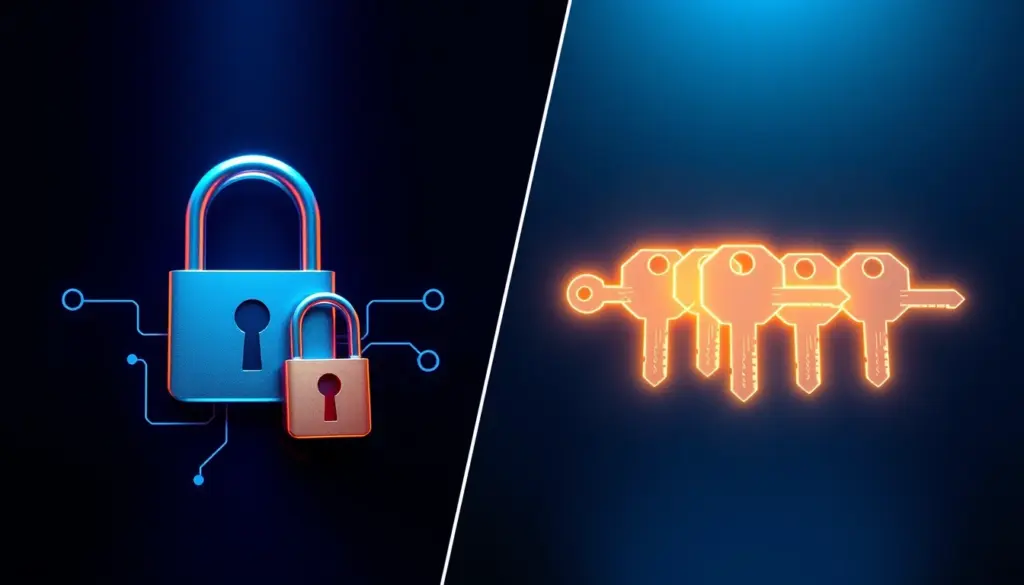
Here’s the property that separates the two schemes at a design level. In Schnorr’s math, sG = R + eX, where G is the curve generator, R is the nonce commitment, e is the challenge, and X is the public key. Because the s term is just addition, multiple signers can each compute their own partial s value and sum them into one valid aggregate signature over a combined public key. That’s the entire premise behind MuSig2 and the newer FROST threshold scheme: several private keys collapse into one signature that looks, on-chain, exactly like a single signer’s.
Schnorr aggregation (simplified):
  Signer 1: s1 = k1 + e * x1
  Signer 2: s2 = k2 + e * x2
  Aggregate signature: s = s1 + s2
  Aggregate pubkey:    X = X1 + X2
  Verifier checks:     s*G == R + e*X   (one check, any number of signers)

ECDSA has no equivalent shortcut — combining signers
requires separate signatures or a multi-round threshold protocol.
ECDSA has no comparable shortcut. Threshold ECDSA protocols exist, including GG18, GG20, and Lindell17, but they require multiple rounds of interactive computation between signers before anything gets posted, and they’re considerably more complex to implement and audit than MuSig2’s two-round signing flow. That complexity gap is a large part of why Bitcoin custody providers moved to Schnorr-based aggregation rather than building out threshold ECDSA for Taproot-era wallets.
MuSig2 isn’t the only aggregation scheme built on Schnorr’s linearity. FROST, a threshold signature scheme designed for setups where any m-of-n signers need to produce a valid signature rather than requiring all participants every time, also depends on the same additive structure. The distinction matters for custody design: MuSig2 assumes every co-owner of a wallet participates in every signature, while FROST lets a subset sign on behalf of the group, which is closer to how most real multisig treasuries actually operate, where losing access to one of three keys shouldn’t mean losing access to funds.
Who Actually Uses Each: Blockchain and Protocol Adoption
Signature scheme choice tends to be sticky once a chain launches, which is why the adoption map looks more fragmented than the technical merits alone would suggest. A chain’s genesis block effectively locks in its signature scheme for its entire base layer, since changing it means either a hard fork or, in Bitcoin’s case, a carefully staged soft fork that adds a new scheme alongside the old one rather than replacing it outright. That’s exactly the path Bitcoin took with Taproot, and it’s why ECDSA addresses from 2010 remain perfectly valid and spendable in 2026 even as new development concentrates on Schnorr.
| Chain / Protocol | Scheme | Status in 2026 |
|---|---|---|
| Bitcoin (legacy/SegWit addresses) | ECDSA | Still the majority of the existing UTXO set |
| Bitcoin (Taproot/P2TR) | Schnorr (BIP340) | Live since Nov. 2021, growing share of new transactions |
| Lightning Network (Simple Taproot Channels) | Schnorr + MuSig2 | Reached LND production release v0.21 on June 11, 2026 |
| Ethereum | ECDSA (secp256k1) | Unchanged, BLS aggregation discussed for account abstraction |
| Solana, Cardano, Stellar, Monero | Ed25519 (Schnorr family) | Use EdDSA at the protocol level |
| Internet Computer (ICP) | Threshold Schnorr + Ed25519 | Native support documented for BIP340 and Ed25519 signing |
| BitGo institutional custody | MuSig2 (Schnorr) | Taproot multisig hot wallets in production for clients |
| Ledger hardware wallets | Both | Full MuSig2 support shipped in Bitcoin App v2.4.0, April 2025 |
| TLS/X.509 certificates | ECDSA (P-256/P-384) | Dominant for web PKI, unrelated to Bitcoin’s secp256k1 usage |
NIST’s own 2025 threshold signatures research, published as part of its post-quantum cryptography publications program, notes that Bitcoin’s Taproot addition effectively brought EdDSA-style signing into a chain that had launched exclusively on ECDSA, while chains like Stellar, Monero, and Solana adopted EdDSA from day one rather than migrating into it later.
Real-World Examples in Production Today
The theory matters less than what’s actually shipping. Six production systems illustrate how each scheme gets used in practice as of late 2026.
- Bitcoin Taproot (BIP340/341/342): Every P2TR address on the network signs with BIP340 Schnorr, and wallets defaulting to Taproot addresses have become standard across major software wallets since the 2021 activation. New addresses starting with bc1p are Schnorr under the hood, while anything starting with 1 or bc1q is still ECDSA.
- Lightning Network Simple Taproot Channels: Lightning Labs shipped a MuSig2 API and used it to build Simple Taproot Channels, which reached production in LND v0.21 on June 11, 2026, turning each 2-of-2 channel funding output into a single ordinary-looking Taproot signature instead of a visibly multisig script. That matters for chain observers trying to fingerprint Lightning activity, since a Simple Taproot Channel’s on-chain footprint no longer stands out from a regular payment.
- BitGo institutional custody: BitGo runs MuSig2 Taproot hot wallets for institutional clients in production, reporting roughly 47 vBytes of savings per input compared to native SegWit multisig, which the firm translates into about 30% lower transaction fees for typical client flows. For a custodian processing thousands of withdrawals a month, that difference compounds into a meaningful line item.
- Ledger Bitcoin App v2.4.0: Ledger shipped full MuSig2 support for Taproot multisig signing on its hardware wallet line in April 2025, letting users co-sign aggregated Schnorr transactions directly from cold storage rather than exposing keys to signing software running on a general-purpose computer.
- Internet Computer threshold Schnorr: ICP’s documented threshold signing service supports both BIP340 Schnorr, used for Bitcoin-adjacent assets like Ordinals and BRC-20 tokens, and Ed25519, covering integrations with Solana, Cardano, Polkadot, and Ripple at the protocol level. That gives smart contracts on ICP a way to sign transactions for chains that never touch ECDSA at all.
- Ethereum’s continued ECDSA baseline: Despite years of discussion around BLS aggregation and account abstraction, Ethereum’s base layer still signs with plain secp256k1 ECDSA, illustrating how much inertia a live chain with an established validator and tooling ecosystem carries against a signature scheme migration. Every wallet, every precompile, and every existing smart contract assumes ECDSA recovery, and rewriting that assumption would touch nearly the entire application layer.
Wallet and Software Support Heading Into 2026
Protocol-level support is only half the adoption story. The other half is whether the software people actually use has caught up. By 2026, mainstream Bitcoin wallets, including Bitcoin Core, Electrum, Sparrow, and BlueWallet, generate Taproot addresses either by default or as a selectable option, and most block explorers clearly label P2TR outputs so users can tell which scheme secures a given address. Coinbase, Kraken, and other large exchanges have added Taproot withdrawal support over the past several years, though deposit-side handling still varies by platform since older infrastructure sometimes assumes legacy or SegWit formats.
The gap that remains is mostly on the multisig and enterprise side. Building a MuSig2-based signing flow correctly, especially the two-round nonce exchange between signers, is meaningfully harder to get right than calling a standard ECDSA signing function, which is why MuSig2 adoption has concentrated first at well-resourced custodians like BitGo and hardware vendors like Ledger rather than spreading evenly across every wallet project at once. Smaller, open-source wallet teams have been slower to ship it, not because Schnorr is worse, but because threshold signing protocols carry real implementation risk if nonce handling goes wrong.
Transaction Fee Costs: A Pricing Comparison
Signature size converts directly into fee cost on Bitcoin, since miners price transactions by virtual size, not by transaction count. Using the vByte figures from Spark’s Schnorr and MuSig2 reference (57.5 vBytes for a Taproot MuSig2 input versus 104 vBytes for an equivalent native SegWit P2WSH 2-of-3 multisig input), the cost gap holds steady at roughly 45% across every fee environment.
| Fee rate (sat/vByte) | ECDSA 2-of-3 P2WSH input cost | Schnorr MuSig2 2-of-3 Taproot input cost | Savings |
|---|---|---|---|
| 10 sat/vB | 1,040 sats | 575 sats | 465 sats (~45%) |
| 20 sat/vB | 2,080 sats | 1,150 sats | 930 sats (~45%) |
| 50 sat/vB | 5,200 sats | 2,875 sats | 2,325 sats (~45%) |
| 100 sat/vB | 10,400 sats | 5,750 sats | 4,650 sats (~45%) |
That 45% figure holds for a single input, and it compounds further on transactions with several multisig inputs, which is exactly the profile of an exchange consolidating funds or a custody provider batching withdrawals. It’s also the reason BitGo’s real-world reported savings, around 30% on typical institutional transaction flows, land in a similar range even though its configuration and fee-rate mix differ from this simplified model. Note that the wider Taproot adoption figures reported across trackers vary considerably by methodology, Spark’s network statistics dashboard put transaction-count share at a 2024 peak near 42% before settling to roughly 15-20% by early 2026, while BitMEX Research measured 8.6% of transaction value moving to Taproot addresses in a 30-day window around July 2025, so treat any single adoption percentage as a snapshot of one specific metric rather than a universal figure.
ECDSA Pros and Cons
ECDSA’s biggest advantage in 2026 is simply how deeply embedded it is. It’s the default in FIPS 186-5, it’s baked into every major TLS library, every HSM, every hardware security module built for enterprise key management, and every Ethereum wallet and smart contract that expects a secp256k1 signature. Switching away from it means touching code that’s been audited, certified, and deployed for over a decade, and for most teams that cost outweighs the byte-level savings Schnorr offers unless multisig or aggregation is a core part of the product.
- Pro: Universal library, hardware, and compliance support (FIPS 186-5)
- Pro: No ecosystem migration required for existing Bitcoin, Ethereum, or TLS deployments
- Pro: Well-understood security track record after decades of production use
- Con: Larger, variable-length DER-encoded signatures (70-72 bytes in Bitcoin)
- Con: No native aggregation, multisig requires posting every signature or building complex threshold protocols
- Con: Historical malleability required a standardness-layer patch (low-S rule) rather than a structural fix
Schnorr Pros and Cons
Schnorr’s advantages are structural rather than incremental. Fixed-size signatures, native non-malleability, and linear aggregation aren’t optimizations bolted onto an existing scheme, they’re properties of the math itself. The tradeoff is that Schnorr support is newer and narrower, and outside Bitcoin and Bitcoin-adjacent projects like the Lightning Network, most of the ecosystem still expects ECDSA at the protocol level.
- Pro: Fixed 64-byte signatures with no encoding overhead
- Pro: Native multisig aggregation via MuSig2/FROST, cutting multisig input size by roughly 45%
- Pro: Non-malleable by construction and supports batch verification
- Pro: Faster verification in benchmark testing (roughly 33% in UltrafastSecp256k1’s GPU tests)
- Con: Not a NIST-standardized algorithm, BIP340 is a Bitcoin community standard
- Con: Narrower hardware wallet and library support outside Bitcoin-focused tooling
- Con: Ethereum and most non-Bitcoin chains have no near-term plans to adopt it at the protocol level
Which One Should You Use? Five Use Cases
The right choice depends heavily on what you’re building and which ecosystem it has to fit into. Treat the framework below as a starting point rather than a strict rule, since plenty of real systems end up running both schemes side by side for different parts of the same product.
- Bitcoin multisig treasury or custody product: Build on Taproot with MuSig2. The vByte savings and privacy benefits (an aggregated signature doesn’t reveal the multisig structure) make this the clear default for new custody infrastructure in 2026.
- Ethereum or EVM-compatible smart contract system: Stay on ECDSA. The entire toolchain, from wallets to precompiles to account abstraction standards, assumes secp256k1 ECDSA, and there’s no practical path to swap it out at the application layer.
- Lightning Network node operator or channel infrastructure: Move to Simple Taproot Channels where your node software supports it (LND v0.21 and later). The malleability guarantees and smaller channel footprints are a direct upgrade.
- Enterprise system requiring FIPS compliance or HSM integration: Stick with ECDSA. FIPS 186-5 certification paths and most hardware security modules are built around it, and Schnorr has no equivalent certification track yet.
- New privacy-focused wallet or coinjoin-style protocol: Schnorr’s aggregation makes multi-party transactions indistinguishable from single-signer ones on-chain, which is a meaningful privacy upgrade over visibly-scripted ECDSA multisig.
- Cross-chain infrastructure touching Solana, Cardano, or Stellar: You’re already working with Ed25519, a Schnorr-family scheme, so the aggregation and verification-speed logic here largely applies, even though it’s a different implementation than Bitcoin’s BIP340.
Migration Guide: Moving From ECDSA to Schnorr/Taproot
Moving an existing Bitcoin-facing product from ECDSA to Schnorr isn’t a drop-in swap. It touches address generation, signing flow, and often key management. Rushing it risks funds sent to malformed addresses or, worse, signing bugs that leak nonces. Here’s the practical sequence most wallet and custody teams have followed, split by role since a wallet developer and a custodian face different risks at each step.
For Wallet Developers
- Audit your current address generation code to confirm which script types (P2PKH, P2WPKH, P2SH) you support and which library handles ECDSA signing.
- Add BIP340/341/342 support through an updated secp256k1 library build, since most major implementations (libsecp256k1, BDK) added Schnorr support around the original Taproot activation.
- Implement x-only public key derivation (32 bytes, dropping the sign byte) alongside your existing compressed 33-byte ECDSA keys.
- Default new wallet addresses to P2TR while keeping full send/receive support for legacy and SegWit addresses your users already hold funds in.
- If you’re building multisig, integrate a MuSig2 library rather than hand-rolling key and nonce aggregation, the two-round signing flow has subtle pitfalls around nonce reuse across sessions.
- Test against known BIP340 test vectors before mainnet deployment, and confirm your hardware wallet integration (if any) matches the signing flow your chosen device firmware expects.
- Update fee estimation logic to account for the smaller vSize of Taproot inputs, or your fee calculations will overestimate costs for Schnorr-based transactions.
For Exchanges and Custodians
- Run Taproot support in a sandboxed hot wallet before touching cold storage or client-facing withdrawal flows.
- Coordinate with your hardware security module or custody vendor to confirm MuSig2 support, not every HSM vendor has shipped it, and check whether your compliance framework requires FIPS-certified signing (which currently points back to ECDSA).
- Migrate withdrawal address generation to P2TR gradually, monitoring fee savings and any wallet-compatibility issues from receiving services that haven’t updated their Taproot support.
- Keep ECDSA signing paths fully operational throughout the transition, since legacy and SegWit UTXOs don’t disappear and still need to be spendable.
Post-Quantum Outlook: Where Both Stand Against NIST’s New Standards
Neither scheme survives a large enough quantum computer. Both ECDSA and Schnorr rely on the discrete logarithm problem over elliptic curves, which Shor’s algorithm breaks in polynomial time given sufficient qubits. NIST closed out its post-quantum signature standardization in August 2024, finalizing FIPS 204 for the lattice-based ML-DSA family and FIPS 205 for the hash-based SLH-DSA family, and formally approved both as the government’s forward path. Neither ECDSA nor Schnorr appears anywhere in that standard, both are explicitly legacy, classical algorithms from NIST’s perspective.
For Bitcoin specifically, the quantum question is complicated by exposed public keys. Any address that has ever spent funds reveals its full public key on-chain, whether that key sits behind ECDSA or Schnorr, and a sufficiently powerful quantum computer could in theory derive the private key from that exposed public key before a new transaction confirms. Addresses that have never spent, only received, keep their public key hidden behind a hash and are comparatively safer until the moment they’re used. That risk applies equally to legacy ECDSA addresses and modern Taproot addresses, since the exposure comes from the public key becoming visible, not from which signature algorithm processed it. Proposals like BIP360 discuss adding post-quantum signature options to Bitcoin, but as of September 2026 nothing has reached the same consensus-activation stage that Taproot did in 2021.
That shared vulnerability doesn’t make the ECDSA-vs-Schnorr choice irrelevant, though. Post-quantum signature schemes are dramatically larger, ML-DSA signatures run into the thousands of bytes compared to 64 for either ECDSA or Schnorr, so whichever scheme a network runs today shapes how painful a future migration to quantum-resistant signatures will be. A chain already comfortable with Schnorr’s aggregation logic may find it easier to integrate quantum-resistant threshold schemes later, since the conceptual groundwork (splitting a signature across multiple rounds and parties) is already part of its tooling.
The Verdict
Schnorr wins on nearly every technical axis that got measured here: fixed 64-byte signatures against ECDSA’s 70-72-byte DER encoding, roughly 33% faster verification in UltrafastSecp256k1’s GPU benchmarks, native non-malleability, and a linear structure that cuts real multisig transaction costs by close to 45%. If you’re building anything new on Bitcoin in 2026, especially anything involving multiple signers, Taproot and MuSig2 are the obvious starting point. The data lines up consistently across independent sources, from Spark’s vByte figures to BitGo’s production fee reports to the raw GPU throughput numbers, which is a stronger signal than any single benchmark on its own.
ECDSA isn’t going anywhere, though, and that’s not inertia for its own sake. Ethereum’s entire account model depends on it, TLS and enterprise PKI depend on it, and FIPS 186-5 compliance paths depend on it. The realistic pattern for most teams in 2026 isn’t picking one scheme and discarding the other, it’s running ECDSA where the ecosystem demands it and Schnorr wherever a fresh Bitcoin-native system gives you the choice.
Frequently Asked Questions
Is Schnorr more secure than ECDSA?
Both rely on the same underlying elliptic curve discrete logarithm hardness assumption, so neither is fundamentally “more secure” in a cryptographic sense. Schnorr’s advantage is structural: it’s non-malleable by design rather than through a policy patch, and its simpler algebra has a smaller attack surface for implementation bugs.
Can Ethereum switch to Schnorr signatures?
Technically yes, but it hasn’t, and there’s no active proposal to replace ECDSA at the base layer. Discussions around Ethereum account abstraction have focused more on BLS signature aggregation for validator sets than on Schnorr specifically.
What is BIP340 in simple terms?
BIP340 is the Bitcoin Improvement Proposal that defines exactly how Schnorr signatures work on Bitcoin’s secp256k1 curve, fixed 64-byte signatures and 32-byte x-only public keys. It shipped as part of the Taproot upgrade in November 2021.
Does Schnorr work with Ed25519?
Ed25519 (EdDSA) is a different, RFC 8032-standardized implementation from the same Schnorr signature family, but it’s not the same as Bitcoin’s BIP340 variant. Both share the linear s = k + e·x structure that enables aggregation, but they use different curves and encoding.
Is ECDSA still safe to use in 2026?
Yes, against classical computers ECDSA remains secure when implemented correctly with proper nonce generation. Its main practical weaknesses are historical (malleability, patched via the low-S rule) and structural (no native aggregation), not cryptographic breaks.
What is MuSig2 and why does it matter?
MuSig2 is a two-round Schnorr signature aggregation protocol that lets multiple signers produce one combined 64-byte signature instead of posting individual signatures. It’s what powers Taproot multisig wallets at BitGo, Ledger, and across the Lightning Network’s Simple Taproot Channels.
Will post-quantum cryptography replace both ECDSA and Schnorr?
Eventually, yes. NIST’s FIPS 204 and FIPS 205 standards, finalized in August 2024, define quantum-resistant signature schemes that don’t rely on elliptic curve math at all. Neither ECDSA nor Schnorr is quantum-resistant, so any chain relying on either will need a future migration path.
How much do Taproot transactions actually save in fees?
For multisig specifically, roughly 45% smaller virtual size compared to native SegWit multisig, based on Spark’s reference figures of 57.5 vBytes versus 104 vBytes per input. BitGo has reported around 30% lower fees on its institutional Taproot flows in production.
Why didn’t Bitcoin launch with Schnorr signatures in 2009?
Claus Schnorr’s original patent on the signature scheme didn’t expire until February 2008, right before Bitcoin’s white paper appeared, and even then the patent situation was seen as legally murky enough that Bitcoin’s creator opted for the unambiguously unencumbered ECDSA instead. It took until Taproot’s 2021 activation for the network to formally adopt a Schnorr variant through BIP340.