Ambarella and ZEDEDA told the market on September 15, 2026 that they are merging silicon and software into a single pitch: cloud-orchestrated AI running on physical devices, deployed and managed from one control plane. The deal pairs ZEDEDA’s open-source EVE-OS with Ambarella’s N1 family of edge generative AI chips, starting with the N1-655, and it lands at a moment when “Physical AI” has gone from a Jensen Huang keynote line to a market category that analysts now size in the tens of billions of dollars. For a chipmaker whose year-over-year growth just decelerated from 49.9% to 13.2%, and a startup that has raised more than $129 million in venture funding without an IPO in sight, the timing is not incidental.
What Ambarella and ZEDEDA Actually Announced
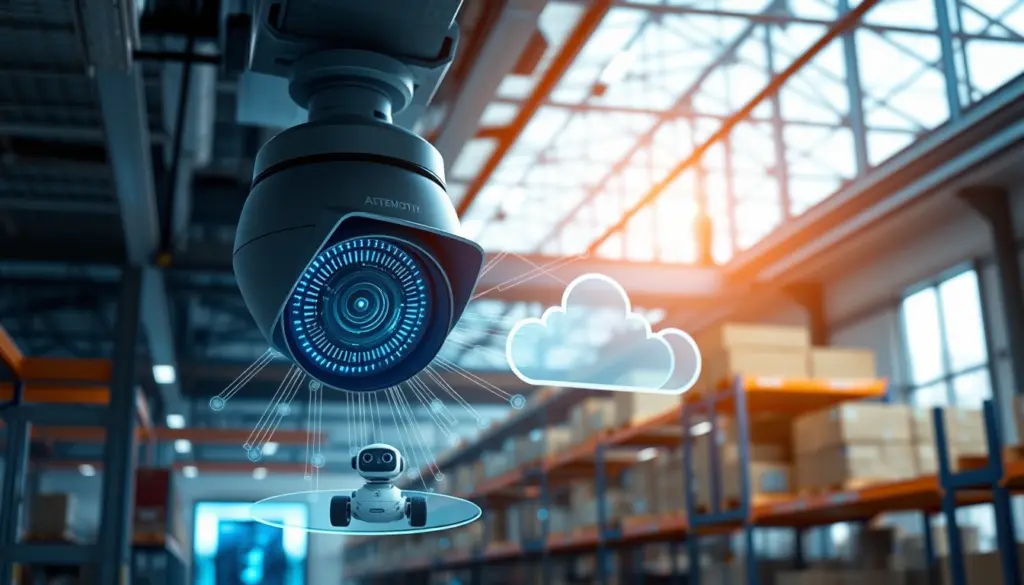
The core of the deal is straightforward. ZEDEDA’s EVE-OS, an open-source edge operating system governed by the Linux Foundation’s LF Edge project, now runs natively on Ambarella’s N1 family of edge AI system-on-chips, with the N1-655 as the first validated target. On top of that OS sits the ZEDEDA Edge Intelligence Platform, a cloud-hosted control plane that lets a fleet operator deploy, update, secure, and monitor AI models across distributed hardware without touching each device by hand. Ambarella and ZEDEDA are framing the combination as infrastructure for cameras, robots, vehicles, industrial systems, and other edge appliances, according to the companies’ joint announcement.
Developer kits with EVE-OS pre-installed on Ambarella silicon are scheduled to reach the company’s Developer Zone, or DevZone, in Q4 2026. That rollout dovetails with a separate move Ambarella made the same week: expanding DevZone with a cloud-hosted IDE and remote access to live silicon for agentic AI development on Google Cloud Platform, a signal that the company is betting its future less on selling raw chips and more on selling a full development and orchestration stack around them, per IoT Tech News’ coverage of the partnership.
Inside the Stack: N1-655 Silicon Meets EVE-OS
Ambarella built its business on video compression and computer vision chips before pivoting hard into edge AI silicon over the past several years. The N1 family extends that lineage into generative AI workloads that need to run locally, not in a data center, because a factory camera or an autonomous forklift cannot tolerate the round-trip latency of shipping every frame to the cloud. EVE-OS provides the missing piece: a lightweight, vendor-neutral foundation that supports containerized and virtualized workloads, including Kubernetes-style deployments, on constrained edge hardware.
That containerized approach matters because it lets fleet operators treat N1-655-powered devices more like the containerized cloud infrastructure their DevOps teams already understand, rather than as bespoke embedded systems that need custom firmware for every update. The Edge Intelligence Platform then handles zero-touch provisioning and lifecycle management, letting a single operator push a model update to thousands of cameras or robots from one dashboard instead of a truck roll.
A Simplified View of Fleet-Scale Deployment
The general pattern behind edge orchestration platforms like this one looks similar across vendors: a declarative manifest describes what should run where, and the control plane reconciles actual device state against that target. A simplified example of that kind of declarative workload targeting looks like this:
workload: vision-inference-v2
target_device_class: n1-655
placement:
  fleet: retail-cameras-us-east
  rollout: canary
  canary_percent: 5
resources:
  memory_limit_mb: 512
  runtime: container
update_policy:
  strategy: zero-touch
  rollback_on_failure: true
This is illustrative of the deployment model these platforms describe publicly, not a literal Ambarella or ZEDEDA configuration file, but it captures the shift: edge AI fleets are increasingly managed the way cloud-native applications are, with canary rollouts, rollback policies, and declarative placement rather than manual flashing.
Why “Physical AI” Is Suddenly a Market Category
The term Physical AI did not exist as a tracked market a few years ago. Nvidia CEO Jensen Huang popularized it during his CES 2025 keynote, describing AI systems that perceive the physical world through sensors and act on it through actuators, spanning industrial robots, autonomous vehicles, drones, and humanoid robots. Analysts have since built dedicated forecasts around the term. Mordor Intelligence pegs the narrow Physical AI market at $7.11 billion in 2026, rising to $34.89 billion by 2031, a 37.46% compound annual growth rate. Broader definitions that fold in all AI-enabled physical systems push the 2026 number into the hundreds of billions.
That framing gives Ambarella and ZEDEDA a story to tell that goes beyond selling chips or software separately: they are positioning the combined stack as infrastructure for an entire emerging category, not just another edge computing SKU. Whether the market ultimately settles on the narrow definition or the broad one will determine how big a prize is actually on the table, but the growth rate under either scenario is steep enough to justify the partnership on its own.
The Numbers: Edge AI and Edge Computing Market Size in 2026
Market research firms do not agree on a single figure for edge AI or edge computing, largely because they scope the category differently, but the overall trajectory across every estimate points the same direction: fast growth from a base that is still small relative to cloud computing overall.
| Research Firm | Market Segment | 2026 Value | Forecast Value | CAGR |
|---|---|---|---|---|
| Grand View Research | Edge AI | $30.0B | $118.7B by 2033 | 21.7% |
| MarketsandMarkets | Edge Computing | $111.34B | $317.39B by 2031 | 23.3% |
| Precedence Research | Edge AI | $31.05B | $165.05B by 2035 | 20.46% |
| Fortune Business Insights | Edge AI | $47.59B | $385.89B by 2034 | 29.9% |
| Mordor Intelligence | Physical AI (narrow) | $7.11B | $34.89B by 2031 | 37.46% |
| ABI Research | Edge AI Chipsets | $34.4B | $96B by 2031 | ~23% |
Read across these estimates and a pattern emerges: whichever scope an analyst chooses, edge AI is compounding at roughly 20% to 37% a year through the early 2030s, according to MarketsandMarkets’ edge computing forecast and Precedence Research’s edge AI market report. That is the growth curve Ambarella and ZEDEDA are trying to ride, and it is also the growth curve every hyperscaler with an IoT division is chasing.
Ambarella’s Earnings Show the Edge AI Bet Paying Off, With a Catch
Ambarella reported fiscal second-quarter results for the period ended July 31, 2026, on September 3, 2026, posting revenue of $108.1 million, up 13.2% year over year from $95.5 million, according to the company’s own 8-K filing summary. Gross profit reached $62.4 million, non-GAAP diluted earnings came in at $0.18 per share against a Zacks consensus estimate of $0.16, and the company described the quarter as driven by record AI revenue alongside strong automotive and IoT demand. The GAAP picture was less clean: a net loss of $6.7 million, or $0.15 per share, though that is a meaningful improvement from the $20.0 million GAAP loss in the same quarter a year earlier.
The catch is in the growth rate itself. A year earlier, Ambarella’s fiscal Q2 2026 revenue of $95.5 million had jumped 49.9% year over year. The most recent quarter’s 13.2% growth is still positive, and still ahead of consensus, but it is a sharp deceleration. For the six months ended July 31, 2026, revenue rose 14.9% to $208.5 million. Investors watching the ZEDEDA partnership as a growth catalyst should read it against that backdrop: Ambarella needs a new demand driver precisely because its post-pandemic AI silicon ramp is normalizing.
ZEDEDA’s Funding Trail and the Bet on Edge Intelligence
ZEDEDA has not disclosed a single, consistent lifetime funding total across the trackers that follow it, a common problem with late-stage private companies. Figures range from $129.6 million across five rounds to $143.3 million across four rounds, depending on the aggregator. What is consistent across sources is the most recent disclosed round: a $72 million Series C in February 2024, led by Keith Block, with participation from ARCH Venture Partners, Clear Ventures, General Catalyst, Lightspeed Venture Partners, LUX Capital, Mubadala, Samsung Next, and Porsche Ventures, among others.
That investor list matters for context. Mubadala and Porsche Ventures both have direct strategic interests in physical-world AI, from sovereign infrastructure to automotive supply chains, and their presence in ZEDEDA’s cap table suggests the Ambarella partnership was not a cold-call business development win but a natural extension of relationships already in place. ZEDEDA has not filed for an IPO as of this writing, and the Ambarella deal gives it a much larger installed hardware base to point to the next time it raises.
How This Compares to AWS IoT Greengrass and Azure IoT Edge
Ambarella and ZEDEDA are not entering an empty field. AWS IoT Greengrass and Azure IoT Edge have run production fleets for years, and Nvidia’s Jetson and IGX lines dominate the high-compute end of edge robotics. The difference in this deal is vertical integration: a single, named silicon target (the N1-655) paired with an open-source OS and a dedicated orchestration layer, versus the more hardware-agnostic approach AWS and Microsoft take.
| Platform | Vendor(s) | Core OS/Runtime | Primary Target Hardware | Entry Pricing |
|---|---|---|---|---|
| Ambarella-ZEDEDA stack | Ambarella + ZEDEDA | EVE-OS (open-source, LF Edge) | N1-655 and N1 family SoCs | Dev kits via DevZone, Q4 2026 |
| AWS IoT Greengrass | Amazon Web Services | Greengrass Nucleus / Nucleus Lite | Hardware-agnostic Linux/Windows | Free core software, pay per AWS IoT usage |
| Azure IoT Edge | Microsoft | Azure IoT Edge runtime (containers) | Hardware-agnostic Linux/Windows | Free runtime, pay per Azure IoT Hub usage |
| Jetson AGX Thor + IGX Thor | NVIDIA | JetPack / Holoscan | Jetson T5000 module (Blackwell GPU) | $5,499 dev kit / $4,999 module (1K+ units) |
AWS has kept Greengrass actively updated through 2026: Greengrass Core v2.17.0 shipped April 16, 2026 with non-root Linux installation and TPM-based fleet provisioning, and v2.18.0 followed on July 8, 2026 with cross-account and cross-region device migration plus Windows Server 2025 support. AWS also set June 1, 2026 as the end-of-support date for Greengrass v1, pushing remaining customers onto the v2 architecture. That cadence shows AWS treating Greengrass as core infrastructure rather than a side project, which is the same signal Ambarella and ZEDEDA are trying to send with their own release cycle.
NVIDIA’s Shadow: Jetson Thor and IGX Thor Pricing
Any edge AI silicon story in 2026 has to reckon with Nvidia. The Jetson AGX Thor Developer Kit, built around the T5000 module with a Blackwell-architecture GPU, 2,560 CUDA cores, 96 fifth-generation Tensor Cores, and up to 2,070 sparse FP4 TFLOPS of AI compute, launched at $3,499 in August 2025. By mid-2026, Nvidia’s own developer FAQ and US marketplace listed the same kit at $5,499, a roughly 57% increase, according to Nvidia’s published Jetson FAQ. The standalone T5000 module runs $4,999 at 1,000-unit-plus volume. The related IGX Thor platform, aimed at industrial, medical, and robotics deployments, shares the same 128GB LPDDR5X memory and Blackwell GPU baseline but adds higher-throughput networking, including dual QSFP112 ports at 200 GbE each, as detailed on Nvidia’s IGX product page.
That price increase is the opening Ambarella is trying to exploit. An N1-655-based system paired with open-source EVE-OS is not a direct performance match for a Blackwell-class Jetson Thor module, but for camera fleets, retail analytics, and mid-tier industrial robotics that do not need 2,070 TFLOPS of headroom, a cheaper Arm-based alternative with built-in fleet orchestration is a real substitute, not just a budget compromise.
Historical Context: From IoT Gateways to Physical AI
Edge computing has gone through at least three distinct phases since the early 2010s. The first was the IoT gateway era, where devices mostly collected sensor data and forwarded it to the cloud for processing, with minimal local intelligence. The second, roughly 2018 to 2023, added real 5G multi-access edge computing and the first generation of dedicated inference chips, letting devices run pre-trained models locally for tasks like object detection. The current phase, which the Ambarella-ZEDEDA deal exemplifies, treats the edge device as a full participant in a distributed AI system: it can run generative and multimodal models, receive orchestrated updates, and operate semi-autonomously when connectivity drops.
This progression tracks the broader shift in cloud computing architecture away from centralization. Just as enterprises spent the 2020s pushing compute out of single-region data centers toward multi-region and edge deployments, they are now pushing AI inference out of the cloud entirely for latency-sensitive and bandwidth-constrained use cases. The difference this time is that the software stack managing that distribution, exemplified by EVE-OS and similar platforms, is maturing into something that looks a lot like Kubernetes for physical hardware.
Market Impact: What This Means for Chipmakers and Cloud Vendors
For Ambarella, the immediate market impact is strategic positioning rather than a revenue event; the partnership itself does not carry disclosed financial terms. But it arrives as the company’s core growth is decelerating, and as competitors from Qualcomm to MediaTek push their own edge AI silicon roadmaps. Bundling silicon with an open-source, Linux Foundation-governed OS is a way to compete on total cost of ownership and integration effort rather than raw compute, which is the metric Nvidia currently wins on outright.
For cloud vendors, the signal is more structural. AWS and Microsoft have spent years building Greengrass and IoT Edge as hardware-agnostic layers precisely so they are not dependent on any single chip vendor’s roadmap. A silicon-specific stack like Ambarella-ZEDEDA does not threaten that model directly, but it does show that chipmakers increasingly want to own the orchestration layer themselves rather than cede it entirely to hyperscalers, echoing the same dynamic already visible in custom AI chip pricing battles playing out in the cloud data center market. If that pattern spreads to other silicon vendors, cloud providers could see a slower share of the edge AI orchestration layer than they currently enjoy in the data center.
Security and Zero-Touch Provisioning Considerations
Fleet-scale edge deployments carry a different risk profile than centralized cloud infrastructure. A compromised cloud region is a single incident; a compromised fleet-management control plane can potentially reach every physical device it manages, from factory-floor cameras to delivery robots. EVE-OS being open-source and governed by the Linux Foundation gives outside researchers visibility into the OS layer that closed embedded firmware typically lacks, which is a meaningful security argument in the pitch, though it does not eliminate risk in the ZEDEDA Edge Intelligence Platform’s cloud-side control plane itself.
Zero-touch provisioning, the ability to onboard a new device into a fleet without manual configuration, is convenient at scale but concentrates trust in whatever credential or certificate chain authorizes that onboarding. Enterprises evaluating this stack, or any competing edge orchestration platform, should treat that provisioning chain with the same scrutiny they would apply to any other AI infrastructure spend that scales quickly: audit what happens when a credential is stolen, not just what happens when everything works.
What Ambarella and ZEDEDA Executives Are Saying
ZEDEDA founder and CEO Said Ouissal framed the partnership around the operational challenge of Physical AI rather than the modeling challenge. “AI is moving into the physical world, and the hard part was never training models. It’s operating them securely and reliably on millions of devices in the field,” Ouissal said, according to the companies’ joint announcement. He added that combining Ambarella silicon with EVE-OS and the Edge Intelligence Platform is meant to “give developers and enterprises a cloud-like experience for deploying and operating AI across fleets of intelligent machines.”
Ouissal went further in describing the stakes, calling the deal “an important step toward making Physical AI operational at scale.” On the Ambarella side, Chief Growth Officer Muneyb Minhazuddin described the underlying shift in similar terms: “Physical AI is moving intelligence from the cloud into machines that perceive, understand and act in the real world,” he said, per the same announcement.
Predictions: Where Cloud-Orchestrated Edge AI Goes Next
- More silicon-specific OS partnerships. Expect other edge AI chipmakers to announce their own tie-ups with open-source edge operating systems through 2027, following the Ambarella-ZEDEDA template rather than building proprietary stacks from scratch.
- Pressure on Nvidia’s Jetson pricing. The 57% jump in Jetson AGX Thor dev kit pricing creates room for Arm-based, lower-cost alternatives to win mid-tier robotics and camera deployments that do not need Blackwell-class compute.
- AWS and Microsoft tighten silicon partnerships. Greengrass’s rapid 2026 release cadence (v2.17.0 in April, v2.18.0 in July) suggests AWS anticipates this competitive pressure and will keep shipping features to avoid ceding the orchestration layer to chip vendors.
- ZEDEDA raises again or gets acquired. A startup with $129 million-plus in disclosed funding and no IPO filing, now sitting on a much larger addressable hardware base through Ambarella, is a plausible acquisition target for a larger infrastructure or semiconductor company within the next 12 to 24 months.
- Ambarella’s growth rate stays choppy. Given the swing from 49.9% to 13.2% year-over-year revenue growth in twelve months, expect continued volatility in Ambarella’s quarterly results as edge AI silicon demand remains lumpy and design-win dependent rather than smoothly recurring.
What Developers and Fleet Operators Should Watch in Q4 2026
The most concrete near-term milestone is the arrival of EVE-OS-preloaded developer kits in Ambarella’s DevZone in Q4 2026. Until those kits ship, the partnership remains an announcement rather than a shipping product, and fleet operators evaluating it against AWS IoT Greengrass, Azure IoT Edge, or Nvidia’s Jetson lineup will not have hands-on hardware to benchmark. Procurement teams building 2027 budgets around edge AI deployments should treat the Q4 2026 DevZone launch as the real starting gun, not the September announcement.
Worth tracking in parallel: whether ZEDEDA extends the same EVE-OS integration to other Ambarella chip families beyond the N1-655, and whether the Edge Intelligence Platform adds native support for the kind of local, on-device inference already spreading across consumer and prosumer GPU hardware. If that convergence happens, the line between “edge AI deployment platform” and “local AI inference stack” will blur further, and today’s competitive comparison table will need a fifth or sixth row within a year.
Frequently Asked Questions
What did Ambarella and ZEDEDA announce on September 15, 2026?
A strategic partnership to run ZEDEDA’s open-source EVE-OS and Edge Intelligence Platform on Ambarella’s N1 family of edge AI chips, starting with the N1-655, aimed at deploying and managing AI on cameras, robots, vehicles, and industrial systems from a single cloud control plane.
What is the Ambarella N1-655?
It is the first chip in Ambarella’s N1 family of edge generative AI system-on-chips validated to run EVE-OS, positioned for physical-edge AI workloads like computer vision and multimodal inference.
What is EVE-OS?
EVE-OS is ZEDEDA’s open-source edge operating system, governed by the Linux Foundation’s LF Edge project, designed to support containerized and virtualized AI workloads on distributed edge hardware.
How is Physical AI different from regular edge AI?
Physical AI, a term popularized by Nvidia CEO Jensen Huang at CES 2025, specifically refers to AI systems that perceive and act on the physical world through sensors and actuators, such as robots and autonomous vehicles, rather than edge AI broadly, which can include simpler inference tasks like local video analytics.
How big is the edge AI market in 2026?
Estimates vary by scope: Grand View Research puts global edge AI at $30.0 billion in 2026, MarketsandMarkets sizes the broader edge computing market at $111.34 billion, and Mordor Intelligence’s narrower Physical AI category at $7.11 billion, all growing at double-digit to high-30s percentage compound annual growth rates.
How does this compare to AWS IoT Greengrass and Azure IoT Edge?
AWS and Microsoft take a hardware-agnostic approach that runs across many device types, while the Ambarella-ZEDEDA stack is vertically integrated around specific Ambarella silicon paired with an open-source OS and dedicated orchestration layer, trading flexibility for tighter hardware-software optimization.
When can developers get access to the combined stack?
Ambarella has said developer kits with EVE-OS pre-installed will be available through its DevZone developer portal starting in Q4 2026.
Is Ambarella profitable?
Not yet on a GAAP basis. The company posted a GAAP net loss of $6.7 million in the quarter ended July 31, 2026, though that is an improvement from a $20.0 million loss a year earlier, and it posted positive non-GAAP earnings of $0.18 per share for the quarter.