A report circulating on Ground News on September 23, 2026 carries a blunt headline: silicon wafer prices are set to surge 40% in 2027 as AI demand squeezes the chip supply chain. The listing points to rising spot prices for 12-inch wafers, with polished wafers seeing the steepest climb of any category, and frames the increase as a knock-on effect of the same AI buildout that has already pushed memory prices to record highs this year. The exact 40% figure isn’t tied to a named executive or an on-record forecast in the material available today, but the direction of travel lines up with a wave of separate industry reporting from the past month.
Taiwan-based outlet TechFlow Post reported on September 22 that wafer manufacturers may need price increases exceeding 40% to 50% just to justify building new capacity, warning of a severe shortage setting in after 2028 if that investment doesn’t happen. Swiss bank UBS, in a separate analyst note cited in the same reporting cycle, projects wafer prices climbing more than 20% a year through 2027 and 2028, a pace it compares to the 2017-2018 upcycle. Neither figure is identical to the “40% in 2027” headline, but both point at the same underlying story: the physical material that every chip starts as is getting harder to secure, and AI is the reason why.
What the New Wafer Price Report Actually Says
Strip away the headline number and the Ground News item makes three specific claims. First, spot prices for 12-inch (300mm) wafers, the standard size used for nearly all modern logic and memory chips, are continuing to rise. Second, polished wafers, the highest-grade substrate used for advanced logic and memory, are seeing the sharpest increases among wafer product categories. Third, rising spot prices could feed into higher long-term contract prices, the multi-year agreements that chipmakers like TSMC and memory producers use to lock in supply.
What the report doesn’t include is a named analyst, a specific wafer grade, or a dated forecast tied to the 40% number itself. That gap matters for readers trying to gauge how solid this is. The safest read: silicon wafer prices are confirmed to be rising right now, driven by AI demand, and separate independent forecasts from UBS and reporting from TechFlow Post put the scale of a 2027 increase somewhere in the 20% to 50% range depending on wafer grade and whose model you trust. A flat 40% across every wafer type is a reasonable midpoint of that range, not a confirmed data point.
Why AI Chip Demand Is Squeezing the Wafer Supply Chain
The mechanism connecting AI accelerators to a shortage of raw silicon wafers runs through several steps. AI accelerator production increases advanced-node wafer starts at foundries. That higher utilization then competes for capacity with every other logic product built on the same nodes, from smartphone processors to networking chips. At the same time, AI systems consume enormous volumes of high-bandwidth memory, which draws on DRAM wafer capacity and requires advanced packaging that adds its own bottlenecks.
Memory makers respond by shifting more of their own wafer allocation toward HBM and high-value server DRAM, which tightens the supply of conventional memory elsewhere in the market. That shortage has already shown up in retail pricing this year, as covered in our look at how China’s AI chip prices jumped 50% amid the HBM shortage. Wafer manufacturers, watching all of this from further up the chain, are the ones now facing pressure to expand physical capacity, and expansion means new fabs, new polishing lines, and years of capital spending they won’t commit to without long-term price guarantees from customers.
12-Inch Wafers vs. Polished Wafers: Where the Squeeze Hits First
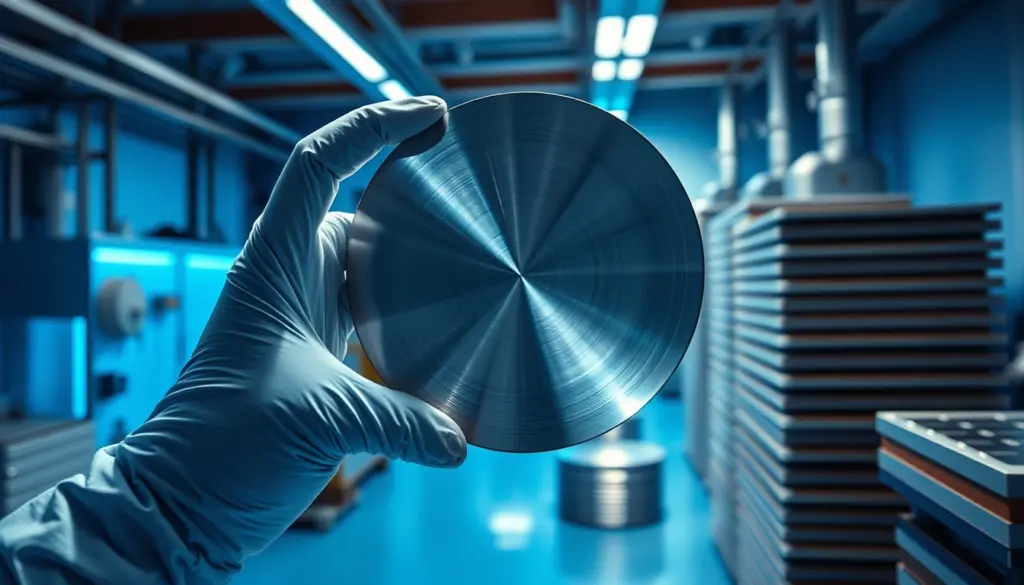
Not every wafer is affected equally, and that distinction is doing a lot of work in the current reporting. A 12-inch wafer is simply the size standard, the physical disc of crystalline silicon that gets sliced, polished, and eventually etched into hundreds of individual chips. A polished wafer is a step further down the processing chain: a bare wafer that’s been ground and chemically polished to the near-atomic flatness that advanced logic and memory production require. Polished wafers cost more to produce and take longer to qualify, which is why they’re the category showing the steepest price increases in the current cycle.
A separate August 2026 market analysis, cited alongside the wafer coverage, put standard 12-inch wafer price increases at 3% to 8%, while high-end AI-specific wafer grades saw increases approaching 20%, with cumulative annual increases running above 15% across the category. Those numbers are more conservative than the 40% headline figure, and they help explain why analysts describe this as an uneven market rather than a uniform price hike. The pressure concentrates in the wafer grades that AI accelerators and HBM actually need, not across every wafer shipped.
The Forecasts Behind the Numbers: UBS and TechFlow Post
UBS has reportedly revised its 2026 forecast for 12-inch wafer demand growth upward, from 9% to 11%, and now projects 14% growth in 2027 and 13% in 2028. On pricing, the bank expects wafer costs to rise more than 20% annually during that same 2027-2028 window, drawing a direct comparison to the 2017-2018 upcycle, a period remembered in the industry for a memory-driven boom that caught buyers off guard.
TechFlow Post’s September 22 reporting takes a different angle, citing industry feedback that wafer manufacturers may require 40% to 50% price increases before committing to the kind of large-scale capacity expansion needed to head off a shortage after 2028. A third data point worth treating with more caution: a September 22 estimate attributed to Kurnal Insights puts TSMC’s N3 wafer price at roughly $20,000 per 300mm wafer, up from around $19,500 in early August 2026. That figure is described as a media estimate rather than an official TSMC price list, so it should be read as directional rather than definitive.
Wafer Demand and Price Forecasts, by Source
| Source | Metric | Figure | Period |
|---|---|---|---|
| UBS | 12-inch wafer demand growth | 11% (revised up from 9%) | 2026 |
| UBS | 12-inch wafer demand growth | 14% | 2027 (forecast) |
| UBS | 12-inch wafer demand growth | 13% | 2028 (forecast) |
| UBS | Wafer price increase | More than 20% annually | 2027-2028 (forecast) |
| TechFlow Post | Price hike needed to justify new capacity | 40%-50% | Reported Sept. 22, 2026 |
| August 2026 market analysis | Standard 12-inch wafer price increase | 3%-8% | Cumulative, 2026 |
| August 2026 market analysis | AI-specific high-end wafer price increase | ~20% | Cumulative, 2026 |
| Kurnal Insights (estimate) | TSMC N3 wafer price | ~$20,000, up from ~$19,500 | Aug.-Sept. 2026 |
TSMC’s Rising Costs and the AMD Price Hike Ripple Effect
TSMC’s N3 Wafer Costs Keep Climbing
TSMC sits at the center of this story because it consumes more advanced-node wafer capacity than any other single customer of the major wafer suppliers. The foundry hasn’t published an official 2027 price list, but the reporting trend, including the Kurnal Insights estimate above, consistently points toward higher per-wafer costs on its most advanced nodes. Those costs don’t stay with TSMC. They flow through to every fabless chip designer that depends on its capacity, from Nvidia and AMD down to smaller AI accelerator startups.
AMD Already Passed a 10% Increase to Partners
This isn’t a hypothetical. As we reported when AMD notified partners of a roughly 10% chip supply price increase starting in the fourth quarter of 2026, the company attributed part of that hike to higher TSMC wafer costs, while sparing its Ryzen consumer line for now. That’s a real, disclosed price action, not a forecast, and it’s the clearest evidence yet that wafer-level cost pressure is already reaching finished chip pricing months before any 2027 wafer surge would even take effect.
HBM and DRAM: The Memory Side of the Same Squeeze
Wafer prices and memory prices are two symptoms of the same underlying scarcity. TrendForce data cited in recent market coverage suggests HBM prices could rise more than 50% in 2027, while a separate report puts the range even wider, with HBM contract prices potentially climbing 70% to 140% depending on product configuration and customer agreements. Those figures aren’t identical, which tells you how much uncertainty still surrounds 2027 memory pricing, but they agree on direction and rough magnitude.
The knock-on effects are already visible on store shelves. Our earlier coverage of the memory chip shortage found stockpiles falling below 10 days of supply at several major buyers, and Intel CEO Lip-Bu Tan has said publicly that memory costs are up sevenfold with no relief expected until 2028. Wafer scarcity sits upstream of all of it: if the raw material for both logic and memory chips gets scarcer and pricier, the shortages further down the chain have less chance of easing on their own.
The Wafer Makers: Shin-Etsu, SUMCO, Siltronic and GlobalWafers
Four companies effectively control the global supply of the high-purity polished wafers at the center of this story: Japan’s Shin-Etsu Chemical and SUMCO, Germany’s Siltronic, and Taiwan’s GlobalWafers. Together they account for the large majority of the world’s silicon wafer output, which is exactly why any hesitation from this group over new capacity spending carries outsized weight for the whole chip industry.
Current reporting doesn’t include confirmed, company-specific 2026 capacity or pricing announcements from any of the four, so it would be a mistake to assign a particular expansion figure or contract increase to any single one of them based on what’s public today. What is clear is the incentive structure: these are the companies TechFlow Post’s sourcing describes as wanting 40% to 50% price guarantees before breaking ground on new polishing capacity, precisely because wafer fabs take years to build and qualify, and nobody wants to be left holding excess capacity if AI demand cools before the investment pays off.
Historical Context: From the 2017-2018 Upcycle to the 2023 Downturn
UBS’s comparison to 2017-2018 is a useful anchor. That period saw a genuine memory supercycle, with DRAM and NAND prices climbing sharply on strong demand and constrained supply, catching device makers off guard and squeezing margins across the PC and phone industries. The current setup echoes that shape, tight capacity meeting demand that outran expectations, but the demand driver is different: AI infrastructure buildout rather than smartphone and PC growth.
The years since then followed a rougher path. 2023 brought a severe memory downturn as excess inventory piled up against weak PC, smartphone, and server demand, forcing DRAM and NAND producers to cut output and reduce wafer starts. Logic and foundry utilization softened too, especially at mature nodes. 2024 flipped the script as AI-server demand began driving strong growth in advanced logic and HBM, and DRAM pricing recovered as the earlier production cuts worked through the system. By 2025, AI-related demand was competing directly for advanced-node wafers, packaging capacity, and memory supply, creating what analysts describe as a two-speed market: red-hot pricing for anything tied to AI, and a much choppier recovery everywhere else.
Semiconductor Wafer Market Cycle, 2023-2028
| Year | Market Condition | Key Driver |
|---|---|---|
| 2023 | Downturn, oversupply | Weak PC, smartphone and server demand; inventory correction |
| 2024 | Recovery begins | AI-server demand lifts advanced logic and HBM |
| 2025 | Two-speed market | AI and HBM tight; mature-node and commodity segments uneven |
| 2026 | Wafer tightness spreads | AI-linked wafer starts compete with mainstream logic and memory |
| 2027 (forecast) | Wafer price upcycle | UBS forecasts more than 20% annual price growth, echoing 2017-2018 |
| 2028 (forecast) | Tightness persists absent new capacity | TechFlow Post cites need for 40%-50% pricing to unlock expansion |
Market Impact: Who Actually Pays for Pricier Wafers
Data Center and AI Infrastructure Buyers
Hyperscalers and AI labs buying accelerators at scale are the first in line to absorb higher wafer costs, since advanced-node logic and HBM are exactly the products seeing the steepest increases. Deployments like Nvidia’s Vera Rubin platform, which reportedly reached full production this fall, depend on a steady flow of leading-edge wafers, and any sustained cost increase at the wafer level eventually shows up in accelerator pricing or in tighter allocation for smaller buyers who can’t match the volume commitments of the largest cloud providers.
Consumer Electronics and PC Buyers
Consumers are further removed from wafer pricing but not insulated from it. Memory costs already account for a growing share of the bill of materials in budget devices, a trend we covered when budget phones and laptops lost as much as 80% of their cost increase to memory pricing this year. If wafer costs climb on top of that, the pressure on entry-level device pricing compounds rather than eases, and manufacturers will have to decide whether to raise prices, cut specs, or shrink margins further.
Competitive Landscape: Foundries and Memory Makers Reposition
TSMC isn’t the only foundry facing this pressure. Reporting also points to UMC signaling price increases for its mature-node manufacturing, while Powerchip is reportedly weighing increases of as much as 40% of its own. That’s notable because mature-node capacity has historically been the more commoditized, price-competitive end of the foundry business. If even that segment starts pushing double-digit increases, it suggests the wafer shortage isn’t confined to the bleeding edge of AI chip production, it’s spreading across the industry’s cost structure more broadly.
For memory makers, the calculus is different again. Companies allocating more capacity to HBM are effectively betting that AI demand stays strong enough to justify sacrificing volume in conventional DRAM and NAND, a bet that’s paid off so far in 2026 but carries real risk if AI capital spending slows faster than expected. Every player in this chain, foundries, memory makers, and the wafer suppliers underneath them, is making multi-year capacity bets based on a demand forecast that could shift.
What Could Slow or Derail the Wafer Price Surge
Several factors could blunt the scale of any 2027 increase. New wafer capacity announced today typically takes 12 to 24 months to reach meaningful volume, so any expansion decisions made in response to current pricing pressure wouldn’t show up as relief until late 2027 at the earliest. A slowdown in AI capital spending, something several major cloud providers have flagged as a risk in recent earnings commentary, would ease demand pressure faster than any new fab could add supply. Export controls and geopolitical friction around advanced semiconductor equipment could cut the other way, tightening capacity further rather than easing it. And if the wafer suppliers themselves decide the pricing environment justifies the risk, a coordinated capacity build-out among Shin-Etsu, SUMCO, Siltronic, and GlobalWafers could moderate the increases forecast by UBS and TechFlow Post.
Five Predictions for the Wafer Market Through 2027
- Long-term contracts renegotiate upward first. Expect multi-year wafer supply agreements to reflect UBS’s 20%-plus annual forecast well before spot prices fully catch up, since foundries and memory makers will want cost certainty locked in early.
- AI-grade polished wafer premiums widen further. With capacity concentrated among four major suppliers, the gap between standard 12-inch wafer pricing and AI-specific polished wafer pricing is likely to grow rather than narrow through 2027.
- More chipmakers follow AMD’s lead. Expect additional fabless companies to disclose their own price increases tied explicitly to foundry and wafer costs, rather than absorbing the hit quietly.
- HBM remains the real bottleneck, not logic wafers. Even if standard wafer pricing moderates, memory makers’ allocation decisions toward HBM will likely stay the dominant constraint shaping overall chip supply into 2027.
- Meaningful relief won’t arrive before late 2027 or 2028. Given the 12-to-24-month lag between a capacity decision and new wafer output, any expansion announced now is a bet on demand two years out, not a near-term fix.
Frequently Asked Questions
What is a 12-inch silicon wafer and why does it matter for AI chips?
A 12-inch (300mm) wafer is the standard round disc of ultra-pure crystalline silicon that gets sliced into hundreds of individual chips during manufacturing. It’s the base material for both the logic chips inside AI accelerators and the DRAM used in high-bandwidth memory, which is why tightness in wafer supply affects nearly every part of the AI hardware stack at once.
Is it confirmed that silicon wafer prices will rise 40% in 2027?
Not as a single confirmed figure. Ground News listed the 40% headline on September 23, 2026, attributing rising 12-inch wafer spot prices and steep polished-wafer increases to AI demand, but the material available doesn’t tie that specific number to a named analyst or on-record forecast. Separate reporting puts related forecasts in a range from roughly 20% to 50% depending on wafer grade and source.
Why are AI chips driving up wafer prices?
AI accelerator production increases advanced-node wafer starts, which competes with other logic products for the same foundry capacity. AI systems also require large volumes of HBM, pulling DRAM wafer capacity away from conventional memory. That combined pressure is pushing wafer suppliers to seek higher prices before committing to new capacity.
Which companies make the silicon wafers used by chipmakers like TSMC?
Shin-Etsu Chemical and SUMCO of Japan, Siltronic of Germany, and GlobalWafers of Taiwan are the four companies that supply the large majority of the world’s high-purity silicon wafers to foundries and memory makers.
How does the wafer shortage relate to the HBM and DRAM memory shortage?
They’re connected at the source. Both HBM and DRAM start as silicon wafers, and memory makers diverting wafer capacity toward high-value HBM production is one of the reasons conventional DRAM has stayed tight and expensive through 2026. A shortage at the wafer level makes it harder for either side of that allocation decision to loosen up.
Will consumers see higher prices on phones and laptops because of this?
It’s likely, though the effect will take time to reach store shelves. Memory pricing has already pushed up the cost of budget phones and laptops in 2026, and if wafer costs climb on top of existing memory pressure, entry-level device pricing faces additional upward pressure rather than relief.
When would a wafer price increase actually show up in finished products?
New wafer capacity generally takes 12 to 24 months to reach volume production after a decision to expand, so the effects of any 2026-2027 pricing shifts on finished chips and devices would likely play out gradually through 2027 and into 2028 rather than all at once.
What’s the historical precedent for this kind of wafer price surge?
UBS has compared the expected 2027-2028 increase to the 2017-2018 memory supercycle, a period when strong demand and constrained supply drove sharp DRAM and NAND price increases that squeezed margins across the PC and phone industries. The demand driver is different this time, AI infrastructure rather than consumer devices, but the underlying dynamic of tight capacity meeting fast-growing demand looks similar.