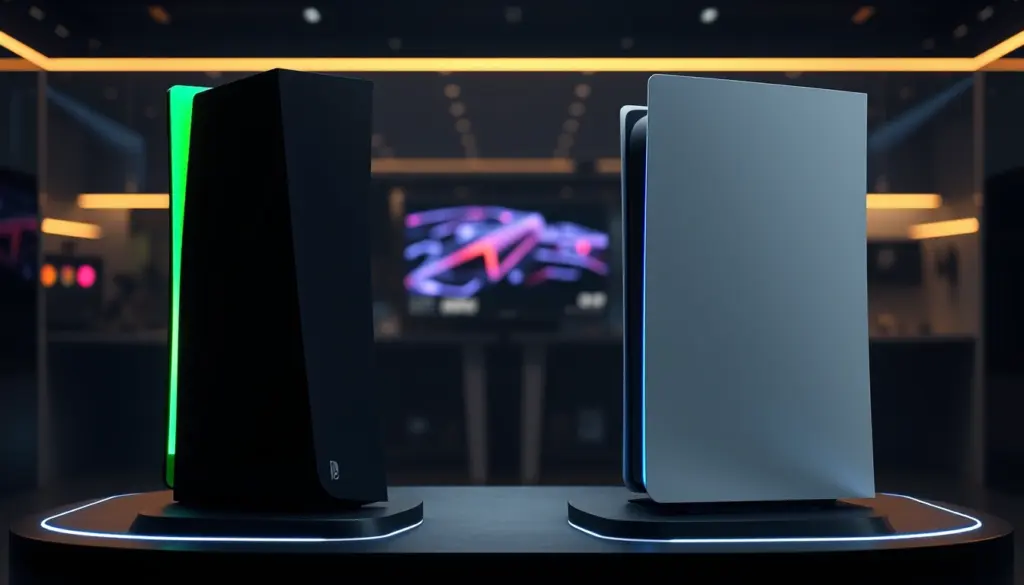
A hardware leaker just reopened the console wars a full year before either next-generation machine has a confirmed release date. On September 23, 2026, Wccftech reported that Xbox’s in-development console, known internally as Project Helix, could deliver roughly 56 TFLOPS of graphics compute, compared with about 40 TFLOPS for Sony’s PlayStation 6. Do the arithmetic and that gap comes out to a 40% theoretical advantage for Microsoft.
The numbers trace back to a well-known hardware leaker who goes by Kepler_L2, whose track record on GPU die specs has made forums take the claim seriously even without a single word of confirmation from Sony, Microsoft, or AMD. Neither company has acknowledged Project Helix or PlayStation 6 by name in any public roadmap. That has not stopped the figures from spreading across Beebom, Gamerant, and dozens of other outlets within 24 hours.
What makes this leak different from the usual rumor cycle is the specificity: a claimed tape-out for both chips, a named GPU architecture, and now a pricing debate that could matter more than the TFLOPS gap itself. Here’s what’s actually confirmed, what’s still speculation, and why the number that wins on paper rarely wins the generation.
What Kepler_L2 Actually Claimed
The claim, as reported by Wccftech, is narrow and specific. Kepler_L2 stated that Project Helix’s GPU compute lands near 56 TFLOPS, while PlayStation 6 sits closer to 40 TFLOPS. When directly asked whether the numbers were exaggerated, the leaker reportedly held the line, restating that PlayStation 6 comes in at 40 TFLOPS against Project Helix’s 56.
Both chips are said to have reached tape-out, the point where a chip design is locked and sent to a foundry for manufacturing. That detail alone tells industry watchers something concrete: if accurate, both companies have moved past the architecture-definition phase and into silicon production planning, a milestone that typically arrives one to two years before a console actually ships.
Sony, Microsoft, and AMD have not confirmed any of it. No spec sheet, no die shot, no investor call has mentioned Project Helix or PlayStation 6 by those names. Readers should treat every number in this leak as reported, not verified, no matter how many outlets repeat it this week.
The 40 TFLOPS vs 56 TFLOPS Math, Explained
TFLOPS stands for trillion floating-point operations per second, a measure of a GPU’s theoretical peak arithmetic throughput. Subtract 40 from 56 and you get a 16 TFLOPS difference. Divide that gap by the smaller number and you land on the 40% figure driving every headline this week, including our own.
That math is correct as arithmetic. It is far shakier as a performance prediction. TFLOPS counts raw shader math capacity under ideal, synthetic conditions. It says nothing about memory bandwidth, cache hierarchy, ray-tracing hardware, CPU balance, or how efficiently a game engine actually uses that theoretical ceiling. Two GPUs with identical TFLOPS ratings can produce noticeably different frame rates depending on how the rest of the system is built.
Both reported chips are said to use AMD’s next graphics architecture, RDNA 5, which at least keeps the comparison closer to apples-to-apples than cross-architecture TFLOPS math tends to be. Even so, treat the 40% figure as a compute-on-paper number, not a promise of 40% higher frame rates in the eventual launch lineup.
Why Tape-Out Doesn’t Mean Confirmed Specs
Tape-out is a manufacturing milestone, not a marketing one. It means the chip’s physical layout has been finalized and handed to a fab for production of test silicon. It does not fix clock speeds, final yields, thermal targets, or the retail configuration a company ships years later. Chips get respun. Clock targets shift based on yield data. Final products routinely differ from the specs that leaked at tape-out.
That caveat matters here because both the 40 TFLOPS and 56 TFLOPS numbers are attached to chips that, per the leak, only just reached this stage. Sony and Microsoft have roughly a year of tuning ahead of them before either console reaches store shelves, based on current rumor timelines. Whatever ships in late 2027, if that timeline holds, could carry different numbers than what’s circulating in September 2026.
TFLOPS Is Not a Frame-Rate Multiplier
This is the section every console generation seems to require, and 2026 is no exception. A GPU rated 40% higher in TFLOPS does not translate into 40% higher frame rates, 40% sharper textures, or a 40% edge in ray tracing. Real-world performance depends on memory bandwidth, cache design, geometry throughput, storage speed, and how well developers optimize for a specific box.
The clearest illustration of this sits in the last two console generations, both of which delivered a TFLOPS “winner” that didn’t cleanly map onto every game’s actual output. Multi-platform titles this generation have shipped with near-identical resolution and frame-rate targets on both PlayStation 5 and Xbox Series X, despite Series X’s higher rated compute. Engine optimization, memory setup, and developer priorities closed most of the gap in practice.
If the Project Helix and PlayStation 6 numbers hold up, expect the same pattern: a real but modest compute edge for Microsoft’s box, and a much smaller gap once actual games ship, patch, and get optimized on both platforms.
Historical Precedent: How the Last Three Generations Compared
Console TFLOPS leaks and TFLOPS-based marketing arguments are not new. Sony’s PlayStation 4 GPU is commonly rated around 1.84 TFLOPS, versus roughly 1.31 TFLOPS for the original Xbox One, a gap of about 40%, almost identical in shape to this week’s claim, just with Sony on the winning side that generation. Multi-platform games that generation frequently ran at higher native resolution on PS4, though the difference narrowed considerably by the back half of that cycle as developers learned both platforms.
The following generation flipped the script. Xbox Series X ships with a GPU commonly rated around 12.15 TFLOPS, ahead of PlayStation 5’s roughly 10.28 TFLOPS, an 18% theoretical edge for Microsoft. Despite that compute lead, PS5 built a considerable install-base advantage over Series X during the current generation, driven by exclusives, price positioning, and marketing rather than raw silicon math. That history is exactly why a straight TFLOPS comparison told analysts covering the PS6 and next Xbox target 2027 timeline to treat this week’s leak with caution rather than excitement.
| Generation | PlayStation GPU (TFLOPS) | Xbox GPU (TFLOPS) | Theoretical Gap | Status |
|---|---|---|---|---|
| PS4 vs Xbox One | ~1.84 | ~1.31 | ~40% (Sony ahead) | Confirmed, shipped |
| PS5 vs Series X | ~10.28 | ~12.15 | ~18% (Microsoft ahead) | Confirmed, shipped |
| PS6 vs Project Helix | ~40 (reported) | ~56 (reported) | ~40% (Microsoft ahead, claimed) | Unconfirmed leak |
Lay those three rows side by side and a pattern emerges: a large TFLOPS gap has shown up before, on both sides, and neither time did it single-handedly decide the generation. Sales, first-party games, subscription pricing, and hardware price all mattered more than raw compute math.
RDNA 5 and What It Means for Both Chips
Reports tie both the PlayStation 6 and Project Helix chips to AMD’s RDNA 5 graphics architecture, the successor to the RDNA 3.5-based silicon inside the current Xbox Series consoles and the custom RDNA 2 design in PlayStation 5. A shared architecture generation is actually good news for anyone trying to compare these leaks honestly. When both consoles use the same underlying GPU architecture family, a TFLOPS comparison carries more weight than it would across two completely different designs, since shader efficiency per FLOP should land closer together.
That said, “same architecture family” does not mean identical implementation. Sony and Microsoft have historically customized their semi-custom AMD silicon differently, tuning cache sizes, memory controllers, and I/O blocks to match each company’s own design priorities. AMD’s own next-generation CPU work, covered in our look at AMD’s Epyc Venice benchmarks against Xeon and Nvidia’s CPU push, shows the company iterating quickly across its entire silicon portfolio this cycle, console chips included.
Pricing Could Decide the Real Winner
This is the part of the story getting less attention than the TFLOPS gap, and it’s arguably the more consequential one. Reports on Project Helix pricing point to an aggressive-minimum estimate of $999, with $1,200 cited as a more realistic retail figure once margins, memory, and storage are factored in. A separate bill-of-materials estimate put the component cost for Project Helix at roughly $900 at scale, before assembly, distribution, and retail markup.
Neither Sony nor Microsoft has confirmed a retail price for either console. But if a $999 to $1,200 range holds anywhere close to accurate, that would land both next-gen machines well above the $499 to $699 range that defined PS5 and Series X launch pricing in 2020. Console buyers have already shown price sensitivity toward premium hardware this cycle. Our coverage of the RTX 5090 vanishing from US retail at $9,500 shows how memory shortages and component costs have pushed high-end hardware prices well past historical norms across the entire industry, not just PC graphics cards.
A 40% compute lead stops mattering to most shoppers the moment the sticker price crosses a psychological threshold. If Project Helix genuinely lands near $1,200, Microsoft may find itself selling the more powerful box while losing the value argument to whichever platform holder prices more aggressively.
| Console | Reported/Estimated Figure | Basis | Confirmed? |
|---|---|---|---|
| Project Helix, aggressive-minimum price | $999 | Industry pricing speculation | No |
| Project Helix, likely retail estimate | $1,200 | Industry pricing speculation | No |
| Project Helix, bill-of-materials estimate | ~$900 at scale | Component cost modeling | No |
| PlayStation 6, retail price | Not identified | No public reporting found | No |
| PS5 / Xbox Series X, 2020 launch price (for reference) | $499 / $499-$599 | Official launch pricing | Yes |
Market Impact: What Premium Pricing Would Do to Both Platforms
Console economics run on volume. Sony and Microsoft have historically sold hardware near cost, sometimes at a loss, and made their money back through games, subscriptions, and storefront cuts. A jump toward $1,000-plus retail pricing changes that math considerably. Higher entry prices tend to slow adoption curves, stretch the tail of the previous generation, and push more buyers toward subscription-driven access rather than outright hardware purchases.
Microsoft in particular has spent the past year reshaping its console business well beyond hardware, a shift visible in its studio consolidation and the layoffs detailed in our report on Xbox’s studio reset hitting 75% of its internal structure. A pricier Project Helix would need to justify itself against a Game Pass ecosystem that already gives Microsoft a revenue path independent of the console sitting under someone’s TV. Sony, by contrast, still leans more heavily on hardware and first-party exclusive sales, which makes PlayStation 6’s eventual price point a bigger swing factor for its business model than Helix’s price is for Microsoft’s.
Component costs across the industry are part of what’s driving this. Memory prices, GPU die costs, and advanced packaging have all climbed through 2026, squeezing every hardware category from graphics cards to game consoles at once. That backdrop makes a $999-plus console price far more plausible today than it would have looked two years ago.
Competitive Comparison: Two Different Strategies Heading Into 2027
Strip away the TFLOPS headline and this leak describes two companies approaching the same generation from different angles. Microsoft, on the numbers reported so far, appears to be chasing a clear compute advantage, mirroring its Series X approach last cycle when it out-specced PS5 on paper. Sony’s reported 40 TFLOPS figure, by contrast, suggests a more conservative, cost-controlled design, closer to the approach it took with the original PS4, which won that generation on price and exclusives rather than raw power.
Xbox has also been the more publicly aggressive platform holder on cross-platform strategy this year, a pattern visible in its decision covered in our story on Xbox cutting 268 jobs while handing Halo to Activision, part of a broader move toward publishing games across every platform rather than locking them to one box. If Microsoft keeps that strategy through the Project Helix launch, a raw TFLOPS win matters less, since the console itself becomes one entry point among several rather than the exclusive gatekeeper to Microsoft’s biggest franchises.
Sony has taken the opposite public position, repeatedly emphasizing exclusive, single-platform experiences as its core differentiator. That divergence, more than a 16 TFLOPS gap, is likely to shape how each company markets its next console when official announcements eventually arrive.
The Leaker Behind the Numbers
Kepler_L2 is not a new name in hardware leak circles, and this is not the only console-adjacent claim making rounds this month. The same community of leakers has also been at the center of disagreements over Nvidia’s next consumer GPU roadmap, including a widely discussed contradiction covered in our report on Kepler_L2 disputing a rival leaker’s RTX 6090 timeline claim. That track record of pushing back on other leakers’ numbers is part of why this week’s PS6 and Project Helix figures spread as fast as they did, even without a single confirming statement from Sony, Microsoft, or AMD.
None of that reputation turns a leak into a confirmed spec sheet. It just explains why outlets across the industry, including Wccftech, TechPowerUp, Beebom, and Gamerant, treated the claim as worth reporting the same day it surfaced rather than waiting for a second source.
What Sony and Microsoft Have (and Haven’t) Confirmed
As of this writing, Sony has made no public statement about PlayStation 6 specifications, pricing, or launch timing. Microsoft has likewise not confirmed Project Helix by name, its TFLOPS figure, or a release date. Both companies’ official console pages, for PlayStation 5 and Xbox Series X respectively, still list the current generation as their flagship hardware, with no next-gen teaser language attached.
That silence is normal at this stage of a console cycle. Sony didn’t officially unveil PS5 specifications until roughly a year before launch, and Microsoft followed a similar pattern with Series X. If the tape-out claims in this week’s leak are accurate, an official reveal window sometime in 2027 would track with both companies’ historical announcement timing relative to a launch.
Five Predictions for the PS6 and Project Helix Launch Window
Based on the reported figures, historical console pricing and performance patterns, and current component cost trends, here’s where this story is likely headed over the next several quarters.
- The final TFLOPS gap between the two consoles will likely shrink from the reported 40% by the time both chips leave tape-out and reach retail-ready clocks, mirroring how early Series X and PS5 leaks also shifted before launch.
- Retail pricing for both consoles will very likely exceed $599, given current memory and GPU component cost trends, even if neither company confirms a number before mid-2027.
- Microsoft will lean on its Game Pass subscription value rather than the TFLOPS gap as its primary marketing message, continuing the direction set by its cross-platform publishing strategy this year.
- Sony will likely emphasize exclusive first-party titles over raw specifications, following the same playbook that helped PS4 and PS5 outsell Xbox despite mixed TFLOPS results across generations.
- Expect at least one more significant spec leak, and at least one denial or non-denial from either company, before either console receives an official name and reveal date.
Why This Story Matters Beyond the Spec Sheet
Console TFLOPS arguments generate clicks every generation, but the underlying story here is really about cost. Component prices across memory, GPU dies, and advanced packaging have risen sharply through 2026, and that pressure now touches everything from flagship graphics cards to next-generation game consoles. A $999-plus PlayStation 6 or Project Helix would represent one of the largest generational price jumps in console history, larger in percentage terms than the jump from PS4 to PS5 or Xbox One to Series X.
That’s the number worth watching closely over the next year, more than the 16 TFLOPS gap making headlines this week. A console that wins on paper but prices itself out of reach for a large share of its potential buyers doesn’t win the generation. History, from PS4’s launch pricing advantage to Series X’s TFLOPS lead that didn’t translate into a sales lead, backs that pattern up twice over.
Frequently Asked Questions
Is the Xbox Project Helix vs PS6 TFLOPS leak confirmed by Sony or Microsoft?
No. The 40 TFLOPS and 56 TFLOPS figures come from leaker Kepler_L2, as reported by Wccftech on September 23, 2026. Sony, Microsoft, and AMD have not confirmed any specifications for either console.
What does “tape-out” mean for a console chip?
Tape-out means a chip’s design has been finalized and sent to a foundry to produce test silicon. It is a manufacturing milestone, not a confirmation of final clock speeds, retail configuration, or launch specifications.
Does a 40% TFLOPS advantage mean 40% better game performance?
No. TFLOPS measures theoretical peak compute throughput, not actual game frame rates. Real-world performance also depends on memory bandwidth, cache design, CPU balance, and engine optimization, which is why past TFLOPS gaps between PlayStation and Xbox consoles have not always matched real-world results.
How much will PlayStation 6 and Project Helix cost?
Neither company has confirmed a retail price. Reports point to a range of roughly $999 to $1,200 for Project Helix based on speculative bill-of-materials and pricing estimates, but these figures are not official.
What GPU architecture are PS6 and Project Helix reportedly using?
Reports link both consoles to AMD’s RDNA 5 graphics architecture, though neither AMD, Sony, nor Microsoft has confirmed this publicly.
When will PlayStation 6 and Xbox Project Helix launch?
No official launch date exists. Current industry rumors point to a late 2027 window for both consoles, though this has not been confirmed by either company.
Who is Kepler_L2?
Kepler_L2 is a hardware leaker known for GPU and console die specification claims, including previous reports on Nvidia and AMD silicon. The leaker’s claims are unverified until confirmed by the manufacturers involved.
Did Xbox win the TFLOPS comparison last generation too?
Yes. Xbox Series X launched with a GPU rated around 12.15 TFLOPS versus PlayStation 5’s roughly 10.28 TFLOPS, an 18% theoretical edge. PS5 still built a larger install base over the generation, showing that a TFLOPS lead alone doesn’t determine commercial success.
Related
- PS6, Next Xbox Target 2027 as AMD Confirms Chip
- Kepler_L2 Contradicts MLID’s RTX 6090 2027 Claim
- RTX 5090 Vanishes From US Stores, Hits $9,500
- Xbox Studio Reset Hits 75%: Inside Microsoft’s Bet
- Xbox Cuts 268 Jobs, Hands Halo to Activision