Memory has quietly become the most expensive line item in a phone or laptop’s bill of materials, and for smaller device makers it is starting to dictate what they can build at all. Tom’s Hardware reported on September 16, 2026 that Fairphone now sees memory chips eat up close to 60% of the materials cost of a phone priced around $400, a jump driven by AI data centers buying up DRAM and NAND faster than fabs can replace it. The same report, credited to writer Kunal Khullar, said independent phone and laptop makers are redesigning products, testing incoming chips for counterfeits, and passing costs on to buyers because they can no longer assume a steady supply of parts.
This is a different story from the console and GPU price hikes that have dominated headlines this year. Those were about sticker shock. What is happening now is structural: companies are re-engineering hardware around a memory supply they can no longer plan against, and a scramble for scarce chips is pulling counterfeit components into a supply chain that used to run almost entirely through authorized channels.
Memory Now Eats Up to 60% of a Phone’s Bill of Materials
Fairphone’s disclosure, relayed by Tom’s Hardware, is one of the clearest numbers to come out of the 2026 memory crunch because it applies to a device most people would call budget hardware, not a flagship. On a roughly $400 phone, memory approaching 60% of the physical parts cost leaves almost nothing for the rest of the bill of materials: the display, the camera module, the battery, the chassis. That math forces a choice between raising the retail price, cutting the memory configuration, or eating the margin.
A related roundup on Ground News, dated September 23, 2026, cited executives at three device companies who said the shortage is now expected to run through 2027, not just through the current quarter. That timeline matters because it changes how manufacturers plan components 12 to 18 months out. A shortage assumed to last one or two quarters gets absorbed with price increases. A shortage expected to run for two more years forces a redesign of the product itself, which is exactly what smaller phone and laptop brands say they are now doing.
Shattered.io covered the earlier phase of this squeeze when budget phones and laptops lost up to 80% of their cost to memory. The Fairphone figure shows that squeeze has not eased since, it has become the baseline that smaller manufacturers now build around.
Availability, Not Price, Is Now the Binding Constraint
The most important shift in the 2026 memory crisis is not the price of a gigabyte of DRAM, it is whether a manufacturer can get any DRAM at all on a given production run. Large brands with volume contracts and long-term supply agreements, think Apple, Samsung, or Dell, can generally still secure allocation even at higher prices. Smaller manufacturers competing for the same wafers often cannot, regardless of what they are willing to pay.
That distinction explains why Fairphone, a company known for repairable, ethically sourced smartphones sold in relatively small volumes, is one of the names surfacing in this story rather than a mass-market giant. Ground News’ September 23 report framed it directly: availability, not price alone, has become the binding constraint for the lower end of the device market. When a factory cannot get parts, a shipping schedule slips no matter what the price tag says.
How Manufacturers Are Redesigning Devices Around Scarce Memory
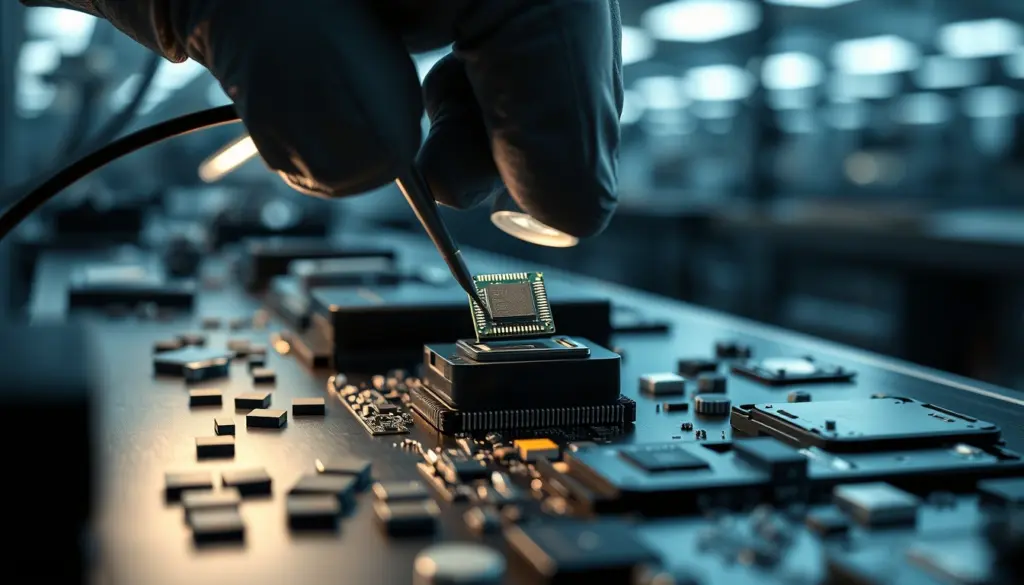
Tom’s Hardware’s reporting describes device makers rethinking product design at the motherboard level, not just adjusting price lists. Two of the responses named in that coverage are buying components further ahead of need to lock in supply, and building in checks against counterfeit parts before they reach the assembly line. Both responses cost money and slow down product cycles, but they are becoming standard practice for brands that cannot absorb a surprise parts shortfall mid-production.
For engineering teams, this plays out as fewer memory configurations per product line, tighter validation on whichever memory parts are actually available, and, in some cases, accepting a lower base memory spec than a device would have shipped with a year ago. None of this is unique to phones. The same pressure runs through gaming laptops and handhelds, where system memory doubles as shared graphics memory and cannot simply be swapped for a cheaper alternative without a real performance hit.
Fake Chips Are Flooding a Market Starved of Real Ones
Scarcity creates an opening for counterfeit and remarked components, and that is exactly what Tom’s Hardware and Ground News describe happening in 2026. When authorized distributors cannot fill an order, buyers turn to brokers and secondary-market suppliers, a channel that carries a much higher risk of receiving chips with forged date codes, relabeled lower-capacity parts, or components pulled from recycled boards and resold as new.
That risk is why testing incoming chips for fakes, once a niche concern mostly handled by large OEMs with dedicated component-engineering teams, is now something smaller phone and laptop makers say they have to do themselves. A single bad batch of counterfeit memory can fail in the field months after shipping, turning a supply-chain shortcut into a warranty and reputation problem.
Screening Incoming Memory: What the Checks Actually Look Like
Counterfeit-component screening is not new to the electronics industry, but it is being pushed down to companies that never used to need it in-house. A simplified version of the checks now common at intake inspection looks like this:
1. Verify package markings, logos, and date codes against
   the manufacturer's official records
2. Cross-check lot codes with the authorized distributor's
   chain-of-custody documentation
3. Run visual inspection under magnification for re-topped
   or re-marked packages
4. X-ray or microscopy pass on a sample from each incoming
   lot to check for internal die inconsistencies
5. Electrical test: confirm actual memory capacity and
   timing match the part number printed on the chip
6. Flag and quarantine any lot that fails step 1-5 before
   it reaches the SMT line
Each of those steps adds cost and time to a process that used to be a purchase order and a delivery date. For a company shipping a few hundred thousand units a year rather than tens of millions, that overhead is much harder to absorb per unit, which is part of why the memory crunch is hitting smaller brands disproportionately hard.
Acer’s Chairman Says the Shortage Can’t Last Until 2030, But Prices Are Still Climbing
Not every executive voice in this story is bracing for a multi-year crisis. Acer chairman Chen Chun-sheng, in comments originally reported by Taiwan’s United Daily News and picked up in English by TechRadar and GamesRadar around September 16 to 22, 2026, pushed back on the idea that the shortage is a permanent feature of the PC market. The English translation of his remarks reads: “It’s impossible for the shortage to last until 2030!” He is also reported to have said supply “has been consistently available” for Acer specifically.
Chen’s more concrete forecast is that PC prices should start falling from mid-2027 as new production capacity comes online, particularly in China. In the meantime, though, he reportedly still expects average PC prices to rise 5% to 20% by the end of 2026. That is a notable gap between rhetoric and near-term reality: even the executive dismissing the worst-case timeline is telling buyers to expect double-digit price increases through the rest of this year.
It is worth reading Chen’s comments alongside Intel’s own public timeline. Shattered.io previously reported that Intel’s Lip-Bu Tan said memory costs had risen roughly sevenfold with no relief expected until 2028, a full year past Acer’s mid-2027 turning point. The two companies sit on different parts of the supply chain, Intel buys memory as a component while Acer builds finished PCs, but the gap between their forecasts shows how unsettled the industry’s own expectations still are.
The Root Cause: AI Data Centers Are Draining the World’s DRAM and HBM Supply
Every thread in this story traces back to the same source: AI infrastructure buildouts have turned memory chips, especially high-bandwidth memory used in AI accelerators, into some of the most valuable silicon a fab can produce. Tom’s Hardware’s own September archive separately reported that memory dies are now more expensive than compute dies on a per-area basis, a reversal of the historical pattern where logic chips commanded the premium price per square millimeter.
That reversal changes fab economics industry-wide. When a wafer of HBM earns more per square millimeter than a wafer of CPU or GPU logic, memory manufacturers like Samsung, SK Hynix, and Micron have every incentive to allocate capacity toward AI customers first and consumer DRAM second. Shattered.io covered China’s side of that race in CXMT Chases NAND as YMTC Preps DRAM, which shows the capacity crunch is reshaping investment decisions well beyond the companies making phones and laptops.
A company spokesperson quoted by Bloomberg summed up the uncertainty facing the entire industry: “We currently do not have line-of-sight as to when memory supply will be able to catch up with increasing demand.” That is a striking admission from inside the supply chain itself, and it is consistent with the two-year timelines executives elsewhere in this story have started citing.
Memory Shortage Timeline: Key Events of 2026
The table below lines up the major developments in this story so far this year, drawn from the reporting cited throughout this article.
| Date (2026) | Development | Source |
|---|---|---|
| Throughout the year | DRAM and NAND allocation tightens as AI data center demand for HBM accelerates | Industry-wide reporting |
| September 16 | Tom’s Hardware reports Fairphone puts memory at ~60% of a $400 phone’s materials cost, redesigns and fake-chip testing begin at smaller brands | Tom’s Hardware |
| September 16-22 | Acer chairman Chen Chun-sheng calls a shortage lasting until 2030 “impossible,” forecasts price relief from mid-2027 | TechRadar, GamesRadar, United Daily News |
| September 23 | Ground News aggregates reporting that smaller phone and laptop makers expect scarcity to persist through 2027 | Ground News |
| September 24 | Tom’s Hardware reports memory dies now cost more per square millimeter than leading-edge compute dies | Tom’s Hardware |
Gaming Hardware Is Already Paying the Price
Gaming hardware is a useful lens on this crisis because system memory in a console or handheld does double duty, it serves the CPU and the GPU at once, so there is less room to cut corners than in a general-purpose laptop. Every major console and handheld maker has already raised prices at least once in 2026, and the memory shortage is the thread connecting nearly all of them.
| Device | Price change | Stated or reported reason |
|---|---|---|
| PlayStation 5 (disc) | $549.99 to $649.99, effective April 2, 2026 | Sony cited “continued pressures in the global economic landscape” |
| Xbox Series X (disc) | $649.99 to $799.99, effective August 1, 2026 | Microsoft cited storage and memory costs up “more than 2.5x” since late 2025 |
| Nintendo Switch 2 | $449.99 to $499.99, effective September 1, 2026 | Nintendo cited “market conditions expected to extend over the medium to long term” |
| Steam Deck OLED (512GB) | $549 to $789, earlier in 2026 | Reported industry-wide memory cost increases |
Shattered.io has tracked the memory side of this squeeze closely, including RAM price increases of up to 89% hitting gaming hardware directly and the broader supply-chain warning that memory stockpiles have fallen below 10 days of buffer at some manufacturers. A 10-day buffer leaves almost no room to absorb a bad shipment, let alone a batch of counterfeit parts that fails inspection and has to be quarantined.
Why Handhelds Have Less Room to Cut Corners
A handheld like the Steam Deck cannot shrink its memory footprint the way a budget phone can, because the integrated GPU pulls from the same pool of RAM the CPU uses. Cut the memory bus width or drop to a single channel to save cost, and frame rates fall along with it. That leaves handheld makers fewer levers than phone makers: raise the price, delay the refresh, or accept a thinner margin, with little room for a quiet spec downgrade that buyers would not notice.
Historical Context: Memory Crunches Have Happened Before
The electronics industry has lived through memory shortages before, though never quite like this one. DRAM prices spiked sharply in 2017 and 2018 as smartphone demand outpaced fab capacity, triggering antitrust scrutiny of the three dominant memory makers in South Korea, Japan, and the United States. The 2021 global chip shortage, driven by pandemic demand shifts and automotive supply chains restarting all at once, hit logic chips and microcontrollers harder than memory specifically, and mostly resolved within about two years as new fab capacity came online.
What sets 2026 apart is the demand source. Previous shortages were driven by consumer electronics cycles that eventually cooled off. This one is driven by AI data center buildouts that show no sign of slowing, which is exactly why executives like Chen at Acer and the spokesperson quoted by Bloomberg are struggling to put a confident end date on it.
Competitive Comparison: How Device Makers Are Responding Differently
Not every manufacturer is handling this the same way, and the split roughly follows company size. Large, vertically integrated players like Apple negotiate long-term supply contracts and can absorb short-term price swings without changing product design mid-cycle. Console makers with fixed hardware generations, Sony, Microsoft, and Nintendo among them, have chosen to pass costs straight to consumers through repeated price increases rather than cut specifications on hardware already in the market.
Smaller independent brands like Fairphone do not have either option. They cannot negotiate the volume discounts of an Apple or a Samsung, and they cannot simply raise prices on a device positioned around affordability and repairability without undercutting their own value proposition. That is why redesigning the product itself, and screening every incoming chip for authenticity, has become their main lever instead of a last resort.
Market Impact: Margins, Consolidation, and the Squeeze on Smaller Brands
The near-term market impact is straightforward: thinner margins for device makers that cannot pass the full cost increase to buyers, and higher retail prices for those that can. The medium-term impact is more concerning for competition in the device market. A prolonged shortage that big brands can weather through scale and small brands cannot tends to push consolidation, either through acquisitions or through smaller players exiting categories where they can no longer compete on price or supply reliability.
Memory and component makers, by contrast, are seeing the opposite effect. When a die earns more per square millimeter than leading-edge logic silicon, as Tom’s Hardware reported, the companies that make DRAM and HBM are in the strongest negotiating position they have held in years, with AI customers effectively setting the floor price that everyone else has to compete against.
What the Data and Industry Voices Are Saying
Two data points anchor how the industry is actually talking about this crisis right now, one cautious and one candid.
“We currently do not have line-of-sight as to when memory supply will be able to catch up with increasing demand.”
Company spokesperson quoted by Bloomberg
That admission stands in some tension with Acer chairman Chen Chun-sheng’s public position that a shortage running until 2030 is “impossible,” as reported by TechRadar. Neither statement is necessarily wrong. It is entirely possible for supply to gradually catch up with demand over several years, exactly as Chen forecasts for mid-2027, while no one inside the industry can currently say precisely when or by how much, which is the more guarded point Bloomberg’s source was making.
Predictions: Where the Memory Crisis Goes From Here
- Counterfeit screening becomes standard, not optional. Expect more device makers, not just Fairphone-sized brands, to build in-house or contracted component-verification programs over the next 12 months as brokered memory purchases grow more common.
- Base memory configurations shrink before prices fall. Manufacturers are more likely to cut the default RAM or storage tier on budget devices than to hold configurations steady and eat the cost difference.
- 2027 becomes the real test of Chen’s forecast. If PC prices have not started easing by the second half of 2027, expect the narrative to shift decisively away from Acer’s more optimistic framing and toward the multi-year timelines Intel and others have already floated.
- Smaller hardware brands consolidate or exit categories. Independent phone and laptop makers without volume contracts are the most exposed group in this story, and some are likely to be acquired or to retreat from categories where they cannot secure reliable memory allocation.
- Gaming hardware sees a second wave of price adjustments in 2027. Given the pattern already set by Sony, Microsoft, and Nintendo in 2026, further increases on consoles and handhelds are more likely than a return to pre-2026 pricing.
Frequently Asked Questions
Why is memory suddenly the most expensive part of a phone or laptop?
AI data centers are buying up DRAM, NAND, and high-bandwidth memory for AI accelerators faster than fabs can expand capacity, pulling supply away from consumer electronics and pushing memory die value above leading-edge compute chips on a per-area basis, according to Tom’s Hardware.
Is this the same shortage that hit consoles and GPUs earlier in 2026?
It is the same root cause, but a different symptom. Console and GPU price hikes were about cost passed to buyers. The Fairphone story is about manufacturers redesigning products and screening for fake chips because they cannot reliably source memory at all.
How long is the memory shortage expected to last?
Estimates vary by source. Executives cited by Ground News expect scarcity through 2027. Acer chairman Chen Chun-sheng expects prices to start falling from mid-2027. Intel has previously said it sees no relief until 2028. No source claims the shortage will last until 2030.
Why are counterfeit chips becoming a bigger problem now?
When authorized distributors cannot fill orders, buyers turn to brokers and secondary markets, which carry a much higher risk of counterfeit, relabeled, or recycled components entering the supply chain.
Which companies are named in this story?
Fairphone and unnamed smaller phone and laptop makers are cited by Tom’s Hardware and Ground News as redesigning products and testing for fake chips. Acer chairman Chen Chun-sheng has publicly forecast the shortage’s timeline. Sony, Microsoft, Nintendo, and Valve have all raised gaming hardware prices in 2026 amid the same memory pressure.
Will gaming laptops and handhelds see reduced RAM to save cost?
It is a plausible response given what smaller phone and laptop makers are already doing, though no specific gaming laptop or handheld maker has confirmed cutting base memory configurations as of this report.
Does a shorter shortage timeline mean prices will drop back down?
Not necessarily. Even Acer’s more optimistic forecast expects average PC prices to keep rising 5% to 20% through the end of 2026 before any relief begins in mid-2027.
Related
- Budget Phones, Laptops Lose 80% of Cost to Memory [2026]
- Intel’s Tan: Memory Up 7x, No Relief Until 2028 [2026]
- Memory Chip Shortage: Stockpiles Fall Below 10 Days [2026]
- RAM Prices Up 89%: AI Memory Crunch Hits Gaming [2026]
- CXMT Chases NAND as YMTC Preps DRAM, 3 Sources Say [2026]