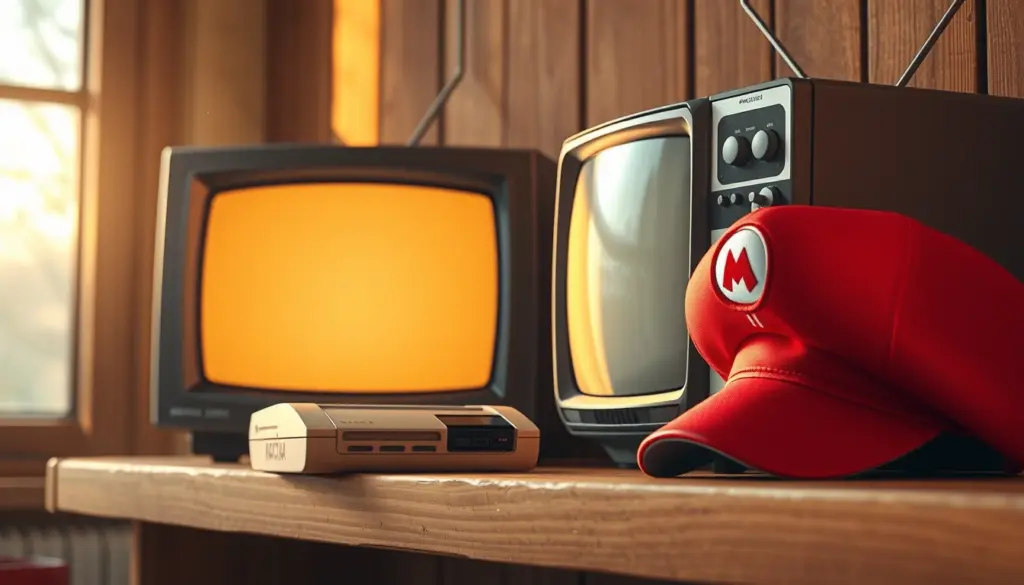
Thirty years ago this week, a plumber jumped into a painting and changed how video games move. Super Mario 64 launched in North America on September 26, 1996, three months after its June 23, 1996 debut in Japan alongside the Nintendo 64 hardware itself. As of today, September 27, 2026, the North American release has crossed the three-decade mark, and gaming outlets including Nintendo Life, Nintendo Everything, and Men’s Journal have used the milestone to revisit a game that is still cited as the moment 3D platforming became a real genre rather than an experiment.
The milestone was highlighted this week by outlets including Nintendo Everything and independent gaming writers such as the retrospective published on Daryl Baxter’s blog, both of which used the anniversary to revisit the game’s design legacy rather than treat it as a simple release-date trivia note. The anniversary lands at an odd moment for Nintendo. The company is mid-cycle on Switch 2, still managing supply and pricing questions around that console (see our coverage of the Switch 2 price increase tied to Nintendo’s profit jump), while also leaning hard into nostalgia marketing with products like the Zelda 40th Anniversary Switch 2 bundle. Super Mario 64 sits in an odd spot in that strategy: it is arguably the most historically important game Nintendo has ever shipped, and yet, as of this writing, there is no confirmed remaster, remake, or anniversary rerelease tied to the 30-year mark. This piece looks at why that game mattered in 1996, what its absence from Nintendo’s current anniversary push says about the company’s priorities, and what the market data around retro re-releases suggests could still happen.
What actually happened 30 years ago
The facts are well documented and worth restating plainly. Super Mario 64 launched in Japan on June 23, 1996, as a launch title for the Nintendo 64, which came out the same day. The North American release followed on September 26, 1996. Europe and Australia waited until March 1997, a gap of roughly nine months from the original Japanese launch, which was typical for Nintendo’s staggered rollout strategy at the time.
The game carried a retail price of around $60, which was steep for 1996 but in line with cartridge-based console games of the era, according to historical release data compiled on Super Mario 64’s Wikipedia entry. It sold approximately 200,000 copies in its first week in Japan, then went on to move more than two million copies in North America within its first three months on shelves, generating an estimated $140 million in the United States alone during that window. Those numbers made it the best-selling video game of 1996 by dollar sales, according to sales tracking from that period. The scale of that commercial performance is easy to lose sight of three decades later, but at the time it meant a single game was driving Nintendo 64 hardware sales almost by itself.
Collector demand has only grown since. A sealed, pristine copy of Super Mario 64 sold for $1,560,000 at auction in July 2021, a price that reflected both the game’s cultural weight and the broader retro-collecting boom that peaked around that period. No single data point captures the gap between a $60 launch price and a seven-figure auction result better than that sale.
| Milestone | Date | Detail |
|---|---|---|
| Japan release (with N64 hardware) | June 23, 1996 | Launch title for Nintendo 64 |
| North America release | September 26, 1996 | Retail price approximately $60 |
| Europe/Australia release | March 1997 | Roughly 9 months after Japan |
| First-week Japan sales | 1996 | Approximately 200,000 copies |
| North America 3-month sales | 1996 | 2M+ copies, ~$140M in US revenue |
| 1996 best-seller ranking | 1996 | Top game of the year by dollar sales |
| Sealed copy auction record | July 2021 | $1,560,000 |
Why Super Mario 64 changed game design
Super Mario 64 was the first Super Mario game to use three-dimensional graphics, and that single technical shift is why the anniversary still gets coverage from outlets that don’t normally revisit 30-year-old titles. Moving from the fixed side-scrolling camera of the Super Nintendo era to a fully explorable 3D castle hub was not a minor upgrade. It required Nintendo’s designers, led by Shigeru Miyamoto and Yoshiaki Koizumi, to invent conventions that the entire industry still uses: a free-roaming analog camera, context-sensitive jumps, and level design built around collectible objectives (the game’s Power Stars) rather than a straight line from start to finish.
That structure, sometimes called the “collectathon” format, became the template for a decade of platformers that followed, from Banjo-Kazooie to Spyro the Dragon. Even games that reject the format define themselves against it. When a modern open-world game talks about camera-relative movement or non-linear objective design, it is working within a vocabulary Super Mario 64 established. That is the core reason gaming press treats this anniversary as a real news event rather than routine nostalgia content: the game’s DNA is present in nearly every 3D action or platforming title released since.
No confirmed remaster: what we know and don’t know
Here is where reporting on this anniversary needs to stay careful. Multiple gaming outlets covering the 30-year mark have noted that Nintendo has not announced a Super Mario 64 remaster, remake, or dedicated anniversary rerelease. One report specifically stated that Nintendo had made no such announcement as of publication. That is a meaningful absence, especially given how aggressively Nintendo has marketed other anniversaries this year, including the Zelda 40th Anniversary Switch 2 hardware bundle priced at 62,980 yen in Japan.
It is worth noting that Nintendo already has a release valve for Super Mario 64 nostalgia: the game is playable today through Nintendo Switch Online’s Nintendo 64 library, which has offered the original ROM (with save states and online play added) since that service tier launched. That may be part of why Nintendo feels less urgency to produce a standalone remaster compared to, say, Zelda: Ocarina of Time, which got its own premium remake treatment, discounted for preorder as covered in our Ocarina of Time remake preorder deal report. Super Mario 64 already has a legal, first-party way to play it on current hardware, which lowers the commercial pressure to remaster it compared to games that are harder to access legitimately.
The Switch 2 backdrop: why timing matters
The absence of a Super Mario 64 anniversary product lands against a busy Switch 2 calendar. Nintendo raised Switch 2 pricing by $50 this year even as profit jumped 52%, a move we covered in detail in our report on the Switch 2 price increase and profit jump. The company also ran what it called its biggest sale ever, cutting prices roughly 30% and issuing an estimated $300 million in refunds to earlier buyers, detailed in our coverage of Nintendo’s customer appreciation sale. Both moves show a company actively managing Switch 2 demand and pricing perception in real time, which makes the decision not to bundle a Super Mario 64 anniversary product into that push notable by omission.
Compare that to the Zelda 40th Anniversary rollout, which sold out fast enough that scalpers pushed resale prices toward $800, according to our report on the Zelda 40th Anniversary Switch 2 sellout. Nintendo clearly knows how to turn an anniversary into a hardware sales event when it wants to. The fact that Super Mario 64’s 30th has not received the same treatment suggests either a deliberate choice to save that marketing beat for later, or simply that Mario’s biggest anniversary marketing energy this cycle went into other projects rather than retro rereleases.
Market impact: what retro anniversaries actually move
Gaming anniversaries are not just sentimental content, they are a real driver of both physical media prices and platform engagement metrics. Search interest for terms like “super mario 64 online” has ranged between roughly 2,900 and 8,100 monthly searches over the past year according to keyword tracking data, with visible spikes tied to community projects and anniversary coverage. That is a modest but consistent search volume for a 30-year-old single-player game, and it reflects an active community still building unofficial online multiplayer mods and speedrunning the title competitively.
Collector markets track a similar pattern. Sealed and graded copies of first-party Nintendo 64 launch titles have historically appreciated fastest around round-number anniversaries, a dynamic that helped push that 2021 Super Mario 64 sale to $1,560,000. Whether the 30th anniversary produces another headline auction result remains to be seen, but the collector market for N64-era Nintendo software has stayed active enough that even ungraded, complete-in-box copies routinely sell in the hundreds of dollars on secondary markets.
| Metric | Value | Source/context |
|---|---|---|
| “Super Mario 64 online” search volume (Aug 2026) | ~5,400/month | Keyword tracking data, US |
| 12-month search volume range | 2,900 – 8,100/month | Keyword tracking data, US |
| Search competition level | Low | Keyword tracking data |
| Sealed copy auction record | $1,560,000 | July 2021 auction |
| Original launch price | ~$60 | 1996 US retail |
| Confirmed 30th-anniversary Nintendo product | None reported | As of Sept. 27, 2026 |
Competitive comparison: how rivals handle legacy platformers
Nintendo’s approach to Super Mario 64’s legacy stands out when set against how competitors treat their own landmark 3D platformers. Sony has repeatedly remade or remastered Crash Bandicoot and Spyro the Dragon, both of which launched slightly after Super Mario 64 and borrowed directly from its camera and level-design ideas. Those remaster packages sold well enough to justify sequels of their own, which suggests there is commercial appetite for this kind of nostalgia product when a publisher chooses to build one.
Microsoft, by contrast, has leaned on backward compatibility rather than remakes for older Xbox and even original Xbox-era titles, a cheaper strategy that preserves access without the cost of a full remaster team. Nintendo’s Switch Online N64 app sits closer to Microsoft’s approach: preserve access to the original code rather than commission a rebuilt version. That makes Nintendo’s Super Mario 64 strategy look more like a preservation play than a sales play, at least for now. Whether that changes as the Switch 2 library matures is one of the open questions this anniversary raises rather than answers.
Historical context: the console war Super Mario 64 helped win
It’s easy to forget, three decades on, that the Nintendo 64’s launch window was a genuinely contested console fight. Sony’s PlayStation had already been on shelves for roughly a year by the time the N64 launched, and Sega’s Saturn was fighting for the same audience. Super Mario 64 gave Nintendo a system-seller strong enough to move hardware almost on its own, at a moment when the company badly needed one after a rocky transition away from cartridge dominance toward CD-based competitors.
The $140 million in US revenue generated in the game’s first three months illustrates just how much weight a single launch title carried in 1996’s console economics, a scale that is almost quaint compared to modern AAA marketing budgets, but proportionally represented a similarly outsized bet for Nintendo at the time. That commercial result is a big part of why the 30th anniversary is treated as a genuine industry milestone rather than a niche fan event.
What retro gaming communities are doing with the anniversary
Nintendo’s own nintendo.com storefront still lists the Nintendo Switch Online Expansion Pack as the official way to access the Nintendo 64 library, and detailed move lists and level breakdowns for the original game remain maintained on fan-run references like the Super Mario Wiki. Away from Nintendo’s own marketing, fan and community activity around the anniversary has been substantial. Speedrunning communities continue to push Super Mario 64’s any-percent and 120-star categories, both of which remain among the most-watched retro speedrun categories on streaming platforms. Modding communities have also kept unofficial online multiplayer projects for the game alive for years, despite periodic legal pressure from Nintendo, which explains part of the sustained search interest in “super mario 64 online” as a query.
That fan energy sits in contrast to how Nintendo has handled piracy and unauthorized distribution more broadly this year, including a $4.5 million judgment the company won against a piracy operation, which we covered in our report on Nintendo’s piracy judgment. Nintendo tends to tolerate fan preservation projects for older titles far more than it tolerates commercial piracy, and Super Mario 64’s modding scene has largely stayed on the tolerated side of that line for three decades.
Where this fits in Nintendo’s broader anniversary calendar
2026 has already been a heavy anniversary year for Nintendo. Beyond the Zelda 40th Anniversary hardware, the company has also drawn attention to older, more obscure library titles, including a resurfaced NES game that made headlines after 40 years, covered in our piece on Nintendo’s hardest NES game resurfacing. Set against that pattern, Super Mario 64’s 30th anniversary looks less like a one-off event and more like one data point in a year where Nintendo has repeatedly used its back catalog to generate coverage and, in some cases, hardware sales.
The difference is scale. A resurfaced NES curiosity or a Zelda hardware bundle are relatively low-risk marketing plays. A Super Mario 64 remaster, if Nintendo ever chose to make one, would carry much higher expectations given the original’s stature, and would invite direct comparison to the well-received Super Mario 3D All-Stars collection from 2020, which itself became a limited-time release that later drove up secondary market prices once it was discontinued.
Predictions: what could happen next
- A formal Super Mario 64 anniversary announcement, if one comes, is more likely to arrive as a Nintendo Direct segment than a standalone press release, following the pattern Nintendo used for the Zelda 40th announcement.
- Expect continued growth in “super mario 64 online” and related search terms through the rest of 2026 regardless of whether Nintendo makes an announcement, driven by community speedrun and modding content rather than official marketing.
- If Nintendo does revisit the game commercially, a Switch 2-enhanced version bundled into a broader 3D Mario collection is more probable than a standalone remaster, mirroring the Super Mario 3D All-Stars approach from 2020.
- Collector-market prices for complete-in-box and sealed Super Mario 64 cartridges are likely to see a modest bump around the anniversary window, consistent with past round-number anniversary patterns in retro game collecting.
- Nintendo’s broader 2026 pattern of anniversary marketing (Zelda 40th, the NES resurfacing story, the customer appreciation sale) suggests more back-catalog activity is coming before the end of the year, even if Super Mario 64 specifically stays quiet.
Why this still matters to the industry in 2026
Thirty years is long enough that most of the developers who shipped Super Mario 64 have moved on to other projects, retired, or in some cases passed away, and long enough that the console it launched on is itself a retro-collecting category rather than current hardware. What hasn’t faded is the design vocabulary the game introduced. Camera-relative movement, star-based non-linear objectives, and a hub-world structure remain baseline expectations for 3D platformers and even influence open-world game design well outside the platforming genre.
That is the real story behind this anniversary: not whether Nintendo ships a remaster, but the fact that a 1996 launch title’s design choices are still the default assumption for how 3D character-action games are built in 2026. Few games from any era can claim that kind of staying power, and it’s why outlets far outside the usual retro-gaming beat, from lifestyle sites to hardware-focused tech press, picked up the 30th-anniversary story this week.
Frequently asked questions
When did Super Mario 64 actually come out?
Super Mario 64 launched in Japan on June 23, 1996, alongside the Nintendo 64 console itself. The North American release followed on September 26, 1996, and Europe and Australia got the game in March 1997.
Is Nintendo releasing a Super Mario 64 remaster for the 30th anniversary?
As of September 27, 2026, Nintendo has not announced a remaster, remake, or dedicated anniversary rerelease of Super Mario 64. Reports covering the milestone note the absence of any such announcement.
How much did Super Mario 64 cost when it launched?
The game retailed for approximately $60 in the United States in 1996, a typical price point for cartridge-based Nintendo 64 games at the time.
How well did Super Mario 64 sell?
The game sold approximately 200,000 copies in its first week in Japan and more than two million copies in North America within its first three months, generating an estimated $140 million in US revenue. It was the best-selling video game of 1996 by dollar sales.
Can I still play Super Mario 64 legally on current Nintendo hardware?
Yes. Super Mario 64 is available through the Nintendo 64 library included with the Nintendo Switch Online Expansion Pack, which offers the original game with added save states and online multiplayer support.
Why is Super Mario 64 considered so influential?
It was the first Super Mario game built in three-dimensional graphics, and it established a set of 3D platforming conventions, including camera-relative movement and star-based non-linear objectives, that became the industry standard for the genre and continue to influence game design today.
What is the most a copy of Super Mario 64 has ever sold for?
A pristine, sealed copy sold for $1,560,000 at auction in July 2021, reflecting both the retro-collecting boom of that period and the game’s outsized cultural significance.
How does Super Mario 64’s anniversary compare to other Nintendo anniversary events in 2026?
Unlike the Zelda 40th Anniversary, which came with a dedicated Switch 2 hardware bundle, Super Mario 64’s 30th anniversary has not been paired with a comparable first-party product as of this writing, making it a quieter milestone despite the game’s historical importance.