DeepSeek pushed a new model onto its API on September 10, 2026, and buried the real story in a pricing table. DeepSeek-V4.1-Flash, a 552-billion-parameter mixture-of-experts model built by Hangzhou DeepSeek Artificial Intelligence Basic Technology Research Co. Ltd., now processes cached input tokens for $0.003 per million during off-peak hours. Output costs $0.60 per million off-peak. Those numbers undercut DeepSeek’s own flagship V4-Pro by roughly 70% on output pricing, and on select coding benchmarks the smaller Flash model edges out Claude Opus 5 and GPT-5.6 Sol, according to SiliconANGLE and VentureBeat.
The launch matters less for the headline discount than for what it signals about where the open-weight AI race is heading in late 2026. A Chinese lab has again shipped a model that is cheaper to run than most Western flagships, ships under an MIT license, and posts benchmark scores that trade blows with proprietary systems costing five to ten times as much per token. That combination has shown up before with DeepSeek, but the gap it’s cutting into this time is the “Flash” tier, the cheap, fast models that power the bulk of production AI traffic at companies that never touch a frontier model directly.
What DeepSeek Actually Shipped on September 10
DeepSeek’s own changelog describes V4.1-Flash as the smallest model in a new architecture family, with native multimodal visual understanding built in rather than bolted on. The company’s Hugging Face model card puts it plainly: DeepSeek introduces V4.1-Flash as “a multimodal Mixture-of-Experts (MoE) model with 552B backbone parameters and support for contexts of up to one million tokens,” according to the official model repository.
That one-million-token context window puts V4.1-Flash in the same class as Google’s Gemini 3.8 Flash line and recent Claude models on raw context length, even though DeepSeek is pricing the model as a budget option. The model activates roughly 8 billion parameters for input processing and 16 billion for output, out of that 552-billion-parameter total, which is the mixture-of-experts trick that lets a huge model run at a fraction of its full compute cost per token.
New API pricing took effect at 04:00 UTC on the release date, per DeepSeek’s own documentation. The rollout was quiet by design. There was no splashy keynote, no benchmark press tour, just an updated changelog entry and a rate card that immediately got picked apart by developers on Hacker News and in AI newsletters within hours.
Inside the Architecture: 552 Billion Parameters, a Fraction Active
The mixture-of-experts design is the whole story here. Instead of running every parameter for every token, V4.1-Flash routes each request through a subset of its expert networks, activating around 8 billion parameters on the input side and 16 billion on the output side. That is a small fraction of the 552-billion-parameter backbone, which is why DeepSeek can price output at $0.60 per million tokens off-peak and still, according to its own benchmark claims, beat its own larger V4-Pro model on several coding evaluations.
The model also ships with native vision support, meaning it can process images without a separate vision adapter model bolted on top, a design choice DeepSeek describes as multimodal from the ground up rather than retrofitted. Weights are released under an MIT license, DataCamp reported, which permits commercial use, modification, and redistribution without the restrictions that come with more conditional open-weight releases like Meta’s Llama license terms.
What’s harder to verify is exactly how the architecture differs from the outgoing DeepSeek V3 line. DeepSeek has not published a detailed architectural paper breaking down changes to attention mechanisms, expert routing, or training data composition relative to V3, so claims about what specifically changed under the hood should be treated as provisional until DeepSeek or independent researchers publish more technical detail.
The Price Cut Rattling the API Market
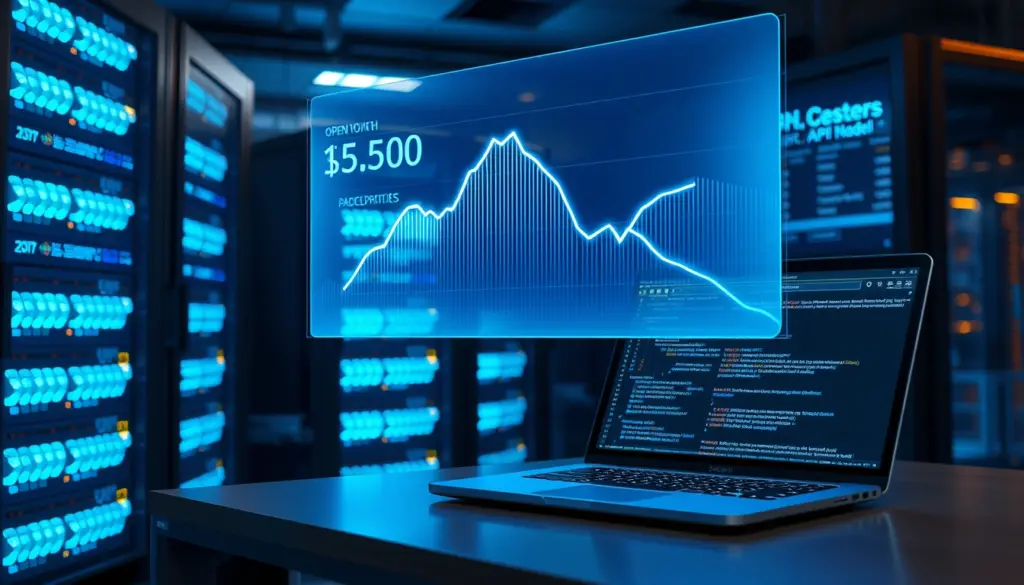
Pricing is where V4.1-Flash actually breaks from the pack. DeepSeek’s off-peak rate card charges $0.003 per million tokens for a cached input hit, $0.15 per million for an uncached input miss, and $0.60 per million for output. During peak hours, defined by DeepSeek as 01:00 to 04:00 UTC and 06:00 to 10:00 UTC on weekdays, all three rates double.
Compare that to DeepSeek’s own V4-Pro line, which lists cached input at $0.022 off-peak and $0.044 at peak, uncached input at $0.66 and $1.32, and output at $1.98 and $3.96 per million tokens, according to figures reported by Digital Applied. Output pricing alone dropped roughly 70% between the two tiers. Third-party routing service OpenRouter lists slightly different intermediary rates for V4.1-Flash, $0.035 per million input tokens and $0.29 per million output tokens with cache reads at $0.001 per million, a reminder that resale markups on open-weight models vary by provider even when the underlying weights are identical.
That pricing lands directly in the middle of an ongoing price war among AI labs. OpenAI cut prices sharply with the GPT-6 Sol and Luna launch earlier in September, xAI followed with an aggressive coding-market discount on Grok 4.7, and Anthropic trimmed its own rates with the Claude Opus 5.5 launch. DeepSeek’s Flash-tier cut adds a fourth front to a race that increasingly looks like a race to the bottom on cost per token, at least for models below the absolute frontier.
DeepSeek V4.1-Flash Pricing at a Glance
| Token Type | V4.1-Flash Off-Peak | V4.1-Flash Peak | V4-Pro Off-Peak | V4-Pro Peak |
|---|---|---|---|---|
| Cached input ($/1M) | $0.003 | $0.006 | $0.022 | $0.044 |
| Uncached input ($/1M) | $0.15 | $0.30 | $0.66 | $1.32 |
| Output ($/1M) | $0.60 | $1.20 | $1.98 | $3.96 |
| Context window | Up to 1,000,000 tokens | |||
| Peak hours (UTC, weekdays) | 01:00–04:00 and 06:00–10:00 | |||
Source: DeepSeek API documentation, as reported by Digital Applied and The Rundown AI, September 2026.
Benchmark Scores: Where V4.1-Flash Wins, and Where It Doesn’t
DeepSeek’s benchmark claims are specific and, on a handful of tests, genuinely competitive with much pricier models. On Terminal-Bench 2.1, a coding-agent evaluation, V4.1-Flash scored 90.6, ahead of Claude Opus 5 at 89.1 and GPT-5.6 Sol at 88.8, per SiliconANGLE’s reporting on the launch. On DeepSWE v1.1, a software-engineering task suite, V4.1-Flash resolved 74.2% of tasks against 74.0% for Claude Opus 5 and 62.7% for DeepSeek’s own V4-Pro.
The picture is less flattering elsewhere. On GPQA Diamond, a graduate-level science reasoning benchmark, V4.1-Flash posted 90.9 against GPT-5.6 Sol’s 94.1 and Claude Opus 5’s 93.4, according to figures compiled by Intelligent Living. On Humanity’s Last Exam without tool use, V4.1-Flash scored 36.8 (39.1 in a text-only variant), well behind GPT-5.6 Sol’s 44.5 and Claude Opus 5’s 56.3. On long-horizon Terminal-Bench 4.0 tasks, V4.1-Flash scored 31.2, trailing both GPT-5.6 Sol (39.9) and Claude Opus 5 (51.8) by a wide margin.
That split matters more than any single number. V4.1-Flash looks strong on short, well-defined coding tasks and weak on long-horizon reasoning and open-ended exams, exactly the profile you’d expect from a “Flash” tier model built for volume and speed rather than depth. It is not a frontier model, and DeepSeek has not claimed it is one. It is a budget model that happens to beat some frontier models on a narrow set of coding benchmarks, which is a different and more commercially relevant claim.
Benchmark Comparison: V4.1-Flash vs the Field
| Benchmark | DeepSeek V4.1-Flash | Claude Opus 5 | GPT-5.6 Sol | DeepSeek V4-Pro |
|---|---|---|---|---|
| Terminal-Bench 2.1 | 90.6 | 89.1 | 88.8 | N/A |
| DeepSWE v1.1 | 74.2% | 74.0% | N/A | 62.7% |
| GPQA Diamond | 90.9 | 93.4 | 94.1 | 92.4 |
| Humanity’s Last Exam (no tools) | 36.8 | 56.3 | 44.5 | N/A |
| Terminal-Bench 4.0 (long horizon) | 31.2 | 51.8 | 39.9 | N/A |
Source: SiliconANGLE, Intelligent Living, and Flowtivity, based on scores published in DeepSeek’s own release notes and independent benchmark trackers, September 2026. Evaluation settings, tool access, and reasoning effort differ across sources, so these figures should be read as directionally comparable rather than a precise head-to-head ranking.
Open Weights, MIT License: What “Open” Actually Buys You
The MIT license is arguably a bigger deal for enterprise buyers than the benchmark table. Unlike Meta’s Llama models, which carry usage restrictions above certain user thresholds, an MIT-licensed release lets any company download the weights, fine-tune them, and deploy the result commercially without asking permission or reporting usage back to DeepSeek. A GitHub issue tracking the release confirmed weights were available in multiple quantization settings shortly after launch, according to a thread on the antirez/ds4 repository, though no independently verified download or star count for the official release has been published as of this writing.
That distinction, open weights you can self-host versus an API-only model, is why V4.1-Flash is being compared to Abacus.AI’s recent Smaug open-weight release and to GLM’s licensing moves rather than to closed models like GPT-6 or Gemini. Self-hosting a 552-billion-parameter MoE model is not free, it requires serious GPU infrastructure even with only 8 to 16 billion parameters active per token, but the option to run it entirely off DeepSeek’s servers is itself a form of pricing leverage for any company negotiating enterprise AI contracts.
The Uncensored Fork Problem
Open weights cut both ways. Within days of the official release, community developers had already produced modified, unrestricted versions of the model that strip out DeepSeek’s built-in content moderation. Shattered.io covered one of those releases separately, an “abliterated” fork of V4.1-Flash that removed safety guardrails and had already logged over 2,254 downloads within its first stretch online. That fork is a distinct piece of software from the official DeepSeek release covered here, built by third-party developers, not DeepSeek itself, but its existence underscores a structural reality of MIT-licensed model weights: once they’re public, the vendor loses control over how they get modified and redistributed.
DeepSeek has not published detailed documentation on the official release’s safety tuning, refusal behavior, or red-team results, so there is no verified basis for comparing how the sanctioned model handles sensitive content against the community-modified variant. What is verifiable is that the gap between “DeepSeek ships a model” and “an unrestricted version of that model circulates publicly” is now measured in days, not months.
Market Impact: Squeezing the Flash Tier
The commercial pressure from this release falls hardest on other “Flash” and “mini” tier models, the cheap, fast options that companies default to for high-volume tasks like chat support, document summarization, and internal tooling. DataCamp’s analysis of the release specifically frames V4.1-Flash as undercutting Google’s Gemini Flash line and Zhipu’s GLM-5.3-Flash on price, though a fully sourced, apples-to-apples benchmark table against those specific competitors has not been published.
For companies running high-volume AI workloads, a 70% output-price cut on a model that beats its own predecessor on coding benchmarks is the kind of number that triggers a procurement review. It’s the same dynamic that played out earlier this year around GLM-5.2’s benchmark run against GPT-5.5, where a cheaper Chinese-developed model closing the gap on Western flagships forced buyers to re-run their cost-per-task math rather than default to brand-name providers. DeepSeek’s Flash-tier discount adds another data point to that trend, and it lands at a moment when AI infrastructure costs are already under scrutiny amid the broader China AI chip price surge tied to the HBM memory shortage.
That last point deserves a caveat: the available reporting on V4.1-Flash’s launch does not draw a direct, sourced link between this specific model’s pricing and China’s chip export environment. The connection is contextual, both stories are unfolding in the same market at the same time, not causal, and should be read that way.
From V4 to V4.1: DeepSeek’s Two-Year Price War
DeepSeek’s pattern since its initial breakout release has been consistent: ship a model that’s meaningfully cheaper than Western equivalents, back it with benchmark numbers on a handful of favorable tests, and let the pricing do the marketing. V4-Pro reached general availability in August 2026, and V4.1-Flash arrived roughly a month later as the budget counterpart, following the same playbook DeepSeek used when it first rattled US markets with aggressive pricing.
What’s different this time is the competitive field around it. In September 2026 alone, the market absorbed Anthropic’s Claude Opus 5.5, OpenAI’s GPT-6 Sol and Luna, Google’s Gemini 3.8 Flash line, and now DeepSeek’s V4.1-Flash, all within a few weeks of each other. Model releases used to be spaced-out events that each got their own news cycle. In late 2026 they’re arriving in overlapping waves, and pricing has become the fastest way to stand out inside that noise.
Try It Yourself: Calling the V4.1-Flash API
DeepSeek’s API follows the same request pattern as its earlier models, using an OpenAI-compatible chat completions endpoint. A basic request for developers testing the new pricing tier looks like this:
curl https://api.deepseek.com/v1/chat/completions \
  -H "Content-Type: application/json" \
  -H "Authorization: Bearer $DEEPSEEK_API_KEY" \
  -d '{
    "model": "deepseek-v4.1-flash",
    "messages": [
      {"role": "user", "content": "Summarize this pull request in three bullet points."}
    ],
    "max_tokens": 512
  }'
Developers watching their bills closely should note the peak-pricing windows built into DeepSeek’s rate card. Running the same workload at 03:00 UTC on a weekday costs double what it would cost two hours later, a scheduling detail that matters for any team batching large jobs against the API.
What the Coverage Actually Says
DeepSeek’s own changelog is blunt about the release: “Today, we officially release the DeepSeek-V4.1-Flash model,” the company wrote in its API documentation changelog. The same entry describes the model’s positioning within DeepSeek’s lineup: “It is the smallest model in our new architecture family, with native multimodal visual understanding,” according to DeepSeek’s official update log.
DeepSeek’s Hugging Face model card frames the release in similar terms, stating that the model is “now live on the DeepSeek API with native multimodal support,” per the official DeepSeek-V4.1-Flash model repository. The same page describes the underlying design: DeepSeek states it is introducing “a multimodal Mixture-of-Experts (MoE) model with 552B backbone parameters and support for contexts of up to one million tokens.”
Trade press coverage has been more pointed about the competitive angle. SiliconANGLE reported that “Chinese artificial intelligence startup Hangzhou DeepSeek Artificial Intelligence Basic Technology Research Co. Ltd. today released DeepSeek-V4.1-Flash, the smallest model in a new architecture family,” in its September 10 report on the launch, framing the release explicitly as DeepSeek positioning a budget model against both its own flagship and Western rivals.
Notably absent from the public record so far: named quotes from independent AI researchers, enterprise buyers, or third-party analysts assessing the release. Coverage to date has leaned on DeepSeek’s own documentation and benchmark claims, plus pricing analysis from trade outlets, rather than outside technical review. That’s not unusual for a model that’s roughly two weeks old at the time of writing, but it does mean the more skeptical, independent read on V4.1-Flash’s real-world performance is still being written.
Risks and Open Questions
- No published architectural comparison against DeepSeek V3 exists yet, so claims about what specifically improved under the hood remain provisional.
- Benchmark figures come from a mix of DeepSeek’s own release notes and third-party trackers using different evaluation settings, tool access, and reasoning effort, which limits how directly the numbers can be compared.
- No independently verified download, star, or deployment count has been published for the official release, separate from the unrelated community “uncensored” fork.
- DeepSeek has not documented the official model’s safety tuning or content-moderation behavior in public materials reviewed for this piece.
- Pricing comparisons against Llama, Qwen3.8-Max, Mistral, and Gemini Flash-tier models rely on partial or third-party data rather than a single authoritative source.
Five Predictions for the Flash-Tier Price War
- Google and OpenAI respond on price within weeks, not months. The pattern since DeepSeek’s earlier releases has been rapid price-matching from Western labs on comparable tiers, and the speed of the September 2026 release cadence makes a fast response more likely, not less.
- More “abliterated” or uncensored forks follow within days of future DeepSeek releases. The V4.1-Flash fork with over 2,254 downloads sets a precedent that community developers will likely repeat with the next open-weight drop.
- Enterprise self-hosting interest grows faster than actual self-hosted deployment. The MIT license removes the legal barrier, but the GPU infrastructure required for a 552-billion-parameter MoE model keeps most buyers on DeepSeek’s hosted API rather than running it themselves.
- Benchmark disputes intensify as more labs publish conflicting comparison tables. The inconsistency already visible across VentureBeat, SiliconANGLE, and Intelligent Living’s reported numbers for the same model suggests third-party evaluation standardization remains an unsolved problem heading into 2027.
- Peak/off-peak pricing spreads to more providers. DeepSeek’s time-based pricing model, cheaper off-peak and doubled during weekday peak windows, is an unusual structure for API pricing, and if it holds down DeepSeek’s margins effectively, expect competitors to test similar scheduling-based discounts.
How V4.1-Flash Fits the Broader AI Landscape
Step back from the benchmark tables and the story is really about market structure. Frontier models like GPT-6 Astra and Claude Opus 5 get the headlines, but the bulk of production AI spending happens in the Flash and mini tiers, the models companies actually run millions of times a day for tasks that don’t need frontier-level reasoning. That’s the market DeepSeek is targeting with V4.1-Flash, and it’s the same market where Grok 4.7’s coding-focused discount and GPT-6’s Sol and Luna pricing are also competing.
None of the labs involved have said publicly that they’re locked in a race to zero on Flash-tier pricing, but the sequence of releases in September 2026, four major labs adjusting prices within a roughly four-week window, reads like one whether or not anyone frames it that way internally. For buyers, that’s a genuinely good outcome in the short term. For the labs absorbing thinner margins on high-volume tiers to stay competitive, it’s a bet that market share now is worth more than revenue per token today.
Frequently Asked Questions
What is DeepSeek V4.1-Flash?
DeepSeek V4.1-Flash is an open-weight, MIT-licensed mixture-of-experts AI model released by DeepSeek on September 10, 2026. It has 552 billion total parameters, activates roughly 8 billion for input and 16 billion for output per request, supports a context window of up to one million tokens, and includes native multimodal vision capability.
How much does DeepSeek V4.1-Flash cost to use?
Off-peak pricing is $0.003 per million tokens for cached input, $0.15 per million for uncached input, and $0.60 per million for output. Peak pricing, which applies during specific weekday UTC windows, doubles all three rates.
Is DeepSeek V4.1-Flash better than Claude Opus 5 or GPT-5.6 Sol?
It depends on the task. V4.1-Flash edges out both on some coding benchmarks like Terminal-Bench 2.1 and DeepSWE v1.1, but trails significantly on long-horizon reasoning tasks like Terminal-Bench 4.0 and open-ended exams like Humanity’s Last Exam. It is a budget-tier model, not a frontier model.
Can I download and self-host DeepSeek V4.1-Flash?
Yes. The model is released under an MIT license, which permits commercial use, modification, and redistribution. Self-hosting a 552-billion-parameter mixture-of-experts model still requires substantial GPU infrastructure, even though only a fraction of its parameters activate per token.
What is the difference between the official V4.1-Flash and the “uncensored” version?
The official release from DeepSeek is the model covered in this article. A separate community-built “abliterated” fork strips out built-in content moderation and safety guardrails. It is a third-party modification, not an official DeepSeek product, and was covered separately by shattered.io after logging over 2,254 downloads.
How does V4.1-Flash compare to DeepSeek’s V4-Pro model?
V4.1-Flash is significantly cheaper, with output pricing roughly 70% lower than V4-Pro’s off-peak rate. On select coding benchmarks like DeepSWE v1.1, DeepSeek’s own data shows V4.1-Flash actually outperforming V4-Pro, though V4-Pro scores higher on broader reasoning tests like GPQA Diamond.
Does V4.1-Flash support multimodal input like images?
Yes. DeepSeek describes the model as natively multimodal, meaning it processes visual input directly rather than through a bolted-on vision adapter, according to the company’s own documentation.
Why does DeepSeek charge different prices at different times of day?
DeepSeek’s API applies peak pricing during specific weekday UTC windows (01:00–04:00 and 06:00–10:00), doubling standard rates. This time-based structure is unusual among major API providers and likely reflects DeepSeek managing compute demand across its highest-traffic hours.