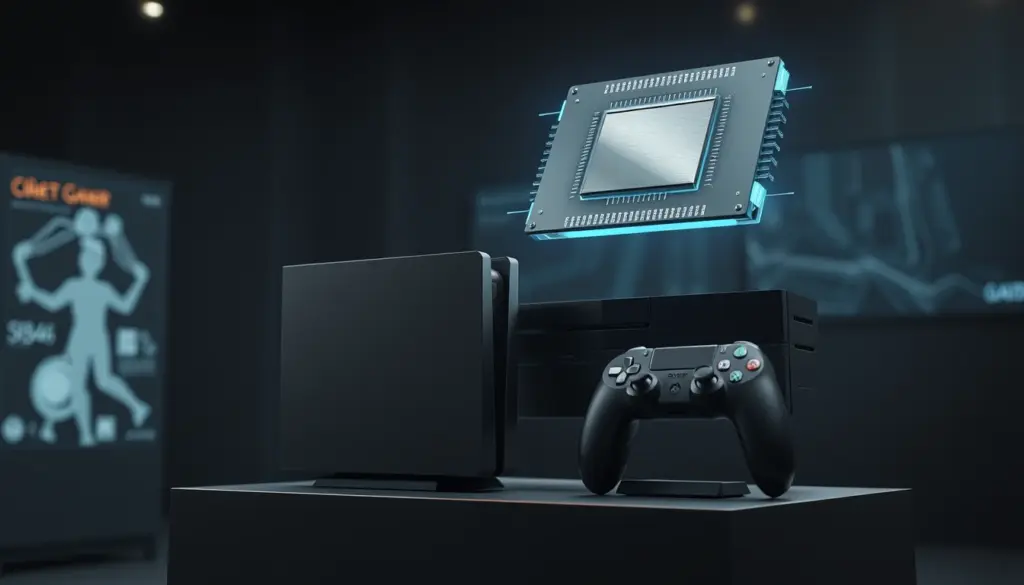
Microsoft’s next Xbox has a name, an AMD partner, and now a delivery date for the people who actually have to build games for it. Xbox executive Jason Ronald said at GDC 2026 that “alpha versions” of Project Helix hardware will start reaching developers in 2027, according to Shacknews and confirmed separately by TechRadar. That single sentence is one of the only things Microsoft has put its name to. Everything else swirling around Project Helix, including a much-repeated claim that it will outrun Sony’s PlayStation 6 by roughly 40 percent, comes from leakers, not from Redmond.
That gap between confirmed fact and leaked rumor is the story worth untangling on September 28, 2026. Project Helix and PS6 chatter has dominated hardware forums for weeks, but the two pieces of information people actually need, when developers get real hardware and how much raw power it carries, sit on opposite ends of the credibility spectrum. One is on the record. The other is a spec sheet nobody at Microsoft or Sony has signed.
What Microsoft Has Actually Confirmed About Project Helix
Strip away the leaks and three facts remain standing. Microsoft has officially named Project Helix as its next-generation Xbox effort. The console runs on a custom AMD system-on-chip, and Microsoft says that chip is being co-designed alongside the next generation of DirectX and FSR upscaling, not bolted onto existing PC architecture after the fact. And per Ronald’s GDC comments, developers should expect alpha hardware in 2027, well ahead of any retail launch.
Notice what is missing from that list: a retail date, a price, a final spec sheet, or any official statement comparing Helix to PlayStation 6. Microsoft has talked about ambition (Ronald has described the goal as advancing the state of the art well beyond Series X) but has not attached a single number to it. That’s a deliberate choice this early in a console cycle, and it is also why the leak ecosystem has rushed in to fill the gap.
The 2027 Alpha Dev Kit Timeline, Explained
Alpha dev kits are not finished consoles. They are early, often bulky reference hardware used to validate silicon, get engines running, and let first-party studios start building years before a public launch. TheSixthAxis reported that this timeline pushes a retail Helix launch well past 2027, likely into 2028 at the earliest, since alpha kits typically precede a shipping console by two to three years in prior Xbox generations.
That cadence tracks with history. Xbox Series X alpha kits reached select studios roughly two years before its November 2020 launch. If Helix follows the same rhythm from a 2027 alpha rollout, a 2029 or even 2030 retail date isn’t unreasonable, though Microsoft has not committed to any of those years publicly. This is one reason the recent industry chatter (also covered in our report on both companies targeting 2027 for chip work) draws a distinction between engineering milestones and consumer availability. Chips can tape out years before a console sits on a shelf.
Inside the Leaked 56 vs 40 TFLOPS Claim
The number driving most of the current news cycle traces back to a single well-known hardware leaker, Kepler_L2, who claims Project Helix carries a 56-teraflop GPU against 40 teraflops for PlayStation 6, a gap of roughly 40 percent in Microsoft’s favor. Yahoo Tech and Gadget Review both picked up the claim, alongside reports that Helix carries around 68 compute units against roughly 54 for PS6, with both chips said to run AMD’s Zen 6 CPU cores, and both said to have reached tape-out, meaning a finished chip design was submitted for fabrication.
None of that has been confirmed by Microsoft, Sony, or AMD. Tape-out is a real and meaningful milestone. It shows a chip design is locked and heading to a foundry, but it says nothing about final clock speeds, yields, memory configuration, or whether either company keeps the design that ships. Our earlier coverage of the original TFLOPS leak walked through Kepler_L2’s track record. This piece focuses on what the claim would actually mean for developers and buyers if it holds up.
Why TFLOPS Alone Never Tells the Full Story
Teraflops measure peak floating-point throughput, not the experience of playing a game. Memory bandwidth, cache design, ray-tracing hardware, and how a studio’s engine is tuned all matter as much as the headline number. Console history offers two very different case studies, and both are useful here because they point in opposite directions.
When the Gap Mattered: Xbox One vs PS4
The original PS4 shipped with an 18-compute-unit GPU rated at 1.84 teraflops, while the launch Xbox One carried 12 compute units and 1.31 teraflops, according to specs compiled by TechRadar. That is a gap of roughly 40 percent, coincidentally the same figure now attached to Helix versus PS6. It was not academic. Multiplatform games in that generation frequently ran at 1080p on PS4 and 900p on Xbox One, a difference players noticed on any HDTV.
When It Didn’t: Xbox Series X vs PS5
The current generation tells a different story. Xbox Series X packs a 52-compute-unit GPU at 12.15 teraflops with up to 560GB/s of memory bandwidth, while PS5 runs 36 compute units at 10.28 teraflops with up to 448GB/s of bandwidth, per specs cited by TechRadar’s console comparisons. That’s an 18 percent compute edge for Series X, yet cross-platform games have shipped at matching resolutions and frame rates for most of the generation. Sony’s faster clock speed, tighter memory design, and its I/O architecture closed a gap that looked decisive on paper.
Put those two generations side by side and the lesson is blunt: a percentage gap can decide a generation, or it can vanish once real engineering choices get made. Nobody, including Kepler_L2, has published enough detail about Helix and PS6 memory subsystems to know which pattern this generation will follow.
Console Generation Power Gaps at a Glance
| Generation | Microsoft console | Sony console | GPU gap | Did it show in games? |
|---|---|---|---|---|
| 2013 launch | Xbox One: 1.31 TFLOPS, 12 CUs | PS4: 1.84 TFLOPS, 18 CUs | ~40% (PS4 ahead) | Yes, frequent 900p vs 1080p splits |
| 2020 launch | Series X: 12.15 TFLOPS, 52 CUs | PS5: 10.28 TFLOPS, 36 CUs | ~18% (Xbox ahead) | Rarely, most releases matched |
| 2027+ (leaked, unconfirmed) | Helix: 56 TFLOPS claimed, ~68 CUs claimed | PS6: 40 TFLOPS claimed, ~54 CUs claimed | ~40% claimed (Helix ahead) | Unknown, no hardware exists yet |
Confirmed vs Unconfirmed Project Helix Facts
| Claim | Status | Source |
|---|---|---|
| Project Helix exists as Microsoft’s next Xbox project | Confirmed | Microsoft, via Shacknews and TechRadar |
| Custom AMD SoC, co-designed with next-gen DirectX and FSR | Confirmed | Microsoft, via TechRadar |
| Alpha dev kits reach developers starting in 2027 | Confirmed | Jason Ronald, Shacknews |
| Retail release date, price, or final specs | Not announced | None |
| Helix at 56 TFLOPS / ~68 compute units | Unconfirmed leak | Kepler_L2, via Yahoo Tech, Gadget Review |
| PS6 at 40 TFLOPS / ~54 compute units | Unconfirmed leak | Kepler_L2, via Yahoo Tech, Gadget Review |
| Both chips have completed tape-out | Unconfirmed leak | Kepler_L2 |
| Zen 6 CPU cores on both consoles | Unconfirmed leak | Kepler_L2 |
Why Memory and Bandwidth Remain the Biggest Unknown
Compute unit counts and TFLOPS figures grab headlines, but memory design has decided more console generations than raw shader throughput has. The PS5’s tighter, faster GDDR6 setup helped it punch above its lower teraflop rating against Series X, and neither Kepler_L2’s leak nor any official statement has pinned down GDDR7 capacity or bus width for either Helix or PS6. Both are widely assumed to use GDDR7 given AMD’s current roadmap, but capacity and bandwidth, the two numbers that actually predict frame-time consistency, remain open questions.
That gap in the leak matters more this cycle than it did in past ones. Memory chip prices have climbed sharply through 2026 as AI data center demand pulls DRAM and GDDR supply away from consumer electronics, a squeeze our coverage of the broader memory cost crisis hitting phones and laptops has tracked in detail. If that pricing pressure holds into 2027 and 2028, both Microsoft and Sony will face harder tradeoffs between memory capacity, bus width, and retail price than either company dealt with when designing Series X and PS5 back in 2019.
Market Impact: What a Widening Gap Means for Multiplatform Studios
If the leaked figures hold, even loosely, the practical fallout lands squarely on third-party developers, not on Microsoft or Sony directly. A studio building a game that ships on both consoles has to target the lower common denominator, meaning PS6, while giving Helix owners a higher resolution, better ray tracing, or a steadier frame rate as a bonus tier. That’s a familiar pattern from the Xbox One and PS4 era, and it is exactly the outcome game directors want to avoid twice in one career.
It also raises the stakes for engine middleware. Studios using Unreal Engine or in-house engines with scalable rendering pipelines can absorb a compute gap more gracefully than teams hand-tuning for a single fixed target. Expect engine vendors to lean harder on dynamic resolution scaling and machine-learning upscaling, the exact area where Microsoft says the next DirectX generation and FSR are being built in tandem with Helix’s silicon rather than added afterward.
There’s a second-order effect worth watching too. Xbox has spent 2026 trimming its internal studio roster, including the 268 layoffs that folded Halo’s development into Activision, a restructuring we covered in detail here. A leaner first-party lineup means Microsoft is leaning more on Game Pass volume and third-party support to make Helix’s case to consumers, which raises the pressure on cross-platform parity even further.
The AMD Angle: One Foundry Partner, Two Consoles
Both Helix and PS6 are reportedly built on AMD silicon, continuing a partnership that has spanned every major console since the Xbox One and PS4 generation. AMD’s stock has had a strong 2026, crossing the $1 trillion market cap mark for the first time, a milestone detailed in our recent market coverage, and next-gen console silicon is one of several growth levers investors are watching alongside AMD’s data center GPU business.
Having one foundry partner design chips for both platforms cuts both ways for consumers. It generally keeps unit costs down, since AMD amortizes engineering costs across two large customers. But it also means any industry-wide pressure on chip supply, whether from foundry capacity or the ongoing memory pricing spike that has already pushed component costs higher across PC hardware (our report on RTX 5090 shortages covers the same underlying supply squeeze), hits Xbox and PlayStation on a similar timeline rather than giving one platform a cost advantage over the other.
Competitive Comparison: Helix, PS6, and the Status Quo
Set against today’s hardware, both next-gen consoles are chasing the same ceiling: matching or beating a high-end 2026 gaming PC at a fraction of the price. Series X and PS5 already sit well below current flagship GPUs, and that gap has only widened as PC graphics cards have gotten more expensive. If Helix really does land near 56 teraflops, it would roughly match a mid-tier discrete GPU from the current PC generation, not a flagship, underscoring that “next-gen” console specs typically launch a step behind whatever PC hardware is available the same year, not ahead of it.
The more relevant competitive question may not be Helix versus PS6 at all. It’s whether either console can meaningfully out-innovate the other on software: matchmaking, backward compatibility, subscription value, and store economics have mattered more than raw GPU throughput for the past two console generations. Sony’s PS5 won plenty of hardware benchmarks against Series X and still ran into the same multiplatform parity outcomes as the generation before it, just in the opposite direction.
What This Means for Game Pass and Cross-Gen Strategy
Microsoft’s subscription strategy complicates the usual power-gap calculus. Xbox has increasingly framed Game Pass, not raw silicon, as its main differentiator, and recent restructuring, including consolidating studios under fewer umbrellas as covered in our report on Xbox’s studio reset, suggests Microsoft is betting more on service revenue than on hardware sales margins for Helix’s generation. A console that’s meaningfully faster than PS6 matters less if Microsoft’s core pitch is subscription access across Xbox, PC, and cloud streaming rather than console exclusivity.
That reframes the entire TFLOPS debate. If Helix ships in 2028 or 2029 as a premium hub for a much broader software ecosystem, a 40 percent compute advantage becomes a selling point for enthusiasts rather than the deciding factor for the mass market the way it was during the Xbox One and PS4 years, when exclusive-heavy strategies made every frame-rate comparison a bigger deal.
Five Predictions for the Next Console Cycle
None of this plays out in isolation. Xbox is mid-restructuring, AMD is juggling console orders against a booming data center GPU business, and the memory market is tighter than it has been in years. Weighing the confirmed timeline against the unconfirmed spec leak, here’s how the next 18 months are likely to unfold.
- Retail specs won’t firm up before 2027 dev kits ship. Expect Microsoft and Sony to keep official numbers vague until alpha hardware is in enough studios’ hands to make leaks harder to suppress.
- The TFLOPS gap narrative will keep resurfacing. Every new leak citing Kepler_L2 or similar sources will reignite the “40 percent faster” framing regardless of whether new evidence backs it up.
- Memory bandwidth and RAM capacity become the next argument. Once compute unit counts stop moving headlines, expect the debate to shift to GDDR7 capacity and bus width, the same unresolved detail in the current PS6 leaks.
- Game Pass economics will matter more than benchmarks at launch. Given Xbox’s 2026 restructuring toward services, Microsoft’s marketing will likely lean on subscription value over raw power comparisons.
- A 2028-2029 retail window is more likely than 2027. Based on the two-to-three-year gap between alpha kits and past console launches, a consumer release before 2028 would be unusually fast for either company.
Frequently Asked Questions
What is Xbox Project Helix?
Project Helix is Microsoft’s officially confirmed codename for its next-generation Xbox hardware. It uses a custom AMD system-on-chip co-designed with the next generation of DirectX and FSR upscaling technology.
When will Project Helix dev kits ship?
Xbox executive Jason Ronald said alpha versions of the hardware will begin reaching developers in 2027, according to Shacknews and TechRadar. No retail release date has been announced.
Is Project Helix really 40 percent faster than PS6?
That figure comes from hardware leaker Kepler_L2, who claims a 56-teraflop GPU for Helix versus 40 teraflops for PS6. Neither Microsoft, Sony, nor AMD has confirmed those numbers, and no official comparison exists.
Have the Helix and PS6 chips taped out?
Reports citing Kepler_L2 claim both chips have reached tape-out, meaning a finalized design was submitted to a foundry. This is not officially confirmed and does not guarantee final clock speeds or specifications.
Does a bigger TFLOPS number guarantee better games?
No. Xbox Series X has a roughly 18 percent TFLOPS edge over PS5, yet most multiplatform games run comparably on both. Memory bandwidth, architecture, and engine optimization matter as much as peak compute.
Who makes the chips for Helix and PS6?
Both consoles are reportedly built on AMD silicon, continuing the partnership AMD has held with Xbox and PlayStation since the prior console generation.
When might Project Helix launch at retail?
No official date exists. Based on past Xbox generations, where alpha dev kits preceded launch by roughly two to three years, a 2028 or 2029 retail launch is plausible, though unconfirmed.
Will Project Helix support backward compatibility?
Microsoft has not detailed backward compatibility plans for Helix. Every Xbox generation since Xbox One has supported broad backward compatibility, making it a reasonable expectation rather than a confirmed feature.