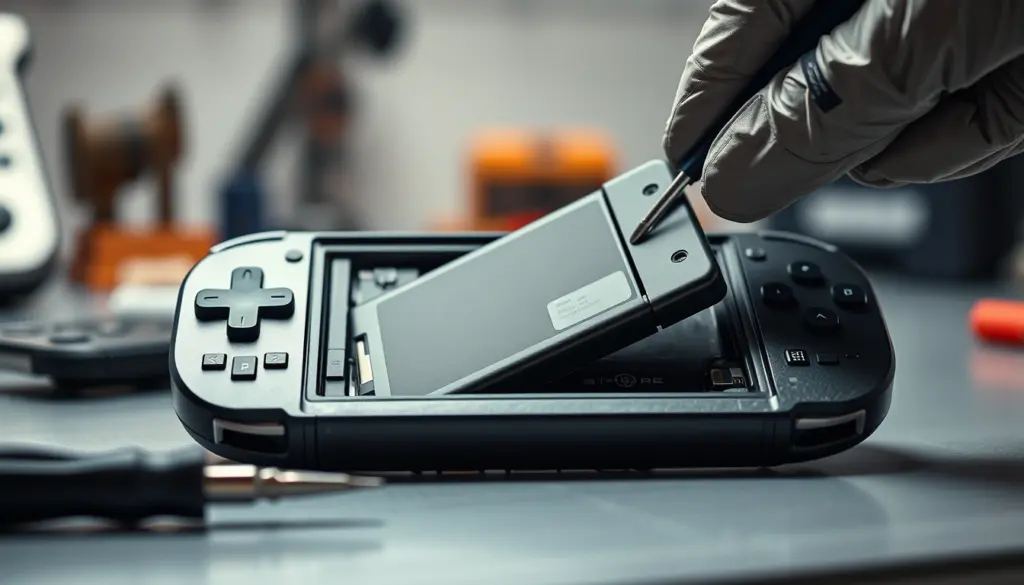
Nintendo has confirmed that a new revision of the Switch 2 is coming – but only if you live in the European Union. Starting this autumn, EU buyers will get a console with a genuinely user-replaceable battery, while the rest of the world keeps the glued-in unit Nintendo has shipped since June 2025. The change isn’t a design refresh or a response to customer complaints. It’s a direct, legally mandated reaction to EU battery law, and it comes bundled with a second, more dramatic decision: the original Nintendo Switch, Switch Lite, and Switch OLED will stop being sold anywhere in the EU from mid-February 2027.
The story sits at the intersection of hardware engineering, EU regulatory policy, and console economics, and it’s the clearest evidence yet that repairability law – not market pressure – is now the force reshaping how gaming hardware gets built. Here’s exactly what’s changing, why the original Switch lineup is being retired years ahead of any planned successor, and what it signals for Sony, Microsoft, and every console maker watching Brussels.
What Nintendo Just Announced
Nintendo first confirmed the change in a brief statement on June 4, 2026, telling The Verge it was “implementing measures to comply with these requirements by preparing versions of products to meet the Regulation.” That single line was enough to confirm months of speculation that had started with a March 2026 Nikkei report, but it left out the details gamers actually wanted: which products, when, and what it would cost in weight or battery life.
Nintendo filled in the blanks on July 6, 2026, telling Eurogamer that its EU hardware lineup “will begin to be replaced on a rolling basis by revisions that contain a user-replaceable battery.” The same statement confirmed the original Switch family’s EU exit “from mid-February 2027, almost ten years after Nintendo Switch launched in March 2017.” Two announcements, one month apart, add up to the biggest hardware policy shift of the Switch 2’s first year on shelves – and it applies to a console that, as covered in our Switch 2 vs. PS5 comparison, only launched in mid-2025.
The EU Battery Regulation That Started It All
The legal trigger is Regulation (EU) 2023/1542, known as the EU Batteries Regulation. Adopted in 2023 and in force since February 2024, it requires that portable batteries in consumer electronics sold in the EU be removable and replaceable by the end user using commercially available tools, with no proprietary equipment required. The full compliance deadline for existing product categories, including the ones covering handheld consoles, lands on February 18, 2027. You can read the regulation’s actual text on the EU’s official EUR-Lex portal, and the European Commission’s Digital Strategy overview page summarizes the compliance timeline in plain language.
Unlike GDPR or the Digital Markets Act, the Batteries Regulation isn’t aimed at tech giants’ business practices – it’s aimed squarely at product design. That’s precisely why it’s forcing physical engineering changes at Nintendo instead of a policy memo. Glued-in lithium cells, soldered battery leads, and adhesive-sealed shells – the standard construction method for handhelds since the original Switch – are no longer legal to sell new into the EU market once the deadline passes. Nintendo isn’t alone in facing this; it’s simply the first console maker to publicly confirm compliance plans.
Every Spec That’s Changing, Broken Down
Making a battery removable without tools means redesigning the battery door, the cell shape, and often the cell chemistry itself – and that always costs something in capacity or weight. Nintendo’s EU-spec hardware trades a small amount of battery capacity for the tool-free door mechanism, and the tradeoffs aren’t identical across the lineup. The table below compiles the verified specs for every affected product, cross-checked across Nintendo’s own statements and independent reporting.
| Product | Standard battery | EU replaceable-battery version | Weight change |
|---|---|---|---|
| Switch 2 console | 5,220 mAh | 5,172 mAh (−1%) | 401g → 411g (+10g) |
| Switch 2 + Joy-Con 2 (attached) | – | – | 534g → 548g (+14g) |
| Joy-Con 2 (each) | Unchanged capacity | Unchanged capacity | +2g each |
| Pro Controller | 1,070 mAh | 897 mAh (−16%) | 235g → 228g (lighter) |
| N64 Controller | Unchanged capacity | Unchanged capacity | 233g → 234g |
| GameCube Controller | 500 mAh | 525 mAh (+5%) | 210g → 215g |
The Pro Controller takes the biggest capacity hit of the lineup at 16%, yet Nintendo says it will still weigh less than the current model – the tool-free battery door apparently saves more mass than the added cell bulk requires. The GameCube controller runs the opposite direction, gaining both weight and capacity, likely because its housing had more slack to accommodate a swappable cell design in the first place. None of these changes affect the console’s core silicon, display, or performance – this is purely a mechanical and battery-chemistry revision, not a new hardware generation.
The Rollout Timeline, Country by Country
Nintendo isn’t switching every product over at once. The rollout is staggered by category, likely tied to manufacturing capacity and existing inventory levels, and it runs right up against the regulation’s hard deadline.
| Milestone | Timing |
|---|---|
| Joy-Con 2 (select colors) | Summer 2026 |
| Switch 2 console revision | Autumn 2026 |
| Pro Controller revision | Winter 2026 |
| N64 and GameCube controller revisions | Early 2027 |
| EU Battery Regulation hard compliance deadline | February 18, 2027 |
| Original Switch, Switch Lite, Switch OLED exit EU shelves | Mid-February 2027 |
The territory affected extends well beyond the 27 EU member states: Nintendo’s compliance zone also covers the United Kingdom, Norway, Switzerland, Saudi Arabia, the United Arab Emirates, Oman, and South Africa – markets that either mirror EU consumer law directly or have adopted equivalent standards. Nintendo has not announced any equivalent change for Japan or the United States, and nothing in the current statements suggests one is coming. There’s also no indication buyers will get a choice between the standard and EU-spec units once the transition completes in a given region – as old stock clears out, the replaceable-battery version simply becomes the only one on shelves.
Why the Original Switch Is Being Discontinued in Europe
The second half of Nintendo’s announcement is arguably the bigger deal: the original Switch, Switch Lite, and Switch OLED – a console family that, per our earlier coverage of the Switch 2 outselling PS5 in its first year, remains one of the best-selling platforms in Nintendo’s history – will stop being manufactured for and sold into the EU market from mid-February 2027. That’s roughly ten years after the original Switch’s March 2017 debut, but it’s not a planned end-of-life. It’s a direct consequence of the same battery law.
Retooling three additional legacy hardware lines – each with its own internal battery design dating back years – for tool-free replaceability would require production investment Nintendo evidently isn’t willing to make for a lineup it’s already trying to phase out in favor of the Switch 2. Rather than redesign the old hardware, Nintendo is simply ending its EU availability at the same moment the compliance deadline hits. It’s a rare case of a regulation directly hastening a product’s retirement rather than just its redesign.
Nintendo’s Repairability Problem: The iFixit Score
None of this happened because Nintendo suddenly prioritized repairability – it happened because regulators forced the issue, and the company’s track record explains why. When iFixit tore down the Switch 2 in June 2025, it awarded the console a 3 out of 10 repairability score, citing a glued-in battery, a soldered USB-C charging port, and a soldered cartridge reader – all components that fail eventually and, on the standard global version, require a service center visit or a warranty-voiding repair to replace.
How the Original Switch’s Score Was Cut in Half
The original Switch’s repairability history makes Nintendo’s position look even shakier. iFixit initially scored it 8 out of 10 back at launch – a genuinely repair-friendly design. That score was later cut to 4 out of 10, not because the hardware changed, but because Nintendo stopped supplying replacement parts to independent repair shops, which iFixit factors directly into its scoring methodology. It’s a useful reminder that a repairability score isn’t just about screws and adhesive; it’s about whether the manufacturer keeps supporting repairs after launch. For a security- and privacy-conscious reader, there’s a real safety angle here too: when official replacement parts and tool-free battery access aren’t available, consumers turn to unofficial repair shops and marketplace battery kits of wildly inconsistent quality, and swollen or counterfeit lithium cells are a legitimate fire-safety concern in aftermarket handheld repairs. A tool-free, manufacturer-sanctioned swap process – which is exactly what the EU regulation forces – actually reduces that risk instead of pushing it underground.
The Loophole: Why Right to Repair Doesn’t Cover Consoles
Here’s the detail that surprises most people following this story: the EU’s dedicated Right to Repair Directive – the regulation people usually associate with this kind of consumer-electronics reform – doesn’t actually apply to game consoles at all. Directive (EU) 2024/1799 was adopted on June 13, 2024, entered into force on July 30, 2024, and requires member states to transpose it into national law by July 31, 2026. But its Annex II, which defines covered product categories, lists smartphones, tablets, washing machines, dishwashers, refrigerators, TVs, and monitors – and stops there. Consoles and controllers are absent. You can confirm the scope directly via Wikipedia’s Right to Repair overview, which documents the directive’s category list and adoption history.
That means the Batteries Regulation isn’t one of several EU levers pushing console makers toward repairable hardware – as of mid-2026, it’s the only one. No repair-access mandate, no spare-parts-availability requirement, no repairability-index labeling applies to consoles anywhere in EU law. The table below lines up the relevant regulations side by side.
| Regulation | Adopted | Key deadline | Covers consoles? | Core requirement |
|---|---|---|---|---|
| EU Batteries Regulation (EU) 2023/1542 | 2023 | Feb 18, 2027 | Yes – only lever that applies | Tool-free, user-replaceable batteries |
| Right to Repair Directive (EU) 2024/1799 | Jun 13, 2024 | Jul 31, 2026 (transposition) | No – Annex II excludes consoles | Repair access for smartphones, tablets, major appliances |
| WEEE Directive (2012/19/EU) | 2012 | Ongoing | Partial – e-waste collection only | Producer takeback and recycling |
| USB-C Common Charger Directive (EU) 2022/2380 | 2022 | Dec 28, 2024 (Dec 2026 for laptops) | Partial – charging port only | Standardized USB-C charging port |
| France’s indice de réparabilité (loi AGEC) | Since Jan 1, 2021 | Ongoing | No – limited to 5 product categories | Repairability score displayed at point of sale |
Read that table carefully and the Switch 2’s replaceable battery starts to look less like a repairability initiative and more like the narrowest possible legal compliance response – Nintendo is fixing exactly the one component the law names, and nothing else the iFixit teardown flagged.
Apple’s USB-C Playbook: The Historical Precedent
Console makers aren’t the first to face this exact playbook, and Apple’s recent history is the clearest template for what usually happens next. Apple resisted USB-C on the iPhone for years, citing accessory-ecosystem lock-in and design constraints, right up until the EU’s Common Charger Directive forced its hand. Apple dropped Lightning for USB-C starting with the iPhone 15 in 2023 – and rather than maintain two separate production lines indefinitely, it took the USB-C design global within about a year, because running dual manufacturing lines for the same product is expensive at Apple’s volume. It’s the same economic logic gaming outlets have already applied to Nintendo’s situation, noting that maintaining EU-only and rest-of-world Switch 2 variants indefinitely is a real ongoing cost center, not a one-time compliance expense.
The parallel isn’t perfect – Apple’s change was a connector swap with no capacity tradeoff, while Nintendo’s is a battery-chemistry and mechanical redesign with a real (if small) performance cost. But the underlying pattern, a reluctant manufacturer forced into a design change by EU law that eventually goes global anyway, is exactly what plays out here if Nintendo follows precedent.
Is Sony’s DualSense Getting the Same Treatment?
Nintendo isn’t the only console maker facing this deadline – every company selling battery-powered gaming hardware into the EU is bound by the same regulation. Reporting has circulated since late 2025 suggesting Sony is preparing its own replaceable-battery revision for the PS5 DualSense controller, though Sony has not made an official statement confirming it, unlike Nintendo’s two public disclosures.
A Contested Teardown
The DualSense rumor has already been complicated by a teardown of the PS5 Pro’s bundled controller, which found a battery that differs from earlier units but is not straightforwardly tool-free removable – evidence the transition, if Sony is indeed planning one, isn’t as far along as Nintendo’s. Microsoft hasn’t publicly addressed its Xbox controller lineup’s compliance plans at all. That silence doesn’t mean Xbox controllers are exempt – it just means Microsoft hasn’t chosen to get ahead of the deadline the way Nintendo has. Every controller sold new into the EU after February 2027 is bound by the same law regardless of whether the manufacturer has announced anything yet.
Market Impact: What Two Production Lines Cost Nintendo
Europe is not a peripheral market for Nintendo. Console hardware still accounts for 38% of European gaming revenue (down from 41% the year before, as spending shifts toward mobile and PC), inside a regional games market worth €26.8 billion across its key territories in 2024 – up 4% year-on-year – according to the trade association Video Games Europe’s official annual data report. A console maker cannot treat a market that size as an afterthought, which is exactly why Nintendo is engineering a dedicated hardware revision rather than simply ceasing EU sales.
At the same time, maintaining two parallel hardware variants – one glued-battery design for the US, Japan, and other unregulated markets, and one tool-free-replaceable design for the EU compliance zone – means duplicated tooling, duplicated component sourcing, and duplicated quality-assurance passes on every hardware refresh going forward. That’s a real, recurring cost, not a one-time engineering charge, and it’s the same math that eventually pushed Apple to go global with USB-C rather than maintain Lightning anywhere.
Will US and Global Buyers Ever See This Model?
Nintendo’s current position is that the replaceable-battery revision is EU-specific, full stop – there’s no confirmed timeline, or even a confirmed intention, to bring it to the $449.99 US Switch 2 or the Japanese domestic model. But the Apple precedent, the recurring dual-production-line cost, and early signs that right-to-repair advocacy is gaining traction in both the US and UK all point toward the same eventual outcome analysts have flagged: a single global hardware design is cheaper to sustain long-term than two permanent variants, even before accounting for the political cost of visibly selling a more repairable product in Europe than in North America.
None of that is a commitment, and readers should treat a global rollout as a plausible medium-term outcome, not an announced product. For now, if you’re buying a Switch 2 in the US, Canada, or Japan, expect the same glued-battery design iFixit already tore down – the version examined in our Steam Deck vs. Switch 2 comparison remains the only one on sale outside the EU compliance zone.
How to Tell Which Unit You’re Buying
Nintendo has confirmed the two hardware variants carry different internal build codes, but it has not published a consumer lookup tool, and no retailer-facing labeling standard has been announced yet. The only confirmed distinguishing marker so far is the build-code string printed on the packaging and console housing.
Standard (non-EU) unit   →  internal build code "BEE" on box / console label
EU-compliant revision    →  distinct model number + "OSM" build code on box / console label

Nintendo has not published a public model-number lookup tool as of this writing.
The build-code marking is currently the only confirmed way to distinguish
units at retail – check the regulatory-compliance panel on the box or the
label on the underside of the console before purchase.
Until Nintendo publishes clearer retail guidance, EU buyers who specifically want the replaceable-battery version should expect some ambiguity during the autumn 2026 transition window, when both build codes may still be in circulation on store shelves simultaneously.
Competitive Angle: Repairability Across the Console Market
This story reframes how the current console generation should be judged. Raw performance comparisons – the kind we’ve covered in our Xbox Series X vs. Series S breakdown – have dominated console coverage for years, but repairability is emerging as a genuinely differentiating axis, and right now Nintendo is the only major console maker with a public, dated compliance plan. Sony’s controller-battery plans remain unconfirmed and contested. Microsoft has said nothing publicly. That puts Nintendo simultaneously in the position of having the worst-scored hardware on record (that 3/10 iFixit rating) and the most transparent regulatory response – a genuinely awkward but very 2026 combination.
It’s also worth noting this isn’t Nintendo’s only recent hardware-policy story. Sony’s decision to wind down new physical-disc production by 2028 – which we covered in PlayStation Ends Discs in 2028 – shows the same pattern from a different angle: external pressure (there, a shifting digital-sales mix; here, EU law) forcing a console maker into hardware and business decisions well outside a normal generational refresh cycle.
What Happens Next: Five Predictions
- Sony and Microsoft will likely confirm their own compliance plans within the next two to three quarters – the February 2027 deadline applies to them regardless of whether they’ve said anything publicly yet.
- A global rollout of the replaceable-battery Switch 2 is plausible by 2028 or 2029, following the Apple USB-C pattern, once EU-specific tooling costs are fully amortized against the expense of running two production lines indefinitely.
- Expect third-party model-number lookup databases and browser extensions to appear within weeks of the autumn 2026 launch window, filling the gap left by Nintendo’s lack of a consumer-facing compliance checker.
- Consumer and right-to-repair advocacy groups will likely push to close the console loophole in the Right to Repair Directive’s Annex II at its next scheduled review, using this exact case as their central example.
- The original Switch’s EU discontinuation will pull forward Switch 2 upgrade purchases among the remaining Switch 1 install base in Europe faster than Nintendo’s own sales projections currently assume.
Frequently Asked Questions
Is the replaceable-battery Switch 2 a new console generation?
No. It’s the same Switch 2 hardware – same chip, same display, same performance – with a redesigned battery door and cell to meet EU law. Nothing about game compatibility or performance changes.
When can EU buyers get the new version?
Joy-Con 2 pairs in select colors arrive first, in summer 2026. The Switch 2 console revision follows in autumn 2026, the Pro Controller in winter 2026, and the N64 and GameCube controllers in early 2027.
Will the US ever get a replaceable-battery Switch 2?
Nintendo has not announced any plan to bring the revision outside its EU compliance zone. Historical precedent, like Apple’s global USB-C rollout after EU pressure, suggests it’s plausible eventually, but nothing is confirmed.
Does the new battery reduce playtime?
The console’s cell shrinks from 5,220 mAh to 5,172 mAh, about a 1% reduction, which should translate to a negligible real-world battery-life difference. The Pro Controller sees a bigger 16% capacity cut, which is more likely to be noticeable during extended play sessions.
Why is the original Switch being discontinued in Europe?
The same battery law applies to it, but Nintendo appears to have decided that redesigning three legacy hardware lines it’s already phasing out isn’t worth the investment. Ending EU sales in February 2027, alongside the compliance deadline, was evidently the more economical choice.
Does the Right to Repair Directive also force this change?
No. The Right to Repair Directive (EU) 2024/1799 explicitly excludes game consoles and controllers from its covered product list. The Batteries Regulation is currently the only EU law affecting console hardware design.
Is Sony’s PS5 controller getting a similar redesign?
It’s rumored but not officially confirmed. A teardown of the PS5 Pro’s bundled controller found a different battery design that isn’t clearly tool-free replaceable, so any Sony compliance plan appears less advanced than Nintendo’s.
How can I tell if a Switch 2 in a store is the EU-compliant version?
Check the build-code marking on the box or console housing – standard units carry a “BEE” code, while EU-compliant units carry a distinct model number and an “OSM” code. Nintendo has not yet published a consumer-facing lookup tool.
Related Coverage
- Switch 2 vs PS5: $449 vs $649, 1080p vs 4K [2026]
- Steam Deck vs Switch 2: $789 vs $449.99 [2026]
- Switch 2 Hits 19.86M, Outsells PS5 in Year One [2026]
- PlayStation Ends Discs in 2028: 85% Now Digital [2026]
- Xbox Series X vs Series S: $649 vs $399, 4K vs 1440p [2026]
For more coverage of console hardware, pricing, and platform news, visit our Gaming section.