
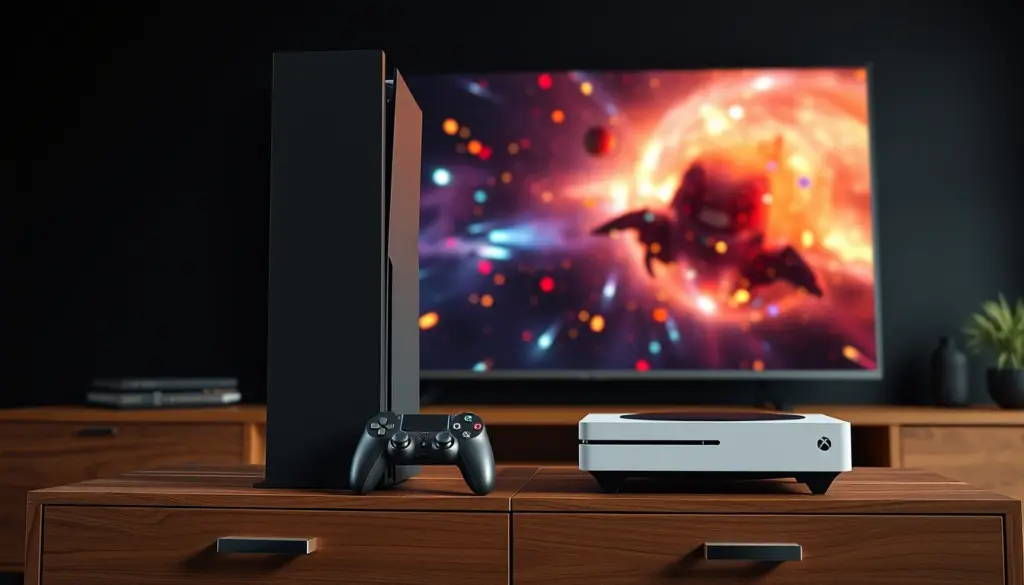
The Xbox Series X vs Series S decision is the single most common question facing anyone buying an Xbox in 2026 – and it just got more urgent. As of this writing the disc-based Series X sells for $649.99 and the entry-level Series S for $399.99, a $250 gap for two consoles that share the same games, the same Game Pass library, and the same controller. But on August 1, 2026 Microsoft is raising Xbox prices for the second time in a year, pushing the Series X to $799.99 and the Series S to $499.99 while discontinuing the 2 TB model entirely.
That price shock reframes the whole comparison. The Series X is a genuine 4K, 12-teraflop machine with a Blu-ray drive; the Series S is a compact, digital-only 1440p console with roughly a third of the graphics power and 10 GB of RAM that developers have openly called a bottleneck. Which one is right for you depends on your TV, your internet, your shelf of physical games, and how much you care about frame rates in the most demanding titles of 2026.
This guide breaks down Xbox Series X vs Series S across every axis that matters: full specs, real 2026 pricing (including the August hike), GPU and RAM, real-world benchmarks from Digital Foundry and other testers, storage and discs, power draw, Game Pass economics, sales data, and clear use-case recommendations. By the end you will know exactly which Xbox to buy – and whether to buy it before August 1.
Xbox Series X vs Series S: Specs at a Glance (2026)
Both consoles launched on November 10, 2020, and both are built on the same fundamental architecture: an 8-core AMD Zen 2 CPU, an RDNA 2 GPU, a custom NVMe SSD, and the Xbox Velocity Architecture that powers fast loading and Quick Resume. The difference is one of scale. The Series X is the full-fat machine; the Series S is a deliberately cut-down, cost-optimized version of the same platform. The table below lays out every meaningful specification side by side, drawn from the official Xbox Series X and Series S hardware documentation and Microsoft’s own console comparison page.
| Specification | Xbox Series X | Xbox Series S |
|---|---|---|
| Launch price (Nov 2020) | $499.99 | $299.99 |
| Current price (mid-2026) | $649.99 (1 TB, disc) | $399.99 (512 GB) |
| Price from Aug 1, 2026 | $799.99 | $499.99 |
| CPU | 8-core AMD Zen 2 @ 3.8 GHz (3.66 GHz w/ SMT) | 8-core AMD Zen 2 @ 3.6 GHz (3.4 GHz w/ SMT) |
| GPU | RDNA 2, 52 CUs @ 1.825 GHz | RDNA 2, 20 CUs @ 1.565 GHz |
| Graphics power | 12.15 TFLOPS | 4.01 TFLOPS |
| Memory | 16 GB GDDR6 (10 GB @ 560 GB/s + 6 GB @ 336 GB/s) | 10 GB GDDR6 (8 GB @ 224 GB/s + 2 GB @ 56 GB/s) |
| Internal storage | 1 TB NVMe SSD (~802 GB usable) | 512 GB NVMe SSD (~364 GB usable); 1 TB model available |
| Storage expansion | 0.5–4 TB proprietary card | Same proprietary card |
| Optical drive | 4K UHD Blu-ray | None (digital only) |
| Target resolution | 4K (2160p) | 1440p (with 4K upscaling) |
| Max frame rate | Up to 120 fps | Up to 120 fps |
| Ray tracing | Yes (DirectX Raytracing) | Yes (DirectX Raytracing) |
| Power draw (gaming) | ~150–220 W | ~65–100 W |
| Dimensions | 301 × 151 × 151 mm | 275 × 151 × 65 mm |
| Weight | 4.46 kg (9.8 lb) | 1.93 kg (4.3 lb) |
| Release date | November 10, 2020 | November 10, 2020 |
The headline numbers – 12.15 TFLOPS vs 4.01 TFLOPS, 16 GB vs 10 GB of RAM, 4K vs 1440p – tell most of the story. But raw specs never translate one-to-one into what you see on screen, which is why the rest of this Xbox Series X vs Series S comparison digs into real benchmarks, pricing, and use cases rather than stopping at the spec sheet.
Xbox Series X vs Series S: 2026 Price Breakdown
Pricing is where this comparison has become genuinely complicated, because there are now three price points in play for each console: the 2020 launch price, the current (mid-2026) price after October 2025’s increase, and the higher price that lands on August 1, 2026. Microsoft confirmed the latest hike on June 25, 2026, telling buyers that prices would rise by $100 on 512 GB models and $150 on 1 TB models, and that the 2 TB Galaxy Black Series X would be discontinued. CNBC reported the company blamed component costs; Variety confirmed the 2 TB sunset.
| Model | Storage | Optical drive | Price now | Price from Aug 1, 2026 |
|---|---|---|---|---|
| Xbox Series S | 512 GB | No | $399.99 | $499.99 |
| Xbox Series S | 1 TB | No | $449.99 | $599.99 |
| Xbox Series X (All-Digital) | 1 TB | No | $599.99 | $749.99 |
| Xbox Series X | 1 TB | 4K UHD Blu-ray | $649.99 | $799.99 |
| Xbox Series X Galaxy Black | 2 TB | 4K UHD Blu-ray | $799.99 | Discontinued |
Read that table carefully, because it changes the value equation. Today the price difference between a Series S (512 GB) and a disc Series X is $250. After August 1, that same gap widens to $300, and the cheapest way into 4K Xbox gaming – the All-Digital Series X – jumps to $749.99. If you have already decided you want a Series X, buying before August 1, 2026 saves you $150 outright. If you are cost-sensitive and leaning Series S, the pre-hike $399.99 entry price is the lowest it will be for the foreseeable future.
It is worth putting these numbers next to the competition. Sony’s standard PS5 also sits at $649.99 after its own 2026 increase, which we cover in our PS5 vs Xbox Series X comparison, while the discless PS5 and the Nintendo Switch 2 occupy the mid-range that the Series S undercuts. The Series S remains, by a wide margin, the cheapest way onto current-generation console gaming.
Why Xbox Prices Are Rising Again on August 1, 2026
Understanding the August hike matters because it is not a normal margin grab – it is a symptom of the same memory and storage shortage rippling across the entire hardware industry in 2026. In its official price update, Microsoft said that console storage and memory prices had increased by more than 2.5x, and that it expected them to roughly double again by the fall of 2027. Consoles, the company reminded buyers, are typically sold at a loss and subsidized by software and subscriptions – so when component costs spike, hardware prices have to follow.
This is the second Xbox increase in under a year. Microsoft raised US console prices by roughly $20–$70 in October 2025, then again by the far steeper $100–$150 in August 2026. The pattern mirrors what is happening elsewhere in gaming: Sony has raised PS5 prices, Nintendo pushed the Switch 2 up, and even Valve’s new living-room hardware launched into inflated pricing, as we detail in our analysis of the 2026 console price surge. The root cause is a global DRAM and NAND crunch driven partly by AI-data-center demand vacuuming up memory supply.
Microsoft did soften the blow with financing and value options: buy-now-pay-later plans, 0% APR financing for up to 12 months, trade-in credit for older consoles, and certified refurbished units at up to $100 off MSRP. For the Xbox Series X vs Series S buyer, the practical takeaway is simple. The Series S’s price advantage is not going away – if anything it becomes more valuable as absolute prices climb, because $499.99 for a current-gen console after August 1 is still dramatically cheaper than $799.99 for the Series X. But if 4K and a disc drive are must-haves, the window to save $150 closes on August 1, 2026.
GPU and Performance: 12 vs 4 TFLOPS Explained
The single largest hardware gap in the Xbox Series X vs Series S matchup is graphics power. The Series X’s GPU packs 52 RDNA 2 compute units running at 1.825 GHz for 12.15 teraflops. The Series S has 20 compute units at 1.565 GHz for 4.01 teraflops. That is roughly a 3x difference in raw shading throughput – the widest gulf between two consoles Microsoft has ever sold side by side.
Teraflops are not a perfect measure of gaming performance, but here the ratio is meaningful because everything else about the two GPUs is architecturally identical. Same RDNA 2 feature set, same ray-tracing accelerators, same variable-rate shading and mesh shaders. The Series S is not a different or older graphics architecture; it is simply a smaller slice of the same silicon. That is why the resolution targets scale almost linearly with the teraflop gap: the Series X aims for 4K (roughly four times the pixels of 1080p) while the Series S aims for 1440p (roughly 1.78x 1080p).
The CPUs, by contrast, are nearly twins. Both use eight Zen 2 cores; the Series X clocks slightly higher (3.8 GHz vs 3.6 GHz, or 3.66 vs 3.4 GHz with simultaneous multithreading enabled). In practice this means the two consoles hit the same frame-rate targets – a game running at 60 fps on Series X will usually target 60 fps on Series S too. What the Series S sacrifices to hit that target is resolution and visual effects, not the frame-rate ceiling. Both can output up to 120 fps in supported titles. If you have compared the current-gen consoles before, this is a different trade-off than the one in our PS5 Pro vs PS5 breakdown, where the gap is mostly about ray tracing and upscaling rather than a 3x raw-power divide.
The 10GB RAM Bottleneck: Series S’s Real Limitation
If the teraflop gap is the headline, the memory gap is the story the spec sheet undersells. The Series X carries 16 GB of GDDR6 split into a fast 10 GB pool (560 GB/s) and a slower 6 GB pool (336 GB/s). The Series S has just 10 GB total, split into 8 GB at 224 GB/s and 2 GB at 56 GB/s – and roughly 2 GB of that is reserved for the operating system, leaving developers about 8 GB for the actual game. That is less than half the Series X’s memory, at less than half the bandwidth.
Memory, not teraflops, is what most often forces the Series S to cut features rather than just resolution. Because every Xbox game must ship on both consoles under Microsoft’s parity policy, the Series S’s 10 GB ceiling can constrain what studios attempt across the whole platform. Engineers at id Software have publicly described the Series S’s memory as a bottleneck for cutting-edge multiplatform development, arguing that the lower capacity and split memory banks are hard to design around, as reported by GamingBolt.
Baldur’s Gate 3: A Case Study in RAM Limits
The clearest real-world example is Baldur’s Gate 3. When Larian brought the game to Xbox in 2023, it launched on Series X with local split-screen co-op – but the Series S shipped without split-screen, because the console could not hold two simultaneous instances of the game in its 10 GB of memory. Larian was blunt that the RAM ceiling was the blocker, and Microsoft even relaxed its certification requirements to let the game ship in that state. Split-screen finally arrived on Series S more than a year later, in early 2025’s Patch 8, only after Larian’s engineers had clawed back enough memory headroom to fit it. It is the canonical illustration that in the Xbox Series S vs Series X debate, the invisible 6 GB of extra RAM in the bigger console can matter more than the visible teraflops.
For most single-player games this bottleneck is invisible – you simply get a lower resolution. But for memory-hungry genres (large open worlds, split-screen co-op, heavily modded experiences, and the most ambitious 2026 releases), the Series S is the console most likely to drop a feature or a texture tier that the Series X keeps.
Real-World Benchmarks: How Games Actually Run
Spec sheets are theory; benchmarks are practice. Frame-rate and resolution analysis from Digital Foundry and other testing outlets shows a consistent pattern across 2020–2026 releases: the Series X and Series S usually hit the same frame-rate target, while the Series S lands at a markedly lower – and often dynamic – resolution, sometimes dropping ray tracing or effects entirely. The table below summarizes tested behavior in five representative titles.
| Game | Xbox Series X | Xbox Series S | Analysis source |
|---|---|---|---|
| Cyberpunk 2077 | Quality: 30 fps, higher res; Performance: ~60 fps | 1440p / 30 fps (dynamic); Performance mode dynamic ~1080p (down to ~1422×800) with FSR upscaling | Digital Foundry / VG Tech |
| Hogwarts Legacy | Performance: dynamic 1440p (50–80% of 4K) targeting 60 fps; Quality: ~1800p / 30 fps | Performance: ~792p; Fidelity/Balanced: 1080p / 30 fps; no ray tracing | Digital Foundry |
| Doom: The Dark Ages | 1440p / 60 fps with dynamic resolution + variable-rate shading | ~900p peak (down to ~648p) / 60 fps | Digital Foundry |
| Starfield | 4K-target / 30 fps (FSR 2) | 1440p / 30 fps (FSR 2) | Bethesda / Digital Foundry |
| Baldur’s Gate 3 | 60 fps + local split-screen co-op | 30 fps; split-screen added in 2025 (Patch 8) after memory optimization | Larian / Pure Xbox |
Three takeaways emerge. First, the Series S rarely holds a native 1440p in demanding titles – Doom: The Dark Ages dips to sub-720p internally, and Cyberpunk’s performance mode falls near 1080p. The “1440p console” marketing is a target, not a guarantee. Second, ray tracing is the effect most often cut on Series S; Hogwarts Legacy drops it entirely. Third, frame-rate parity is real: if a game offers a 60 fps mode on Series X, the Series S almost always offers one too, just at lower fidelity. For a deeper cross-platform view, Tom’s Guide’s Xbox Series X vs Series S face-off reaches the same conclusion from independent testing.
Resolution and Frame Rate: 4K vs 1440p in Practice
The resolution difference is the most consequential everyday distinction in the Xbox Series X vs Series S comparison, and its importance depends almost entirely on your display. On a 4K TV of 55 inches or larger, the Series X’s native or near-native 4K output looks noticeably sharper and cleaner than the Series S’s upscaled 1440p, especially in games with fine detail like foliage, text, and distant geometry. On a 1080p TV or a smaller screen, much of that advantage evaporates – the Series S was explicitly designed for 1080p and 1440p displays, and it excels there.
Both consoles support HDMI 2.1 features: 4K/120, variable refresh rate (VRR), and auto low-latency mode. The Series S can technically output a 4K signal (it upscales to it) and drive 120 fps in supported games, but it renders at a lower internal resolution to get there. The Series X, with three times the GPU power and 60% more memory bandwidth, holds higher internal resolutions and hits its targets more consistently, particularly in the ray-traced, high-detail titles that define late-generation gaming.
The practical rule of thumb: match the console to the screen. If your TV is 4K and you sit close enough to appreciate it, the Series X’s resolution advantage is real and worth paying for. If you game on a 1080p set, a monitor, or a bedroom TV, the Series S delivers the same games at the same frame rates with a difference you may never notice – the same logic gamers weigh in our Switch 2 vs PS5 comparison, where target resolution similarly separates the tiers.
Storage, Discs, and Expansion Compared
Storage is the second-biggest practical divide after graphics. The Series X ships with a 1 TB NVMe SSD (about 802 GB usable after the OS), while the base Series S includes just 512 GB (about 364 GB usable) – and modern games are enormous. A single flagship title with 4K assets can consume 100–150 GB, which means the base Series S can realistically hold only three or four big games at once. Microsoft’s answer is the 1 TB Series S, which roughly doubles usable space and, for many buyers, is the version worth getting.
Both consoles expand identically via the proprietary Storage Expansion Card (available from 512 GB up to 4 TB), which plugs into a rear slot and delivers the same Velocity Architecture speeds as internal storage. These cards are not cheap, however – historically they have cost roughly as much per terabyte as a chunk of the console itself, and with the 2026 memory shortage driving prices up, expansion is an ongoing cost to factor into either console. You can also offload (but not play) older Xbox One and backward-compatible titles to any cheap USB drive.
The Disc Drive: The Series X’s Hidden Value
The Series X’s 4K UHD Blu-ray drive is easy to overlook but genuinely valuable. It lets you buy physical games – often cheaper than digital, and resellable when you finish – play a library of discs you may already own, and use the console as a 4K Blu-ray movie player. The Series S is digital-only, which means every game must be bought from the Xbox Store or accessed through Game Pass, and you can never resell a title. For collectors, bargain-hunters, and anyone with spotty internet, the disc drive alone can justify stepping up from Series S to Series X. It is worth noting that the All-Digital Series X exists precisely for buyers who want 4K power without a drive, at $50 less than the disc model.
Design, Size, and Power Consumption
Physically, these two consoles could not look more different. The Series X is a hefty 301 mm monolith weighing 4.46 kg (9.8 lb) – a serious presence in an entertainment center. The Series S is one of the smallest current-gen consoles ever made: 275 × 151 × 65 mm and just 1.93 kg (4.3 lb), thin enough to tuck onto a bookshelf or slip into a bag for a trip. If space or portability between rooms matters, the Series S wins outright.
Power consumption follows the same pattern. The Series X draws roughly 150–220 W while gaming, peaking higher in ray-traced AAA titles, while the Series S sips 65–100 W – often less than half. Over years of ownership that difference adds up, both on your electricity bill and in heat output. The Series S runs cooler and quieter by default. For an always-on household console, the efficiency gap is a legitimate, if secondary, point in the Series S’s favor.
Total Cost of Ownership: It’s Not Just the Sticker Price
The purchase price is only part of what an Xbox costs you. Factor in Game Pass and electricity over a few years and the picture shifts – the subscription, which is identical on both consoles, quickly dwarfs the hardware gap. The small script below estimates three-year total cost of ownership at 2026 US prices (Game Pass Ultimate at $22.99/month, electricity at $0.17/kWh, 15 hours of play per week):
# Three-year total cost of ownership (USD), 2026 prices
def tco(console_price, gp_monthly=22.99, watts=185, hrs_per_week=15,
        kwh_price=0.17, years=3):
    subscription = gp_monthly * 12 * years
    kwh = (watts / 1000) * hrs_per_week * 52 * years
    electricity = kwh * kwh_price
    return round(console_price + subscription + electricity, 2)

print("Series X:", tco(649.99, watts=185))   # about $1,551
print("Series S:", tco(399.99, watts=85))     # about $1,261
The result is instructive: over three years the Series X costs roughly $1,551 to own and run, the Series S about $1,261 – a $290 difference, of which the hardware accounts for $250 and electricity most of the rest. Because Game Pass Ultimate is identical on both machines, the subscription (~$828 over three years) is the largest single line item on either console. That reframes the choice: you are not really choosing between a cheap console and an expensive one, but between two consoles whose long-run costs are closer than the sticker prices suggest.
Game Pass and the Shared Xbox Ecosystem
Everything above the hardware line is identical on both consoles, and it is arguably the best reason to buy either. The Series X and Series S share the exact same game library – there are no Series X-exclusive games – plus Quick Resume (instantly switching between multiple suspended games), backward compatibility with thousands of Xbox One, Xbox 360, and original Xbox titles, Auto HDR, FPS Boost, and full cross-play. Whatever you can play on one, you can play on the other; only the fidelity differs.
Game Pass is the ecosystem’s centerpiece, and its 2026 pricing has been a rollercoaster. After Microsoft raised Game Pass Ultimate by roughly 50% (to $29.99/month) in late 2025 and triggered a backlash, new Xbox gaming CEO Asha Sharma reversed course. As CNBC reported, on April 21, 2026 Ultimate was cut back to $22.99/month and PC Game Pass to $13.99, while the lower tiers held at $9.99 (Essential) and $14.99 (Premium). Microsoft also renamed the tiers – Core became Essential, Standard became Premium – as detailed in the official Game Pass update.
One caveat matters for 2026 buyers: new Call of Duty titles will no longer join Game Pass Ultimate at launch, instead arriving about a year later during the following holiday season. But the core value proposition is intact and identical across both consoles – which is precisely why the Series S is such a compelling Game Pass box. You get the same day-one library, the same subscription price, and the same online play on the $399.99 console as on the $649.99 one.
Sales and Market Position in 2026
Sales data reveals how buyers have actually voted, and the story has flipped over the generation. Early on, the cheaper Series S dominated: it accounted for 74.8% of all Xbox Series X/S sales as of April 2022, versus just 25.1% for the Series X, according to internal figures surfaced on NeoGAF. Cost-conscious buyers and parents gravitated to the sub-$300 machine, and for a while the Series S looked like the console that would define Xbox’s generation.
That trend reversed. As supply normalized and the Series X became easier to find, the balance shifted toward the flagship. By September 2024, the Series X had overtaken the Series S in the US for the first time, capturing 58% of Xbox units sold, according to Windows Central. Buyers who waited increasingly chose the more capable machine – a sign that, given the choice and the budget, many gamers prefer the Series X’s headroom.
Collectively, the Xbox Series family has sold more than 34 million units worldwide, reaching roughly 35 million by early 2026 per VGChartz tracking. That trails the PlayStation 5’s roughly 90 million, giving Sony about 72% of ninth-generation console sales to Xbox’s 28%. Xbox’s strategy has increasingly leaned on Game Pass and multiplatform releases rather than pure hardware volume – context that makes the affordable, Game Pass-friendly Series S strategically important even as the Series X wins the head-to-head sales race. For the broader console landscape, see our Steam Deck vs Switch 2 comparison.
Which Xbox Should You Buy? Use-Case Recommendations
There is no universally “better” console in the Xbox Series X vs Series S debate – only the better fit for your setup and budget. The table below maps common buyer profiles to the right pick, followed by the reasoning.
| If you are… | Best pick | Why |
|---|---|---|
| A 4K TV owner who wants the sharpest image | Series X | Native/near-4K output and headroom for ray tracing |
| Budget-focused or buying your first current-gen console | Series S (512 GB) | Cheapest entry at $399.99; identical game library |
| A physical-disc collector or 4K Blu-ray movie fan | Series X | Only model with a disc drive; buy/resell physical games |
| Buying a second console for a bedroom, dorm, or travel | Series S | Tiny, light, low-power, plays the same games |
| A Game Pass-first player on a 1080p/1440p screen | Series S (1 TB) | Same day-one library; extra storage for big installs |
| Chasing 120 fps in the most demanding 2026 titles | Series X | 3x GPU and 60% more RAM sustain higher settings |
Buy the Series X if: you own a good 4K TV, you want the most consistent frame rates and full ray tracing, you buy or collect physical games, you play the most graphically demanding releases, or you simply want the machine you will not feel the urge to upgrade. If you are set on the Series X, buy before August 1, 2026 to lock in the $649.99 price and save $150.
Buy the Series S if: you game on a 1080p or 1440p screen, you are subscribed to (or want) Game Pass and rarely buy games at retail, you value a small and quiet console, you are buying for a child or as a secondary system, or the price is the deciding factor. For most Series S buyers, the 1 TB model at $449.99 is the sweet spot, because storage – not graphics – is the limitation you will hit first.
Upgrade and Migration Guide: Series S to Series X
Plenty of players start on a Series S and later move up to a Series X – it is one of the most common Xbox upgrade paths, and Microsoft has made it painless because both consoles run the same operating system and account ecosystem. Here is how to migrate without losing progress.
- Sync your saves to the cloud. Xbox saves back up to the cloud automatically when you are online. Before switching, open each recent game or wait on the dashboard to confirm sync, so your progress is waiting on the new console.
- Use “Network Transfer” or an external drive. On the same Wi-Fi network, the Series X can pull your entire installed library, apps, and settings directly from the Series S via Xbox’s built-in Network Transfer tool – no re-downloading. Alternatively, move installed games to a USB drive and plug it into the Series X.
- Re-verify Series X-optimized versions. Many games ship separate Series X|S assets. After transfer, let titles update so you get the full-fat 4K/ray-tracing version rather than the Series S profile.
- Keep your Storage Expansion Card. The proprietary expansion card works identically in both consoles – unplug it from the Series S and plug it straight into the Series X.
- Redeploy the Series S, don’t retire it. Because the library is shared, the old Series S makes an ideal second console for another room or for local multiplayer.
Because your digital games, Game Pass entitlements, achievements, friends list, and cloud saves all live on your Xbox account rather than the hardware, the migration is genuinely low-friction. The main thing you cannot carry over is physical discs – if you upgrade from a Series S and want to play disc-based games, you need the disc-drive Series X, not the All-Digital edition.
Xbox Series X vs Series S: Pros and Cons
A quick summary of where each console shines and where it compromises, distilled from everything above.
Xbox Series X – Pros and Cons
- Pros: True 4K target with 12.15 TFLOPS; 16 GB RAM removes the memory bottleneck; 1 TB SSD; 4K UHD Blu-ray drive for physical games and movies; most consistent frame rates and ray tracing; best long-term future-proofing.
- Cons: Expensive ($649.99, rising to $799.99 on Aug 1, 2026); large and heavy; draws up to ~220 W; overkill for 1080p displays.
Xbox Series S – Pros and Cons
- Pros: Cheapest current-gen console at $399.99; tiny, light, and quiet; low power draw; identical game library and Game Pass; excellent 1080p/1440p performance; ideal secondary or first console.
- Cons: Only 4.01 TFLOPS and 10 GB RAM; no disc drive (digital only); base 512 GB fills fast; frequently drops to sub-1440p and cuts ray tracing; RAM ceiling can limit features like split-screen.
Verdict: Xbox Series X vs Series S in 2026
The Xbox Series X vs Series S choice comes down to a single question: what screen do you play on, and how much do you care about maximum fidelity? The Series X is the definitively better console – 3x the graphics power, 60% more memory, a disc drive, and the headroom to run the most demanding 2026 games at 4K with ray tracing intact. If you own a 4K TV and want a console you will not second-guess, it is worth the premium, and buying before the August 1 hike saves you $150.
But “better” is not the same as “right for you.” The Series S remains one of the smartest values in gaming: for $399.99 it plays every Xbox game, at the same frame rates, with the same Game Pass library, on a console small enough to forget is there. On a 1080p or 1440p screen the visual gap shrinks to something many players never notice, and our three-year cost analysis showed the true ownership gap is closer to $290 than the headline $250 – with Game Pass, identical on both, as the biggest expense either way.
Our recommendation: buy the Series X if you have a 4K TV, want physical games, or chase the best frame rates – and buy it before August 1, 2026. Buy the Series S (ideally the 1 TB model) if you are on a smaller or 1080p screen, live in Game Pass, want a compact second console, or simply want the lowest-cost path onto current-generation Xbox. Either way, you get the same games, the same ecosystem, and the same online play – the only real difference is how sharp they look and how much you pay.
Frequently Asked Questions
Is the Xbox Series X worth $250 more than the Series S?
On a 4K TV, yes – the Series X delivers roughly 3x the graphics power, native or near-4K resolution, full ray tracing, a 1 TB SSD, and a Blu-ray drive. On a 1080p or 1440p screen, the visual advantage shrinks considerably and the Series S becomes the better value. The gap widens to $300 after the August 1, 2026 price increase.
Do Xbox Series X and Series S play the same games?
Yes. There are no Series X-exclusive games – every Xbox title runs on both consoles, along with the same Game Pass library, Quick Resume, and backward compatibility. The only difference is fidelity: the Series X renders at higher resolutions with more effects, while the Series S targets 1440p and often uses dynamic resolution.
Why is the Xbox Series S limited by its RAM?
The Series S has 10 GB of GDDR6 memory – roughly 8 GB usable after the OS – compared to 16 GB on the Series X. Because all Xbox games must run on both consoles, that ceiling can force studios to cut features. The clearest example is Baldur’s Gate 3, which shipped without split-screen co-op on Series S in 2023 and only added it in 2025 after Larian optimized memory usage.
When are Xbox prices going up, and by how much?
On August 1, 2026, Microsoft is raising US Xbox prices by $100 on 512 GB models and $150 on 1 TB models. The Series S (512 GB) goes from $399.99 to $499.99, and the disc Series X goes from $649.99 to $799.99. The 2 TB Series X is being discontinued. Microsoft cited a 2.5x rise in memory and storage component costs.
Should I buy an Xbox before August 1, 2026?
If you have already decided to buy – especially a Series X – then yes, purchasing before August 1 locks in the lower price and saves $100–$150. If you are undecided, remember that even at the new prices the Series S at $499.99 remains the cheapest current-gen console, so there is no urgency if budget is your main concern.
Can the Xbox Series S run games at 4K?
The Series S can output a 4K signal and upscale to it, but it renders games internally at 1440p or lower and upscales for display. It is designed as a 1440p console. For native or near-native 4K rendering, you need the Series X, which has three times the GPU power and far more memory bandwidth.
Is Game Pass the same on Series X and Series S?
Yes, Game Pass is identical on both consoles at the same price. As of April 2026, Game Pass Ultimate costs $22.99/month after Microsoft reversed a late-2025 increase. The full day-one library, cloud saves, and online multiplayer are the same regardless of which console you own – one reason the Series S is such a strong Game Pass machine.
Which Xbox is better for a child or a second console?
The Series S is usually the better pick for kids or as a secondary console. It is inexpensive, tiny, quiet, low-power, and plays the exact same games as the Series X. Pair it with the 1 TB model or a Storage Expansion Card if you expect to install several large games at once.