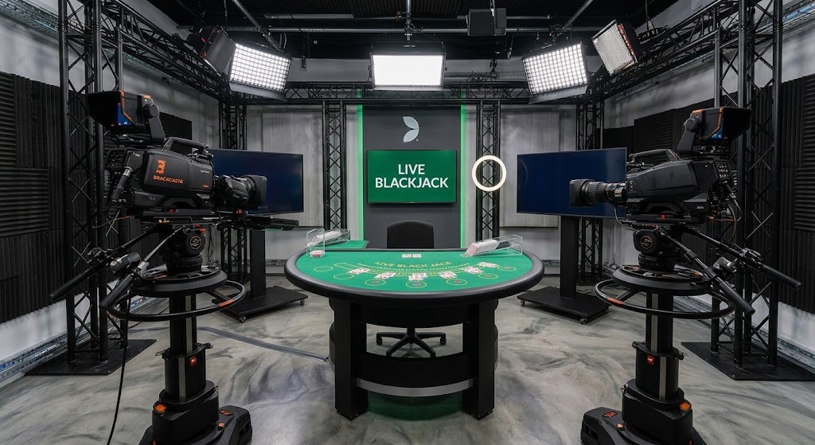
If you have visited an online casino in recent years, you have almost certainly seen live casino games. These developers run real life blackjack, roulette and other table games in massive studios with real human dealers, while hundreds of thousands of players at any one time bet on the results through a live interface. They have gone from niche options to standard across the global online casino business in just a few years.
The smooth experience of putting $5 on a blackjack hand with a live dealer belies the complex technology beneath. Part of the selling point for live casino games is that they are inherently easier to trust than Random Number Generator-powered virtual casino games. So, developers had to put a lot of time and care into making sure each physical event is accurately tracked, processed and settled correctly – and that is a real technological challenge that has multiple layers.
Live Games and Data Tracking Basics
To start with, live casino gaming is a multi-billion dollar business globally. Most casinos do not produce live games in-house, because they are expensive to set up and maintain. Instead they license them from developers like Evolution, or Pragmatic Play. The former employs some 16,000 people across its dozen live studios in North America, Europe and Asia.
Casino.org provides a useful consumer-facing example of this ecosystem: its real money casinos coverage for US players devotes substantial attention to live dealer gaming, with reviews and comparisons covering features such as bonuses, payment speeds, banking options and user experience, alongside dedicated live casino selections.
With a large number of concurrent players across the US who are deeply invested in finding quality games, and many jurisdictions enforcing different rules and regulations, capturing every element of a live casino table and translating that to digital outcomes at an acceptable standard for everyone is a complex task.
Consider, the following data streams are involved in just a single roulette spin:
- Physical video feed
- Game outcome log
- Game server state
- Timestamps and audit logs
- Player account data
- Bet settlement across dozens of casino brands
- Live chat monitoring
The cameras, lighting, live dealer training, game equipment and studio fittings are the easy part. Filming the roulette spin and streaming it to an audience is simple in today’s age. The difficulty comes in ensuring that every outcome is correctly translated along the data chain to the end result and subsequent storage for potential review. All across dozens if not hundreds of client casinos at once.
A Real-Life Roulette Spin to Digital Data Point
So how is this process managed?
- Cameras continuously capture all the information, from the roulette spin to the dealer’s hole cards in blackjack
- Automated systems identify the outcome of the spin or hand
- They then record the result, store it and send it off to operators
- Individual casinos are responsible for immediately settling the bets in player’s accounts
This entire process completes in just a few seconds for a roulette spin, or for a fast-paced game show like Crazy Time. Latency and downtime really matter here, especially with live casino tables running 24/7 with dealers on shifts. In almost all cases, studios need an immutable event trail from start to finish of each bet. This is not only for regulatory purposes, for which there are often complex requirements, but also as insurance for casinos in case there is a dispute or glitch in the system.
A developer like Evolution could have four to five cameras monitoring one roulette or blackjack table, at 200 frames per second.
Independent Testing, Regulation and Settlement
With likely millions of roulette spins and blackjack hands played per day across their studios, the unlikely is bound to happen occasionally. An error in the system however is not usually a complete disaster.
With fail-safe plans, backups and accurate record keeping the studio should understand what happened quickly and be able to settle any bets with minimal argument. This is partly why regulators around the world demand this information is held by licensed operators, in the case of dispute. But it is also useful for operators when monitoring and catching cheaters or other bad actors.
Operator’s systems are often tested to regulatory standards globally, and many employ independent auditors to prove that point to customers. Evolution claims it has an average incident response and settlement time of just 62 seconds.
Security for all of this stored data is crucial. While regulators may only want to look at it in case of dispute, many gamblers like to review their transaction or bet history for various reasons – and in the US this is even needed for tax purposes in case of a big win.
Therefore it needs to be stored for a long time, and safely. Secure encryption protocols, constantly updated cybersecurity, network segmentation, incident logging and authentication controls for access are all standard across the business.
Interestingly, some live casino developers will transmit data from their games to third party providers, who analyze them for data-driven assessment of outcomes. This is particularly popular for the newer game show-type titles with big production values and bigger prize potential than ever.