Star Wars: Zero Company launched on August 27, 2026, and the early verdict from reviewers is rare in a franchise this large: the tactics are good enough to carry a flawed build. Developer Bit Reactor, working with Lucasfilm Games, built a single-player, turn-based squad game set during the twilight of the Clone Wars, and critics have largely praised its combat systems, writing, and RPG layer. But a wave of reviews published in the days around launch also documented crashes, softlocks, camera failures, and desynced audio that undercut the experience for some players. That split between “great game” and “busted game” is now the defining story of the release.
The game arrived on PC, PlayStation 5, and Xbox Series X|S at 3 PM UTC per EA’s own store listing, with pricing that varies by platform and edition. It is a notable bet for a mid-size studio: Bit Reactor is a relatively young developer taking on a licensed Star Wars project, and the technical rockiness at launch has already drawn comparisons to other high-profile 2026 releases that shipped strong ideas inside rough code. Below, we break down what reviewers actually found, how the bugs compare to other recent launches, what it means for Bit Reactor and EA commercially, and where the game likely goes from here.
What Is Star Wars: Zero Company?
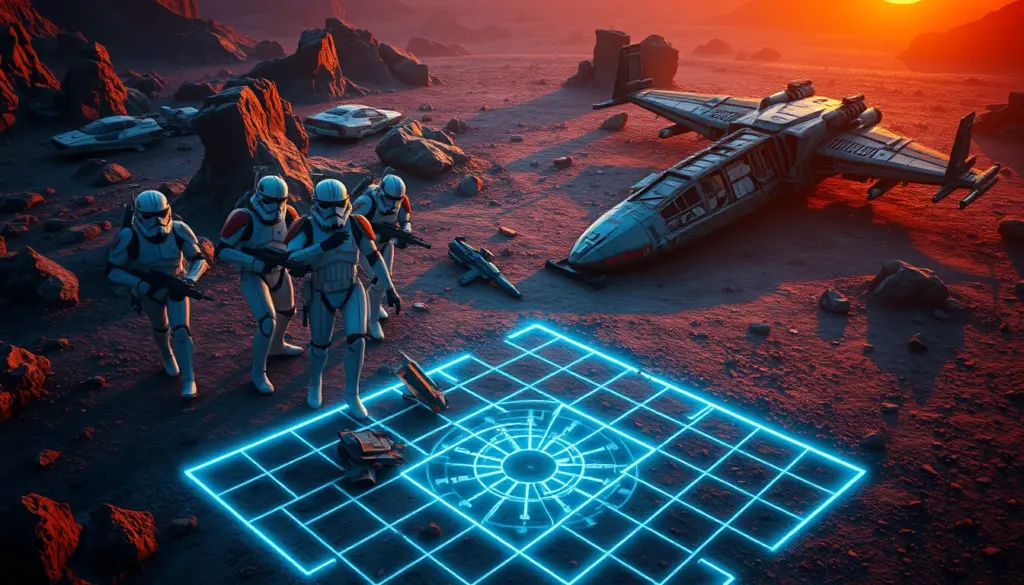
Star Wars: Zero Company is a single-player, turn-based tactics game built by Bit Reactor in collaboration with Lucasfilm Games. The story is set during the twilight of the Clone Wars, a period the Star Wars franchise has mined extensively on screen but rarely in a dedicated tactics format. Players command a squad of three to five beings across battlefields that use cover, terrain, and positioning in the way genre veterans would expect from a modern XCOM-style system.
The pitch is straightforward: take the tactical combat loop that’s defined the genre for over a decade and filter it through Star Wars-specific units, abilities, and a Clone Wars-era narrative. It’s a licensed game, but one built around genre mechanics rather than an open-world or shooter format, which puts it in a smaller, more specialized lane than most Star Wars titles get. That specialization is part of why early reviews leaned so heavily on the strength of the tactical layer itself rather than treating it as a side note to spectacle.
Release Date, Platforms, and Launch Window
Zero Company went live on August 27, 2026, across PC, PlayStation 5, and Xbox Series X|S. EA’s store listing pegged the release at 3 PM UTC, a detail that matters for players who tracked the countdown across time zones in the days before launch. The simultaneous three-platform release is itself a signal of confidence from EA and Lucasfilm Games: rather than staggering a PC-first or console-first rollout, the publisher pushed Zero Company out everywhere at once, which also means the bug reports that followed landed across every platform simultaneously rather than being isolated to one SKU.
Star Wars Zero Company: Confirmed Game Details
| Detail | Confirmed Fact |
|---|---|
| Developer | Bit Reactor, in collaboration with Lucasfilm Games |
| Genre | Single-player, turn-based tactics |
| Setting | Twilight of the Clone Wars |
| Platforms | PC, PlayStation 5, Xbox Series X|S |
| Release date | August 27, 2026 |
| Release time | 3 PM UTC (per EA’s store listing) |
| Squad size | 3 to 5 units per mission |
Pricing Breakdown: Standard vs. Deluxe Edition
EA split pricing between PC and consoles, a common move for mid-tier releases but one that still catches buyers off guard when they’re comparing platforms. The Standard Edition runs $49.99 on PC and $59.99 on PlayStation 5 and Xbox Series X|S. The Deluxe Edition adds $10 on every platform, landing at $59.99 on PC and $69.99 on consoles. That Deluxe tier includes two additional unique cosmetic packs and five painted weapon themes inspired by the Clone Wars era, cosmetic additions rather than gameplay content.
| Platform | Standard Edition | Deluxe Edition |
|---|---|---|
| PC | $49.99 | $59.99 |
| PlayStation 5 | $59.99 | $69.99 |
| Xbox Series X|S | $59.99 | $69.99 |
For budget-minded players, the PC Standard Edition at $49.99 is the clear value play, especially given that the Deluxe tier’s content is purely cosmetic. Console buyers pay a $10 premium over PC at both tiers, which tracks with how EA has priced other recent console releases this cycle.
How Combat Works: Squads, Cover, and Terrain
The tactical core of Zero Company sends players into missions commanding three to five units at a time, using cover and terrain to manage engagements the way the genre has trained players to expect since the XCOM reboot era. That’s a deliberately tight squad size compared to some larger-scale tactics games, and reviewers generally credited the smaller roster with making individual unit abilities and positioning decisions feel more consequential mission to mission.
Reviews converged on a few specific strengths: the tactical combat itself, the story, the characters, and the RPG systems layered on top of mission structure. That’s an unusually positive consensus across outlets for a licensed game, and it’s the reason so many reviews frame Zero Company as a strong entry in the tactics genre first, and a Star Wars game second. If you’re tracking how other turn-based titles are landing with critics this year, Bit Reactor’s approach sits in similar territory to what Fire Emblem: Fortune’s Weave delivered earlier this year on the strategy side, where mechanical depth carried a franchise entry through a crowded release calendar.
Critics Praised the Tactics, Story, and Characters
PC Gamer called Zero Company “a superbly executed” tactics game and “a genuine new high point for Star Wars storytelling,” a strong statement from an outlet that reviews tactics games regularly and has no shortage of comparison points. You can read the full PC Gamer review here. Gamers Heroes went further, describing it as the greatest tactics game in the galaxy and calling it the chosen one of the tactics genre, language that signals genuine enthusiasm rather than a routine positive score.
Those two reactions matter because they come from outlets with different review priorities: one general-audience gaming publication, one genre-focused outlet. Both landed in the same place on the fundamentals of the game, which is an unusually consistent signal for a licensed title. It’s also why the bug reports that followed didn’t sink the game’s reputation outright. The tactical foundation earned enough goodwill that most reviewers treated the technical problems as a frustrating asterisk rather than a dealbreaker.
The Bug List: What Reviewers Actually Hit
Here’s where the “buried under bugs” framing comes from. Multiple reviews, across multiple platforms, documented a consistent set of technical problems: delayed or unsynchronized audio, long pauses during enemy turns, character models that teleport or flicker, camera issues during key moments, and occasional hangs after ending a turn. These aren’t one-off reports from a single reviewer on a single platform. They show up repeatedly across independent write-ups, which is the strongest signal that the issues are systemic rather than isolated hardware quirks.
WolfsGamingBlog’s review was blunt about where the game falls short. “There’s quite a few bugs, though, and I’m not just talking about some of the weird looking characters,” the reviewer wrote in a detailed write-up published in September. The same review added: “Unfortunately, the technical side is where Zero Company most consistently lets itself down.” That’s a pointed criticism precisely because it comes wrapped around praise for the underlying systems, not instead of it.
Crashes, Camera Trouble, and How Bad It Gets
The most severe reports came from Engadget, whose reviewer described the game as crashing almost every hour, which forced them to save constantly to avoid losing progress. “Crashed almost every hour, so needed to save every few minutes,” the reviewer wrote in a piece titled Star Wars: Zero Company is a great game that’s busted and may never be fixed. That headline alone captures the tension running through nearly every review of this game: strong design undercut by stability that didn’t hold up for extended sessions.
GamesRadar’s review flagged a more specific, recurring problem with the camera system during combat. “The camera can struggle to keep up, too, so that I’m left to watch some pivotal manoeuvres from the far side of a wall,” the reviewer wrote in their published review. For a tactics game, where reading unit positioning and line of sight is central to decision-making, a camera that can’t track key moments is more than a cosmetic annoyance. It’s a problem that touches the core gameplay loop.
Reviews also reported a softlock bug severe enough to force a full mission restart near completion, a frustrating outcome in a tactics game where individual missions can run long. It’s worth noting that at least one review explicitly stated most of the glitches were cosmetic and didn’t typically affect gameplay, a detail that tempers the overall severity even as it doesn’t erase the crash and softlock reports from other outlets.
Why Tactics Games Keep Shipping With Rough Edges
Zero Company’s launch fits a pattern that’s shown up repeatedly across the genre and across 2026’s release calendar more broadly. Turn-based tactics games are deceptively complex under the hood: they track dozens of interlocking systems (unit states, line of sight calculations, animation queues, AI turn sequencing) that all have to synchronize correctly across a full mission without desyncing. That complexity is exactly where bugs like delayed audio and stuck enemy turns tend to surface, because the failure mode isn’t a single crash, it’s dozens of small timing mismatches compounding over a long play session.
This isn’t unique to Bit Reactor. Earlier this year, Control Resonant shipped to a score in the mid-80s before a hotfix addressed a specific review complaint, and the Witcher 3 Remastered saw negative review percentages climb into the mid-30s before patches started landing. The common thread across all three: strong underlying content shipping alongside technical debt that reviewers and players had to absorb in the first weeks post-launch. Studios increasingly treat day-one patches and rapid post-launch fixes as part of the release plan rather than a sign something went catastrophically wrong, but that only works if the fixes actually arrive quickly.
A Pattern Going Back to Early Tactics Launches
The tension between ambitious tactical systems and launch-day stability isn’t new to 2026. It traces back through the genre’s modern revival, where studios repeatedly chose to ship complex, highly reactive combat systems on fixed release dates rather than delay for additional stability passes. The calculus has generally paid off commercially even when it costs some review score points, because tactics fans are a patient, patch-tolerant audience when the core gameplay loop is sound. Zero Company’s critical reception suggests Bit Reactor is benefiting from that same tolerance so far.
Bit Reactor’s High-Stakes Bet on a Licensed Game
Zero Company is a significant swing for Bit Reactor, a studio that doesn’t have the scale of EA’s largest internal teams. Taking on a Star Wars license while building an original tactics IP from scratch carries real commercial risk, independent of the technical issues reviewers found. Bit Reactor furloughed staff before the game’s launch, a detail that puts the studio’s post-launch bug-fixing capacity under extra scrutiny. Reviewers who praised the game’s foundation but flagged its stability now have a real open question: does Bit Reactor have the staffing runway left to ship the patches those reviews are implicitly asking for?
That staffing context changes how the bug reports should be read. A well-resourced AAA studio treating a buggy launch as a known, budgeted cost is a different situation than a smaller studio facing furloughs trying to stabilize a live game with fewer people than it launched with. It’s also a reminder that Star Wars licensing deals, while a reliable sales driver, don’t guarantee the kind of long-tail support budget that keeps a technically rough launch from becoming a permanent reputation problem.
Market Impact: Can Strong Reviews Outrun Bug Reports?
The commercial question for EA and Lucasfilm Games is whether positive critical consensus on the tactics and story can outrun word-of-mouth about stability. Historically, this genre has a track record of surviving rough launches when the core systems are genuinely good, largely because tactics fans research purchases heavily before buying and tend to wait for a few weeks of patch notes before committing. That buying pattern can soften the first-week sales hit from bug reports, but it also means the first patch cycle matters disproportionately: if Bit Reactor ships a meaningful stability update within the first month, the “buried under bugs” narrative likely fades. If it doesn’t, that narrative hardens into the game’s lasting reputation.
There’s also a franchise-level consideration. EA and Lucasfilm Games are running multiple Star Wars projects in parallel this cycle, including the previously reported Star Wars: Galactic Racer launch and ongoing speculation around a potential third Jedi game. A rocky Zero Company launch doesn’t exist in isolation. It feeds into how critics and players size up the broader portfolio of Star Wars games EA is fielding at once, and whether the publisher is prioritizing polish across that slate or treating individual titles as lower-stakes bets.
Competitive Comparison: Zero Company’s Place in the Tactics Genre
Zero Company enters a genre that’s had a genuine resurgence over the past several years, and its reception so far places it among the more mechanically well-regarded entries, bugs notwithstanding. The table below lines up the key confirmed details for Zero Company against what’s publicly known about how the broader turn-based tactics conversation has evolved this year, based on prior coverage of comparable genre releases.
| Factor | Star Wars: Zero Company | Genre Context |
|---|---|---|
| Squad size | 3 to 5 units | Comparable to other modern cover-based tactics titles |
| Platforms at launch | PC, PS5, Xbox Series X|S (simultaneous) | Simultaneous tri-platform launches remain the norm for AAA-adjacent tactics releases |
| Critical strengths cited | Combat, story, characters, RPG systems | Matches the genre’s typical review priorities |
| Reported weaknesses | Crashes, softlocks, camera and audio desync | Consistent with other 2026 licensed-game launches facing post-launch patch cycles |
| Price point | $49.99 (PC) / $59.99 (console) | In line with mid-tier, non-flagship AAA pricing this cycle |
What stands out is that Zero Company isn’t competing primarily on scale or production budget. It’s competing on tactical depth and narrative, the same ground Fire Emblem: Fortune’s Weave and other genre entries have staked out this year. That’s a sign the tactics space is maturing past needing a AAA budget to land with critics, even if it still needs AAA-level QA resources to land cleanly at launch.
Historical Context: Star Wars Games and Launch-Day Risk
Star Wars as a license has a long, uneven history with launch quality, stretching back decades across multiple publishers and genres. The franchise has produced some of gaming’s most beloved titles and some of its most notorious disappointments, often with the gap between the two coming down to execution rather than concept. Zero Company’s reception fits the more fortunate half of that history: strong concept, mostly strong execution, undercut specifically by stability rather than by fundamental design problems. That’s a meaningfully better place to be than a game with sound code but a weak core loop, because stability issues are fixable with patches in a way that bad fundamental design generally isn’t.
EA’s broader Star Wars output this cycle has leaned into variety: a tactics game, a racing title, and continued speculation around further entries in established sub-franchises. That diversification spreads risk across genres rather than concentrating it in one format, which is a reasonable publishing strategy even when individual titles like Zero Company hit turbulence at launch.
What Comes Next: Predictions for Zero Company’s Patch Cycle
- A stability-focused patch lands within four to six weeks. Given how consistently reviewers flagged crashes and softlocks across outlets, the pressure to address the worst-case stability bugs quickly is high, and publishers typically prioritize fixes that generate the most negative word-of-mouth first.
- Camera and audio-sync issues take longer to resolve than crash fixes. Crash-to-desktop bugs are usually easier to isolate and patch than systemic timing issues across animation, audio, and camera tracking, which often require deeper engine-level work.
- Review scores on aggregators stabilize rather than decline further. Since the core tactical and narrative content earned strong praise, additional post-launch reviews and user scores are more likely to track with the technical fixes than with the initial bug reports, assuming patches ship on a reasonable timeline.
- Bit Reactor’s staffing situation remains the biggest wildcard. With furloughs already reported in the weeks after launch, the studio’s capacity to sustain a rapid patch cadence is less certain than it would be for a larger internal EA studio.
- Zero Company becomes a reference point for future licensed tactics games. Regardless of how the patch cycle plays out, the strength of its tactical and narrative reception likely encourages other publishers to greenlight similarly scoped, genre-focused licensed titles rather than defaulting to open-world or shooter formats for every major franchise entry.
Should You Buy Star Wars: Zero Company Right Now?
For players who prioritize narrative and tactical depth over a flawless technical experience, the critical consensus suggests Zero Company delivers on its central promise. The praise for combat, story, characters, and RPG systems is consistent across outlets with different review philosophies, which is a stronger signal than a single outlet’s score. For players with low tolerance for crashes or who plan to play in long, uninterrupted sessions, waiting for a patch or two is the more cautious path, particularly given the Engadget report of near-hourly crashes during review play. Checking how the aggregate critic score settles on Metacritic’s game page over the next few weeks is a reasonable way to gauge whether early patches are closing the gap between the game’s tactical praise and its technical complaints.
Budget-conscious buyers should also note the $10 price gap between Standard and Deluxe editions buys purely cosmetic content, not additional missions or systems, making the Standard Edition the more sensible default purchase for most players regardless of platform.
Frequently Asked Questions
What is Star Wars: Zero Company?
It’s a single-player, turn-based tactics game developed by Bit Reactor in collaboration with Lucasfilm Games, set during the twilight of the Clone Wars. Players command a squad of three to five units across mission-based combat.
When did Star Wars: Zero Company release?
The game launched on August 27, 2026, across PC, PlayStation 5, and Xbox Series X|S at 3 PM UTC, according to EA’s store listing.
How much does Star Wars: Zero Company cost?
The Standard Edition is $49.99 on PC and $59.99 on PlayStation 5 and Xbox Series X|S. The Deluxe Edition is $59.99 on PC and $69.99 on consoles.
What’s included in the Deluxe Edition?
Two additional unique cosmetic packs and five painted weapon themes inspired by the Clone Wars era. The content is cosmetic rather than gameplay-altering.
Is Star Wars: Zero Company actually buggy?
Multiple reviews documented crashes, softlocks, camera tracking problems, and audio desync issues. One reviewer reported crashes almost every hour during their playthrough. Another review noted that most glitches were cosmetic and didn’t typically affect gameplay, so severity appears to vary by playthrough and platform.
Is the combat in Zero Company good despite the bugs?
Reviews across multiple outlets praised the tactical combat, story, characters, and RPG systems. PC Gamer and Gamers Heroes were both strongly positive about the core gameplay loop specifically.
How many units do you control in Zero Company?
Missions have players commanding a squad of three to five beings at a time, using cover and terrain in combat.
Will Star Wars: Zero Company get bug-fixing patches?
No official patch schedule has been announced publicly. Given the consistency of bug reports across reviews, a stability-focused update is likely, though Bit Reactor’s reported staff furloughs after launch add uncertainty to how quickly fixes can ship.
Related
- Bit Reactor Furloughs Staff Weeks After Steam Hit
- Star Wars: Galactic Racer Hits 4 Platforms via Luna
- Star Wars Jedi 3 Leak Claims 2027 Launch, 0 EA Confirmation
- Fire Emblem: Fortune’s Weave Review: 18th Game
- Control Resonant Release Date Delivers 84 Score