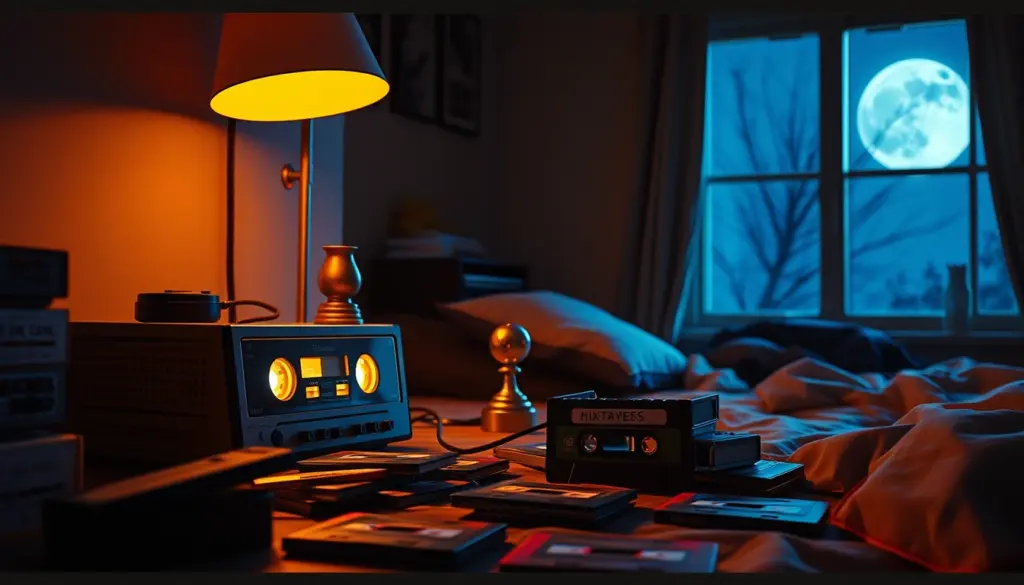
Melbourne studio Beethoven & Dinosaur walked away with the biggest prize in Australian game development on October 7, 2026, when Mixtape won Game of the Year at the 2026 Australian Game Developer Awards (AGDAs). The win wasn’t a narrow squeak. The studio also picked up Excellence in Visual Art and Excellence in Sound Design, giving the coming-of-age narrative title three trophies from a single ceremony, according to reports from inkl, 2ST, Explosion Network, ScreenHub Australia and GamesRadar+.
For a country whose game industry rarely gets front-page treatment outside its own borders, a three-award sweep by a small Melbourne team is the kind of story that travels. It also raises a broader question worth digging into: what does it say about where game development money, talent and attention are flowing in 2026 when a personal, music-driven story about three teenagers beats out bigger-budget competition for the top prize at a national awards show?
What happened at the 2026 AGDAs
The Australian Game Developer Awards is the country’s main annual showcase for locally made games, and the 2026 ceremony ran on October 7. Mixtape, developed by Beethoven & Dinosaur, took the night’s headline trophy, Game of the Year, plus wins in Excellence in Visual Art and Excellence in Sound Design. That’s three statues for one game, a result multiple outlets flagged as the standout storyline of the night.
Before the ceremony, the Game of the Year category had four finalists: Aether & Iron from Chaos Theory Games with Seismic Squirrel, Go-Go Town! from Prideful Sloth, Mixtape from Beethoven & Dinosaur, and Momento from Fat Alien Cat & Nomo Studio with Screen Queensland and Silver Lining Interactive. Heading into the show, Mixtape carried five nominations total, tied with Bits & Bops, which also entered with five nods across the broader awards slate.
Johnny Galvatron, director of Beethoven & Dinosaur, framed the win as a team achievement rather than a personal one. “Mixtape was the outcome of an amazingly talented team,” he said, according to 2EC’s report on the ceremony. He went further in describing how far the project had traveled from its original pitch: “To go from wanting to make a game around Devo to creating something that resonates with so many people is mind blowing.” He closed with a nod to the wider scene the studio works inside: “We’re lucky to be part of such a talented community, and I’m so proud of Mixtape and my team.”
The judges’ own writeup leaned into the same emotional register the director described. Per the ceremony’s published description, Mixtape “is a triumph in virtual storytelling, pairing a distinct visual identity with heartfelt music to deliver one of the most memorable experiences in recent memory.” That’s a strong line for a judging panel to put on record, and it lines up with why the game also cleaned up in the visual art and sound design categories rather than just sneaking past on narrative alone.
Who is Beethoven & Dinosaur
Beethoven & Dinosaur is a small, Melbourne-based development team that has built a reputation on music-first, visually distinctive games rather than sprawling open worlds or live-service systems. Mixtape follows three high-school friends on their final night together before they scatter into separate post-school lives, using a curated cassette playlist as the hook that pulls the group into dreamlike reenactments of earlier memories. It’s a small-cast, emotionally dense premise, closer in spirit to a coming-of-age film than to a traditional video game pitch deck.
That approach fits the studio’s track record. Beethoven & Dinosaur’s prior release, The Artful Escape, built its own cult following around stylized visuals and a soundtrack-driven structure, and reports describe Mixtape as a continuation of that same creative lane rather than a reinvention. Annapurna Interactive, a publisher that has made a habit of backing small teams with strong creative voices over big-budget shooters, published the game, keeping the studio in the same publishing family it worked with previously.
What makes the AGDA sweep notable from a market standpoint is scale. Beethoven & Dinosaur is not a 200-person studio backed by a publicly traded parent company. It’s a comparatively small Melbourne team, and its Game of the Year win puts it in direct contrast with the AAA budget conversation playing out elsewhere in the industry, including the sort of nine-figure spend debates covered around titles like Blood of Dawnwalker’s $40 million budget. A national Game of the Year award going to a music-driven narrative title, rather than a mega-budget open-world game, is itself a data point about where critical and peer recognition is landing this year.
The full list of confirmed AGDA 2026 winners
As of this writing, the only award results confirmed across named reporting are Mixtape‘s three wins. Outlets covering the ceremony, including inkl, 2ST, Explosion Network, ScreenHub Australia and GamesRadar+, have specifically verified Game of the Year, Excellence in Visual Art and Excellence in Sound Design as belonging to Mixtape and Beethoven & Dinosaur. Results for the AGDAs’ other categories, covering gameplay, narrative, music, accessibility, extended reality, impact, debut titles and ongoing development support, were still being compiled or confirmed as of publication, and this piece intentionally stays general on those until full results are independently verified by multiple outlets.
| Category | Winner | Studio | Status |
|---|---|---|---|
| Game of the Year | Mixtape | Beethoven & Dinosaur | Confirmed |
| Excellence in Visual Art | Mixtape | Beethoven & Dinosaur | Confirmed |
| Excellence in Sound Design | Mixtape | Beethoven & Dinosaur | Confirmed |
| Excellence in Gameplay | Pending verification | — | Unconfirmed |
| Excellence in Narrative | Pending verification | — | Unconfirmed |
| Excellence in Music | Pending verification | — | Unconfirmed |
| Studio of the Year | Pending verification | — | Unconfirmed |
The Game of the Year finalist field
What’s striking about the 2026 Game of the Year shortlist is how much creative range it covered before a winner was even picked. Aether & Iron, developed by Chaos Theory Games in partnership with Seismic Squirrel, represented a different genre lane entirely. Go-Go Town!, from Prideful Sloth, brought a management-sim sensibility to the category. Momento, built by Fat Alien Cat and Nomo Studio with backing from Screen Queensland and Silver Lining Interactive, showed how state screen agencies are co-funding ambitious local projects. And Mixtape, the eventual winner, stood apart as the most overtly personal, music-centered entry of the four.
That spread matters because it shows the AGDAs aren’t rewarding a single house style. A simulation game, a tactics-adjacent title, a screen-agency-backed narrative project and an indie music game all made the same four-way final. The fact that the most intimate, smallest-cast game in that group took the top prize says something about what judges valued this cycle: emotional cohesion and craft execution over scale or systems complexity.
Why a three-award sweep is unusual
Major game awards shows, from The Game Awards to BAFTA’s games categories, tend to spread wins around. Voters and juries often split technical categories (visual art, sound, music) from the top overall prize, partly because different panels or weighting criteria apply to each. When a single title wins Game of the Year and also sweeps both of the AGDAs’ craft-specific categories tied most closely to presentation, visual art and sound design, it signals that the judging consensus wasn’t close. It also tends to translate into stronger word-of-mouth and press coverage after the fact, because “won three awards” is a cleaner headline than “won one award in a crowded field.”
For a comparison point on how other recent Australian-made or Australian-adjacent titles have converted critical attention into commercial traction, see the pattern around Control Resonant’s reception and buyer support, where a strong critical score lined up with a tangible sales signal. Awards recognition and commercial performance don’t always move together, but a three-category sweep at a national ceremony is the kind of marketing asset that small studios without big ad budgets rely on heavily.
Market impact: what a AAA-free Game of the Year means
The Australian game industry has spent the past several years dealing with a mixed picture: strong creative output from small and mid-size studios, alongside the kind of layoff waves that have hit the wider global industry. Elsewhere in games news this year, studios like Supermassive Games and Ninja Theory have gone through rounds of job cuts, and the AAA cost structure itself has come under scrutiny following budget disclosures tied to projects like Blood of Dawnwalker. Against that backdrop, a small narrative-driven team winning the top national award is a useful counter-data point: craft-focused, modestly scoped projects can still win the biggest prize in the room, even while bigger-budget peers are shedding staff or defending nine-figure spend.
It also matters for funding conversations happening around Australian game development right now. Industry panels, including the one covered around GamesIndustry.biz’s funding discussion, have spent much of 2026 wrestling with how smaller studios access capital when publisher risk appetite has tightened globally. A nationally recognized Game of the Year win for a small, publisher-backed Melbourne team is exactly the kind of proof point that gets cited in grant applications, investor pitches and state screen-agency funding rounds going forward. Expect Victoria’s state government and national bodies focused on screen and interactive media funding to reference this result directly when making the case for continued support of narrative and music-driven projects, categories that don’t always fit neatly into traditional “AAA scale” funding models.
There’s also a broader market-size backdrop worth noting. Global digital storefronts have had a strong run in 2026, with Steam posting a record-setting September that outlets have tied to a pace toward roughly a $20 billion annual run rate, and mobile gaming revenue tracking in the multi-billion-dollar range for individual months. A win like this doesn’t move those totals on its own, but it does shape which kinds of games get greenlit by publishers scanning for the next critically decorated, mid-budget hit in a market still dominated by much larger platforms. For context on how those storefront numbers have trended, see the coverage of Steam’s record September and mobile gaming’s recent revenue run.
Historical context: Australia’s awards and industry trajectory
The AGDAs have run annually for years as the primary recognition event for the Australian game development scene, typically tied to Melbourne International Games Week and the GCAP developer conference. Beethoven & Dinosaur’s win continues a pattern the studio established with its earlier title, The Artful Escape, which built a strong critical reputation on similar strengths: distinctive visual direction and a soundtrack treated as a core gameplay element rather than background texture. Winning Game of the Year with a spiritual successor in that same creative lane suggests the studio has found a repeatable formula that resonates with both critics and national awards juries.
More broadly, Australian studios have increasingly found success by leaning into distinctive creative identities rather than chasing AAA scale, a strategy that mirrors what’s worked for small studios globally, from Devolver Digital-published titles to Annapurna Interactive’s broader slate. Annapurna in particular has built its entire publishing identity around backing auteur-driven, visually and sonically distinctive projects, and its continued partnership with Beethoven & Dinosaur across two titles now reinforces that this publisher-developer relationship is a durable one rather than a one-off bet.
Competitive comparison: indie narrative wins versus AAA output
Placing Mixtape‘s win alongside the rest of 2026’s biggest game releases makes the contrast sharper. Big-budget projects this year have repeatedly made headlines for their cost structures and staffing decisions rather than pure critical reception, while smaller, tightly scoped projects have shown they can still capture the top industry honors without matching that spend.
| Factor | Mixtape (Beethoven & Dinosaur) | Typical big-budget 2026 release |
|---|---|---|
| Studio size | Small, Melbourne-based team | Large, often multi-studio or outsourced teams |
| Core pitch | Personal, music-driven coming-of-age story | Open-world systems, live-service scope, or franchise scale |
| Publisher model | Annapurna Interactive (auteur-focused) | Major publisher with marketing-heavy rollout |
| Awards outcome (AGDAs 2026) | 3 confirmed wins incl. Game of the Year | Varies; not a 2026 AGDA finalist in this cycle |
| Industry narrative attached | Craft and emotional resonance recognized by judges | Budget, layoffs, and cost-of-development debates |
That comparison isn’t meant to suggest every big-budget project is in trouble or that every small studio wins awards. It’s meant to show that, at least in this specific national awards cycle, the industry’s top honor went to the smaller, more personal production, which is a data point publishers and investors watching the Australian market will likely weigh carefully.
What this means for Annapurna Interactive’s publishing strategy
Annapurna Interactive’s publishing slate has long leaned on the idea that distinctive, creator-driven games can find an audience without matching AAA marketing budgets. A national Game of the Year win for one of its titles, on top of the critical reputation Beethoven & Dinosaur already built with its previous release, gives the publisher another concrete example to point to when courting future development partners or discussing its portfolio with investors. It also reinforces Melbourne’s position as a hub within that publisher’s broader roster, alongside other creator-led teams it has backed in past years.
What’s still unconfirmed
Several details around the 2026 AGDAs remain outside what’s been independently verified across multiple named outlets at the time of writing. Full results for every award category beyond Mixtape‘s three wins have not been confirmed broadly enough to report as settled fact. Any claims about overall attendance figures, broadcast viewership, or detailed studio headcounts tied to the ceremony are similarly outside the scope of what’s been verified here. As outlets continue publishing full winner lists in the days following the ceremony, additional confirmed categories will likely surface, and this piece will be treated as a snapshot of what was verifiable as of October 8, 2026, rather than a final record of the night.
Predictions: where this story goes next
- Expect a sales bump for Mixtape. Awards wins, especially a clean sweep of Game of the Year plus two craft categories, typically produce a visible sales spike on digital storefronts in the days following a ceremony, as happened with other recent critically decorated narrative titles.
- Annapurna Interactive will likely lean into the win in future marketing. Publishers routinely fold national or international award recognition into storefront messaging and trailers; expect updated marketing material referencing the AGDA sweep within weeks.
- Beethoven & Dinosaur’s next project will draw early attention. With two acclaimed, music-driven titles now in its portfolio, the studio’s next announcement is likely to attract outsized coverage relative to its team size.
- Full AGDA category results will surface and get aggregated. As more outlets publish complete winner lists, expect roundup coverage that fills in the categories still unconfirmed as of this article.
- Australian funding bodies will cite this result in policy and grant discussions. Expect state screen agencies and national interactive media funds to reference the win when advocating for continued support of narrative and music-focused game development, particularly amid the funding-access conversations already playing out at industry panels this year.
Why this matters beyond Australia
Game awards shows outside the handful of globally watched ceremonies, like The Game Awards or BAFTA, don’t usually cross into international gaming press unless something about the result stands out. A clean three-category sweep by a small studio, on a title built around a very specific creative premise (three friends, one playlist, one last night), is the kind of result that travels because it’s easy to summarize and easy to root for. It also gives publishers and platform holders outside Australia another proof point that narrative-driven, music-forward games can win at the highest level of a national awards circuit without AAA-scale budgets behind them.
For players outside Australia who hadn’t heard of Mixtape before October 7, the AGDA sweep is likely to function as a discovery moment, similar to how international audiences often learn about acclaimed smaller titles only after they clear a major regional or national awards show. Given the studio’s track record with The Artful Escape, that discovery effect could meaningfully widen the game’s audience heading into the rest of 2026.
Frequently Asked Questions
What won Game of the Year at the 2026 Australian Game Developer Awards?
Mixtape, developed by Melbourne studio Beethoven & Dinosaur, won Game of the Year at the 2026 AGDAs, held on October 7, 2026.
What other awards did Mixtape win?
Beyond Game of the Year, Mixtape also won Excellence in Visual Art and Excellence in Sound Design, for a total of three confirmed awards at the ceremony.
Who developed Mixtape?
Mixtape was developed by Beethoven & Dinosaur, a Melbourne, Australia-based development team, and published by Annapurna Interactive.
What is Mixtape about?
Mixtape is a coming-of-age narrative game that follows three high-school friends on their final night together, using a curated playlist as a gateway into reenactments of earlier memories in their friendship.
Who were the other Game of the Year finalists in 2026?
The 2026 Game of the Year finalists were Aether & Iron (Chaos Theory Games with Seismic Squirrel), Go-Go Town! (Prideful Sloth), Mixtape (Beethoven & Dinosaur), and Momento (Fat Alien Cat & Nomo Studio with Screen Queensland and Silver Lining Interactive).
Has Beethoven & Dinosaur won major awards before?
Yes. The studio’s previous release, The Artful Escape, earned significant critical recognition before Mixtape’s AGDA sweep, establishing a track record in music-driven narrative games.
Are the full 2026 AGDA results available yet?
As of this writing, only Mixtape’s three wins are confirmed across multiple named outlets. Full category-by-category results for the rest of the ceremony were still being compiled or confirmed at publication time.
What is the Australian Game Developer Awards (AGDAs)?
The AGDAs are Australia’s primary annual awards show recognizing locally developed games, typically held alongside Melbourne International Games Week and the GCAP developer conference.