
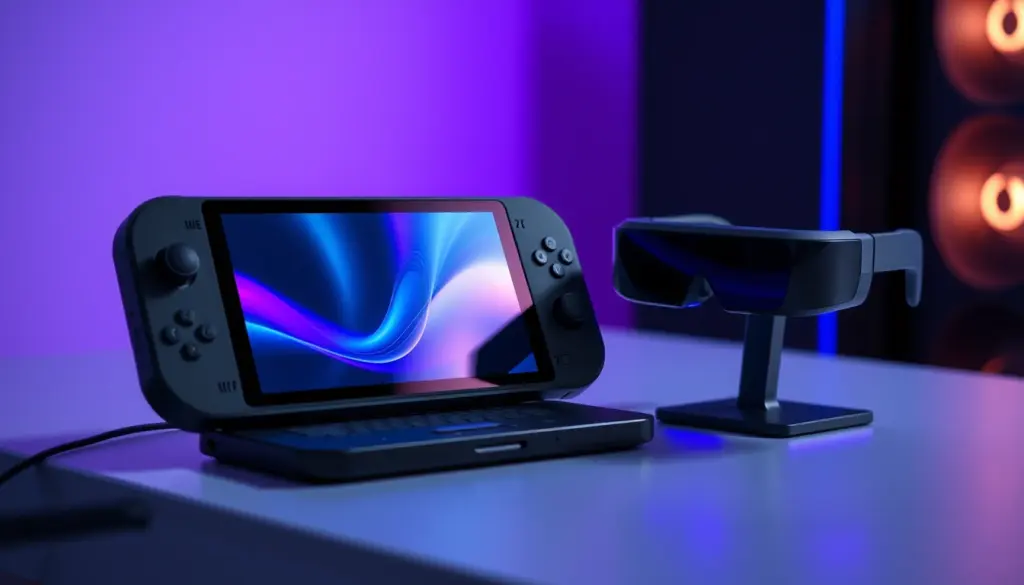
ASUS spent Computex 2026 showing off the ROG Xbox Ally X20 as the flagship handheld gaming PC of the year: the first OLED screen in the ROG Ally lineup, redesigned TMR joysticks, and a bundled pair of augmented-reality glasses that project a 171-inch virtual display. The catch, according to reviewers and prospective buyers who spent the following seven weeks complaining about it, was that ASUS would only sell the ROG Xbox Ally X20 as part of that AR bundle, pushing the realistic price above $2,000 for a handheld whose direct predecessor launched at $999.99.
That is now changing. ASUS spokesperson Anthony Spence has confirmed to The Verge that the company is preparing to sell the ROG Xbox Ally X20 on its own, without the XREAL R1 AR glasses attached. It is a rare public reversal for a hardware maker mid-launch-cycle, and it lands at the exact moment the entire handheld gaming PC category is being squeezed by a global memory shortage that has already forced Valve, Lenovo, and ASUS itself to raise prices on existing hardware.
ASUS Confirms a Standalone ROG Xbox Ally X20 Is Coming
ASUS unveiled the ROG Xbox Ally X20 on June 1, 2026, the opening day of Computex in Taipei, positioning it as the OLED flagship of the ROG Ally family roughly eight months after the standard ROG Xbox Ally and ROG Xbox Ally X launched in October 2025. At the reveal, ASUS packaged the X20 exclusively with ROG XREAL R1 Edition 20 AR glasses, an accessory that retails on its own for $849.99. Reviewers quickly did the math: stacked on top of a handheld built around the same silicon as the $999.99 Ally X, the bundle-only configuration implied a real-world price north of $2,000, according to outlets including Tech Times and PC Guide.
Seven weeks of visible frustration later, ASUS has changed course. The company has not announced a release date or a standalone price for the ROG Xbox Ally X20, but it has now gone on record confirming that buyers who want the OLED handheld without the AR glasses will eventually be able to get it. That single sentence reshapes the entire pricing conversation around ASUS’s newest handheld, and it is the reason the X20 is suddenly relevant again after weeks of being written off as an over-engineered novelty.
What Anthony Spence Told The Verge
The confirmation came in the form of a short statement from ASUS spokesperson Anthony Spence, who has become the company’s point of contact on the X20 controversy.
“We are actively discussing the release schedule for a standalone version of the new Ally. Please stay tuned for upcoming announcements.”
Anthony Spence, ASUS spokesperson, via The Verge
Spence separately told the outlet, more plainly, that “Asus will sell a standalone version of the OLED Ally as well,” according to The Verge’s reporting. Notice what neither statement includes: a price, a date, or any acknowledgment that the original bundle-only plan was a mistake. ASUS is confirming the existence of a standalone SKU without committing to when it ships or what it will cost, which is a carefully hedged position for a company that spent Computex presenting the AR bundle as the whole point of the X20.
Why the $2,000 Bundle-Only Plan Backfired
The backlash was less about the ROG Xbox Ally X20 hardware itself, which reviewers who went hands-on generally liked, and more about ASUS forcing an unrelated purchase onto anyone who wanted it. The ROG XREAL R1 Edition 20 glasses are a legitimate, if niche, product: a virtual 171-inch display running at 240Hz with a claimed 0.01ms response time, connected over a single USB-C cable. But they are aimed at a narrow slice of buyers who want a private big-screen experience on the go, not at the broader audience simply looking for ASUS’s best handheld screen.
Independent estimates converged quickly on the same number. A Tom’s Guide reviewer who went hands-on with the bundle put it bluntly:
“I doubt this special edition bundle will cost less than $2,000.”
Tom’s Guide, hands-on review
A separate hands-on video arrived at nearly identical math: “Genuinely, I think this is they’re aiming at like 1800 to like $2,000, but realistically, I think that it’s going to be like $2,000,” one reviewer said, before adding, “So, with the bundle, I think that it’s going to be around like 2K,” in a hands-on video posted after the Computex reveal. None of these are official ASUS figures, and the company has still not confirmed final pricing for either the bundle or the standalone unit as of this writing. But when three independent sources land within $200 of each other using nothing but public component pricing, it is a reasonable working estimate, and it is almost certainly the number that triggered the standalone-version conversation ASUS now says it is having.
ROG Xbox Ally X20 Specs: What’s Actually New
Strip away the AR glasses and the pricing drama, and the ROG Xbox Ally X20 is a fairly conventional mid-cycle refresh: a new screen and new controls bolted onto last year’s internals.
OLED Display and Redesigned Controls
The headline change is the display. The ROG Xbox Ally X20 uses a 7.4-inch ROG Nebula HDR OLED panel at 1920×1080 and 120Hz, rated for 600 nits SDR and up to 1,400 nits HDR with Dolby Vision and 100% DCI-P3 coverage, alongside a claimed 0.2ms response time. That is a substantial jump over the 7-inch IPS panel on the existing ROG Xbox Ally X, which tops out around 500 nits. ASUS also redesigned the input hardware: TMR (tunneling magnetoresistance) joysticks replace the standard potentiometer sticks, and a new transforming D-pad switches between 4-way and 8-way configurations. Hall Effect triggers, a 6-axis gyroscope, and HD haptics carry over from the existing lineup.
The Silicon and Battery Nobody Upgraded
Everything under the hood is unchanged. The ROG Xbox Ally X20 keeps the same AMD Ryzen AI Z2 Extreme processor (8 cores/16 threads, up to 5.0GHz, an XDNA NPU rated up to 50 TOPS) as the current Ally X, along with the same 24GB of LPDDR5X-8000 memory and 1TB of PCIe 4.0 NVMe storage. The 80Wh battery also carries over unchanged. The only physical difference reviewers have flagged is a small weight increase, to roughly 756 grams from the Ally X’s 715 grams, presumably from the heavier OLED panel and redesigned sticks. In other words, this is a screen-and-controls refresh, not a performance refresh, the same pattern ASUS followed when the original 2024 ROG Ally X reused its predecessor’s chip and simply upgraded battery and memory.
ROG Xbox Ally X20 -- changes vs. ROG Xbox Ally X (Oct 2025)
+ Display:   7.4" OLED "Nebula HDR", 1400 nits HDR     (was: 7" IPS, 500 nits)
+ Joysticks: TMR (tunneling magnetoresistance)          (was: potentiometer)
+ D-Pad:     transforming 4-way / 8-way                 (was: fixed 8-way)
+ Weight:    ~756g                                       (was: 715g)
  Chip:      Ryzen AI Z2 Extreme, 8c/16t, 50 TOPS NPU    (unchanged)
  Memory:    24GB LPDDR5X-8000                           (unchanged)
  Storage:   1TB PCIe 4.0 NVMe, M.2 2280                 (unchanged)
  Battery:   80Wh                                        (unchanged)
+ Bundle:    ROG XREAL R1 AR glasses, optional pending standalone launch (new)
The $849.99 AR Glasses Nobody Asked to Buy
ASUS’s own product page for the bundle, published under the “ROG Xbox Ally X20 Bundle (2026)” name, treats the handheld and the glasses as a single unit rather than two separate products, which is exactly the framing that caused the problem. The ROG XREAL R1 Edition 20 glasses are a genuinely capable accessory on their own terms: a 171-inch virtual display, 240Hz refresh, a claimed 0.01ms response time, and single-cable USB-C connectivity that avoids the external battery packs some AR glasses require. At $849.99 standalone, they are priced like a serious peripheral, not an impulse add-on.
The disconnect is that AR glasses and handheld gaming PCs serve different use cases. A handheld’s entire value proposition is its own built-in screen; buyers are not typically shopping for a handheld and a private-cinema headset in the same purchase. By making the glasses mandatory, ASUS effectively taxed every ROG Xbox Ally X20 buyer for a niche accessory, regardless of whether they wanted it, which is the specific decision Anthony Spence’s statement to The Verge now appears to be walking back.
ROG Xbox Ally X20 vs. the Field
Even before a standalone price exists, the ROG Xbox Ally X20 can be measured against its closest rivals on paper. The clearest comparison is against its own sibling, the ROG Xbox Ally X, and against the Lenovo Legion Go 2, the other premium Windows handheld built around the same class of AMD silicon.
| Spec | ROG Xbox Ally X20 | ROG Xbox Ally X | Legion Go 2 (32GB) |
|---|---|---|---|
| Display | 7.4″ OLED, 1080p, 120Hz, 1,400 nits HDR | 7″ IPS, 1080p, 120Hz, 500 nits | 8.8″ OLED, 1200p, 144Hz, ~1,155 nits HDR (Notebookcheck-measured) |
| Chip | Ryzen AI Z2 Extreme | Ryzen AI Z2 Extreme | Ryzen Z2 Extreme |
| Memory | 24GB LPDDR5X-8000 | 24GB LPDDR5X-8000 | up to 32GB LPDDR5X-8000 |
| Storage | 1TB PCIe 4.0 NVMe | 1TB PCIe 4.0 NVMe | up to 2TB PCIe 4.0 (M.2 2242) |
| Battery | 80Wh | 80Wh | 74Wh |
| Weight | ~756g | 715g | ~922g (measured, with controllers) |
| Price | Bundle est. $2,000+ (unconfirmed); standalone TBA | $999.99 | from $1,049 (base) to $1,349 (32GB) |
On paper, the ROG Xbox Ally X20 and the existing Ally X are nearly identical machines wearing different screens, which is exactly why the bundle-only pricing felt so disproportionate. A buyer choosing between the X20 and the Legion Go 2 is really choosing between a smaller, brighter OLED panel with no glasses attached versus a larger OLED panel, more memory headroom, and detachable controllers, once ASUS actually reveals what the X20 costs on its own.
Why Handheld Prices Keep Climbing: Inside the 2026 Memory Shortage
The ROG Xbox Ally X20’s price problem did not happen in a vacuum. Every handheld built around 24GB or more of LPDDR5X memory is currently exposed to what the industry has taken to calling the 2026 memory crisis: a global DRAM and NAND shortage driven by manufacturers diverting production capacity toward AI datacenter memory. Tom’s Hardware’s RAM price index tracked a 16GB DDR5 spot chip rising from $6.84 in September 2025 to $27.20 by December 2025, a roughly 298% increase, while Wccftech reported consumer DRAM contract prices up 89% in the second quarter of 2026 alone, citing TrendForce data.
Intel chief executive Lip-Bu Tan told reporters in early February 2026 that meaningful relief was not expected before 2028, a timeline echoed by multiple memory manufacturers, according to Digital Trends. That backdrop matters directly to the ROG Xbox Ally X20: its 24GB LPDDR5X-8000 configuration is precisely the kind of high-capacity mobile memory now in short supply, and it is a major reason ASUS had incentive to bundle in a second product rather than absorb the full memory-cost increase into a single, higher sticker price on the handheld alone. For the deeper numbers behind the crisis, see our coverage of the 2026 RAM price surge.
The Windows Handheld Price Spiral
The ROG Xbox Ally X20’s pricing controversy is the latest entry in a pattern that has played out across nearly every premium handheld released in the last year.
| Device | Original Price | 2026 Price | Change |
|---|---|---|---|
| Steam Deck OLED 512GB | $549 | $789 (effective 27 May 2026) | +43.7% |
| Steam Deck OLED 1TB | $649 | $949 (effective 27 May 2026) | +46.2% |
| ROG Xbox Ally X (Japan) | ¥139,800 | ¥169,800 (Feb 2026) | +21.5% |
| ROG Xbox Ally X (Australia) | AU$1,599 | AU$1,799 (2026) | +12.5% |
| Legion Go 2 (32GB, street price) | €1,349 MSRP | €1,499-€1,749 street | up to +30% |
| ROG Xbox Ally X20 (bundle) | n/a (new product) | $2,000+ (press estimate, unconfirmed) | n/a |
Valve raised Steam Deck OLED prices in May 2026, citing rising memory and storage costs directly. ASUS quietly raised ROG Xbox Ally X prices in Japan and Australia earlier in 2026, while leaving the cheaper base Ally untouched in both markets, a strong signal that it is specifically the 24GB-and-up configurations absorbing the memory shortage. The ROG Xbox Ally X20’s AR bundle, whatever its final price turns out to be, arrived directly in the middle of this pattern rather than as an isolated pricing misstep.
Market Impact: What the Reversal Signals About ASUS’s Strategy
A hardware maker publicly walking back a launch strategy seven weeks after a splashy reveal is not a small thing. It suggests ASUS underestimated how buyers would react to a mandatory bundle, and it suggests the backlash was loud enough, across enough outlets, to change the company’s plans before the product even has a release date. It also raises an obvious question for ASUS’s near-term roadmap: if the standalone ROG Xbox Ally X20 is priced anywhere close to the existing $999.99 Ally X, the AR-glasses bundle starts to look less like a premium option and more like a way to disguise a price increase that ASUS wasn’t ready to put on the base handheld alone.
What Reservation Holders Should Expect
ASUS has not opened pre-orders or reservations for either version of the ROG Xbox Ally X20, so nobody is currently locked into the bundle-only configuration. Anyone who registered interest through ASUS’s “Notify Me” page at Computex should expect a follow-up communication once both SKUs and their prices are finalized, rather than an automatic bundle purchase. Given Spence’s wording, that announcement appears to still be weeks or months away rather than imminent.
From $699 to $2,000+: Three Years of ROG Ally Pricing
The ROG Xbox Ally X20 situation looks less surprising in the context of how fast ASUS’s flagship handheld price has moved since the line began. The original ROG Ally launched on June 13, 2023, at $699.99, built around AMD’s Ryzen Z1 Extreme chip and a 40Wh battery. The ROG Ally X followed in June 2024 at $799.99, keeping the same processor but doubling battery capacity to 80Wh and upgrading memory and storage. The Xbox-branded ROG Xbox Ally and Ally X arrived October 16, 2025, at $599.99 and $999.99 respectively, introducing genuinely new silicon (Ryzen Z2 A and Ryzen AI Z2 Extreme) rather than just a battery refresh. Eight months later, the ROG Xbox Ally X20 arrived at Computex with an estimated combined price north of $2,000. In three years, ASUS’s flagship handheld price has nearly tripled, though it’s worth noting the X20’s estimate reflects an unwanted bundle rather than the handheld’s standalone price, which ASUS has yet to set.
Competitive Landscape: Steam Deck, Legion Go 2, and the $1,000 Ceiling
For most of 2025, $999 functioned as an informal ceiling for premium handhelds: the ROG Xbox Ally X launched there, and Valve’s Steam Deck OLED sat comfortably below it. That ceiling has effectively broken in 2026. Steam Deck OLED’s post-hike pricing now reaches $949 for the 1TB model, Lenovo’s Legion Go 2 starts at $1,049 and climbs to $1,349 for its highest memory configuration, and Valve’s own Steam Machine desktop launched at $1,049. Against that backdrop, a $2,000 handheld bundle is a bigger jump than it would have looked twelve months ago, but it is arriving in a corner of the gaming hardware market where four-figure price tags have already become normalized. The Windows-versus-SteamOS handheld race is increasingly being fought on software polish and price discipline as much as raw specs, since the underlying AMD silicon across most of these devices is now converging on the same handful of chips.
Industry Reactions and Early Verdicts
Reaction to the ROG Xbox Ally X20 has split cleanly along the bundle question. Reviewers who tested the hardware itself, separate from its packaging, generally praised the screen and controls. But pricing commentary was uniformly skeptical of the bundle-only approach. As one hands-on video summarized the math after weighing the handheld and glasses separately: “Genuinely, I think this is they’re aiming at like 1800 to like $2,000, but realistically, I think that it’s going to be like $2,000,” according to the reviewer’s hands-on video. That estimate landed within roughly $150 of Tom’s Guide’s independent projection, and both arrived well before ASUS said anything publicly about a standalone option, suggesting the pressure to unbundle came from convergent press criticism rather than any single influential review.
What Happens Next: 5 Predictions
- A standalone price closer to $1,200-$1,400 than to $999.99. ASUS charged a roughly 25-40% premium for the Ally X over the base Ally; applying a similar premium to account for the new OLED panel over the existing Ally X’s $999.99 price points toward this range, though ASUS has confirmed nothing and could land anywhere.
- An announcement before the 2026 holiday shopping season. ASUS has historically finalized pricing and availability for holiday-window hardware in the September-to-November stretch, and the X20 would lose most of its shine as a “flagship” if it missed the holidays entirely.
- The AR glasses survive as an optional add-on, not a discontinued product. ASUS built a real accessory in the ROG XREAL R1 Edition 20; expect it to keep selling at or near its existing $849.99 price for buyers who do want it, just no longer as a forced purchase.
- Rivals will avoid mandatory-bundle launches. Lenovo and MSI have watched ASUS absorb seven weeks of negative press over the X20 bundle; expect competing handheld launches through the rest of 2026 to keep premium accessories clearly optional from day one.
- Handheld prices keep climbing through 2026 and into 2027. With Intel’s Lip-Bu Tan and multiple memory manufacturers not projecting relief until 2028, expect further price adjustments across the Steam Deck, Legion Go, and ROG Ally lines rather than a return to 2025-era pricing.
These are shattered.io’s own analysis based on ASUS’s pricing history and the current memory-market trajectory, not confirmed ASUS plans.
Frequently Asked Questions
What is the ROG Xbox Ally X20?
It’s ASUS’s OLED flagship handheld gaming PC, revealed at Computex 2026 on June 1. It uses the same Ryzen AI Z2 Extreme chip, 24GB of memory, and 1TB of storage as the existing ROG Xbox Ally X, but adds a 7.4-inch OLED display, new TMR joysticks, and a transforming D-pad.
Will ASUS really sell the ROG Xbox Ally X20 without the AR glasses?
Yes, according to ASUS spokesperson Anthony Spence, who told The Verge the company is “actively discussing the release schedule for a standalone version of the new Ally.” No date has been confirmed yet.
How much does the ROG Xbox Ally X20 cost?
ASUS has not announced an official price for either version. Independent estimates from Tom’s Guide and other reviewers put the original AR-glasses bundle at roughly $2,000, based on the $999.99 Ally X’s pricing plus the $849.99 standalone cost of the AR glasses. No standalone price has been set.
What’s different between the ROG Xbox Ally X20 and the ROG Xbox Ally X?
Mainly the screen and controls. The X20 swaps the Ally X’s 7-inch, 500-nit IPS panel for a 7.4-inch OLED panel rated to 1,400 nits HDR, and adds TMR joysticks and a transforming D-pad. The processor, memory, storage, and 80Wh battery are unchanged.
Why were the AR glasses bundled in the first place?
ASUS has not explained its reasoning publicly. Reviewers have speculated it let ASUS present a higher combined price without raising the handheld’s own sticker price directly, at a time when handheld memory costs are rising sharply industry-wide.
When is the ROG Xbox Ally X20 coming out?
No firm release date has been confirmed. Early coverage placed a window sometime in the second half of 2026, but ASUS has only said a standalone-version announcement is coming, without a specific date.
How does the ROG Xbox Ally X20 compare to the Lenovo Legion Go 2?
The Legion Go 2 has a larger 8.8-inch OLED display, up to 32GB of memory, and detachable controllers, starting from $1,049. The ROG Xbox Ally X20 has a smaller but sharper 7.4-inch OLED panel and lighter overall weight, but its price is not yet confirmed for direct comparison.
Why do handheld gaming PCs keep getting more expensive?
A global DRAM and NAND shortage, driven largely by AI datacenter memory demand, has pushed consumer memory prices up sharply through 2026. Devices with 24GB or more of LPDDR5X memory, including the ROG Xbox Ally X, ROG Xbox Ally X20, and Legion Go 2’s higher configurations, are especially exposed.