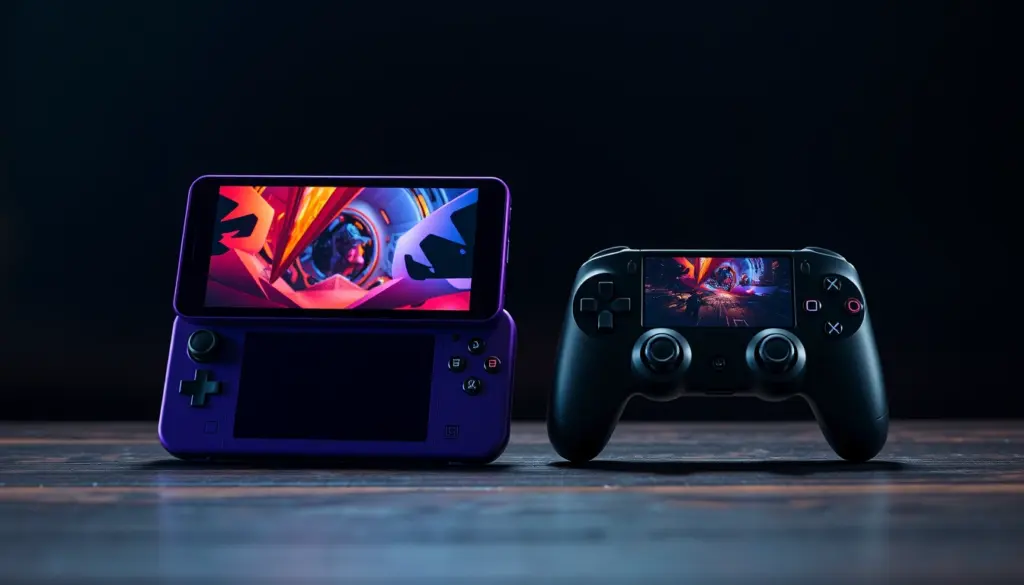
MSI’s newest flagship handheld went on sale 23 June 2026 with a price tag that stopped reviewers mid-sentence: $1,799 for the MSI Claw 8 EX AI+, nearly double what ASUS charges for its own top-tier Windows handheld, the ROG Xbox Ally X, at $999.99. The gap isn’t a rounding error or a launch-week markup – it’s the widest price split between two flagship gaming handhelds either company has ever shipped, and it lands in the middle of a memory-chip shortage that’s already made every high-RAM device more expensive to build.
The performance gap is real too. In matched-hardware lab testing at identical 35W power limits, Notebookcheck measured the Claw 8 EX AI+’s Intel Arc G3 Extreme chip beating the ROG Xbox Ally X’s AMD Ryzen AI Z2 Extreme by 41% on average across eight games, with some titles seeing swings above 100%. The question this comparison answers isn’t which handheld is faster – that’s settled. It’s whether that speed is worth $800, and which device actually fits how you play. Every spec, price, and benchmark below is sourced from official product pages and named reviewers as of late July 2026.
Why This Handheld Matchup Matters Right Now
2026 has been the year handheld gaming PC prices stopped following a predictable curve. Valve raised Steam Deck OLED pricing earlier this year, Lenovo’s Legion Go 2 launched above $1,300, and ASUS’s own ROG Xbox Ally X20 bundle sparked backlash for forcing a $2,000+ AR-glasses package on buyers who just wanted the base hardware. The MSI Claw 8 EX AI+ is the most extreme data point in that trend yet – a mainstream handheld priced closer to a gaming laptop than a gaming handheld.
Part of the story is silicon. The Claw 8 EX AI+ is the first handheld built around Intel’s Arc G3 Extreme, a Panther Lake chip designed specifically for portable gaming rather than adapted from a laptop lineup. It’s the same chip family used in Acer’s upcoming Predator Atlas 8, which posted a near-identical 41% average lead over AMD’s Z2 Extreme silicon in its own benchmark round – confirming this isn’t a one-off result specific to MSI’s cooling or power tuning, but a genuine architectural advantage Intel is bringing to the handheld market for the first time.
Part of the story is memory. TechRadar framed its own Claw 8 EX AI+ coverage around the ongoing 2026 memory shortage, explicitly asking whether the “RAM crisis” is driving the price rather than pure component cost – a fair question given the Claw ships with 32GB of LPDDR5X-8533, a configuration that carries far more exposure to 2026’s DDR5 and LPDDR5X price spikes than the Ally X’s smaller 24GB pool. Whatever the cause, the effect is the same for buyers: two of the best Windows gaming handhelds on the market now sit $800 apart, and picking the right one depends on more than just which wins the benchmark chart.
It also matters because these two devices approach the same problem – AAA-class gaming in a battery-powered, palm-sized chassis – from opposite ends of the market. ASUS built the ROG Xbox Ally X in partnership with Microsoft specifically to be the mainstream, Game-Pass-anchored default; MSI built the Claw 8 EX AI+ to be the halo product that proves Intel’s handheld silicon can out-muscle AMD’s multi-year incumbency. Neither company is chasing the same buyer, which is exactly why a straight spec comparison undersells what’s actually going on here.
Full Specs Comparison: MSI Claw 8 EX AI+ vs ROG Xbox Ally X
Both devices are Windows 11 handhelds with 80Wh batteries and 1TB of storage, but the similarities mostly end there. The table below lines up every officially published spec, verified against MSI’s and ASUS’s own product listings plus Notebookcheck’s lab-measured figures.
| Spec | MSI Claw 8 EX AI+ | ROG Xbox Ally X |
|---|---|---|
| Launch price | $1,799 (retail as low as $1,699) | $999.99 |
| Release date | 23 June 2026 | 16 October 2025 |
| CPU | Intel Arc G3 Extreme, 14-core (2P+8E+4LPE), up to 4.7GHz | AMD Ryzen AI Z2 Extreme, 8-core/16-thread Zen 5, up to 5.0GHz |
| GPU | Intel Arc B390, 12 Xe3 cores, 2.3GHz | AMD Radeon 890M, RDNA 3.5, 16 CUs |
| NPU / AI | Intel AI Boost NPU, XeSS 3 + Multi-Frame Generation | AMD XDNA NPU, up to 50 TOPS, Auto Super Resolution |
| RAM | 32GB LPDDR5X-8533, dual-channel, onboard | 24GB LPDDR5X-8000 |
| Storage | 1TB PCIe Gen4 NVMe (Micron 2500) | 1TB M.2 2280 NVMe, user-upgradeable |
| Display | 8.0″ 1920×1200 IPS, 16:10, 283 PPI, up to 120Hz (VRR 48-120Hz), 500 nits | 7.0″ 1920×1080 IPS, 16:9, 120Hz, FreeSync Premium, 500 nits |
| Battery | 80Wh | 80Wh |
| Weight | 786g | 715g |
| Controls | Hall-effect analog sticks + triggers, reactive D-pad | HD haptic impulse triggers |
| Ports | 2× USB4 (40Gbps) / Thunderbolt 4, microSD Express, fingerprint reader | 1× USB4 (DisplayPort 2.1/TB4), 1× USB 3.2 Gen 2, UHS-II microSD |
| Wireless | Wi-Fi 7, Bluetooth 6 | Wi-Fi 6E (2×2), Bluetooth 5.4 |
| Operating system | Windows 11 Home (no confirmed SteamOS support) | Windows 11 Home |
The two rows that jump out are RAM and display. MSI’s 32GB pool gives the Claw 8 EX AI+ 8GB of headroom the Ally X simply doesn’t have, useful for background capture software, Copilot+ features, or just heavier modern titles – while the larger 8-inch, higher-resolution 1200p panel is the single most visible difference if you put both devices side by side. ASUS counters with a lighter chassis and a socket layout – DisplayPort 2.1 over Thunderbolt 4 – that’s arguably more useful for docking to an external monitor, even with fewer total high-speed ports than MSI’s dual-Thunderbolt setup.
Processor Showdown: Intel Arc G3 Extreme vs AMD Ryzen Z2 Extreme
This is the first head-to-head between Intel’s purpose-built handheld silicon and AMD’s incumbent Z2 Extreme, and it’s a more interesting fight than the raw benchmark gap suggests. The Arc G3 Extreme uses a 14-core Panther Lake layout split across three tiers – 2 performance cores at up to 4.7GHz, 8 efficiency cores at 3.4GHz, and 4 low-power efficiency cores at 3.1GHz – paired with a 12-core Arc B390 Xe3 GPU. AMD’s Z2 Extreme takes a more conventional approach: 8 full Zen 5 cores running both threads (16 total) up to 5.0GHz, paired with a 16-CU RDNA 3.5 Radeon 890M GPU.
On paper, AMD’s chip has more raw CPU muscle – and reviewers confirmed it. XDA-Developers ran Cinebench 2024, a pure CPU benchmark with no GPU component, and the Z2 Extreme scored 112 versus the Arc G3 Extreme’s 103, a rare category where AMD wins outright. But gaming performance depends far more on the GPU and how well the whole chip balances power across a battery-constrained thermal envelope, and that’s where Intel’s handheld-specific design shows its purpose. The Arc B390’s 12 Xe3 cores, combined with Intel’s XeSS 3 upscaling and Multi-Frame Generation, translate raw compute into playable frame rates more efficiently at the same wattage than AMD’s more general-purpose RDNA 3.5 implementation.
That single CPU-only exception is worth remembering before assuming the Claw 8 EX AI+ wins every category. If your workload leans toward CPU-bound tasks – heavy modding, emulation of CPU-intensive systems, or general Windows multitasking – the Z2 Extreme’s straightforward 8-core Zen 5 design is genuinely competitive, and it’s doing that at roughly half the price and lower power draw. The gap that actually matters to most buyers shows up once you load an actual game, which is where the next section’s benchmark data comes in.
Cooling design plays into this too. Both handhelds use active fan cooling to sustain their 35W-class power envelopes, but MSI’s larger 8-inch chassis gives its cooling solution more physical surface area to work with than the Ally X’s more compact shell – part of why the Claw can hold its performance advantage in longer sessions rather than just winning short synthetic bursts before throttling. That’s a meaningful distinction from some past handheld launches where a chip looked strong in a five-minute benchmark run but faded once the housing heat-soaked.
Benchmark Results: Real Game Performance Data
Notebookcheck ran the most rigorous head-to-head available: both handhelds capped at an identical 35W TDP, running the same eight-game test suite at 1080p with no upscaling enabled, isolating the chip comparison from any power-limit or resolution advantage. The result was decisive – the Arc G3 Extreme beat the Z2 Extreme by 41% on average, with the largest single-game gap reaching 106%, and AMD’s chip won exactly one test in the entire suite. Notebookcheck’s own verdict called the Claw 8 EX AI+ “the fastest gaming handheld we tested.”
XDA-Developers ran an independent benchmark pass and published specific per-game numbers that back up the scale of that gap. The table below combines both data sets.
| Test | MSI Claw 8 EX AI+ | ROG Xbox Ally X | Intel lead |
|---|---|---|---|
| 8-game average (35W, 1080p, no upscaling) | Notebookcheck matched-hardware suite | +41% avg, up to +106% peak | |
| 3DMark Time Spy | 4,564 | 4,033 | +13% |
| PCMark 10 | 8,148 | 7,167 | +14% |
| Shadow of the Tomb Raider (fps) | 71 | 43 | +65% |
| Cyberpunk 2077 (fps) | 44 | 25 | +76% |
| Forza Horizon 5 (fps) | 61 | 57 | +7% |
| Cinebench 2024 (CPU-only) | 103 | 112 | -8% (AMD wins) |
Gizmodo’s Kyle Barr, who gave the Claw 8 EX AI+ an Editor’s Choice award, measured a similar real-world gap in his own testing – describing the MSI handheld as delivering roughly 30-40% better frame rates than the Ally X across the games he tested, closely tracking Notebookcheck’s lab figure. But the spread across individual titles above is the more useful data point for buyers: Forza Horizon 5’s +7% gap is nearly a wash, while Cyberpunk 2077’s +76% gap is transformative. If you know which specific games you play most, that per-title variance matters more than any single average.
These aren’t obscure titles, either – they’re exactly the kind of games a handheld buyer is likely to actually own. Cyberpunk 2077 and Shadow of the Tomb Raider are both heavy ray-tracing and shadow-rendering workloads that stress the GPU hardest, which is why they show the widest Intel leads. Forza Horizon 5 is comparatively light and well-optimized for handheld hardware on both platforms, which is why its gap nearly closes. 3DMark Time Spy and PCMark 10 round out the picture as synthetic, repeatable benchmarks reviewers use specifically because they strip out game-specific optimization quirks – useful for confirming the underlying silicon gap is real and not an artifact of one developer favoring one chip vendor.
Display, Design and Build Quality
MSI’s 8-inch, 1920×1200 panel is both larger and higher-resolution than the ROG Xbox Ally X’s 7-inch, 1920×1080 screen, and the 16:10 aspect ratio gives it slightly more vertical space for UI elements. MSI also quotes a wider variable refresh rate window (48-120Hz) versus a fixed 120Hz on the Ally X, which should translate to smoother frame pacing at the lower end when a demanding game can’t sustain 60fps. Both panels hit the same 500-nit peak brightness, so outdoor visibility should be comparable despite the size and resolution difference.
Physically, the Ally X is the lighter and more compact device at 715g against the Claw’s 786g – a 71-gram difference that’s noticeable during long handheld sessions, particularly for anyone who already finds 700g+ devices fatiguing to hold for hours. MSI’s control layout adds Hall-effect sensors to both the analog sticks and the triggers, a magnetic-sensing design that eliminates the physical wear and stick-drift risk associated with older potentiometer-based sticks. ASUS instead focuses its engineering on HD haptic impulse triggers, prioritizing force-feedback fidelity in supported titles over the drift-resistance angle. Neither approach is objectively better; they’re solving different problems.
One detail favors MSI outright: a built-in fingerprint reader integrated into the power button, a feature the Ally X’s spec sheet doesn’t list. For anyone using a handheld as a secondary Windows PC – logging into a Microsoft account, unlocking a password manager, or authenticating a banking app – that’s a genuine convenience the cheaper device is missing.
Battery Life and Power Efficiency
Both handhelds ship with an identical 80Wh cell, which makes this section less about raw capacity and more about how efficiently each chip converts that capacity into playtime. Engadget’s Sam Rutherford tested the Claw 8 EX AI+’s Endurance Mode and got over three hours of continuous play in the visually demanding Clair Obscur: Expedition 33, with battery life stretching toward four hours in less demanding, older titles. MSI’s efficiency story leans on the same handheld-specific Panther Lake design that drives its gaming performance advantage – Intel built the low-power E-cores specifically to handle background tasks without waking the full performance cluster.
The Ally X’s efficiency numbers, independently reviewed by outlets including HotHardware, show six or more hours of battery life on lightweight titles like Hollow Knight: Silksong even at 120fps, stretching toward ten hours with frame-rate limiting enabled – but dropping to roughly 2.5 hours under a demanding 25W Cyberpunk 2077 session at maximum settings, per GamesRadar’s testing. That’s the general pattern with both devices: light, well-optimized titles can stretch either handheld well past three hours, while AAA titles at high settings pull both down into the two-to-three-hour range regardless of which chip is inside.
Given that neither reviewer set tested both devices on an identical, controlled workload for battery specifically – unlike the matched 35W performance test above – the honest conclusion is that battery life between these two is close enough that it shouldn’t be the deciding factor in your purchase. Power draw scales with performance on both chips; the Claw simply does more work per watt at the high end, while the Ally X sips less power overall at lower, more sustainable settings.
Pricing and Where to Buy in 2026
MSI’s official U.S. price for the Claw 8 EX AI+ is $1,799, though The Next Web and other outlets have tracked select retail listings – including Best Buy and B&H – as low as $1,699 at various points since launch. Early buyers also got a “Launch Pack” bundle worth mentioning: a free MSI Claw travel case plus six extra months of warranty coverage, through a promotion that ran until 30 September. In the EU, Notebookcheck listed the same configuration at €1,649, a reminder that regional pricing on premium handhelds doesn’t always convert 1:1 with the dollar figure.
The ROG Xbox Ally X has held steady at $999.99 / £799.99 in the U.S. and U.K. since its October 2025 launch, though ASUS has quietly raised prices in other regions as the 2026 memory shortage squeezes its 24GB configuration – Japan saw a roughly 21.5% hike and Australia around 12.5% earlier this year, while the base non-X ROG Xbox Ally at $599.99 has stayed flat in every market tracked, since its smaller 16GB memory pool carries far less shortage exposure.
| Handheld | Price | Chip class |
|---|---|---|
| ROG Xbox Ally (base) | $599.99 | AMD Ryzen Z2 A |
| Steam Deck OLED | from $789 | AMD custom (Van Gogh-class) |
| ROG Xbox Ally X | $999.99 | AMD Ryzen AI Z2 Extreme |
| Legion Go 2 | from $1,349 | AMD Ryzen AI Z2 Extreme |
| MSI Claw 8 EX AI+ | $1,799 (as low as $1,699) | Intel Arc G3 Extreme |
Positioned against that field, the Claw 8 EX AI+ isn’t just pricier than the Ally X – it’s $450 above even the Legion Go 2, which uses the exact same Z2 Extreme silicon as the Ally X. MSI is the only company charging a premium specifically for Intel’s new chip, and reviewers have been blunt about whether that premium is justified. TechRadar’s own headline framed it as a warning shot: “RAM crisis or not, the MSI Claw 8 EX AI+ should not cost anywhere near $1,800.”
Operating System and Software Experience
Both handhelds run Windows 11 Home out of the box, and both layer a controller-friendly full-screen shell over the standard desktop to hide the mouse-and-keyboard-oriented parts of Windows during handheld play. That’s where the similarities end. The ROG Xbox Ally X’s software experience is the more mature of the two – it boots into a Microsoft-built Xbox full-screen experience that aggregates Game Pass, the Microsoft Store, Steam, Epic, and GOG into a single library view, a feature Microsoft has since expanded beyond the Ally line to other Windows 11 handhelds.
MSI’s Claw 8 EX AI+ instead layers its own MSI Center M software and an Xbox Mode compatible with the same underlying full-screen shell, but its bigger software differentiator is on the AI side: Copilot+ PC certification, which the Ally X does not carry. That unlocks on-device Windows Studio Effects, Recall (where enabled), and Intel’s own XeSS 3 upscaling stack directly in supported titles – features aimed as much at general Windows productivity as gaming.
The most consequential software gap is SteamOS. MSI has not confirmed SteamOS support for the Claw line at launch, keeping it Windows-only for now. The Ally X, meanwhile, benefits from the wider Windows-handheld Linux ecosystem covered in our SteamOS 3.8 rollout report – both Valve’s own SteamOS and community options like Bazzite already run on ROG Ally hardware, giving Ally X owners a real alternative to Windows if they want it. If a Linux-based, console-like boot experience matters to you, that’s a meaningful point in the Ally X’s favor regardless of the performance gap.
AI and Upscaling Features Compared
Both chips ship a dedicated neural processing unit, and both use it primarily for frame generation and upscaling rather than general machine learning workloads – but they take different paths to get there. Intel’s Arc G3 Extreme pairs its AI Boost NPU with XeSS 3, Intel’s latest upscaling algorithm, plus Multi-Frame Generation, which can generate multiple interpolated frames per rendered frame to boost perceived smoothness well beyond native rendering output. AMD’s Z2 Extreme uses its 50-TOPS XDNA NPU to drive Auto Super Resolution, an automatic upscaling layer that doesn’t require per-game integration the way some competing upscaling stacks do, alongside AMD Fluid Motion Frames for frame interpolation.
The practical difference: AMD’s Auto Super Resolution is designed to work broadly across your existing game library without developer opt-in, which is genuinely useful if you play a lot of older or smaller titles that will never get official upscaler support. Intel’s XeSS 3 requires more per-game integration but, according to reviewer testing, produces a cleaner image with fewer artifacts in supported AAA titles – part of why the Cyberpunk 2077 and Shadow of the Tomb Raider benchmark gaps above run so much wider than the CPU-only Cinebench result. If your library skews toward major recent releases, Intel’s stack has the edge; if it skews toward a long tail of older or indie titles, AMD’s broader automatic coverage may matter more in practice than the raw performance numbers suggest.
Multi-Frame Generation and AMD Fluid Motion Frames both carry the same tradeoff every frame-generation technology does: interpolated frames add smoothness without reducing actual input latency, so competitive multiplayer players chasing the lowest possible response time should disable them and rely on native rendering plus the raw hardware gap instead. For single-player, story-driven titles – the games most reviewers used in their benchmark suites – both companies’ frame-generation stacks are mature enough in 2026 to leave on by default.
Pros and Cons Compared
MSI Claw 8 EX AI+
Pros:
- 41% faster on average than the ROG Xbox Ally X in matched 35W testing, up to 106% in the best case
- Larger, higher-resolution 8″ 1200p display with a wider VRR window (48-120Hz)
- 32GB of RAM, 8GB more than the Ally X, plus faster Wi-Fi 7 and dual Thunderbolt 4 ports
- Hall-effect analog sticks and triggers resist long-term stick drift
- Copilot+ certification unlocks on-device AI features the Ally X lacks
- Built-in fingerprint reader for quick, secure sign-in
Cons:
- $1,799 launch price, $800 above the Ally X and $450 above the Legion Go 2
- 71g heavier than the Ally X, noticeable on long sessions
- No confirmed SteamOS or Bazzite support at launch, locking you into Windows
- AMD still wins the CPU-only Cinebench benchmark, so gains aren’t universal across every workload
ROG Xbox Ally X
Pros:
- $999.99, $800 cheaper than the Claw 8 EX AI+ and the best value of the two
- Mature Xbox full-screen software experience unifying Game Pass, Steam, Epic and GOG
- Lighter at 715g, more comfortable for extended handheld sessions
- Real SteamOS and Bazzite compatibility if you want to leave Windows entirely
- Auto Super Resolution upscales your whole library automatically, no per-game integration needed
- Wins the CPU-only Cinebench 2024 benchmark against the pricier Claw
Cons:
- Loses every gaming benchmark tested by a wide margin, up to 106% in the worst case
- 24GB RAM, 8GB less than the Claw, and no path to expand it
- Smaller 7″ 1080p display versus the Claw’s larger, sharper 8″ 1200p panel
- Older Wi-Fi 6E and Bluetooth 5.4 versus the Claw’s Wi-Fi 7 and Bluetooth 6
- No Copilot+ certification or equivalent on-device AI feature set
Best Use Cases: Which Handheld Fits Your Needs
Specs and benchmarks only matter in the context of how you’ll actually use the device. Here’s how the two stack up against common buyer profiles.
- Competitive or graphically demanding AAA gaming on the go: the Claw 8 EX AI+’s 41% average performance lead makes the difference between unstable and rock-solid frame rates in the heaviest titles – the clearest case for paying the premium.
- Budget-conscious buyers who still want a capable Windows handheld: the Ally X delivers most of the experience at nearly half the price, and its CPU-only win against the pricier Claw shows it isn’t simply outclassed everywhere.
- Xbox Game Pass subscribers: the Ally X’s Xbox full-screen experience is purpose-built around Game Pass integration in a way MSI’s software layer doesn’t match yet.
- Anyone planning to run SteamOS or Bazzite instead of Windows: stick with the Ally X – the Claw’s lack of confirmed SteamOS support rules it out entirely for this use case today.
- Content creators wanting on-device AI tools: Copilot+ certification makes the Claw the only one of the two with genuine on-device AI features beyond gaming-specific upscaling.
- Buyers prioritizing screen quality above all else: the Claw’s larger, sharper, wider-VRR-range display is a tangible daily-use upgrade the Ally X can’t match regardless of price.
- Anyone who travels frequently and prioritizes low weight: the Ally X’s 71g weight advantage adds up across long sessions and adds less bulk to a travel bag.
Migration Guide: Moving Your Library to a New Handheld
Because both handhelds run Windows 11 and the same major storefronts, switching between them – or upgrading from an older handheld to either one – doesn’t require repurchasing anything. Your Steam, Xbox/Game Pass, Epic, GOG, and Battle.net licenses are all tied to your account, not your hardware. The work is in transferring local saves, controller profiles, and app configurations cleanly.
- Enable cloud saves in every storefront client (Steam Cloud, Xbox Play Anywhere, Ubisoft Connect, EA App, GOG Galaxy) before you unbox the new device, so in-progress games sync automatically.
- For games without native cloud save support, manually back up local save folders to an external drive or cloud storage using the script below.
- Export your MSI Center or Armoury Crate SE button-mapping and macro profiles, since these formats aren’t cross-compatible between the two vendors’ software.
- Sign into your Microsoft account on the new handheld first, before installing any storefront clients, so Windows Hello and OneDrive sync are ready from the start.
- Reinstall Steam, the Xbox app, Epic Games Launcher, and GOG Galaxy, and let each client detect your owned library – no repurchasing needed since licenses live on your account.
- Recreate any RetroArch or emulator core configurations manually, since BIOS files and per-core settings typically live outside cloud-synced folders.
- Reconfigure per-game TDP and graphics profiles from scratch – MSI Center and Armoury Crate SE use different power-curve tools, so old presets won’t carry over.
- Wipe the old device’s local storage (Settings > System > Reset) before reselling or trading it in, once you’ve confirmed every save and license transferred successfully.
For the manual save-backup step, this PowerShell snippet mirrors your local save directories to an external or network drive, preserving folder structure – run it before you retire the old handheld:
$source = "$env:USERPROFILE\Saved Games"
$destination = "E:\HandheldBackup\SavedGames"

robocopy $source $destination /MIR /Z /XA:H /R:3 /W:5 /LOG:E:\HandheldBackup\backup-log.txt

Write-Host "Backup complete. Verify backup-log.txt for any skipped files."
Adjust the source path per game – many titles store saves in Documents or %APPDATA% rather than Saved Games, so check each game’s save-location documentation before assuming one folder covers your whole library.
If you’re retiring an older handheld after upgrading, resist the urge to skip the wipe step. Both devices store Windows account tokens and, in the Claw’s case, fingerprint biometric data locally – a factory reset through Windows’ own Settings app removes both before the hardware changes hands, whether you’re selling it directly to another buyer or trading it in through a retailer’s device buyback program.
What Reviewers Are Saying
The review cycle for the Claw 8 EX AI+ has been unusually split between admiration for the hardware and alarm at the price. Gizmodo’s Kyle Barr gave it an Editor’s Choice award, calling it his new favorite handheld and “the best performance for efficiency handheld available now” – while adding in the same review that there’s “no way I can tell you to go out and buy a device that costs $1,300 more than a Switch 2.”
Engadget’s Sam Rutherford focused on the battery-versus-performance tradeoff, noting that Endurance Mode lets players choose “big performance or class-leading longevity” depending on how they configure the device, rather than being locked into one or the other. XDA-Developers’ Joe Rice-Jones was the most skeptical of the value proposition despite acknowledging the performance win, concluding that “at $1,800, this handheld isn’t competing with other handhelds anymore” and ultimately recommending the Ally X as “the sane buy at this tier” for most shoppers.
Notebookcheck’s lab-based review was more direct, stating plainly that the Arc G3 Extreme chip is “much more powerful” than the Ryzen Z2 Extreme in the Ally X and confirming the Claw as the fastest handheld the outlet had tested to date. Windows Latest’s review roundup summarized the broader press consensus in its headline: “unmatched power, unhinged price” – a framing that’s shown up, in one form or another, in nearly every published review of the device.
The Verdict: Our Recommendation
The data is unambiguous on pure performance: the MSI Claw 8 EX AI+ wins almost every gaming benchmark that matters, by a margin wide enough (41% average, up to 106% peak) that it will be visible in everyday play, not just synthetic scores. If you play graphically demanding, recently released titles and treat frame rate as non-negotiable, that gap is real and the Claw delivers it.
But value is a different question than performance, and on value the ROG Xbox Ally X is the stronger recommendation for most buyers. It costs $800 less, weighs 71g less, runs a more mature Xbox-integrated software experience, keeps SteamOS and Bazzite on the table as real alternatives to Windows, and even beats the pricier Claw in one legitimate CPU benchmark. Multiple reviewers who tested both devices independently – including XDA-Developers, whose Joe Rice-Jones directly compared the two – reached the same conclusion: the Ally X is “the sane buy” unless you have a specific, demanding reason to spend $800 more.
Our recommendation: choose the ROG Xbox Ally X by default. Step up to the MSI Claw 8 EX AI+ only if you’re playing the most demanding current-generation titles at settings where that 41-106% performance gap will be visible every session, you want the larger 1200p display, or Copilot+ AI features matter to your workflow beyond gaming. For everyone else, the extra $800 buys diminishing returns relative to what you’re already getting from the Ally X.
Frequently Asked Questions
Is the MSI Claw 8 EX AI+ worth $1,799 over the $999.99 ROG Xbox Ally X?
Only if you play the most demanding current-generation games and want the largest possible frame-rate advantage – Notebookcheck measured a 41% average lead, up to 106% in the best case. For general use, most reviewers, including XDA-Developers, recommend the Ally X as the better value.
Does the MSI Claw 8 EX AI+ support SteamOS or Bazzite?
No. MSI has not confirmed SteamOS support for the Claw 8 EX AI+ at launch, and it currently ships Windows-only. The Ally X, by contrast, already supports both SteamOS and Bazzite as alternatives to Windows.
What’s the actual performance gap between Intel Arc G3 Extreme and AMD Ryzen Z2 Extreme?
In Notebookcheck’s matched 35W testing across eight games, Intel’s Arc G3 Extreme beat AMD’s Z2 Extreme by 41% on average, with the largest single-game gap reaching 106%. AMD’s chip won exactly one test in the suite, and separately wins the CPU-only Cinebench 2024 benchmark.
Can I play Xbox Game Pass games on the MSI Claw 8 EX AI+?
Yes – both handhelds run Windows 11 and can install the Xbox app and Game Pass like any Windows PC. The Ally X has a more integrated, purpose-built Xbox full-screen experience, but Game Pass itself works on both devices.
How long does the battery last on each device?
The Claw 8 EX AI+ gets roughly three to four hours depending on game intensity in Endurance Mode, per Engadget’s testing. The Ally X ranges from about 2.5 hours under a demanding 25W Cyberpunk 2077 session up to six-plus hours on lightweight titles like Hollow Knight: Silksong. Neither device has been tested against the other on an identical controlled battery workload, so treat both figures as close enough that battery shouldn’t be the deciding factor.
Is the ROG Xbox Ally X a good value pick in 2026’s handheld market?
Yes. At $999.99 it undercuts the Claw 8 EX AI+ by $800 and the Legion Go 2 by roughly $350, while using the same Z2 Extreme chip as the Legion Go 2. It remains the most balanced price-to-performance option among 2026’s premium Windows handhelds.
What’s the difference between the MSI Claw 8 AI+ (base) and the Claw 8 EX AI+?
The base Claw 8 AI+ uses an older Intel Core Ultra 7 258V (Lunar Lake) chip and costs significantly less. The EX AI+ variant reviewed here upgrades to the newer Arc G3 Extreme (Panther Lake) chip, adds Hall-effect controls and a wider VRR display range, and carries the $1,799 premium price – they are two distinct products despite the shared “Claw 8” name.
Which one should I buy if I’m upgrading from an original Steam Deck or first-generation ROG Ally?
The ROG Xbox Ally X offers the bigger practical upgrade per dollar spent, plus a software ecosystem (Xbox full-screen experience, SteamOS compatibility) built to ease that transition. Only choose the Claw 8 EX AI+ if the extra performance headroom is worth doubling your budget.
Related Coverage
- ROG Xbox Ally vs Ally X: $599 vs $999, 47% Faster [2026]
- ROG Xbox Ally X20 Drops Forced $2,000 AR Bundle [2026]
- Predator Atlas 8: Intel’s Arc G3 Beats AMD by 41% [2026]
- Steam Deck vs ROG Ally: $789 OLED vs $999 120Hz [2026]
- SteamOS 3.8 Takes On Windows 11 on 6+ Handhelds [2026]
- RAM Prices Up 89%: AI Memory Crunch Hits Gaming [2026]
- More Gaming Coverage