
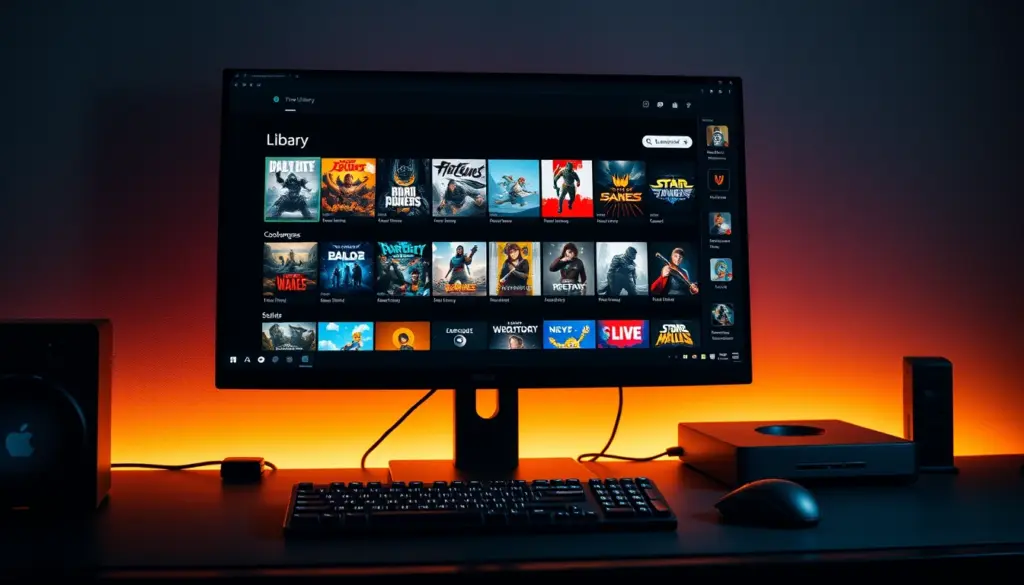
GOG Galaxy has spent more than a decade as the odd one out among game launchers: free, DRM-agnostic, and conspicuously absent from Linux. That changed on July 28, 2026, when GOG’s joint-CEO confirmed to GamingOnLinux that a native Linux build is now in active development. It’s the biggest platform news the client has had in years, and it lands while the launcher is already quietly one of the most useful pieces of free software a PC gamer can install – a single launcher that pulls Steam, Epic, Xbox, EA, Ubisoft Connect, PlayStation Network, Amazon Games, and Rockstar libraries into one unified view. This guide walks through installing the client, connecting all nine platforms, and locking the setup down the way a security-conscious reader should, in twelve steps.
| Quick Facts | Detail |
|---|---|
| Developer | GOG.com (independently owned by Michał Kiciński since Dec. 2025) |
| Cost | Free, requires a GOG.com account |
| Current version | 2.1.7.22 (July 24, 2026, per aggregator tracking) |
| Native platforms | Windows, macOS – Linux confirmed in development, no date set |
| Storefronts unified | 9: GOG, Epic Games Store, Xbox, Steam, EA App, Ubisoft Connect, PlayStation Network, Amazon Games, Rockstar |
| Official integrations | Epic Games Store, Xbox (2 of 9) |
| Community plugins | Steam, EA App, Ubisoft Connect, PSN, Amazon Games, Rockstar (6 of 9) |
What Is GOG Galaxy?
GOG Galaxy is a free desktop client built by GOG.com that unifies game libraries from multiple storefronts into a single interface, with cross-platform friends lists, achievement tracking, and cloud-synced customization layered on top. It was announced in June 2014 and entered open beta on October 15, 2014, as a lightweight alternative to Steam that didn’t require any single store to be your only store. The architecture in use today, known as Galaxy 2.0, rebuilt the client around cross-platform library unification – it entered closed beta in June 2019 and open beta that December, and it’s the version everyone runs now.
GOG.com itself goes back further. It launched February 22, 2008, in Warsaw as “Good Old Games,” a storefront specializing in DRM-free re-releases of older PC titles, and rebranded to GOG.com in March 2012 once the catalog expanded well beyond retro games. The catalog grew to more than 5,200 listed items by September 2021, before a financially-driven shift toward a smaller, hand-picked selection rather than an ever-expanding library – worth knowing if you remember GOG as a bigger storefront than it presents itself as today. For most of its life GOG.com was a subsidiary of CD Projekt – the studio behind the Witcher series and Cyberpunk 2077 – until December 29, 2025, when CD Projekt sold 100% of GOG to co-founder Michał Kiciński for roughly PLN 90.7 million (about $25.2 million), confirmed in CD Projekt’s own press release. Kiciński financed the purchase without selling his CD Projekt shares, and a parallel distribution agreement keeps future CD Projekt RED titles – the studio renamed itself CD Projekt RED after a June 2026 shareholder vote – shipping on GOG regardless of who owns it. Nothing changed for existing users: accounts, DRM-free installers, and the client itself all kept working through the ownership transition.
Why GOG Galaxy Matters Right Now
Three things make mid-2026 a good time to actually set this up, rather than leaving it as a launcher you meant to try. First, the Linux announcement – covered in full further down – signals GOG is investing in the client again after years of incremental updates, with the current build sitting at version 2.1.7.22 as of July 24, 2026 per independent version tracking (GOG’s own changelog page returns an access-denied response to automated requests, so third-party aggregator data is the most reliable public source available). Second, the storefront itself remains one of the only major PC platforms built entirely around DRM-free installers you can download and keep forever, independent of any launcher being installed at all – a real hedge against a store disappearing, an account getting locked, or a publisher pulling a title from sale years after you bought it. Third, six of the nine platform integrations are community-maintained open-source plugins that install arbitrary code alongside your game libraries, which is exactly the kind of setup that benefits from the security-minded walkthrough in Step 12 below, not just a blind “click install.”
GOG’s DRM-Free Difference
It’s worth understanding why GOG exists as a separate storefront at all before installing the client that unifies it with everything else. Every game sold directly through GOG.com ships as a standalone, DRM-free installer – no launcher check-in, no online activation, no license server that can go dark and take your library with it. That model has real commercial traction, not just ideological appeal: GOG accounted for roughly 10% of Cyberpunk 2077’s PC sales at launch in 2021, and about a third of the game’s early pre-orders, a meaningful share for a storefront that doesn’t run ads on competing platforms. The tradeoff is catalog size – GOG’s hand-picked approach means it doesn’t carry anywhere near Steam’s total library, and plenty of newer, DRM-dependent titles never appear there at all, since publishers who rely on always-online activation or anti-tamper middleware generally aren’t willing to ship a DRM-free build in the first place. GOG Galaxy doesn’t change that calculus for GOG-native titles, but it does mean you no longer have to choose between “DRM-free convenience” and “one place to see everything you own,” since the client’s whole purpose is closing that gap.
Prerequisites and System Requirements
GOG Galaxy is light by modern standards. You need a free GOG.com account (email address, no payment method required), one of the two supported desktop operating systems, and – if you plan to complete every step in this guide, including the community plugins – about 30 minutes.
Windows Requirements
Windows 10 64-bit or later, an Intel Core i3-equivalent CPU or better, 4GB of RAM, roughly 200MB of free disk space for the client itself (games install separately), and a DirectX 10-capable GPU. These figures come from third-party requirement aggregators rather than GOG’s own requirements page, which also blocks automated fetches – treat them as a practical floor rather than an official spec sheet.
macOS Requirements
The macOS build is tracked separately and currently sits at version 2.1.6.29 (July 13, 2026) by the same aggregator. Apple has not published a GOG-specific minimum OS version; in practice, a Mac released in the last several years running a currently-supported macOS release will run the client without issue, since it’s a lightweight Electron-adjacent app rather than anything GPU-intensive.
| Requirement | Windows | macOS |
|---|---|---|
| Minimum OS | Windows 10 64-bit+ | Currently-supported macOS release |
| CPU | Intel Core i3 equivalent | Any Mac from the last several years |
| RAM | 4GB | 4GB |
| Disk (client only) | ~200MB | ~200MB |
| GPU | DirectX 10-capable | Not applicable |
| Linux | Not yet available – confirmed in development, no release date | |
Step 1: Create a Free GOG.com Account
Go to gog.com and register with an email address and password – no phone number or payment method is required, unlike some competing storefronts’ anti-fraud onboarding. If you already bought anything on GOG.com in the past, including free giveaway titles, use that existing account rather than creating a second one, since your DRM-free library and any future GOG Connect-era claims (see the FAQ below) are tied to the account, not the client installation.
Step 2: Download the GOG Galaxy Installer
The official installer lives at gog.com/galaxy. The page auto-detects your operating system and serves the correct Windows or macOS build; there’s no separate beta channel to opt into for ordinary use. Download the installer to a folder you’ll remember – you won’t need it again after installation, but it’s a convenient offline copy if you ever need to reinstall without re-downloading.
Step 3: Install GOG Galaxy on Windows or macOS
Run the downloaded installer and follow the on-screen prompts – a standard Inno Setup wizard on Windows, a drag-to-Applications flow on macOS. If you’re setting up multiple machines, or you want a reproducible install you can script, the Windows installer supports silent switches:
GOG_Galaxy_2.0.exe /VERYSILENT /SUPPRESSMSGBOXES /NORESTART /LOG="C:\Temp\gog_galaxy_install.log"The /LOG switch is worth keeping even on a single-machine install – if something goes wrong, that log file tells you exactly which step failed instead of leaving you guessing. On first launch, Windows SmartScreen or macOS Gatekeeper may flag the installer as being from an unidentified or less-common publisher; that’s expected for GOG’s installer and not a sign of tampering, but it’s still worth verifying you downloaded it from gog.com directly rather than a third-party mirror (see Step 12 for how to confirm a download’s integrity).
Step 4: Complete First-Time Setup and Sign In
Launch GOG Galaxy and sign in with the account from Step 1. The client will immediately populate your GOG.COM tab with anything you already own, including free titles you may have claimed years ago and forgotten about. First launch also prompts you to choose a default install location for games – pick a drive with enough free space up front, since it doesn’t offer a one-click “move all games” tool later (more on that in the Pitfalls section).
Step 5: Connect Epic Games Store and Xbox
Open Settings → Integrations. Of the eight non-GOG platforms Galaxy can unify, only two – Epic Games Store and Xbox (covering Xbox Live and PC Game Pass) – are official, GOG-built integrations. Click either one, sign in with your existing Epic or Microsoft credentials in the pop-up window, and authorize the connection. Both sync automatically afterward: newly purchased or claimed games on either platform show up in your unified Galaxy library without any manual refresh.
Step 6: Install Community Plugins for the Remaining Six Platforms
Steam, EA App, Ubisoft Connect, PlayStation Network, Amazon Games, and Rockstar Games Launcher are not official GOG integrations – they’re community-built, open-source plugins, catalogued at github.com/Mixaill/awesome-gog-galaxy. This is the step that actually gets you to “nine platforms in one client,” and it’s also the step that deserves the most scrutiny, since you’re installing third-party code that runs alongside your game libraries.
Close the client completely before installing plugins – the client won’t recognize new plugin folders while running. Download a plugin’s release archive from its GitHub repository (not a random mirror site) and extract it into the plugins-installed directory for your OS:
# Windows
%localappdata%\GOG.com\Galaxy\plugins\installed\

# macOS
~/Library/Application Support/GOG.com/Galaxy/plugins/installed/
Relaunch the client, open Settings → Integrations again, and the newly installed plugin(s) will appear alongside Epic and Xbox. Connect each one the same way – sign in, authorize, wait for the initial library sync. Repeat for each of the six community plugins you want; you don’t have to install all of them if you only use, say, Steam and EA App.
A quick way to confirm a plugin actually landed in the right place before relaunching is to list the installed-plugins folder directly rather than relying on the GUI to tell you:
PS C:\Users\you> dir "$env:localappdata\GOG.com\Galaxy\plugins\installed\"

    Directory: C:\Users\you\AppData\Local\GOG.com\Galaxy\plugins\installed

Mode      LastWriteTime         Length Name
----      -------------         ------ ----
d-----    7/30/2026  2:14 PM           steam_a1b2c3d4
d-----    7/30/2026  2:15 PM           ea_app_e5f6a7b8
Each subfolder name is the plugin’s own internal identifier, not necessarily the human-readable name shown later in the Integrations panel – if a folder is missing after extraction, that’s the plugin failing to register, and reinstalling from a fresh download is faster than debugging why.
Step 7: Organize Your Unified Library
Once two or more storefronts are connected, the default library view mixes everything together, which gets unwieldy fast past a couple hundred games. Galaxy’s built-in organization tools are custom tags (right-click any game → Manage Tags), a filter sidebar (by platform, installed/not-installed, genre, tag), and custom views you can save and switch between. A practical starting setup: tag anything you’re “actively playing,” filter the default view to installed-only, and leave a second saved view showing your full cross-platform catalog for browsing.
Search works across every connected platform simultaneously, which matters once your combined library spans nine sources – typing a partial title surfaces matches from GOG, Steam, Epic, and every community plugin in one dropdown instead of forcing you to remember which storefront a particular game actually lives on. That’s arguably the single biggest daily-use argument for going through this whole setup in the first place: you stop having to remember where you bought something before you can launch it.
Step 8: Set Up Friends, Achievements, and Activity Tracking
Galaxy maintains its own friends list, separate from any individual storefront’s – useful precisely because your friends may be scattered across Steam, Epic, and GOG itself. Add friends by GOG username or by importing contacts from a connected platform where that platform’s API allows it. Once connected, the friends panel shows real-time online/offline/in-game status, and Galaxy tracks achievements and playtime locally across every connected platform, giving you one combined activity feed instead of eight separate ones.
This local, client-side achievement tracking is worth calling out specifically: because Galaxy records playtime and unlocked achievements itself rather than only mirroring whatever each storefront reports, it keeps working as a unified history even for DRM-free GOG titles that have no online service backing them at all. That’s a meaningfully different model from a platform like Steam, where achievement data lives entirely on Valve’s servers.
Step 9: Configure Cloud Sync, Overlay, and Notifications
Under Settings → Cloud Saves, enable sync for any GOG-native games that support it (cloud save support depends on each individual game’s GOG release, not the client). The in-game overlay (toggle in Settings → In-game) adds a Galaxy-branded screenshot and friends-list layer on top of GOG titles specifically – it does not overlay on games launched through the community storefront plugins, which is a common point of confusion worth flagging before you go looking for it in a Steam game. If you’re on a metered or slow connection, the bandwidth limiter in Settings → Downloads caps background update traffic so Galaxy doesn’t quietly saturate your link.
Step 10: Install and Manage Your First Game
Pick any game in your unified library and click Install. The client downloads it to the location you set in Step 4, under a per-game storage path structured like this on Windows:
%LocalAppData%\GOG.com\Galaxy\Applications\\Storage\
%LocalAppData%\GOG.com\Galaxy\Applications\\Storage\Shared\Files\   # cloud saves
On macOS the equivalent path is ~/Library/Application Support/GOG.com/Galaxy/Applications/<ClientID>/Storage. There is no built-in “move this game to another drive” button – if you need to relocate an install later, copy the folder manually to the new location, then use Manage Installation → Verify / Repair from the game’s context menu so Galaxy re-links its records to the new path instead of re-downloading everything from scratch.
Step 11: Automate Deployment with Winget
If you’re setting up more than one Windows machine – a home PC plus a laptop, or a small LAN party’s worth of systems – Microsoft’s official package manager can install it without touching a browser. The package ID is registered directly in Microsoft’s own winget-pkgs repository as GOG.Galaxy:
winget install --id GOG.Galaxy -eCombine this with the silent-install switches from Step 3 inside a scripted deployment (a PowerShell provisioning script, an Intune package, whatever your environment already uses) and the client becomes a zero-click part of a standard image, rather than something every new machine has to install by hand.
Step 12: Audit Plugin Sources and Harden Your Setup
This is the step most setup guides skip entirely, and it’s the one worth taking seriously given that six of the nine integrations you just set up in Step 6 are unofficial, community-maintained code with direct access to your storefront credentials via OAuth-style sign-in flows. None of this means avoid the plugins – the awesome-gog-galaxy ecosystem is widely used and actively maintained – but a few minutes of verification is cheap insurance.
Before installing any plugin, check its GitHub repository directly rather than a third-party download mirror: look at the star count and open-issue activity as a rough trust signal, confirm the most recent commit isn’t years stale (an abandoned plugin is a bigger risk than an actively maintained one, since unpatched auth flows age badly), and download release archives from the repo’s own Releases tab, never a linked “faster mirror.”
If a plugin publishes checksums alongside its release, verify the download before extracting it:
# Windows (PowerShell)
certutil -hashfile plugin-release.zip SHA256

# macOS
shasum -a 256 plugin-release.zip
A successful check outputs a single hash string you can compare by eye against the one on GitHub:
SHA256 hash of plugin-release.zip:
a1b2c3d4e5f6789012345678901234567890abcdef1234567890abcdef1234
CertUtil: -hashfile command completed successfully.
If the two strings don’t match exactly, delete the download and get it again directly from the release page rather than trying to figure out why – a mismatch means either a corrupted download or a tampered file, and it’s not worth the risk of guessing which. Finally, periodically re-open Settings → Integrations and remove any plugin you connected once and no longer use – every active integration is a live credential grant, and pruning unused ones shrinks your actual attack surface rather than just tidying a menu.
| Platform | Integration Type | What Syncs |
|---|---|---|
| GOG | Native | Full library, cloud saves, achievements |
| Epic Games Store | Official (GOG-built) | Library, ownership status |
| Xbox (Live / PC Game Pass) | Official (GOG-built) | Library, ownership status |
| Steam | Community plugin | Library, install status |
| EA App | Community plugin | Library |
| Ubisoft Connect | Community plugin | Library |
| PlayStation Network | Community plugin | Library (PC titles) |
| Amazon Games | Community plugin | Library, Prime Gaming claims |
| Rockstar Games Launcher | Community plugin | Library |
GOG Galaxy vs. Steam, Heroic, Lutris, and Playnite
It isn’t the only cross-launcher tool on this site – Heroic Games Launcher, Lutris, and Playnite all solve a version of the same “too many launchers” problem, and each takes a different approach. Steam itself isn’t a unifier at all, but it’s the baseline everything else gets compared against.
| Client | Platforms Unified | OS Support | Runs Windows Games on Linux | Best For |
|---|---|---|---|---|
| GOG Galaxy | 9 (2 official + 6 community) | Windows, macOS (Linux in development) | No (not yet) | Official achievement/cloud-save sync, DRM-free library |
| Steam | 1 (Steam only) | Windows, macOS, Linux, SteamOS | Yes (Proton, built in) | Largest single storefront, native Linux/Deck support |
| Heroic Games Launcher | 3 (Epic, GOG, Amazon) | Windows, macOS, Linux | Yes (via bundled Proton/Wine) | Epic + GOG on Linux/Steam Deck specifically |
| Lutris | 8+ (via installer scripts) | Linux only | Yes (Wine/Proton-GE runners) | Deep per-game runner customization on Linux |
| Playnite | 5+ (via plugins) | Windows only | N/A | Deep library metadata and emulator integration on Windows |
The practical takeaway: if you’re on Windows or macOS and want official achievement and cloud-save syncing across the platforms GOG directly supports, Galaxy is the only option on this list that does it. If you’re already on Linux or a Steam Deck, Heroic or Lutris currently cover more ground than Galaxy does, simply because Galaxy doesn’t run there yet.
GOG Galaxy Is Finally Coming to Linux
On July 28, 2026, GamingOnLinux reported that GOG is actively building a native Linux version of Galaxy, ending years of the client being the one major launcher missing from the platform – GOG.com has offered Linux-native game downloads for years, but the unifying client itself never followed. Speaking to the outlet by email, GOG joint-CEO Krzysztof Papliński confirmed the project directly:
“Linux continues to be one of the topics we hear the most about from our community, and we really appreciate the passion and patience of everyone who’s been asking about it. Following the role we announced earlier this year, we now have the specialist on board and are actively exploring the best way to approach Linux support for GOG Galaxy. This is a significant undertaking, so while we’re not ready to share any specific plans, timelines, or results just yet, it’s very much an area we’re investing time and effort into.”
Krzysztof Papliński, joint-CEO of GOG, via GamingOnLinux
Reporting on the announcement, It’s FOSS independently confirmed the same core details: GOG has hired a dedicated specialist for the Linux effort, no release window exists yet, and the eventual goal is feature parity with the Windows client – achievement sync, cloud saves, patch rollbacks, and full cross-platform library unification, not a stripped-down port. Neither GOG nor either outlet has said whether the Linux build will lean on Proton for running Windows-only games the way Heroic and Lutris already do, or build something GOG-specific – a distinction the client’s own most technical users have been actively debating since the announcement broke. Until it ships, running it on Linux or Steam Deck remains possible only indirectly, through a Windows-compatibility layer like Lutris, not as a native install.
Common Pitfalls When Setting Up GOG Galaxy
- Assuming GOG Connect still works. GOG Connect – a feature that let you claim free DRM-free copies of Steam games you already owned – was discontinued years ago. Several competing setup guides still describe it as a current feature; if you see instructions built around it, they’re outdated.
- Installing plugins while the client is still running. The client only scans the plugins-installed folder on launch. Copy files in with Galaxy open and nothing happens until you fully quit and restart it.
- Multiselecting dependencies during game setup. This applies to some GOG-native installers with optional redistributable prompts, not Galaxy itself, but it’s a frequent source of “why won’t this game launch” reports – install one dependency at a time when troubleshooting rather than batch-selecting everything.
- Mixing up the Windows and macOS plugin folder paths. Copy-pasting a Windows path (
%localappdata%\...) into a macOS Finder “Go to Folder” prompt, or vice versa, silently fails rather than erroring clearly – double-check you’re using the path for your actual OS. - Expecting Linux support to already be available. The July 2026 announcement confirmed active development, not a release. Running Galaxy on Linux today still requires a compatibility layer such as Lutris; treat “coming to Linux” and “available on Linux” as two different states.
- Dragging install folders to a new drive instead of using Verify/Repair. A manual copy alone leaves Galaxy’s internal database pointing at the old path – always follow a manual move with Manage Installation → Verify/Repair.
- Connecting a plugin and forgetting it’s there. Every integration you authorize stays connected – and therefore able to sync and hold a live credential – until you manually disconnect it in Settings → Integrations, even if you uninstalled the plugin’s own storefront app months ago.
Troubleshooting GOG Galaxy Problems
Most day-to-day problems trace back to one of three causes: a stale session token on a connected platform, a plugin that didn’t fully register, or Galaxy’s own database losing track of a file path after a manual change outside the client. The following covers the specific symptoms that come up most often, roughly in the order you’re likely to hit them during initial setup.
Galaxy won’t launch or shows a black screen on startup. Quit fully via Task Manager (Windows) or Activity Monitor (macOS) in case a background process is stuck, then relaunch. If it recurs, reinstall using the silent-install command from Step 3 with logging enabled and check the log for the failing component.
A community plugin doesn’t appear in Settings → Integrations after installing it. Confirm the extracted files landed directly inside the plugins\installed\ folder and not a nested subfolder created by the zip extraction – a common mis-extraction that leaves the plugin invisible to Galaxy.
Epic or Xbox integration login fails or loops back to the sign-in screen. This is almost always a stale session token on the platform side rather than a Galaxy bug – sign out of Epic Games Store or the Xbox app directly, sign back in there first, then retry the connection inside Galaxy.
Games are missing from the unified library after connecting a plugin. Community plugins sync on their own schedule, not instantly. Right-click the platform tab and look for a manual “Refresh” or “Sync Now” option before assuming games are actually missing.
The in-game overlay doesn’t appear. The overlay only works for GOG-native titles launched through Galaxy directly – it does not extend to games launched via the Steam, EA, or other community plugins, which each rely on their own platform’s overlay instead.
Cloud saves aren’t syncing for a specific game. Cloud save support is set per game by its GOG release, not globally by the client – check the individual game’s store page or in-client details panel to confirm cloud saves are actually supported before assuming Galaxy is broken.
The installer is blocked by Windows SmartScreen or macOS Gatekeeper. Confirm you downloaded from gog.com/galaxy directly (check the download’s properties/Get Info for the source URL if unsure), verify the file hash if GOG has published one, then explicitly allow it – “More info → Run anyway” on Windows, or right-click → Open on macOS.
Library load is slow with many plugins connected. Each additional community plugin adds its own sync pass on startup. If load times become noticeable, disconnect integrations for platforms you rarely actually use – you can always reconnect one later without losing any local data.
A downloaded game won’t launch after a Windows update. Use the game’s Manage Installation → Verify/Repair option first; it re-checks installed files against expected checksums and re-downloads anything that Windows Update inadvertently touched, without a full reinstall.
Advanced Tips for Power Users
Treat GOG’s own DRM-free offline installers as a backup layer independent of Galaxy entirely – for any GOG-native game, the store page offers a standalone installer download alongside the Galaxy-managed install, and keeping a copy of that offline installer for titles you care about means you can reinstall the game even if the client itself were ever unavailable. That’s the practical version of GOG’s “own it forever” pitch, and it costs nothing beyond disk space.
Since the community plugin ecosystem is actively maintained rather than fixed, periodically re-check the awesome-gog-galaxy repository for new or updated integrations – this is also where you’ll see if a plugin you rely on has gone stale or been superseded by a fork, which matters more once you’ve adopted the Step 12 audit habit.
If you’re deploying Galaxy across a household or small office’s worth of machines, script the winget install from Step 11 together with a post-install step that pre-populates the plugins folder from a known-good, hash-verified archive on a shared network location – this turns a 12-step manual process into a two-command provisioning script for every machine after the first.
Finally, if your actual goal is a single client that also runs everything on Linux or a Steam Deck today – not “eventually,” when GOG’s native build ships – pair this guide with the Lutris setup guide or the Heroic Games Launcher guide in the meantime. Both already run GOG titles alongside other stores on Linux right now, and nothing stops you from running it on Windows/macOS as your primary client while using one of those as the Linux-specific bridge.
Frequently Asked Questions
Is GOG Galaxy free?
Yes. The client itself costs nothing and only requires a free GOG.com account. You pay only for the games you choose to buy, and any DRM-free or Epic/Xbox/Steam titles you already own show up once you connect those integrations.
Does GOG Galaxy work on Linux or Steam Deck?
Not natively, as of this writing. GOG confirmed on July 28, 2026 that a native Linux build is in active development, but gave no release date. Until it ships, Linux and Steam Deck users can run the Windows build through a compatibility layer like Lutris, but there’s no direct install.
Is GOG Connect still available?
No. GOG Connect, which let users claim free DRM-free copies of Steam games they already owned, was discontinued years ago. Any guide describing it as an active feature is outdated.
Do I need GOG Galaxy to play games I bought on GOG.com?
No. GOG.com’s defining feature is DRM-free standalone installers that work without any launcher at all. Galaxy adds convenience – auto-updates, cloud saves, achievements, cross-platform library unification – but it has never been mandatory to play a GOG-purchased game.
Are the community integration plugins safe to install?
The awesome-gog-galaxy plugins are widely used and actively maintained, but they’re third-party code with access to your storefront sign-ins, not GOG-audited software. Follow Step 12: download only from each plugin’s own GitHub Releases page, check for recent maintenance activity, and verify checksums when published.
Can I use GOG Galaxy without connecting any other storefronts?
Yes. Every integration in Settings → Integrations is opt-in. You can run Galaxy purely as a GOG-native client and skip Epic, Xbox, and all six community plugins entirely if that’s all you need.
Did the December 2025 ownership change affect GOG Galaxy?
No functional changes have been reported. CD Projekt sold GOG to co-founder Michał Kiciński in December 2025, but accounts, libraries, DRM-free installers, and the Galaxy client all continued operating unaffected, and a distribution deal keeps future CD Projekt RED titles shipping on the store.
How do I move an installed game to a different drive?
GOG Galaxy has no built-in “move” button. Manually copy the game’s folder to the new location, then use that game’s Manage Installation → Verify/Repair option so Galaxy updates its internal path record instead of treating the game as missing.
Related Coverage
Once you’ve worked through all twelve steps, you should have a single client showing your combined library across every storefront you actually use, cross-platform friends and achievement tracking running locally, cloud sync configured for the GOG titles that support it, and – if you followed Step 12 – a plugin folder you’ve actually verified rather than just trusted. That’s the real payoff of GOG Galaxy over any single storefront app: one place to see everything, backed by a DRM-free fallback that keeps working even if a launcher someday doesn’t.
- Heroic Games Launcher: 3 Stores, 12 Steps, 30 Min [2026]
- Lutris Setup: 8 Stores in 12 Steps, 30 Min [2026]
- Playnite Setup: 5+ Stores in 12 Steps, 30 Min [2026]
- Heroic vs Lutris: 3 Stores vs 346K Games [2026]
- GOG vs Steam: 30-Day Refunds vs 2-Hour Limit [2026]
- CD Projekt Rebrands to Red After $25M GOG Sale [2026]
- Steam vs Epic Games Store: 30% vs 12% Cut [2026]
For more coverage of gaming platforms, launchers, and hardware, visit the Gaming section.