
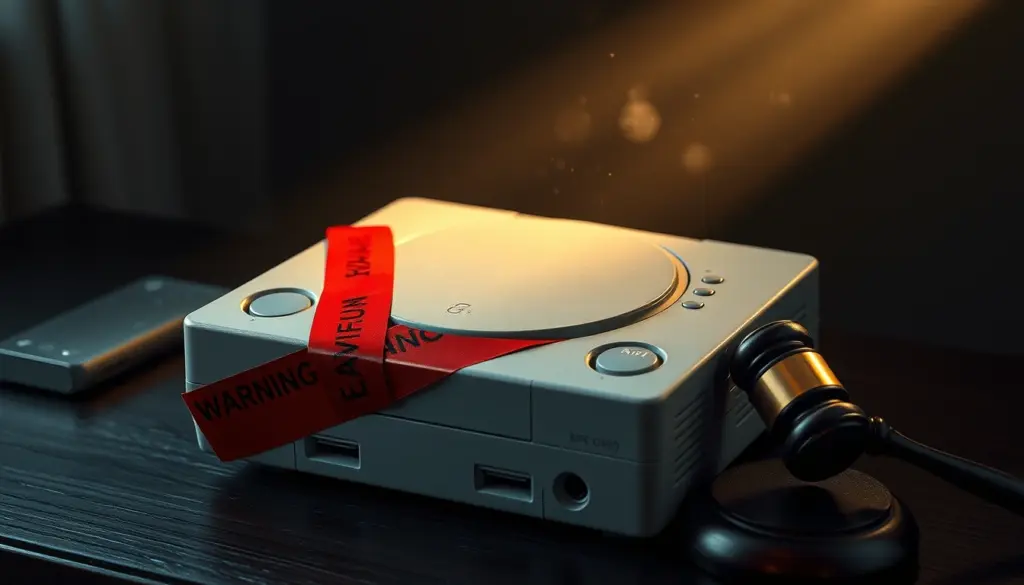
In late June 2026, a British-Turkish entrepreneur named Işık Şekercigil announced on LinkedIn that his newly relaunched publisher, Empire Interactive, had acquired “the trademark and select intellectual property rights of The 3DO Company” – the defunct games company behind one of the most infamous console flops of the 1990s. The plan: remaster the 3DO’s back catalogue, build a retro mini-console in the mold of the SNES Classic, and eventually license out an entire “console ecosystem.” Less than two weeks later, the entire project was dead.
The collapse wasn’t caused by a lack of interest – retro-gaming outlets covered the announcement eagerly. It was caused by a far more mundane problem: Empire Interactive did not appear to own the rights it claimed to own. Canadian company Throwback Entertainment, which holds the actual 3DO console trademark, hardware designs, and the 3do.com domain, said publicly that nothing had been sold, transferred, or licensed to Empire Interactive. Days later, Empire Interactive walked the plan back entirely, citing “multiple parties claiming ownership rights.”
The saga, playing out over roughly a week between late June and early July 2026, is a compact case study in how fragmented, decades-old intellectual property can derail even a well-publicized revival – and how fast an unverified announcement can unravel once retro-gaming journalists and rival rights-holders start asking questions. It’s also the second time in a single month that Şekercigil resurrected a bankrupt games brand; Empire Interactive itself folded in 2009.
A Timeline: How the 3DO Console Revival Rose and Fell in Days
Empire Interactive’s announcement landed on LinkedIn in the final days of June 2026, styled as what GamesRadar’s Phil Hayton called a “strangely dry” corporate post. The publisher said it had obtained the trademark and select intellectual property rights of The 3DO Company, and laid out an ambitious roadmap: remaster classic 3DO titles, launch a retro-style mini-console, and eventually build a licensable “console ecosystem” echoing the original 1990s business model.
The reaction was immediate. In the comments of that same LinkedIn post, Josh Fairhurst – the co-founder and former CEO of physical-game publisher Limited Run Games, who stepped down from the CEO role in September 2025 – offered to license some of the 3DO catalogue’s biggest titles, commenting simply, “I own the rights!” His list included cult titles like Night Trap, Sewer Shark, Corpse Killer, Quarterback Attack, and Supreme Warrior.
That comment helped trigger the unraveling. Throwback Entertainment, which actually holds the 3DO trademark, associated hardware designs, and the 3do.com domain, went public with a flat denial: “These assets have not been sold, transferred, or licensed to Empire Interactive, and there are no plans for them to be sold,” the company told GamesRadar.
Fairhurst walked back his own comment within days, once he’d looked into the situation further: “I did that before I had a chance to research the situation. I’m currently of the opinion that this is not legitimate or will be highly contested, at the very least.”
Under pressure, Şekercigil clarified exactly what Empire Interactive had bought – and it wasn’t what the original announcement implied: “We acquired the rights to The 3DO Company brand, not the 3DO console brand. Although they may seem identical, they are legally different,” he said in a statement reported by European Express. He added that the trademark is registered “under The 3DO Company and is limited to the game development and publishing category. It does not include console manufacturing or any hardware technology development.”
By early July, Empire Interactive had seen enough. In a black-and-white LinkedIn statement, the publisher confirmed it was abandoning the plan entirely: “After careful consideration, we have decided to abandon both the console production and the idea of remastering retro games,” it wrote, adding that “the reason for this decision is the emergence of multiple parties claiming ownership rights over both the games and console manufacturing process.” It closed with a pivot: “Given the niche nature of this market and the likelihood of prolonged legal disputes, we have chosen not to engage in lengthy legal proceedings. Instead, we will focus our efforts on developing our own next-generation games,” the company said, as reported by GamesRadar.
| Date (2026) | Event |
|---|---|
| Late June | Empire Interactive announces on LinkedIn it acquired “the trademark and select intellectual property rights of The 3DO Company” |
| Late June | Josh Fairhurst comments “I own the rights!”, offering to license classic 3DO titles |
| Late June | Throwback Entertainment publicly denies transferring any 3DO console or hardware rights |
| July 1 | GamesRadar reports rising industry skepticism; Fairhurst walks back his endorsement, calling it “not legitimate” |
| July 1 | Şekercigil clarifies Empire Interactive holds only the “The 3DO Company” publishing-class trademark |
| July 2–3 | Empire Interactive formally withdraws from the 3DO project, pivots to original games |
Who Is Işık Şekercigil, and What Did Empire Interactive Actually Acquire?
Şekercigil is a British-Turkish dual citizen with a background in mobile gaming. Earlier the same month, he relaunched Empire Interactive itself – the long-dormant UK publisher behind FlatOut, Ford Racing, Big Mutha Truckers, and The Longest Journey – as a going concern under his own leadership. The 3DO announcement followed almost immediately, positioning the “new” Empire Interactive as the vehicle for a second revival: not just a defunct publisher, but a defunct console brand layered on top of it.
What he’d actually secured, by his own later admission, was narrower than the original announcement suggested: a trademark for “The 3DO Company” name, restricted to the game development and publishing category – not the console hardware, not the “3DO” brand as applied to physical devices, and not any of the original catalogue’s individual game IP. Most of that IP had already been sold off piecemeal when the original 3DO Company went bankrupt in 2003: Microsoft picked up High Heat Baseball, Ubisoft took Might and Magic, Take-Two acquired Army Men, and Namco bought Street Racing Syndicate.
The Trademark Trap: Two Names, One Legendary Brand
This is where trademark law’s category system becomes the whole story. A trademark isn’t a single blanket right – most national IP offices register marks against specific classes of goods and services (the Nice Classification framework used internationally). It’s entirely possible for two unrelated parties to legitimately hold “the same name” in two different classes: one for publishing and software, another for hardware and electronics. That’s precisely the gap Şekercigil said Empire Interactive fell into: a name registered for game publishing, sitting next to a separate, disputed hardware trademark that Throwback Entertainment says it already owns outright, undiluted, and not for sale.
| Asset | Claimed By | Status |
|---|---|---|
| “The 3DO Company” trademark (game publishing class) | Empire Interactive | Acquired, per Şekercigil’s statement |
| 3DO console / hardware trademark | Throwback Entertainment | Held; “not sold, transferred, or licensed,” per company statement |
| 3do.com domain | Throwback Entertainment | Held, per company statement |
| Individual 1990s-2000s game IP (Army Men, Might and Magic, High Heat Baseball, Street Racing Syndicate) | Take-Two, Ubisoft, Microsoft, Namco | Sold off separately in the 2003 bankruptcy auction |
| Night Trap, Sewer Shark, Corpse Killer, Quarterback Attack, Supreme Warrior | Disputed – offered for license by Josh Fairhurst, later walked back | Unresolved |
| Original hardware manufacturing licenses | Historically Panasonic, AT&T, Time Warner, Goldstar (now LG) | Never centralized under one company |
The dispute is also complicated by the original 3DO’s business model. Unlike Sony or Nintendo, The 3DO Company never manufactured its own hardware – it licensed the design to third parties. Panasonic, AT&T, Time Warner, and Goldstar all built and sold their own branded 3DO units under license. That means “the console rights,” even in Throwback’s hands, may never have been a single clean bundle to begin with – a structural complication baked into the brand since its founding in 1991.
“Not Legitimate”: Industry Reaction Turns Skeptical Within Days
By July 1, 2026 – just days after the original announcement – GamesRadar’s Phil Hayton was already framing the story around Fairhurst’s about-face, describing the revival as “already being branded as ‘not legitimate.'” Engadget covered the collapse in similar terms, calling it “a strange attempt to revive the 3DO” that was “already dead.” European Express ran the story under the headline “3DO Console Revival Dead Days After Reveal,” and other outlets went further, describing it as the 3DO’s second death, this time arriving in under a week.
That speed is itself notable. A decade ago, a poorly substantiated console-revival claim might have circulated for weeks before anyone tracked down the actual rights holder. In 2026, Throwback Entertainment was on the record with a denial within days, and the original claimant was publicly contradicting his own announcement before the news cycle had even finished its first pass.
Why the Original 3DO Failed in 1993 – History Rhymes
The 3DO Company was founded on September 12, 1991, by Electronic Arts founder Trip Hawkins alongside seven partners, with manufacturing backing from Panasonic, AT&T, Time Warner, and others. Panasonic’s FZ-1 launched the platform in the US on October 3, 1993, at $699 – technically the first 3D-capable home console on the market, arriving roughly a year ahead of the Sega Saturn and original PlayStation.
The price was the problem. Hawkins built the business around low hardware royalties, hoping to attract third-party publishers the way Nintendo and Sega did – but that meant manufacturers had to pass the full cost of the hardware straight to consumers instead of subsidizing it with software royalties. The $699 launch price topped the combined cost of a SNES and a Sega Genesis. Roughly 2 million units sold in total across every manufacturer and region before Hawkins sold his stake to Matsushita, Panasonic’s parent company, after missing 1994 sales targets. A planned successor, the 3DO M2, never reached consumers. The company pivoted entirely to software publishing – titles like Might and Magic, Army Men, and High Heat Baseball – before filing for Chapter 11 bankruptcy on May 28, 2003, following more than $10 million in losses over the prior nine months.
The 3DO Isn’t the Only 1990s Console Ghost
The 3DO’s flameout wasn’t unique. The mid-1990s console wars produced several platforms that launched with real manufacturer backing and still failed to find an audience. Atari’s Jaguar sold fewer than 150,000 units after its November 1993 US launch, undone by a thin game library and weak third-party support. Sega fared better twice and worse twice: the Saturn moved 9.26 million units worldwide after its November 1994 Japan launch but lost the format war to the PlayStation’s aggressive $299 pricing, while the Dreamcast – Sega’s last hardware effort – sold 9.13 million units before Sega discontinued it on March 31, 2001, following a ¥51.7 billion (roughly $417.5 million) net loss that pushed the company out of console hardware entirely.
| Console | Launch | Launch Price | Units Sold | Why It Failed |
|---|---|---|---|---|
| 3DO (Panasonic FZ-1) | Oct 3, 1993 (US) | $699 | ~2 million (all makers) | Royalty-light licensing pushed hardware cost onto buyers |
| Atari Jaguar | Nov 1993 (US) | $249.95 | <150,000 | Thin game library, weak third-party support |
| Sega Saturn | Nov 1994 (Japan) / May 1995 (US) | ¥44,800 / $399.99 | 9.26 million | Lost format war to PlayStation’s $299 price |
| Sega Dreamcast | Nov 1998 (Japan) / Sept 1999 (US) | ¥29,000 / $199 | 9.13 million | Discontinued 2001 after ¥51.7B net loss; Sega exited hardware |
Set against those numbers, the 3DO’s roughly 2 million lifetime units make it one of the smaller commercial failures of the era – part of why its brand equity is so thin today, and part of why the idea of a full revival raised eyebrows even before the trademark dispute surfaced.
Empire Interactive Has Already Died Once – This Was Its Second Resurrection in One Month
The company doing the reviving has its own history of collapse. The original Empire Interactive was founded in 1987 by Ian Higgins and Simon Jeffrey, and built a respectable catalogue over two decades: FlatOut, Ford Racing, Big Mutha Truckers, Starship Troopers, budget label Xplosiv, and console ports of Sega arcade hits like Crazy Taxi and Sega Rally. It also published The Longest Journey and its sequel Dreamfall, two of the more acclaimed adventure games of the 2000s.
US investment firm Silverstar Holdings bought Empire Interactive for roughly £4.5 million in 2006. Silverstar itself was delisted from NASDAQ in March 2009, and Empire Interactive followed it into administration on May 1, 2009, laying off 49 of its 55 staff. Its intellectual property was later sold to New World IP and licensed out to Zoo Publishing.
That means Şekercigil didn’t just attempt to revive one defunct, bankrupt games brand in June 2026 – he revived two in the same month: Empire Interactive itself, and, briefly, the 3DO. It’s a pattern worth naming on its own: a zombie-brand strategy that bets nostalgia and a lapsed trademark are enough of a foundation to build a new business on, even when the underlying rights are murky.
The 2026 “Zombie Brand” Trend in Gaming
Reviving dormant hardware brands isn’t a new idea – Nintendo’s SNES Classic and Sega’s Mega Drive Mini both proved that a well-executed, officially licensed mini-console can sell briskly on nostalgia alone. Şekercigil’s plan followed that exact playbook. The difference is that Nintendo and Sega were reviving their own IP. Empire Interactive was attempting the same trick with somebody else’s.
2026 has already produced several other major identity shifts in the games industry – most of them, unlike the 3DO episode, backed by clean, undisputed ownership. CD Projekt’s shareholders voted in June to rename the company’s parent entity to CD Projekt RED, folding the studio and holding-company brand into one; that same deal included selling GOG outright to CEO Michał Kiciński for $25.2 million, covered in our CD Projekt Red rebrand report. Embracer Group took the opposite structural approach, splitting into two independent public companies as profit craters, detailed in our Embracer Group split coverage. Both are real corporate transactions involving assets the companies indisputably owned. The 3DO episode is the cautionary counterexample: renaming or relaunching a brand is easy; owning what the name actually represents is not.
The Legal Reality of Reviving a Dead Console Brand
Trademark offices don’t automatically police who “deserves” a defunct brand name. In most jurisdictions, if a trademark hasn’t been actively used or renewed for long enough, a new party can file to register it – but only within the specific class of goods or services it applies for. That’s the mechanism Şekercigil used, and by his own account, it secured only the games-publishing class, not electronics or hardware manufacturing.
For a rough sense of how disconnected two “identical-looking” trademark claims can legally be, the structure looks something like this:
# Illustrative only: why "the same name" can have two legitimate owners
trademark_registry = {
    "The 3DO Company": {
        "class": "41/42 - game development & publishing",
        "holder": "Empire Interactive (2026)",
    },
    "3DO": {
        "class": "9/28 - consumer electronics & hardware",
        "holder": "Throwback Entertainment",
    },
}

def can_sell_hardware(claimant, registry):
    return registry.get("3DO", {}).get("holder") == claimant

print(can_sell_hardware("Empire Interactive (2026)", trademark_registry))
# False -- publishing-class ownership does not extend to hardware
That gap is exactly why Throwback Entertainment’s separate, hardware-side trademark claim – untouched by Şekercigil’s filing – was enough to end the project within days. It’s also why, for any company hoping to revive gaming hardware from three decades ago, buying one class of a lapsed trademark isn’t due diligence. Confirming who holds every class, plus the original manufacturing licenses – in the 3DO’s case, spread across at least four companies – is.
Market Impact: What This Means for Collectors, Buyers, and Investors
No hardware shipped, no crowdfunding campaign opened, and no pre-orders were taken before the plan collapsed – which means, unlike a failed Kickstarter, there’s no direct consumer financial exposure from this specific episode. The practical impact is narrower and mostly reputational.
For Empire Interactive, the damage lands squarely on the credibility of its actual, legitimate relaunch. The publisher’s stated pivot – developing “our own next-generation games” under its own recovered name – now proceeds under a cloud, having very publicly overstated what it owned in its first major announcement as a reborn company.
For the retro-collector market, the news is unlikely to move original 3DO hardware prices meaningfully; the supply of vintage Panasonic FZ-1 and Goldstar units hasn’t changed. If anything, a burst of press attention over a “3DO comeback” tends to briefly bump search interest and collector curiosity in the original hardware rather than in any future product. Buyers hunting for period-correct 3DO consoles or carts should stick to established collector marketplaces and verified sellers rather than any pre-order page that might opportunistically surface using the 3DO name before the ownership question is actually settled.
How the 3DO Saga Fits Into 2026’s Wider Gaming-Preservation Debate
The 3DO’s brief resurrection and rapid death is a strange companion piece to a much larger conversation happening in gaming right now: who gets to control access to old games and hardware, and for how long. Sony’s own decision to end new physical-disc production for PlayStation by January 2028, covered in our report on Sony’s disc wind-down, has fueled the consumer-led “Don’t Kill the Disc” petition, which has collected more than 330,000 signatures protesting the loss of physical ownership. Both stories, alongside the 3DO saga, point to the same underlying tension: as gaming hardware ages, its intellectual property becomes harder to track, license, and preserve cleanly – whether the party trying to manage it is a platform holder with tens of millions of units in the field or a two-person publisher relaunched on LinkedIn.
The emulation and preservation community offers a legal, well-established alternative for anyone who actually wants to experience 3DO-era libraries today. Our guides to the Batocera, RetroPie, and Recalbox retro-emulation operating systems and to PS1-era emulation with DuckStation cover how enthusiasts legally preserve and run old console libraries on their own hardware, using their own legally-owned game data – no contested trademark required.
What Happens Next: 5 Predictions for the 3DO Brand
- Throwback Entertainment keeps uncontested control. Nothing in the public record suggests Throwback has any interest in licensing or selling the console trademark through 2027.
- Empire Interactive drops “3DO” from its plans entirely. Expect the publisher to keep operating under its own recovered name, focused on original games rather than any further mention of the console.
- Renewed use of the 3DO name draws a formal response. If Şekercigil or Empire Interactive use 3DO branding commercially again without Throwback’s direct sign-off, a cease-and-desist is a realistic next step.
- The episode becomes a reference case. Retro-gaming outlets that already covered this in detail are likely to cite it any time a future “lost console” revival is announced, raising the bar for what counts as a credible claim.
- The mini-console nostalgia trend continues regardless. Expect more licensed revivals from companies that do own their IP outright, in the mold of the SNES Classic and Mega Drive Mini, even as unlicensed attempts like this one keep getting caught faster.
How to Spot a Legitimate Retro Console Revival
The 3DO episode is a useful checklist-generator for anyone tempted by the next “forgotten console returns” headline:
- Check the actual trademark registration and its class, not just a company’s announcement – national IP offices like the USPTO, UKIPO, and EUIPO publish searchable trademark registries.
- Look for a named, confirmed manufacturing partner before taking any pre-order or crowdfunding pledge seriously.
- Watch for public statements from any other company that might hold competing rights – silence isn’t confirmation, but a quick denial, as happened here, is a hard stop.
- Treat “we acquired the trademark” as a narrower claim than “we own the console” – ask which specific class is involved.
- Be wary of pre-order links that appear before a project has confirmed hardware partners; buy only through the announcing company’s own verified channels once – and if – a real product ships, never through unaffiliated third-party resellers promising early access.
Related Coverage
- CD Projekt Rebrands to Red After $25M GOG Sale
- Embracer Group Splits in Two, Profit Craters 68%
- Don’t Kill the Disc Petition Hits 330K, Sony Silent
- PlayStation Ends Discs in 2028: 85% Now Digital
- Batocera vs RetroPie vs Recalbox: 200+ Systems
- DuckStation Setup: 512KB BIOS in 12 Steps
Frequently Asked Questions
What is the 3DO, and why does it matter?
The 3DO was a home video game console co-designed by EA founder Trip Hawkins, launched in the US in October 1993 at $699. It was one of the first 3D-capable consoles but sold only around 2 million units before The 3DO Company collapsed into Chapter 11 bankruptcy in 2003.
Did Empire Interactive actually launch a new 3DO console?
No. Empire Interactive announced plans to remaster 3DO games and build a retro mini-console, but withdrew the entire plan within days after Throwback Entertainment disputed its ownership claims.
Who owns the 3DO trademark today?
It’s split. Empire Interactive holds a trademark for “The 3DO Company” name limited to game publishing. Throwback Entertainment says it owns the console and hardware trademark, associated designs, and the 3do.com domain, and has not licensed or sold any of it.
Who is Işık Şekercigil?
A British-Turkish entrepreneur with a mobile-gaming background who relaunched the defunct UK publisher Empire Interactive in June 2026, then announced the disputed 3DO acquisition days later.
Why did Josh Fairhurst’s comments matter?
Fairhurst, the co-founder and former CEO of Limited Run Games, initially offered to license 3DO titles in a LinkedIn comment (“I own the rights!”), then walked it back once he’d researched the situation, calling the revival “not legitimate.”
Is any 3DO hardware or remaster still coming?
Not from Empire Interactive. The company confirmed it is abandoning both the console production plan and the game remasters, and will focus on original, new games instead.
Can I still play 3DO games legally today?
Yes, through original hardware and legally owned game media, or through general-purpose retro-emulation frontends that don’t require any 3DO trademark license to operate.
Could someone revive the 3DO console legitimately in the future?
Only with Throwback Entertainment’s direct involvement or consent, since it holds the console and hardware trademark. Nothing in the public record suggests Throwback currently plans a revival of its own.