
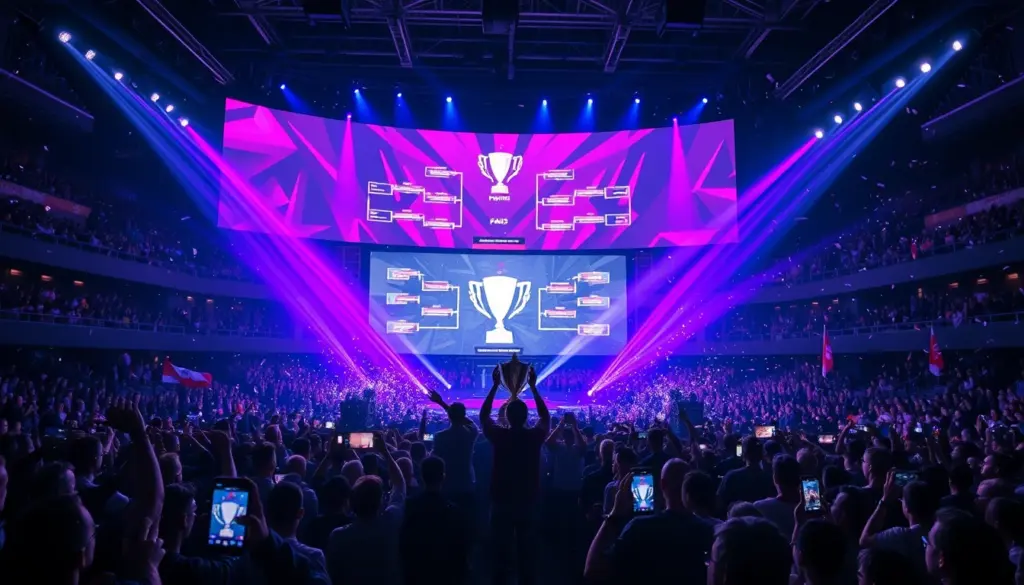
The Esports World Cup wrapped its 2026 season in Paris on August 23, and the numbers it left behind say more about where competitive gaming is headed than any single match result. Gaming collective AG.AL closed a record-breaking seven-week season by winning the Club Championship, edging two-time defending champion Team Falcons on the tournament’s final weekend. The event drew 850 million viewers across 100 broadcast and OTT partners in 47 languages, a 13% jump from the previous edition, according to The Week. It was also the first Esports World Cup held outside Saudi Arabia since the series launched in Riyadh in 2024.
None of that happened by accident. The Esports World Cup Foundation built this edition to be bigger on every axis, from a record $75 million prize pool spread across 25 tournaments and 24 games to a ticketed attendance of more than 175,000, nearly double the 2025 total. What makes the 2026 finale worth a closer look isn’t just the scale, though. It’s how close the title race actually was, and what the surrounding numbers say about where esports investment is heading next.
AG.AL Crowns Itself Club Champion in a Trackmania Photo Finish
AG.AL entered the final weekend trailing Team Falcons in the Club Championship standings, the points-based competition that determines the Esports World Cup’s overall winner across all 24 games. The gap closed in the tournament’s newest event: AG.AL’s Gwendal “Gwen” Duparc won the Esports World Cup’s first-ever Trackmania competition, worth $130,000 on its own, and the points from that win were enough to overturn Team Falcons’ lead and hand AG.AL the Club Championship with 5,300 total points, according to The Week’s report from Paris.
Team Falcons finished second with 4,600 points, followed by Team Vitality, Natus Vincere, and Team Liquid rounding out the top five. AG.AL’s title run leaned on a spread of results across very different games: a Tekken 8 championship for Khawaja “M. Zubair,” runner-up finishes in Chess, Free Fire, and the Honor of Kings World Cup, and a third-place finish in Teamfight Tactics. The club only began competing globally in 2024, making the 2026 title its first Club Championship win. AG.AL’s chief operating officer Eddy Chen described the result as a milestone for the organization, framing it as validation of a strategy built around fielding rosters across many titles rather than betting on one flagship game.
Inside the $75 Million Prize Pool
The Esports World Cup Foundation first announced the $75 million prize pool figure on January 20, 2026, according to Field Level Media, months before the tournament itself began. That total was split across 25 tournaments covering 24 different games, with individual events ranging from smaller specialty competitions like the new Trackmania event up to major team-based games with multi-million-dollar pools of their own. The League of Legends bracket alone carried a $2 million prize pool, with champion Dplus Kia collecting $600,000 and runner-up Karmine Corp taking home $340,000.
Esports world cup prize money has climbed every year since the event launched, and 2026’s $75 million total keeps that streak intact. It’s a meaningful jump from the $70 million pool in 2025, which itself included a $27 million allocation just for the Club Championship standings, according to Bitcoin.com News. Sponsorship money, not ticket sales or broadcast rights, still does most of the heavy lifting behind those numbers. Sponsorship accounts for close to 60% of overall esports industry revenue, per the most recent full breakdown cited by Bitcoin.com News, which helps explain why an event this size can keep growing its prize pool even as attendance and broadcast reach expand in parallel.
How the Club Championship Standings Actually Shook Out
The margin between first and second place looked comfortable by the time the tournament ended, but the standings shifted repeatedly over the seven-week event as different clubs picked up points in different games. Here’s how the top five finished once every event had been scored.
| Rank | Club | Club Championship Points | Notable Results |
|---|---|---|---|
| 1 | AG.AL | 5,300 | Trackmania win, Tekken 8 title, runner-up in Chess, Free Fire, Honor of Kings World Cup |
| 2 | Team Falcons | 4,600 | Two-time defending champion (2024, 2025); led standings entering final weekend |
| 3 | Team Vitality | Not disclosed in reporting | Team Vitality Fem defended its MLBB Women’s Invitational crown |
| 4 | Natus Vincere | Not disclosed in reporting | Natus Vincere PH reached the MWI grand final |
| 5 | Team Liquid | Not disclosed in reporting | Won three separate EWC titles across the 2025 season, a first for any club |
The Week’s coverage of the closing ceremony didn’t publish exact point totals for third through fifth place, only their order, which suggests the gap behind Team Falcons was wider than the gap between Falcons and AG.AL at the top. That kind of late-tournament volatility, decided by a brand-new event most clubs hadn’t specifically built rosters around, is likely to shape how organizations plan their 2027 rosters.
A Three-Year Climb: From Riyadh’s $60M Debut to Paris’s $75M Finale
The Esports World Cup launched in Riyadh in 2024 with a $60 million prize pool, 1,500 athletes, and 200 clubs from 100 countries, according to Bitcoin.com News. Team Falcons won that inaugural Club Championship with 5,665 points, ahead of Team Liquid and Team BDS, and organizers reported more than 500 million online viewers and 2.6 million visitors to the host site that year. The 2025 edition grew the pool to $70 million, with Team Falcons repeating as champion and Team Liquid making history by winning three separate competitions in a single season, a first for any organization in the event’s history.
| Edition | Host City | Prize Pool | Reported Viewers / Visitors | Club Champion |
|---|---|---|---|---|
| 2024 | Riyadh, Saudi Arabia | $60 million | 500M+ online viewers; 2.6M site visitors | Team Falcons |
| 2025 | Riyadh, Saudi Arabia | $70 million | 3M+ site visitors; LoL final peaked at 7.5M concurrent | Team Falcons |
| 2026 | Paris, France | $75 million | 850M total viewers; 175,000+ tickets sold | AG.AL |
Reading the three years side by side, the prize pool growth has actually slowed even as the audience and ticketing numbers have surged. That’s consistent with an event maturing past its early growth-at-any-cost phase and into one where organizers are optimizing for reach and legitimacy, especially with the move to a new host city, rather than chasing bigger headline prize numbers year over year.
Record Viewership, With a Caveat on the Peak Number
The headline viewership figures from Paris are genuinely large: 850 million total viewers, up 13% from 2025, spread across 100 broadcast and OTT partners in 47 languages, per The Week. But the peak concurrent viewership number depends heavily on which measurement you’re citing, and the two most-reported figures don’t match. The Week reported a peak of 4.3 million concurrent viewers during the League of Legends tournament. Bitcoin.com News, citing tracking firm Esports Charts, put the peak for that same League of Legends bracket at 1,449,163 concurrent viewers, with the semifinal between T1 and Karmine Corp alone drawing about 1,447,194.
The gap likely comes down to methodology. Esports Charts typically tracks concurrent viewers on specific platforms like Twitch and YouTube, while broader total-viewership claims often fold in simulcasts, embedded streams, and regional broadcast partners that don’t show up in platform-level tracking tools. Either figure, notably, falls short of the 7.5 million peak concurrent viewers Bitcoin.com News reported for the 2025 League of Legends grand final in Riyadh, which raises a real question about whether 2026’s format changes, more games, more tournaments, a new city, diluted attention on any single marquee final even as overall reach grew.
The Marquee Individual Finals
Beyond the Club Championship standings, several individual game finals produced their own storylines throughout the tournament.
League of Legends: Dplus Kia sweeps for its first international title since 2020
Dplus Kia beat Karmine Corp 3-0 in the League of Legends grand final, closing out a bracket that included Bilibili Gaming, T1, AG.AL, Gen.G, Hanwha Life Esports, and JD Gaming, according to Bitcoin.com News. Dplus Kia beat Bilibili Gaming in the quarterfinals and Gen.G in the semifinals before sweeping the final, with bot laner Smash named tournament MVP. It marked the team’s first international title since 2020. Karmine Corp reached the final by beating T1 in its own semifinal, while Gen.G took third place over T1.
MLBB Women’s Invitational: Team Vitality Fem defends its crown
Team Vitality Fem beat Natus Vincere PH 4-2 in the Mobile Legends: Bang Bang Women’s Invitational grand final, successfully defending the title it had won previously. Natus Vincere PH reached the final by beating Galaxy Phoenix 3-0 in the semifinals, while Team Vitality Fem advanced past Geltek Cyber Team 3-1.
Free Fire: LYON edges AG.AL and LOUD
LYON won the Free Fire competition with 155 points, narrowly ahead of AG.AL’s 122 and LOUD’s 111, according to Bitcoin.com News. AG.AL’s runner-up finish in Free Fire ended up being one of several second-place results that fed into its overall Club Championship points total.
Team Liquid’s Historic Season and the Business Behind the Games
Team Liquid’s run across the 2025 season, winning three separate Esports World Cup competitions in a single year, remains one of the more significant organizational achievements in the event’s short history, and it’s part of why the club still placed inside the top five in 2026 despite not winning the overall Club Championship. That kind of multi-title depth has become the clearest differentiator between the clubs treating the Esports World Cup as a core part of their business and those showing up for a single marquee game.
Mobile Legends: Bang Bang led all esports titles by peak viewership so far in 2026, hitting 5.68 million viewers during its M7 World Championship, a separate event from the Esports World Cup, according to Bitcoin.com News. Counter-Strike, meanwhile, generated $13.57 million in prize money across 2026 tournaments tracked so far, more than any other title this year. Both numbers underline that the Esports World Cup, for all its scale, is one large event inside a much bigger, increasingly fragmented competitive gaming economy.
Esports’ Bigger Picture: A 640-Million-Person Global Audience
The Esports World Cup’s growth mirrors a broader expansion across the esports industry. Global esports audience size reached 640.8 million people in 2025, split between 318.1 million core enthusiasts and 322.7 million occasional viewers, according to figures from Quantumrun and Newzoo cited by Bitcoin.com News. That’s up from 435.7 million in 2020, an 8.1% annual growth rate for the core enthusiast segment over five years. Asia Pacific accounts for roughly 57% of the global esports audience, with China and the Philippines posting the highest regular viewership rates of any market, driven heavily by mobile titles.
That mobile-heavy, Asia-Pacific-centered audience is a useful lens for reading the Esports World Cup’s own numbers. An event built primarily around PC and console titles, with a Riyadh-to-Paris travel path, reaches a different, more Western and PC-centric slice of that global audience than the mobile-first titles that dominate raw viewership numbers elsewhere in the industry.
Why the Move to Paris Matters for the Franchise’s Future
The relocation from Riyadh to Paris was first announced in May 2026, and the shift carries strategic weight beyond a change of scenery. The Esports World Cup remains a flagship initiative of Saudi Arabia’s National Gaming and Esports Strategy, which aims to turn the kingdom into a global esports hub by 2030. Taking the marquee event to Paris, at least for one year, gave the tournament access to European broadcast infrastructure, a different regulatory environment, and a fan base less accustomed to traveling to the Gulf for major esports events.
Organizers have already announced the next step in that global expansion: an inaugural Esports Nations Cup planned for November 2027, structured as a country-versus-country competition rather than a club championship. That format shift, from clubs to national teams, suggests the Esports World Cup Foundation is trying to build multiple, differentiated properties rather than simply scaling one annual event bigger every year.
India’s Growing Role in the Esports World Cup Story
The Paris finale doubled as a pitch to India’s gaming market, which market estimates cited by The Week put at more than 500 million gamers and growing. India’s formal, organized esports market remains in an early stage relative to that player base, with an estimated audience of around 85 million viewers in the middle of the decade. Industry studies cited in the same coverage suggest India’s organized esports revenue could more than triple by 2030, driven by sponsorship deals, media rights, and tournament production services rather than prize money alone.
That growth trajectory is part of why the Esports World Cup Foundation has explicitly invited collaboration with India’s developer and player ecosystem, and why the planned 2027 Esports Nations Cup is being framed, in part, around the hope that Indian national teams will play a significant role in one of the world’s largest gaming championships.
Competitive Landscape: How EWC Stacks Up Against Rival Tournaments
The Esports World Cup’s $75 million prize pool dwarfs any single tournament most competitive games run on their own, but it’s worth remembering that figure is spread across 25 separate tournaments rather than concentrated in one game the way a League of Legends World Championship or a Counter-Strike Major typically is. Counter-Strike’s $13.57 million in total 2026 prize money, spread across multiple standalone tournaments run by different organizers, still trails what a single well-funded title can generate outside the Esports World Cup umbrella. Mobile Legends: Bang Bang’s M7 World Championship, with its 5.68 million peak viewers, shows that mobile-first, single-game tournaments can out-draw individual Esports World Cup brackets even without the multi-game, multi-week format.
What the Esports World Cup offers that single-game tournaments can’t replicate is the club-versus-club Championship framing, which gives organizations like AG.AL and Team Falcons a reason to compete broadly across genres rather than specializing in one game. That structure is closer to an Olympic-style multi-sport event than a traditional esports tournament, and it’s likely the main reason sponsors and national gaming strategies, including Saudi Arabia’s, have found it a more attractive long-term investment than backing any single title.
Market Impact: What the Numbers Mean for Sponsors and Investors
With sponsorship accounting for close to 60% of overall esports revenue, the Esports World Cup’s growing viewership and ticketing numbers directly support the case for continued sponsor investment, even as prize pool growth slows year over year. A 13% jump in total viewership and a near-doubling of ticket sales give sponsors concrete, improving numbers to point to when renewing or expanding deals, regardless of which peak-concurrent figure gets cited in any given report.
For club organizations, the financial case is more mixed. AG.AL’s $7 million grand prize is a meaningful sum for an organization that only began competing globally in 2024, but it also reflects the reality that Club Championship prize money is now the primary financial incentive driving multi-game roster investment, more so than any single game’s individual prize pool. Organizations weighing whether to build out rosters across a dozen titles, the way AG.AL did on its way to the title, versus concentrating resources on one or two flagship games, now have three years of Esports World Cup data to model that decision against.
Five Predictions for the Esports World Cup’s Next Chapter
- Team Falcons and AG.AL will both invest more heavily in Trackmania and other newer, lower-profile events ahead of 2027, given how directly the Trackmania result decided this year’s Club Championship.
- The Esports World Cup will alternate or rotate host cities in future years rather than settling permanently in Paris, using the relocation as leverage to negotiate better terms with multiple bidding cities.
- The November 2027 Esports Nations Cup will draw significant investment from national gaming strategies beyond Saudi Arabia and India, as governments increasingly treat esports as a soft-power and tourism tool.
- Prize pool growth will continue to slow in percentage terms even as total viewership and ticketing figures keep climbing, reflecting a maturing event prioritizing reach over headline dollar figures.
- Expect closer scrutiny of viewership methodology going forward, given the gap between The Week’s 4.3 million peak figure and Esports Charts’ 1.4 million figure for the same League of Legends bracket.
Frequently Asked Questions
Who won the Esports World Cup 2026 Club Championship?
AG.AL won the 2026 Club Championship with 5,300 points, edging two-time defending champion Team Falcons, who finished second with 4,600 points, according to The Week’s coverage of the Paris closing ceremony.
How big was the Esports World Cup 2026 prize pool?
The total prize pool was $75 million, spread across 25 tournaments and 24 games, up from $70 million in 2025 and $60 million at the event’s 2024 debut in Riyadh.
How much prize money did AG.AL win?
AG.AL earned a $7 million grand prize, equivalent to roughly ₹67 crore, for winning the overall Club Championship standings.
Why did the Esports World Cup move from Riyadh to Paris?
Organizers announced the relocation to Paris Expo Porte de Versailles in May 2026. The Esports World Cup remains a flagship project of Saudi Arabia’s National Gaming and Esports Strategy, and the Paris edition gave the tournament access to European broadcast infrastructure and a new fan base while the kingdom continues building toward its 2030 esports hub goals.
Who won the League of Legends title at the Esports World Cup 2026?
Dplus Kia swept Karmine Corp 3-0 in the grand final, winning $600,000 from the $2 million League of Legends prize pool. It was Dplus Kia’s first international title since 2020.
How many people watched the Esports World Cup 2026?
The Week reported 850 million total viewers across 100 broadcast and OTT partners in 47 languages, a 13% increase over the 2025 edition. Peak concurrent viewership figures vary by source and measurement method, ranging from 1.4 million to 4.3 million depending on the tracking platform.
What is planned for the Esports World Cup in 2027?
Organizers have announced an inaugural Esports Nations Cup for November 2027, a country-versus-country format distinct from the club-based Esports World Cup, with hopes of significant participation from markets including India.