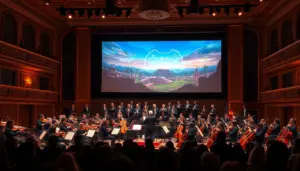
Video Games Live is coming back to Los Angeles for the first time in 12 years, and the numbers behind the two-night run tell their own story about how orchestral game-music tours actually get booked and sold. The concerts land at the San Gabriel Mission Playhouse on September 11 and 12, 2026, with tickets starting at $25 and a venue parking lot that holds just 178 cars. Those aren’t incidental details. They’re the economics of a touring franchise that has to fill regional theaters, not arenas, to survive.
The San Gabriel Valley Symphony, which is producing both shows with a full orchestra and choir, confirmed the return in its own event listing, framing it plainly: “After 12 years, Video Games Live finally returns to Los Angeles.” That gap matters. Video Games Live has performed more than 500 shows in 42 countries since it launched in 2002, according to the franchise’s own FAQ page, yet a market as large as Los Angeles went over a decade without a stop. What changed, what the tickets actually cost, and how this comeback compares to the rest of the touring game-music business is worth unpacking in detail.
Video Games Live Returns to Los Angeles After a 12-Year Gap
Video Games Live is a touring concert series that pairs live orchestral performances with synchronized video footage, lighting cues, and audience-participation segments built around music from video games. It was founded in 2002 by video game composer Tommy Tallarico and composer Jack Wall, according to Wikipedia’s entry on the series and the franchise’s own site. Wall left the project in 2010 to focus on scoring games directly, but the tour kept expanding under Tallarico, eventually reaching the 500-show, 42-country mark the company cites on its FAQ page.
Los Angeles is not a market Video Games Live has ignored by accident. The city sits at the intersection of the game industry (Riot Games, Blizzard, Activision, Sony’s PlayStation studios, and Naughty Dog all have offices in the greater LA area) and the film-scoring industry that supplies many of the arrangers and musicians the tour relies on. A 12-year absence from that market is unusual for a franchise built on repeat touring, and it puts extra weight on this specific booking succeeding. Two sold-out or near-sold-out nights at a mid-size regional playhouse would make a far stronger case for a faster return than one soft weekend.
The Venue: San Gabriel Mission Playhouse, Not a Downtown Arena
Both shows are booked at the San Gabriel Mission Playhouse, located at 320 S. Mission Dr. in San Gabriel, California, a city inside the greater Los Angeles area roughly 10 miles east of downtown. That’s a notable choice. Rather than a downtown LA arena or a Hollywood-adjacent theater, Video Games Live is playing a historic community playhouse partnered with a regional orchestra, the San Gabriel Valley Symphony. It’s a pattern the franchise has used in other mid-size markets: partner with a local symphony that already has box-office relationships and a subscriber base, rather than renting a large commercial hall and building an audience from zero.
The tradeoff is capacity. A community playhouse simply can’t hold as many seats as an arena, which caps the maximum revenue per night regardless of demand. It also means logistics like parking become a real constraint rather than an afterthought, something the event’s own venue information makes clear.
Ticket Prices Start at $25, and a VIP Night Adds a Reception
According to one official event listing, tickets for the September shows start at $25, though that figure reflects the entry-level price tier on that specific listing and may not match every ticket reseller’s pricing. There’s also a separate VIP add-on: “VGL VIP – Los Angeles, CA” is scheduled for September 12 at 6:00 PM, ahead of that evening’s main performance, at the same San Gabriel Mission Playhouse venue.
VIP upgrades are common across the touring orchestral game-music circuit. They typically bundle early entry, a meet-and-greet or reception, and sometimes signed merchandise, letting the promoter capture more revenue from the segment of the audience willing to pay above the base ticket price without raising the price floor for everyone else. For a franchise operating in mid-size venues with a hard capacity ceiling, that per-seat yield matters more than it would for an arena tour that can simply add another date.
Event Details at a Glance
| Detail | Information |
|---|---|
| Event | Video Games Live |
| Venue | San Gabriel Mission Playhouse, 320 S. Mission Dr., San Gabriel, CA 91776 |
| Performing orchestra | San Gabriel Valley Symphony |
| Show 1 | September 11, 2026, 8:00 PM |
| Show 2 | September 12, 2026, 8:00 PM |
| VIP event | September 12, 2026, 6:00 PM (same venue) |
| Guest conductor | Esin Aydingoz |
| Starting ticket price | $25 (per one official listing) |
| Adjacent parking | 178 spaces, $15 during performances |
| Free parking alternative | Park & Ride lot, 257 S. Mission Dr., plus nearby streets |
| Recommended arrival | At least 60 minutes before showtime |
What’s on the Program: Halo, Final Fantasy, and Three World Premieres
The San Gabriel Valley Symphony’s own listing for the September 12 festival concert names a setlist built around Halo, Final Fantasy, Tetris, Warcraft, Skyrim, Kingdom Hearts, The Last of Us, and Undertale. Three selections are billed as Video Games Live world premieres: music from Minecraft, a Studio Ghibli segment, and music from Expedition 33, the breakout role-playing game from Sandfall Interactive that became one of 2025’s most acclaimed releases.
Adding a world-premiere arrangement is a recurring hook for Video Games Live, since it gives longtime fans a reason to attend even if they’ve seen the tour’s core repertoire before. Slotting in Expedition 33, a 2025 release, alongside catalog staples like Tetris and Skyrim also signals that the franchise is actively refreshing its setlist rather than running the same program city to city.
A Second, Slightly Different Setlist Is Also Circulating
Not every promotional listing agrees on the exact program. A separate fan and event-listing source names an overlapping but distinct set: Halo, Warcraft, Skyrim, Kingdom Hearts, The Last of Us, and Undertale all appear again, but that listing also includes Metal Gear Solid, Shadow of the Colossus, and Okami, none of which show up in the symphony’s own program description.
Discrepancies like this aren’t unusual for touring concerts, where an early promotional setlist can differ from what a specific presenting partner ultimately confirms, or where a printed program varies slightly night to night. Ticket holders who want the confirmed program should treat the San Gabriel Valley Symphony’s own event page as the more current source, since it’s the presenting organization’s direct listing rather than a secondary promotional site.
San Gabriel Valley Symphony and Guest Conductor Esin Aydingoz
The San Gabriel Valley Symphony is handling both nights with a full orchestra and choir, under guest conductor Esin Aydingoz. Partnering with an established regional orchestra rather than assembling a touring pickup ensemble is standard practice for Video Games Live in markets outside its core production hubs; it lets the franchise plug its video, lighting, and interactive-audience elements into a group that already rehearses and performs together regularly, cutting the coordination risk that comes with a one-off ensemble.
For the San Gabriel Valley Symphony, hosting a Video Games Live date is also a way to reach an audience that doesn’t typically buy tickets to a standard classical subscription series, a strategy that regional orchestras across the country have leaned on more heavily as traditional subscription sales have softened industry-wide.
Parking Math: 178 Spots, a $15 Fee, and a Free Backup Lot
The venue’s own parking guidance is specific enough to double as a warning: the lot adjacent to the Playhouse holds 178 spaces, and parking there during performances costs $15. For two shows with a combined capacity well above 178 seats each, that lot will not cover every attendee driving in, which is presumably why the venue also points to a free Park & Ride lot at 257 S. Mission Dr. and additional free parking on nearby streets.
The venue recommends arriving at least 60 minutes before the show, which is a reasonable buffer given the parking math. Attendees banking on the $15 adjacent lot who arrive closer to showtime risk getting rerouted to the free lot several blocks away, adding walking time they may not have budgeted for.
A Brief History of Video Games Live, From 2002 to 500-Plus Shows
Video Games Live launched in 2002 under Tallarico and Wall’s Mystical Stone Entertainment, at a time when the idea of a full orchestra playing video game soundtracks in a concert hall was still a novelty rather than an established touring category. Over the following two decades the format proved durable enough that Video Games Live now cites more than 500 performances across 42 countries on five continents, and the company’s FAQ notes one 2016 show in Beijing that drew an audience of over 752,000 people, reflecting the scale some international dates have reached with broadcast and outdoor-viewing components factored in.
That history is part of why a 12-year gap in a market the size of Los Angeles stands out. A franchise built on constant touring generally returns to major metro areas on a rolling basis, filling gaps in its calendar with markets it hasn’t visited recently. Twelve years without a Los Angeles date suggests either a scheduling gap that simply never got prioritized, or a venue and promoter relationship that took years to line up, since the San Gabriel Valley Symphony partnership is what ultimately brought the tour back rather than a return to a previous LA venue.
How Video Games Live Compares to Rival Orchestral Game-Music Tours
Video Games Live isn’t the only touring orchestral franchise built around game soundtracks, and the competitive landscape shapes how it prices and books shows like the San Gabriel dates. Distant Worlds: Music from Final Fantasy, co-founded by composer Nobuo Uematsu and conductor Arnie Roth in 2007, sticks to a single franchise and has sold premium seats well above $200 at some U.S. venues, including tiered pricing at St. Louis’s Fabulous Fox Theatre that ran from roughly $48 for rear seating up to over $300 for front orchestra seats with fees included. Symphonic Fantasies: Music from Square Enix, which premiered in Cologne in 2009 under the long-running Symphonic Game Music Concerts umbrella that started in Leipzig in 2003, takes a similar single-publisher approach built around Square Enix titles. Japan’s Press Start – Symphony of Games, running since 2006, covers multiple publishers and hardware platforms rather than one franchise.
Video Games Live’s differentiator is breadth: it draws from dozens of franchises across publishers in a single show, plus original visual and interactive elements layered on top of the music, rather than presenting a single company’s catalog. That breadth is likely part of why its entry-level pricing, at $25 for the San Gabriel dates, sits well below the premium tiers Distant Worlds commands at larger venues for single-franchise superfans.
Touring Franchise Comparison
| Franchise | Founded | Format | Typical ticket range |
|---|---|---|---|
| Video Games Live | 2002 | Multi-publisher, multi-game | From $25 (San Gabriel dates); company FAQ cites shows as low as $1-$20 up to $80 historically |
| Distant Worlds: Music from Final Fantasy | 2007 | Single-franchise (Final Fantasy) | Roughly $48-$300+ depending on seat tier (example: Fabulous Fox Theatre, St. Louis) |
| Symphonic Fantasies: Music from Square Enix | 2009 | Single-publisher, multi-game | Comparable to standard European philharmonic pricing (estimate, not independently confirmed for this article) |
| Symphonic Game Music Concerts | 2003 | Multi-game umbrella series | Comparable to standard European philharmonic pricing (estimate, not independently confirmed for this article) |
| Press Start – Symphony of Games | 2006 | Multi-publisher, cross-platform | Estimate based on typical Japanese concert-hall pricing, not independently confirmed for this article |
The Business Case for Putting Game Music on a Symphony Stage
Regional orchestras have faced a well-documented squeeze in subscription-based ticket sales over the past decade, and pairing with a franchise like Video Games Live is one of the more reliable ways to bring in a younger, non-subscriber audience for at least one or two nights a season. The video game industry itself has grown into an entertainment category larger than film and music combined by global revenue in recent years, which means the potential audience for orchestral game-music crossover events is enormous even if only a small fraction of gamers ever buy a ticket.
For Video Games Live specifically, partnering with an existing regional symphony rather than touring with its own dedicated orchestra reduces fixed costs and lets the franchise scale into markets like San Gabriel that wouldn’t support a full arena production. It’s a lower-risk, lower-ceiling model that trades maximum single-night revenue for the ability to keep touring in more cities without a resident orchestra payroll.
What This Comeback Means for San Gabriel’s Local Economy
Two sold-out nights at the San Gabriel Mission Playhouse would bring a meaningful, if temporary, bump to the surrounding business district. The venue’s own parking guidance, directing overflow traffic to a Park & Ride lot several blocks away, suggests organizers are already planning for attendance that exceeds the adjacent lot’s 178-space capacity, a reasonable expectation for a franchise’s first Los Angeles-area date in over a decade.
For a city the size of San Gabriel, hosting a nationally recognized touring act, even one playing a mid-size community venue rather than an arena, is a notable booking. It also gives the city’s tourism and small-business promotion efforts a concrete, dated event to point to, something that recurs more often in larger entertainment hubs like downtown LA or Hollywood than in smaller surrounding communities.
Market Impact: Regional Orchestras Are Betting on Gamers
The San Gabriel booking fits a broader pattern of regional and community orchestras looking to game-music crossover concerts as a growth lever rather than a novelty. Video Games Live’s own touring history, more than 500 shows across 42 countries since 2002, shows the format has moved well past its early-2000s status as an experiment. When a single 2016 Beijing show can draw an audience north of 752,000, according to the company’s FAQ, it’s clear the ceiling for this kind of event scales far beyond what a typical classical program can reach.
That doesn’t mean every date performs at that scale, and the San Gabriel shows are explicitly a community-playhouse booking rather than a stadium event. But it does explain why more regional symphonies, not just major metropolitan orchestras, are willing to hand a night of their season over to a licensed game-music program instead of a standard classical bill.
What Comes Next: Five Predictions for Video Games Live and the Genre
Based on the franchise’s touring pattern and the broader trajectory of orchestral game-music concerts, a few things look likely over the next year or two.
- Video Games Live will likely announce additional 2026 and 2027 U.S. dates through its official site, which already states that “new shows around the world” are being added monthly.
- Expect more world-premiere segments tied to recent releases, following the pattern set by adding Expedition 33 alongside older catalog staples like Tetris and Skyrim.
- Regional symphony partnerships, rather than dedicated touring orchestras, will likely remain the franchise’s primary model for expanding into mid-size markets it hasn’t visited recently.
- Competing single-franchise tours like Distant Worlds will likely continue to command premium pricing at larger venues, while multi-game shows like Video Games Live anchor the lower end of the ticket-price spectrum to maximize turnout.
- If the San Gabriel dates perform well, Los Angeles is unlikely to wait another 12 years for a return date, given how large and game-industry-adjacent the market is compared to most cities on the tour’s circuit.
Frequently Asked Questions
When is Video Games Live playing in Los Angeles in 2026?
Two shows are scheduled at the San Gabriel Mission Playhouse: September 11, 2026, at 8:00 PM and September 12, 2026, at 8:00 PM.
Where exactly is the venue?
The San Gabriel Mission Playhouse is located at 320 S. Mission Dr., San Gabriel, CA 91776, in the greater Los Angeles area.
How much do tickets cost?
One official event listing shows tickets starting at $25. Pricing can vary by seat tier and reseller, so checking the presenting organization’s own listing before purchasing is the safest way to confirm current prices.
Is there a VIP option?
Yes. A separate VIP event, “VGL VIP – Los Angeles, CA,” is scheduled for September 12, 2026, at 6:00 PM at the same venue, ahead of that night’s main performance.
Who is performing the music?
The San Gabriel Valley Symphony, a full orchestra and choir, is performing both nights under guest conductor Esin Aydingoz.
What games are featured in the setlist?
The San Gabriel Valley Symphony’s listing for the September 12 show names Halo, Final Fantasy, Tetris, Warcraft, Skyrim, Kingdom Hearts, The Last of Us, and Undertale, plus world premieres of Minecraft, Studio Ghibli, and Expedition 33 selections. A separate promotional listing includes some different titles, including Metal Gear Solid, Shadow of the Colossus, and Okami, so the exact program may vary from what’s listed here.
Where should I park?
An adjacent lot next to the Playhouse has 178 spaces and costs $15 during performances. A free Park & Ride lot is available at 257 S. Mission Dr., along with free parking on nearby streets. Arriving at least 60 minutes before showtime is recommended.
Why hasn’t Video Games Live played Los Angeles in over a decade?
The San Gabriel Valley Symphony’s own announcement confirms the 12-year gap but does not detail the specific reason for it. It’s consistent with the franchise’s broader touring model, which relies on lining up regional orchestra partners and venues city by city rather than maintaining a fixed annual return schedule in every major market.