
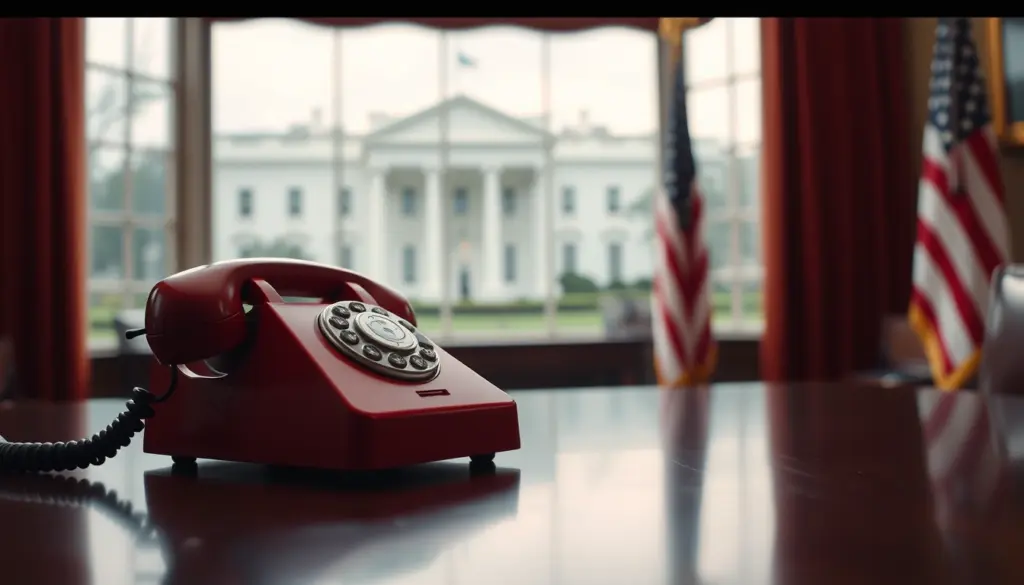
A single phone call is now the center of a fight over how the United States will police artificial intelligence. On September 3, 2026, Politico reported that Meta CEO Mark Zuckerberg privately told President Donald Trump that a proposed national AI regulator was a flawed idea, an intervention that landed in the middle of a White House debate over how much oversight the fastest-growing technology sector should face. The call, which Politico said happened the week of August 17, 2026, has since triggered pushback from Capitol Hill and reopened questions about how much sway a handful of tech executives hold over federal AI policy.
What Happened on the Zuckerberg-Trump Call
According to Politico’s exclusive report, Zuckerberg used the call to push back on a White House proposal for an independent body that would test and approve frontier AI models before they reach the public. A White House official told the outlet that Zuckerberg described the plan as flawed and warned it could open the door to regulatory capture, where a newly formed agency ends up shaped by the very companies it is supposed to police. A second source, cited by AI Weekly, disputed that Zuckerberg went so far as to ask Trump to abandon the idea outright, pointing instead to a more general expression of concern about the shape any new agency might take.
The dispute between those two accounts matters. If Zuckerberg simply raised concerns, the story is about a CEO doing what CEOs do when a new regulator is on the table. If he asked Trump directly to kill the plan, it becomes a much sharper story about private access shaping public policy in real time. Politico’s own reporting leaves both readings on the table, and the White House has not issued a detailed on-the-record account of what was said.
Inside the FINRA-Style AI Regulator Proposal
The regulator Zuckerberg pushed back on would be modeled on the Financial Industry Regulatory Authority, the self-regulatory body that oversees US brokerage firms. Applied to artificial intelligence, a FINRA-style agency would test frontier models against safety benchmarks before major releases, something no US federal body currently does on a mandatory basis. Model testing today happens largely through voluntary commitments AI labs made to the Biden and early Trump administrations, plus internal red-teaming that companies run and disclose at their own discretion.
Where the Idea Came From
Journalist Leo Schwartz reported on X that Google DeepMind CEO Demis Hassabis briefed White House officials earlier in the summer of 2026 on his own version of a FINRA-style regulator, and that senior officials previewed the concept with Trump before Zuckerberg’s call. That detail suggests the regulator idea already had support inside the administration and among at least one major AI lab before Meta’s pushback, which frames Zuckerberg’s call less as a lone objection and more as a counterweight to arguments Hassabis had already made.
Timeline: From the March Tech Council to the September Report
This story did not start with the phone call. On March 25, 2026, the Trump administration announced a revamped President’s Council of Advisors on Science and Technology, and Politico reported that Zuckerberg, Jensen Huang, Larry Ellison, and Marc Andreessen were among the industry figures given seats. Bloomberg described the same appointments the same week, framing the council as a forum built to give the administration direct input from the executives running the largest AI labs and chipmakers. Five months later, one of those same council members used his personal access to the president to argue against a specific regulatory structure under consideration inside that same White House.
The gap between March and September also shows how fast the underlying debate moved. In March, the story was about which executives got a seat at the table. By September, the story is about what one of them did once he had a direct line to the Oval Office.
Why Zuckerberg Opposes a National AI Regulator
Meta’s public position on AI policy has consistently favored fewer mandatory checkpoints and more room to ship. A dedicated federal AI testing body, even a FINRA-style one built around industry participation, would add a formal approval step that does not exist today. The White House official quoted by Politico said Zuckerberg’s central argument was about competitiveness: a US regulator with real enforcement teeth could slow domestic labs relative to competitors operating under lighter rules elsewhere, particularly in jurisdictions racing to ship frontier models without an equivalent review layer.
That argument sits alongside a separate concern about regulatory capture. Once a regulator exists, the companies large enough to staff compliance teams and shape technical standards tend to have more influence over how that regulator operates than smaller competitors do. Meta, along with Google, Microsoft, and OpenAI, would be well positioned to manage a compliance relationship with a new agency. Startups and open-source projects would not have the same resources, which cuts against the idea that a regulator with major-lab input automatically favors incumbents.
The White House’s Internal Split
Politico’s reporting points to real disagreement inside the administration over how to read the call, not just over what to do about AI regulation. One official framed Zuckerberg’s comments as a direct objection to the FINRA model. A second pushed back on that characterization. That kind of split, two sources inside the same White House giving different accounts of the same conversation, usually signals that the underlying policy fight is still unresolved rather than heading toward a quick decision.
Politico separately reported that the Treasury Department has been involved in promoting the national regulator concept, which adds another institutional player with its own interest in how AI oversight gets structured. A proposal with Treasury backing and a Hassabis-originated technical framework was already moving before Zuckerberg’s call. Whether it survives in its current form now depends on how much weight the White House gives industry pushback against a plan its own agencies helped shape. By mid-September 2026, that pushback appeared to win out: the Wall Street Journal reported, in coverage picked up by Forbes and TheStreet, that Trump had decided against the industry-funded regulator after Zuckerberg, Elon Musk, and Nvidia CEO Jensen Huang each spoke with him separately.
David Sacks and the Industry-Led Alternative
The alternative to a FINRA-style agency circulating inside the administration is associated with David Sacks, the venture capitalist who has taken on an AI and crypto policy role in the Trump White House. Sacks’ approach looks closer to the Motion Picture Association model, where an industry-run body sets standards and ratings without a standalone federal regulator holding enforcement power over the sector. That structure would leave far more of the actual oversight work to the companies building the models, with government involvement limited to a lighter coordinating role.
Zuckerberg’s objection to the FINRA plan lines up closely with the model Sacks has floated, even though Politico’s reporting does not establish that the two coordinated directly. The practical effect is the same either way: the loudest voices inside the process right now are arguing for a framework AI companies would design and run largely on their own terms.
Congress Reacts: Lori Trahan Raises Alarms
Politico reported on September 4, 2026 that Rep. Lori Trahan, a Democrat active on AI policy, responded to the story with clear discomfort about a tech CEO privately lobbying the president against an independent oversight body. Trahan has been one of the more consistent voices in the House pushing for federal AI guardrails, and her reaction signals that this story will likely surface in upcoming hearings or oversight letters rather than fade quietly. A single Democratic lawmaker’s objection will not change White House policy on its own, but it does mean the call is now part of the public record Congress can reference when it debates AI legislation later this year. Separate coverage from CryptoRank framed the episode as one side of a wider fight, noting that Sen. Bernie Sanders has pushed for far stricter limits on advanced AI development, putting Zuckerberg’s industry-friendly position at the opposite end of the spectrum from Congress’s most vocal AI skeptic.
Meta’s Broader AI Policy Playbook
This is not the first time Meta has worked to shape the regulatory environment around its AI ambitions from the inside. The company built its case for keeping Llama models open-weight around the argument that openness accelerates US competitiveness against closed labs abroad, a framing that fits the same competitiveness logic Zuckerberg reportedly used with Trump. Positioning any new rule as a threat to America’s lead over foreign AI labs has become the most reliable argument industry lobbyists use in Washington, regardless of which company is making it.
Precedents for Direct Executive Access
Direct phone access between a sitting president and a tech CEO on a live regulatory question is not new. What is different here is the speed of disclosure. Politico’s report came out within weeks of the call itself, rather than emerging months or years later through a memoir, a leaked memo, or a congressional subpoena. That fast turnaround reflects how closely reporters are now tracking AI policy specifically, given how much is riding on which regulatory model the US settles on before other governments finalize their own frameworks.
How the US Approach Compares to the EU and UK
The debate over a FINRA-style US regulator is happening against a backdrop where other major jurisdictions have already picked a model. The European Union’s AI Act created a binding, tiered risk framework with real fines attached, enforced by national authorities and the newly formed EU AI Office. The UK went the other direction, relying on existing sector regulators plus a voluntary testing partnership with major labs through its AI Security Institute, rather than standing up a single dedicated AI regulator. The US proposal Zuckerberg pushed back on sits between those two: more centralized than the UK’s approach, but built around industry participation in a way the EU’s binding rules are not.
That positioning is exactly why the outcome of this internal fight matters beyond Washington. If the US lands on an industry-led framework instead of a FINRA-style regulator, it widens the gap between the American approach and the EU’s binding rules, making compliance strategy a bigger variable for any AI company operating across both markets.
Market Impact: What AI Labs and Investors Are Watching
For AI labs, the regulatory model that wins out changes the cost of doing business in very different ways. A mandatory testing regime adds compliance overhead and potential release delays, which larger labs can absorb more easily than smaller ones. An industry-led framework keeps costs lower across the board but leaves open questions about how much real independent scrutiny frontier models will get before release. Investors watching this fight are less interested in the political theater of who called whom and more focused on which model determines how fast the next generation of frontier models can ship, and at what compliance cost.
Meta, OpenAI, Google DeepMind, Anthropic, and xAI all have a direct stake in the outcome, since each has frontier models in active development that would fall under whatever testing regime eventually takes shape. A lighter, industry-run framework benefits every one of them relative to a regulator with independent enforcement power, which is part of why the competitiveness argument Zuckerberg reportedly made resonates well beyond Meta.
The White House AI Policy Panel: Who Holds Influence
| Name | Company / Role | Confirmed Position | Relevance to AI Regulator Debate |
|---|---|---|---|
| Mark Zuckerberg | Meta CEO | PCAST panel member | Told Trump the FINRA-style national AI regulator plan was flawed, per Politico |
| David Sacks | Venture capitalist, White House AI policy role | Associated with industry-led regulation proposal | Backs an MPA-style, industry-run alternative to a federal regulator |
| Jensen Huang | Nvidia CEO | PCAST panel member | Represents the chip supply side of the AI buildout the regulator would oversee |
| Larry Ellison | Oracle executive chairman | PCAST panel member | Oracle’s cloud AI infrastructure business is directly affected by compliance costs |
| Marc Andreessen | Andreessen Horowitz co-founder | PCAST panel member | Has publicly favored lighter-touch AI regulation across his portfolio companies |
The panel above reflects publicly confirmed appointments to the President’s Council of Advisors on Science and Technology, reported by Politico and Bloomberg in March 2026, alongside each figure’s confirmed connection to the current regulator debate. Gizmodo’s coverage of the original council announcement noted that Elon Musk was not included on the official list, despite his frequent public commentary on AI safety and regulation.
Two Paths for US AI Regulation, Side by Side
| Feature | National AI Regulator (FINRA-style) | Industry-Led Framework (Sacks model) |
|---|---|---|
| Structural precedent | Financial Industry Regulatory Authority | Motion Picture Association |
| Enforcement power | Independent agency with binding authority over model releases | Industry-set standards, no standalone federal enforcement body |
| Key institutional backer | Reportedly promoted with Treasury Department involvement, per Politico | Associated with David Sacks’ White House AI policy role |
| Zuckerberg’s reported position | Opposed, called it flawed in call with Trump | Not explicitly confirmed as supportive, but aligned in substance |
| Origin of the concept | Briefed to the White House by Demis Hassabis, per reporting on X | Tied to Sacks’ broader AI and crypto advisory role |
| Status as of September 4, 2026 | Under active White House consideration, no final decision reported | Circulating as the industry-favored alternative |
Historical Context: Big Tech’s Long Reach Into Washington
Tech companies lobbying the White House directly is not new, but the speed and stakes of the AI fight are unusual. During the net neutrality debates of the 2010s, telecom and internet companies spent years working through formal FCC comment periods before rules took effect. The AI regulator question is moving in months, not years, largely because model capability is advancing fast enough that any regulatory framework risks being outdated before it is finalized. That compressed timeline is part of why a single phone call can carry this much weight: there is no multi-year comment period standing between a CEO’s opinion and a policy decision.
The closest recent parallel is the voluntary AI safety commitments major labs signed with the Biden administration in 2023, which relied entirely on company self-reporting rather than independent testing. Whether the current administration moves toward the FINRA model, the industry-led model, or some hybrid will determine whether the US ever moves past that voluntary framework at all.
What Comes Next: Five Things to Watch
- A formal White House decision on the regulator’s structure is likely before the end of 2026, given how far along both the FINRA-style and industry-led proposals already are.
- Expect congressional Democrats, following Trahan’s lead, to request briefings or documents related to the Zuckerberg call, adding a paper trail to what is currently a sourced-but-informal account.
- Other PCAST members, including Huang, Ellison, and Andreessen, are likely to face questions about whether they made similar direct appeals to the White House on AI oversight.
- Watch for Meta, OpenAI, and Google DeepMind to issue public statements on AI regulation timed around any formal White House announcement, since each has a direct stake in which model wins.
- If the industry-led framework advances, expect the EU to point to the gap between its binding AI Act and a lighter US approach as a competitive divergence worth monitoring for cross-border compliance.
Why This Story Matters Beyond One Phone Call
The specifics of one call are, on their own, a footnote. What makes this story bigger is what it reveals about how AI policy is actually getting made in 2026: through a small number of direct conversations between the executives building frontier models and the small circle of officials deciding how to regulate them. Congress has not passed broad federal AI legislation, which leaves the executive branch, and by extension whoever has the president’s ear, as the primary venue where these decisions get shaped. Zuckerberg’s call is a visible example of a dynamic that likely happens far more often without ever surfacing in reporting.
Frequently Asked Questions
What did Mark Zuckerberg tell Trump about AI regulation?
According to Politico, Zuckerberg told Trump during a private call that a proposed national AI regulator, modeled on FINRA, was a flawed idea and could expose the US to regulatory capture and reduced competitiveness against foreign AI labs.
When did the Zuckerberg-Trump call take place?
Politico reported the call happened the week of August 17, 2026, and was previously unreported before the outlet’s September 3, 2026 story.
What is a FINRA-style AI regulator?
It refers to an independent body modeled on the Financial Industry Regulatory Authority that would test and review frontier AI models against safety standards, similar to how FINRA oversees US brokerage firms.
Who is on the White House’s AI advisory panel?
The President’s Council of Advisors on Science and Technology, announced in March 2026, includes Mark Zuckerberg, Jensen Huang, Larry Ellison, and Marc Andreessen among its industry members, according to Politico and Bloomberg.
What is David Sacks’ role in AI policy?
David Sacks holds an AI and crypto policy advisory role in the Trump White House and is associated with an industry-led alternative to a federal AI regulator, modeled loosely on the Motion Picture Association.
How did Congress react to the report?
Rep. Lori Trahan raised concerns about the call, according to Politico’s September 4, 2026 report, signaling likely congressional interest in how private industry input is shaping AI oversight decisions.
Has the White House decided on an AI regulator yet?
As of September 4, 2026, Politico’s reporting indicated the administration was still weighing the FINRA-style regulator against an industry-led framework, with no final decision announced. By mid-September 2026, the Wall Street Journal reported that Trump had decided against the industry-funded regulator after separate calls from Zuckerberg, Musk, and Jensen Huang, though no formal White House decision document had been released at that point.
Why does this matter for AI companies beyond Meta?
Whichever model the White House chooses will set compliance costs and release timelines for every major US AI lab, including OpenAI, Google DeepMind, Anthropic, and xAI, making the outcome of this internal debate relevant well beyond Meta’s own interests.