
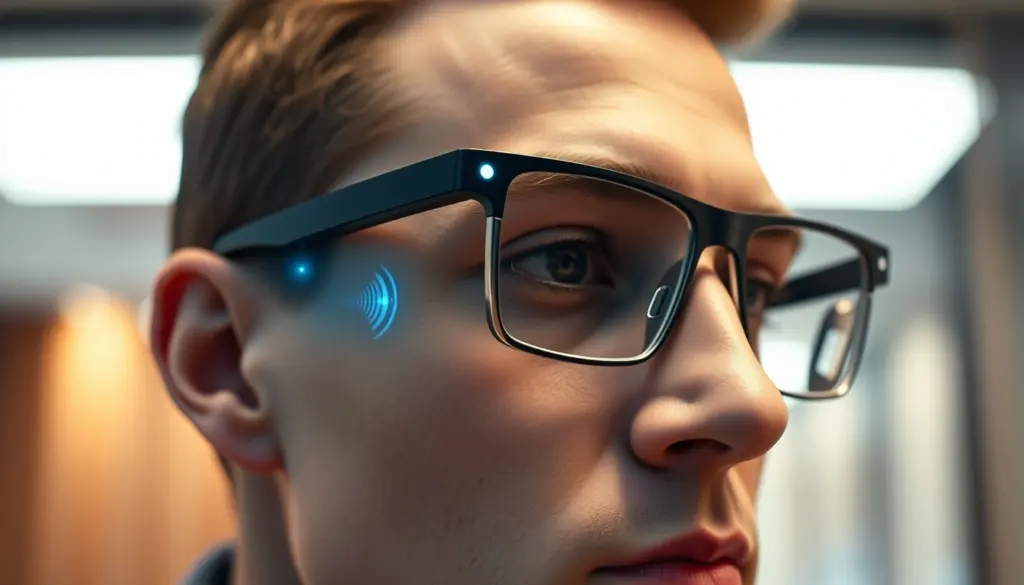
Meta Superintelligence Labs shipped its first real-time audio model on September 1, 2026, and the timing is not an accident. Muse Voice Transcribe lands just as Meta pushes deeper into always-on wearables, and the model’s headline trick, a decision made every 80 milliseconds about whether to keep listening or start writing, is built for exactly that use case. It runs on glasses, phones, and desktops without waiting for a sentence to finish before it starts typing.
According to Meta’s own research blog, Muse Voice Transcribe is “the first real-time audio perception model developed by Meta Superintelligence Labs,” combining streaming transcription, speaker diarization for more than 20 people, and endpoint detection into a single pass. Outlets including Slator, Gigazine, and The Indian Express confirmed the launch this week, and the model already ranks first on the Artificial Analysis streaming speech-to-text leaderboard as of September 1, 2026.
What Meta Actually Shipped on September 1
Muse Voice Transcribe is not a chatbot and it is not a general-purpose language model. It is a narrow, fast audio model whose only job is turning sound into structured, speaker-tagged text as the sound happens. That distinction matters because most consumer speech-to-text tools today, including Meta’s own past dictation features, wait for a pause before committing to a transcript. Muse Voice Transcribe instead evaluates its audio buffer roughly every 80 milliseconds and decides, in that instant, whether to extend the listening window or emit text. Slator’s September 8 report frames the release as the “first milestone” in a broader plan to move real-time voice models out of research and into shipping products.
Three functions that used to require separate systems are now handled by one model: streaming automatic speech recognition, speaker diarization across 20-plus participants, and endpointing, the technical term for detecting when someone has actually stopped talking rather than just paused. Layer3Labs, in a technical explainer published the same week, notes this consolidation is the real engineering story, since running three models in sequence adds latency at every handoff. Collapsing them into one autoregressive pass is what gets the reported final-transcript latency down to roughly 0.16 seconds after a speaker stops.
The 80-Millisecond Loop, Explained
The number generating the most attention this week is the 80ms inference cycle. Every 80 milliseconds, the model re-evaluates its current audio window and chooses one of two paths: keep buffering because the speaker is probably still mid-sentence, or commit to output because a natural break point has arrived. A technical breakdown published on Note.com on September 3 describes this as a “listen more or output text” decision loop trained with reinforcement learning to balance speed against accuracy.
That tradeoff is exactly what matters for glasses-based use cases. A pair of smart glasses cannot afford to show a transcript that lags three or four seconds behind conversation, because the entire value proposition of an always-on assistant is that it reacts while the conversation is still happening. At the same time, committing to text too early risks garbling words that get clarified a beat later. The 80ms cadence is Meta’s answer to that balance, and it is fast enough that Meta reports the model now powers dictation inside Meta AI for Mac and voice input in Muse Code, its coding assistant, as of launch day.
Why AI Glasses Are the Real Target
Meta has spent 2026 rolling out its Muse Spark multimodal model to Ray-Ban Meta and Oakley Meta glasses, a rollout SiliconANGLE covered when the first Muse Spark-powered glasses shipped in June. Muse Voice Transcribe fits into that same family as the audio perception layer, and coverage from UploadVR and Slator both frame it as the missing piece for glasses that need to transcribe, caption, and respond to speech without a phone doing the heavy lifting in between.
Always-on audio capture on a wearable device raises an obvious question that early coverage has mostly glossed over: what happens to the audio after it is transcribed. Meta’s announcement includes a zero-data-retention tier on the Meta Model API, aimed at developers building products that cannot store raw audio for compliance reasons. That tier matters more for glasses than for a desktop dictation app, since a device that is listening continuously in public spaces creates a much larger dataset of other people’s speech, captured without their direct consent, than a tool a user deliberately turns on to dictate a document.
Benchmark Standing and What “First Place” Means
Meta reports a 3.1% word error rate on the Artificial Analysis streaming speech-to-text benchmark, a leaderboard that also tracks models from Cartesia, ElevenLabs, OpenAI, and Google. As of September 1, 2026, Muse Voice Transcribe ranks first on that streaming leaderboard, according to Meta’s research blog and corroborated by Gigazine’s September 2 coverage. Streaming benchmarks measure something different from batch transcription accuracy: they penalize a model for correcting itself mid-stream, so a low word error rate on a streaming leaderboard is a harder number to hit than the same score on a model that gets to process a full recording before answering.
It’s worth being precise about what “SOTA” claims mean here. Meta’s own framing, amplified by Mark Zuckerberg’s post announcing the rollout, describes the model as state-of-the-art in streaming speech-to-text with diarization and endpointing handled natively in a single model. That is a claim about a specific benchmark category, not a claim that Muse Voice Transcribe beats every transcription model on every metric. Batch transcription tools built for post-hoc accuracy on recorded meetings, rather than live streaming, are a different competitive category entirely, and Meta has not claimed to beat them.
| Metric | Muse Voice Transcribe | Detail |
|---|---|---|
| Launch date | September 1, 2026 | Announced via Meta’s research blog and Mark Zuckerberg’s public post |
| Word error rate (streaming) | 3.1% | Artificial Analysis streaming speech-to-text benchmark, ranked first |
| Decision cadence | Every 80ms | Model re-evaluates whether to keep listening or emit text |
| Final transcript latency | ~0.16 seconds | Measured after the speaker stops talking |
| Speaker diarization capacity | 20+ speakers | Real-time speaker separation and labeling |
| Languages trained | 70+ trained, 25 validated at launch | Includes Hindi, Tamil, Telugu, Malayalam, and Kannada per The Indian Express |
| API pricing | $3 per 1,000 audio minutes | Equivalent to roughly $0.18 per hour of processed audio |
| Access channels | Meta Model API, Meta AI for Mac, Muse Code | Live audio and prerecorded audio supported |
Pricing and Developer Access
Muse Voice Transcribe is available through the Meta Model API under the identifier muse-voice-transcribe-1.0, priced at $3.00 per 1,000 audio minutes, which multiple outlets, including AIbase and Layer3Labs, convert to roughly $0.18 per hour of processed audio. That pricing covers both live streaming audio and prerecorded files submitted after the fact, so a developer building a meeting-notes tool and a developer building a live captioning feature use the same billing model.
One detail developers evaluating a migration will care about: Layer3Labs’ technical writeup notes the API is compatible with existing OpenAI SDK-style clients, which lowers the switching cost for teams already wired into an OpenAI-shaped integration. That is a meaningful decision on Meta’s part. Rather than forcing a bespoke SDK, Meta is betting that familiarity lowers the barrier to adoption faster than a novel interface would, even one built specifically around streaming audio.
Competitive Landscape: Where Muse Voice Transcribe Sits
The streaming speech-to-text field was already crowded before Meta entered it. Cartesia and ElevenLabs built dedicated businesses around low-latency voice models, OpenAI has shipped real-time audio capabilities inside its own API stack, and Google has folded streaming transcription into its Gemini-branded tools. What differentiates Meta’s entry is not that it is first to streaming ASR, it is the specific combination of diarization scale, native endpointing, and a pricing model aimed at high-volume developer use rather than premium enterprise contracts.
Meta also has a distribution advantage none of those competitors can match in the short term: hundreds of millions of Ray-Ban Meta and Oakley Meta glasses and headsets already running Meta Spark-family models, plus a desktop app and a coding assistant that can absorb the new model on day one. A standalone speech API vendor has to win developers one integration at a time. Meta can push Muse Voice Transcribe into products it already controls, which is precisely what happened with Meta AI for Mac and Muse Code at launch.
Historical Context: From Wav2Vec to Wearables
Meta’s audio research did not start this month. The company’s AI research arm has published speech models for years, including earlier self-supervised audio work that predates the Superintelligence Labs branding. What changed in 2026 is organizational: Meta Superintelligence Labs, the unit formed to consolidate the company’s frontier AI efforts, folded audio perception into the same Muse Spark family that powers the company’s multimodal reasoning work, which SiliconANGLE and About.fb.com both covered when Muse Spark first launched in April 2026.
That shift, from audio as an academic research thread to audio as a first-class component of a shipping product family, tracks the same arc Meta’s glasses hardware went through. Ray-Ban Meta glasses launched as a camera-and-speaker accessory. Two years later they are a platform for models like Muse Spark to run continuous perception. Muse Voice Transcribe is the next layer in that stack, and Meta’s own framing treats it as infrastructure for wearables rather than a standalone consumer feature.
Privacy Questions the Launch Didn’t Fully Answer
The zero-data-retention tier is the clearest signal Meta is aware of the privacy stakes here, but it is an opt-in developer setting, not a default. Announcements referencing the launch describe the tier as aimed at enterprise and privacy-sensitive use cases, which implies that plenty of consumer-facing integrations will run without it. For a desktop dictation feature that only activates when a user presses a button, that distinction is low-stakes. For an always-on glasses microphone capturing ambient conversation in public, it is a much bigger question, and one that regulators in the EU and California have flagged repeatedly around wearable audio capture in general, independent of this specific model.
Speaker diarization for 20-plus people also means the model is explicitly built to identify and separate voices in group settings, not just transcribe a single user’s dictation. That is a genuinely useful feature for meeting notes and call intelligence. It is also a feature that, deployed on a wearable, transcribes and attributes speech from bystanders who never opted into being recorded at all. None of the coverage this week from Meta, Slator, or Gigazine addressed consent mechanics for third parties captured by a glasses microphone, and that gap is likely to be the subject of scrutiny as the Muse Spark glasses rollout continues through the rest of 2026.
Market Impact: What This Means for the Speech AI Sector
Dedicated speech AI vendors now face a familiar platform-risk problem. When a company with Meta’s distribution ships a comparable capability at $0.18 per hour and folds it into products already installed on hundreds of millions of devices, smaller vendors selling the same capability as a standalone API have to compete on either price, accuracy at the margins, or features Meta has not built yet, like specialized domain vocabularies for medical or legal transcription. That pattern has played out before in adjacent categories, and it tends to compress margins across an entire market segment rather than eliminating it outright.
For developers, the practical effect is more choice at a lower price point, which is generally a net good. For competitors whose entire business is streaming transcription, the pressure is now to differentiate on something Meta is not optimizing for, since Meta’s stated goal is powering its own hardware and software ecosystem, not winning a horizontal speech-API market on its own terms.
Regional Rollout: India and Beyond
The Indian Express’s September 2 coverage highlighted that Muse Voice Transcribe’s launch-day language validation specifically calls out five Indian languages: Hindi, Tamil, Telugu, Malayalam, and Kannada. That is a notable inclusion for a US-based launch announcement, and it signals Meta is treating the Indian market, where WhatsApp and Meta’s other products already have enormous install bases, as a priority audience for real-time transcription rather than an afterthought added in a later update.
Meta trained the underlying model on more than 70 languages even though only 25 are validated for launch, according to reporting cited by both The Indian Express and Layer3Labs. That gap between trained and validated languages is a common pattern in large model releases: broad pretraining coverage, narrower initial validation, with additional languages typically added in follow-up releases once benchmark testing catches up.
What Developers Should Actually Build First
Meta’s own framing points to five use cases: voice agents, meeting and call intelligence, live transcription, dictation, and captioning. Of those, live captioning and dictation are the lowest-risk starting points for most teams, since both involve a single consenting user speaking into a device they control. Meeting and call intelligence tools involving multiple participants raise the diarization-and-consent questions discussed above, and teams building in that space should plan for explicit participant notification rather than assuming the zero-data-retention tier alone resolves compliance obligations.
| Use case | Fit for Muse Voice Transcribe | Key consideration |
|---|---|---|
| Live captioning | Strong | 80ms latency loop suits real-time subtitle display |
| Desktop dictation | Strong | Already shipping in Meta AI for Mac |
| Coding voice input | Strong | Already shipping in Muse Code |
| Meeting transcription (20+ speakers) | Moderate | Diarization scale is a differentiator, but consent notice needed for all participants |
| Always-on wearable capture | Emerging | Positioned as foundational layer for Ray-Ban Meta and Oakley Meta glasses |
| High-volume enterprise transcription | Cost-competitive | $0.18/hour pricing undercuts many dedicated vendors |
Five Predictions for the Next Six Months
First, expect Meta to widen validated-language coverage from 25 toward the full 70-plus trained set over the next several quarters, following the same incremental pattern set by earlier Muse Spark rollouts. Second, expect at least one dedicated streaming-speech vendor to respond with an aggressive price cut or a bundled diarization feature within the next two to three months, since $0.18 per hour sets a new floor that horizontal competitors will need to match on cost even if they win on niche accuracy. Third, expect Muse Voice Transcribe to appear as a named component in the next wave of Ray-Ban Meta and Oakley Meta software updates, given Meta’s own framing of it as foundational wearable infrastructure. Fourth, expect privacy advocates and at least one EU regulator to formally raise questions about bystander consent for always-on glasses microphones once Muse Voice Transcribe-powered features ship broadly on hardware, rather than staying confined to desktop and coding tools. Fifth, expect Meta to publish an updated benchmark comparison within the next two quarters as competitors respond, since Artificial Analysis leaderboard rankings in the streaming speech category have historically shifted quickly once a new entrant claims the top spot.
How This Compares to Meta’s Earlier Muse Spark Launch
Muse Spark, introduced by Meta Superintelligence Labs in April 2026, was pitched as Meta’s most powerful multimodal reasoning model at the time, according to Meta’s own announcement. Muse Voice Transcribe is narrower by design. It is not trying to reason about what was said, only to capture it accurately and quickly. That narrowness is a feature, not a limitation: specialized models tuned for one task tend to beat general-purpose models on that specific task’s latency and cost, which is exactly the gap Muse Voice Transcribe is built to fill between a full multimodal model like Muse Spark and the raw audio a microphone captures.
Put together, the two models describe a stack: Muse Voice Transcribe listens and transcribes in real time, and Muse Spark reasons over what gets transcribed, plus whatever visual context a camera on a pair of glasses provides. Meta has not described the two as formally chained together in a single product yet, but the architecture pieces are now both live.
Frequently Asked Questions
What is Muse Voice Transcribe?
It is Meta Superintelligence Labs’ first real-time audio perception model, combining streaming speech-to-text, speaker diarization for 20-plus speakers, and endpoint detection into a single model, launched September 1, 2026.
How much does Muse Voice Transcribe cost?
Meta prices it at $3.00 per 1,000 audio minutes through the Meta Model API, which works out to roughly $0.18 per hour of processed audio.
What is the 80-millisecond decision loop?
The model re-evaluates its audio buffer roughly every 80 milliseconds to decide whether to keep listening or commit to outputting text, which Meta reports results in a final transcript latency of about 0.16 seconds after a speaker stops talking.
Does Muse Voice Transcribe support languages other than English?
Meta trained the model on more than 70 languages and validated 25 for launch, including Hindi, Tamil, Telugu, Malayalam, and Kannada, according to The Indian Express.
Is Muse Voice Transcribe available on Ray-Ban Meta or Oakley Meta glasses yet?
Meta has positioned it as a foundational voice layer for its wearables, building on the Muse Spark rollout that began reaching Ray-Ban Meta and Oakley Meta glasses in 2026, though launch-day coverage confirms it shipping first in Meta AI for Mac and Muse Code.
How does it compare to OpenAI, Google, and ElevenLabs on speech-to-text?
Meta reports Muse Voice Transcribe ranks first on the Artificial Analysis streaming speech-to-text leaderboard as of September 1, 2026, ahead of models from Cartesia, ElevenLabs, OpenAI, and Google in that specific streaming category.
What is the zero-data-retention tier?
It is an option on the Meta Model API that lets developers process audio through Muse Voice Transcribe without Meta retaining the raw audio, aimed at privacy-sensitive and enterprise use cases.
Can existing OpenAI-integrated apps switch to Muse Voice Transcribe easily?
According to Layer3Labs’ technical analysis, the Meta Model API is compatible with existing OpenAI SDK-style clients, which lowers the integration cost for teams already using that pattern.