
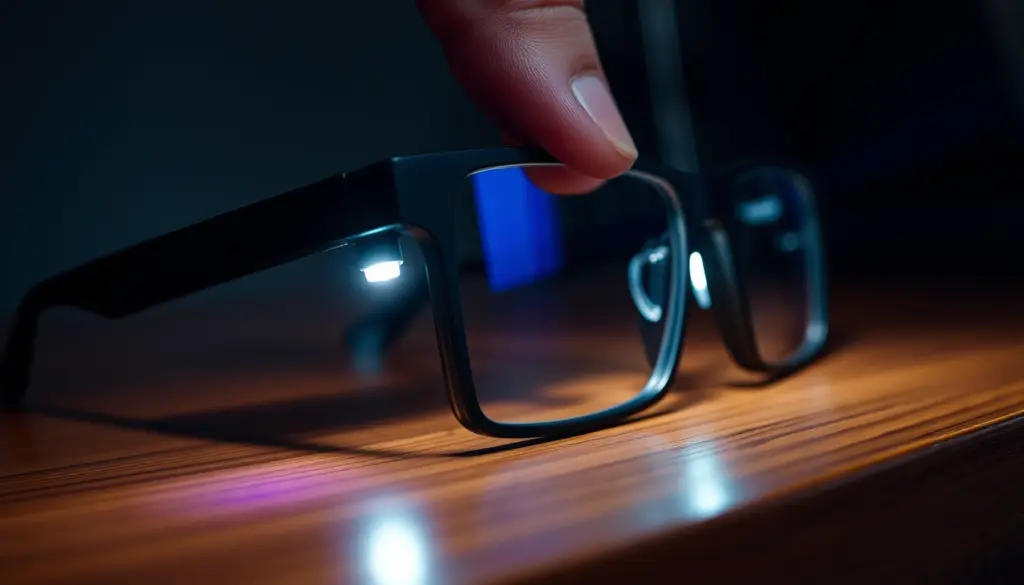
Meta pushed a fresh update to its AI glasses on August 28, 2026 that closes a gap privacy advocates had flagged for months. The company’s capture LED, the small white light that flashes whenever a Ray-Ban Meta camera is rolling, has always been designed to shut the camera off if someone blocks it before recording starts. Now, according to reporting from Tom’s Guide and Phandroid, the glasses can also catch someone who starts a recording first and covers the light afterward.
That distinction matters more than it sounds. A determined bad actor never needed to disable the capture LED before filming. They just needed a finger, a sticker, or a strip of tape placed over the lens once the recording had already begun. Meta’s newest patch targets exactly that workaround, and it lands at a moment when Meta’s smart glasses business has grown large enough that a single design choice touches millions of devices already in the wild.
What Changed on August 28, 2026
Reports from Tom’s Guide, 9to5Google and Phandroid describe an update that extends Meta’s existing camera safeguard into the middle of an active recording session. Previously, the protection Meta had documented applied when the capture LED was already blocked before a photo or video began. The new behavior watches for someone covering the light mid-capture and cuts the camera when it happens.
Phandroid’s coverage ties the update directly to a pattern of misuse: people wearing Meta AI glasses to record others without consent, in some cases as a form of harassment, then hiding the tell-tale blinking light with tape or a fingertip once footage had already started. Meta’s fix removes the option to keep recording once that light disappears from view, regardless of when in the process someone tries to hide it.
How the Capture LED Safeguard Actually Works
Meta laid out the mechanics in its own July 2026 blog post, titled “Meta’s AI Glasses: Your Questions Answered.” The company explained that every pair of its AI glasses carries a small light on the front frame that blinks whenever content is being captured for a user’s gallery. That light cannot be switched off by the wearer, and Meta says it built the camera system so that obstruction of the LED disables capture entirely rather than letting recording continue silently.
The mechanism relies on the glasses detecting, in real time, whether the capture LED remains visibly unobstructed. If a sensor determines the light is covered, damaged, or otherwise blocked, the glasses stop taking photos or video until the obstruction clears. It is a hardware-and-software pairing rather than a policy promise, which is why Meta frames it as a built-in limit on the device rather than a rule wearers are simply asked to follow.
From July’s Tamper Detection to August’s Mid-Recording Kill Switch
This week’s news builds on a change Meta confirmed earlier in the summer. In its July 2026 Q&A, the company said that beginning with its second generation of glasses, the camera automatically disables if the capture LED is detected as blocked, and that no photos or video can be captured until the light is unblocked again. Meta also said it was extending that protection to cover attempts to physically damage or tamper with the LED itself, not just cover it with an object.
Techloy and Outlook Business both covered that July announcement as a direct response to concerns about covert filming. What the August 28 update adds is timing. Where the July change addressed tampering broadly, the newest behavior specifically closes the window during an active capture, which is the exact moment a bad actor would try to hide what the glasses are doing.
Why Meta Built This: Harassment and Covert Filming Complaints
Phandroid’s headline puts it bluntly: people are still using Meta glasses to harass and record others, so Meta is pushing a new update. The outlet’s reporting describes a recurring complaint pattern rather than a single incident, with users flagging cases where the glasses were used to film strangers in public without their knowledge, sometimes paired with harassment. The capture LED was meant to prevent exactly that kind of covert use, but a light that can be taped over provides only partial protection.
The Guardian’s coverage on August 19 framed the story around that same tension between a wearable camera and the person standing in front of it who has no way to consent. Meta’s own public statement, published through the Business & Human Rights Resource Centre, addressed the concern directly by describing the capture LED as something that cannot be turned off and that disables the camera when someone tries to defeat it.
What Meta Says
Meta has been consistent in how it describes the feature across its own channels. Five statements from the company’s July 2026 Q&A capture the core design logic behind the safeguard.
“There’s a light on the front of every pair of our AI glasses that we call a capture LED. Whenever content is being captured for your gallery, this white light blinks to let people know you’re capturing content.”
Meta, Official company statement — about.fb.com
“The capture LED has no off switch.”
Meta, Official company statement — about.fb.com
Meta also addressed what happens when someone tries to defeat the light rather than simply cover it by accident.
“The camera is disabled when people try to do this.”
Meta, Official company statement — about.fb.com
“Beginning with our second generation of glasses, the camera is automatically disabled if we detect that the capture LED has been blocked.”
Meta, Official company statement — about.fb.com
“No photos or videos can be taken until we detect that the light is unblocked.”
Meta, Official company statement — about.fb.com
Meta’s VP of Augmented Reality, Alex Himel, has been the company’s public face on its AI glasses strategy in past coverage of the product line, though Meta has not published a personal statement from him specifically on this week’s update. The company has instead chosen to speak through its official blog and prepared Q&A format for every stage of the capture LED story so far.
Meta’s Market Position: 84% Share and 7.4 Million Units
The reason this single feature draws so much attention comes down to scale. Mid-2026 industry coverage citing Counterpoint Research put Meta’s share of the global smart glasses market at 84% in the first quarter of 2026. The same wave of reporting cited global AI and smart glasses shipments of roughly 8.7 million units in 2025, with Meta accounting for around 7.4 million of those units.
Those numbers mean whatever safety behavior Meta ships becomes, in practice, the default behavior for the category. A rival with a fraction of that install base can experiment quietly. Meta cannot. Every design decision on the capture LED, including a change as narrow as detecting mid-recording tampering, immediately becomes the reference point every reporter, regulator and competitor measures against.
Table 1: Timeline of Meta’s Capture LED Safeguard
| Date | Development | Source |
|---|---|---|
| Second-generation launch (date not specified by Meta) | Camera automatically disables if the capture LED is detected as blocked before a capture starts | Meta, about.fb.com |
| July 7-8, 2026 | Meta confirms the camera also disables if the LED is physically tampered with or destroyed | about.fb.com, Techloy |
| August 19, 2026 | Coverage of the covert-recording concern tied to the capture LED design | The Guardian (per industry research summary) |
| August 21, 2026 | Reporting on the tamper-response camera lock | USA Today (per industry research summary) |
| August 28, 2026 | Meta extends detection to mid-recording LED covering, closing the after-the-fact tape-over workaround | Tom’s Guide, Phandroid, 9to5Google (per industry research summary) |
Competitive Comparison: Where Snap, Google and Samsung Stand
Meta is not the only company selling camera-equipped smart glasses, but available reporting does not point to an equivalent, explicitly documented tamper-detection safeguard from Snap’s Spectacles line, Google’s smart eyewear efforts, or Samsung’s glasses projects. That does not necessarily mean rival hardware lacks any indicator light. Most camera wearables on the market carry some form of recording indicator as a baseline privacy measure. What is different about Meta’s approach is the specificity of the public commitment: a named behavior, described in the company’s own words, that ties camera function directly to the visibility of that single light.
That gap gives Meta a talking point at a moment when its glasses business faces real scrutiny over misuse. It also raises the bar for competitors entering the same space. If Meta’s 84% share continues to hold, any smart glasses maker without a comparable, tamper-aware safeguard will increasingly need to explain why its device doesn’t stop recording the same way.
The Historical Precedent: Google Glass and the Indicator Light Problem
None of this is happening in a vacuum. Google Glass launched in the early 2010s with its own visible recording cue, and it still became a cultural flashpoint. Bars and restaurants banned the device outright, and wearers picked up the nickname “Glasshole” as a badge of public suspicion rather than early-adopter status. The core complaint back then was simple: an indicator light only protects bystanders if it cannot be defeated, and critics argued Glass’s design left too much room for exactly that kind of workaround.
Meta’s engineers appear to be working from that same lesson more than a decade later, treating the capture LED not as a courtesy feature but as a hard constraint enforced in hardware. Whether that approach avoids a repeat of the Glass backlash depends less on the technology and more on whether the public believes the safeguard actually holds up in everyday use.
The Irony: Meta’s Next Glasses May Drop the LED Entirely
Here is the twist reporters have started to flag. According to VR.org, Meta is reportedly developing a next generation of glasses, described under the working concept of “Super Sensing,” that may not include a physical capture LED at all. If that reporting holds up, Meta would be locking down its current indicator-light safeguard at the exact moment its own product roadmap is said to be moving toward sensors that don’t rely on a visible light in the first place.
That tension is worth watching closely. A device that captures the world constantly through always-on sensing, without a light bystanders can look for, would reopen the very question this week’s update is trying to close. Meta has not confirmed final specifications for that future hardware, so this remains a reported direction rather than a settled fact, but it sets up a clear test of whether the company’s privacy engineering keeps pace with its own ambitions.
Regulatory and Legal Context
Wearable cameras sit in an area regulators are still catching up to. Existing coverage does not point to a specific new law passed in direct response to Meta’s capture LED, but the pattern is familiar from other privacy fights: a company ships a safeguard voluntarily, media coverage tests whether it holds, and lawmakers reference the outcome later when drafting rules for the broader category. Wearable and AI-camera policy discussions in the EU and in several US states have already touched on consent and recording notification requirements in other contexts, and a high-profile, well-documented case like this one gives that debate a concrete example to point to.
For now, Meta’s move is a product decision rather than a legal mandate. That distinction matters because it means the company can adjust, loosen, or tighten the behavior without going through a regulatory process, for better or worse.
Market Impact: Trust, Adoption and the Smart Glasses Race
Smart glasses only work as a mainstream product category if people who are not wearing them feel comfortable being around people who are. Every viral clip of someone secretly recording strangers chips away at that comfort level, and Meta knows it. With roughly 7.4 million units already shipped and an 84% share of the category, Meta has the most to lose if public trust in camera-equipped eyewear sours broadly, and the most to gain if its safeguards visibly work.
The update also shapes how retailers, employers and venues think about policy. A workplace or gym deciding whether to allow camera glasses on the premises now has a slightly stronger technical argument for allowing them, since Meta can point to a hardware-enforced limit rather than an honor system. That argument only holds, though, as long as the detection genuinely works in the field and isn’t defeated by some new workaround within a few months.
Table 2: Global Smart Glasses Market Snapshot
| Metric | Figure | Period / Source |
|---|---|---|
| Global AI and smart glasses shipments | ~8.7 million units | 2025, industry shipment estimate citing Counterpoint Research |
| Meta unit shipments | ~7.4 million units | 2025, same industry estimate |
| Meta global market share | 84% | Q1 2026, Counterpoint Research |
| Capture LED tamper-detection scope | Pre-capture blocking, physical tampering, and now mid-recording covering | As of August 28, 2026, per Meta and industry reporting |
What Comes Next: 5 Predictions
- Rivals will feel pressure to match the disclosure. Expect Snap, Google, and Samsung to face direct questions about whether their own camera wearables detect tampering the same way Meta’s now do.
- Regulators will reference this case, not necessarily legislate it. Look for EU and US privacy discussions on wearable cameras to cite Meta’s capture LED design as an example of voluntary industry practice.
- The “Super Sensing” tension will resurface. If Meta’s reported next-generation glasses ship without a visible LED, expect renewed comparisons to the Google Glass backlash within weeks of any launch.
- Venue-level policies will keep growing regardless of the fix. Gyms, bars, and workplaces are likely to keep restricting camera glasses as a category, since a covered light is only one of several ways bystanders lose the ability to give consent.
- Scale keeps raising the stakes for Meta specifically. With shipments already in the millions and a market share above 80%, every future tweak to the capture LED will draw outsized scrutiny simply because so many devices are already in use.
What Wearers and Bystanders Should Actually Expect
For current Ray-Ban Meta owners, the practical change is straightforward. Covering the capture LED, whether before or during a recording, should now stop the camera rather than simply hide the warning sign. For bystanders, the light itself remains the only visible cue that a capture is happening, so the update doesn’t add a new signal to watch for. It closes a way that signal could be silenced without also silencing the camera.
None of this makes covert recording with smart glasses impossible. A determined person could still remove the glasses entirely and hide a separate camera, and no software update changes that. What Meta’s update does is remove one specific, easy workaround that turned its own safety feature into a false sense of security for anyone standing nearby.
Frequently Asked Questions
What is Meta’s capture LED?
It is a small white light on the front of Meta’s AI glasses that blinks whenever the device is capturing a photo or video for the wearer’s gallery. Meta says the light has no off switch for the wearer.
What exactly changed on August 28, 2026?
Reports from Tom’s Guide, 9to5Google, and Phandroid describe Meta extending its camera safeguard to detect when the capture LED is covered during an active recording, not just before one starts.
Can someone still record covertly by covering the LED?
Meta’s stated design is that covering the LED, before or during a capture, disables the camera until the light is visible again. The update specifically targets the mid-recording version of that workaround.
Do all Meta smart glasses have this protection?
Meta says the blocked-LED camera shutdown applies beginning with its second generation of glasses. The company has not published a specific model list beyond referring to “Meta Ray-Ban glasses” and its second-generation hardware.
Do Snap, Google, or Samsung smart glasses have a similar safeguard?
Available reporting does not confirm an equivalent, explicitly documented tamper-detection feature on Snap Spectacles, Google’s eyewear efforts, or Samsung’s smart glasses projects as of this writing.
Why did Meta make this change now?
Phandroid’s reporting ties the update to ongoing complaints about people using Meta glasses to record or harass others without consent, then covering the capture LED to hide the recording in progress.
Will Meta’s next glasses still have a visible LED?
According to VR.org, Meta’s reported next-generation “Super Sensing” glasses may not include a physical capture LED at all, which would mark a reversal from the safeguard Meta is reinforcing this week. Meta has not confirmed final specifications for that hardware.
How big is the market this policy affects?
Industry estimates cited in mid-2026 coverage put Meta’s share of the global smart glasses market at 84% in the first quarter of 2026, with total category shipments of around 8.7 million units in 2025.
- Claude Adds Text Watermarks as EU Fines Hit €15M
- Google Ships Gemini 3.5 Transcribe at 2.6% WER
- Google Tests Gemini 3.8 Flash 14 Days After 3.7
- Nvidia Reportedly Buys Hugging Face for $12.9B
- Free VPNs, Decrypted: Protocols, Leaks, and the Real Price of “Free”
- More AI & Machine Learning coverage