
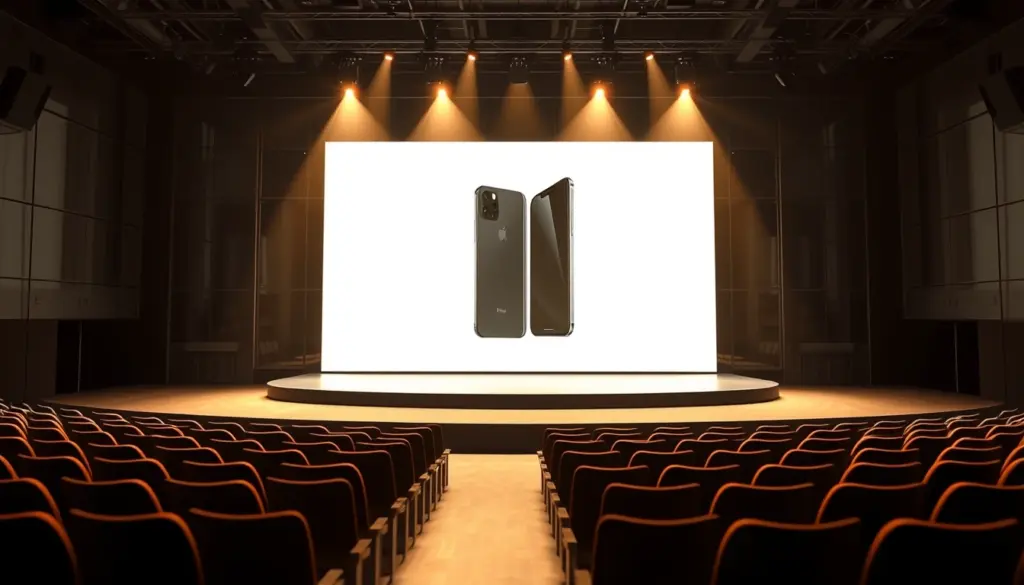
Apple pulled back the curtain on its fall 2026 hardware lineup today, September 9, at an event officially titled “Surprise and Shine.” The keynote opened at 10:00 a.m. Pacific Time from the Steve Jobs Theater inside Apple Park in Cupertino, California, and confirmed what leakers had circled on calendars for months: a new iPhone 18 Pro, an iPhone 18 Pro Max, and the company’s first foldable iPhone. For a company that has largely stuck to a predictable rectangular slab for eighteen years, that third device is the one worth watching.
The invite went out from Greg Joswiak, Apple’s senior vice president of worldwide marketing, who posted the “Surprise and Shine” graphic on X to lock in the September 9 date. Outlets including MacRumors, Macworld, TechRadar, PCMag Australia, SiliconANGLE, WCBD News 2, and 9to5Mac all tracked the buildup, and the event streamed live on Apple’s own events page, its YouTube channel, and the Apple TV app for anyone who wanted to watch without a press badge.
What Apple Actually Confirmed on September 9
Strip away the speculation and the confirmed facts are fairly narrow. Apple named two devices outright, the iPhone 18 Pro and iPhone 18 Pro Max, and signaled a foldable iPhone as the event’s headline hardware reveal. The company did not attach an official name to the folding device ahead of the show, despite months of coverage referring to it as the “iPhone Ultra.” That gap between what reporters expect and what Apple has actually branded matters, because it is the difference between a confirmed product line and a placeholder name that outlets adopted out of convenience.
Apple also did not launch a standard iPhone 18 today. According to reporting cited ahead of the event, the base iPhone 18 is expected to arrive separately in spring 2027, alongside an iPhone 18e and a second-generation iPhone Air. That timing split is a break from Apple’s usual pattern of shipping its whole annual lineup in one September event, and it is the clearest signal yet that engineering resources went somewhere else this cycle: into the foldable.
iPhone 18 Pro and iPhone 18 Pro Max: The Known Details
The iPhone 18 Pro and iPhone 18 Pro Max carry the branding forward from last year’s Pro line, keeping Apple’s naming convention intact even as the rest of the lineup gets reshuffled. Both phones were confirmed as part of today’s announcement, giving Apple a familiar anchor product to sell alongside a completely new form factor. That pairing is a deliberate hedge. If the foldable underperforms at retail, the Pro models still carry the bulk of iPhone revenue the way they have for the past several cycles.
Design and Timing
Detailed specifications, chip names, and pricing for the Pro models were not part of the verified information available ahead of publication, and this piece will not guess at numbers Apple has not put on a slide. What is established is the branding, the event date, and the fact that both phones were positioned as the “known quantity” half of the announcement, next to a foldable that Apple treated as the surprise.
The Foldable iPhone: Apple’s Biggest Hardware Bet Since the Apple Watch
Apple entering the foldable category at all is the story here, more than any single spec. Samsung has sold folding phones since 2019, and Huawei, Honor, and Google have all shipped their own versions in the years since. Apple waited. That patience fits a pattern: the company let other manufacturers work out hinge durability, crease visibility, and software scaling problems in public, then arrived once the category matured enough to meet its own bar for a finished product. The same playbook played out with smartwatches, wireless earbuds, and tablets before Apple entered each category years after the first movers.
What Reports Suggest About Positioning
Ahead of the keynote, coverage from outlets tracking the rumor cycle described the folding phone as Apple’s first foldable smartphone and floated it as potentially the most expensive iPhone the company has ever sold. Those are characterized in the reporting as expectations rather than confirmed Apple statements, and Apple had not officially named or priced the device before the event began. Readers should treat any specific price or spec circulating online today as unconfirmed until Apple’s own newsroom or store listings confirm it directly.
What can be said with confidence is that a folding iPhone existing at all changes the competitive math for the entire premium phone segment. Apple’s decision to enter is itself a market signal, the kind that tends to legitimize a product category for buyers who were waiting to see what the biggest phone maker in the world would do before spending on a fold.
Why the Foldable’s Name Is Still Up in the Air
“iPhone Ultra” has been the working name across most pre-event coverage, but it is worth being precise about what that means. It is a name reporters converged on, not a name Apple confirmed. Apple has a history of surprising even well-sourced outlets on branding, going back to when the “iPhone 5C” rumors turned into a very different naming scheme than expected, and when “iPad Pro” arrived with a name few had guessed months earlier. Until Apple’s own site lists the folding phone by name, any label used in coverage, including on this page, should be read as a placeholder borrowed from the rumor mill rather than a confirmed product name.
The Standard iPhone 18 Gets Pushed Out of September
One of the more consequential shifts buried in today’s news is what did not launch. Reporting ahead of the event pointed to a standard iPhone 18, an iPhone 18e, and an iPhone Air 2 all landing in spring 2027 instead of alongside the Pro models this month. If that holds, it splits Apple’s annual iPhone cycle into two release windows for the second year running, a pattern that started when the company staggered iPhone Air’s debut from the rest of the 17-series lineup.
That staggering has an upside for Apple’s retail and supply chain teams: fewer simultaneous SKUs to stock in September, and a spring news cycle to fill what used to be a quiet stretch between the holiday quarter and WWDC. It has a downside for shoppers who want a non-Pro phone now and will instead wait roughly six more months.
How to Watch and Where the Event Took Place
Apple held “Surprise and Shine” at Apple Park in Cupertino, specifically inside the Steve Jobs Theater, the venue the company has used for its marquee hardware reveals since 2017. The keynote streamed at 10:00 a.m. Pacific Time, 1:00 p.m. Eastern Time, and 6:00 p.m. British Summer Time, available through Apple’s website, Apple’s official YouTube channel, and the Apple TV app on supported devices. No ticket or press credential was required to watch, a format Apple has kept consistent since it moved keynotes online during the pandemic and never fully reverted to an in-person-only audience.
That accessibility matters more than it might seem at first glance. A free, global livestream turns a product launch into a shared moment for millions of people at once, rather than a story that trickles out through press photos hours later. It also puts pressure on Apple’s own servers and on outlets racing to publish first, which is part of why live-blog coverage from Tom’s Guide and others tends to post incremental updates throughout the hour-long keynote rather than a single wrap-up after the fact.
Historical Context: Apple’s Fall Event Names Since 2022
Apple has leaned into cryptic, single-phrase event names for years, and the pattern gives a rough read on how the company signals ambition before a keynote even starts. “It’s Glowtime” in 2024 turned out to be a fairly conventional iPhone 16 refresh. This year’s “Surprise and Shine” lands differently, given that Apple is using it to introduce an entirely new device category rather than an iterative update.
| Year | Event Name | Headline Hardware |
|---|---|---|
| 2022 | Far Out | iPhone 14 lineup, Apple Watch Ultra |
| 2023 | Wonderlust | iPhone 15 lineup, Apple Watch Series 9 |
| 2024 | It’s Glowtime | iPhone 16 lineup, AirPods 4 |
| 2025 | Awe Dropping | iPhone 17 lineup, iPhone Air debut |
| 2026 | Surprise and Shine | iPhone 18 Pro, iPhone 18 Pro Max, first foldable iPhone |
Confirmed vs. Rumored: A Reality Check on the iPhone 18 Family
Given how much speculation piles up ahead of any Apple keynote, it helps to separate what today’s announcement locked in from what is still floating around as a rumor. The table below draws only on what has actually been confirmed through the event and named-outlet reporting, versus what remains an expectation.
| Device | Status as of Sept. 9, 2026 | Notes |
|---|---|---|
| iPhone 18 Pro | Confirmed | Announced at the Sept. 9 event |
| iPhone 18 Pro Max | Confirmed | Announced at the Sept. 9 event |
| Foldable iPhone | Confirmed to exist, not yet named | Widely referred to as “iPhone Ultra” in coverage, not an Apple-confirmed name |
| Standard iPhone 18 | Not part of this event | Reported for spring 2027 |
| iPhone 18e | Not part of this event | Reported for spring 2027 |
| iPhone Air 2 | Not part of this event | Reported for spring 2027 |
Market Impact: Why a Folding iPhone Moves More Than Apple’s Stock
A first-generation Apple product tends to ripple through its supplier base long before the retail sales numbers land. Display makers, hinge manufacturers, and battery suppliers that already serve Samsung’s and Huawei’s folding lines are the obvious first beneficiaries if Apple’s foldable ships in real volume, since Apple’s purchase orders are large enough to reshape a component market on their own. That is exactly what happened when Apple entered wearables at scale with the Apple Watch and again when it pushed OLED panels into the mainstream iPhone line years after Samsung had normalized the technology in its own phones.
There is also a simple category-validation effect. Skeptical buyers who treated folding phones as a Samsung or Huawei experiment now have to reconsider that view once Apple, with its scale and its App Store ecosystem, is selling one too. That does not guarantee the foldable sells well on its own, but it changes how seriously competitors, developers, and case and accessory makers treat the entire folding-phone category going forward.
Carriers and retailers face their own version of this calculation. Every US carrier that stocks iPhones now has to plan shelf space, trade-in programs, and financing tiers for a device shape they have never sold before, at whatever price point Apple eventually confirms. That operational lift, quietly, is one reason Apple tends to move slowly into new categories: the retail machine behind an iPhone launch is enormous, and a first-generation product with unknown demand is harder to plan around than a predictable annual refresh. Expect early trade-in offers and carrier promotions to lean heavily on the Pro models, where demand is easier to forecast, while the foldable gets a more cautious initial allocation.
Competitive Comparison: Apple Enters a Category It Didn’t Create
Samsung’s Galaxy Z Fold line has anchored the premium folding segment since 2019, with Huawei’s Mate X series competing hardest in China and other manufacturers, including Honor and Google, filling in around the edges globally. Apple joining seven years after Samsung’s first fold is a familiar cadence for the company. Apple was not first with a smartwatch, a wireless earbud, or a large-screen tablet either, and in each case it arrived once battery life, software, and manufacturing costs had matured past the point where an early adopter had to accept obvious compromises.
What Apple brings that rivals cannot fully match is the software and accessory ecosystem built around iOS, plus a services business that turns every new hardware category into another surface for the App Store, iCloud, and Apple Pay. Samsung and Huawei both run their own app stores and software layers, but neither has the same developer gravity that Apple can point a foldable-specific API at from day one. Whether that translates into folding-phone market share the way it did with wearables is the open question analysts will spend the next two quarters answering.
What This Means for the Apple Silicon Roadmap
A folding phone puts new pressure on Apple’s chip design team that a flat iPhone never did. Thermal management gets harder when a chip has to perform inside a thinner, hinge-adjacent chassis, and battery capacity is inherently constrained by splitting the internal volume across two panels instead of one. None of Apple’s specific silicon choices for the new devices were part of the verified information available at publication time, so this piece will not speculate on a chip name or node. What is fair to say is that Apple’s chip team has spent the better part of a decade optimizing for thinner, more efficient designs across iPhone, iPad, and Mac, and a foldable is the next test of whether that engineering discipline holds up in a genuinely new chassis shape.
Predictions: Where the Foldable iPhone Story Goes Next
- Expect Apple to lean hard on software exclusivity, iPadOS-style multitasking and app continuity, to justify the foldable’s price against Samsung and Huawei’s hardware-first pitch.
- Watch for a second wave of coverage in the weeks after launch focused on hinge durability and crease visibility, the same scrutiny every first-generation folding phone from Samsung and Huawei faced.
- Component suppliers tied to foldable displays and hinges are likely to see analyst attention rise regardless of how the first-generation sales numbers land, simply because Apple is now a confirmed buyer in the category.
- The spring 2027 split launch for the standard iPhone 18, iPhone 18e, and iPhone Air 2 is likely to become Apple’s new normal cadence rather than a one-off, freeing September for higher-margin Pro and foldable hardware.
- Expect rival phone makers to accelerate their own folding roadmaps in response, using Apple’s entry as validation to pitch cheaper folding alternatives to buyers who were waiting for Apple’s blessing on the category.
What Happens Next for Buyers
For anyone deciding what to do with an existing iPhone right now, the practical takeaway is patience on pricing and specs. Apple’s own store listings, not pre-event rumor roundups, are the only reliable source for the foldable’s actual name, price, and release date. The iPhone 18 Pro and Pro Max are the safer, more conventional purchase for buyers who want confirmed hardware without waiting on a first-generation form factor to prove itself. Buyers curious about the foldable specifically should expect the usual gap between announcement and hands-on reviews before independent outlets can speak to real-world hinge durability and battery life under daily use.
Trade-in shoppers should also factor in the spring 2027 split. Anyone hoping to move from an older, non-Pro iPhone to a new non-Pro model will be waiting roughly six more months regardless of what happens at this event, since the standard iPhone 18, the iPhone 18e, and the iPhone Air 2 are not part of today’s announcement. That is a longer wait than Apple buyers have faced in past cycles, and it is worth building into any upgrade planning now rather than assuming a September release across the whole lineup the way Apple has trained customers to expect for the better part of two decades.
Frequently Asked Questions About Apple’s Surprise and Shine Event
What did Apple actually announce on September 9, 2026? Apple confirmed the iPhone 18 Pro, the iPhone 18 Pro Max, and its first foldable iPhone at the “Surprise and Shine” event held at Apple Park.
Is the foldable iPhone called the “iPhone Ultra”? That name comes from pre-event reporting and rumor coverage, not from Apple. Apple had not officially named the foldable device ahead of the event.
Did Apple release a standard iPhone 18 today? No. Reporting ahead of the event indicated the standard iPhone 18, along with an iPhone 18e and iPhone Air 2, is expected in spring 2027 instead.
Where was the event held and how could people watch it? The event took place at the Steve Jobs Theater inside Apple Park in Cupertino, California, and streamed live on Apple’s website, its YouTube channel, and the Apple TV app starting at 10:00 a.m. Pacific Time.
Is Apple’s foldable iPhone the first of its kind on the market? No. Samsung has sold folding phones since 2019, and Huawei, Honor, and Google have all shipped their own foldables in the years since. Apple is a later entrant to a category it did not create.
Who announced the “Surprise and Shine” event? Greg Joswiak, Apple’s senior vice president of worldwide marketing, posted the event invite on X confirming the September 9 date.
Do we know the price of the foldable iPhone yet? Not officially. Pre-event coverage speculated it could be Apple’s most expensive iPhone to date, but Apple had not priced the device ahead of the keynote, and any specific figure circulating before an official Apple listing should be treated as unconfirmed.
Which outlets covered the event live? MacRumors, Macworld, TechRadar, Tom’s Guide, 9to5Mac, PCMag Australia, SiliconANGLE, and WCBD News 2 all provided live coverage of the September 9 keynote.