Cologne just hosted the biggest trade fair the games business has ever put on, and the numbers behind it say more about where the industry is headed than any single game reveal did. Gamescom 2026 sold out its entire 233,000-square-metre exhibition floor for the first time in the event’s history, and organizers were bracing for more than 350,000 visitors before the doors closed. Deutsche Welle, reporting on the show, cited Newzoo data putting the global games market at $213.9 billion, up 6.1% year-on-year. That single figure, dropped into a recap of a European trade fair, is really the headline: a mature entertainment industry, still growing, still consolidating, and still figuring out what comes after the AAA blockbuster era.
What Actually Happened at Gamescom 2026
Gamescom 2026 ran in Cologne, Germany, and organizer Koelnmesse described it as the world’s largest trade fair dedicated to computer and video games. The show’s own press materials call it, more bluntly, the world’s biggest games event, and this year the claim came with hard evidence attached rather than just marketing copy. Koelnmesse’s official opening statement, dated August 26, 2026 at 8:00 p.m. local time, announced that “gamescom 2026 is officially open” following its Political Opening ceremony, the ritual that kicks off the show each year with government officials and industry executives sharing a stage.
There’s an odd wrinkle in the official record worth flagging for anyone trying to nail down exact dates. One Koelnmesse press release states gamescom 2026 ran from August 26 to 30, 2026. A separate official release from the same organizer states the event ran from August 24 to 30, 2026, in Cologne and online. Euronews, covering the show, reported that it opened to the general public on August 27 and was expected to close on August 30. The discrepancy likely reflects the difference between trade-only days, public days, and the online program, but organizers never issued a single reconciled calendar, so the exact start date remains genuinely unconfirmed even after the show wrapped.
A Sold-Out Floor for the First Time Ever
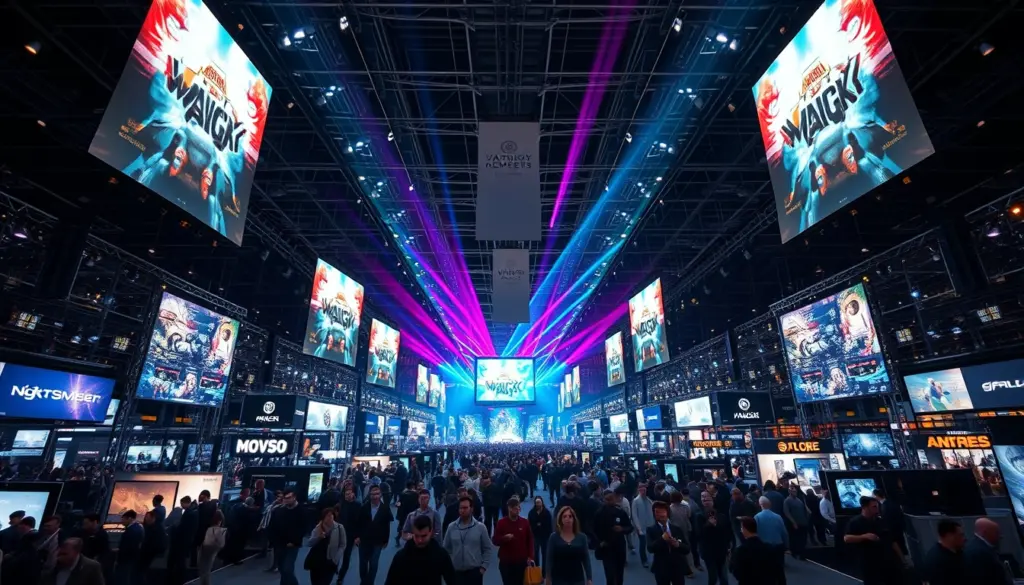
The most concrete fact to come out of Cologne is also the simplest: every square metre of exhibition space sold out. Euronews reported that the entire 233,000-square-metre exhibition space sold out for the first time, and a Koelnmesse press release separately confirmed that all available areas for 2026 were booked up, which the organizer called a new milestone for the show. For a trade fair that has run for well over a decade, “sold out” is a different kind of headline than a big game announcement. It means publishers, hardware makers, indie studios, and national pavilions were competing for physical floor space in a way that outstripped what Cologne’s convention center could physically hold.
Euronews also reported that organizers were expecting more than 350,000 visitors before the event closed. That figure is a projection, not a confirmed final count, and no outlet has published a reconciled, audited attendance total as of this writing. Treat any specific final attendance number circulating online with caution until Koelnmesse publishes its own wrap-up report, which typically lands weeks after the show ends.
The $213.9 Billion Number Behind the Show
DW’s recap of the show, headlined “Gamescom 2026: What’s next for the gaming industry?”, pulled in a market-sizing figure to frame why an exhibition hall in western Germany matters to an industry that operates globally and mostly online. Citing Newzoo, DW reported the global games market valued at $213.9 billion, up 6.1% year-on-year. Newzoo has been the games industry’s default market-sizing shop for years, tracking consumer spend across console, PC, and mobile segments, so a Newzoo-sourced number carries real weight in trade coverage even when other research firms land on very different totals.
And other firms do land on very different totals, which is worth explaining rather than glossing over.
Why Market-Size Estimates Swing by Hundreds of Billions
Anyone who has tried to pin down “the size of the games industry” runs into the same problem: there isn’t one agreed definition of what counts. Some trackers count only software and in-game spending. Others fold in hardware, subscriptions, advertising, and esports. A few extend the definition to cover adjacent categories like game-related merchandising or streaming platforms. The result is a spread of published numbers that all claim to describe the same market.
Statista’s games market forecast projects the global games market reaching $577.91 billion in 2026, according to Statista’s Games – Worldwide outlook page. A separate Statista topic page estimates the worldwide gaming market at almost $522.5 billion in 2025, according to Statista’s video game industry statistics page. McKinsey & Company, in a 2026 report on the sector, put the video game industry at roughly $360 billion globally, expecting it to grow around 5% annually through 2030. Bain & Company’s gaming report forecasts global video game revenue could climb to $257 billion by 2028, implying about 6% annual growth from its baseline. IDC, tracking a narrower slice of the market, expects global direct and ad-based spending in mobile and handheld gaming alone to exceed $212 billion by 2029, a figure that isn’t even trying to capture console or PC.
None of these firms are wrong. They’re measuring different things and calling them the same name. That’s the unglamorous truth behind every “games industry now worth $X billion” headline, including the one DW ran with out of Cologne.
Table 1: How Research Firms Size the Global Games Market
| Source | Market Scope | Latest Published Estimate | Growth Signal |
|---|---|---|---|
| Newzoo, cited by DW at gamescom 2026 | Global games market | $213.9 billion | +6.1% year-on-year |
| Statista (games outlook) | Global games market, broad segment definition | $577.91 billion (2026 forecast) | Multi-year forecast growth |
| Statista (topic page) | Worldwide video game industry | $522.5 billion (2025 estimate) | Baseline for 2026 forecast |
| McKinsey & Company | Global video game industry | ~$360 billion | ~5% annually through 2030 |
| Bain & Company | Global video game revenue | $257 billion (2028 projection) | ~6% annually |
| IDC | Mobile and handheld gaming spend only | $212 billion+ (2029 projection) | Narrower single-segment forecast |
The gap between the smallest and largest number in that table is roughly $364 billion, more than the entire industry was worth by some counts just a few years ago. When a headline cites “the games market,” the honest follow-up question is always: whose definition?
“Games Spark Excitement for the Future”: This Year’s Official Theme
Every gamescom carries an official theme, and for 2026 Koelnmesse chose “Games Spark Excitement for the Future.” It’s broad by design, the kind of phrase that can sit over both a hardware reveal and a panel on game accessibility without feeling out of place. More useful than the theme itself are the two specific trends Koelnmesse’s own communications flagged as defining the show floor this year: “saving the world through play” and “small teams, huge success.”
Those two phrases are doing a lot of work, and they point in opposite directions at once. One gestures at games with social or environmental purpose. The other is a nod to the fact that small studios keep landing outsized hits in a market still dominated, in dollar terms, by a handful of publishers with nine-figure production budgets.
Saving the World Through Play
Koelnmesse’s framing of “saving the world through play” as an official 2026 trend puts a label on something that’s been building at gamescom for a few years: a growing floor presence for games built around climate themes, civic education, and social-impact design, sitting alongside the usual shooters and sports titles. The organizer didn’t publish a granular breakdown of how many exhibitors fit this category, so treat it as a curatorial signal from Koelnmesse rather than a hard statistic. It’s a trend worth watching because it shifts what publishers pitch to funders and platform holders when they’re chasing visibility at a sold-out show.
Small Teams, Huge Success
The second trend is more concrete in what it implies, even without exact numbers attached. A sold-out 233,000-square-metre floor with room for small studios to book booths next to AAA publishers tells its own story: distribution costs for a small team to reach a global audience have kept falling even as production budgets for tentpole titles keep climbing. Steam’s discovery algorithms, cross-platform releases, and streaming-driven word of mouth all lower the bar for a five-person studio to have a breakout year, something the games industry has watched happen repeatedly since 2023 without slowing down.
Table 2: Gamescom 2026 at a Glance
| Detail | Reported Figure |
|---|---|
| Location | Cologne, Germany |
| Official dates (per Koelnmesse releases) | Aug. 24–30, 2026 in one release; Aug. 26–30, 2026 in another |
| Public opening (per Euronews) | Opened to the public Aug. 27, closed Aug. 30 |
| Exhibition space | 233,000 square metres, sold out |
| Expected visitors | More than 350,000 (organizer projection, not a final audited count) |
| Official 2026 theme | “Games Spark Excitement for the Future” |
| Flagged trends | “Saving the world through play”; “Small teams, huge success” |
| Global market cited by DW | $213.9 billion, +6.1% year-on-year (Newzoo) |
| Notable release tied to the show | Path of Exile 2 leaves early access Dec. 11, 2026 |
Path of Exile 2 and the Games Riding Gamescom’s Momentum
Among the confirmed titles tied to gamescom 2026’s opening-night coverage, Path of Exile 2 stood out with a concrete date attached: developer Grinding Gear Games confirmed the free-to-play action RPG will hit version 1.0 on December 11, 2026, officially leaving early access after roughly two years in that status. It’s the kind of announcement gamescom exists for, a live-service title with an established player base using the show’s global spotlight to set a firm date rather than another “coming soon.”
The gamescom fact sheet released alongside the show’s opening didn’t enumerate every title that appeared during the recap coverage, so this article sticks to what’s been specifically confirmed rather than listing every rumor that circulated during the show. Expect the usual pattern in the weeks after gamescom: publishers using the post-show news cycle to drip out further release windows for titles that debuted trailers in Cologne.
Historical Context: How Gamescom Got Here
Gamescom’s rise to “sold out” status didn’t happen in a vacuum. The show has spent the past several years absorbing floor space and mindshare that used to belong to E3, the Los Angeles trade show that was once the games industry’s undisputed centerpiece before it was formally shut down in 2023 after years of declining publisher participation. With E3 gone, the industry split its attention between Cologne’s physical trade fair, digital-first showcases like Summer Game Fest each June, and region-specific events like Tokyo Game Show. Gamescom’s advantage has always been scale: it runs both a public-facing consumer show and a business-to-business trade floor in the same week, letting publishers hit consumers and deal-making partners without flying to two different cities.
A sold-out floor in 2026 is the clearest evidence yet that consolidation around fewer, bigger events is still playing out in gamescom’s favor, at least for now. It also raises an obvious capacity question Koelnmesse will have to answer before 2027: what happens when demand for booth space keeps growing but the physical hall doesn’t.
Market Impact: What a Sold-Out Show Signals to Investors
Trade show attendance isn’t a stock-moving metric on its own, but it functions as a sentiment indicator that publishers, platform holders, and investors read closely. A record-demand floor at gamescom 2026, paired with Newzoo’s 6.1% year-on-year growth figure cited by DW, supports the case that the games industry has stabilized after the post-pandemic pullback that hit hiring and publisher stock prices hard between 2022 and 2024. That pullback was severe enough that games industry layoffs became their own recurring news category through 2025 and into 2026, so growth figures out of a major trade show read as a tentative “worst is over” signal to an industry still nursing those wounds.
The wide spread in market-size estimates documented above matters here too. Investors and executives don’t cite Newzoo, Statista, McKinsey, or Bain interchangeably by accident, they pick whichever number best supports the pitch they’re making, whether that’s to a board, a lender, or the trade press. A gamescom recap citing a $213.9 billion Newzoo figure alongside a sold-out floor is a relatively conservative growth story. A recap citing Statista’s $577.91 billion figure would tell a much more aggressive one. Both are technically defensible, which is exactly the problem with treating any single “market size” headline as gospel.
Competitive Landscape: Gamescom vs. the Rest of the Trade Show Calendar
Gamescom’s core competitive advantage over rivals is breadth. It combines a business-to-business trade floor with a public consumer show, an online broadcast component, and country pavilions representing national game industries, all under one roof and one week. Tokyo Game Show leans harder into the Japanese publisher ecosystem and Asian market access. Summer Game Fest, now the industry’s default post-E3 announcement showcase each June, is digital-first with no comparable physical trade floor, trading Cologne’s networking density for lower cost and global reach without travel. PAX events, run across multiple cities, lean consumer and community-first rather than B2B dealmaking.
None of gamescom’s rivals have published a comparable “sold out” claim for 2026, which is itself notable. Trade press outlets like GamesIndustry.biz and PocketGamer.biz have both tracked the broader shift toward fewer, larger flagship events since E3’s closure, and gamescom’s sold-out floor fits that consolidation narrative better than any single game announcement from the show does.
What the Growth Numbers Actually Mean for Developers
For working developers, the headline growth percentages matter less than where that growth is concentrated. McKinsey’s research frames the next phase of industry growth around what it calls the value of player attention rather than raw unit sales, meaning monetization increasingly comes from engagement depth, live-service retention, and cross-platform reach rather than one-time box sales. IDC’s mobile-and-handheld-specific forecast, projecting spend past $212 billion by 2029, underlines that mobile remains the single largest battleground for that attention, even as console and PC coverage dominates gamescom’s show floor and press cycle.
That mismatch, mobile driving the biggest dollar figures while consoles and PC dominate the trade show spotlight, is one of the quieter structural tensions in the industry right now. It’s part of why gamescom’s own “small teams, huge success” framing resonates: distribution on mobile and PC storefronts has narrowed the gap between what a five-person studio and a 500-person studio can achieve commercially, even if their booth sizes in Cologne look nothing alike.
Five Predictions for Gaming’s Next Act
- Gamescom 2027 will need a capacity decision. A sold-out 233,000-square-metre floor in 2026 puts real pressure on Koelnmesse to either expand usable exhibition space or start turning away exhibitors, a first for the show.
- Market-size headlines will keep diverging. Expect continued wide swings between Newzoo-style figures in the low $200 billions and broader “games market” estimates north of $500 billion, since no industry body has standardized the definition.
- Small-studio breakout hits will keep landing on PC and mobile storefronts. The “small teams, huge success” framing gamescom highlighted this year is a trailing indicator of a trend that’s been building since 2023, not a new one, and it should keep producing surprise hits through 2027.
- Live-service titles will keep using gamescom to anchor firm release dates. Path of Exile 2’s December 11, 2026 exit from early access is the template: use the show’s global spotlight to convert a “coming eventually” into a calendar commitment.
- Digital-first showcases and Cologne’s physical floor will keep splitting the calendar rather than competing head-on. Summer Game Fest owns the announcement cycle each June, and gamescom owns the deal-making and hands-on floor each August. Neither has strong incentive to challenge the other’s slot.
The Open Questions Nobody Answered in Cologne
A few things gamescom 2026’s own communications left unresolved are worth naming plainly rather than papering over. The exact show dates were never reconciled across Koelnmesse’s own press releases. The final, audited attendance figure hadn’t been published as of this writing, only the organizer’s pre-show expectation of more than 350,000 visitors. And no single market-size figure commands consensus, meaning every “games industry now worth $X” headline coming out of this show, including DW’s own $213.9 billion citation, is one defensible estimate among several, not a settled fact.
None of that undercuts the real story: a games-industry trade show sold out its entire floor for the first time, in a year when Newzoo’s tracked figures show the market still growing by more than 6%. That’s a genuinely strong signal for an industry that spent 2023 through 2025 absorbing painful layoffs and studio closures. It just deserves to be reported with its edges intact rather than rounded into a clean, single number.
Frequently Asked Questions
When exactly did gamescom 2026 take place?
Organizer Koelnmesse published two different date ranges across its own press releases: August 24–30, 2026 in one, and August 26–30, 2026 in another. Euronews reported the show opened to the general public on August 27 and was expected to close on August 30. No single reconciled calendar has been published, so treat the exact start date as unconfirmed.
How big was gamescom 2026 compared to past years?
Euronews reported that the entire 233,000-square-metre exhibition space sold out for the first time in the show’s history, with organizers expecting more than 350,000 visitors before it closed. A Koelnmesse press release separately confirmed all available exhibition areas for 2026 were booked up.
How big is the global games market in 2026?
It depends on which research firm’s definition you use. DW, citing Newzoo, reported $213.9 billion, up 6.1% year-on-year. Statista’s broader games outlook projects $577.91 billion for 2026. McKinsey estimates roughly $360 billion. The spread reflects differing definitions of what counts as “the games market,” from pure software spend to a broader mix including hardware and services.
What was gamescom 2026’s official theme?
Koelnmesse set the 2026 theme as “Games Spark Excitement for the Future,” and flagged two specific trends on the show floor: “saving the world through play” and “small teams, huge success.”
What major games were confirmed around gamescom 2026?
Among confirmed news tied to the show’s opening coverage, Path of Exile 2 is set to leave early access and reach version 1.0 on December 11, 2026, according to developer Grinding Gear Games.
Is gamescom bigger than E3 was?
E3 was formally discontinued in 2023 after years of declining publisher participation, and gamescom has absorbed much of the trade-show mindshare that once belonged to the Los Angeles event. A sold-out 2026 floor is the strongest evidence yet that gamescom, not any single successor event, has become the industry’s primary physical trade show.
Who organizes gamescom?
Gamescom is organized by Koelnmesse in Cologne, Germany. Its public and media relations team, including managers Marvin Grollius and Simon Krenkel, handles the show’s official press communications.
Where can I find gamescom’s official information?
Koelnmesse publishes official show details, including dates, exhibitor information, and press materials, at gamescom.global.