Activision’s anti-cheat operation has spent years fielding accusations that its ban system is either a black box or barely functioning at all. On September 10, 2026, IGN published an interview that pulls back the curtain further than any prior Activision statement has: a sit-down with David Andrews, Senior Director of Game Security for Call of Duty, who walked through exactly how RICOCHET Anti-Cheat flags, reviews, and bans players.
The piece, titled “Call of Duty’s Anti-Cheat Boss Dispels Cheating Myths, Breaks Down Review Process, and More,” is the most detailed public account yet of the mechanics behind RICOCHET Anti-Cheat, the system Activision has run since 2021. Andrews joined Activision last year to lead the unit, and his comments to IGN cut against a few long-running community theories, particularly the idea that Call of Duty bans are dished out by an unsupervised algorithm with no human involved.
What the IGN Interview With David Andrews Actually Says
The core claim from Andrews is straightforward but significant: most Call of Duty bans are not purely automated. According to the interview, “the vast majority of our bans that go out are through reviewed but automated systems.” That phrasing matters. It describes a hybrid pipeline where software flags an account, but a human still checks the flag before a permanent penalty lands. For a community that has spent years assuming bans are a blunt, unaccountable process, that distinction is the headline.
Andrews also described how a single cheat gets identified in the first place. He explained that the team can deploy what he called a signature, a marker unique to one specific cheat tool. In his words: “For a particular cheat, we might deploy a signature that identifies like, ‘Oh, in running memory, if you see this string, this string only exists for this cheat.'” Once that signature starts triggering, the team does not ban instantly. Instead, as Andrews put it, “we’ll collect that data for a little bit on all those accounts that are triggering that detection, look at them en masse, and also one by one and just make sure that those really do look like cheaters. That process is pretty involved.”
Who Is David Andrews, Call of Duty’s Anti-Cheat Chief
Andrews is the name now attached to one of the most scrutinized jobs in gaming. IGN’s headline calls him Call of Duty’s “anti-cheat boss,” a title that reflects his actual role: Senior Director of Game Security for Call of Duty at Activision. He came into the position relatively recently, having made the jump to Activision last year specifically to run this function. That timing puts his tenure at roughly a year as of this month, which is worth noting given how much operational detail he was willing to share so early into the job.
Public-facing anti-cheat leads are rare in this industry. Most publishers keep the people running ban systems anonymous, partly to avoid giving cheat developers a face to target and partly because the job invites nonstop community anger. Andrews going on record, by name, with IGN is itself part of the story: it signals that Activision wants to spend some reputational capital on transparency rather than staying silent.
Inside RICOCHET Anti-Cheat’s Review Process
RICOCHET Anti-Cheat is the branded name for Activision’s detection and enforcement stack across Call of Duty. Officially, the initiative is described as a system of tools and processes built to detect, deter, and remove cheaters from the Call of Duty ecosystem, according to Call of Duty’s own RICOCHET materials. What Andrews added to that framing is procedural: RICOCHET does not treat every trigger the same way. Signature hits on a known cheat get grouped, reviewed in batches, and then reviewed individually before enforcement, rather than being auto-actioned the moment a string appears in memory.
That two-stage rhythm, machine detection followed by human confirmation, is what Andrews means when he separates “automated” from “reviewed but automated.” It is a distinction that has been missing from almost every previous public Activision statement on anti-cheat, most of which have stuck to high-level messaging about ban totals rather than process detail.
What Signals RICOCHET Actually Checks
Beyond memory-string signatures, Andrews outlined a broader set of signals the review team weighs when deciding whether an account is cheating. That includes the raw game data generated by inputs during a match, an account’s kill-to-death ratio over time, its win-loss ratio, and sudden performance spikes under specific circumstances. None of these signals is treated as proof on its own. A player can run a hot streak legitimately; a sudden statistical spike only becomes meaningful when it lines up with other evidence.
That is where the human side of the review process earns its keep. Analysts are not just staring at dashboards of aggregate stats. They are cross-referencing multiple data streams per account before anyone gets flagged for action, which is part of why Andrews describes the process as “pretty involved” rather than instantaneous.
The Replay Tool: Recreating a Match to Catch Cheaters
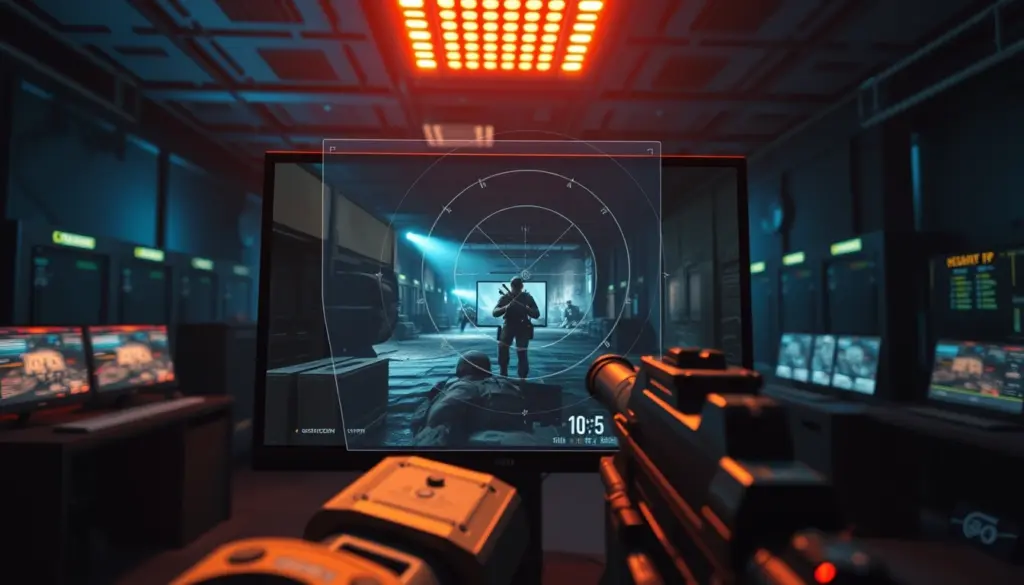
Perhaps the most concrete detail Andrews shared is that Activision’s internal tooling can rebuild an entire match from stored data. He described the capability directly: the team can “recreate an entire match and look at it and see if it looks suspicious or not.” In practice, that means an investigator is not limited to reading a spreadsheet of stats. They can watch a reconstructed replay of the match in question and visually assess whether a player’s aim, movement, or awareness looks physically plausible.
This replay capability closes a gap that has dogged anti-cheat systems industry-wide: a spike in kill-death ratio can come from a genuinely great player having a good night, but a replay showing snap-perfect flick shots through walls tells a different story. Giving human reviewers a visual reconstruction, rather than just numbers, is a meaningful upgrade in how confidently the team can confirm a suspicious signature hit before it turns into a ban.
Limited Matchmaking: Isolation Before a Permanent Ban
According to the verified interview record, Andrews also detailed a tool called limited matchmaking, a holding pattern for suspicious accounts. As he explained it, “we have limited matchmaking that we will put a suspicious account into to isolate them while other checks are either running or we’re waiting on other data,” a step confirmed in IGN’s published interview.
Limited matchmaking is not framed purely as punishment. Andrews described it as also serving a rehabilitation function, telling IGN in a separate part of the same conversation, “We have also done some rehabilitation through the limited matchmaking saying, ‘Hey, you can’t do that behavior that you’ve just been engaged in and you can come back if you stop,’ or whatever,” according to a companion IGN report on the same interview. In other words, some accounts get a second chance in a restricted pool before Activision escalates to a permanent action.
Historical Context: How RICOCHET Got Here
RICOCHET Anti-Cheat was introduced alongside Call of Duty: Warzone and Vanguard in 2021, at a point when cheating complaints in Call of Duty’s battle royale mode had become one of the loudest recurring community grievances. The system combined a kernel-level driver on PC with server-side detection, an approach that drew both praise for effectiveness and scrutiny over the access a kernel driver requires.
Since then, Activision has issued periodic public updates tied to Call of Duty’s seasonal content cadence, folding anti-cheat progress notes into the same blog channel used for Black Ops 7 and Warzone season updates. The pattern this year has been to publish incremental RICOCHET notes alongside each seasonal drop, which is consistent with Activision’s broader strategy of treating anti-cheat as an ongoing live-service workstream rather than a one-time fix. The September 2026 IGN interview is the first time that cadence of small technical updates has been paired with a named executive explaining the reasoning behind it in his own words.
RICOCHET Anti-Cheat Timeline
| Milestone | What Happened | Source |
|---|---|---|
| 2021 | RICOCHET Anti-Cheat launches with Call of Duty: Vanguard and Warzone, pairing a kernel-level PC driver with server-side detection | Call of Duty / Activision |
| February 2026 | RICOCHET Season 02 update ships alongside Black Ops 7 and Warzone content | Call of Duty blog |
| April 2026 | RICOCHET Season 03 update expands detection tooling tied to the Black Ops 7 seasonal cycle | Call of Duty blog |
| June 2026 | RICOCHET Season 04 update ships with Black Ops 7 and Warzone’s ongoing content season | Call of Duty blog |
| September 10, 2026 | IGN publishes its interview with David Andrews detailing RICOCHET’s review process, signature detection, and limited matchmaking | IGN |
How RICOCHET Compares to Rival Anti-Cheat Systems
Call of Duty is not alone in running a hybrid detection-plus-review model. Riot Games’ Vanguard, used for Valorant, is probably the closest industry comparison point in terms of public profile, since both systems rely on a kernel-level driver and both have drawn scrutiny over privacy and system access. Where Andrews’ comments distinguish RICOCHET is the emphasis on a rehabilitation path through limited matchmaking rather than an immediate ban, a middle step that is not a headline feature of how Riot has historically described Vanguard’s enforcement actions. Readers managing Vanguard on their own systems can see how that driver-level approach plays out operationally in our Riot Vanguard fleet management guide and our walkthrough on how to remove the Vanguard anti-cheat driver after uninstalling Valorant.
Third-party middleware like Easy Anti-Cheat and BattlEye take a different commercial approach: both license their detection stack to multiple publishers rather than building a single-franchise system the way Activision has with RICOCHET. That gives Easy Anti-Cheat and BattlEye more data volume across titles, but it also means their public communication tends to be even more limited than Activision’s, since a shared vendor answering for dozens of client games rarely names a single spokesperson the way Andrews has stepped forward for Call of Duty.
Anti-Cheat Approach Comparison
| System | Publisher / Vendor Model | Kernel-Level Driver | Public-Facing Lead Named | Rehabilitation Step Before Ban |
|---|---|---|---|---|
| RICOCHET Anti-Cheat | Single-franchise, built by Activision | Yes (PC) | Yes, David Andrews | Yes, limited matchmaking |
| Vanguard | Single-franchise, built by Riot Games | Yes | Not consistently named publicly | Not a headline feature publicly |
| Easy Anti-Cheat | Multi-publisher, licensed by Epic Games | Varies by integration | No | Varies by publisher |
| BattlEye | Multi-publisher, licensed by BattlEye GmbH | Varies by integration | No | Varies by publisher |
Why This Interview Doubles as a Market Signal
Call of Duty remains one of the flagship franchises inside Microsoft’s gaming division following the Activision Blizzard acquisition, and its live-service titles, Warzone and Black Ops 7, depend heavily on player trust in matchmaking fairness. Cheating complaints are not just a community-relations problem; they are a retention problem, since players who repeatedly lose lobbies to suspected cheaters are the ones most likely to churn out of a free-to-play battle royale or drop a paid seasonal pass. A publisher spending executive time and PR capital explaining its anti-cheat internals is, in effect, addressing a retention risk directly rather than through marketing.
That framing also matters competitively. Valorant, Fortnite, and Apex Legends are all fighting for the same pool of competitive shooter attention, and anti-cheat reputation has become a real differentiator in player acquisition conversations, not just a technical footnote. Activision naming an executive and having him speak in detail to a major outlet like IGN is a low-cost way to compete on that axis without shipping new detection technology, and it comes at a moment when the broader gaming industry is under pressure to justify live-service spending after a rough year of studio layoffs, a trend we tracked in our games industry layoffs report.
Community Reaction and the Myths Andrews Was Pushing Back On
IGN’s own headline frames the interview as dispelling myths, and the biggest myth on the table is the idea that Call of Duty’s ban system runs on autopilot with no human oversight. Andrews’ comments directly counter that narrative by describing a workflow where automated detection is explicitly paired with manual review before enforcement. Community skepticism toward anti-cheat systems tends to spike after high-profile incidents, whether that is a wave of visible cheaters in ranked play or a public complaint from a streamer, and Activision’s decision to put a named leader in front of that skepticism is a deliberate response to a recurring trust deficit rather than a one-off PR moment.
It is worth noting that transparency of this kind carries its own risk. Every operational detail Andrews shares, from how signatures work to how limited matchmaking isolates suspicious accounts, is also information cheat developers can study and try to route around. That tension between transparency and operational security is one every anti-cheat team faces, and Andrews’ willingness to go into this much depth suggests Activision has decided the trust dividend outweighs the tactical cost.
What Industry Voices Are Saying
David Andrews’ own words to IGN remain the clearest public record of RICOCHET’s current design philosophy. In the interview, he stated: “We’re kind of doing this review process of looking at that account more holistically and seeing what’s really going on here,” according to IGN. That “holistic” framing is consistent with his broader description of RICOCHET as a system that avoids single-signal decisions.
He expanded on the isolation tool specifically, telling IGN: “We have limited matchmaking that we will put a suspicious account into to isolate them while other checks are either running or we’re waiting on other data,” a point documented in IGN’s full write-up. Andrews also described the second-chance angle of that same tool: “We have also done some rehabilitation through the limited matchmaking saying, ‘Hey, you can’t do that behavior that you’ve just been engaged in and you can come back if you stop,’ or whatever,” per the same IGN interview.
On the official side, Call of Duty’s RICOCHET Anti-Cheat team has described its own mandate in similarly systemic terms, stating that RICOCHET Anti-Cheat combines client protections, server-side analysis, and dedicated investigation tools to identify and address unfair play, according to an official RICOCHET update posted to the Call of Duty Updates account. That statement lines up with the specific mechanics Andrews described, from memory-string signatures to holistic account review to replay reconstruction.
What This Means for Players Reporting Cheaters
For the average player, the practical takeaway from Andrews’ comments is patience. A report does not vanish into a void, but it also does not trigger an instant ban. Based on the process he described, a flagged account typically moves through signature detection, a data-collection window, batch and individual review, and in many cases a stint in limited matchmaking before any permanent action. Players hoping for same-day gratification after filing a report are, according to this account, misunderstanding how deliberately the system is built to avoid false positives.
That deliberateness cuts both ways. It reduces the odds that a legitimately skilled player gets banned over a statistical anomaly, which has historically been a real complaint from high-performing competitive players and content creators, the same kind of concern that drives players in other titles to build their own performance logs, like the tools covered in our CS2 stats tracker guide. But it also means visible cheaters can persist in lobbies for longer than frustrated players would like while the review process runs its course, which is likely why Activision felt the need to explain the delay publicly rather than let community patience run out entirely. Ban systems elsewhere in gaming have hit their own rough patches this year too, including the wave of erroneous-looking enforcement actions we detailed in our Switch 2 ban wave coverage.
Predictions: Where RICOCHET Goes From Here
- Expect Activision to keep pairing RICOCHET updates with each Black Ops 7 and Warzone content season, continuing the pattern already visible across the 2026 seasonal cadence.
- Look for more named-spokesperson interviews from Andrews or his team, since this IGN piece is likely a test of how much community goodwill transparency actually buys back.
- Rival publishers running Vanguard, Easy Anti-Cheat, or BattlEye integrations may face pressure to put a named lead in front of the press, now that Activision has set that precedent publicly.
- Limited matchmaking, as a concept, could get formalized into player-facing messaging (an in-game notice, for instance) rather than staying an internal tool players only learn about through press interviews.
- Cheat developers will likely respond to the disclosed signature-detection method by trying to obfuscate memory strings further, which typically forces anti-cheat teams into another detection iteration within a few months.
None of these are guaranteed outcomes, they are reasonable extrapolations from Activision’s current communication pattern and the seasonal cadence already visible in RICOCHET’s 2026 update history. Anti-cheat is inherently adversarial, and any public disclosure resets part of that arms race the moment it is published.
Frequently Asked Questions
Who is David Andrews at Activision?
David Andrews is the Senior Director of Game Security for Call of Duty at Activision. He joined the company last year to lead the team responsible for RICOCHET Anti-Cheat.
What is RICOCHET Anti-Cheat?
RICOCHET Anti-Cheat is Activision’s detection and enforcement system for Call of Duty, launched in 2021 alongside Call of Duty: Vanguard and Warzone. It combines client-side protections, server-side analysis, and investigation tooling.
Are Call of Duty bans automated or manual?
According to Andrews, most bans go through what he calls “reviewed but automated systems,” meaning software flags suspicious accounts, but a human reviews the evidence before a permanent ban is issued.
How does Call of Duty detect cheaters?
The team uses memory-string signatures unique to specific cheat tools, plus contextual signals like kill-death ratio, win-loss ratio, and performance spikes, cross-checked with a replay tool that can recreate an entire match for visual review.
What is limited matchmaking in Call of Duty?
Limited matchmaking is a restricted pool that Activision places suspicious accounts into while additional checks run. Andrews described it as serving both an isolation function and a rehabilitation function for players willing to change their behavior.
Can a player recover from limited matchmaking without a permanent ban?
Based on Andrews’ comments, yes. He described using limited matchmaking to give some players a chance to stop the flagged behavior and return to normal matchmaking rather than escalating straight to a ban.
How does RICOCHET compare to Valorant’s Vanguard?
Both systems use a kernel-level driver on PC and a hybrid detection-plus-review model. RICOCHET is distinct in that Activision has now put a named executive, David Andrews, in front of the press to explain its process in detail.
When did RICOCHET Anti-Cheat launch?
RICOCHET launched in 2021 alongside Call of Duty: Vanguard and Warzone, and has received incremental seasonal updates tied to each new Call of Duty content season since.