Intel spent Computex 2026 trying to prove it can still ship leading-edge silicon. For about twenty minutes on Monday, the market didn’t care. Shares of Intel and AMD each slid roughly 4.2% in premarket trading, according to reports from outlets including Tech Times and Stocktwits, as Nvidia used the Taipei stage to unveil its first PC processor. But the story that got buried under that headline is arguably the more consequential one for the data center business both chipmakers actually depend on: Intel’s Xeon 6+ “Clearwater Forest” launch, the first server CPU built on the company’s 18A manufacturing process.
That launch matters more than a single trading session. Intel has spent three years telling investors, customers, and its own foundry partners that 18A would be the node that proves it can compete with TSMC again. Xeon 6+ is the first real product built on that promise, in server silicon that ships to hyperscalers and enterprise buyers rather than a reference laptop. This piece digs into what actually shipped, how it stacks up against AMD’s Epyc lineup, why Nvidia’s N1X and RTX Spark chip stole the spotlight anyway, and what the launch means for the data center CPU market heading into 2027.
What Intel Actually Announced at Computex 2026
Intel’s newsroom confirmed the Xeon 6+ family as a next-generation data center CPU line “designed for high-density, scale-out workloads,” built on the Intel 18A process node. The formal name is Xeon 6+, and the underlying codename engineers have used for years is Clearwater Forest. HotHardware described it as Intel’s server product with “market-leading rack density” and, per Intel’s own performance claims, the best per-thread throughput the company has published for a data center part.
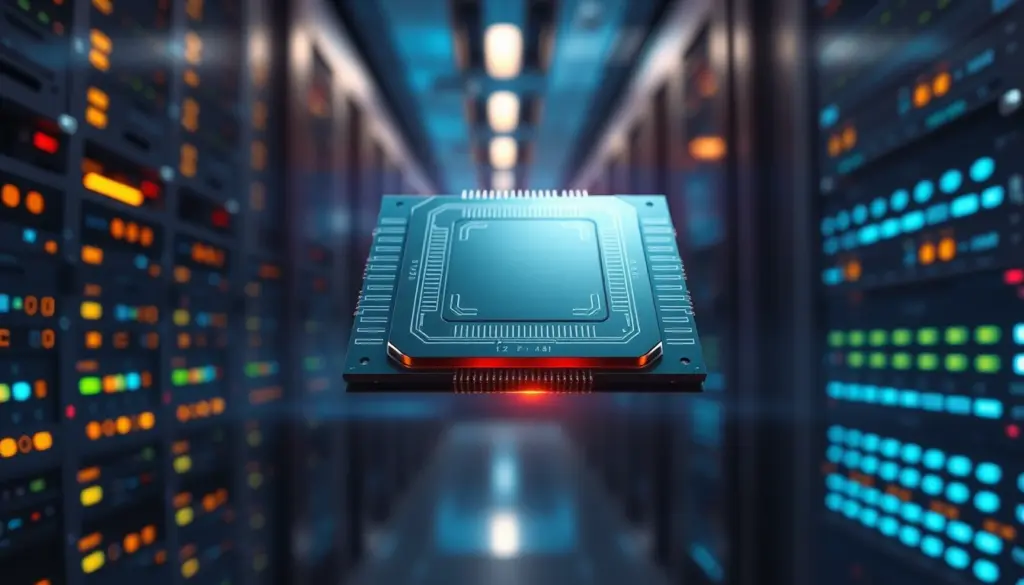
The headline number is 288 cores in a single socket, all of them Intel’s “Darkmont” efficiency cores rather than a mix of performance and efficiency designs. That’s an E-core-only server chip, a second generation of the approach Intel first tried with Sierra Forest. The flagship SKU, Xeon 6990E+, pairs those 288 cores with 576MB of L3 cache and a 12-channel DDR5-8000 memory subsystem, according to Futurum Group’s technical breakdown of the launch. The lineup scales down to a 144-core entry part, the Xeon 6960E+, giving Intel a spread from budget-scale-out to maximum-density configurations.
Availability isn’t theoretical. Tom’s Hardware reported that systems are shipping day-one through Dell Technologies, HPE, Lenovo, and Supermicro, which tells you Intel wanted proof of real OEM commitment attached to the launch rather than a paper announcement. StorageReview also noted companion platform pieces revealed alongside Xeon 6+, including E835 200GbE networking silicon and early details on a “Crescent Island” GPU accelerator, though those are platform components rather than specs of the Xeon 6+ die itself.
Inside Clearwater Forest: The 18A Milestone
The core count is the number that grabs headlines, but the more important story for Intel as a company is the manufacturing process underneath it. Xeon 6+ is Intel’s first data center CPU with compute tiles fabricated on 18A, the node the company has staked its “five nodes in four years” turnaround plan on. That plan, first laid out under previous leadership, promised Intel would close the process gap with TSMC by the middle of this decade. Xeon 6+ is the first shipping proof that the roadmap produced actual server silicon rather than slide decks.
Two specific 18A features show up directly in Intel’s marketing of the chip. The first is RibbonFET, Intel’s version of gate-all-around transistor architecture, which the company says improves switching efficiency versus the FinFET designs used on Intel 7 and Intel 3. The second is PowerVia, a backside power delivery scheme that moves power routing to the underside of the die and frees up the front side for signal routing. Intel has argued for two years that this combination should yield meaningfully better performance-per-watt than its prior nodes, and Xeon 6+ is the first data center chip where customers can actually test that claim in production racks.
A Disaggregated, Three-Node Design
Xeon 6+ isn’t built entirely on 18A. Futurum Group’s analysis describes a disaggregated tile architecture where the compute tiles use 18A, base tiles use the older Intel 3 node, and I/O tiles sit on Intel 7. That’s a deliberate cost and yield decision: putting only the parts of the chip that benefit most from the newest transistors on the newest (and most expensive, lowest-yielding) process, while routing less performance-sensitive I/O logic to mature, cheaper nodes. It also marks the first industry use of Foveros Direct, Intel’s advanced 3D die-stacking packaging technology, to bond those tiles together. Getting Foveros Direct into a shipping product alongside 18A gives Intel two manufacturing proof points in a single launch, which is exactly the message the company needed heading into a year where its foundry business is competing for external customers.
| Spec | Xeon 6+ (Clearwater Forest) |
|---|---|
| Codename | Clearwater Forest |
| Compute tile process | Intel 18A |
| Base / I/O tile process | Intel 3 / Intel 7 |
| Max cores (flagship 6990E+) | 288 Darkmont E-cores |
| Entry SKU cores (6960E+) | 144 E-cores |
| L3 cache (flagship) | 576 MB |
| Memory support | 12-channel DDR5-8000 |
| I/O | PCIe Gen5 |
| Packaging | Foveros Direct 3D stacking (industry first) |
| Transistor technology | RibbonFET (GAAFET) + PowerVia backside power |
| Launch OEM partners | Dell Technologies, HPE, Lenovo, Supermicro |
| Target workloads | Cloud-native, telecom, agentic AI |
Xeon 6+ vs AMD Epyc: A Comparison With Real Gaps
Here’s where honest reporting has to slow down. Intel’s own materials frame the 6990E+ as delivering roughly a 30% average per-thread performance improvement compared with AMD’s 192-core Epyc 9965, along with up to 30% better power efficiency. Those are Intel’s numbers, generated by Intel’s benchmarking, and they haven’t yet been replicated by an independent lab running both chips side by side. Treat that 30% figure the way you’d treat any vendor-supplied comparison: directionally informative, not gospel.
What’s harder to pin down is a full spec-for-spec breakdown of Epyc 9965 itself. AMD’s Turin-generation Epyc lineup is built on advanced TSMC nodes and has, generation over generation, out-executed Intel on core efficiency and time-to-market for the past several years. But the detailed core count, cache split, and clock specifications customers would need for a true apples-to-apples table weren’t part of AMD’s own Computex-adjacent disclosures. Coverage of the Xeon 6+ launch treats Epyc 9965 mainly as the competitive reference point Intel is measuring itself against, not as a chip with its own matching press cycle that week. That asymmetry itself tells you something: Intel needed a comeback narrative badly enough to build its launch messaging around beating a specific AMD part, while AMD didn’t need to respond in kind.
The practical takeaway for IT buyers evaluating both platforms: Xeon 6+ wins on raw core density and claims an edge on power efficiency, according to Intel’s figures. AMD’s counterargument, based on its track record, will likely center on per-core performance consistency and total cost of ownership across mixed workloads rather than density alone. Independent benchmarks from firms like Phoronix or ServeTheHome should start appearing within weeks of general availability, and that’s the data that will actually settle the argument.
The Nvidia Shadow: Why N1X Ate the Headlines
Understanding why Intel’s server milestone got drowned out requires looking at what Nvidia did on the same stage. CEO Jensen Huang used a Computex keynote to reveal the N1X, an Arm-based CPU co-developed with MediaTek and built on TSMC’s 3-nanometer process, according to The Register. In its fully specified form, N1X pairs 20 Arm CPU cores with a Blackwell-based GPU carrying 6,144 CUDA cores, the same GPU core count as a desktop RTX 5070, plus 128GB of unified LPDDR5X memory, per Digital Foundry’s coverage of the reveal. That combined package is being marketed as RTX Spark, Nvidia’s first PC processor, and it’s landing this fall in Windows machines from Microsoft, Dell, HP, ASUS, Lenovo, and MSI.
It’s easy to see why that story pulled coverage away from Xeon 6+. Nvidia entering the PC processor market for the first time, in partnership with Microsoft and against Intel and AMD’s decades-long duopoly over Windows laptop CPUs, is a bigger structural threat than a server refresh. It’s also a simpler story to tell: a company famous for GPUs is now selling you the whole chip. Intel’s 18A milestone, by contrast, requires explaining transistor architecture and packaging tiers to land, which is a much harder sell to a general audience even though the business stakes for Intel are arguably just as high.
Market Share: The Bigger Threat Isn’t Just AMD
The most striking framing to come out of Computex coverage wasn’t Intel-versus-AMD at all. Tech Times published a piece characterizing the moment as the point where “x86 data center dominance ends,” arguing that Arm-based chips, spanning custom hyperscaler silicon like AWS Graviton, Ampere’s server lineup, and Nvidia’s own Arm-based designs, have now crossed roughly half of CPU deployments inside hyperscale cloud environments. That’s a striking claim and it deserves the caveat that exact market-share percentages for any single quarter are notoriously hard to pin down and vary by which analyst firm and methodology you trust.
But directionally, the framing lines up with what both Intel and AMD have been signaling for two years: the fight for data center CPU sockets isn’t purely a two-horse x86 race anymore. Every hyperscaler, from Amazon to Google to Microsoft, now designs at least some of its own Arm silicon specifically to reduce dependence on both Intel and AMD. Xeon 6+’s density push, cramming 288 cores into a socket, is partly a direct response to that pressure: Intel needs x86 racks to look competitive against Arm racks on a cores-per-watt and cores-per-dollar basis, not just against AMD’s next Epyc refresh.
Historical Context: Intel’s Long Road Back
To appreciate why Intel needed this launch to land, it helps to remember where the company was a few years ago. Intel effectively ceded process leadership to TSMC for the better part of a decade, watching AMD’s Epyc line, built on TSMC’s advanced nodes since the Genoa and Bergamo generations, chip away at data center share that Intel once held almost entirely. Intel’s “IDM 2.0” strategy, announced under prior leadership, promised a five-nodes-in-four-years cadence meant to close that gap and eventually let Intel sell foundry capacity to outside customers the same way TSMC does.
18A is the node where that promise either becomes real or doesn’t. MarketBeat’s coverage of the Computex event framed Xeon 6+ explicitly as Intel’s “comeback pitch,” a phrase that captures the stakes accurately: this isn’t just a product launch, it’s evidence Intel is trying to present to its own foundry customers, its shareholders, and the hyperscalers deciding whether to trust Intel with more of their server fleets. If 18A yields hold up at volume and the performance claims survive independent testing, Intel gets to reset the “Intel can’t execute” narrative that’s dogged it since roughly 2018. If yields stumble or the 30% AMD comparison collapses under scrutiny, the comeback story gets a lot harder to tell next time.
Computex 2026 Launches Side by Side
Putting the two headline chip stories from the show next to each other makes the contrast in scope and audience clear.
| Chip | Company | Process Node | Configuration | Target Market | Availability |
|---|---|---|---|---|---|
| Xeon 6+ (Clearwater Forest) | Intel | Intel 18A (compute tiles) | Up to 288 E-cores, 576MB L3, 12-ch DDR5-8000 | Data center / cloud / telecom | Shipping now via Dell, HPE, Lenovo, Supermicro |
| N1X / RTX Spark | Nvidia + MediaTek | TSMC 3nm (N3) | 20 Arm cores + Blackwell GPU (6,144 CUDA cores), 128GB unified LPDDR5X | Windows PCs / laptops | Fall 2026 via Microsoft, Dell, HP, ASUS, Lenovo, MSI |
| Epyc (Turin family, incl. 9965) | AMD | TSMC advanced nodes | Referenced by Intel as comparison point; full spec sheet not disclosed at Computex | Data center / cloud | Existing lineup shipping |
Market Impact: Stock Moves and Enterprise Buying Decisions
The premarket dip in Intel and AMD shares on the day of Nvidia’s reveal was a headline-driven move, the kind of reflexive sell-off that happens whenever a well-capitalized outsider announces it’s entering a market incumbents thought was locked down. It’s worth remembering that Intel’s stock has been on a volatile run this year, and the company recently signaled it would raise CPU prices ahead of March 2027, a move that reads very differently depending on whether you think Xeon 6+ gives Intel the performance credibility to justify higher prices, or whether it just makes Intel’s chips a harder sell against AMD’s roadmap.
AMD, for its part, has spent 2026 leaning into a much larger total addressable market story for AI infrastructure, and executives have talked up a $3 trillion TAM that spans both GPUs and CPUs. A premarket dip tied to one competitor’s PC chip announcement doesn’t change that thesis much. The more durable market impact will come from server OEMs like Dell, HPE, and Lenovo deciding how to split their 2026 and 2027 rack orders between Xeon 6+ and Epyc, decisions that hinge on independent benchmarks and pricing, not premarket sentiment. HPE in particular has leaned hard into diversifying its CPU and GPU supplier base this year, and its stock has moved on other chip partnerships in recent months, a sign that server vendors are actively hedging rather than betting everything on one silicon supplier.
Competitive Landscape: A Three-Way Fight, Not Two
It’s tempting to frame this as Intel versus AMD, the rivalry that’s defined x86 for two decades. But Xeon 6+ landed in a market where Nvidia just became a plausible third player in a space Intel and AMD used to have entirely to themselves, and where custom Arm silicon from the hyperscalers themselves is eating share that neither x86 vendor controls at all. Nvidia’s record quarterly revenue this year came almost entirely from AI accelerators, not CPUs, but a company with that much cash and manufacturing leverage entering the CPU business, even the PC side of it for now, is not a signal Intel or AMD can ignore. If Nvidia’s Arm-based approach with N1X proves it can scale from laptops toward server parts down the line, Xeon 6+’s 18A win starts to look less like a victory lap and more like table stakes for staying in the game.
What Comes Next: Five Predictions
- Independent benchmarks of Xeon 6990E+ against Epyc 9965 will start appearing from outlets like ServeTheHome and Phoronix within four to eight weeks of broad availability, and they’ll likely show a narrower gap than Intel’s 30% claim in mixed real-world workloads.
- Expect AMD to respond with pricing moves or an accelerated Epyc roadmap disclosure at its next earnings call rather than a rushed counter-launch, since AMD’s playbook has favored measured cadence over reactive announcements.
- 18A yield data will become the single most-watched metric in Intel’s next two quarterly earnings calls, since sustained high-volume yield is the difference between a genuine foundry turnaround and an expensive one-off launch.
- Nvidia’s N1X will not ship in a server-class variant in 2026, but expect renewed speculation about an Arm-based Nvidia data center CPU once RTX Spark laptops prove out the architecture with consumers this fall.
- Hyperscaler capital expenditure disclosures through 2027 will keep showing a rising share of custom Arm silicon, reinforcing that the real long-term threat to both Intel and AMD’s data center businesses is architectural, not just competitive between the two of them.
Why This Launch Deserved More Attention Than It Got
Consumer tech news cycles favor the flashier story, and a PC chip debut from Nvidia is objectively flashier than a data center CPU refresh most casual readers will never touch directly. But the Xeon 6+ launch is the more consequential data point for anyone tracking where cloud computing costs, AI training infrastructure, and enterprise IT budgets are headed. Every hyperscaler and cloud provider running Xeon 6+ in production racks is a direct input into what compute costs look like for every company renting cloud infrastructure in 2027, including the AI labs whose GPU-hungry training runs depend on the CPUs orchestrating them. A 30% claimed efficiency gain, if it holds up under independent scrutiny, translates into real power and cooling savings at hyperscale, savings that eventually show up in AWS, Azure, and Google Cloud pricing.
The stock market’s one-day reaction to Nvidia’s PC chip reveal will be forgotten by most investors within a month. Whether Intel’s 18A node can hold its yield and performance promises at scale is a question that will shape the company’s fortunes, and the broader data center cost structure, for years.
Frequently Asked Questions
What is Intel Xeon 6+ Clearwater Forest?
Xeon 6+ is Intel’s next-generation data center CPU family, codenamed Clearwater Forest, and it’s the first server chip built with compute tiles on Intel’s 18A manufacturing process. The flagship Xeon 6990E+ packs up to 288 efficiency cores and 576MB of L3 cache in a single socket, according to Intel’s own newsroom announcement and Futurum Group’s technical analysis of the launch.
How does Xeon 6+ compare to AMD Epyc 9965?
Intel claims roughly a 30% average per-thread performance improvement and up to 30% better power efficiency versus AMD’s 192-core Epyc 9965, but those figures come from Intel’s own benchmarking and haven’t yet been independently verified. AMD hasn’t published a full matching spec sheet for Epyc 9965 alongside the Computex coverage, so a complete side-by-side comparison isn’t possible yet.
Why did Intel and AMD stock drop at Computex 2026?
Reports from outlets including Tech Times and Stocktwits described roughly a 4.2% premarket drop in both Intel and AMD shares after Nvidia unveiled its first PC processor, the N1X, at the same event. The move reflected investor concern about Nvidia entering a market segment Intel and AMD had controlled for decades, rather than any specific weakness in Intel’s own Xeon 6+ announcement.
What is Intel’s 18A process node?
Intel 18A is the company’s leading-edge manufacturing node, part of its “five nodes in four years” turnaround plan. It introduces RibbonFET gate-all-around transistors and PowerVia backside power delivery, technologies Intel says improve transistor density and power efficiency compared with its older Intel 3 and Intel 7 nodes. Xeon 6+ is the first data center product built with compute tiles on 18A.
When will Xeon 6+ servers be available?
Xeon 6+ systems began shipping day-one at launch through Dell Technologies, HPE, Lenovo, and Supermicro, according to Tom’s Hardware’s coverage of the Computex 2026 announcement.
Is Nvidia’s N1X a data center chip or a PC chip?
N1X is a PC processor, not a server chip. It’s an Arm-based CPU co-developed with MediaTek, built on TSMC’s 3nm process, and paired with a Blackwell GPU in the RTX Spark package for Windows laptops. It’s set to appear in machines from Microsoft, Dell, HP, ASUS, Lenovo, and MSI starting this fall, per CNBC’s reporting on the reveal.
Is x86 losing share to Arm in data centers?
Coverage of Computex 2026, including a Tech Times report framing the moment as the end of “x86 data center dominance,” pointed to Arm-based chips, including custom hyperscaler silicon, approaching or crossing half of CPU deployments in some hyperscale cloud environments. Exact market-share figures vary by analyst firm and methodology, but the directional trend toward more Arm adoption in cloud data centers is widely acknowledged across the industry.
What does Foveros Direct do?
Foveros Direct is Intel’s advanced 3D die-stacking packaging technology. Xeon 6+ is the first industry product to use it, bonding compute tiles built on Intel 18A to base and I/O tiles built on older Intel 3 and Intel 7 nodes, according to Futurum Group’s analysis of the launch. The approach lets Intel put only the most performance-critical logic on its newest, most expensive process while keeping other components on cheaper, mature nodes.