
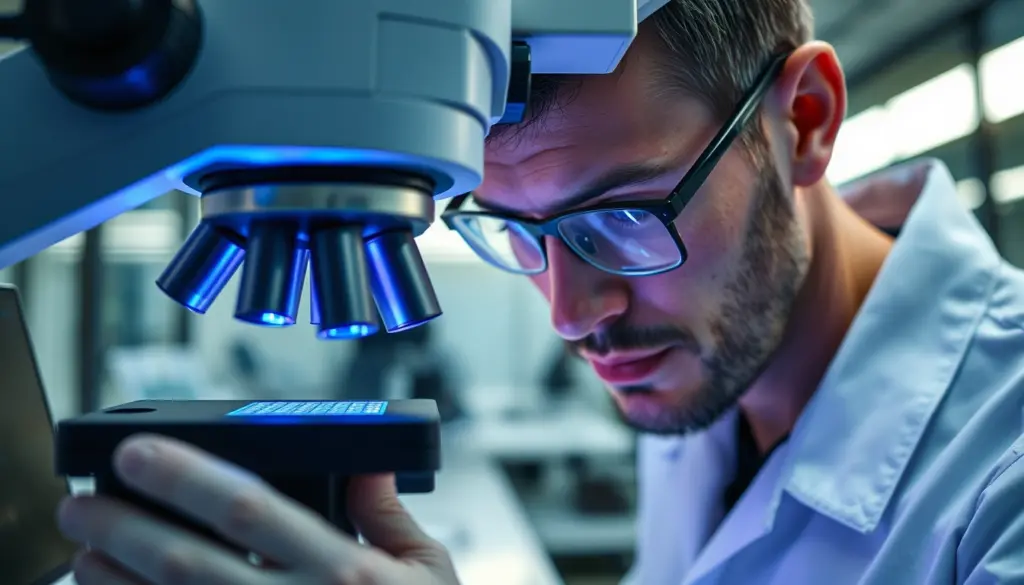
Neurophos said on September 10, 2026 that it has hired four executives, added a new board member, and opened a Silicon Valley office in Sunnyvale, California, eight months after closing a $110 million Series A round. The Austin, Texas-based startup builds metasurface-based photonic AI chips, a bet that light rather than electricity can move data through an AI accelerator faster and with less heat than today’s GPU-based systems. The announcement, first carried through a PR Newswire release and picked up by outlets including Pulse2 and Yahoo Finance, marks the company’s most visible step yet toward shipping real hardware to customers.
The timing matters. Nvidia just posted a $96.2 billion quarter built almost entirely on GPU demand, and rivals from Google to Microsoft keep pouring billions into custom silicon to chip away at that dominance. Neurophos is chasing a narrower but potentially disruptive lane: replacing the copper and standard silicon photonics inside AI chips with metasurfaces, flat optical structures that can route and process light signals directly on a chip. If the approach scales the way Neurophos claims, it could cut the power and cost bottlenecks that have made every large AI cluster this year some flavor of GPU-constrained.
What Neurophos Just Announced
The core of the September 10 announcement is a leadership expansion paired with a new office. Neurophos named Dr. Nathan Kundtz as Chief Technology Officer, promoted Dr. Michael Shebanow to Senior Vice President of Engineering, hired Kevin Keller as General Counsel, and expanded Preston Woo’s role to include Chief Commercial Officer duties on top of his finance work. All four now sit alongside CEO and co-founder Dr. Patrick Bowen on the leadership team, according to a report from Pulse2.
Neurophos also confirmed the opening of a new office in Sunnyvale, described in the release as sitting “in the heart of Silicon Valley,” while keeping its headquarters and manufacturing plans centered in Austin. The company frames both moves as a single push: build out the team and the footprint needed to turn lab-stage photonic chips into a product it can actually sell at volume.
The New Executive Bench: CTO, SVP Engineering and General Counsel
Kundtz arrives as CTO with a background that includes serving as CEO of satellite antenna company Kymeta and holding a PhD in physics from Duke University, according to the company’s announcement carried by Yahoo Finance. His job is effectively to turn Neurophos’s metasurface research into a chip roadmap customers can plan around.
Shebanow’s promotion to SVP of Engineering pulls in three decades of chip industry experience spanning NVIDIA, AMD, Samsung and Cadence, plus a PhD in computer science from UC Berkeley and IEEE Fellow status. Keller joins as General Counsel with more than 25 years of experience and a JD from NYU, a hire that signals Neurophos expects to spend the next phase of its life negotiating supply agreements, IP disputes and possibly acquisition interest rather than just raising money. Woo, now carrying both CFO and Chief Commercial Officer titles, holds an MBA from Wharton and becomes the executive most directly responsible for turning engineering output into signed customer contracts.
The Deep Bench Below the C-Suite
Beneath the executive announcements, Neurophos also brought on Justin Flanagan as Director of Intellectual Property with 15 years of patent law experience, Dr. Kristina Uhlendorf as Technical Fellow for Optics with more than five years at Magic Leap, Dr. Josh Isaacs as Director of Optics, and Dr. Chris Pan as Director of Board Design with 30 years across Intel, HP, Qualcomm, Huawei and Juniper. That mix of patent, optics and board-design talent points to a company trying to lock down defensible IP while it still has a head start, not just hire engineers to write code.
Nigel Toon Joins the Board From Graphcore
Neurophos also added Nigel Toon, the former CEO and co-founder of AI chip maker Graphcore, to its board of directors. Toon co-founded Icera before Graphcore and holds a Doctor of Science from the University of Bristol. His arrival gives Neurophos a board member who has already lived through the hardest part of the AI chip business: building custom silicon, raising the capital to scale manufacturing, and competing against Nvidia’s software and ecosystem advantage rather than just its raw chip performance.
Graphcore itself struggled to unseat Nvidia despite years of funding and was eventually acquired by SoftBank in 2024, a cautionary data point for any board member evaluating a challenger chip startup. Toon’s presence suggests Neurophos wants that lived experience close to its cap table decisions, not just venture capital opinions.
Inside the $110 Million Series A and the Road to $118 Million
Neurophos closed its Series A round in January 2026 at $110 million, an oversubscribed raise that pushed the company’s total funding to $118 million, according to the company’s own figures. M12, Microsoft’s venture fund, was among the backers. In a LinkedIn post about the round, M12 wrote it was proud to back Neurophos “in their $110M Series A as they tackle one of the biggest bottlenecks in AI infrastructure: the inability of GPUs to scale efficiently across cost, power, and footprint.”
That framing from a Microsoft-affiliated fund is notable given Microsoft is simultaneously building its own Maia AI chip line to reduce Nvidia dependence. A venture arm backing a photonic AI chip startup while its parent company ships a competing custom accelerator shows how many parallel bets the AI infrastructure giants are placing at once, rather than picking a single technical path and committing to it exclusively.
Why Sunnyvale, Not Just Austin
Austin remains Neurophos’s headquarters and the planned site of a Low-Rate Initial Production facility the company expects to have running later in 2026, per its announcement. Sunnyvale adds a second front door in the Bay Area, where the bulk of hyperscaler AI infrastructure teams, chip design talent and potential customers are physically based.
CEO Patrick Bowen tied the two moves together directly in the announcement, saying “the addition of these industry-leading experts and the opening of our Silicon Valley office are crucial steps in accelerating Neurophos’ commercialization efforts.” Bowen added that the company is “positioning ourselves to lead the next generation of high-performance computing and deliver on our mission to bring very large orders of metasurface-based photonic AI chips to market,” a statement that frames this round of hiring less as research expansion and more as a pre-shipping sales push.
The Technology Bet: Metasurface-Based Photonic AI Chips
Neurophos describes itself as the pioneer of metasurface-based photonic AI chips, a category distinct from the more familiar silicon photonics used for optical interconnects. A metasurface is a flat, engineered surface patterned with structures smaller than the wavelength of light, designed to bend, focus or route optical signals without the bulky lenses or waveguide structures traditional photonic chips rely on. In theory, that lets a chip pack more optical processing into a smaller area while cutting the energy lost as heat when data moves between memory and compute.
Why Metasurfaces Instead of Waveguides
Most photonic AI hardware on the market today, including products from Ayar Labs and Lightmatter, relies on waveguides etched into silicon to guide light between chips, a technique borrowed directly from telecom optics. Metasurfaces instead manipulate light at the point of a surface rather than channeling it through a physical path, which Neurophos argues gives it more flexibility to place optical processing directly inside the compute die rather than only at the edges where chips connect to each other. Whether that flexibility survives contact with high-volume manufacturing is the open question every one of Neurophos’s new hires now has to help answer.
Headcount Math: Scaling 4x in 2026
Neurophos says it has scaled its workforce 4x so far in 2026 since closing the Series A, and expects to double headcount again by year-end, which would put the company at roughly 8x its January headcount within twelve months. An earlier company update from April 2026 described headcount as having nearly tripled since the round closed, meaning the growth curve steepened through the middle of the year rather than flattening out.
That pace of hiring for a company with $118 million in total funding is aggressive by hardware-startup standards, where burn rates on physical prototyping and fab time already eat into runway faster than in pure software companies. It puts real pressure on Neurophos to either close a larger round soon or start generating meaningful customer revenue once the Austin production facility comes online later this year.
Neurophos Leadership Team At a Glance
The table below lays out the executives and senior hires named in the September 10 announcement, alongside their prior roles.
| Name | Role at Neurophos | Prior Background |
|---|---|---|
| Dr. Patrick Bowen | CEO and Co-Founder | Founded Neurophos; leads overall strategy |
| Dr. Nathan Kundtz | Chief Technology Officer | Former CEO, Kymeta; PhD Physics, Duke University |
| Dr. Michael Shebanow | SVP of Engineering | NVIDIA, AMD, Samsung, Cadence; PhD CS, UC Berkeley; IEEE Fellow |
| Preston Woo | CFO and Chief Commercial Officer | MBA, Wharton School |
| Kevin Keller | General Counsel | 25+ years in law; JD, NYU |
| Nigel Toon | Board Member | Former CEO and Co-Founder, Graphcore; co-founded Icera |
| Dr. Chris Pan | Director of Board Design | 30 years at Intel, HP, Qualcomm, Huawei, Juniper |
| Dr. Kristina Uhlendorf | Technical Fellow, Optics | 5+ years at Magic Leap; PhD Physics, Friedrich Schiller University Jena |
How Neurophos Stacks Up Against Lightmatter, Ayar Labs and Celestial AI
Neurophos is entering a field that already has better-funded, further-along competitors. Research from Contrary puts Lightmatter’s total funding at roughly $822 million with a $4.4 billion valuation as of October 2025, selling both a photonic interconnect product called Passage and a full optical AI accelerator called Envise. Ayar Labs raised a $500 million Series E in March 2026, pushing its total funding to about $870 million at a $3.75 billion valuation, according to a report on the round, built around co-packaged optics chiplets that are further along commercially than most rivals.
Marvell Technology closed its roughly $3.25 billion acquisition of Celestial AI in early 2026, absorbing that startup’s Photonic Fabric technology, which routes optically encoded data to any location on a die rather than only to the chip’s edge. Against that backdrop, Neurophos’s $118 million in total funding looks small, though the company is betting its metasurface approach is different enough from waveguide-based competitors to avoid a head-to-head fight on their terms.
Photonic and Optical AI Chip Funding Landscape
The wider optical interconnect and photonic AI chip ecosystem, including firms like Lightelligence, Enfabrica, AttoTude, Oriole Networks, Lucidean, Hyperlume and Mesh alongside Ayar Labs and Celestial AI, has raised roughly $2.5 billion combined, according to startup tracking from Cignal AI. The table below compares Neurophos against the sector’s best-funded names.
| Company | Latest Milestone | Funding / Valuation | Core Technology |
|---|---|---|---|
| Neurophos | $110M Series A (Jan. 2026); leadership expansion Sept. 2026 | $118M total raised | Metasurface-based photonic AI chips |
| Lightmatter | Valuation set as of Oct. 2025 | $822M raised; $4.4B valuation | Photonic interconnect (Passage) and optical accelerator (Envise) |
| Ayar Labs | $500M Series E (March 2026) | ~$870M total raised; $3.75B valuation | Co-packaged optics chiplets |
| Celestial AI | Acquired by Marvell (early 2026) | ~$3.25B acquisition price | Photonic Fabric die-level optical routing |
| Ecosystem (Lightelligence, Enfabrica, others) | Combined sector activity, 2026 | ~$2.5B combined raised | Mixed optical interconnect approaches |
From Optical Computing Dreams to Today’s GPU Bottleneck
Optical computing is not a new idea. Researchers chased light-based processors for decades, mostly running into the same wall: light is excellent at moving data over long distances but historically clumsy at the tight, repeated logic operations a processor needs to perform. What changed by 2026 is the problem on the other side of the equation. AI training clusters now consume so much power and generate so much heat moving data between memory and compute that even modest efficiency gains from optics look commercially viable in a way they did not a decade ago.
Nvidia’s dominance through 2025 and 2026, capped by that $96.2 billion quarter, has made every hyperscaler and well-funded startup search harder for an edge that does not depend on winning a GPU allocation fight. Photonics, metasurfaces included, is one of the few paths where the physics itself, not just chip design cleverness, offers a plausible route to meaningfully lower power draw per unit of AI compute.
Market Impact and Risks for the AI Infrastructure Race
For hyperscalers and cloud providers, a credible new photonic AI chip vendor is another card to play in negotiations with Nvidia, even if actual deployed volume stays small in the near term. Every serious alternative supplier, whether it ships meaningful volume or not, gives buyers leverage when GPU allocation and pricing get discussed.
The risk side is real. Neurophos is still pre-shipment, its Low-Rate Initial Production facility in Austin has not yet opened, and it is competing against Lightmatter and Ayar Labs, both of which have far more capital, more manufacturing partnerships in place, and multi-year head starts turning lab demonstrations into shipping products. Doubling headcount by year-end while still pre-revenue also means Neurophos will likely need another funding round within the next 12 to 18 months unless commercial orders arrive faster than typical for hardware startups at this stage.
What Investors Are Saying
Beyond Bowen’s own statements, the clearest outside signal on Neurophos’s positioning came from M12, Microsoft’s venture fund, which backed the Series A round. M12 wrote it was “proud to back Neurophos in their $110M Series A as they tackle one of the biggest bottlenecks in AI infrastructure: the inability of GPUs to scale efficiently across cost, power, and footprint.”
CEO Patrick Bowen, in the company’s own announcement carried by Yahoo Finance, said the addition of the new executives and the Silicon Valley office are “crucial steps in accelerating Neurophos’ commercialization efforts.” Read together, both statements frame September’s news less as a research milestone and more as the start of a sales and delivery phase the company now has to execute on.
Predictions: What Comes Next for Neurophos
- Neurophos will likely announce its first named design partner or pilot customer within the next two to three quarters, given the commercial hires just made under Preston Woo.
- Expect a Series B round to surface before mid-2027, sized well above the $110 million Series A, if the Austin Low-Rate Initial Production facility hits its 2026 timeline.
- Nigel Toon’s board seat increases the odds of a strategic partnership or minority investment from a larger chipmaker or hyperscaler looking to hedge its GPU dependence, similar to how Microsoft’s M12 has already positioned itself.
- Competitive pressure from Ayar Labs and Lightmatter will likely push Neurophos to publicly disclose benchmark or efficiency data sooner than it might otherwise, to justify its funding gap against better-capitalized rivals.
- If headcount growth outpaces revenue through 2027, watch for either a down round or an acquisition approach from a larger player, the same path Celestial AI took with Marvell earlier in 2026.
Frequently Asked Questions
What did Neurophos announce on September 10, 2026?
Neurophos announced four new or expanded executive roles, a new board member, and a new office in Sunnyvale, California, eight months after closing a $110 million Series A funding round.
Who is Neurophos’s new CTO?
Dr. Nathan Kundtz, formerly CEO of satellite antenna company Kymeta, joined as Chief Technology Officer. He holds a PhD in physics from Duke University.
How much funding has Neurophos raised in total?
Neurophos has raised $118 million in total funding, including a $110 million Series A round announced in January 2026.
What does Neurophos actually build?
Neurophos builds metasurface-based photonic AI chips, which use flat, engineered optical surfaces to route and process light-based signals for AI compute, aiming to cut the power and heat costs of moving data compared with conventional GPU architectures.
Where is Neurophos located?
Neurophos is headquartered in Austin, Texas, where it also plans a Low-Rate Initial Production facility later in 2026, and it just opened a second office in Sunnyvale, California.
Who are Neurophos’s main competitors?
Its closest competitors in photonic AI hardware are Lightmatter, valued at $4.4 billion as of October 2025, and Ayar Labs, valued at $3.75 billion after a $500 million Series E in March 2026. Celestial AI, another rival, was acquired by Marvell Technology for roughly $3.25 billion in early 2026.
Who invested in Neurophos’s Series A?
M12, Microsoft’s venture capital fund, was among the investors in the oversubscribed $110 million Series A round.
Why did Nigel Toon join the Neurophos board?
Toon is the former CEO and co-founder of AI chip company Graphcore and previously co-founded Icera. His board appointment brings direct experience building and scaling a custom AI chip company against Nvidia’s market position.