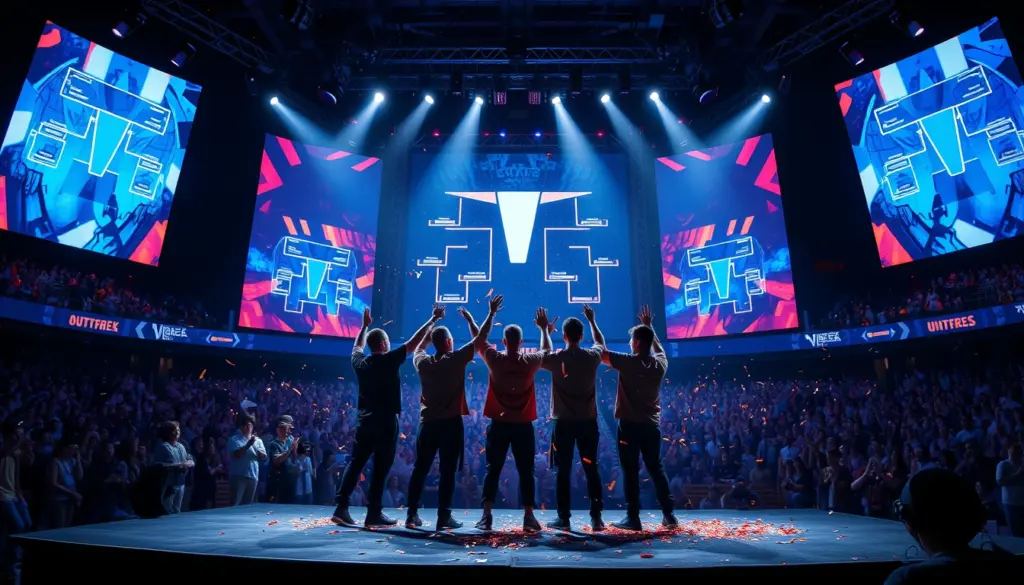
Legacy closed out FISSURE Playground #3 on September 13, 2026, sweeping G2 Esports 3-0 in the grand final at the SND Cultural and Sports Centre in Suzhou, China. The Brazilian roster walked away with $300,000 of the event’s $1 million prize pool, the biggest trophy in the organization’s three-year history, according to event coverage from bracketseason.com. Sixteen teams entered the bracket on September 8. Only one left with the trophy, and the result reshuffles the conversation about who the best Counter-Strike 2 roster in the world actually is heading into the final stretch of 2026.
The scoreline mattered as much as the win itself. A 3-0 sweep in a best-of-five grand final is rare at this level of play, and it came against a G2 Esports side that had beaten Legacy in group play at the IEM Cologne Major just months earlier. For a Brazilian org still building its international resume, dominating a rematch on a bigger stage sends a louder message than the win alone.
Legacy Stuns G2 Esports With a 3-0 Sweep in Suzhou
FISSURE Playground #3 ran from September 8 to September 13, 2026, drawing 16 of the world’s top Counter-Strike 2 rosters to Suzhou for a week of group-stage and playoff matches. Legacy entered the playoffs as a top-10 side by most tracking sites and needed to get past FURIA in the semifinal before facing G2 in the final, a task it completed cleanly enough to climb into the top five of Valve’s regional standings points system during the run.
The grand final itself was a formality by the third map. Legacy’s rifle-heavy lineup controlled the tempo from the opening round, and G2 never found the map-one momentum it needed to force a longer series. A 3-0 result in CS2’s best-of-five format is a statement, not a squeak-by. It means Legacy won every map decisively enough that G2 couldn’t flip a single one of five potential contests in its favor.
For context on how CS2’s competitive ladder and ranking systems work day to day, readers newer to the scene can check CS2 Ranks Explained, which breaks down how the game’s matchmaking tiers relate to the pro circuit’s world rankings that events like FISSURE Playground feed into.
Grand Final Breakdown: How Legacy Closed It Out
Match-tracking coverage lists the grand final as a best-of-five, the standard format for FISSURE Playground’s championship match, following best-of-three matches through the rest of the playoff bracket. The group stage, run September 8 through 10, used a double-elimination format with all matches played as best-of-three. Playoffs then moved to single elimination from September 11 through the September 13 final, still using best-of-three matches until the deciding series.
That structure means Legacy had to win at least nine maps across the tournament without a single elimination-stage loss to reach and then sweep the final. G2, by contrast, arrived at the final having already dropped at least one series along the way, based on the single-elimination bracket format. The gap in form between the two teams by finals day was wider than a typical 3-0 might suggest on paper.
What makes the sweep notable in a historical sense is the head-to-head reversal. At the IEM Cologne Major 2026, Legacy lost 0-2 to G2 in Stage 3 Round 4, a result that helped eliminate Legacy in a tie for 12th-14th place and limited the team to a $20,000 payout at that event. Five months later, Legacy didn’t just beat G2, it didn’t lose a single map doing so.
Prize Pool: $1 Million Split Between Players and Clubs
FISSURE Playground #3’s $1 million total pool broke into two separate pots: $450,000 paid directly to players and $550,000 distributed as club shares to the organizations themselves, a structure increasingly common on the non-Valve tournament circuit. Legacy’s first-place finish earned the roster $165,000 in player money on top of $135,000 in club share, for a combined $300,000. G2’s runner-up finish paid out $160,000 total, split $75,000 to players and $85,000 to the organization.
| Placement | Player Prize | Club Share | Total Payout |
|---|---|---|---|
| 1st (Legacy) | $165,000 | $135,000 | $300,000 |
| 2nd (G2 Esports) | $75,000 | $85,000 | $160,000 |
| 3rd-4th | $40,000 | $53,000 | $93,000 |
| 5th-6th | $25,000 | $40,000 | $65,000 |
| 7th-8th | $15,000 | $27,000 | $42,000 |
| 9th-12th | $7,500 | $12,500 | $20,000 |
| 13th-16th | $5,000 | $10,000 | $15,000 |
The split model matters for how players are actually compensated. A pure player-prize event would have handed Legacy’s five competitors $33,000 each before taxes and org cuts. Under FISSURE’s model, the $135,000 club share goes to Legacy the organization first, and how much of that reaches the players depends on each org’s internal contract terms, which tournament organizers don’t publish.
Legacy’s 2026 Season: From CS Asia Champions to FISSURE Playground Champions
Legacy’s path to a $1 million grand final didn’t happen overnight. The org was founded on August 15, 2023, by Ricardo “dead” Sinigaglia after the Brazilian division of Norwegian club 00 Nation split off, briefly competing under the placeholder name Fake Natty before rebranding to Legacy within a month. The current CS2 roster is built around Brazilian talent, with dumau, latto, n1ssim, lux and arT forming the core after Guilherme “saadzin” Pacheco departed for Imperial in July 2026.
Before Suzhou, Legacy’s signature win of the year came at CS Asia Championships 2026, where the roster beat Team Falcons 3-1 in the grand final for $150,000, a result widely cited as the biggest trophy in the team’s history up to that point. Legacy also took third place at IEM Atlanta 2026 for $30,000, but stumbled at the sport’s most prestigious event, the IEM Cologne Major, exiting in a tie for 12th-14th place after that Stage 3 loss to G2.
| 2026 Event | Result | Prize Money |
|---|---|---|
| CS Asia Championships 2026 | 1st, beat Team Falcons 3-1 | $150,000 |
| IEM Atlanta 2026 | 3rd place | $30,000 |
| IEM Cologne Major 2026 | 12th-14th, lost to G2 0-2 | $20,000 |
| FISSURE Playground #3 | 1st, beat G2 3-0 | $300,000 |
Read together, the four results trace a team that spent most of 2026 as a dangerous top-10 contender without a marquee win against the sport’s biggest names, then closed the gap twice in the same year: first against Team Falcons in Asia, then against G2 in China. Pre-tournament coverage of FISSURE Playground #3 had Legacy ranked seventh in the world; by the semifinal stage, after eliminating FURIA, the team had climbed to fourth in Valve’s regional standings points system.
G2 Esports Falls Short Again on the Big Stage
G2 Esports came into the FISSURE Playground #3 final with a roster built around IGL Nemanja “huNter-” Kovač, AWPer Álvaro “SunPayus” García, and riflers Guy “NertZ” Iluz, Matúš “MATYS” Šimko and Nikita “HeavyGod” Martynenko, a lineup covered extensively by outlets tracking the European CS2 scene. It’s a lineup with a long track record of reaching the late stages of top events, including the win over Legacy at IEM Cologne earlier in 2026. That history made the 3-0 result in Suzhou a harder pill to swallow than a standard runner-up finish.
A $160,000 payout for second place is still a strong result on paper. But for an organization with G2’s resources and expectations, a scoreless grand final loss to a team it had beaten only months earlier reads as a step backward rather than forward, especially with CS2’s Major circuit resuming later in the year. The team’s next opportunities to answer the loss come at the sport’s remaining marquee events before 2026 closes out.
FISSURE Playground vs. Valve Majors and ESL/BLAST Opens
At $1 million, FISSURE Playground #3 sits in the upper-middle tier of CS2’s 2026 tournament calendar, above the standard ESL and BLAST regional Opens but below the sport’s flagship Major. The IEM Cologne Major 2026 carried a $1,250,000 prize pool, the largest of the year, while BLAST’s Open Fall 2026 offered $1.1 million. By contrast, regional stops like IEM Rio, IEM Atlanta and IEM Beijing each ran at $300,000, a third of FISSURE Playground’s total.
| 2026 CS2 Event | Prize Pool | Teams |
|---|---|---|
| IEM Cologne Major 2026 | $1,250,000 | 32 |
| BLAST Open Fall 2026 | $1,100,000 | 16 |
| FISSURE Playground #3 | $1,000,000 | 16 |
| IEM Rio 2026 | $300,000 | 16 |
| IEM Atlanta 2026 | $300,000 | 16 |
| IEM Beijing 2026 | $300,000 | 16 |
The comparison matters because it shows FISSURE Playground operating as a genuine second tier of the CS2 calendar, not a minor side event. A $1 million pool with 16 invited teams, most of them ranked in the world’s top 20, puts real pressure on orgs to treat it as seriously as a Valve Major stop, even though it carries no Valve Regional Standings implications beyond the points teams already earn through Valve-recognized qualifiers.
Player Payouts vs. Club Shares: CS2’s Split-Prize Model Explained
The 45/55 split between player prize money and club shares used at FISSURE Playground #3 reflects a broader shift across CS2’s third-party circuit. Rather than paying prize money directly to a five-person roster, tournament organizers increasingly route a majority share to the organization itself, treating orgs as stakeholders in event revenue rather than pass-through entities for player winnings.
For an org like Legacy, still building sponsorship and investor relationships three years after its founding, a $135,000 club-share check from a single event carries weight beyond what the five-player prize split alone would suggest. It’s operating capital that funds practice facilities, coaching staff and the kind of infrastructure that turned a 2023 roster split into a 2026 world top-five contender.
CS2’s 2026 Prize Money Economy Keeps Climbing
Counter-Strike 2 produced roughly $32.28 million in total prize money across 2025, up 41.5% from 2024, according to esports tournament tracking data compiled by PandaScore and cited in year-end industry recaps. That made CS2 the highest-earning esports title of the year, ahead of Dota 2 and League of Legends. A single, finalized 2026 year-to-date figure isn’t published yet, but the pace of 2026’s calendar, anchored by a $1.25 million Major, a $1.1 million BLAST Open, and now a $1 million FISSURE Playground, suggests the circuit is tracking at least in line with 2025’s growth.
That growth has real consequences for teams outside the traditional European and North American power base. Legacy’s rise, along with results from Team Falcons and other regional organizations, points to prize money flowing to a wider set of rosters than the sport saw during the CS:GO era, when a handful of European and North American orgs dominated the top of every bracket.
From CS:GO to CS2: How the Major Circuit Got Here
Valve’s Counter-Strike Majors have anchored the competitive scene since 2013, but the game’s move from CS:GO to CS2 in 2023 reshaped how third-party tournaments fit around that anchor. Organizers like ESL and BLAST built out Open and Impact circuits to fill the calendar between Majors, and newer entrants such as FISSURE have carved out space with invite-only events that skip the qualifier grind entirely, inviting top-ranked teams directly based on world standing.
That format, closed invite lists built from current world rankings rather than open qualification, is part of why FISSURE Playground #3 fielded a field this strong without running weeks of regional qualifiers. It compresses a full tournament cycle, from invite to grand final, into a single week, which is part of what makes results like Legacy’s sweep land with more weight than a typical regional Open.
Market Impact: What a Non-Valve $1M Event Signals for the Scene
A seven-figure prize pool from a non-Valve organizer running back-to-back years (this is FISSURE’s third Playground event) tells sponsors and investors that CS2’s third-party ecosystem doesn’t need Valve’s direct involvement to sustain top-tier prize money. That’s a meaningfully different market than the one CS:GO had for most of its run, when Majors carried an outsized share of the sport’s total annual prize pool relative to everything else on the calendar.
It also raises the stakes for orgs deciding where to allocate roster resources across a calendar that now includes multiple $1 million-plus events outside the Major itself. Teams that treat FISSURE-tier events as warm-ups risk losing ground, both competitively and financially, to teams like Legacy that clearly prepared for Suzhou as a primary objective rather than a stepping stone.
Competitive Landscape: Where Legacy and G2 Rank Now
Legacy’s run through FISSURE Playground #3, including the FURIA semifinal win and the G2 sweep, pushed the team into the top five of Valve’s regional standings points system, a notable jump from its seventh-place pre-tournament position. For an organization that only reached CS2 relevance in the past two years, cracking the world’s top five by any major ranking metric marks a genuine shift in the sport’s competitive hierarchy.
G2, meanwhile, remains a fixture near the top of the world rankings, but the loss adds to a growing question about whether the roster’s ceiling at the biggest events has flattened. Beating Legacy at Cologne only to lose 0-3 to the same opponent in a Suzhou final is the kind of reversal that tends to follow a team into its next few bracket draws, fairly or not. Readers tracking how other major esports finals have shaken up world standings this year can compare the FISSURE Playground result with Global Esports’ VCT Pacific title run and the Esports World Cup’s club championship results, both of which reordered their respective competitive scenes in similar fashion this year.
Predictions for the Rest of CS2’s 2026 Season
- Legacy enters the next Valve-recognized qualifier cycle as a top-five seed by regional standings points, a first for the organization, and should draw tougher opening-round matchups as a result.
- G2 Esports will face increased scrutiny over its finals record at marquee non-Major events, and a roster or coaching staff adjustment before the next Major cycle wouldn’t be a surprise if results don’t improve.
- FISSURE Playground’s prize pool is likely to hold steady or grow for a fourth edition, given the strength of the 16-team field it attracted in year three.
- CS2’s full-year 2026 prize money total should land at or above 2025’s roughly $32.28 million figure, based on the size of confirmed events already on the calendar.
- Brazilian and other non-European, non-North American orgs will keep gaining ground in world rankings, continuing a trend Legacy and Team Falcons have both driven through their 2026 results.
What This Means for Fans and the Broader Esports Business
For viewers, a result like this reinforces why CS2’s competitive calendar has become appointment viewing well beyond the two Valve Majors each year. Events like FISSURE Playground now carry enough prize money and roster quality to produce genuinely unpredictable outcomes between teams that met under very different circumstances just months apart. That unpredictability is good for the sport commercially, since broadcasters and sponsors pay more for events where the outcome isn’t a foregone conclusion.
It’s also a reminder that esports prize pools, while growing, still work differently than most traditional sports. The club-share model at FISSURE Playground #3 means a chunk of that $1 million went to keeping organizations like Legacy financially stable rather than directly into players’ pockets, a structural detail that shapes how orgs plan their competitive calendars for events like CS2’s Premier and Competitive ranked modes, where amateur and semi-pro players build the résumés that eventually get them scouted onto rosters like this one.
General esports infrastructure and prize distribution trends across titles beyond CS2, including outages and technical disruptions that have hit other tournament finals this year, add useful context for how fragile even well-funded events can be logistically; see coverage of a PlayStation Network outage that delayed a separate $1 million esports final earlier in 2026 for a comparison point.
More background on how Counter-Strike’s ecosystem and competitive rankings work, including matchmaking systems that feed the amateur-to-pro pipeline, is available on shattered.io’s broader gaming coverage hub, which tracks hardware, platform and competitive esports news across titles beyond CS2.
Frequently Asked Questions
Who won FISSURE Playground #3?
Legacy won FISSURE Playground #3, sweeping G2 Esports 3-0 in the grand final on September 13, 2026, in Suzhou, China.
How much prize money did Legacy win?
Legacy earned $300,000 total for first place, made up of $165,000 in player prize money and $135,000 in club share, out of the event’s $1 million overall pool.
What was the final score between Legacy and G2 Esports?
Legacy won the best-of-five grand final 3-0, sweeping every map against G2 Esports without dropping a series.
Where and when was FISSURE Playground #3 held?
The event ran September 8 through September 13, 2026, at the SND Cultural and Sports Centre in Suzhou, China, with 16 teams competing.
How does FISSURE Playground #3’s prize pool compare to CS2’s Valve Majors?
At $1 million, FISSURE Playground #3 ran below the IEM Cologne Major 2026’s $1.25 million pool but above standard regional Opens like IEM Rio, Atlanta and Beijing, which each carried $300,000 in 2026.
Who is on Legacy’s CS2 roster?
Legacy’s core 2026 roster includes dumau, latto, n1ssim, lux and arT, following Guilherme “saadzin” Pacheco’s departure to Imperial in July 2026. The Brazilian organization was founded in August 2023 by Ricardo “dead” Sinigaglia.
Is FISSURE Playground a Valve-sponsored Major?
No. FISSURE Playground is a third-party, invite-only tournament separate from Valve’s official Major circuit, though results still count toward teams’ Valve regional standings points through the underlying match data.
What’s next for G2 Esports after this loss?
G2 walks away with a $160,000 runner-up payout and remains a top-ranked roster heading into CS2’s next Major qualifier cycle, but the scoreless final loss to a team it had previously beaten raises questions the org will need to answer at its next event.