
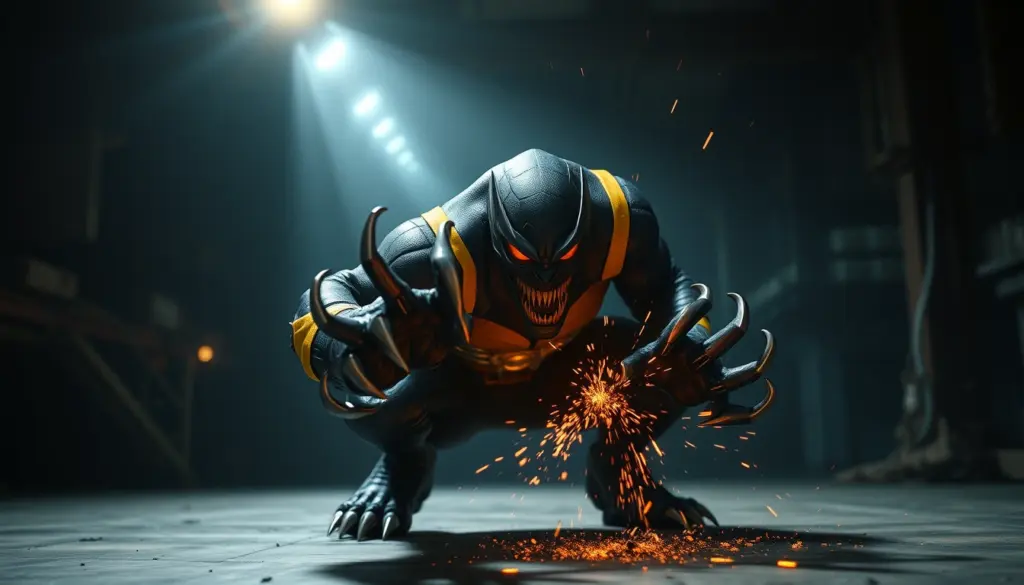
Insomniac Games shipped its fourth Marvel-licensed PlayStation exclusive on September 15, 2026, and the reception broke a five-year streak. Marvel’s Wolverine landed on Metacritic at 77 out of 100 across 121 critic reviews, the lowest score any Insomniac superhero title has posted since the studio partnered with Sony on Marvel’s Spider-Man in 2018. OpenCritic’s tally sits close behind at roughly 79, with about 75% of outlets recommending the game. Both numbers put Wolverine well below Marvel’s Spider-Man 2, which opened at 90 on Metacritic in 2023 and went on to sell 10 million copies in just over 100 days.
The game launched at $69.99 for the standard edition and $79.99 for a Digital Deluxe version bundling five extra suits and a matching claw set, with UK pricing set at £69.99 and £79.99. There is no early-access window: both editions unlocked simultaneously at midnight ET on September 15. The review embargo lifted five days earlier, on September 10, giving outlets a short runway before launch day. No PC release has been announced, and Wolverine ships as a PlayStation 5 exclusive, extending Sony’s long-running bet on first-party, single-player action games even as review scores for the format show signs of fatigue.
What Marvel’s Wolverine Actually Launched With
Marvel’s Wolverine is Insomniac’s fourth Marvel game built on the studio’s internal engine and its first without Spider-Man’s web-swinging traversal at the center of the design. The studio replaced open-city swinging with claw-based melee combat and a more linear, mission-driven structure, a deliberate swing away from the formula that carried three straight Spider-Man releases to Metacritic scores in the high 80s and low 90s.
Pre-order bonuses included a Classic Brown suit, Reflective Claws, one Technique Point, and four avatars, standard fare for a Sony first-party release built to reward day-one buyers. What is not standard is the review split. GamesRadar’s coverage of the Metacritic numbers framed Wolverine as the studio’s worst-reviewed game in years and not the smash hit Sony’s PS5 exclusive lineup needed heading into the back half of 2026. That framing matters because Wolverine isn’t an indie experiment or a spinoff; it’s a full-price, full-marketing-push flagship release from the same studio behind Sony’s best-selling PS5 franchise.
Critics were not uniformly negative. A GameSpot reviewer, quoted in a Push Square previews roundup ahead of launch, wrote that “the satisfaction of combat is what I left thinking most about.” A GamesRadar reviewer covering the same previews wave went further, writing that “Insomniac has crushed my fears of a post-Spider-Man slump.” Those are real signals of quality in the combat systems. The problem for Sony is that combat alone didn’t lift the aggregate score anywhere near Insomniac’s Spider-Man run.
The Score Drop, in Numbers
The cleanest way to see the gap is to line up every Insomniac Marvel and PS5-exclusive release side by side. The pattern is consistent: three Spider-Man-adjacent titles clustered in the high 80s to low 90s, and Wolverine landing 8 to 13 points below all of them.
| Game | Release Year | Metacritic Score | Critic Reviews |
|---|---|---|---|
| Marvel’s Spider-Man | 2018 | 87 | — |
| Marvel’s Spider-Man: Miles Morales | 2020 | 85 | — |
| Ratchet & Clank: Rift Apart (PS5) | 2021 | 88 | 127 |
| Marvel’s Spider-Man 2 | 2023 | 90 | — |
| Marvel’s Wolverine | 2026 | 77 | 121 |
OpenCritic’s number for Wolverine sits a few points above Metacritic’s, in the high 70s to 80 range depending on the snapshot, with roughly 79 critic reviews logged and about three in four critics recommending the game. That divergence between the two aggregators is normal (they weight and average differently), but neither one puts Wolverine within striking distance of the Spider-Man trilogy. Eurogamer’s review, part of the same wave, described the game as ferocious and cinematic but predictable, a summary that lines up with the broader critical consensus: strong combat mechanics wrapped around a story and pacing that reviewers found familiar.
An IGN reviewer put it plainly in a piece describing overall impressions: they walked away impressed, but not thoroughly blown away. That’s a fair one-line summary of the entire review cycle. Nobody is calling Wolverine broken. Multiple outlets are calling it good but not great, and for a studio that had posted three consecutive 85-plus scores, good but not great reads as a step down.
Why This Hits Differently Than a Normal Mixed Review
Sony’s PS5 strategy since 2020 has leaned hard on a short list of first-party studios delivering near-annual, high-Metacritic single-player exclusives: Insomniac, Santa Monica Studio, Naughty Dog, Guerrilla. Wolverine was slotted into 2026 as one of the year’s marquee PlayStation-only releases, arriving in a stretch where Sony has also dealt with PHYSINT exiting budget review and a Fairgame$ leak surfacing under yet another code name. A 77 Metascore doesn’t sink a franchise, but it does complicate the pitch that PS5 exclusives are a near-guaranteed critical hit, a pitch Sony has leaned on heavily when justifying $69.99-and-up pricing against a PC and Xbox library that increasingly ships day-one on subscription services.
A GamesRadar reviewer summed up the disappointment in blunt terms, writing that “Marvel’s Wolverine is never a bad experience, just an underwhelming one full of odd choices.” That line captures the commercial risk better than the raw score does. A universally-panned game gets written off quickly. An underwhelming one lingers in word-of-mouth, which is exactly the kind of soft momentum that hurts week-two and week-three sales more than review scores alone.
Insomniac’s Track Record Before Wolverine
Insomniac’s run with Sony has been one of the most consistent in the industry. Marvel’s Spider-Man opened at 87 in 2018 and became the fastest-selling first-party PS4 game at the time. Miles Morales followed in 2020 at 85, a smaller-scope spinoff that still cleared industry benchmarks for a $49.99 release. Ratchet & Clank: Rift Apart hit 88 on PS5 in 2021, backed by 127 critic reviews and a 94% positive split, proving the studio could carry a non-Marvel franchise at the same quality bar. Marvel’s Spider-Man 2 then topped the run in 2023 at 90, selling 10 million copies in roughly 100 days, according to figures cited in the run-up to Wolverine’s launch.
That four-title streak is why Wolverine’s 77 stands out. It isn’t a bad score in absolute terms, “generally favorable” is still Metacritic’s official banding for anything from 75 to 100, but it’s the first Insomniac Marvel release to fall outside the high-80s-to-90 band the studio had held for eight straight years. For a studio whose brand equity was partly built on hitting that number release after release, one title 8 to 13 points below the pack is a data point worth tracking into whatever comes next.
Competitive Landscape: How PS5 Exclusives Are Scoring in 2026
Wolverine’s launch lands in a year where Sony’s exclusive strategy is being tested on multiple fronts at once. PHYSINT, Kojima’s PlayStation-funded project, exited budget review after roughly three years in development, a sign that even prestige, director-led exclusives face financial scrutiny inside PlayStation Studios. Separately, Sony’s next big original IP, Fairgame$, has leaked under a third code name in the space of a year, an unusually long and public gestation for a game meant to anchor a future PS5 exclusive slate. Wolverine’s score drop adds a third data point: the studios with the strongest track records are not immune to a step down, even when the underlying combat systems land well with critics.
| PS5 Exclusive / Sony Project | 2026 Status | Key Number |
|---|---|---|
| Marvel’s Wolverine (Insomniac) | Launched Sept. 15, 2026 | 77 Metacritic / ~79 OpenCritic |
| PHYSINT (Kojima Productions) | Exited PlayStation budget after ~3 years | Development paused/restructured |
| Fairgame$ (Haven Studios) | Leaked under 3rd code name in 2026 | Still unreleased |
| Marvel’s Spider-Man 2 (Insomniac) | 2023 release, prior high-water mark | 90 Metacritic / 10M copies in ~100 days |
None of this means Sony’s first-party model is broken. It means 2026 has been a year where the gap between PlayStation’s marketing ambitions and its release-by-release execution has narrowed, and Wolverine’s Metacritic number is the most measurable evidence of that gap so far this year.
What the Combat-First Redesign Changed
The single biggest structural change from Spider-Man to Wolverine is traversal. Spider-Man’s open-world web-swinging was, by most critical consensus across three games, the single strongest hook in Insomniac’s Marvel catalog, a mechanic so well-tuned that reviewers routinely cited it independent of story or side content quality. Wolverine drops that hook entirely in favor of ground-based melee and a claw system built around aggression and recovery mechanics.
Reviewers largely credit the combat. The GameSpot and GamesRadar previews quoted above both single out the fight systems as the game’s strongest asset. But traversal and open-world density were doing real work in the Spider-Man scores that combat alone can’t replace, since aggregate review scores account for pacing, mission variety, and world design, not just moment-to-moment combat feel. Eurogamer’s “ferocious, destructive and cinematic, but a little predictable” summary reads like a studio that nailed the params of the new combat system without fully replacing what traversal contributed to overall pacing in the older games.
Market and Studio Impact
No official first-week or launch-window sales figures for Wolverine have been published by Sony or Insomniac as of this writing. That’s typical; Sony historically reports PS5 exclusive sales in aggregate quarterly or annual filings rather than same-day figures, and Spider-Man 2’s 10-million number only became public roughly 100 days after that game’s 2023 launch. What’s already measurable is the review score gap, and that gap is the leading indicator investors, analysts, and Sony’s own PlayStation Studios leadership will watch heading into holiday-quarter earnings.
A lower review score doesn’t linearly predict lower sales; Miles Morales sold well despite trailing the flagship Spider-Man titles on Metacritic. But Wolverine carries full $69.99 pricing and a full marketing campaign, not the reduced scope and price point that softened expectations for Miles Morales in 2020. If Wolverine’s sales trajectory tracks its review score rather than Sony’s marketing spend, it becomes a harder case study for justifying premium pricing on future PS5-exclusive, single-player-only releases, particularly as Xbox and PC continue expanding day-one subscription access to first-party titles from other publishers.
Historical Context: How Insomniac Got Here
Insomniac’s relationship with Sony predates the Marvel license by decades, running through the Spyro and Ratchet & Clank franchises before the studio became a first-party Sony acquisition. The Marvel partnership, which began with 2018’s Spider-Man, turned Insomniac into arguably the most bankable studio in Sony’s first-party portfolio, four Marvel releases across eight years averaging in the high 80s on Metacritic before Wolverine. That consistency is part of why Wolverine’s score is being treated as news rather than a routine mixed review: the baseline expectation, built release after release, was a near-guaranteed 85-plus.
Ratchet & Clank: Rift Apart, released in between Miles Morales and Spider-Man 2, is worth noting separately because it shows the streak wasn’t Marvel-license-dependent. Rift Apart hit 88 on a wholly original IP, meaning Insomniac’s quality bar held across both licensed and owned properties for most of the PS5 generation. Wolverine breaking that pattern raises a genuine question about whether the dip is tied to the specific design choices in this game, or a signal of broader pressure on the studio following years of near-back-to-back AAA production.
Predictions: What Happens From Here
- Sales will lag Spider-Man 2’s pace but not collapse. A 77 Metascore with a 75% OpenCritic recommend rate is still comfortably in “buy if you like the genre” territory, not “avoid” territory. Expect launch-week numbers below Spider-Man 2’s opening pace but ahead of a true commercial disappointment.
- Sony will lean on post-launch patches and DLC to extend the conversation. Every recent Insomniac Marvel title has received meaningful post-launch content; expect a similar cadence here, partly to offset the review-cycle narrative.
- Expect renewed scrutiny of Sony’s exclusive pricing model. With PHYSINT’s budget exit and Fairgame$’s repeated leaks already raising questions about PlayStation Studios’ pipeline, a sub-80 Metascore on a $69.99 flagship will feed into analyst commentary about whether every PS5 exclusive needs day-one full pricing.
- Insomniac’s next Marvel title (if any) will likely reintroduce traversal-heavy elements. Given how consistently reviewers cited the loss of open-world swinging as a pacing gap, a hybrid approach blending claw combat with more open traversal is the most probable design correction.
- A PC port remains plausible within 12 to 18 months. Sony’s recent pattern has been to bring PS5 exclusives to PC roughly a year or more after console launch; nothing has been announced for Wolverine, but the studio’s prior titles all eventually shipped on PC.
What Critics Actually Praised
It’s worth separating the aggregate score from what individual critics actually wrote, because the two tell slightly different stories. The GameSpot quote about combat satisfaction, the GamesRadar quote crediting Insomniac with avoiding a post-Spider-Man slump, and Eurogamer’s “ferocious, destructive and cinematic” line are not the words of critics who think Insomniac lost its footing entirely. They’re describing a game whose core systems work. The score gap comes from pacing, predictability, and structural choices layered on top of those systems, not a fundamental failure of craft.
That distinction matters for anyone deciding whether to buy at launch versus wait for a price drop. A game reviewers describe as good-but-familiar with strong combat is a different purchase decision than a game reviewers describe as broken or rushed. Wolverine falls firmly in the former category, which is also why the review score, while a step down for Insomniac, hasn’t triggered the kind of backlash that follows a genuinely troubled launch.
Pricing and Editions Breakdown
| Edition | US Price | UK Price | Contents |
|---|---|---|---|
| Standard Edition | $69.99 | £69.99 | Base game |
| Digital Deluxe Edition | $79.99 | £79.99 | Base game + 5 exclusive suits + matching claw set |
| Pre-order bonus (either edition) | Included | Included | Classic Brown suit, Reflective Claws, 1 Technique Point, 4 avatars |
Both editions unlocked at the same moment on September 15, with no staggered early-access window for Digital Deluxe buyers, a break from the trend of paid early access some publishers have adopted for premium tiers. That decision likely helped avoid a separate wave of complaints about pay-to-play-early, even as the review score became the dominant story of launch day.
The Bigger Picture for Sony’s Single-Player Strategy
Wolverine’s launch doesn’t exist in isolation. It’s the latest data point in a year where PlayStation’s exclusive pipeline has faced visible friction: a Kojima project exiting budget review, an original IP leaking repeatedly before its own reveal, and now a flagship Marvel sequel scoring well below its predecessors. None of these are catastrophic on their own. Together, they describe a PlayStation Studios slate under more public scrutiny in 2026 than it faced during the run of Spider-Man, God of War Ragnarök, and Horizon Forbidden West releases that defined the early PS5 years.
The takeaway for Sony: the model of near-annual, full-price, single-player exclusives still works commercially, but the critical consensus that used to be close to automatic for Insomniac specifically is no longer guaranteed. That shift alone is enough to keep Wolverine’s Metacritic number in industry conversation well past its launch week.
Frequently Asked Questions
What is Marvel’s Wolverine’s Metacritic score?
Marvel’s Wolverine holds a 77 out of 100 on Metacritic based on 121 critic reviews, officially banded as “Generally Favorable.” OpenCritic lists a similar high-70s to 80 range with roughly 79 critic reviews and about 75% of critics recommending the game.
Is Marvel’s Wolverine a PS5 exclusive?
Yes. Marvel’s Wolverine launched as a PlayStation 5 exclusive on September 15, 2026, with no PC version announced at launch.
How does Marvel’s Wolverine compare to Marvel’s Spider-Man 2?
Spider-Man 2 opened at 90 on Metacritic in 2023 and sold 10 million copies in just over 100 days. Wolverine’s 77 Metascore is 13 points lower, making it the weakest-reviewed Insomniac Marvel release to date.
How much does Marvel’s Wolverine cost?
The Standard Edition is $69.99 (£69.99) and the Digital Deluxe Edition is $79.99 (£79.99), including five exclusive suits and a matching claw set. Both editions unlocked simultaneously at launch with no early-access window.
Who developed Marvel’s Wolverine?
Insomniac Games developed Marvel’s Wolverine, the same California-based studio behind Marvel’s Spider-Man, Spider-Man: Miles Morales, Marvel’s Spider-Man 2, and Ratchet & Clank: Rift Apart.
Will Marvel’s Wolverine come to PC?
No PC release has been confirmed as of launch. Sony’s recent pattern has been to bring PS5 exclusives to PC roughly a year or more after console release, though nothing has been officially announced for Wolverine.
Why did Marvel’s Wolverine score lower than Insomniac’s Spider-Man games?
Critics generally praised the combat systems but pointed to the loss of Spider-Man’s open-world traversal and a more predictable, linear structure as reasons the overall score fell short of the Spider-Man trilogy’s high-80s-to-90 range.
Are there sales figures for Marvel’s Wolverine yet?
No official launch-week sales figures have been released by Sony or Insomniac. Comparable data, such as Spider-Man 2’s 10 million copies, historically has taken around 100 days to become public.