
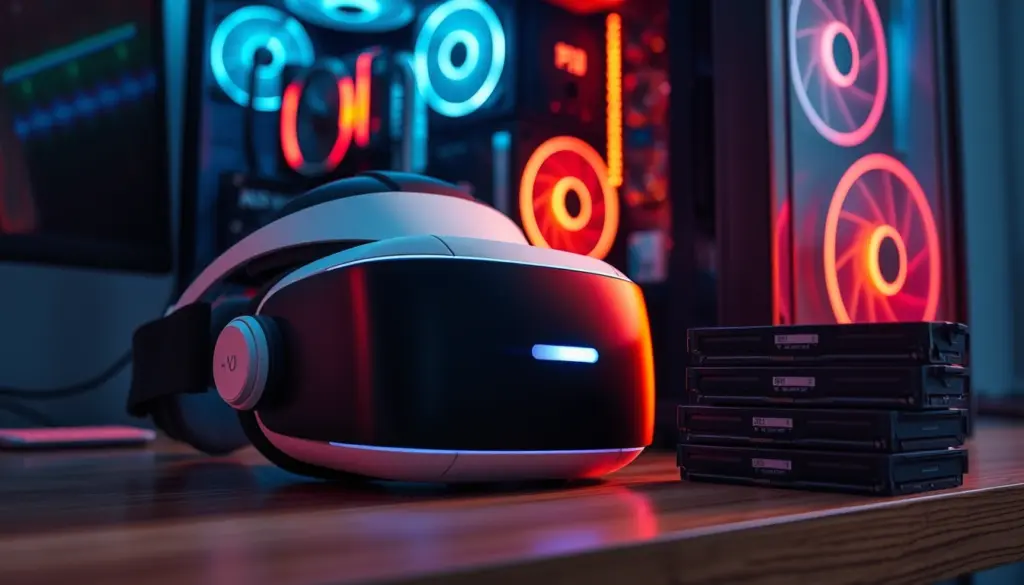
Valve put a real number on its long-delayed VR headset this week, and the number came in higher than the company itself once promised. The Steam Frame launches at $1,059 for the 256GB kit and $1,299 for the 1TB kit in the US, according to pricing details reported by VR.org. That is above the “less than $1,000” target Valve gave UploadVR earlier this year, and it lands the headset above the price of Valve’s own Index full kit. For a company that built its reputation on undercutting rivals on price, that reversal is the story.
The steam frame price search term has spiked to 33,100 monthly searches in the US, according to DataForSEO keyword data pulled September 2026, with related terms like “steam frame release date” adding another 27,100 searches. People aren’t just curious about specs. They want to know why the price moved, whether it’s worth the wait, and how it stacks up against Meta’s cheaper standalone headsets. This piece digs into all three.
What Valve Actually Announced for Steam Frame Pricing
Steam Frame ships in two storage configurations. The base 256GB kit costs $1,059 in the US, and the 1TB kit costs $1,299, per the pricing breakdown published by VR.org. Those are launch prices for the headset alone. Valve has not published a bundled controller or accessory price on the same page. The company’s own earlier guidance, given to UploadVR months before launch, pointed toward something cheaper than the $1,000 Valve Index full kit. Instead, Steam Frame’s base configuration sits roughly 6% above that old Index benchmark, and the top-tier kit runs nearly 30% higher.
Valve has not walked back the pricing publicly since the announcement, and it hasn’t offered a discount path for early reservation holders. What the company has acknowledged is the reason behind the increase: component costs, specifically memory and storage, moved against it in the months leading up to launch. That single supply chain issue now explains three separate 2026 Valve hardware launches, not just this one.
UploadVR’s own reporting on the run-up to launch put the gap in plain terms: “For pricing, it told UploadVR it was ‘aiming’ to sell Steam Frame for less than the $1000 Index full-kit.” VR.org’s pricing breakdown at launch confirmed the final numbers landed above that target: “The Steam Frame 256GB Kit costs $1,059 and the 1TB Kit costs $1,299 in the US.” Coverage from RoadToVR and The Verge confirms the same figures, treating the final pricing as a notable reversal from Valve’s stated ambitions.
The Memory Crisis Behind the Price Jump
Valve has been unusually candid about why Steam Frame costs more than it wanted to charge. Reporting from Game Developer attributes the delay and price shift directly to memory and storage component shortages affecting Valve’s ability to manufacture its hardware at volume. That’s not a vague industry excuse. DRAM and NAND flash prices climbed through most of 2026 as AI data center buildouts soaked up global memory supply, and hardware makers who don’t have Nvidia-scale purchasing leverage got squeezed hardest.
Valve gave a statement to Game Developer that captured the uncertainty this created internally: “Our goal of shipping all three products in the first half of the year has not changed. But we have work to do to land on concrete pricing and launch dates that we can confidently announce, being mindful of how quickly the circumstances around both of those things can change.” That’s a company admitting, in plain terms, that it was pricing hardware against a moving target.
This isn’t Steam Frame’s first brush with the memory shortage. Shattered.io’s coverage of the broader memory chip shortage tracked stockpiles falling below 10 days of supply earlier in 2026, a level that manufacturers across the PC and console industry described as unsustainable. Valve isn’t unique in eating this cost. It’s just one of the more visible casualties because its hardware line was already mid-launch when the shortage peaked.
Steam Frame Isn’t Valve’s First 2026 Price Casualty
Valve announced three hardware products this cycle: the Steam Machine console, the Steam Frame headset, and a new Steam Controller. Steam Machine went first, and it already showed the pattern Steam Frame is now repeating. Steam Machine launched at $1,049 for the 512GB model and $1,349 for the 2TB version, both well above the roughly $750 pre-crisis target that had circulated before launch. Weeks later, Valve admitted the Steam Machine price ran about $300 over its original plan, pointing to the same component cost pressure now showing up in Steam Frame’s pricing.
Put the two launches side by side and the trend is hard to miss. Valve set out to price its 2026 hardware refresh aggressively, aiming to undercut consoles and rival VR headsets the way Steam Deck did in 2022. Instead, it’s shipped two products in a row that landed meaningfully above their own internal targets, both for the same reason. That’s a pattern, not a one-off supply hiccup.
| Valve 2026 Hardware | Announced/Launch Date | Base Price | Top Configuration | Price vs. Original Target |
|---|---|---|---|---|
| Steam Machine (512GB) | June 2026 | $1,049 | $1,349 (2TB) | ~40% above ~$750 estimate |
| Steam Frame (256GB) | September 2026 | $1,059 | $1,299 (1TB) | Above “under $1,000” target |
| Steam Controller (standalone) | 2026 (bundled) | $79-$99 | N/A | Not previously targeted separately |
Data compiled from Game Developer, VR.org, and UploadVR reporting on Valve’s 2026 hardware announcements.
Why Steam Frame Search Interest Is Spiking Right Now
Search volume around Steam Frame pricing didn’t build slowly. It jumped the moment firm numbers replaced speculation. DataForSEO’s related-keyword data shows “steam frame price” pulling 33,100 monthly searches with low keyword difficulty, and “steam frame release date” close behind at 27,100. Smaller, more specific queries are climbing even faster in relative terms: “steam frame pre order” is up 404% quarter over quarter, even though its absolute volume (4,400/month) is smaller.
That pattern is typical of hardware news that moves from rumor to confirmed pricing. Broad terms spike first because casual searchers just want the headline number. Transactional terms like pre-order and reservation queries follow once people decide they’re actually buying and start hunting for a way to secure a unit before Valve’s supply runs out.
| Keyword | Monthly Search Volume (US) | Competition | CPC | Quarterly Trend |
|---|---|---|---|---|
| steam frame price | 33,100 | Low | $1.91 | -33% |
| steam frame release date | 27,100 | Low | $0.27 | +49% |
| steam frame news | 8,100 | Low | N/A | +50% |
| steam frame pre order | 4,400 | Low | $0.56 | +404% |
| steam frame vr | 2,900 | Low | $1.27 | -16% |
| steam frame specs | 1,900 | Low | N/A | -33% |
| steam frame vs quest 3 | 1,900 | Low | $0.06 | -21% |
Source: DataForSEO Google Ads keyword data, US location, pulled September 2026.
Steam Frame vs. Meta Quest: The Comparison Everyone Is Searching For
The “steam frame vs quest 3” query isn’t huge in raw volume, but it’s the comparison that will decide how many mainstream buyers Valve actually reaches. Meta’s current standalone lineup, per Meta’s own pricing update, prices the Quest 3S at $349.99 for 128GB and $449.99 for 256GB, with the full Quest 3 at $599.99 for 512GB. That means even Steam Frame’s base 256GB configuration costs roughly $460 more than the comparable Quest 3S tier, and about $460 more than the flagship Quest 3 as well.
That gap isn’t really an apples-to-apples problem, though it will read that way to casual shoppers. Steam Frame is built as a PC-first device tied into the Steam library and SteamOS, not a standalone mobile-chip headset optimized for Meta’s app ecosystem. Buyers picking between the two aren’t choosing on hardware spec sheets alone, they’re choosing an ecosystem: SteamOS and native PC game access versus Meta’s more mature standalone content store. Still, a near-$500 price gap is the kind of number that shows up in every comparison video and Reddit thread the week of launch, and Valve will have to justify it on more than software philosophy.
Component Shortages: Not Just a Valve Problem
Valve’s memory-driven price hikes fit inside a much bigger 2026 story. GPU pricing has moved in the same direction for similar reasons. RTX 5090 prices roughly doubled toward $5,000 earlier this year as AI compute demand pulled memory and silicon supply away from consumer graphics cards. Steam Deck buyers felt a version of the same squeeze too: a Steam Deck price increase triggered an 82% sales slide, showing just how price-sensitive the handheld and portable gaming market really is once a beloved product stops being the budget option.
The throughline across all of these stories is the same: AI data center demand for high-bandwidth memory and general DRAM has reordered who gets priority access to component supply, and consumer gaming hardware makers are near the back of that line. Valve, Nvidia’s AIB partners, and Steam Deck’s supply chain are all drawing from the same shrinking pool. When one segment of that market reports a price shock, it’s rarely isolated.
What Steam Frame Actually Is (and Isn’t)
A PC-tethered VR platform, not a phone-chip headset
Steam Frame is positioned as part of Valve’s broader SteamOS hardware push rather than a standalone mobile headset competing purely on specs. It runs alongside Steam Machine and the new Steam Controller as one of three products Valve set out to ship in the same window. That matters for how buyers should think about the price: this isn’t a phone-chip headset being sold at a premium, it’s VR hardware built to plug into the same PC gaming ecosystem Valve has spent two decades building through Steam.
Reservations and limited early supply
Coverage tracking the rollout this week has flagged constrained early manufacturing volume, consistent with the reservation queue model Valve already used for Steam Machine. Buyers who want a unit at launch should expect a sign-up or reservation step rather than an instant add-to-cart purchase, mirroring how Steam Machine’s own rollout worked earlier this year.
Historical Context: Valve’s Track Record on VR Pricing
Valve’s VR history has always been a story of premium pricing followed by course correction. The original Valve Index launched at $999 for the full kit, a price that drew criticism at the time for sitting well above Meta’s (then Oculus) consumer offerings. Steam Frame’s $1,059-$1,299 range effectively repeats that positioning, except this time Valve entered the launch cycle saying it wanted to do the opposite: come in under $1,000 and make VR more accessible to the existing Steam user base rather than a niche enthusiast product.
What’s different in 2026 is that Valve didn’t choose this positioning voluntarily. Every public statement the company has made points to component costs, not strategy, as the driver. That distinction matters for how the market reads the move. A deliberate premium strategy signals confidence in a product’s value. A cost-forced premium signals a company absorbing supply chain risk it didn’t fully control, and passing along only part of that cost to buyers.
Market Impact: What This Means for VR and PC Gaming Hardware
For the broader VR market, a higher-priced Steam Frame reduces the near-term pressure on Meta to cut its own prices further, since Valve’s entry no longer undercuts the Quest lineup the way early Steam Frame rumors suggested it might. That’s a meaningful shift. Much of the pre-launch excitement around Steam Frame assumed Valve would use its Steam storefront leverage to subsidize hardware and compete on price the way it did with the original Steam Deck against the Nintendo Switch. Instead, Steam Frame enters the market as the more expensive option in its category.
For PC hardware makers more broadly, Steam Frame’s pricing is another data point confirming that 2026 is not the year to launch memory-heavy consumer devices on thin margins. Component costs are being treated as a shared, unavoidable tax across the industry, from GPUs to handhelds to VR headsets, and companies that already priced products before the shortage worsened are now the ones absorbing the biggest gap between plan and reality.
Steam Frame Specifications and Configuration Breakdown
Valve’s published pricing splits Steam Frame into two storage tiers, mirroring the same two-tier approach used for Steam Machine. The gap between the 256GB and 1TB kit is $240, a premium that lines up with typical NAND flash markups seen across other 2026 hardware launches with similar storage tier jumps.
| Steam Frame Configuration | Storage | US Price | Price Difference vs. Base |
|---|---|---|---|
| Steam Frame 256GB Kit | 256GB | $1,059 | – |
| Steam Frame 1TB Kit | 1TB | $1,299 | +$240 |
Source: VR.org pricing report, September 2026.
What Buyers Should Watch Before Reserving a Unit
Anyone deciding whether to reserve a Steam Frame at launch pricing should weigh a few practical factors. First, storage tier matters more than usual here: a $240 jump between 256GB and 1TB is steep relative to typical SSD pricing, so buyers should size their needs carefully rather than defaulting to the larger kit. Second, reservation-based launches like Steam Machine’s showed that early demand can outstrip supply quickly, so waiting to decide often means waiting months for a second allocation window. Third, buyers comparing Steam Frame against Quest hardware should factor in software ecosystem lock-in, not just sticker price, since the two platforms serve different primary use cases.
Competitive Landscape: Where Steam Frame Fits
Steam Frame now competes across two different markets simultaneously: standalone consumer VR, where Meta’s Quest lineup dominates on price and install base, and PC-tethered enthusiast VR, where Valve’s own Index and higher-end headsets from other manufacturers have historically competed on fidelity rather than affordability. Steam Frame’s pricing puts it closer to the second category despite early marketing suggesting Valve wanted to reach the first. That positioning gap is likely to shape a lot of the early reviews and comparison content once units start shipping.
Predictions: Where Steam Frame Pricing Goes From Here
- Expect Valve to face renewed pressure from its own community to explain the price gap versus its original sub-$1,000 promise, similar to the response Steam Machine received earlier in 2026.
- If memory and NAND prices ease in 2027, look for a Steam Frame revision or bundle discount rather than an outright price cut on the existing hardware, following Valve’s historical pattern of holding launch prices steady.
- Reservation queues will likely remain the primary purchase path through at least the first two quarters after launch, given the same supply constraints that shaped Steam Machine’s rollout.
- Meta is unlikely to cut Quest 3 or Quest 3S pricing in direct response, since Steam Frame no longer undercuts it on price, removing the immediate competitive trigger.
- Expect more coverage comparing Steam Frame’s total cost of ownership (headset plus a capable PC) against standalone headsets, since Steam Frame’s PC-tethered model carries hidden costs Quest buyers don’t face.
The RAM Shortage Is Reshaping the Whole Hardware Calendar
What’s notable about 2026 isn’t any single price increase, it’s how many unrelated hardware categories are citing the identical root cause. Console-class PCs, handhelds, GPUs, and now VR headsets have all pointed to memory and storage component costs as the reason launch prices moved upward mid-cycle. That’s a structural story about global chip supply, not a Valve-specific misstep, and it’s worth watching whether other hardware makers follow with their own admissions before the end of the year.
For now, Steam Frame’s $1,059 starting price stands as the clearest single data point of how far that shortage has pushed a product that was originally pitched as VR’s affordable, mainstream option.
Frequently Asked Questions
How much does Steam Frame cost?
The Steam Frame 256GB kit costs $1,059 in the US, and the 1TB kit costs $1,299, according to pricing reported by VR.org.
Why is Steam Frame more expensive than Valve originally planned?
Valve has attributed the higher price to memory and storage component shortages that affected manufacturing costs, according to reporting from Game Developer. The company originally aimed for a price under $1,000, per statements given to UploadVR.
Is Steam Frame more expensive than Meta Quest 3?
Yes. Meta’s Quest 3 (512GB) is priced at $599.99 and the Quest 3S starts at $349.99 for 128GB, per Meta’s official pricing update. Steam Frame’s base 256GB kit at $1,059 costs significantly more than either Quest model.
Is Steam Frame’s price hike similar to the Steam Machine price hike?
Yes. Steam Machine launched at $1,049 for the 512GB model, well above earlier estimates of around $750, and Valve later confirmed the price ran roughly $300 over its original internal plan due to the same component cost pressures now affecting Steam Frame.
Do I need a gaming PC to use Steam Frame?
Steam Frame is built around Valve’s SteamOS and PC gaming ecosystem rather than functioning as a fully standalone mobile-chip headset like Quest. Buyers should factor in the cost of a capable PC alongside the headset price when budgeting.
When can I reserve or pre-order a Steam Frame?
Valve has used a reservation queue model for its 2026 hardware launches, including Steam Machine, rather than open instant purchasing. Buyers should expect a similar sign-up process for Steam Frame given current limited production volume.
Will Steam Frame get cheaper after launch?
Valve has not announced any planned price cuts. Based on the company’s pattern with Steam Machine, a price drop is more likely to come through a future hardware revision or bundle than a cut to the current model’s launch price.
What’s included in the Steam Frame price?
Published pricing covers the headset itself in either the 256GB or 1TB configuration. Valve has not detailed a separate bundled controller price alongside the headset the way it did for Steam Machine, which offered controller bundles for an additional $79-$99.