
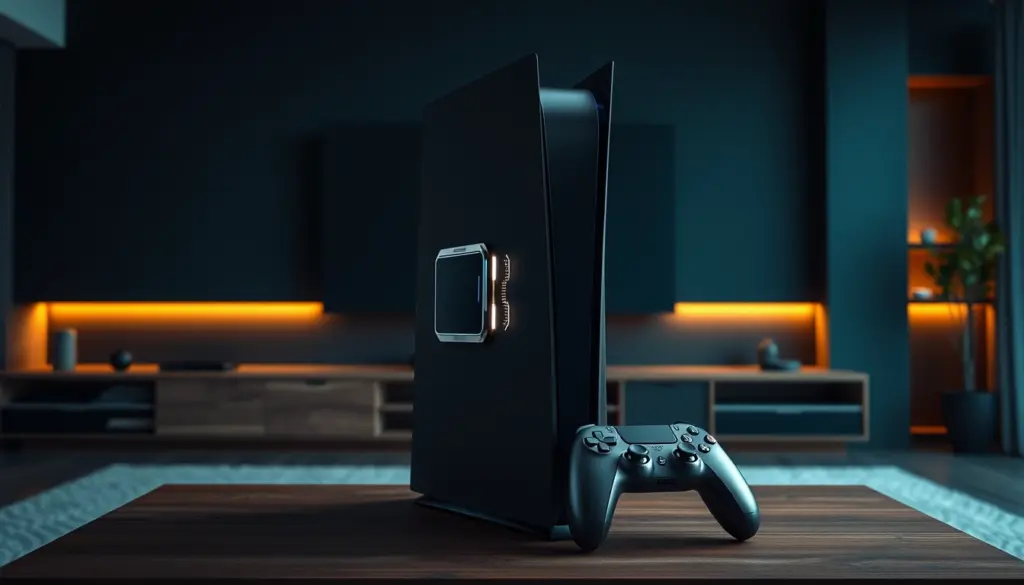
Updated July 6, 2026. Xbox turned 25 this year, and the birthday party told you everything about where the brand is headed. At its June 7 anniversary showcase, Microsoft flooded the stage with games and a commemorative console edition – and said almost nothing about the one product that will decide its next decade. That product is Xbox Project Helix, the codename for the next-generation Xbox, and the silence around it is not neglect. It is strategy. This is the state of the next Xbox as of early July 2026: what Microsoft has actually confirmed, what remains a leak, and why a custom AMD box that promises to play both Xbox and PC games could reshape the console business more than any spec sheet.

Don't miss new tech stories on Google
Add Shattered once in the Google app and our stories show up in your news suggestions.
What Is Xbox Project Helix?
Xbox Project Helix is the internal codename for Microsoft’s next-generation gaming hardware. The name first surfaced publicly in a March 5, 2026 Xbox Wire post and was fleshed out days later at the Game Developers Conference, where the company laid out the technical vision. According to the official Xbox Wire announcement, Jason Ronald, Vice President of Next Generation at Xbox, framed the device in a single sentence: “Project Helix is designed to play your Xbox console and PC games, delivering leading performance and ushering in the next generation of console gaming.”
Read that carefully, because it is the whole thesis. Every Xbox before it has been a closed appliance that ran only Microsoft-sanctioned software. Project Helix is being built to run your Xbox console and PC games – a hybrid that treats the living-room box and the gaming PC as one platform rather than two rival products. Microsoft confirmed the hardware is powered by a custom AMD system-on-chip, co-designed for the next generation of DirectX and AMD’s FSR upscaling technology, and promised what it called an “order of magnitude leap in ray tracing performance and capability.” Those are the officially sanctioned facts. Everything spicier – the exact chip, the storefronts, the price – is either a leak or a carefully hedged executive tease. Keeping that line straight is the entire job of covering this story honestly, and it is where most of the Project Helix coverage online falls apart.
Why Xbox Stayed Silent at Its 25th-Anniversary Showcase
The original Xbox launched in November 2001, which made the June 7, 2026 Xbox Games Showcase a 25th-anniversary moment. Fans expected a next-gen reveal. Instead, Microsoft showed games and a commemorative Xbox Series X25 anniversary edition, and left Project Helix entirely off the stage. This was flagged well in advance. In May 2026, Matt Booty, who leads Xbox’s game content and studios, told press that the showcase would stay focused on titles rather than hardware strategy, saying the company wanted to “get everything about that right” and would address Helix “at a later time” in 2026.
That restraint is a tell. As TechRadar reported, Microsoft still plans to share more on the next console “later this year,” keeping the deep-dive out of a games showcase where it could overshadow launches and confuse messaging. Holding a hardware reveal back also buys time: silicon does not lock until roughly early 2027, so any spec Microsoft commits to now risks being outdated or embarrassing by launch. As T3 noted of the anniversary event, the company technically acknowledged its “next console is well underway” without offering a name, price, or window. For a brand that has spent this generation cutting hardware prices and shipping its exclusives to PlayStation, a controlled, later-in-the-year Helix unveiling is the disciplined play – not a stumble.
The AMD Deal Behind Project Helix
Project Helix did not begin in March 2026. It began in June 2025, when Xbox and AMD went public with a strategic, multi-year partnership to co-engineer the silicon for future Xbox devices. The Xbox Wire announcement quoted Sarah Bond, President of Xbox: “Xbox and AMD are working together to advance the state of the art in gaming silicon across the Xbox ecosystem.” AMD Chair and CEO Lisa Su matched it, saying AMD “will extend its console work to design a full roadmap of gaming-optimized chips combining the power of Ryzen and Radeon for consoles, handhelds, PCs, and cloud.”
The scope is what matters. This is not a one-console chip deal like the ones that produced the Xbox Series X and PlayStation 5. It is a portfolio agreement spanning living-room consoles, handhelds, cloud servers, and accessories – the same Ryzen-plus-Radeon foundation reused across every device Xbox ships. That is how a next-gen console, a first-party handheld, and cloud instances can eventually share an architecture and a compatibility layer. It also explains the single most quoted line of the entire announcement: Microsoft’s commitment to “deliver an enduring gaming platform that enables you to play across devices in entirely new ways, with an Xbox experience designed for players – not locked to a single store or tied to one device.” That last clause is the one that set the internet on fire.
Will the Next Xbox Run Steam? The Open-Platform Pivot
“Not locked to a single store” is the phrase that launched a thousand headlines claiming the next Xbox will run Steam. Here is the honest version. Microsoft has officially stated the vision: an Xbox experience not tied to one storefront or one device. Jason Ronald has officially confirmed Project Helix is designed to play “your Xbox console and PC games.” Those two facts strongly imply that Steam, the Epic Games Store, GOG, and other Windows storefronts could run on the next Xbox the way they run on any PC. What Microsoft has not done is publish a storefront policy, name Steam, or commit to any specific PC store. Every outlet that tells you the next Xbox “will run Steam” is extrapolating from an intent, not reporting a confirmed feature.
The extrapolation is reasonable, though. Project Helix is a custom AMD x86 machine with a Windows lineage, and Microsoft has already shipped the Xbox full-screen experience for Windows 11 – a controller-first interface that began rolling out in April 2026 and debuted on the ROG Xbox Ally handheld. If the next Xbox boots a Windows-derived OS into that console shell, opening it to third-party stores is a policy decision, not an engineering hurdle. It would also mirror what Valve has done in reverse: SteamOS is expanding onto third-party handhelds, and the Steam Machine put a SteamOS living-room PC on shelves at $1,049. Both companies are converging on the same idea – a game box that behaves like an open PC. The difference is that Valve started open and is adding polish, while Xbox started closed and is deciding how far to open. For gamers who have watched the industry lock down ownership, the storefront question is the most consequential part of the entire Project Helix story.
The bigger pattern is Windows becoming the shared substrate under every Xbox device – handheld, living-room console, and cloud – with the player choosing a form factor while the store access and library follow. It is the mirror image of Valve’s Linux-and-Proton push, and the two visions are already colliding across handhelds and living rooms, a fight we mapped in Bazzite vs SteamOS. The catch is that a Windows-derived console inherits desktop overhead and a wider attack surface than a purpose-built console OS – a trade-off explored in the security section below.
Confirmed vs Rumored: What We Actually Know
The fastest way to get this story wrong is to blur official facts and leaks together. The table below separates them cleanly. Treat the “Confirmed” rows as Microsoft’s own words; treat everything marked “Reported,” “Rumored,” or “Estimated” as unofficial and subject to change.
| Detail | Status | Source |
|---|---|---|
| Codename “Project Helix” | Confirmed | Xbox Wire, Mar 11, 2026 |
| Custom AMD system-on-chip | Confirmed | Xbox Wire |
| Plays Xbox console and PC games | Confirmed | Jason Ronald, VP Next Generation |
| “Order of magnitude” ray-tracing leap | Confirmed claim | Xbox Wire |
| Backward compatible across 4 Xbox generations | Confirmed | Xbox Wire |
| “Not locked to a single store or device” | Confirmed vision | Sarah Bond, President of Xbox |
| Developer alpha kits ship in 2027 | Confirmed | Xbox Wire |
| RDNA 5 GPU / Zen 6 CPU / TSMC 3nm | Reported (leak) | Moore’s Law Is Dead, WCCFTech |
| Runs Steam / Epic specifically | Rumored | Extrapolation from “open” vision |
| Consumer launch in 2028 | Estimated | Analysts / press |
| Retail price (“very premium”) | Teased, no figure | Sarah Bond, Oct 2025 |
Inside the Leaked “Magnus” Specs
Now the fun, load-bearing caveat: none of the following is confirmed by Microsoft or AMD. The most detailed spec picture comes from leaker Moore’s Law Is Dead, whose “Magnus” SoC breakdown has been aggregated by outlets including WCCFTech and Guru3D. These figures could change entirely before silicon locks around early 2027, and I am presenting them as a leak that exists, not as fact. With that firmly stated, here is the reported package next to the verified specs of today’s Xbox Series X for scale.
| Component | Leaked Project Helix (“Magnus”) | Xbox Series X (verified, for reference) |
|---|---|---|
| GPU architecture | AMD RDNA 5 | AMD RDNA 2 |
| Compute units | ~68 CUs | 52 CUs |
| GPU clock (est.) | ~2.5 GHz | 1.825 GHz |
| CPU | Hybrid: 3× Zen 6 + 8× Zen 6c | 8× Zen 2 |
| CPU clock (est.) | >5 GHz on performance cores | 3.8 GHz (3.6 GHz w/ SMT) |
| Memory | Up to 48GB GDDR7, 192-bit | 16GB GDDR6, 320-bit |
| Process node | TSMC 3nm | TSMC 7nm |
| Die size (est.) | ~408 mm² (largest console APU ever) | ~360 mm² |
| Rasterization vs Series X | ~5–6× (est.) | 1× baseline (12.15 TFLOPS) |
| Ray tracing vs Series X | Up to ~20× (est.) | 1× baseline |
If even half of the “Magnus” leak holds, Project Helix would not be an incremental console – it would be a desktop gaming PC in a console shell. Moore’s Law Is Dead’s own estimate pegs raster performance near an RTX 5080 and ray tracing potentially near an RTX 5090, which is why the leak has been described as “PC-class.” A roughly 408 mm² APU would be, by a wide margin, the largest ever put in a console, and 48GB of GDDR7 would dwarf the 16GB in a Series X. It would also be expensive to manufacture, which loops directly back to Sarah Bond’s “very premium” pricing warning. Skepticism is healthy here: leaks this early are aspirational, memory prices are volatile, and Microsoft has explicitly said it may adjust configurations. But the direction – a big, PC-grade AMD chip – is consistent with everything the company has confirmed on the record.
Project Helix vs PlayStation 6: The Next Console War
Here is the twist that makes the next console war stranger than the last: both machines are AMD. Sony’s PlayStation 6 and Microsoft’s Project Helix are each expected to use AMD’s RDNA 5 graphics and Zen 6 CPU cores on TSMC’s 3nm node, because both companies share the same silicon partner. That means the hardware differences will be smaller than the philosophical ones. The table below compares the two on reported figures – again, all unconfirmed – plus the platform choices that actually separate them.
| Spec (reported / unconfirmed) | Xbox Project Helix | PlayStation 6 |
|---|---|---|
| GPU architecture | AMD RDNA 5 | AMD RDNA 5 |
| Compute units (leaked) | ~68 CUs | ~52–54 CUs |
| CPU | AMD Zen 6 (hybrid) | AMD Zen 6 |
| Memory (leaked) | Up to 48GB GDDR7 | Up to 40GB GDDR7 |
| Process node | TSMC 3nm | TSMC 3nm |
| Die size (est.) | ~408 mm² | ~280 mm² |
| Storefront model | Reported open (PC stores) | PlayStation Store (closed) |
| Backward compatibility | 4 Xbox generations | PS5 / PS4 (expected) |
| Developer kits | Alpha in 2027 | Reported 2026–2027 |
| Estimated launch | ~2028 | 2027–2028 (“not decided”) |
On paper, the leaked Helix chip is bigger – more compute units, a larger die, more memory bandwidth. But raw silicon is not the story. Sony’s advantage is a disciplined, fixed-target console that developers optimize for and a first-party lineup that still drives hardware. Microsoft’s bet is the opposite: an open, PC-adjacent box that plays a quarter-century of Xbox games plus your existing PC library. Sony’s CEO said in May 2026 that PS6 timing has “not yet been decided,” and analysts widely expect both machines to land around 2028, partly because the same memory shortage squeezing today’s consoles makes launching expensive new hardware into a price-sensitive market risky. For a broader head-to-head of the current generation, our PS5 vs Xbox Series X breakdown shows how close the hardware race already is – Helix versus PS6 will be even closer.
Backward Compatibility Across Four Xbox Generations
One of the few unambiguous commitments in the March 2026 announcement is backward compatibility. Microsoft says Project Helix will keep games from four generations of Xbox playable – original Xbox, Xbox 360, Xbox One, and Xbox Series X|S – extending the industry’s most aggressive back-compat program rather than resetting it. That is a deliberate contrast to the console norm of starting each generation with a near-empty storefront. It is also a natural fit for the “play everything on one box” pitch: if the machine already runs your PC games, running two decades of Xbox titles is a smaller ask.
Backward compatibility also underpins Xbox Play Anywhere, which Microsoft says now spans more than 1,500 games with over 500 development teams participating – titles you buy once and play on Xbox and PC with shared saves and achievements. Project Helix is the hardware that makes that promise seamless, because it erases the line between the console version and the PC version of a game. For preservation-minded players, robust back-compat is one of the few bright spots in an industry that has spent 2026 fighting over disappearing games, a fight we covered in depth in our report on the Stop Killing Games petition. An Xbox that keeps four generations alive is, quietly, one of the better preservation stories in mainstream gaming.
Release Date: Dev Kits in 2027, Console Around 2028
Microsoft has confirmed exactly one date on the Project Helix roadmap: developer alpha kits ship beginning in 2027. Everything downstream of that is inference. Hardware historically reaches consumers 12 to 18 months after alpha kits reach studios, which puts a realistic launch window in late 2027 at the earliest and, more plausibly, 2028. That is the estimate most analysts and outlets have converged on, and it is the one I will use. The timeline below stitches the confirmed milestones together with the reported ones.
| Date | Milestone |
|---|---|
| Jun 19, 2025 | Xbox–AMD multi-year silicon partnership announced |
| Oct 2025 | Sarah Bond calls next console “very premium,” cites ROG Xbox Ally as a blueprint |
| Mar 5, 2026 | “Project Helix” codename first surfaces on Xbox Wire |
| Mar 11, 2026 | Jason Ronald details architecture in a GDC keynote |
| Apr 2026 | Xbox full-screen mode for Windows 11 begins rollout (ROG Xbox Ally first) |
| Jun 7, 2026 | 25th-anniversary showcase — Helix deliberately held back |
| Jun 25, 2026 | Xbox announces Aug 1 price hikes, blaming the DRAM crisis |
| Later 2026 | Next official Helix information drop expected |
| 2027 | Developer alpha kits ship (confirmed) |
| ~2028 | Expected consumer launch (estimated) |
The DRAM Crisis and the “Very Premium” Price Problem
No conversation about a 2028 console is complete without the memory-price elephant in the room. In October 2025, Sarah Bond described the next Xbox as “very premium” and pointed to the ROG Xbox Ally as a design blueprint – a signal that Microsoft is aiming upmarket, not at a budget box. Then reality intervened. On June 25, 2026, Xbox announced its third round of console price increases, effective August 1: Series S models up $100, Series X models up $150, and the 2TB edition discontinued, all attributed to a DRAM crisis the company says has pushed memory costs up more than 2.5×. Those increases are now in effect, with the disc-based Series X listing at $799.99 and the 512GB Series S at $499.99 on Microsoft’s US store, up from $649.99 and $399.99. We broke down that pricing shock in our report on the PS5 sales crash and console price surge, and the same forces will define Helix’s launch price.
Here is the squeeze in plain terms. The “Magnus” leak calls for up to 48GB of GDDR7 on the largest APU in console history – precisely the components getting more expensive by the month. A console that would already be “very premium” in a normal market becomes genuinely pricey in a memory-starved one. That is a strong reason to expect Microsoft to hold Helix for 2028: launching a high-cost machine into 2027’s shortage would either crush margins or produce a sticker price that scares off the mainstream. It is also why the reported 48GB spec carries an asterisk – the same leaks note Microsoft may ship 36GB instead, depending on where RAM prices land. The DRAM crisis is not a footnote to the Project Helix story. It may be the single biggest variable in when the console arrives and what it costs. For context on today’s Xbox lineup and pricing, see our Xbox Series X vs Series S comparison.
25 Years of Xbox: How Helix Fits the History
Project Helix lands on a milestone. The original Xbox shipped in November 2001 as a black slab that was, essentially, a PC in a console case – an Intel CPU, an NVIDIA GPU, and a hard drive at a time when rivals used custom chips and memory cards. Twenty-five years later, Microsoft is closing the loop: Helix is once again a PC in a console case, only now that is the entire point rather than a cost-saving shortcut. The Xbox 360 defined online console gaming, the Xbox One stumbled on a controversial always-online reveal, and the Xbox Series X|S generation pivoted hard to services, Game Pass, and cross-platform releases.
That services pivot is the connective tissue to Helix. Over the past two years Xbox has shipped former exclusives to rival hardware – most strikingly a Halo game, as we covered when Halo: Campaign Evolved came to PS5. The logic that puts Halo on a PlayStation is the same logic that would put Steam on an Xbox: Microsoft increasingly sells games and subscriptions, not boxes, and it wants its software everywhere. Project Helix is the hardware expression of a company that has quietly stopped believing the console is the product. After 25 years, the box is a delivery mechanism – and Helix is designed to deliver more than just Xbox.
What Project Helix Means for Gamers and the Market
Strip away the leaks and the market impact comes into focus. If Project Helix ships as an open, PC-class console that runs Xbox games, PC storefronts, and 25 years of back-compat, it collapses the wall between “console gamer” and “PC gamer” that has defined the industry since the 1990s – good for players (more choice, less lock-in, one library) and disruptive for anyone selling into the walled-garden model. It also pressures Valve directly, whose Steam Machine and SteamOS chase the same open-living-room target from the Linux side.
The threat to Sony is subtler. A closed PlayStation 6 with a stellar first-party lineup will sell regardless. But if Helix normalizes the idea that a console should run your existing PC games, “closed” starts to look like a limitation – the same way disc-only consoles looked dated once digital libraries took over, a shift we tracked when PlayStation confirmed it will end physical discs by 2028. Both next-gen consoles will be AMD machines within a rounding error of each other, so Helix wins or loses not on teraflops but on whether “the Xbox that plays everything” is a pitch gamers actually want.
5 Predictions for Project Helix Through 2028
- Official reveal in late 2026, launch in 2028. Microsoft’s “later this year” language plus a confirmed 2027 dev-kit milestone points to a full unveiling before year’s end and a consumer launch that slips to 2028 as the memory market and dev timelines dictate.
- Third-party storefront support will be confirmed – with limits. Expect Microsoft to formally allow PC stores like Steam and Epic, but framed as a Windows capability with guardrails (security prompts, an Xbox-first default UI), not a fully unlocked free-for-all on day one.
- A “very premium” launch price at or above $699. Given the DRAM crisis, a largest-ever APU, and Bond’s own “very premium” framing, Helix launches at a price that makes today’s $799 Series X look cheap, likely paired with a lower-cost sibling or cloud tier.
- A first-party Xbox handheld follows the console. The AMD portfolio deal explicitly covers handhelds; a Helix-architecture handheld – the true successor to the ROG Xbox Ally collaboration – arrives within a year or two of the console.
- PS6 and Helix launch within months of each other around 2028. Sharing AMD and TSMC constraints, and the same memory-shortage caution, Sony and Microsoft end up on nearly the same timeline, setting up the closest-spec console war in history.
Security and Ownership: The Hidden Cost of an Open Box
An open console is a security story as much as a gaming one, and it is the angle most Project Helix coverage ignores. A traditional console is locked down by design: a curated store, signed software, and a small attack surface make it one of the safest computing devices most people own. The moment you let a console install software from Steam, Epic, GOG, and the open web, you inherit the PC’s threat model too – malware in pirated games, malicious mods, phishing storefront clones, and account-takeover risk. If Helix runs a Windows-derived OS, it will need Windows-grade defenses: sandboxing, signed-driver enforcement, secure boot, and a clear separation between the trusted Xbox layer and untrusted third-party apps.
Ownership is the other half. “Not locked to a single store” cuts both ways. Buying across multiple storefronts spreads your library across multiple companies’ licensing terms, any of which can change or vanish – the exact fragility that fuels the game-preservation movement. The upside is real: an open box that keeps four Xbox generations playable and lets you bring your existing PC purchases is a genuine win for players who want to actually own and keep their games. The practical advice holds either way – buy from official storefronts, keep two-factor authentication on your Microsoft and storefront accounts, and be wary of “free game” installers that ask for permissions a game never needs. An open Xbox would be more powerful and flexible than any before it, and, for the first time, make console security something the owner has to think about.
Frequently Asked Questions About Xbox Project Helix
What is Xbox Project Helix?
Project Helix is Microsoft’s codename for the next-generation Xbox console. Officially confirmed at GDC in March 2026, it is a custom AMD-powered machine designed, in Jason Ronald’s words, “to play your Xbox console and PC games.” It is not a mid-generation refresh; it is the successor to the Xbox Series X|S.
When will the next Xbox (Project Helix) release?
Microsoft has confirmed only that developer alpha kits ship starting in 2027. Based on typical hardware lead times and the ongoing memory shortage, most analysts expect a consumer launch around 2028, with late 2027 the earliest plausible case. No official launch date exists yet.
Will Project Helix run Steam and other PC storefronts?
Not officially confirmed. Microsoft has said the next Xbox will be “not locked to a single store or tied to one device” and that Helix plays PC games, which strongly implies support for stores like Steam, Epic, and GOG. But Microsoft has not published a storefront policy or named any specific PC store, so treat “runs Steam” as a well-supported expectation, not a confirmed feature.
What are the leaked Project Helix specs?
Unofficial leaks (notably from Moore’s Law Is Dead) describe a “Magnus” SoC with roughly 68 RDNA 5 compute units, a hybrid Zen 6 CPU, up to 48GB of GDDR7, and a TSMC 3nm process on a ~408 mm² die – potentially 5–6× the rasterization of a Series X. None of this is confirmed by Microsoft or AMD, and configurations may change before silicon locks around 2027.
How much will Project Helix cost?
No price has been announced. Sarah Bond called the next console “very premium” in October 2025, and the 2026 DRAM crisis – which already forced Xbox price hikes on August 1, 2026 – points to a launch price notably above today’s $799 Xbox Series X. Expect a high-end console price, likely with a cheaper sibling or cloud option.
Is Project Helix backward compatible?
Yes. Microsoft has confirmed Project Helix will keep games from four generations of Xbox – original Xbox, Xbox 360, Xbox One, and Xbox Series X|S – playable, continuing the industry’s most extensive backward-compatibility program and tying into Xbox Play Anywhere’s 1,500-plus cross-buy titles.
How does Project Helix compare to the PlayStation 6?
Both are expected to use AMD RDNA 5 graphics and Zen 6 CPUs on TSMC’s 3nm node, so the hardware will be close. Leaked figures give Helix more compute units and a larger die, but the real difference is philosophy: Helix is reportedly open to PC storefronts, while PS6 is expected to stay a closed PlayStation Store platform. Both are expected around 2028.
Why didn’t Xbox show Project Helix at its 25th-anniversary showcase?
Microsoft deliberately kept the June 7, 2026 showcase focused on games. Matt Booty said in advance the company wanted to “get everything about that right” and would talk about Helix “at a later time” in 2026. With silicon not locking until around 2027, holding the hardware reveal avoids committing to specs that could change.
Sources and further reading: Xbox Wire – Building the Next Generation of Xbox; Xbox Wire – Xbox and AMD partnership; TechRadar; T3; WCCFTech; Guru3D; TweakTown; Notebookcheck; AMD Investor Relations; Xbox history.