
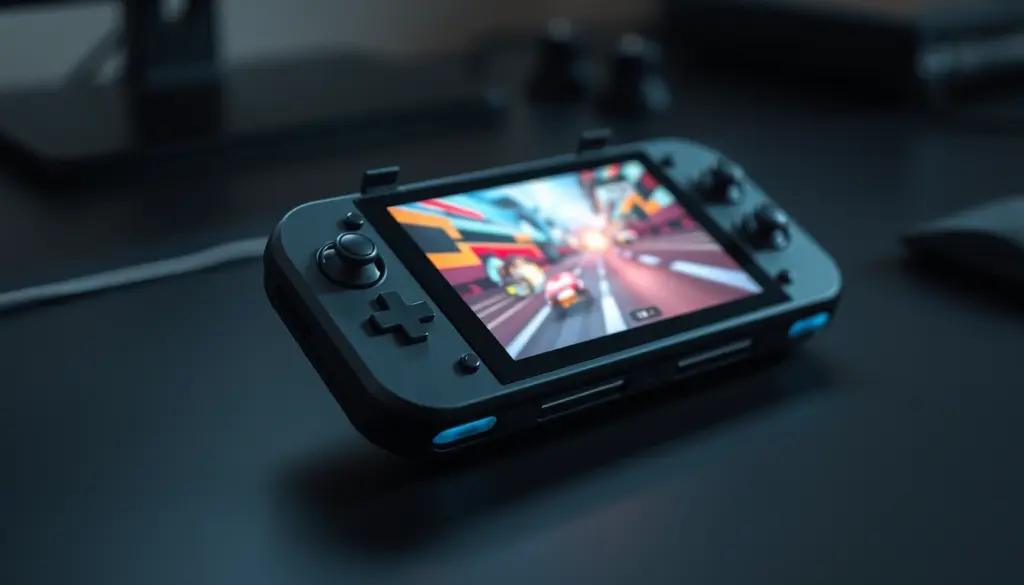
MSI has started selling a cheaper version of its Claw 8 EX AI+ handheld in China, and the way it got there says more about the gaming handheld market than the device itself. The new model, internally coded CG3M, swaps Intel’s flagship Arc G3 Extreme chip for the standard Arc G3, drops the price by 1,000 yuan, and otherwise ships with the same screen, battery, and body as the pricier unit. It is a small move on paper. It is also the clearest signal yet that Intel’s push into handheld silicon is starting to reshape what these devices cost, and who can afford to buy one.
MSI Trims the Price of Its Claw 8 EX AI+ Handheld in China
The CG3M variant of the Claw 8 EX AI+ lists for 10,499 yuan in China with 32GB of memory and 512GB of storage, according to Guru3D. That is 1,000 yuan less than the equivalent Arc G3 Extreme configuration, which lists at 11,499 yuan for the same 32GB/512GB spec. The gap is entirely down to the processor: MSI kept the display, battery, chassis, and every other component identical between the two models. Only the silicon changed, and MSI cut the price to match.
The listing appeared on Chinese retail channels first, then spread to hardware coverage sites tracking the Arc G3 handheld rollout. A US retailer, Excalibur PC, already carries the equivalent SKU under the model number CG3M-072USY, which points to a wider release beyond China. That listing prices US preorders at $1,499, a figure that lines up with earlier reporting that pegged the cheaper Claw at roughly $300 below the Arc G3 Extreme model’s launch price.
Inside the CG3M: What Makes This Configuration Different
Strip away the marketing name and the CG3M is a straightforward downgrade path. The CPU side of the Arc G3 chip keeps the same layout as the Extreme version: 2 performance cores, 8 efficiency cores, and 4 low-power efficiency cores, all built on Intel’s Panther Lake platform. Where the two chips split is the graphics side. The standard Arc G3 pairs with an Arc B370 GPU running 10 Xe cores at a maximum dynamic frequency of 2.2GHz, versus the more powerful iGPU bundled into the Extreme tier.
That trade-off mirrors a pattern MSI and its rivals have leaned on for years in handhelds: keep the expensive, hard-to-change parts (screen, battery, chassis, cooling) constant across a lineup, then use the processor tier to set price points. It’s the same logic Valve used across Steam Deck LCD and OLED models, and the same logic Lenovo applies across its Legion Go line. What’s new here is that Intel, not AMD, now supplies the chip doing the differentiating.
Xe3 Core Count and Clock Speeds
Intel’s Arc B370 sits in the same Xe3 graphics family that powers the higher-tier Arc B390 found in the Extreme chip, which shattered.io covered in detail when it landed in Panther Lake laptops and handhelds benchmarking near an RTX 4050. The B370’s 10 Xe cores and lower clock ceiling put a real gap between it and the B390, though Intel has not published head-to-head frame-rate figures for the two chips in handheld form factors as of this writing. Buyers choosing the CG3M are explicitly trading graphics headroom for a lower sticker price, not getting a free lunch.
Display, Battery and Build Quality Stay Unchanged
Everything outside the processor stayed put. The CG3M uses the same 8-inch WUXGA (1920×1200) IPS touchscreen as the Extreme model, running at 120Hz with 500 nits brightness, 100% sRGB coverage, and variable refresh rate support. Battery capacity holds at 80Wh, and cooling is handled by the same dual-fan, dual-heat-pipe system MSI ships across the Claw 8 EX AI+ line.
MSI also kept the control layout untouched: Hall-effect sensor joysticks and triggers, which resist the drift that plagues cheaper potentiometer-based sticks over time, plus Hi-Res Audio-certified dual speakers. For a device positioned as the budget option in MSI’s own lineup, that’s a meaningful decision. It means the CG3M isn’t a stripped-down handheld in the way a cheaper phone often ships with a worse screen or a smaller battery. It’s the same hardware shell running a less powerful graphics chip.
Connectivity and Controls: Wi-Fi 7, Thunderbolt 4, Hall-Effect Sticks
On the connectivity front, the CG3M carries Wi-Fi 7, Bluetooth 6.0, two Thunderbolt 4 ports, and a microSD Express card reader. Thunderbolt 4 support matters more on a handheld than it might on a laptop, since it’s the port most owners will use to connect an external GPU dock or a higher-speed storage expansion when the onboard 512GB fills up with modern game installs.
None of this connectivity package changed from the Extreme model either. MSI’s approach here reads less like a budget SKU and more like a straightforward binning strategy: take one chassis design, offer it with two different processor tiers, and let the GPU silicon do the price segmentation. That’s a lower-risk way to expand a lineup than designing an entirely new device, and it’s consistent with how MSI built out variants of the original Claw before Intel’s newer platform arrived.
Pricing Breakdown: CG3M vs the Arc G3 Extreme Model
The table below lays out what changes and what doesn’t between the two Claw 8 EX AI+ configurations, based on the China retail listings and the confirmed spec sheet.
| Spec | Claw 8 EX AI+ (CG3M / Arc G3) | Claw 8 EX AI+ (Arc G3 Extreme) |
|---|---|---|
| China price (32GB/512GB) | 10,499 yuan | 11,499 yuan |
| GPU | Intel Arc B370, 10 Xe cores, 2.2GHz max | Intel Arc B390 (higher core count) |
| CPU layout | 2P + 8E + 4 low-power E cores | 2P + 8E + 4 low-power E cores |
| Memory / storage | 32GB / 512GB | 32GB / 512GB |
| Display | 8-inch WUXGA, 120Hz, 500 nits | 8-inch WUXGA, 120Hz, 500 nits |
| Battery | 80Wh | 80Wh |
| US preorder price | $1,499 (retailer listing) | Approximately $300 higher, per retailer pricing |
The 1,000 yuan gap in China (roughly $140 at current exchange rates) is smaller than the reported $300 spread in US retail listings, which suggests importers and Western retailers are pricing in additional margin, tariffs, or currency-conversion buffer rather than passing through MSI’s domestic discount one-for-one.
How This Fits Intel’s Arc G3 Platform Launch
Intel introduced the Arc G3 and Arc G3 Extreme platform on May 28, 2026, positioning both chips as Panther Lake-derived silicon purpose-built for Windows 11 gaming handhelds, according to Intel’s own newsroom announcement. The launch named a broad partner list, including Acer, Compal, Foxconn, GPD, Inventec, Microsoft, MSI, OneXPlayer, Pegatron, and Wistron, signaling Intel wanted handheld makers building on Arc G3 from day one rather than treating it as a niche experiment.
That launch also arrived at an awkward moment for pricing. shattered.io reported at the time that Panther Lake-based laptops were shipping with OLED upgrades alongside roughly 10% CPU price increases, a reflection of how memory and component costs were already squeezing margins across Intel’s client lineup well before any handheld reached retail shelves.
A Six-Month Build-Up to Retail Handheld Silicon
From Intel’s May announcement to MSI’s China listing in September, roughly four months passed before Arc G3 chips reached a shipping product buyers could actually order. Acer’s Predator Atlas 8, another handheld confirmed for the Arc G3 platform, is currently slated for an October 2026 launch, putting MSI’s CG3M among the first Arc G3-powered devices to reach a retail listing anywhere in the world.
Market Impact: A Handheld Price War Amid a Memory Shortage
MSI’s price cut lands in the middle of a memory market that has made every device with 16GB or more of RAM meaningfully more expensive to build. shattered.io has tracked how RAM now accounts for as much as 60% of the bill of materials on some budget phones, and how that same pressure is squeezing laptop and phone pricing across the board. A handheld gaming PC with 32GB of LPDDR5X, like the Claw 8 EX AI+, sits squarely inside that cost pressure zone.
Against that backdrop, MSI cutting 1,000 yuan off a configuration by swapping only the GPU silicon, while keeping memory capacity fixed, shows where manufacturers still have room to move: the processor tier, not the memory or display. That’s a narrower lever than it was two years ago, when RAM and storage upgrades offered an easier way to spread a product across price points. Valve faced a version of the same math when it acknowledged pressure around its own hardware roadmap in reporting on the Steam Deck’s pricing and the prospects for a second-generation device.
Competitive Landscape: ASUS, Lenovo and Valve
The Claw 8 EX AI+ CG3M doesn’t launch into an empty field. ASUS, Lenovo, and Valve all currently sell handhelds in the same rough price band, though none of them use Intel silicon. The table below compares officially published specs and prices for each.
| Device | Price | Chip | RAM / Storage | Display |
|---|---|---|---|---|
| MSI Claw 8 EX AI+ (CG3M) | 10,499 yuan / $1,499 (US preorder) | Intel Arc G3 (Arc B370 GPU) | 32GB / 512GB | 8-inch WUXGA, 120Hz |
| ASUS ROG Xbox Ally X | $999.99 | AMD Ryzen Z2 Extreme | 24GB / 1TB | 7-inch FHD, 120Hz |
| Lenovo Legion Go 2 (SteamOS) | From $1,199 | AMD Ryzen Z2 Extreme | Up to 32GB / up to 2TB | 8.8-inch OLED, 144Hz |
The ASUS ROG Xbox Ally X undercuts MSI’s cheaper Claw on raw price, but ships with less RAM and a smaller, lower-resolution screen. Lenovo’s Legion Go 2 with SteamOS sits closer to the CG3M on price and matches its RAM ceiling, but trades Windows compatibility for Valve’s operating system and pairs it with a larger OLED panel. Every device in this comparison runs on AMD silicon except MSI’s Claw line, which makes Intel’s Arc G3 the only non-AMD option in this specific price bracket as of September 2026.
The US Angle: A $1,499 Preorder Signal
The Excalibur PC listing for the CG3M-072USY variant puts US pricing at $1,499, which is notably higher than the China price converts to directly. That gap is normal for handheld hardware sold in the US, where import costs, retailer margin, and MSI’s own regional pricing strategy all add up. Still, $1,499 places the cheaper Claw well above both the ROG Xbox Ally X and the Legion Go 2’s SteamOS starting price, undercutting only the Arc G3 Extreme version of the same Claw chassis.
That pricing gap matters for how buyers will actually read this launch. In China, the CG3M reads as a genuine budget option. In the US, where the listing currently sits, it reads more like a mid-tier choice sandwiched between AMD-based rivals on one side and MSI’s own flagship on the other. Whether MSI adjusts US pricing before a wider launch is one of the open questions around this release.
What’s Still Unconfirmed About the CG3M Launch
A few details around this launch remain open. MSI has not published an official global launch date for the CG3M through its own channels, and no on-record statement from an MSI representative has surfaced alongside the China listing. The $1,499 US figure currently traces back to a single retailer listing rather than an MSI press release, so that number could shift before the device reaches wider availability. Readers should treat the China retail price as the most solid data point in this story, and treat the US figure as directionally accurate but not yet locked in.
MSI’s Handheld Learning Curve Since the Original Claw
MSI’s first Claw, built on an earlier Intel Core Ultra chip, launched into a market that already had Valve’s Steam Deck and ASUS’s ROG Ally established as reference points. That first Claw struggled against software and driver issues tied to its Intel Arc graphics stack, criticism that trailed the product for months after launch. The Arc G3 platform represents Intel’s second attempt at handheld-specific silicon, built from the ground up on Panther Lake rather than adapted from a laptop chip, and MSI’s willingness to offer two price tiers on day one suggests more confidence in the underlying hardware than it had with the original Claw.
That history matters for how seriously buyers should take Intel’s renewed push. A single generation of driver improvements doesn’t erase years of AMD’s head start in handheld-optimized graphics drivers, but Intel shipping a second, more mature handheld platform, with a broader partner list than its first attempt, is a different signal than a one-off product refresh.
Predictions: Where the Handheld Price War Goes Next
A few trends look likely to play out over the next two quarters.
- More handheld makers will follow MSI’s two-tier approach, offering a single chassis with a choice of Arc G3 or Arc G3 Extreme rather than designing separate budget and flagship devices from scratch.
- Expect Acer’s Predator Atlas 8, due in October 2026, to arrive with its own two-tier pricing split once it reaches retail, testing whether Intel’s chip strategy holds up outside MSI’s ecosystem.
- US pricing on the CG3M will likely come down from the current $1,499 retailer listing once MSI issues an official regional launch, given how far it sits above the China-converted price.
- Memory costs, not GPU tier, will keep pushing baseline handheld prices upward through early 2027, meaning even budget configurations like the CG3M may not stay this affordable for long.
- AMD will face pressure to respond with its own tiered handheld chip strategy if Intel’s Arc G3 platform gains traction beyond MSI, given how closely ASUS and Lenovo currently track AMD’s Ryzen Z2 roadmap.
FAQ
What is the MSI Claw 8 EX AI+ CG3M?
It’s a cheaper configuration of MSI’s Claw 8 EX AI+ handheld that uses Intel’s standard Arc G3 chip instead of the Arc G3 Extreme, priced at 10,499 yuan in China with 32GB of memory and 512GB of storage.
How much cheaper is the CG3M than the Arc G3 Extreme model?
It lists for 1,000 yuan less in China (10,499 yuan versus 11,499 yuan) for the same memory and storage configuration.
What’s the difference between Intel’s Arc B370 and Arc B390 GPUs?
The Arc B370, used in the standard Arc G3 chip, runs 10 Xe cores at up to 2.2GHz. The Arc B390 in the Arc G3 Extreme chip offers a higher core count. Both belong to Intel’s Xe3 graphics family built on the Panther Lake platform.
Is the MSI Claw 8 EX AI+ CG3M available in the US?
A US retailer, Excalibur PC, lists the equivalent SKU (CG3M-072USY) with preorder pricing around $1,499, though MSI has not confirmed an official global launch date.
How does the CG3M compare to the Steam Deck or ROG Xbox Ally X?
The ASUS ROG Xbox Ally X starts at $999.99 with 24GB of RAM and a 7-inch display, undercutting the CG3M’s reported US price. Lenovo’s Legion Go 2 with SteamOS starts at $1,199 with up to 32GB of RAM and an 8.8-inch OLED screen, sitting closer to the CG3M on price.
Did MSI change anything besides the processor on the cheaper model?
No. The display, battery, chassis, cooling system, and connectivity are identical between the CG3M and the Arc G3 Extreme version of the Claw 8 EX AI+.
When did Intel launch the Arc G3 handheld platform?
Intel announced Arc G3 and Arc G3 Extreme on May 28, 2026, naming partners including Acer, MSI, Microsoft, and GPD among others building handhelds on the platform.
Will other manufacturers offer a similar two-tier Arc G3 handheld?
Acer’s Predator Atlas 8, expected in October 2026, is confirmed to use the Arc G3 platform, and other partners named at Intel’s May launch may follow MSI’s approach of offering both chip tiers in a single chassis design.
Related
- Intel Arc B390 iGPU Nears RTX 4050 Under 50W
- Intel Panther Lake Laptops Hit OLED, CPUs Rise 10%
- RAM Now 60% of Phone Cost, Sparks Fake-Chip Checks
- Legion Go 2 vs Steam Deck OLED
- Steam Deck Hits $500, Valve Confirms Deck 2 Coming