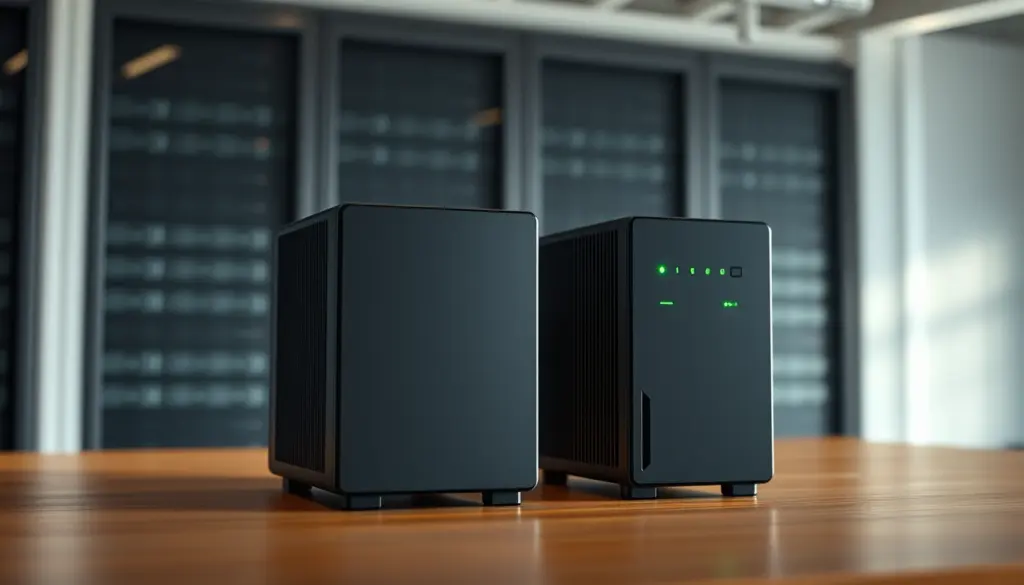
Nvidia used to sell one local AI computer. As of October 2, 2026, it sells two, and the gap between them just got more expensive. The company’s newsroom confirmed a 64GB configuration of its DGX Spark desktop AI box priced at $4,999, arriving the same day reports surfaced that the existing 128GB model had climbed to $6,950. Same chip, same memory bandwidth, half the unified memory, and a price spread that tells its own story about where AI hardware costs are headed this fall.
The move lands in the middle of what Tom’s Hardware has been calling a “RAMpocalypse,” a memory crunch that’s pushing up prices across the PC and AI hardware market. For developers who’ve been priced out of the original DGX Spark, the cheaper 64GB unit is a lifeline. For everyone who already needs 128GB of unified memory to run bigger local models, the math just got worse.
What Nvidia Announced on October 2, 2026
Nvidia’s newsroom published the announcement under the headline “NVIDIA DGX Spark 64GB Gives Developers More Ways to Build and Scale Local AI.” The post frames the new configuration as an entry point rather than a replacement, aimed at developers and researchers who want to prototype and fine-tune models locally without renting cloud GPU time. The 64GB DGX Spark starts at $4,999, according to Nvidia’s own materials.
On the same day, outlets including Tom’s Hardware and Hardware Busters reported that the existing 128GB DGX Spark had risen to $6,950. Neither Nvidia nor the retailers quoted gave a single reason for the increase, but the timing, landing alongside a cheaper 64GB sibling, reads less like a coincidence and more like a repricing of the whole lineup around current memory costs.
Inside the GB10 Grace Blackwell Superchip
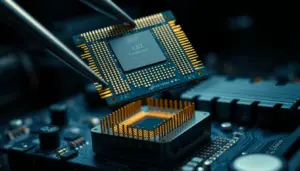
Both DGX Spark configurations run on the same silicon: Nvidia’s GB10 Grace Blackwell Superchip, which pairs an Arm-based Grace CPU with a Blackwell-generation GPU on a single module. That’s a meaningfully different architecture from a conventional x86 desktop or workstation. Instead of a discrete GPU talking to a separate CPU over PCIe, the Grace and Blackwell dies share a unified memory pool, which is the entire point of the product. A local large language model doesn’t care whether its weights sit in “GPU memory” or “system memory” if the two are the same pool with high bandwidth between compute units.
According to Tom’s Hardware’s reporting, the 64GB model keeps the same GB10 chip and the same memory bandwidth as the 128GB version. The only thing that changes is how much unified memory you get to work with. That’s an unusual way to segment a product line. Most companies would cut a corner on compute to hit a lower price point. Nvidia instead cut capacity and left the engine alone, which says something about how it wants customers to think about the tradeoff: this isn’t a slower DGX Spark, it’s a smaller one.
Same Chip, Half the Memory: What You Actually Lose at 64GB
For anyone running quantized 7B or 13B-parameter models, 64GB of unified memory is comfortable headroom. The practical ceiling shows up once you move into 30B-plus parameter territory, or when you want to keep a vector database, a tokenizer, and a model loaded simultaneously for an agentic workflow. Developers who need to fine-tune rather than just run inference also eat into that budget fast, since optimizer states and gradients add overhead on top of the model weights themselves.
This is why Nvidia frames the 64GB unit as being for “those who can work with less,” in the words of Tom’s Hardware’s headline describing the launch. It isn’t a downgrade for every use case, just the ones that need the larger pool. A developer testing an open-weight 8B model, building a RAG pipeline, or doing early-stage experimentation before scaling to cloud GPUs is the exact buyer Nvidia is describing.
Why the 128GB Model Just Got $1,951 More Expensive
Nvidia hasn’t published an official explanation for the 128GB price increase, and no Nvidia representative has gone on record with a stated reason, so any explanation beyond the reported number itself is analysis rather than confirmed fact. What’s confirmed is the figure: Hardware Busters reported the jump to $6,950, specifically tying the increase to the same announcement window as the 64GB launch.
The more interesting read is structural. Unified memory on a GB10 module isn’t commodity DDR you can swap from a cheaper supplier; it’s tightly integrated with the Grace-Blackwell package. When memory input costs rise across the board, as they have through 2026, a product built around 128GB of that memory absorbs a proportionally bigger hit than one built around 64GB. Nvidia didn’t just add a new SKU. It restructured pricing so the memory-constrained buyer pays more, while the compute-focused buyer who’s happy with less memory gets a new lower door.
The Memory Shortage Behind the Price Hike
The DGX Spark reshuffle didn’t happen in a vacuum. Across the PC hardware market, 2026 has been defined by tightening memory supply as AI data center demand competes with consumer and workstation markets for the same DRAM and HBM capacity. Shattered.io has already covered how Nvidia’s next-generation Rubin Ultra accelerator lost a third of its planned memory allocation to the HBM shortage, and how DRAM pricing has climbed past the cost of leading-edge TSMC silicon on a per-unit basis.
Hardware Busters’ own reporting from the same day placed the DGX Spark pricing story next to a separate data point: the Steam Hardware Survey showing 32GB of system RAM overtaking 16GB as the most common configuration among surveyed gamers for the first time. That’s a consumer-side signal of the same underlying pressure. Memory that used to be an afterthought in a PC build is now a line item buyers negotiate over, and AI-specific hardware like DGX Spark sits right at the center of that squeeze because unified memory is the product, not an accessory to it.
DGX Spark vs RTX Spark: Nvidia’s Two-Track Local AI Strategy
DGX Spark isn’t Nvidia’s only bet on AI computing that stays on your desk instead of in a data center. The company is also pushing RTX Spark, a parallel line that puts a similar Grace-plus-Blackwell combination into mainstream Windows PCs rather than developer workstations. Reuters reported in early September that Lenovo and Acer would ship the first RTX Spark-powered Windows machines in October 2026, extending Nvidia’s Arm-plus-GPU approach from niche developer hardware into consumer and prosumer PCs. Shattered.io has previously covered the broader RTX Spark rollout to six PC makers and the specific N1X chip powering those systems.
The two product lines answer different questions. DGX Spark asks how much unified memory a developer needs for local AI work, while RTX Spark asks how to put AI acceleration into a normal PC form factor. Together they show Nvidia hedging across price points and buyer types rather than betting everything on one local AI hardware category.
DGX Spark 64GB vs 128GB: Specs and Pricing
| Spec | DGX Spark 64GB | DGX Spark 128GB |
|---|---|---|
| Starting price | $4,999 | $6,950 |
| Chip | GB10 Grace Blackwell Superchip | GB10 Grace Blackwell Superchip |
| Unified memory | 64GB | 128GB |
| Memory bandwidth | Same as 128GB model, per Tom’s Hardware | Same as 64GB model, per Tom’s Hardware |
| CPU architecture | Arm-based Grace CPU | Arm-based Grace CPU |
| GPU architecture | Blackwell | Blackwell |
| Primary use case | Entry-level local AI development, inference | Larger model fine-tuning, multi-model workflows |
| Announced | October 2, 2026 (Nvidia Newsroom) | Price increase reported October 2, 2026 |
Who Actually Buys a $4,999 AI Workstation
Nvidia’s own positioning is explicit about the audience: developers, researchers, and teams building and testing AI models locally before scaling to cloud infrastructure. That’s a narrower buyer pool than a gaming GPU or even a professional workstation GPU, and it explains why the pricing conversation skews differently than it would for, say, an RTX 5090. A $4,999 entry price is steep for a hobbyist, but it’s a rounding error for an engineering team that would otherwise burn that much in cloud GPU hours within weeks.
The buyer calculus usually comes down to a simple comparison: the cost of renting equivalent GPU-hours in the cloud against the fixed cost of owning a local box you control. A small team iterating constantly on a fine-tuned model, or a developer who needs to work with sensitive data that can’t leave the building, tends to land on “buy” even at this price. A team doing one-off training runs on massive models tends to land on “rent,” which is exactly why Nvidia still sells data center-scale Blackwell and the forthcoming Rubin generations alongside DGX Spark rather than instead of it.
From DGX Station to DGX Spark: A Short History
Nvidia’s desktop AI hardware didn’t start with DGX Spark. The company has sold DGX-branded systems for years, historically as rack-mounted or large tower systems aimed at enterprise data science teams, priced well into five and six figures. DGX Spark represents a deliberate miniaturization of that idea: take the DGX software stack and philosophy, shrink the hardware into something that sits on a desk, and price it for an individual developer or small team rather than an IT procurement department.
The 64GB/128GB split announced this week is the next step in that same direction, segmenting what used to be a single SKU into a tiered product line the way Apple segments its Mac lineup by memory, or the way cloud providers tier GPU instances by VRAM. It’s a sign DGX Spark has found enough of a market to be worth tiering rather than selling as one fixed configuration.
Competitive Landscape: AMD, Apple, and the Race for Local AI Compute
Nvidia doesn’t have this category to itself, even if it currently sets the pace. Digitimes reported this week that AMD continues to push into the AI accelerator market where Nvidia still holds, in Digitimes’ words, the upper hand, pointing to deals like cloud provider Vultr’s reported $1.2 billion order for AMD Helios AI rack systems, combining 72 MI455X GPUs per rack, disclosed by HPE on September 30. That’s a data center-scale deal rather than a desktop one, but it underlines that AMD is competing for AI infrastructure spending broadly, even where it hasn’t shipped a direct desktop answer to DGX Spark.
Apple sits in a different lane entirely. Rather than an Arm CPU paired with a discrete Blackwell GPU, Apple’s approach bundles everything into its own silicon. Shattered.io covered the M5 Ultra Mac Studio’s local AI performance, a machine that competes for some of the same local-inference use cases at a different price and architecture tradeoff. None of these approaches are identical, which is itself the point: local AI hardware isn’t one product category in 2026, it’s three or four different bets on where developers want their compute to live.
Nvidia’s 2026 Local and Edge AI Hardware Lineup
| Product | Price | Memory | Status as of Oct. 2, 2026 |
|---|---|---|---|
| DGX Spark 64GB | $4,999 | 64GB unified | Announced, GB10 Grace Blackwell |
| DGX Spark 128GB | $6,950 | 128GB unified | Existing model, price increased |
| RTX Spark N1X (desktop) | Not disclosed in this report | Not disclosed in this report | Covered separately by Shattered.io |
| RTX Spark Windows PCs (Lenovo, Acer) | Not yet announced | Not disclosed | Launching October 2026, per Reuters |
| NVLink Fusion / NVHBM | Not applicable (interconnect tech) | N/A | Announced October 1, 2026 |
That NVLink Fusion announcement is worth a separate note. Nvidia’s developer blog described it on October 1 as a way to bring NVHBM, a next-generation high-bandwidth memory approach, into future AI infrastructure. It’s a data center-scale interconnect story rather than a DGX Spark feature, but it lands one day before the DGX Spark reshuffle, in the same week Nvidia is clearly trying to control the memory narrative across its entire product stack, from desktop boxes to rack-scale systems.
What the Pricing Signals About Nvidia’s Margins and Strategy
Splitting a single SKU into a cheaper, memory-reduced version and a pricier, memory-increased version is a classic way to protect margin on the high end while opening the funnel on the low end. If Nvidia’s own input costs for unified memory have risen, as the broader DRAM and HBM shortage reporting suggests, a flat price increase across the whole DGX Spark line risks pricing out the developer audience it’s trying to court. A two-tier structure solves that: entry-level buyers get a new, lower door at $4,999, while buyers who specifically need 128GB, arguably the segment least likely to walk away over price, absorb more of the increase.
It also reinforces something Nvidia has leaned on all year: compute is not the constraint anymore, memory is. The GB10 chip itself didn’t get more expensive to manufacture between the 64GB and 128GB configurations. The cost delta is almost entirely the memory package, which is exactly the component category squeezed hardest by 2026’s supply shortages.
Predictions: Where Local AI Hardware Pricing Goes From Here
- Expect more memory-tiered SKUs, not fewer. If the 64GB/128GB split works commercially for DGX Spark, look for Nvidia to apply the same playbook to RTX Spark PCs and future DGX hardware rather than selling fixed configurations.
- Prices on the high-memory tier will likely keep drifting up through early 2027 if HBM and DRAM supply stays tight, based on the trajectory already visible in Rubin Ultra’s memory allocation cuts and broader DRAM pricing.
- Watch for AMD to announce a more direct desktop or small-form-factor answer to DGX Spark, rather than only competing at data center rack scale through deals like the Vultr Helios order.
- RTX Spark’s October 2026 Windows PC launch from Lenovo and Acer will be the next real pricing data point. Expect comparisons to DGX Spark’s $4,999 floor the moment retail prices land.
- Local AI hardware marketing will increasingly quote unified memory capacity as the headline spec, the way GPU marketing has long quoted VRAM, because it’s now the number that actually gates what a buyer can run.
What Developers and IT Buyers Should Do Now
Anyone evaluating DGX Spark today should start by sizing the actual models they plan to run, rather than buying based on price alone. A quick local memory check on an existing machine is a useful gut-check before committing to a configuration:
# Rough estimate of memory needed for a quantized model
# (parameters in billions x bytes-per-parameter at target quantization)
python3 -c "
params_b = 13          # model size in billions of parameters
bytes_per_param = 0.5  # ~4-bit quantization
print(f'{params_b * bytes_per_param:.1f} GB for weights alone')
"
That number is just the weights. Add headroom for context windows, any fine-tuning overhead, and whatever else is running alongside the model, and the gap between 64GB and 128GB stops looking abstract. Teams already committed to larger local models should budget for the $6,950 128GB configuration now rather than assuming prices settle back down; nothing in the current memory market reporting points to near-term relief. Teams doing lighter local inference and prototyping have a genuinely cheaper, capable option at $4,999 that didn’t exist before this week.
FAQ: Nvidia DGX Spark 64GB and 128GB Pricing
What is the Nvidia DGX Spark 64GB price?
Nvidia’s newsroom lists the 64GB DGX Spark starting at $4,999, announced October 2, 2026.
Why did the DGX Spark 128GB price increase to $6,950?
Nvidia has not published an official reason. Hardware Busters and Tom’s Hardware reported the increase alongside the 64GB launch, which lines up with wider memory supply pressure affecting DRAM and HBM pricing across the industry this year.
What chip powers both DGX Spark configurations?
Both the 64GB and 128GB DGX Spark use Nvidia’s GB10 Grace Blackwell Superchip, combining an Arm-based Grace CPU with a Blackwell-generation GPU and shared unified memory.
Is the 64GB DGX Spark slower than the 128GB model?
According to Tom’s Hardware’s reporting, no. The two configurations share the same chip and the same memory bandwidth. The only difference is the amount of unified memory available, which caps how large a model or how many simultaneous workloads you can run.
How is DGX Spark different from RTX Spark?
DGX Spark is Nvidia’s own branded desktop AI development box, sold directly for local model building and testing. RTX Spark is a chip platform that partners like Lenovo and Acer are using to build Windows PCs, with the first systems reported to launch in October 2026.
Is DGX Spark meant for gaming?
No. Nvidia positions DGX Spark for AI developers and researchers doing local model development, not as a gaming system. Its Arm-based Grace CPU and unified-memory design are built around AI workloads rather than game engines.
Will DGX Spark prices drop again in 2026 or 2027?
There’s no confirmed timeline for that. Current reporting on DRAM and HBM supply suggests memory costs are more likely to stay elevated through early 2027 than fall, which argues against a near-term price cut on the higher-memory configuration specifically.
Where can I buy the Nvidia DGX Spark 64GB?
Nvidia announced the configuration through its own newsroom and developer channels on October 2, 2026. Availability through specific retail and distribution partners was not detailed in that announcement.