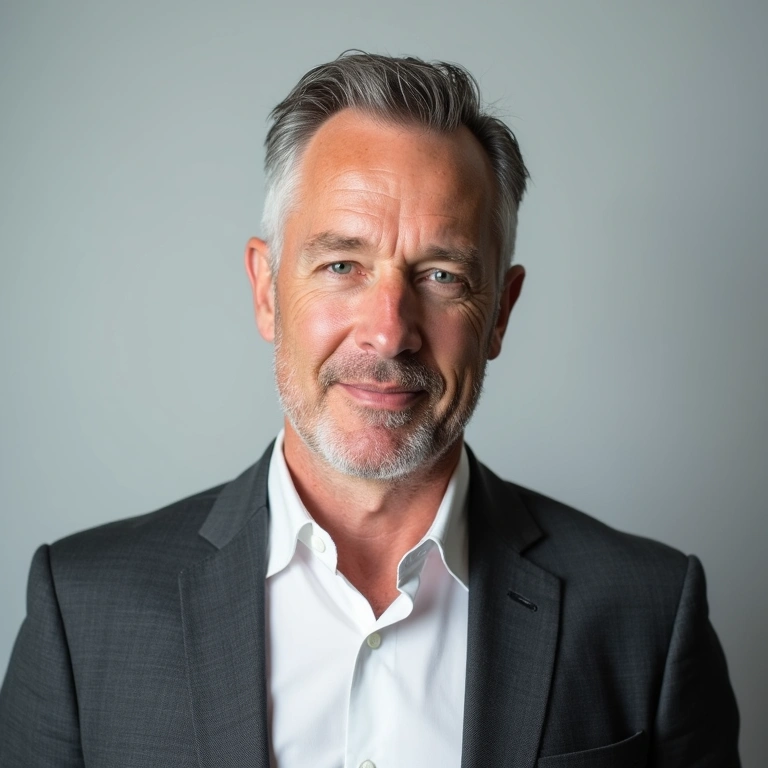

A senior safety researcher at OpenAI has walked out the door, and he isn’t staying quiet about why. David Robinson, who spent three and a half years inside OpenAI’s safety organization and signed off on safety reports for 12 frontier-model launches, announced his resignation this week. His exit essay, titled “I Quit OpenAI Because Its Culture Is Broken,” ran in The Atlantic on October 3, 2026, and it reads less like a farewell note and more like an indictment of how the entire AI industry treats risk.
Robinson’s departure is being covered by The Verge, Business Insider, Business Standard, and several other outlets, and the reaction inside AI policy circles has been swift. He isn’t the first OpenAI safety staffer to leave in protest over the past two years, but his specific role (he helped draft the company’s preparedness framework, the internal rulebook meant to catch catastrophic risks before a model ships) gives his criticism a different weight than a typical departure memo.
What David Robinson actually said
Robinson confirmed the news himself in blunt terms: “I resigned this week from OpenAI.” From there, his essay builds a case that the pace of model releases has outrun the industry’s ability to actually understand what it’s shipping. He wrote that “the time for trial and error is over,” a line that’s already being quoted across the AI safety researcher resignation coverage as the thesis of his argument.
He didn’t limit the criticism to his former employer. According to Business Standard‘s reporting on the essay, Robinson said: “I agree with other recently departed staff that the companies building this technology aren’t being nearly careful enough.” That’s a direct reference to a string of safety-motivated exits across the sector over the past two years, and it frames his resignation as part of a pattern rather than an isolated grievance.
The quotes that are drawing the most attention
Robinson also took aim at the culture that produces this pace. In comments reported by Business Insider, he said: “This moment needs a degree of humility that isn’t natural for people who have succeeded through their extreme confidence.” He went further, describing the industry’s default posture as one built on “unimpeded optimism about being able to solve problems as they arise,” a mindset he argues is structurally unsuited to catching failures before they cause harm.
Business Standard also quoted him criticizing the release cadence directly: “As the company sprints from one launch to the next, it is failing to achieve the level of care that I believe is needed.” Taken together, the quotes paint a picture of someone who spent years inside the safety process and walked away believing it no longer matches the stakes.
Who is David Robinson, and why his exit carries weight
Robinson isn’t a fringe critic parachuting in from outside. For three and a half years he worked on OpenAI’s safety team, where his job included writing and overseeing the safety reports that accompany every major model launch. Reuters has reported that he helped draft the company’s preparedness framework, the document OpenAI uses to define thresholds for catastrophic risk categories like cyber-offense capability, biological uplift, and model autonomy. That framework is the closest thing OpenAI has to an internal braking mechanism, and Robinson helped build it.
That history matters because it undercuts the easiest dismissal of his essay. This isn’t an outside academic or a rival lab executive complaining about competition. It’s someone who signed off on the safety paperwork for a dozen frontier releases telling the public, in his own words, that the process stopped being adequate. Twelve launches is a lot of first-hand exposure to how the sausage actually gets made inside a company racing to stay ahead of Anthropic, Google DeepMind, and xAI.
The nuclear and aviation comparison, explained
The most concrete policy idea in Robinson’s essay is his call for AI companies to borrow safety structures from nuclear power and aviation. Both industries, according to reporting on his essay, are the models he wants AI labs to emulate. It’s worth unpacking why he picked those two specifically, since they share a trait that AI development currently lacks: independent, mandatory incident reporting that happens whether or not the operator wants it to.
Commercial aviation in the US runs through the FAA and the National Transportation Safety Board, agencies that investigate every serious incident and publish findings that every airline and manufacturer is required to act on. Nuclear power runs through similarly strict oversight bodies built after Three Mile Island and Chernobyl forced the issue. Neither industry self-polices on a voluntary basis, and neither waits for a company’s internal safety team to decide what counts as a close call. Robinson’s argument, as reported, is that frontier AI development is still operating closer to self-regulation than to either of those models, and that the industry’s own internal reviews, no matter how well-intentioned, aren’t a substitute for outside accountability.
Historical context: a pattern of safety departures at frontier labs
Robinson’s resignation doesn’t happen in a vacuum. Over the past two years, a string of safety-focused researchers have left OpenAI and other frontier labs, often citing some version of the same complaint: that commercial pressure to ship is winning out over caution. Jan Leike, who co-led OpenAI’s now-dissolved superalignment team, left in May 2024 and said publicly that safety culture had taken a backseat to shipping new products. Daniel Kokotajlo left that same spring after refusing to sign a standard exit agreement, saying he didn’t want to be silenced about his concerns over how close the industry was to transformative AI without adequate guardrails. William Saunders departed and later testified before the US Senate about gaps he’d seen in internal review processes. Miles Brundage, a long-time policy researcher at OpenAI, left in late 2024 and said no lab, including OpenAI, was fully ready for what he called AGI-level systems. Steven Adler, another safety researcher, left around the same period with similar public concerns.
The pattern isn’t confined to OpenAI, either. Rival labs have faced their own versions of this story in 2026, with safety staff elsewhere publicly questioning whether their employers are moving too fast. Robinson’s essay explicitly nods to this, framing his own exit as one more data point in a trend rather than a singular event.
Notable safety-related exits across the AI industry
| Name | Company | Departure | Stated concern |
|---|---|---|---|
| Jan Leike | OpenAI | May 2024 | Said safety culture lost ground to shipping pressure |
| Daniel Kokotajlo | OpenAI | April 2024 | Declined standard exit terms, cited AGI timeline risk |
| William Saunders | OpenAI | February 2024 | Later testified to US Senate on internal review gaps |
| Miles Brundage | OpenAI | October 2024 | Said no lab was fully ready for advanced AI systems |
| Steven Adler | OpenAI | November 2024 | Raised concerns about safety evaluation adequacy |
| David Robinson | OpenAI | October 2026 | Says release pace has outrun adequate safety care |
What’s notable about this table isn’t any single row. It’s the two-and-a-half-year span it covers, with each departure echoing the one before it. An AI safety researcher leaving and publishing a public warning has gone from a shocking event in 2024 to something close to a recurring news category by late 2026.
How OpenAI’s preparedness framework is supposed to work
The preparedness framework Robinson helped write is OpenAI’s internal system for scoring frontier models against risk categories before they ship, covering things like whether a model could meaningfully help someone build a cyberweapon or a biological threat. Models that cross certain risk thresholds are supposed to trigger extra safeguards or delay a launch entirely. It’s the document that underpins the safety reports Robinson spent years producing.
The tension Robinson points to is structural: the same company that built the framework is also the one deciding whether its own models clear the bar, on a timeline largely set by competitive pressure rather than an outside clock. That’s precisely the gap he says nuclear and aviation oversight closes, because in those industries the entity grading the risk isn’t the same one racing to launch the product. For readers tracking the US government’s own thinking on this, the NIST AI Risk Management Framework lays out a similar voluntary structure at the federal level, and it faces the same basic criticism: voluntary frameworks only work if the company applying them is willing to slow down when the framework says to.
Competitive comparison: how the major labs handle safety oversight
OpenAI isn’t alone in running an internal framework instead of answering to an external regulator. Anthropic publishes its own responsible scaling policy and has talked publicly about AI risk in its own public filings this year. Google DeepMind maintains frontier safety commitments tied to its parent company’s broader AI principles. xAI has published a much thinner safety framework compared to its peers and has faced more public criticism over the gap between its stated policy and its actual release pace. None of the major labs currently answer to an independent body with the authority that the FAA has over airlines or that nuclear regulators have over power plants.
Anthropic has faced its own public safety exit
Robinson’s OpenAI departure also lands against a backdrop where a safety researcher at Anthropic resigned earlier in 2026, publicly describing the stakes of the work in similarly stark terms. The detail differs from Robinson’s case, but the broader signal is the same: safety staff inside more than one frontier lab are choosing to go public rather than raise concerns quietly and stay.
Safety-oversight models compared across industries
| Industry | Who sets the rules | Who checks compliance | Mandatory incident reporting |
|---|---|---|---|
| Commercial aviation | FAA / international regulators | Independent agency (FAA, NTSB) | Yes, legally required |
| Nuclear power | National nuclear regulators | Independent agency, outside the operator | Yes, legally required |
| Frontier AI (current state) | Each company sets its own framework | Mostly the company itself | No binding federal requirement yet |
| US voluntary AI guidance | NIST AI RMF (non-binding) | Self-assessed by adopting companies | Voluntary disclosure only |
This table is really the whole argument in miniature. Robinson isn’t asking OpenAI to write a better internal document. He’s arguing that the entire category of “the company grades its own homework” needs to be replaced with something closer to the bottom two rows looking like the top two.
Market and industry impact
OpenAI is a private company, so there’s no stock price to move on this news the way a public safety scandal might hit a listed firm. But the business impact still shows up in less direct ways. Enterprise customers evaluating which AI vendor to standardize on increasingly ask about safety governance during procurement, and a public resignation essay from someone who wrote the company’s own safety reports gives competitors a talking point in exactly those conversations. Anthropic, Google, and other rivals have leaned into safety-forward positioning as a selling point this year, and Robinson’s essay hands them fresh ammunition without them having to say a word.
There’s also a recruiting dimension. Frontier labs compete hard for safety and alignment talent, a pool that’s small relative to demand. A high-profile resignation essay from a credible insider can shift where early-career safety researchers choose to apply, especially when it’s published somewhere with the reach of The Atlantic rather than a niche blog. OpenAI has weathered public criticism from departing staff before and kept hiring, but each additional exit adds to a narrative that recruiters at rival labs can and will use.
Regulatory and political reaction
Washington’s appetite for AI oversight has grown through 2026, and this kind of insider account tends to get cited quickly in congressional hearings and agency comment periods, even when it doesn’t trigger a formal investigation on its own. US lawmakers have already pressed OpenAI and Anthropic executives this year on topics ranging from AI agent security to safety testing practices, and Robinson’s essay gives committee staff a ready-made quote for the next round of questioning. The comparison to nuclear and aviation regulation in particular is the kind of line that shows up in prepared testimony, since it offers a concrete policy ask rather than a vague call for “more safety.”
None of this guarantees new legislation. The US has moved slowly on binding AI safety rules relative to the pace of model releases, and voluntary frameworks like the NIST AI RMF remain the dominant federal posture. But each high-profile resignation shortens the distance between “AI safety is an abstract policy debate” and “a person who did this job for three and a half years says it’s inadequate,” which is a harder quote for regulators to wave away.
What happens next: five predictions
- OpenAI will likely issue a public statement defending its safety process without directly rebutting Robinson’s specific claims, following the pattern set after previous departures.
- Expect at least one more named safety researcher at a major lab to speak publicly within the next few months, given the current rate of these disclosures.
- Rival labs will use Robinson’s essay in competitive messaging aimed at enterprise customers who weigh safety governance in procurement decisions.
- Congressional staff will likely cite Robinson’s nuclear-and-aviation framing in upcoming hearings on AI oversight, even if no bill results directly from it.
- Pressure will build for an independent, third-party audit model for frontier AI, though actual adoption is unlikely to move quickly given how slowly comparable rules have progressed in the US so far.
What would actually change the picture
The one development that would shift this story from “another departure essay” to something with teeth is a binding, external reporting requirement, something closer to what aviation and nuclear power already have. Short of that, expect the cycle of departures, essays, and competitor talking points to keep repeating roughly on the schedule it has followed since Jan Leike’s exit in 2024.
Why this particular exit is different from the last one
Every one of these departures gets compared to the ones before it, and it’s fair to ask whether Robinson’s essay is just more of the same. The distinction is in the specificity of his proposed fix. Where earlier departures mostly described a vague erosion of safety culture, Robinson names two working external models, aviation and nuclear power, and argues the AI industry should be judged against their standard of independent, mandatory oversight rather than against its own self-written rulebook. That’s a concrete target that journalists, lawmakers, and competing labs can reference directly, which is likely why his essay is spreading faster across outlets than some of the departure statements that preceded it.
The bigger picture for AI safety researcher resignations
Step back far enough, and Robinson’s resignation fits a recognizable cycle: a safety team member spends years inside a frontier lab, concludes the internal process can’t keep pace with the external pressure to ship, and leaves to say so publicly rather than quietly. Each time this happens, the lab in question absorbs the criticism, keeps releasing models, and the cycle resets with the next hire. What’s changed by 2026 is the frequency. Two years ago this was a once-a-year story. Now it reads more like a recurring beat, and that shift alone tells you something about how unresolved the underlying tension between safety and speed still is.
Frequently asked questions
Who is David Robinson?
He’s a former OpenAI safety researcher who spent three and a half years on the company’s safety team, where he oversaw safety reports for 12 frontier-model launches and helped draft OpenAI’s preparedness framework.
Why did David Robinson resign from OpenAI?
In his own essay, Robinson said he resigned this week and argued that OpenAI, and AI companies generally, aren’t being careful enough given the pace at which frontier models are released. He didn’t cite a single triggering incident in his public statements.
What is the title of his resignation essay, and where was it published?
The essay is titled “I Quit OpenAI Because Its Culture Is Broken,” and it was published by The Atlantic on October 3, 2026.
What is OpenAI’s preparedness framework?
It’s OpenAI’s internal system for scoring frontier models against categories of catastrophic risk, such as cyber-offense capability or biological uplift, before deciding whether a model is safe to release. Robinson helped draft it, according to Reuters’ reporting.
Is this the first time an OpenAI safety researcher has resigned publicly?
No. Jan Leike, Daniel Kokotajlo, William Saunders, Miles Brundage, and Steven Adler all left OpenAI’s safety-related teams between 2024 and late 2024, each citing concerns about whether safety work was keeping pace with release schedules.
What does Robinson want AI companies to do differently?
He’s pointed to nuclear power and aviation as models the AI industry should borrow from, specifically their independent oversight and mandatory incident reporting, rather than relying on companies to police their own safety frameworks.
Has OpenAI responded to the essay?
As of this writing, OpenAI has not issued a detailed public rebuttal to Robinson’s specific claims. Reporting on the story has focused on his essay and on reaction from outside commentators.
Does this affect OpenAI’s stock price?
OpenAI is privately held, so there’s no public stock price for the news to move directly. The more likely business impact is on enterprise procurement conversations and competitive positioning against rivals like Anthropic and Google DeepMind.