
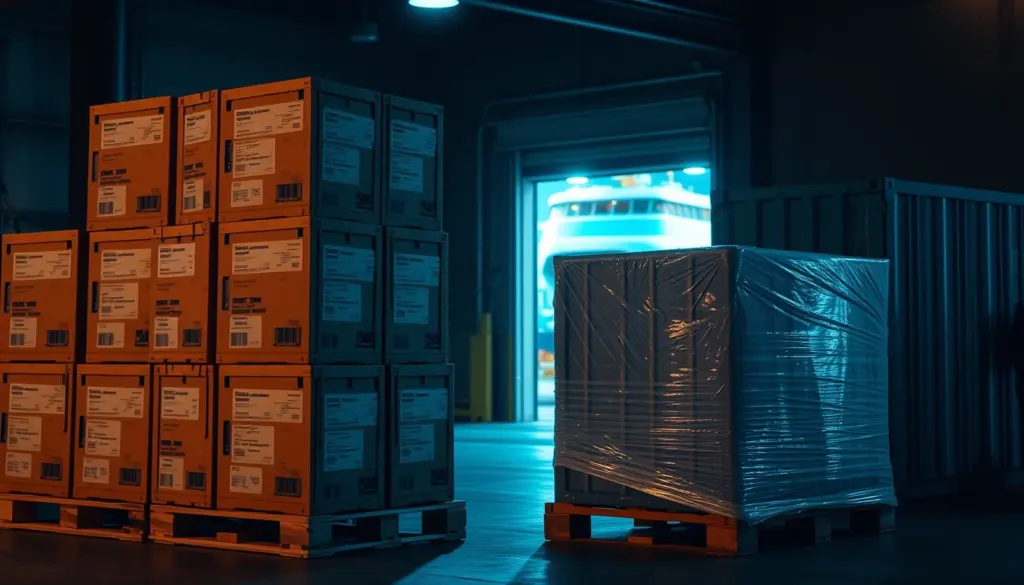
A California tech executive is facing federal charges over an alleged scheme to route more than $300 million worth of Nvidia-equipped servers into China, the U.S. Department of Justice announced on October 1, 2026. Greg Lui, who also goes by Yiu Kong Lui, is accused of using his company, Earthmade Computer Inc., to disguise shipments of export-controlled Nvidia GPUs through Malaysia, Singapore, and Hong Kong before the hardware reached buyers in China, according to court filings reported by Ars Technica and TweakTown.
The 38-year-old, based in San Gabriel, California, faces three felony counts tied to export control violations, smuggling, and money laundering. Each count carries its own decade-plus prison exposure. The case lands at a moment when Nvidia’s China chip problem keeps resurfacing in federal court. Prosecutors have brought several similar cases through 2026, and a Bloomberg investigation cited by Ars Technica found that Nvidia’s own screening process has repeatedly missed shipments that outside officials viewed as obvious red flags. Here is what the indictment says, how the Nvidia GPU smuggling case fits the wider enforcement pattern, and what it could mean for buyers and rivals watching the chip export fight play out.
What Prosecutors Allege Against Earthmade Computer
According to the Justice Department’s October 1 announcement, Lui owned and ran Earthmade Computer Inc., a technology company based in City of Industry, California. Federal prosecutors allege that from around October 2023 until at least August 2026, Lui and unnamed co-conspirators bought high-end servers loaded with controlled Nvidia GPUs from U.S. manufacturers, then used falsified paperwork to claim the hardware was headed to permitted buyers in Malaysia or Singapore. Instead, the servers were allegedly rerouted to customers in China without the export licenses the U.S. Commerce Department requires for that class of chip.
Ars Technica reported that the FBI’s indictment ties the scheme to freight-forwarding firms in Malaysia and Singapore that allegedly helped mask the hardware’s true destination. The total value of the diverted equipment tops $300 million, which is the figure driving most headlines, but the underlying mechanics (fake end users, layered shipping routes, and shell transactions) are what carry the legal weight in an export control case like this one.
Inside the Paper Trail: $7.6 Million, 27 Servers, One Stolen Identity
Court filings described by Ars Technica lay out specific transactions rather than just a round-number total. In one instance, Lui allegedly submitted a purchase order to a U.S. manufacturer for 27 servers worth roughly $7,614,000 in January 2024. The equipment was shipped to Kuala Lumpur, and a co-conspirator later told a Malaysian official that all 27 units had already been forwarded to China.
A 92-Server Shipment Through Three Countries
A separate shipment of 92 export-controlled servers was allegedly routed through Singapore, then Malaysia, then Hong Kong, before landing with a buyer in Hangzhou, a city the Wall Street Journal has previously described as a hub for Chinese AI firms. That multi-country path is the kind of layered routing that export control investigators say is designed specifically to outrun paperwork checks at any single port.
The Fake Buyer Named “Jackie Lui”
In yet another flagged shipment, prosecutors allege Lui sent 100 servers bound for Malaysia, loaded with Nvidia H100 GPUs, that together carried a declared value of more than $22 million. To support the paperwork, Lui allegedly submitted fraudulent documentation naming a fake buyer whose CEO was identified as “Jackie Lui.” Three years earlier, prosecutors say, Lui had purchased the identity documents of a real person, now known to the grand jury, and used that identity to help run the scheme.
Four GPU Models Named in the Indictment
What stands out about this Nvidia GPU smuggling case is the mix of hardware involved. The indictment names Nvidia’s A100 and H100, both data-center accelerators long subject to U.S. export licensing, alongside GeForce RTX 4090 and RTX 5090, consumer gaming cards that are not primarily marketed as AI training hardware. Ars Technica noted that the A100 and H100 are “not Nvidia’s most advanced chips” by 2026 standards, yet they remain powerful enough to train large language models at meaningful scale, which is exactly the capability U.S. export rules were written to keep out of Chinese hands.
| GPU Model | Category | Export Control Status | Primary Use Case |
|---|---|---|---|
| Nvidia A100 | Data-center accelerator | Export-controlled to China | AI training and inference |
| Nvidia H100 | Data-center accelerator | Export-controlled to China | Large language model training |
| GeForce RTX 4090 | Consumer gaming GPU | Named in indictment for China routing | Gaming, repurposed for AI inference clusters |
| GeForce RTX 5090 | Consumer gaming GPU | Named in indictment for China routing | Gaming, repurposed for AI inference clusters |
The presence of consumer cards alongside data-center silicon suggests the alleged buyers in China were assembling compute capacity from whatever Nvidia hardware they could acquire, not just chasing the newest data-center parts. It also hints at why enforcement is getting harder: a shipment of gaming GPUs looks far less suspicious on paper than a pallet of H100s.
The Three Federal Charges and Maximum Prison Terms
Lui is charged with three counts: conspiracy to violate the Export Control Reform Act and the Export Administration Regulations, outbound smuggling, and conspiracy to commit money laundering. Both Ars Technica and TweakTown report that the first and third counts each carry a maximum of 20 years in prison, while the smuggling count carries a maximum of 10 years. These are maximum statutory penalties tied to each individual count, not a single combined sentence, and Lui has not been convicted of anything. He is currently facing an indictment, which under U.S. law means the allegations have not yet been proven in court.
| Charge | Underlying Law | Maximum Prison Term |
|---|---|---|
| Conspiracy to violate export controls | Export Control Reform Act / Export Administration Regulations | 20 years |
| Outbound smuggling | Federal smuggling statute | 10 years |
| Conspiracy to commit money laundering | Federal money laundering statute | 20 years |
The Defense Criminal Investigative Service, an arm of the Department of Defense’s Office of Inspector General, also weighed in on the case. “Preventing the illegal export of controlled technology is critical to protecting our national security,” said Special Agent in Charge John E. Helsing of the DCIS Western Field Office, in the Justice Department’s announcement of the case. “These technologies provide core advantages to U.S. forces, and ensuring they remain safeguarded prevents adversaries from exploiting them.”
More Than $176 Million Moved Through Two Shipping Firms
Beyond the chip routing, prosecutors say the money trail is just as detailed. Ars Technica reported that Earthmade received more than $176 million from two Malaysian shipping companies in 2024 alone. Bank records from accounts Lui held at Bank of America and JPMorgan allegedly show how payments moved through the scheme. The Justice Department is seeking forfeiture of all funds it says were generated through the alleged export evasion, a standard step in cases where prosecutors want to claw back profits tied to the underlying crime, regardless of how the eventual criminal counts are resolved.
Nvidia’s Compliance Blind Spots, According to Bloomberg
The Lui case did not surface in a vacuum. It follows an earlier smuggling scheme tied to a Nvidia senior manager based in Taiwan and former Supermicro staff, a case in which Nvidia CEO Jensen Huang publicly urged Supermicro to tighten its compliance while maintaining there was no evidence Nvidia itself had facilitated smuggling. Since then, Ars Technica reported, Nvidia has shifted from flatly denying any smuggling problem to downplaying how much of China’s AI buildout actually runs on diverted chips, a buildout Ars says is now powered largely by domestic Huawei silicon rather than smuggled Nvidia parts.
A Bloomberg investigation, cited by Ars Technica and based on conversations with people across five countries, found that Nvidia built an internal whitelist of pre-approved Asian buyers instead of digging deeper into shipments that officials considered obviously suspicious. In one case tied to the earlier Taiwan scheme, the FBI alleged Nvidia and Supermicro visited a facility that was “clearly insufficient to house all the ordered servers” and still approved the deal. In another, a small Thailand-based buyer allegedly used fake leases to justify bulk orders, and Nvidia has declined to say whether it ever visited that site.
Nvidia has pushed back hard on the idea that it is the weak link. An Nvidia spokesperson told Bloomberg, in comments relayed by Ars Technica, that “less than one half of one percent” of Nvidia products have been diverted to China, adding that “governments and media have found insignificant diversion of controlled US products, a drop in the bucket compared to the ocean of domestic compute China already has.” On the specific question of fast-growing but unverified buyers, the spokesperson argued that “a startup’s growth plan in a friendly nation is an opportunity for America, not a ‘red flag’ to be feared,” and that “when the law is clear, American companies honor US laws as they are, not as America’s critics wish they were.” Nvidia also confirmed to Bloomberg that it continues working with Megaspeed, a buyer U.S. officials have separately flagged for possible chip diversion, until it is formally ordered to stop.
A Pattern Prosecutors Have Chased Through 2026
The Lui indictment is not an isolated event. TweakTown’s coverage points to a separate case in which federal authorities caught what they described as a “trafficking network” moving roughly $160 million worth of Nvidia AI chips to China through similar South Asian routing. Combined with the earlier Taiwan-linked Supermicro case, that puts at least three distinct Nvidia GPU smuggling prosecutions in public view within the same year, each following a comparable playbook: U.S.-based buyers, falsified end-user paperwork, and multi-country shipping chains that terminate in China.
That repetition is part of why officials describe the shadow trade in Nvidia hardware as larger than any single indictment can capture. Bloomberg’s reporting, as relayed by Ars Technica, suggested the real scale of diverted chips is “hard to measure” but likely runs into the hundreds of thousands of units when accounting for shipments that never surface in a criminal case at all.
Why Banned Nvidia Chips Still Flow Toward China’s AI Buildout
China’s appetite for restricted Nvidia silicon comes down to a gap domestic chipmakers have not closed yet. Bloomberg sources cited by Ars Technica put that gap at roughly through 2030 before China’s own accelerators can plausibly substitute for the Nvidia hardware its AI labs still want. In the meantime, officials believe the diverted chips are powering everything from small regional data centers to, in some cases, larger operators. That demand is exactly why consumer cards like the RTX 4090 and RTX 5090 are showing up in smuggling indictments alongside dedicated data-center parts such as the A100 and H100: when the highest-end chips are hardest to move, buyers improvise with whatever Nvidia silicon export controls have not fully locked down.
Nvidia vs. AMD: Who Carries More China Export Risk
Nvidia’s scale is also its exposure. The company supplies the large majority of AI training and inference hardware worldwide, which means it shows up in essentially every smuggling case tied to Chinese AI buildout, simply because its chips are the ones buyers want most. AMD sells competing data-center accelerators and faces the same Commerce Department licensing regime for shipments to China, but its smaller footprint in China-bound AI hardware has kept it largely out of the criminal cases making headlines this year. Neither company controls what happens to hardware once it leaves authorized distribution channels, which is precisely the enforcement gap the Earthmade case is designed to close.
Meanwhile, Huawei’s own AI accelerators have become the default option for Chinese buyers who cannot access Nvidia hardware at all, whether through legitimate licensing or smuggling. That dynamic cuts against the argument that smuggling cases alone can stop China’s AI progress. Each prosecution removes one network, but it does not change the underlying economics that make smuggled or diverted Nvidia chips worth hundreds of millions of dollars to buyers who would otherwise turn to domestic alternatives.
The Political Backdrop Shaping Export Enforcement
The case also lands amid a broader fight in Washington over how aggressively to police chip exports. Ars Technica reported that industry opposition has already watered down at least one proposed anti-smuggling bill in Congress, and that Huang has declined a congressional invitation to testify on the issue. The Trump administration, according to sources described in Bloomberg’s reporting, has largely let Nvidia police its own sales while moving slowly to block shipments flagged as suspicious, an approach that aligns with the administration’s broader reluctance to impose new guardrails on the AI industry.
The same Justice Department press release that announced the Lui case also included an unrelated signal of how the administration frames AI policy. Assistant Attorney General for National Security John A. Eisenberg said, in that announcement as reported by Ars Technica, that “SI is the defining technology of the era,” using the administration’s preferred “super intelligence” terminology rather than the more common “artificial intelligence” label. That framing has drawn criticism from figures including California Governor Gavin Newsom, who has called the rebranding an “impotent and craven failure to address well-documented emerging security and safety risks,” according to Ars Technica’s reporting.
What Happens Next for Greg Lui and Earthmade Computer
Lui was arrested on October 1, 2026, and faces an initial appearance and arraignment in federal court. No trial date, plea, or conviction has been reported, and under U.S. law Lui is presumed innocent unless and until prosecutors prove the charges. The Justice Department has signaled it will seek forfeiture of funds tied to the alleged scheme regardless of how the criminal counts proceed. For Earthmade Computer, the case likely means the end of its ability to operate as a legitimate reseller of U.S.-made servers, given that federal prosecutors have now laid out a detailed paper trail connecting the company to the alleged diversion scheme.
Market Impact: Cloud Buyers, Resellers, and Nvidia’s Scrutiny Problem
For legitimate buyers of Nvidia hardware, cases like this one tend to translate into slower paperwork and tighter end-user verification across the board, not just for shipments headed to Asia. Cloud providers and server integrators that already face long waits for allocation of scarce Nvidia GPUs could see additional documentation requirements as Nvidia and its partners try to show regulators they are closing the gaps Bloomberg’s reporting exposed. Resellers operating in Southeast Asia, a region now tied to at least three separate 2026 smuggling cases, are likely to face more direct scrutiny from both Nvidia’s own sales teams and Commerce Department investigators going forward.
There is also a reputational cost for Nvidia itself. Each new indictment that names Nvidia chips, even when Nvidia is not a defendant, keeps the company’s compliance practices in the news at a time when its business depends heavily on maintaining goodwill with U.S. regulators who could tighten export rules further if political pressure builds ahead of the midterm elections.
5 Predictions for Nvidia Export Enforcement Through 2027
- More indictments naming Nvidia hardware are likely before the end of 2026, following the pattern of at least three cases already surfacing this year across Taiwan- and Southeast Asia-linked routes.
- Congress will likely revisit anti-smuggling legislation, though industry lobbying that already watered down one bill makes a strict new law unlikely before 2027.
- Nvidia will probably expand its internal buyer whitelist and documentation requirements rather than fundamentally change its sales approach, given its public position that diversion remains a small fraction of total shipments.
- Consumer gaming GPUs such as the RTX 4090 and RTX 5090 will draw more export-control attention as smugglers increasingly substitute them for harder-to-move data-center chips.
- Pressure on Southeast Asian transshipment hubs, particularly Malaysia and Singapore, will grow as U.S. investigators treat those routes as the common thread across multiple 2026 cases.
FAQ: Nvidia GPU Smuggling Case Explained
Who is Greg Lui and what is Earthmade Computer?
Greg Lui, also known as Yiu Kong Lui, is a 38-year-old California resident and owner of Earthmade Computer Inc., a technology company based in City of Industry, California, that U.S. prosecutors accuse of routing Nvidia GPU-equipped servers to China through falsified export paperwork.
Which Nvidia GPUs were named in the indictment?
The indictment names Nvidia’s A100 and H100 data-center accelerators along with GeForce RTX 4090 and RTX 5090 consumer gaming cards, according to TweakTown’s review of the court filings.
How much prison time does Greg Lui face?
The export control conspiracy count and the money laundering conspiracy count each carry a maximum of 20 years in prison, while the smuggling count carries a maximum of 10 years, per the Justice Department’s announcement. These are statutory maximums for an indictment, not a guaranteed sentence, and Lui has not been convicted.
How did the servers allegedly reach China?
Prosecutors allege the servers were shipped through intermediate countries, including Malaysia, Singapore, and Hong Kong, using paperwork that falsely identified those locations as the final destination before the hardware was forwarded on to buyers in China, including at least one buyer based in Hangzhou.
Is Nvidia accused of wrongdoing in this case?
No. Nvidia is not named as a defendant in the Lui indictment. Nvidia has told Bloomberg that diverted chips represent less than half of one percent of its total shipments and has defended its screening practices, even as officials and outside experts have raised questions about gaps in that screening.
Is this the first Nvidia GPU smuggling case in 2026?
No. TweakTown’s reporting references a separate case involving roughly $160 million in smuggled Nvidia AI chips, and an earlier case tied to a Nvidia manager in Taiwan and former Supermicro employees also surfaced before the Lui indictment.
What happens to the money and servers tied to the case?
The Justice Department has said it intends to seek forfeiture of funds generated through the alleged scheme, a standard step prosecutors take in export control and money laundering cases regardless of how individual criminal counts are resolved.
Does this affect Nvidia’s ability to legally sell GPUs in Asia?
Not directly. Nvidia’s authorized sales channels remain governed by existing Commerce Department licensing rules through the Bureau of Industry and Security. The case targets an alleged unauthorized reseller network, not Nvidia’s own distribution agreements, though it adds pressure on Nvidia to tighten how it vets buyers in the region.