PlatinumGames CEO Atsushi Inaba answered two of the most-asked questions in action gaming this week, and neither answer was the one fans wanted. Speaking in a Famitsu interview alongside Shift Up’s Kim Hyung-tae, Inaba confirmed that PlatinumGames has not released a single game on Nintendo Switch 2, even as the console closes in on broad third-party support from nearly every other major Japanese studio. Asked directly about Bayonetta’s future, he laughed, dodged the question, and then said just enough to keep the internet talking.
The remarks were first surfaced in Japanese by Famitsu and translated into English by outlets including Nintendo Everything, My Nintendo News, and Insider Gaming between October 3 and October 4, 2026. None of them reported a new Bayonetta title, a release window, or a Switch 2 project from PlatinumGames. What they reported was narrower and, in some ways, more interesting: a studio head who still has nothing to show for Nintendo’s newest hardware, paired with a character he is clearly reluctant to let go of.
What PlatinumGames Actually Said
The exchange happened in a joint discussion tied to a Bayonetta costume collaboration headed for Stellar Blade, according to reporting from GoNintendo. Famitsu pressed Inaba on Switch 2 first. His answer was direct: “We have yet to release a game on Nintendo Switch 2, but I think there is so much potential.” He followed with a more guarded line, acknowledging the gap between ambition and execution: “There are challenges in bringing various things to reality, but it’s a piece of hardware that can really widen a player’s enjoyment.”
That is an unusually candid admission for a studio with PlatinumGames’ pedigree. Bayonetta, Metal Gear Rising, Nier: Automata, and Astral Chain all carry the PlatinumGames name, and all of them shipped on hardware generations the studio clearly understood. Switch 2, a year into its life, has not had that moment yet. Inaba did not offer a date for when that might change, and none of the outlets covering the story claimed one existed.
Bayonetta’s Future: A Laugh, Not an Answer
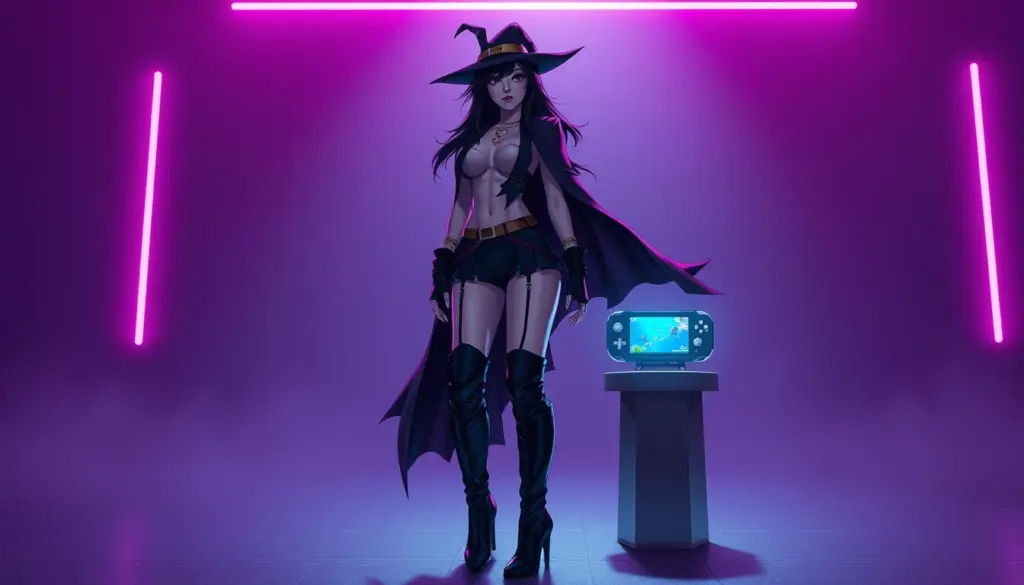
When Famitsu turned the conversation to Bayonetta specifically, Inaba’s response ran shorter and warmer. “Well… I can’t really answer that at the moment (laughs),” he said, before adding the line that launched a hundred headlines: “As for Bayonetta, I strongly feel that I want to expand her as a character and broaden her world. Please wait to see exactly what shape that will take.”
Strip away the enthusiasm and the facts are thin. Inaba did not say Bayonetta 4 is in development. He did not say a Bayonetta game is coming to Switch 2. He did not name a platform, a release window, or a budget. What he confirmed is intent, not a project, and several outlets were careful to draw that distinction even while running excited headlines of their own.
The Stellar Blade Connection Behind the Comments
The interview did not happen in a vacuum. Shift Up’s Kim Hyung-tae has talked openly about Bayonetta’s influence on his own work, and the two studios are linked through a costume collaboration tied to Stellar Blade’s console expansion, per coverage from GoNintendo and My Nintendo News. That context matters: Inaba was not addressing a press conference about PlatinumGames’ roadmap. He was reacting, in real time, to a fellow director gushing about a character he helped build. Laughing off a direct question in that setting reads differently than a dodge delivered at a shareholder call or a Nintendo Direct.
It also explains why the comments broke the way they did. A casual, half-answered question at a fan-adjacent event traveled through translation and aggregation until it looked, by the time it reached English-language headlines, like a tease rather than a shrug. Both readings are defensible. Neither is confirmed.
Why Fans Are Reading Between the Lines
Bayonetta fans have earned their skepticism toward vague studio comments. The franchise has had false starts before, and Inaba himself has given similarly hedged answers in past interviews without a game materializing for years afterward. What changed this week is simply volume: enough outlets picked up the quote that it started functioning as news even though nothing concrete was announced.
There is a pattern worth naming here. Studios under pressure to show Switch 2 commitment tend to pair vague future-tense language with specific present-tense disappointment, and Inaba’s answer fits that mold closely. He gave Nintendo’s hardware a compliment and gave Bayonetta’s fans a maybe, without tying the two together explicitly. Readers connected that dot themselves.
Bayonetta’s 17-Year Run, From PS3 to Switch 2
Bayonetta is not a young franchise, and its platform history explains some of why fans care this much about where it lands next. The series launched in 2009, moved to a single-platform exclusive deal for its second entry, and has stayed tied to Nintendo hardware ever since.
| Game | Release Year | Original Platforms | Later Availability |
|---|---|---|---|
| Bayonetta | 2009 | PlayStation 3, Xbox 360 | Wii U, Switch, PC |
| Bayonetta 2 | 2014 | Wii U | Nintendo Switch |
| Bayonetta 3 | 2022 | Nintendo Switch | Switch only to date |
| Bayonetta Origins: Cereza and the Lost Demon | 2023 | Nintendo Switch | Switch only to date |
| Next mainline entry | Unannounced | Not confirmed | Not confirmed |
That table tells its own story. Every mainline Bayonetta release since 2014 has landed on Nintendo hardware, which is exactly why Inaba’s comments about Switch 2 and Bayonetta arrived in the same breath. The franchise’s entire recent identity is tied to Nintendo consoles. A next entry skipping Switch 2 would be the surprise, not the other way around, though surprise is not the same as confirmation.
Who Actually Controls Bayonetta’s Next Move
PlatinumGames is a developer, not a publisher, on its biggest franchises. Bayonetta has shipped under Nintendo’s publishing arrangement since the second entry, which means Inaba’s enthusiasm, however genuine, is not the only signature a new game would need. Greenlighting a fourth mainline entry, or any expansion of the character Inaba described, runs through Nintendo’s own release calendar and budget priorities, not just PlatinumGames’ development slate.
That structure also explains why Inaba laughed instead of answering. A CEO freelancing commitments about a partner’s intellectual property, in public, ahead of any internal approval, is a fast way to create a headline that later has to be walked back. The safer move, and the one he made, is to express desire without specifics.
The Kamiya Factor
Bayonetta’s creator-level history adds another layer. Hideki Kamiya, the series’ original director and a PlatinumGames co-founder, has made his own feelings about the franchise’s future clear in past interviews. “I personally can’t conceive the Bayonetta series ever ending. I want to make a Bayonetta 4 and Bayonetta 5, and I intend on pitching them to the company,” Kamiya told IGN in an earlier interview. He has also framed his broader creative ambitions for the universe in less character-specific terms, telling Nintendo Everything: “If I just come out and say it openly, we want to make this title part of a new series, and keep expanding the world.”
Kamiya’s comments predate Inaba’s and were made in a different context, but they establish a throughline. People close to Bayonetta’s creation have wanted more of it for years. What has been missing is not internal desire. It is a greenlit, dated, platform-confirmed project, and this week’s Famitsu interview did not produce one.
Switch 2’s Third-Party Push, One Year In
Inaba’s admission lands at an awkward moment for Nintendo’s narrative around Switch 2. The console has spent its first year courting exactly the kind of studio PlatinumGames represents: known action and RPG developers with franchises that benefit from more horsepower than the original Switch could offer. Several of those efforts have already shipped, which makes PlatinumGames’ absence more visible by comparison rather than less.
| Franchise | Publisher/Studio | Switch 2 Status |
|---|---|---|
| Resident Evil 2/3/4 Remakes | Capcom | Already shipped, strong sales reported |
| Ocarina of Time Remake | Nintendo | Dated release |
| Zelda franchise slate | Nintendo | Multiple launches in a 14-day window |
| Witcher 3 Remastered | CD Projekt | Already shipped |
| Octopath Traveler I & II | Square Enix | Already shipped |
| Bayonetta franchise | PlatinumGames / Nintendo | No Switch 2 title yet |
Switch 2 hardware sales have climbed steadily since launch, a trajectory covered in detail in earlier reporting on the console’s first-year numbers, and Nintendo has used that installed base to pitch third parties on bigger, more demanding ports and remakes. A packed release calendar heading into 2027 underscores how fast that lineup is filling in. PlatinumGames is one of the more conspicuous names still missing from it.
Competitive Landscape: Who Else Is Racing to Switch 2
Compare PlatinumGames’ position to its peers and the gap becomes clearer. Capcom moved aggressively, bringing its RE Engine remakes to Switch 2 within months of launch and reporting sales strong enough to justify the investment. Square Enix ported its Octopath Traveler library over with minimal friction. CD Projekt treated Switch 2 as a near-day-one priority for its Witcher 3 remaster work. Each of those studios made a calculated bet that Switch 2’s improved hardware budget was worth the porting cost, and each has something shipped to show for it.
PlatinumGames, by contrast, is a smaller studio without the back catalog of easy remaster candidates that Capcom or Square Enix can lean on. Its most bankable franchise, Bayonetta, is also the one most entangled in publisher approval, since Nintendo has held the purse strings on it since 2014. That combination, a lean studio plus a franchise it does not fully control, is a plausible explanation for why PlatinumGames is behind its peers on Switch 2 commitment, separate from whatever creative ambitions Inaba described this week.
Market Impact: What a Vague Comment Actually Moves
It is tempting to treat a CEO’s offhand remark as market-moving news, but the honest read is more modest. PlatinumGames is not a publicly traded company, so there is no stock reaction to track. What does move is attention, and attention has real value for a studio that has had a mixed run commercially over the last several years. Every outlet that picked up the Bayonetta comments this week gave PlatinumGames free visibility it would otherwise have had to buy through marketing.
For Nintendo, the impact cuts differently. Switch 2’s pitch to fans has leaned heavily on first-party exclusives and ported back catalogs rather than ground-up third-party exclusives from mid-size studios. A confirmed PlatinumGames project, whenever it arrives, would be a genuine proof point that Switch 2 can still attract the kind of stylish, genre-defining action games that made the original Switch’s later years feel distinct. Until that project exists, Nintendo gets a headline about potential rather than a product to sell.
Expert and Industry Voices
Beyond this week’s Famitsu interview, the people closest to Bayonetta’s creation have been consistent for years about wanting the series to continue. Atsushi Inaba, PlatinumGames’ CEO, put it plainly in the comments that sparked this story: “I have a strong desire to expand the character of Bayonetta and broaden her world. Please look forward to seeing what form that will take in the future,” he told Insider Gaming.
On the hardware side, Inaba was equally direct about where PlatinumGames stands today, telling Nintendo Everything: “We have yet to release a game on Nintendo Switch 2, but I think there is so much potential. There are challenges in bringing various things to reality, but it’s a piece of hardware that can really widen a player’s enjoyment.”
Hideki Kamiya, the character’s original director, has gone further than Inaba in past remarks about his own ambitions for the franchise. “I personally can’t conceive the Bayonetta series ever ending. I want to make a Bayonetta 4 and Bayonetta 5, and I intend on pitching them to the company,” he said in comments reported by IGN. In a separate interview covered by Nintendo Everything, Kamiya added: “If I just come out and say it openly, we want to make this title part of a new series, and keep expanding the world.”
Even Inaba’s most guarded line carries weight once you line it up against those older quotes. “Well… I can’t really answer that at the moment (laughs). As for Bayonetta, I strongly feel that I want to expand her as a character and broaden her world. Please wait to see exactly what shape that will take,” he told Nintendo Life and other outlets covering the Famitsu exchange. Read together, these five quotes describe a studio culture that has wanted to keep building Bayonetta’s world for close to a decade, even without a single confirmed next project to point to.
Historical Context: Two Times Bayonetta Almost Didn’t Happen
This is not the first time Bayonetta’s future has looked uncertain. Bayonetta 2’s original pitch struggled to find a publisher willing to fund a sequel to a game that had sold modestly on PS3 and Xbox 360, and Nintendo’s decision to fund it as a Wii U exclusive is widely credited with keeping the series alive at all. Bayonetta 3 then spent years in a quiet development window long enough that fans openly worried it had been shelved, before finally launching on Switch in 2022.
Seen against that backdrop, Inaba’s hedge this week looks less like evasion and more like a pattern. Bayonetta has never had a smooth, predictable announcement cycle. Every entry since the first has arrived after a stretch of uncertainty, rescue deals, or vague studio comments that fans had to parse for meaning. The current moment, a laugh followed by a promise with no specifics, fits that history closely.
What Any New Bayonetta Project Would Need to Clear
Even setting aside the question of whether a new game is in development, a theoretical next Bayonetta entry faces practical hurdles beyond Inaba’s enthusiasm. It would need sign-off from Nintendo as publisher, a development team following several years of reported departures among PlatinumGames veterans, and a technical plan for Switch 2 hardware that the studio has, by its own CEO’s admission, not yet shipped a single product on.
None of that makes a new game impossible. It does mean that “I want to expand her as a character” is a long distance from a shipped product, and readers treating this week’s quotes as a de facto announcement are getting ahead of what PlatinumGames and Nintendo have actually confirmed.
Predictions: Where This Story Goes Next
- Any formal Bayonetta announcement is more likely to surface at a future Nintendo Direct than through another Famitsu aside, given how publishing approval works on the franchise.
- PlatinumGames will probably announce a Switch 2 project, of some kind, before it announces a new Bayonetta entry specifically, simply because the hardware gap is the more urgent business problem.
- Expect continued cross-promotion between Bayonetta and other studios’ games, similar to the Stellar Blade costume tie-in, as a low-cost way to keep the character visible between actual releases.
- If a new mainline Bayonetta is eventually confirmed, Switch 2 exclusivity is the most likely outcome given the franchise’s unbroken Nintendo-platform streak since 2014.
- Coverage volume around vague PlatinumGames comments will likely keep outpacing actual news until a dated, platform-confirmed project exists to report on instead.
The Bigger Picture for PlatinumGames
Strip away the Bayonetta speculation and PlatinumGames still has a straightforward problem to solve: it has no presence on Nintendo’s current flagship hardware, a year into that hardware’s life, while most of its genre peers already do. Inaba’s comments this week read as an acknowledgment of that gap as much as a tease about Bayonetta. The studio knows where it stands relative to Capcom, Square Enix, and CD Projekt on Switch 2 support, and it said so plainly, even while wrapping the admission in optimism about the hardware.
Whether that gap closes with a new Bayonetta entry, a different franchise, or an original project remains unanswered. What is clear from this week’s interview, and from the outlets that covered it, is that PlatinumGames knows the clock is running on both questions at once.
Frequently Asked Questions
Did PlatinumGames confirm Bayonetta 4?
No. CEO Atsushi Inaba said he wants to “expand her as a character and broaden her world” but did not name a title, platform, or release window. No outlet covering the Famitsu interview reported a confirmed Bayonetta 4.
Does PlatinumGames have any games on Nintendo Switch 2?
As of this report, no. Inaba stated directly that the studio has yet to release a game on Switch 2, while adding that he sees significant potential in the hardware.
Who owns the Bayonetta franchise?
PlatinumGames develops Bayonetta, but Nintendo has published the series since Bayonetta 2 in 2014. That publishing relationship means any new entry needs Nintendo’s approval, not just PlatinumGames’ internal green light.
What prompted Inaba’s comments about Bayonetta and Switch 2?
The remarks came during a Famitsu interview alongside Shift Up’s Kim Hyung-tae, in a discussion connected to a Bayonetta costume collaboration tied to Stellar Blade’s console release.
Has Hideki Kamiya talked about a new Bayonetta game before?
Yes. In earlier interviews, Kamiya, Bayonetta’s original director and a PlatinumGames co-founder, said he wanted to make additional entries and pitch them internally, though those comments also stopped short of confirming an active project.
Which Bayonetta games are currently playable on Switch?
The original Bayonetta, Bayonetta 2, Bayonetta 3, and Bayonetta Origins: Cereza and the Lost Demon are all available on Nintendo Switch. None of the mainline entries have a confirmed native Switch 2 release yet.
Is a Bayonetta game coming to Stellar Blade?
Reports describe a costume collaboration bringing Bayonetta-themed content into Stellar Blade’s console release rather than a standalone Bayonetta game. It is a crossover promotion, not a new entry in the Bayonetta series.
Why does PlatinumGames’ Switch 2 absence matter for Nintendo?
Nintendo has spent Switch 2’s first year courting third-party studios for ports and remakes. A mid-size, stylish-action specialist like PlatinumGames staying absent from that lineup is a visible gap compared to studios such as Capcom, Square Enix, and CD Projekt, which have already shipped titles on the platform.